The 1968 “Hue Massacre”

by D. Gareth Porter
“Indochina Chronicle,” #33, June 24, 1974

Six years after the stunning communist Tet Offensive of 1968, one of the enduring myths of the Second Indochina War remains essentially unchallenged: the communist “massacre” at Hue. The official version of what happened in Hue has been that the National Liberation Front (NLF) and the North Vietnamese deliberately and systematically murdered not only responsible officials but religious figures, the educated elite and ordinary people, and that burial sites later found yielded some 3,000 bodies, the largest portion of the total of more than 4,700 victims of communist execution.

Although there is still much that is not known about what happened in Hue, there is sufficient evidence to conclude that the story conveyed to the American public by the South Vietnamese and American propaganda agencies bore little resemblance to the truth, but was, on the contrary, the result of a political warfare campaign by the Saigon government, embellished by the U.S. government and accepted uncritically by the U.S. press. A careful study of the official story of the Hue “massacre” on the one hand, and of the evidence from independent or anti-communist sources on the other, provides a revealing glimpse into efforts by the U.S. press to keep alive fears of a massive “bloodbath.”1 It is a myth which has served the U.S. administration interests well in the past, and continues to influence public attitudes deeply today. Tiếp tục đọc “The 1968 “Hue Massacre””
17 Năm Trong Các Trại Cải Tạo – Hồi ký KALE

Giới Thiệu Về Tác Giả KALE:

  • Tên thật là Lê Anh Kiệt
  • Sinh năm 1945, đã trãi qua gần như cả tuổi trẻ trong chiến tranh và tù đày.
  • Không có tham vọng viết văn chỉ viết để diển tả những suy nghĩ, những quan sát về thân phận mình và vận mạng đất nước sau những biến đổi thăng trầm của lịch sử.
  • Tốt nghiệp trường Đại Học Khoa Học Sài Gòn, từng làm giáo sư Toán Lý Hoá đệ nhị cấp tại các trường trung học tư thục như Nguyễn Bá Tòng (Sài Gòn và Gia Định), Hoàng Gia Huệ (Trung Chánh), Khiết Tâm (Biên Hoà), Trần Hưng Đạo (Tổng Tham Mưu).
  • Phục vụ tại Phủ Đặc Ủy Trung Ương Tình Báo VNCH.
  • Sau ngày 30 tháng 4 năm 1975, đi tù cải tạo của cho đến năm 1992.
  • Sang Mỹ năm 1993 và hiện định cư ở tiểu bang Indiana.
  • Về hưu từ năm 2012

17 Năm Trong Các Trại Cải Tạo CSVN >>

The 1974 Paracels Sea Battle: A Campaign Appraisal – Trận Hải chiến Hoàng Sa 1974

tranhoangsa

Trận hải chiến Hoàng Sa 1974.

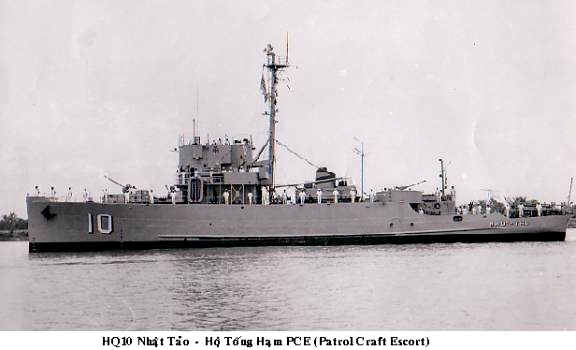
Hộ Tống hạm Nhật Tảo HQ 10

Toshi Yoshihara. Mùa Xuân 2016. Theo U.S. Naval War College

Trần H Sa lược dịch

(Xin lưu ý, các dử liệu về trận hải chiến Hoàng sa 1974 được tác giả nêu lên trong bài viết này đều dựa chủ yếu vào các tài liệu Trung quốc; tài liệu của phía VNCH không có, ngoại trừ một vài bài viết của các sĩ quan hải quân VNCH tham dự trận đánh được trình bày bằng Anh ngữ. Như tác giả đã cảnh giác “Hãy cẩn thận về phẩm chất của các nguồn tài liệu và phương pháp đang được đề cập……Do đó, những gì theo sau đó không phải là một quan điểm trung lập”. Cho nên, người dịch mạn phép được đánh dấu những nơi mà tài liệu TQ thiếu khách quan bằng dấu hỏi kèm mẫu tự, ví dụ (a?), mong người đọc hãy khách quan nhận xét lại theo quan điểm của mình; ngoài ra các ghi chú nguồn tài liệu được tác giả đánh dấu bằng các số thứ tự rải rác trong bài viết  xin theo dỏi trong bản gốc tiếng Anh ở link giới thiệu bên trên .) Tiếp tục đọc “The 1974 Paracels Sea Battle: A Campaign Appraisal – Trận Hải chiến Hoàng Sa 1974”

Lịch Sử Hội Thánh Tin Lành Việt Nam

giadinhmuoicuadat Thứ Năm, 1 tháng 3, 2012

Hội thánh Tin lành Việt Nam được hình thành đã gần một thế kỷ (1911-2006), không do một giáo phái nào truyền giáo, nhưng lại do một Hội Truyền Giáo thuần túy đặt nền tảng, đó là Hội Truyền gíao Phước âm Liên hiệp (The Christian and Missionary Alliance). Quá trình phát triển tuy chậm chạp – vì do có nhiều biến động trong xã hội – nhưng chắc chắn và vững mạnh. Do vậy, hiện nay tuy số tín đồ ít hơn so với các tôn giáo khác tại Việt Nam, nhưng Hội thánh Tin lành vẫn được kể là một trong những tôn giáo lớn.

Tài liệu này nhằm giúp các con cái Chúa có lòng yêu mến và muốn phục vụ Ngài, một cái nhìn khái quát về sự hình thành và phát triển của Hội thánh trong hơn 90 năm qua. Tiếp tục đọc “Lịch Sử Hội Thánh Tin Lành Việt Nam”

Lịch sử Giáo hội Công giáo Việt Nam

Đạo Thiên Chúa và Chủ nghĩa thực dân tại Việt Nam

, , Cao Huy Thuần


Luận án Tiến Sĩ Quốc Gia Khoa Học Chính Trị Đại Học Paris


Vietnam War in photos, Part III: Hands of a Nation

Part I: Early Years and Escalation
Part II: Losses and Withdrawal
Part III: Hands of a Nation

The Atlantic, Alan Taylor, Apr 1, 2015
26 Photos

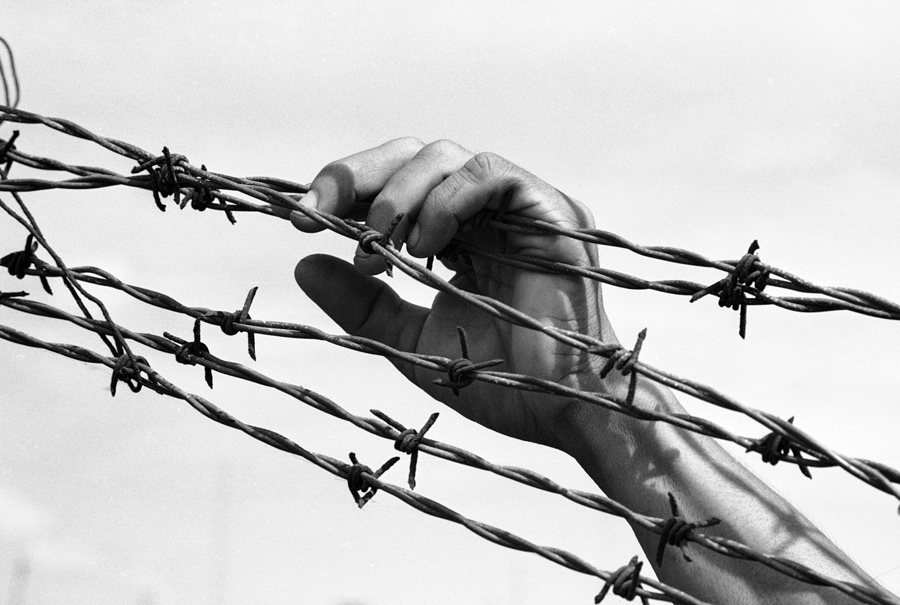
The photojournalist Eddie Adams, who covered the Vietnam War for the Associated Press, not only captured the action and chaos but took the time to get up close to the Vietnamese people whenever he could. In 1968, he undertook a project called “Hands of a Nation,” taking intimate photos of the hands of Vietnamese soldiers and civilians. Their hands were busy doing so many things then: reaching out for medicine, grasping weapons, straining against bindings, soothing, praying, rebuilding. Adams photographed hands young and old, belonging to the healthy and the wounded, the living and the dead.
Hints: View this page full screen.

Vietnam War in photos, Part II: Losses and Withdrawal

Part I: Early Years and Escalation
Part II: Losses and Withdrawal
Part III: Hands of a Nation

The Attlantic, Alan Taylor, Mar 31, 2015.
50 Photos

Early in 1968, North Vietnamese troops and the Viet Cong launched the largest battle of the Vietnam War, attacking more than 100 cities simultaneously with more than 80,000 fighters. After brief losses, U.S. and South Vietnamese forces regained lost territory, and dealt heavy losses to the North. Tactically, the offensive was a huge loss for the North, but it marked a significant turning point in public opinion and political support, leading to a drawdown of U.S. troop involvement, and eventual withdrawal in 1973. This photo essay, part two of a three-part series, covers the war years between 1968 and 1975.

Warning: Several of these photographs are graphic in nature.

Hints: View this page full screen.

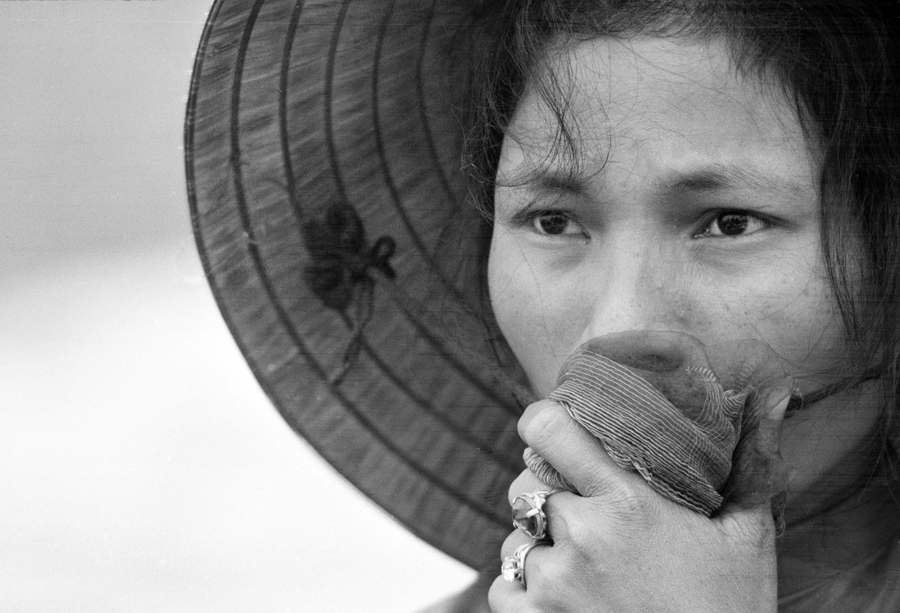
  • A young South Vietnamese woman covers her mouth as she stares into a mass grave where victims of a reported Viet Cong massacre were being exhumed near Dien Bai village, east of Hue, in April of 1969. The woman’s husband, father, and brother had been missing since the Tet Offensive, and were feared to be among those killed by Communist forces.

    Tiếp tục đọc “Vietnam War in photos, Part II: Losses and Withdrawal”

Vietnam War in photos, Part I: Early Years and Escalation

Part I: Early Years and Escalation
Part II: Losses and Withdrawal
Part III: Hands of a Nation

The Atlantic, Alan Taylor, Mar 30, 2015.
46 Photos

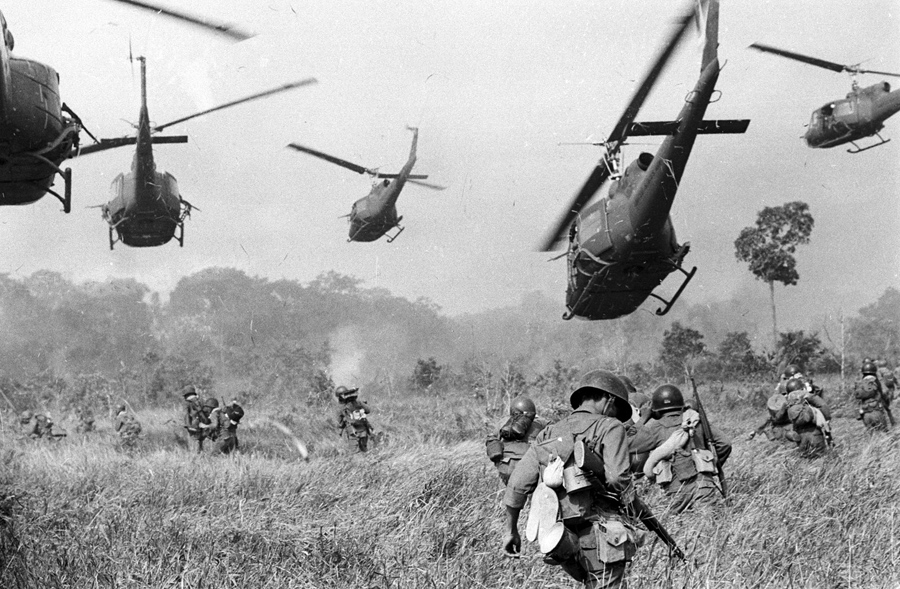
Fifty years ago, in March 1965, 3,500 U.S. Marines landed in South Vietnam. They were the first American combat troops on the ground in a conflict that had been building for decades. The communist government of North Vietnam (backed by the Soviet Union and China) was locked in a battle with South Vietnam (supported by the United States) in a Cold War proxy fight. The U.S. had been providing aid and advisors to the South since the 1950s, slowly escalating operations to include bombing runs and ground troops. By 1968, more than 500,000 U.S. troops were in the country, fighting alongside South Vietnamese soldiers as they faced both a conventional army and a guerrilla force in unforgiving terrain. Each side suffered and inflicted huge losses, with the civilian populace suffering horribly. Based on widely varying estimates, between 1.5 and 3.6 million people were killed in the war. This photo essay, part one of a three-part series, looks at the earlier stages of U.S. involvement in the Vietnam War, as well as the growing protest movement, between the years 1962 and 1967.

Warning: Several of these photographs are graphic in nature.

Hints: View this page full screen.

21 Iconic Photos of the Vietnam War

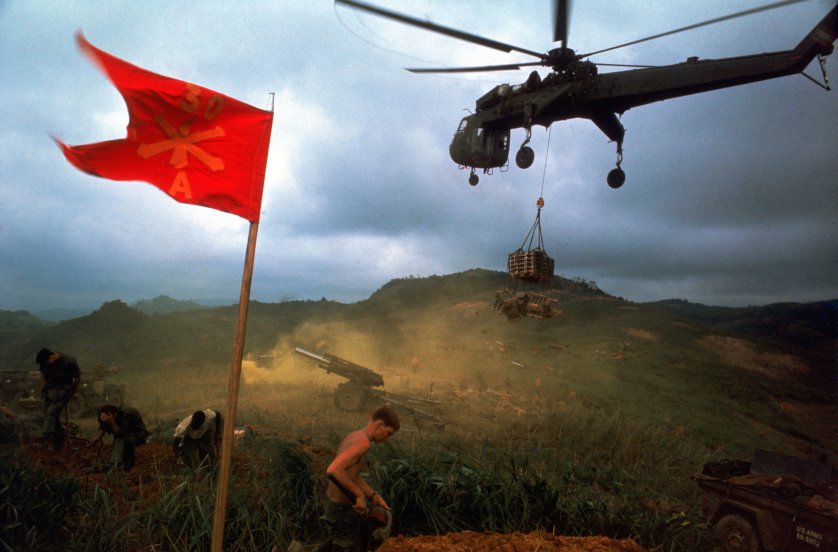
An American 1st Air Cavalry Skycrane helicopter, during Operation Pegasus in Vietnam in 1968, delivering ammunition and supplies into a US Marine outpost besieged by North Vietnamese troops at the forward base of Khe Sanh. (Larry Burrows—The LIFE Picture Collection/Getty Images).

HISTORY

See 21 Iconic Photos of the Vietnam War

TIME Photo
Apr 30, 2015

It has been 40 years since the spring day when the last U.S. helicopters lifted up and, shortly after, the North Vietnamese army entered Saigon, deciding a conflict that had raged for years. News photographs from the time showed the world what was going on, from a country full of death in all its gruesome forms to peaceful protests across the ocean. Despite their age, those images have not lost their impact. Tiếp tục đọc “21 Iconic Photos of the Vietnam War”

1965-1975 Another Vietnam: Unseen images of the war from the winning side

1972

Activists meet in the Nam Can forest, wearing masks to hide their identities from one another in case of capture and interrogation. From here in the mangrove swamps of the Mekong Delta, forwarding images to the North was difficult. “Sometimes the photos were lost or confiscated on the way,” said the photographer.

Image: Vo Anh Khanh/Another Vietnam/National Geographic Books

Tiếp tục đọc “1965-1975 Another Vietnam: Unseen images of the war from the winning side”

Thư mục Lịch sử Việt Nam


Thư mục Lịch Sử Việt Nam

***

  1. An Nam Chí Lược – Lê Tắc – Viện ĐH Huế
  2. Binh Thư Yếu Lược – Trần Hưng Đạo
  3. Đại Nam Liệt Truyện – Quốc Sử Quán triều Nguyễn
  4. Đại Nam Nhất Thống Chí – Quốc Sử Quán triều Duy Tân
  5. Đại Nam Thực Lục – Quốc Sử Quán triều Nguyễn
  6. Đại Việt Sử Ký Toàn Thư – Lê Văn Hưu, Phan Chu Tiên, Ngô Sĩ Liên
  7. Đại Việt Thông Sử  – Lê Quý Đôn
  8. Đại Việt Sử Lược – Khuyết Danh (Nguyễn Gia Tường dịch)
  9. Đông Kinh Nghĩa Thục – Nguyễn Hiến Lê
  10. Đồng Khánh, Khải Định Chính Yếu – Quốc Sử Quán triều Nguyễn
  11. Gia Định Thành Thông Chí – Trịnh Hoài Đức
  12. Hoàng Lê Nhất Thống Chí – Ngô gia văn phái
  13. Hoàng Việt Nhất Thống Dư Địa Chí – Lê Quang Định
  14. Khâm Định Việt Sử Thông Giám Cương Mục – Quốc Sử Quán Triều Nguyễn
  15. Lam Sơn Thực Lục – Nguyễn Trãi biên soạn – Lê Thái Tổ đề tựa
  16. Lịch Triều Hiến Chương Loại Chí – Phan Huy Ích
  17. Nam Hải Dị Nhân Liệt Truyện – Phan Kế Bính
  18. Phủ Biên Tạp Lục – Lê Quý Đôn
  19. Quốc Triều Chánh Biên Toát Yếu – Cao Xuân Dục
  20. Sài Gòn Năm Xưa – Vương Hồng Sển
  21. Sử ký Đại Nam Việt – Hội Tượng Ảnh Phép Lạ (1903)
  22. Sử liệu Phù Nam – Lê Hương, Nguyên Nhiều
  23. Việt Nam Sử Lược – Trần Trọng Kim
  24. Việt Sử Tiêu Án – Ngô Thời Sỹ
  25. Việt Sử Toàn Thư – Phạm Văn Sơn
  26. Việt Điện U Linh Tập – Lý Tế Xuyên
  27. Vietnam History Overall (with historical landmarks and relics)
  28. ________

  29. Thiền Uyển Tập Anh – Lê Mạnh Thát
  30. Tổng tập Văn học Phật giáo Việt Nam (3 tập) – Lê Mạnh Thát
  31. Việt Nam Phật Giáo Sử Luận – Nguyễn Lang
  32. Lược sử Gia đình Phật tử Việt Nam – Huỳnh Ái Tông
  33. Lịch sử Giáo hội Công giáo Việt Nam
  34. Đạo Thiên Chúa và Chủ nghĩa thực dân tại Việt Nam – Cao Huy Thuần
  35. Lịch sử Hội thánh Tin Lành Việt Nam
  36. Tìm hiểu và học đạo Cao Đài
  37. Đất nam kỳ – Tiền đề văn hóa mở đạo Cao Đài
  38. Phật giáo Hòa Hảo trong dòng lịch sử dân tộc
  39. _______

  40. Trang Web Dựng Nước – Giữ Nước – Lich sử Quân sử VN
  41. 1963 – 2013 Năm mươi năm nhìn lại [chế độ Ngô Đình Diệm]
  42. Foreign Relations of the United States, 1963, Vietnam – Hồ sơ mật VN 1963
  43. Một số hồ sơ CIA giải mật về cuộc chiến Việt Nam
  44. Vietnam: A Television History (PBS TV Channel – 1983)
  45. Battlefield Vietnam – Chiến trường VN (PBS TV Channel – 1994)
  46. The Vietnam War – Cuộc Chiến Việt Nam (Ken Burns and Lynn Novick, PBS 2017)
  47. Vietnam War in photos – The Atlantic
  48. 21 Iconic Photos of the Vietnam War – Time magazine
  49. Ideology in Urban South Vietnam 1950-1975 – PhD dissertaion
  50. 1965-1975 Another Vietnam: Unseen images of the war from the winning side
  51. Lịch sử kháng chiến chống Mỹ, cứu nước 1954 – 1975 – Viện Sử Học
  52. Đại Thắng Mùa Xuân – Văn Tiến Dũng
  53. Tổng Hành Dinh Trong Mùa Xuân Toàn Thắng – Võ Nguyên Giáp
  54. Hồ sơ mật Dinh Độc Lập – Nguyễn Tiến Hưng
  55. Khi Đồng Minh Tháo Chạy – Nguyễn Tiến Hưng
  56. Việt Nam 1945-1995 – Chiến tranh, Tị nạn và Bài học Lịch sử – Lê Xuân Khoa
  57. ________

  58. Dien Bien Phu – Vo Nguyen Giap – Foreign Language Publishing House
  59. Điện Biên Phủ – Võ Nguyên Giáp
  60. Cuộc chiến Điện Biên Phủ – Những hình ảnh chưa được biết tới
  61. Vo Nguyen Giap’ books
  62. ________

  63. Loạt bài về Chiến tranh biên giới Việt Trung 1979
  64. Loạt bài về cuộc chiến biên giới tây nam 1978 giải phóng Kampuchia
  65. The 1974 Paracels Sea Battle: A Campaign Appraisal – Trận Hải chiến Hoàng Sa 1974
  66. Hải chiến Trường Sa 1988
    i. Johnson South Reef Skirmish) – wikipedia
    ii. Hải chiến Gạc Ma – Cô Lin – Len Đao 1988 – wiki tiếng Việt
    iii. Chiến dịch CQ-88 – wiki quân sự tiếng Việt
  67. ________

  68. Nguyễn Thị Năm and the Land Reform in North Vietnam in 1953 – Alex-Thai D. Vo
  69. Cải cách ruộng đất tại miền Bắc Việt Nam – wikipedia tiếng Việt
  70. Nguyễn Thị Năm – wikipedia tiếng Việt
  71. ___

  72. Vụ Nhân Văn Giai Phẩm từ góc nhìn của Đại tá Công an – Lê Hoài Nguyên
  73. Phong trào Nhân Văn Giai Phẩm – wikipedia tiếng Việt
  74. ___

  75. The 1968 “Hue Massacre” – D. Gareth Porter
  76. Thảm sát Tết Mậu Thân – wikipedia tiếng Việt
  77. ___

  78. My Lai Massacre – Digital History
  79. My Lai webpage – University of Missouri
  80. Thảm sát Mỹ Lai – wikipedia tiếng Việt
  81. Tội ác của Quân đội Hoa Kỳ và đồng minh trong chiến tranh Việt Nam – wikipedia tiếng Việt
  82. ___

  83. Re-education in Unliberated Vietnam: Loneliness, Suffering and Death
  84. Học tập cải tao – wikipedia tiếng Việt
  85. 17 Năm trong các trại cải tạo – KALE
  86. ___

  87. Anthony Morreale: An Interview with Nguyên Ngọc
  88. Bên thắng cuộc – Huy Đức
    Quyển 1
    Quyển 2
  89. Việt Nam 1945-1995 – Chiến tranh, Tị nạn và Bài học Lịch sử (Lê Xuân Khoa)
  90. The last Confucians of Mid-20th Century Vietnam – Nguyễn Tuấn Cường
  91. First Indochina War – Ed. Oğuzhan Yılmaz
  92. ____

  93. Vương quốc Champa: Địa dư, Dân cư và Lịch sử – Pieørre-Bernard LAFONT – Hassan Poklaun dịch
  94. Lược sử nền văn minh Champa – Thanh Trà
  95. Ký sự Phong trào thanh niên Chăm tham gia Fulro vào 1968