Biến đổi khí hậu đe dọa sụp đổ tài chính toàn cầu

ENGLISH: Climate change threatens global financial crash

Các giám đốc ngân hàng có ảnh hưởng nhất thế giới cho biết một sự chuyển đổi trật tự từ nhiên liệu hóa thạch sang năng lượng tái tạo là cần thiết để tránh tình trạng hỗn loạn trên thị trường chứng khoán thế giới.

Climate change threatens global financial crash

Mark Carney, Chủ tịch Ủy ban ổn định tài chính các nước G20 đã đưa ra một cảnh báo rằng biến đổi khí hậu có thể làm cho thị trường chứng khoán thế giới và các ngân hàng không ổn định, dẫn tới một sự sụp đổ tài chính.

Carney, cũng chính là Thống đốc Ngân hàng Anh, đặc biệt cảnh báo về những ảnh hưởng lên thị trường nếu xảy ra bán tháo và có một sụt giảm giá trị cổ phần trong những công ty nhiên liệu hóa thạch và các ngành công nghiệp tạo ra rất nhiều carbon dioxide. Tiếp tục đọc “Biến đổi khí hậu đe dọa sụp đổ tài chính toàn cầu”

Viet Nam special report on managing the risks of extreme events and disasters to advance climate change adaptation

Viet Nam special report on managing the risks of extreme events and disasters to advance climate change adaptation

1 2 3 4 5

02 Feb 2015

image

Viet Nam is one of the countries most affected by natural disasters and climate change. Storms and floods are the most frequent and severe natural disasters affecting Viet Nam. Viet Nam is suffering 6 to 7 typhoons every year, on average. Between 1990 and 2010, 74 floods have occurred in the river systems of Viet Nam. Severe drought, saline water intrusion, landslides and other natural disasters are hindering the development of Viet Nam. Extreme disasters are more frequent in recent years, causing more damage to people and impacting significantly on the economy.

The report assesses extreme events and their impact on the natural environment, social economic development and sustainable development of Viet Nam; the future changes in extreme climate events due to climate change; interactions between climatic, environmental and human factors; and promote adaptation to climate change and management of risks of disaster and extreme events in Viet Nam.

Làm gì giàu nhanh ở vùng nhiễm mặn? 

27/08/2015 10:32 GMT+7

TT – Với mô hình lúa – tôm, nuôi cá chình và cá bống tượng, nhiều nông dân tại các vùng quanh năm bị nhiễm mặn ở ĐBSCL thắng lớn…

Nhân viên trại cá chình giống Hoàng Thông kiểm tra cá giống được ươm trong bể ximăng - Ảnh: TÙNG LÂM
Nhân viên trại cá chình giống Hoàng Thông kiểm tra cá giống được ươm trong bể ximăng – Ảnh: TÙNG LÂM

Với mô hình lúa – tôm, nuôi cá chình và cá bống tượng – hai loại cá sống tốt trong môi trường nước mặn, nhiều nông dân tại các vùng quanh năm bị nhiễm mặn ở ĐBSCL không những giữ được nghề trồng lúa mà còn làm giàu trên chính mảnh ruộng của mình.

Bộ NN&PTNT xác định đây chính là những mô hình chiến lược, bền vững tại vùng ĐBSCL trong tương lai gần, vừa đảm bảo an ninh lương thực vừa giúp nông dân sống tốt với nghề trồng lúa. Tiếp tục đọc “Làm gì giàu nhanh ở vùng nhiễm mặn? “

Chơi vơi trước biển – 3 kỳ

TPBãi bồi ven biển, cồn cát, kênh mương ăn thông ra biển thành cụm dân cư cơ cực, bêu mạng sống với sóng biển, với rắn độc ven rừng. Đất chật, người đông, người dân từ đất liền kiếm sống lấn dần về phía biển, rồi dừng chân, dựng lều, cất chòi thành xóm làng heo hút ven rừng phòng hộ, chơi vơi trước biển mênh mông.

Người dân Cồn Nhàn, ấp Mù U, xã Dân Thành (Duyên Hải, Trà Vinh) trước bờ biển bị xói lở. Ảnh: Hòa Hội.

Người dân Cồn Nhàn, ấp Mù U, xã Dân Thành (Duyên Hải, Trà Vinh) trước bờ biển bị xói lở. Ảnh: Hòa Hội. Tiếp tục đọc “Chơi vơi trước biển – 3 kỳ”

Miền Tây điêu đứng vì biến đổi khí hậu – 4 kỳ

27/07/2015 14:56 GMT+7

TT – Biến đổi khí hậu đang có những tác động mạnh mẽ đến ĐBSCL: nước nhiễm mặn bất thường trong mùa mưa, thiếu nước ngọt trầm trọng, nhiều vùng đất bị nước “ngoạm”, cá tôm không còn nữa…

Kỳ 1: Mặn tấn công, trở tay không kịp

Nước nhiễm mặn cùng với nhiễm phèn kết lại từng mảng lớn trên mặt ruộng khiến lúa chết ở phường Vĩnh Thông, Rạch Giá, Kiên Giang - Ảnh: Hữu Khoa
Nước nhiễm mặn cùng với nhiễm phèn kết lại từng mảng lớn trên mặt ruộng khiến lúa chết ở phường Vĩnh Thông, Rạch Giá, Kiên Giang – Ảnh: Hữu Khoa

Những thay đổi chưa từng có trong lịch sử miền Tây từng được các nhà khoa học cảnh báo và bây giờ xảy ra làm người dân điêu đứng.

Những ngày cuối tháng 7 này, dù đã vào mùa mưa nhưng ở nhiều vùng ngọt hóa tại ĐBSCL bất ngờ bị nước mặn tấn công, đẩy cuộc sống nhiều hộ dân nơi đây vào thế trở tay không kịp. Tiếp tục đọc “Miền Tây điêu đứng vì biến đổi khí hậu – 4 kỳ”

Inside China’s shift to a low-carbon economy

Monday, July 27, 2015 – 2:00am

Monday, July 27, 2015 – 2:00am

Greenbiz – China’s announcement of how it plans to reduce its greenhouse gas (GHG) emissions represents the clearest signal to date that a major structural shift away from carbon-intensive development is underway in the world’s second-largest economy.

The direction outlined by the Chinese government — to peak the country’s carbon-dioxide emissions around 2030 or likely earlier — is ground-breaking, both in the scale of proposed emissions reductions, and when viewed within the wider trend of substantial GHG reductions pledged by major economies. Tiếp tục đọc “Inside China’s shift to a low-carbon economy”

Economic benefits from climate change mitigation far outweigh the costs

Global-net – The paper published by the Grantham Research Institute on Climate Change and the Environment and ESRC Centre for Climate Change Economics and Policy at London School of Economics and Political Science suggests that individual countries have large incentives to make ambitious reductions in greenhouse gas emissions and to agree to strong collective action at the United Nations climate change conference in Paris in December.

The author of the paper, Fergus Green, says the vast majority of emissions cuts needed to decarbonize the global economy this century can lead to domestic economic benefits that outweigh the costs for individual countries, even before the avoided risks of dangerous climate change are taken into account.

Self Interest Pays

“All things considered, I conclude that there is a very strong case that most of the mitigation action needed to stay within the internationally-agreed 2°C limit is likely to be nationally net-beneficial,” he writes.

Domestic economic gains from action to tackle climate change include improved air quality, increased energy efficiency, and clean technology innovation ‘spillovers’.
Tiếp tục đọc “Economic benefits from climate change mitigation far outweigh the costs”

Japan’s Long-term Energy Plan Shoots for Ultimate Balance in Economics, Environment and Safety

July 9, 2015

What is 3E + S? It is neither a mathematics problem nor chemical equation. It is Japan’s latest long-term energy plan, which was released by Japan’s Ministry of Economy, Trade and Industry (METI) on June 1stf for review. The draft plan aims to establish an optimum energy mix by the year 2030.

The three Es stand for the first letters in Energy Security, Economic Efficiency and Environment and the letter S stands for Safety. Safety is crucial to the energy plan in the wake of the world’s worst nuclear disaster since Chernobyl when the devastating tsunami and earthquake hit northeast Japan in 2011. Since the disasters, Japan’s electricity generation mix has drastically changed. Tiếp tục đọc “Japan’s Long-term Energy Plan Shoots for Ultimate Balance in Economics, Environment and Safety”

The emerging renewable financing landscape

Green bonds – and a newer, flashier financing vehicle called the yieldco – are generating considerable buzz in the renewable energy sector. In Asia, it’s early days but experts say it’s a matter of time before these financing options become widely available for infrastructure owners and investors.

With more companies, funds and endowments planning to divest from fossil fuels, the role of renewables as a key energy source has never been more important.According to the United Nations Environment Programme (UNEP), in 2014, more than US$270 billion was invested in green energy projects and infrastructure, mainly in solar and wind energy. In June, the US$900 billion Norwegian Government Pension fund, one of the largest in the world, announced that it would begin selling its coal assets which are worth about US$8 billion. Tiếp tục đọc “The emerging renewable financing landscape”

Why we need to rethink ‘maladaptation’

By Lindsey Jones 29 June 2015


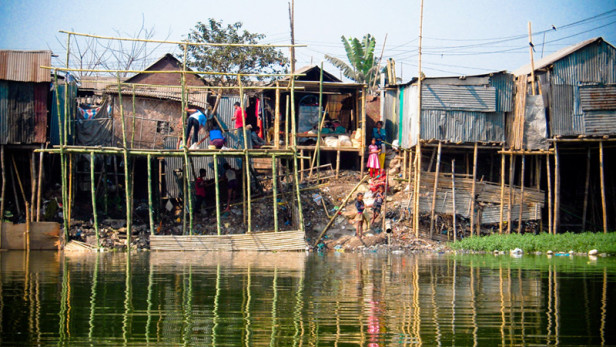
Urban poor communities built stilt houses in Dhaka, Bangladesh, to cope with flooding brought about by climate change. There is concern that actions taken to respond to climate change may end up increasing people’s vulnerability now or in the future. Photo by: Development Planning Unit / University College London / CC BY

Devex – “Maladaptation” is a hot topic in the climate change community. With increasing global attention and finance being poured into adaptation, people are understandably concerned that actions taken to respond to climate change may end up increasing people’s vulnerability now or in the future.

But what does maladaptation actually look like? One example comes from Ho Chi Minh City, Vietnam, where city planners drew up and started to implement many infrastructure projects to help mitigate the risk of flooding. The design of these infrastructural investments was based on the best information and predictions of future climate and development trends available at the time. Tiếp tục đọc “Why we need to rethink ‘maladaptation’”

Germany Gives Dirtiest Coal Plants Six Years for Phase Out

July 2, 2015 — 9:24 AM BST Updated on July 2, 2015 — 3:03 PM BST
A Coal-Fired Power Plant
A coal-fired power plant in Janschwalde, Germany. The government’s coal plans would mean immediate closures of lignite mines and power stations, RWE AG Chief Executive Officer Peter Terium told shareholders on April 23. Photographer: Krisztian Bocsi/Bloomberg

Bloomberg – Germany’s main political parties worked out a compromise plan to cut power-industry pollution by handing a six-year lifeline to some of the dirtiest coal-fired plants. Tiếp tục đọc “Germany Gives Dirtiest Coal Plants Six Years for Phase Out”

Thai Solar Energy Plans 300 MW Solar PV Capacity In Japan

July 2nd, 2015 by

Cleantechnica– Global interest in Japan’s renewable energy sector, specifically the solar power market, continues to strengthen with a major developer from Thailand looking to boost its footprint in the land of the rising sun.

Thai Solar Energy has announced that it will set up 300 MW worth of solar power capacity in Japan over the next 3 years. The company will start with the implementation of a 25 MW solar power plant, then expand the installed capacity to 100 MW by the end of 2016, which will eventually be increased to 300 MW.

Thai Solar Energy claims to be “the first company in Southeast Asia to have effectively applied solar energy commercially.” The company is moving into Japan as the government policies support development of renewable energy projects and a large number of solar power projects are already under construction. Tiếp tục đọc “Thai Solar Energy Plans 300 MW Solar PV Capacity In Japan”

The End of Coal: Ontario’s coal phase-out

Melissa Harris, Marisa Beck, Ivetta Gerasimchuk

IISD – Ontario has successfully implemented its policy to put an end to coal use in 2014. This energy transition has become “the single largest GHG reduction measure in North America”: since 2007, when coal accounted for about 25 per cent of its electricity generation, Ontario has reduced its greenhouse gas emissions by approximately 34 Mt or 17 per cent.

What lessons can be learned from Ontario’s coal phase-out experience? How can its success be replicated in other parts of the globe? This paper explores this question for all those around the world who may draw inspiration and lessons learned from Ontario: policy-makers, campaigners, entrepreneurs and others interested in transitioning to a low-carbon future.

We rely on the concept of the “window of opportunity” and suggest that all elements critical to a sustainable energy transition can be clustered within the four “panes” of this “window”: context, champions, concerns and complementary policies. These “panes” provide the basis for the structure of this paper. This analysis has been informed by a comprehensive review of existing literature and semi-structured interviews with high-level experts from Canadian political and academic circles, industry and civil society.


Năm 2015: Việt Nam ‘đi ngược’ thế giới

Tuanvietnam – Từ nước xuất khẩu, từ năm 2015 VN phải nhập khẩu than. Thế giới chuyển sang phát triển năng lượng tái tạo, từ bỏ nhiệt điện than, điện nguyên tử, thì VN lại thúc đẩy.

Phần 1: Luật cũng không ngờ sự ‘táo bạo’ của con người
Phần 2: Không thể lấy tiền thuế dân đền quyết sách sai

Tuần Việt Nam giới thiệu phần cuối toạ đàm: “Tận thu tài nguyên đất nước” cùng ông Đào Trọng Tứ, GĐ Trung tâm Phát triển bền vững Tài nguyên nước và thích nghi biến đổi khí hậu; bà Ngụy Thị Khanh, GĐTrung tâm Sáng tạo Phát triển xanh Green ID và ông Nguyễn Minh Thuyết, nguyên là ĐBQH khoá XI, XII.

Play Tiếp tục đọc “Năm 2015: Việt Nam ‘đi ngược’ thế giới”

HẠN HÁN: Không còn là vấn đề của riêng ngành nông nghiệp 

24/06/2015 13:22 GMT+7

TTCT Cho đến nay, cả ba hình thái hạn nông nghiệp, hạn khí tượng thủy văn và hạn kinh tế – xã hội đều đã hiện diện tại Việt Nam.

 			Suy giảm lượng mưa đầu mùa (15-5 - 15-6) thập niên 2030 so với thập niên 1980 (biểu đồ do tác giả lập)
Suy giảm lượng mưa đầu mùa (15-5 – 15-6) thập niên 2030 so với thập niên 1980 (biểu đồ do tác giả lập)

Việt Nam đã chịu đựng những thiệt hại đáng kể về kinh tế – xã hội trong các thập kỷ qua do hạn hán. Các trận hạn hán lớn trong những năm 1997 và 2002 đã ảnh hưởng trực tiếp tới khoảng 3 triệu người (1997) và 1,3 triệu người (2002), gây thiệt hại kinh tế lần lượt là 407 triệu đôla Mỹ và 200 triệu đôla Mỹ (UNISDR và Ngân hàng Thế giới, 2010).

Suốt hơn 10 năm qua, ở khu vực miền Trung, Tây nguyên, vùng Đông Nam bộ chưa có lúc nào người dân phải hứng chịu những đợt khô hạn và nắng nóng nặng như năm nay. Tiếp tục đọc “HẠN HÁN: Không còn là vấn đề của riêng ngành nông nghiệp “