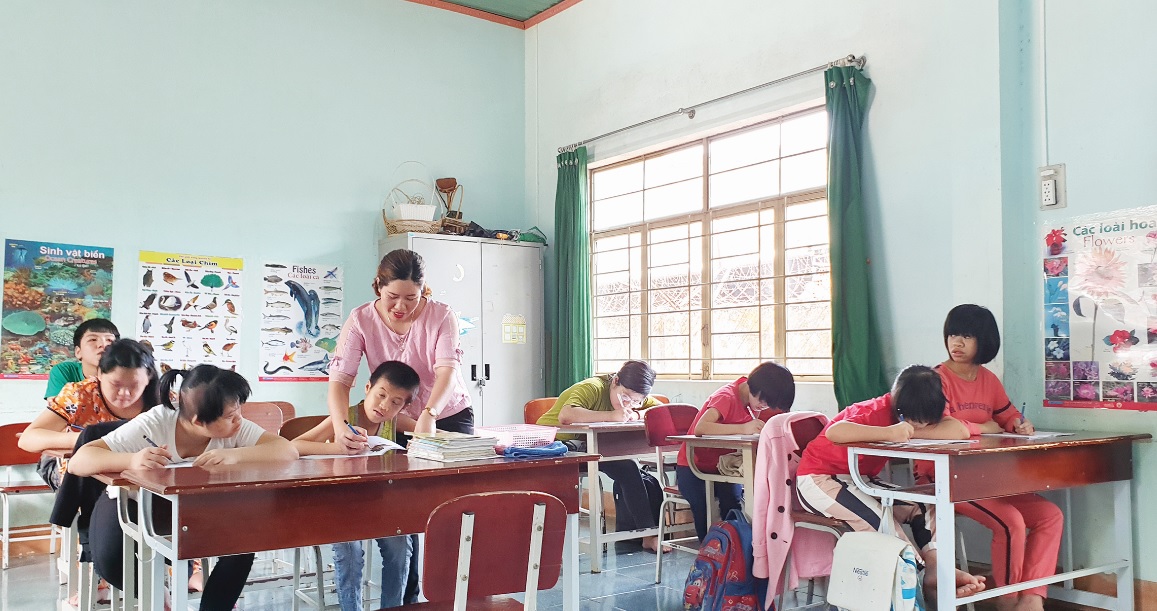
Chiến tranh đã lùi xa, nhưng nỗi đau vẫn còn hiện hữu đến tận bây giờ trên những thân thể mang di chứng của chiến tranh. Tại Hội nạn nhân chất độc da cam Dioxin tỉnh Gia Lai đang có những con người hằng ngày vẫn âm thầm xoa dịu nỗi đau, di chứng chiến tranh để lại. Những hành động tưởng chừng như bình dị nhưng mang ý nghĩa hết sức cao cả.
Cô giáo H’Khuin dạy học cho học sinh là nạn nhân của di chứng chất độc da cam.
Tokyo (VNA) – A Japanese researcher has just announced a project on training Vietnamese health workers in addressing problems related to Agent Orange (AO)/dioxin chemical that was sprayed on the country during the war.
Japan’s national broadcasting organization NHK quoted Professor Kido Teruhiko from the Kanazawa University and officials from the Japan International Cooperation Agency as saying the project will last for three years in the Vietnamese central province of Binh Dinh’s Phu Cat district. Tiếp tục đọc “Japanese researcher helps Vietnam tackle AO/dioxin-related health issues”→
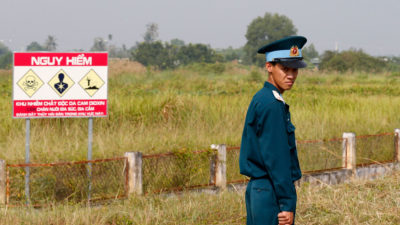
A Vietnamese soldier next to a hazardous warning sign for dioxin contamination at Bien Hoa air base last October.KHAM/AFP/GETTY IMAGES
From 1962 to 1971, the American military sprayed vast areas of Vietnam with Agent Orange, leaving dioxin contamination that has severely affected the health of three generations of Vietnamese. Now, the U.S. and Vietnamese governments have joined together in a massive cleanup project.
In the thriving industrial city of Bien Hoa, about 20 miles east of Ho Chi Minh City, the former Saigon, there is a large air base, just beyond a sweeping bend in the Dong Nai River. During the American war in Vietnam, it was said to be the busiest airport in the world. Since the war ended in 1975, a dense cluster of four residential neighborhoods has grown up around the base. Their total population is perhaps 111,000, while the base itself, now home to advanced long-range fighter-bombers of the Vietnam People’s Air Force, has another 1,200 permanent residents. Tiếp tục đọc “Fifty Years After, A Daunting Cleanup of Vietnam’s Toxic Legacy”→
On a mild, sunny morning last November, Chuck Searcy and I drove out along a spur of the old Ho Chi Minh Trail to the former Marine base at Khe Sanh, which sits in a bowl of green mountains and coffee plantations in Vietnam’s Quang Tri province, hard on the border with Laos. The seventy-seven-day siege of Khe Sanh in early 1968, coinciding with the Tet Offensive, was the longest battle of what Vietnamese call the American War and a pivotal event in the conflict. By the off-kilter logic of Saigon and Washington, unleashing enough technology and firepower to produce a ten-to-one kill ratio was a metric of success, but the televised carnage of 1968, in which 16,592 Americans died, was too much for audiences back home. After Tet and Khe Sanh, the war was no longer America’s to win, only to avoid losing. Tiếp tục đọc “The Lethal Legacy of the Vietnam War”→
FILE – The cleaning operation of the area that was used for storing Agent Orange is seen from a plane taking off from Danang international airport.
TAIPEI — Vietnam is demanding compensation from manufacturers of Agent Orange in what experts describe as a last resort for helping citizens who still fall sick or face disabilities linked to the defoliant the United States used during war in the country five decades ago.
United States and Vietnam Complete Environmental Remediation at Danang Airport. Nguyen Thac Phuong/USAID
ĐÀ NẴNG, 7/11/2018 – Hôm nay, Đại sứ Hoa Kỳ tại Việt Nam Daniel J. Kritenbrink và Thứ trưởng Bộ Quốc phòng Việt Nam Nguyễn Chí Vịnh chứng kiến lễ ký thỏa thuận bàn giao 13,7 ha đất sạch đã xử lý tại Sân bay Quốc tế Đà Nẵng cho Bộ Giao thông Vận tải quản lý. Đây là phần đất bàn giao đợt ba và cũng là phần đất cuối cùng được bàn giao để phục vụ cho việc mở rộng Sân bay Đà Nẵng. Buổi lễ cũng đánh dấu việc hoàn thành Dự án Xử lý Môi trường Ô nhiễm Dioxin tại Sân bay Đà Nẵng kéo dài 6 năm với kinh phí 110 triệu đô la do Cơ quan Phát triển Quốc tế Hoa Kỳ (USAID) và Bộ Quốc phòng Việt Nam phối hợp thực hiện. Tiếp tục đọc “Việt Nam và Hoa Kỳ hoàn thành Dự án Xử lý Môi trường tại Sân bay Đà Nẵng”→
(Reuters) – A California jury on Friday found Monsanto liable in a lawsuit filed by a man who alleged the company’s glyphosate-based weed-killers, including Roundup, caused his cancer and ordered the company to pay $289 million in damages.
FILE PHOTO: Monsanto Co’s Roundup is shown for sale in Encinitas, California, U.S., June 26, 2017. REUTERS/Mike Blake/File Photo
The case of school groundskeeper Dewayne Johnson was the first lawsuit to go to trial alleging glyphosate causes cancer. Monsanto, a unit of Bayer AG following a $62.5 billion acquisition by the German conglomerate, faces more than 5,000 similar lawsuits across the United States.
The jury at San Francisco’s Superior Court of California deliberated for three days before finding that Monsanto had failed to warn Johnson and other consumers of the cancer risks posed by its weed killers.
SPONSORED
It awarded $39 million in compensatory and $250 million in punitive damages.
Monsanto in a statement said it would appeal the verdict. “Today’s decision does not change the fact that more than 800 scientific studies and reviews…support the fact that glyphosate does not cause cancer, and did not cause Mr. Johnson’s cancer,” the company said.
(Guest expert article by Charles R. Bailey) As we mark Earth Day this Sunday, we remember the first Earth Day in 1970. That year saw another landmark event: President Nixon brought to an end to the spraying of Agent Orange in Vietnam. That spraying had gone on for a decade. Its aim was to defoliate forests and destroy food crops in order to deny cover and sustenance to opposition forces. The Agent Orange and some of the other herbicides were contaminated with dioxin, a highly toxic substance.
The legacy of Agent Orange/dioxin continues to impact our veterans and the Vietnamese. Since 1991, scientists at the United States Institute of Medicine have shown dioxin to be a risk factor in a growing number of illnesses and birth defects, and their research is corroborated by the work of Vietnamese scientists. Tiếp tục đọc “Remembering Agent Orange this Earth Day”→
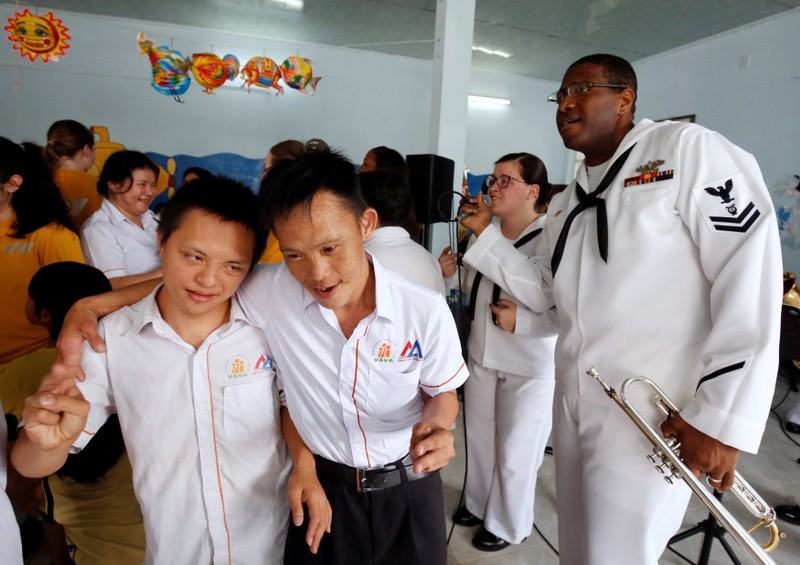
U.S. sailors perform with victims of Agent Orange at a hospice, as part of the U.S aircraft carrier USS Carl Vinson visit in Danang, Vietnam March 7, 2018. REUTERS/Kham
TTO – Cùng thời điểm sự kiện tàu sân bay Mỹ USS Carl Vinson đến Đà Nẵng, một cựu binh Mỹ lặng lẽ sắp xếp cho một nhóm 40 cựu binh Mỹ đi dọc Việt Nam 17 ngày để tìm hiểu về chất độc da cam và bom mìn còn sót lại.
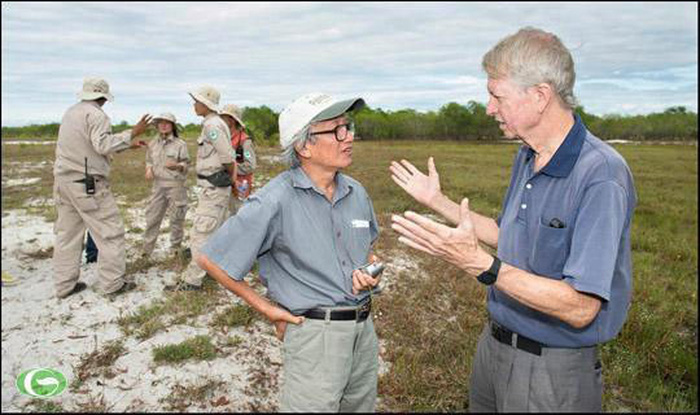
Chuck Searcy trò chuyện với các chuyên gia rà phá bom mìn người Việt ở Quảng Trị – Ảnh: NVCC
“Chuyến thăm không phải để ôn lại những ký ức đau thương mà là hàn gắn lại những vết thương chưa lành” – Chuck Searcy, một cựu binh Mỹ 73 tuổi, nói.
Bien Hoa Airport is the largest remaining dioxin hotspot in Vietnam.
Vietnam and the U.S. have kickstarted the process of cleaning up the dioxin around Bien Hoa Airport, a heavily contaminated zone just outside Ho Chi Minh City.
The process formally began on Tuesday with the signing of a Memorandum of Intent between the United States Agency for International Development (USAID) and the Military Science Department under Vietnam’s Ministry of Defense.
Monsanto đang bành chướng ở Việt Nam nơi họ đã góp phần tàn phá.
Hình 1: Một người lính Việt Nam bảo vệ khu vực bị nhiễm độc ở rìa sân bay Đà Nẵng ngày 1 tháng 7 năm 2009 tại Đà Nẵng, miền Trung Việt Nam. Trong chiến tranh Việt Nam, quân đội Mỹ đã tàng trữ hơn 4 triệu gallon thuốc diệt cỏ, trong đó có chất độc da cam tại căn cứ quân sự mà hiện nay là căn cứ không quân nội địa và quân sự.
A Vietnamese soldier guards the contaminated site at the edge of the Da Nang Airfield on July 1, 2009 in Da Nang, Central Vietnam. During the Vietnam War, the U.S. military stored more than four million of gallons of herbicides, including Agent Orange, at the military base that is now a domestic and military airbase.
HO CHI MINH CITY, Vietnam ― Fifty-five years ago this month, the U.S. Army began spraying millions of gallons of the toxic defoliant known as Agent Orange over large swaths of southern Vietnam. Today, however, instead of resentment and isolation from the U.S., the country is awash with Americanophilia. Tiếp tục đọc “55 Years After Agent Orange Was Used In Vietnam, One Of Its Creators Is Thriving Here”→
VietNamNet Bridge – Under the hot noon sun, more than 20 women at Nguyen Thi Thu Ha’s sewing workshop seem oblivious of the sweat pouring down their faces as they work at their sewing machines.
Nguyen Thi Thu Ha (right) guides a worker on how to sew a bag. — Photo hanoimoi.com.vn
The seamstresses in Thach That Commune of the capital’s Quoc Oai District are not like most garment sector workers in Viet Nam. At least half are women with disabilities.
Ha, their boss, is too. Her father was a victim of Agent Orange and she suffers some enduring side effects of the toxic herbicide sprayed by American forces in Viet Nam. In addition to her sewing work she heads up the Club of Women with Disabilities in Quoc Oai District. Tiếp tục đọc “The seamstress who patches up lives”→
Trinh Tran Nam Dat spends his daily life on a bamboo mat in the middle of his home.
Emaciated body, urinating and defecating onto the floor…
His father, Trinh Nam Khoa stays by him all day and night, not thinking of leaving him for a while for tens of years now. He himself is not well enough to work.
Dat’s grandfather was a former soldier. He died of cancer in 1998. His parents had no idea of Agent Orange until Dat was diagnosed cerebral palsy.
The faith of the children in AO victim families has been decided 56 years ago. However, until now there has not been any specific policy designated for the third generation victims.
Between 1961-1971, US troops sprayed some 80 million liters of defoliants over southern Vietnam, 44 million liters of which were Agent Orange. The later contained a total of nearly 370 kilograms of dioxin, the most poisonous toxin people have ever known. As many as 4.8 million Vietnamese people are exposed to AO/dioxin, of whom over 3 million are victims and hundreds of thousands of children are in the third and fourth generations. The agony lasts from generations to generations, bringing along the silent pain.
The move of the Ministry of Labour, Invalids and Social Affairs is imperative to pay tribute to generations of people who devoted themselves for the independence of the nation.


 A Vietnamese soldier next to a hazardous warning sign for dioxin contamination at Bien Hoa air base last October.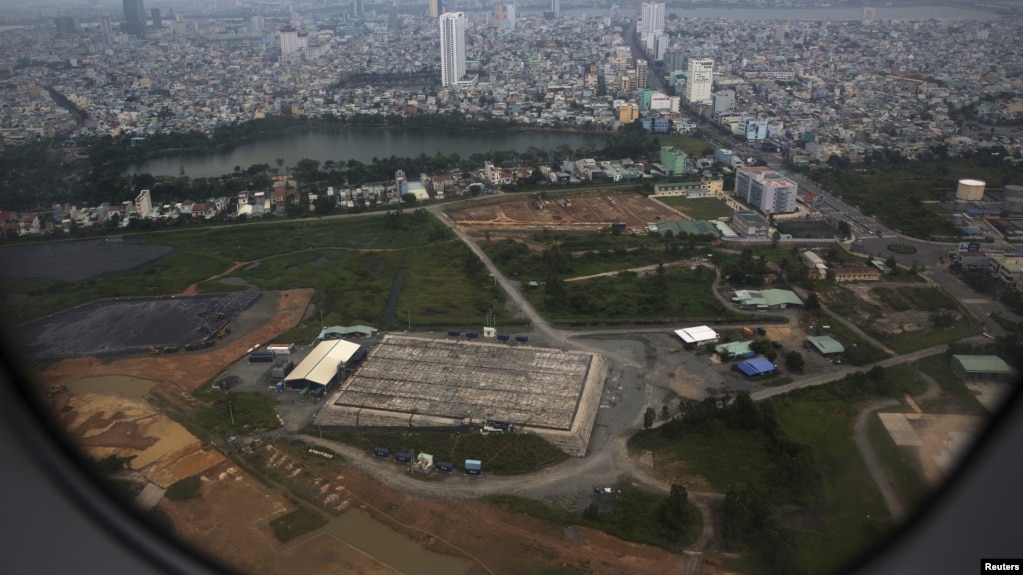


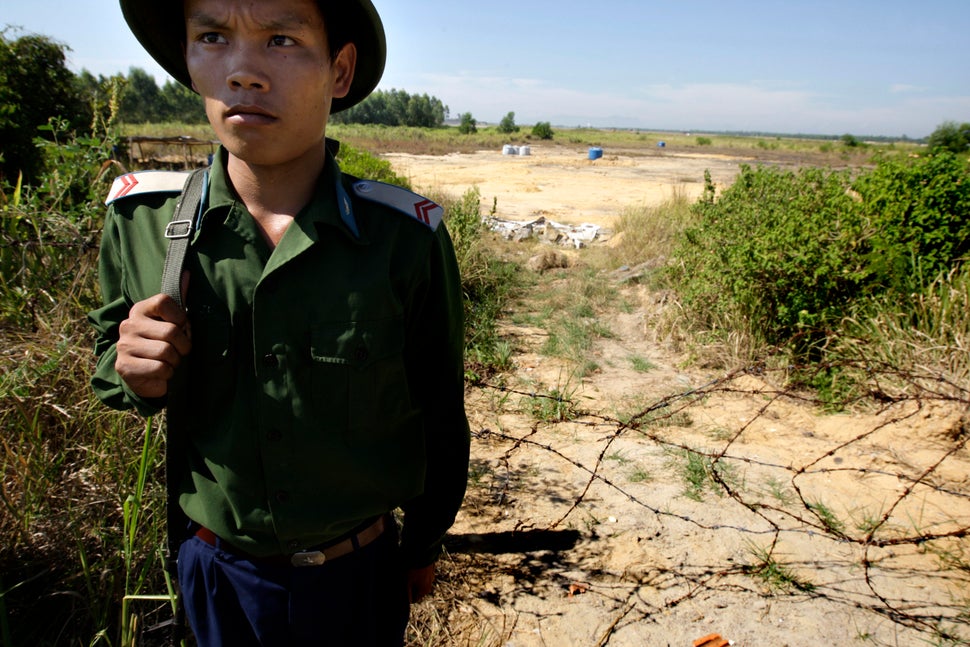 Hình 1: Một người lính Việt Nam bảo vệ khu vực bị nhiễm độc ở rìa sân bay Đà Nẵng ngày 1 tháng 7 năm 2009 tại Đà Nẵng, miền Trung Việt Nam. Trong chiến tranh Việt Nam, quân đội Mỹ đã tàng trữ hơn 4 triệu gallon thuốc diệt cỏ, trong đó có chất độc da cam tại căn cứ quân sự mà hiện nay là căn cứ không quân nội địa và quân sự.
 CVD
CVD 