Will Vietnam’s communist princelings deliver?

13 November 2015
Author: Hai Hong Nguyen, University of Queensland
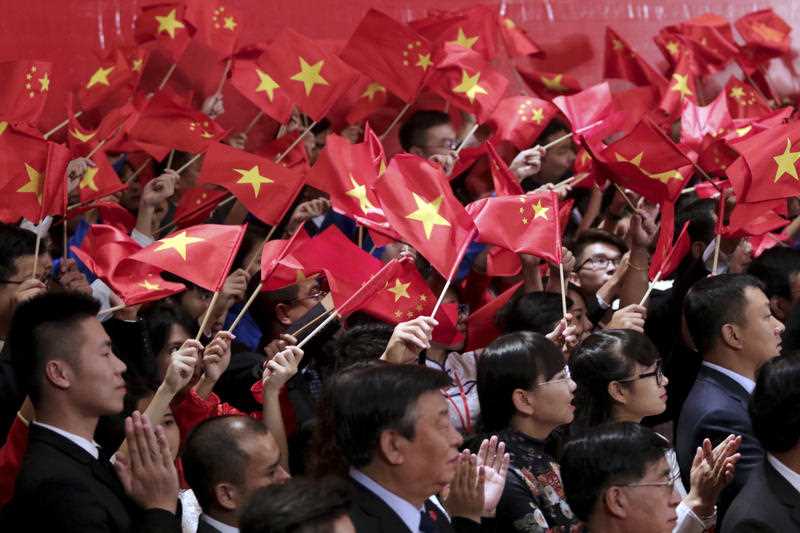
eastasiaforum – The Vietnamese Communist Party (VCP) is preparing a new slate of leaders to replace the old guard who are retiring at the 12th National Congress in 2016. Public attention has been drawn to the rise of young ‘princelings’ — the children of current or former leaders in communist authoritarian regimes like Vietnam and China — to local executive positions and bodies. Vietnamese and Chinese communist youths wave flags to welcome Chinese President Xi Jinping and Vietnamese Communist Party General Secretary Nguyen Phu Trong at a meeting in Hanoi, Vietnam, Friday, Nov. 6, 2015. (Photo: AAP)The ability of these princelings to deliver on a broad range of governance issues, beyond just high levels of economic growth, will determine the durability of the current regime. Tiếp tục đọc “Will Vietnam’s communist princelings deliver?” →

Tại sao hội nhập ASEAN lại qua con đường kinh tế

NCBĐ – Thứ năm, 05 Tháng 11 2015 16:16

Các nước ASEAN tập trung vào hội nhập về kinh tế bởi sự hội nhập về chính trị là điều “không tưởng” ở khu vực này do có những khác biệt lớn về các ý niệm cơ bản như quyền lực, bộ máy lãnh đạo, vai trò của nhân dân.

Trong khi chỉ với chưa đầy 20 tháng nữa là tròn nửa thế kỉ thành lập và phát triển, ASEAN sẽ chính thức trở thành một cộng đồng vào ngày 31/12 tới. Sự hội nhập này về cơ bản đang và sẽ tiếp tục được triển khai trong lĩnh vực kinh tế. ASEAN có tham vọng và chủ động trong việc tạo ra một thị trường và cơ sở sản xuất chung. Tiếp tục đọc “Tại sao hội nhập ASEAN lại qua con đường kinh tế” →

Quyền tham gia quản lý Nhà nước của công dân trong Hiến pháp các nước Đông Nam Á

VKHPL – Quyền tham gia quản lý Nhà nước là một trong những quyền chính trị quan trọng được ghi nhận từ lâu trên thế giới. Có nhiều quan niệm và cách hiểu khác nhau về quyền chính trị và hiện nay cũng chưa có định nghĩa hay giải thích chính thức trong một văn kiện quốc tế về khái niệm quyền chính trị.

Trong Công ước quốc tế về các quyền dân sự, chính trị năm 1966 (ICCPR) không đưa ra khái niệm mà chỉ liệt kê một loạt các quyền và tự do cơ bản của con người trên cả hai lĩnh vực là dân sự và chính trị. Mặc dù vậy, các quyền chính trị có thể được hiểu một cách đơn giản là các quyền của cá nhân được tham gia một cách trực tiếp và gián tiếp vào công việc của nhà n­ước và xã hội, bao gồm cả việc thành lập và quản lý nhà nước (Chính phủ). Tiếp tục đọc “Quyền tham gia quản lý Nhà nước của công dân trong Hiến pháp các nước Đông Nam Á” →

Người đồng tính, song tính và chuyển giới tại Việt Nam – Những vấn đề đặt ra trong lĩnh vực hành chính, hình sự và tố tụng hình sự


Bài viết đề cập đến một số vấn đề phát sinh trong lĩnh vực hành chính, hình sự liên quan đến người LGBT Việt Nam

VKHPL – Người đồng tính, song tính và chuyển giới* (sau đây gọi tắt là LGBT[i]) là một trong những vấn đề được quan tâm tại Việt Nam thời gian gần đây. Cũng như nhiều nước trên thế giới, việc thống kê số lượng người LGBT trong xã hội Việt Nam là điều không dễ dàng. Thời gian qua Việt Nam cũng chưa tiến hành cuộc điều tra quy mô toàn quốc về số lượng, sự phân bố, đặc điểm của người LGBT. Tại Việt Nam, Báo cáo công bố tại Hội nghị khoa học kỹ thuật do Bệnh viện Da liễu Thành phố Hồ Chí Minh tổ chức vào ngày 26-9-2006 cho biết chưa có những số liệu chắc chắn về con số đồng tính nam chính xác ở Việt Nam. Nếu lấy tỉ lệ trung bình, “an toàn” mà nhiều nhà khoa học thừa nhận là 3%[ii] thì số người đồng tính tạm tính ở Việt Nam vào khoảng 2,66 triệu người (tính theo dân số Việt Nam năm 2012 có 88,78 triệu người)[iii]. Tiếp tục đọc “Người đồng tính, song tính và chuyển giới tại Việt Nam – Những vấn đề đặt ra trong lĩnh vực hành chính, hình sự và tố tụng hình sự” →

The History of Jobs In America

 Lloyd Alter


treehugger – Paul Kedrosky points to this very cool tool for visualizing the jobs people have done between 1850 and 2000; you click on any one or write it in the window and see how they have changed. Kedrosky writes “Too bad it ends at 2000, thus taking away the fun of watching the profusion of real estate agents and mortgage brokers.” But what about “green jobs”? Can one get a sense of what people are doing, and what the trends are?

There appear to be a lot fewer carpenters than there used to be, although again by ending in 2000 this is missing the housing boom of earlier this decade. Tiếp tục đọc “The History of Jobs In America” →

The SDGs: why should business schools care?

This post is written by Giselle Weybrecht, advisor, speaker in the areas of sustainability and business and author of The Sustainable MBA: A Business Guide to Sustainability. A version this post first appeared on the AACSB blog


What Are the Sustainable Development Goals?

Post2015 – On September 25 this year, all 193 member states of the United Nations adopted a plan for a path to achieve a better future for all, to end extreme poverty, fight inequality and injustice, and protect the planet. A set of 17 Sustainable Development Goals (SDGs) and 169 related targets were presented that address the most important economic, social, environmental, and governance challenges and that will help guide national priorities over the next 15 years.

Unlike its predecessor, the Millennium Development Goals (MDGs), which expire at the end of 2015, the SDGs were developed through the largest global consultation process ever with a wide range of stakeholders, including business through the UN Global Compact as well as business schools through the Principles for Responsible Management Education (PRME). Although progress was made on the MDGs, which started in 2001, the SDGs represent a much more complete path forward and, despite the increased complexity of having 17 goals instead of just seven, look to enjoy a much larger acceptance and push for action, in particular by business. Tiếp tục đọc “The SDGs: why should business schools care?” →

How Vietnamese villagers beat drinking addiction to end years of poverty

TNN – QUANG TRI – Thursday, November 12, 2015 13:37

Ho E Not, head of a village in central Vietnam, has persuaded everyone to stop drinking to build a better life. Photo: Hoang Tao/VnExpressHo E Not, head of a village in central Vietnam, has persuaded everyone to stop drinking to build a better life. Photo: Hoang Tao/VnExpress

Ho E Not used to beat his wife and their children whenever she refused to give him money for drinking.

“I was tired every time I came from the field and I craved for some alcohol,” Not told news website VnExpress from the central province of Quang Tri.

But one day, 15 years ago, his youngest child kept crying because there was nothing to eat. It hit him hard. He decided to stop drinking. Tiếp tục đọc “How Vietnamese villagers beat drinking addiction to end years of poverty” →

Women in central Vietnam work hard at sea to keep families afloat

By Ngoc Minh, TNN

THANH HOA – Sunday, November 15, 2015 11:43

A couple of husband and wife in Thanh Hoa pull their nets at first light of day after sailing out at 3 a.m. Photo: Ngoc Minh
A couple of husband and wife in Thanh Hoa pull their nets at first light of day after sailing out at 3 a.m. Photo: Ngoc MinhA couple of husband and wife in Thanh Hoa pull their nets at first light of day after sailing out at 3 a.m. Photo: Ngoc Minh

In the coastal Hoang Hoa District in the central province of Thanh Hoa, fishing is no longer a male preserve like it is in most places.

Hundreds of women, many of whom suffered from severe seasickness once, accompany their husbands out to sea to make their job easier and help them earn more money from each trip. Tiếp tục đọc “Women in central Vietnam work hard at sea to keep families afloat” →

Mô tả toàn cảnh chuỗi khủng bố tại Paris dưới một tấm ảnh

MTG – 05:17 15-11-2015

khung bo o Paris
Bọn khủng bố đã thực hiện chuỗi tội ác theo trình tự thời gian rất gần nhau, bắt đầu từ sân Stade de France để tạo ra hiệu ứng hoảng loạn bao trùm khắp Paris

khung bo o Paris
 Toàn cảnh chuỗi khủng bố tại Paris. Xử lý lại ảnh từ Daily Mail

Tiếp tục đọc “Mô tả toàn cảnh chuỗi khủng bố tại Paris dưới một tấm ảnh” →

Bỏ hoang con tàu “lịch sử” bị Trung Quốc đâm chìm

12/11/2015 14:00 GMT+7

TT – Là bằng chứng tố cáo tội ác của Trung Quốc đã hạ đặt giàn khoan trái phép ở Hoàng Sa của Việt Nam, đau xót thay con tàu DNa 90152 lại bị bỏ phế hơn 1 năm qua.

Do không được che chắn, bảo quản nên tàu DNa 90152 đang xuống cấp, hư hỏng - Ảnh: Hữu Khá
Do không được che chắn, bảo quản nên tàu DNa 90152 đang xuống cấp, hư hỏng – Ảnh: Hữu Khá

Mọi người vẫn còn nhớ việc con tàu DNa 90152 của bà Huỳnh Thị Như Hoa (quận Thanh Khê, TP Đà Nẵng) bị tàu Trung Quốc đâm chìm chiều 26-5-2014 trong sự kiện Trung Quốc hạ đặt giàn khoan trái phép ở Hoàng Sa của Việt Nam. Bây giờ con tàu đó đang ở đâu?

Tưởng đâu con tàu “lịch sử” ấy sau khi được trục vớt từ Hoàng Sa đưa về đất liền sẽ được “lưu giữ” cẩn thận như một bằng chứng tố cáo tội ác của Trung Quốc như nguyện vọng của nhiều người dân Việt.

Thế mà đau xót thay, hơn một năm nay tàu DNa 90152 bị bỏ nằm hoang phế, đang xuống cấp từng ngày. Tiếp tục đọc “Bỏ hoang con tàu “lịch sử” bị Trung Quốc đâm chìm” →

Đàn bà đi biển

TN – Đàn ông trai tráng đi biển đã cực, đàn bà đi biển lại càng cực hơn khi vật lộn với sóng gió mưu sinh.

Ở vùng ven biển Hoằng Hóa có hàng chục phụ nữ trên dưới 60 tuổi ngày ngày cùng chồng đạp sóng ra khơi đánh cá - Ảnh: Ngọc MinhỞ vùng ven biển Hoằng Hóa có hàng chục phụ nữ trên dưới 60 tuổi ngày ngày cùng chồng đạp sóng ra khơi đánh cá – Ảnh: Ngọc Minh

Thế nhưng, ngày ngày ở H.Hoằng Hóa (Thanh Hóa) vẫn có hàng trăm phụ nữ cùng chồng đạp sóng trên những chiếc bè mảng mỏng manh lênh đênh giữa biển.

Sau vài lần lỡ hẹn do thời tiết xấu, cuối cùng chúng tôi cũng thu xếp được chuyến đi biển với chị em ngư dân Hoằng Hóa. Đúng hơn, các nữ ngư dân không để chúng tôi lên thuyền là vì “sợ mấy anh phóng viên không chịu được sóng gió”, chứ những hôm sóng to gió lớn, mưa gió kèm sương mù dày đặc các chị vẫn cùng chồng con vượt sóng ra khơi. Tiếp tục đọc “Đàn bà đi biển” →

A Return to the Rule of Law in the South China Sea?

The UNCLOS tribunal’s ruling that it has jurisdiction in the case brought by the Philippines will likely improve prospects for the rule of law in the South China Sea – and it is in China’s interest to contribute to this development.
DigitalGlobe high-resolution imagery of the Subi Reef in the South China Sea. Photo via Getty Images.DigitalGlobe high-resolution imagery of the Subi Reef in the South China Sea. Photo via Getty Images.

Chathamhouse – China has been on a diplomatic charm offensive last week to improve its relations with  neighbours who have a stake in the stability of the South China Sea (SCS), reaching out to Vietnam and Japan and  culminating in the historic meeting with Taiwan’s leader Ma Ying-jeou on 7 November. This followed on from recent setbacks for its ambitions in the SCS . First, the United States sent its warship USS Lassen within 12 nautical miles of the Chinese controlled Subi Reef to challenge China’s claim to the feature. Then, on 29 October an arbitral tribunal established under the United Nations Convention on the Law of the Sea (UNCLOS) and hosted by the Permanent Court of Arbitration (PCA) at the Hague found that it has jurisdiction to hear the claims put forward by the Philippines in a case against China concerning maritime rights in a part of the SCS claimed by both. Tiếp tục đọc “A Return to the Rule of Law in the South China Sea?” →

Direct Democracy: The International IDEA Handbook

Download Free of Charge

Full PDF Chapter PDFs

Lead Writers and Editors: Virginia Beramendi, Andrew Ellis, Bruno Kaufman, Miriam Kornblith, Larry LeDuc, Paddy McGuire, Theo Schiller and Palle Svensson Contributors: Jennifer Somalie Angeyo, Nadja Braun, Mugyenyi Silver Byanyima, Mugyenyi Silver Byanyima, Humberto de la Calle Lombana, Krisztina Medve, Alfred Lock Okello Oryem, Rodolfo Gonzáles Rissotto and Daniel Zovatto

Additional Material

Overviews in other languages

Map on the use of the instruments of direct democracy worldwide

While many books on direct democracy have a regional or national approach, or simply focus on one of the many mechanisms associated with direct democracy, this Handbook delves into a global comparison of direct democracy mechanisms, including referendums, citizens’ initiatives, agenda initiatives and recall. A detailed look into each of these instruments is discussed in a chapter by chapter analysis of each tool, including comprehensive definitions, how each instrument can be used to shape political decisions and an outline of the steps most often involved in planning any given procedure.

Also included as a chapter in the Handbook are possible measures for best practices of implementation, designed for those who wish to tailor direct democracy instruments to their specific needs. In order to further complement the best practices, a variety of global case studies detail the practical uses of direct democracy mechanisms in specific contexts. These country case studies allow for in depth discussion of particular issues, including signature collection and voter participation, campaign financing, media coverage, national variations in the usage of direct democracy procedures and national lessons learned.

In addition, the uniquely comprehensive world survey outlines direct democracy provisions in 214 countries and territories and indicates which, if any, of these provisions are used by each country or territory at both the national and sub-national levels. Furthermore, the world survey includes valuable information regarding the binding or non-binding nature of referendums, as well as issues that can be brought forth to a referendum.

An overview of this Handbook is also available in English, French and Nepali.

UNDP Vietnam: Policy recommendations to the draft law on referedum

Download this Document

12 Nov 2015

image

The development of a Law on Referendum is a significant step toward building the rule-of-law state and the promotion of direct democracy in line with the provisions of the 2013 Constitution of Vietnam (hereafter, “the Constitution”). The analysis and recommendations in this Policy Brief and Recommendations have been made in reference to the Draft Law on Referendum (hereafter, “the Draft law”), which has been submitted to the XIII National Assembly of Vietnam, at its 10th Session in October 2015.

China must act decisively to eradicate the ivory trade

11 November 2015

Article tools

Kin Cheung /AP/Press Association Images Criminal gangs tried to smuggle this ivory into China from Tanzania.

Nature – The fight against the illegal ivory trade had some success last month with the arrest of a Chinese woman alleged to have smuggled more than 700 elephant tusks from Tanzania. Ivory is a particular prize in China, where it has been carved into ornaments, chopsticks and jewellery for more than 3,000 years. Tiếp tục đọc “China must act decisively to eradicate the ivory trade” →