
PhD disertation by Tuấn Hoàng
Notre Dame University
April 2013
Bangladesh’s Identity Crisis: To be or Not to be secular
Fifty years after it gained its independence, Bangladesh’s commitment to secularism remains shaky.
thediplomat – By Shafi Md Mostofa – December 06, 2021
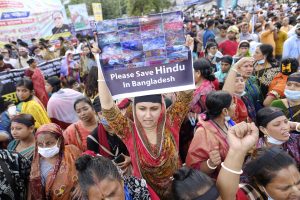
In a couple of weeks, Bangladesh will celebrate the golden jubilee of its victory in the liberation war against Pakistan. Fifty years have passed since it became independent, and secular nationalist forces gained the upper hand over religious ones in the war. However, Bangladesh has not been able to secure its secularism.
Tiếp tục đọc “Bangladesh’s Identity Crisis: To be or Not to be secular”
A new culture of dissent is remaking Cuba’s politics
worldpoliticsreview.com – William M. LeoGrande Tuesday, March 8, 2022

In mid-February, a court in Holguin, Cuba, about 500 miles east of Havana, handed down sentences of up to 20 years in prison to 20 people convicted of sedition the previous month. Their crime, and that of the hundreds of others like them still awaiting verdicts elsewhere, was to have participated in widespread protests last summer, some peaceful but some violent, that took the Cuban government—and the world—by surprise.
Tiếp tục đọc “A new culture of dissent is remaking Cuba’s politics”
EU leaders seek escape route from Russian fossil fuels, weigh energy investment plan
10 Mar 2022

Europe’s energy independence from Russia, including in its financial aspects, will be a key topic of discussion at a two-day summit in Versailles hosted by the French EU presidency. [France Diplomatie – MEAE]
European Union leaders will tackle ways to wean themselves off Russian fossil fuels on Thursday (10 March) and debate how quickly to ditch their key supplier, with countries split over whether to sanction oil and gas imports as Moscow wages war in Ukraine.
Tiếp tục đọc “EU leaders seek escape route from Russian fossil fuels, weigh energy investment plan”
Ukraine sees risk of radiation leak at Chernobyl, IAEA sees ‘no critical impact’ on safety
EURACTIV.com with Reuters
10 Mar 2022

A still image taken from a handout video made available by the Russian Defence Ministry press service shows a general view of the Chernobyl Nuclear Power Plant in Pripyat, Ukraine, 7 March 2022. Russian President Putin on 24 February 2022 announced a “special military operation against Ukraine”. Martial law has been introduced in Ukraine, and explosions are heard in many cities including Kyiv. [Handout photo/EPA/EFE]
Ukraine said on Wednesday (9 March) there was a danger of a radiation leak at the Chernobyl nuclear power station after electricity was cut off to the plant, but the UN nuclear watchdog saw “no critical impact on security”.
The War in Ukraine Is Transforming the EU
Dave Keating Thursday, March 10, 2022 worldpoliticsreview
The European Union’s 27 leaders are in Versailles today for a summit that could prove to be historic. They are expected to sign the “Versailles Declaration,” intended to formalize the far-reaching but ad hoc policy changes the EU has implemented in response to Russia’s invasion of Ukraine, which is now entering its third week. The measures under discussion would strengthen the union’s existing military, economic and border control capabilities, while also giving the bloc new powers in those areas that will push it further down the path toward federalism.
The symbolism of the decision to sign the declaration at the Palace of Versailles—where the Versailles Treaty, another pivotal document that proved central to the remaking of Europe after World War I, was signed in 1919—is not lost on anyone. In 1919, Europe’s leaders got it very wrong. Will they get it right this time? It’s very hard to say, since nobody knows what the world that emerges after the war in Ukraine will look like.
Tiếp tục đọc “The War in Ukraine Is Transforming the EU”The need for economics education in Vietnam high school curriculum: A preliminary observation
Nghị định số 12/2012/NĐ-CP của Chính phủ: Về đăng ký và quản lý hoạt động của các tổ chức phi chính phủ nước ngoài tại Việt Nam
| CHÍNH PHỦ ________Số: 12/2012/NĐ-CP | CỘNG HOÀ XÃ HỘI CHỦ NGHĨA VIỆT NAMĐộc lập – Tự do – Hạnh phúc______________________________Hà Nội, ngày 01 tháng 3 năm 2012 |
NGHỊ ĐỊNH
Về đăng ký và quản lý hoạt động của
các tổ chức phi chính phủ nước ngoài tại Việt Nam
__________
CHÍNH PHỦ
Căn cứ Luật Tổ chức Chính phủ ngày 25 tháng 12 năm 2001;
Căn cứ Luật ban hành văn bản quy phạm pháp luật ngày 03 tháng 6 năm 2008;
Căn cứ Nghị định số 15/2008/NĐ-CP ngày 04 tháng 02 năm 2008 quy định chức năng, nhiệm vụ, quyền hạn và cơ cấu tổ chức của Bộ Ngoại giao;
Xét đề nghị của Bộ trưởng Bộ Ngoại giao,
NGHỊ ĐỊNH:
Chương I
QUY ĐỊNH CHUNG
Điều 1. Phạm vi điều chỉnh và đối tượng áp dụng
1. Nghị định này quy định về đăng ký và quản lý hoạt động hỗ trợ phát triển, viện trợ nhân đạo, không vì mục đích lợi nhuận hoặc các mục đích khác, của các tổ chức phi chính phủ nước ngoài tại Việt Nam.
2. Nghị định này áp dụng đối với các tổ chức phi chính phủ, tổ chức phi lợi nhuận, các quỹ xã hội, quỹ tư nhân, hoặc các hình thức tổ chức xã hội, phi lợi nhuận khác, được thành lập theo luật pháp nước ngoài, có hoạt động hỗ trợ phát triển, viện trợ nhân đạo, không vì mục đích lợi nhuận hoặc các mục đích khác tại Việt Nam.
Tiếp tục đọc “Nghị định số 12/2012/NĐ-CP của Chính phủ: Về đăng ký và quản lý hoạt động của các tổ chức phi chính phủ nước ngoài tại Việt Nam”No Man’s Land
10/03/2022: Transparency International newsletter
This week, we took to the streets to mark International Women’s Day. This year, we are thinking of Ukrainian and Russian women in particular.

© Transparency International, illustrations courtesy of Andrea Fonseca
International Women’s Day is also a stark reminder that there’s still a very long road ahead to fulfilling the United Nation’s Sustainable Development Goals (SDGs), including SDG 5: “Achieve gender equality and empower all women and girls”, a cornerstone for making progress on the rest of the SDGs, including the goal to end poverty in all its forms, everywhere. Taking action to advance gender equality is therefore crucial.
Women are most affected by inequality, not least because they represent the largest proportion of people living in poverty. And corruption worsens these existing inequalities. Tiếp tục đọc “No Man’s Land”
The Kafala system and Vietnam’s domestic workers: Corruption and a Silenced Press
newmandala – ANGIE NGOC TRAN – 15 FEB, 2022

While worker grievances about abuses and exploitation since 2015 have fallen on deaf ears with the renewal of a bilateral Vietnam-Saudi Arabia labour pact (2019-2024), a recent announcement from the official state media seems to appease recent bad publicity about labor export. It reveals an entrenched network of financial interests between recruitment companies and the Ministry of Foreign Affairs. The Security Agency has prosecuted some officials at the Consular Department level for accepting bribes to permit recruitment companies to organise commercial flights to bring overseas workers, who pay upwards of USD $3000 for the one-way flight and quarantine costs, to return to Vietnam. It’s not a coincidence that the corruption exposé happened after waves of social media and the UN special rapporteurs’ letter about human trafficking. Still, numerous worker complaints about Department of Overseas Labour (DOLAB) officials operating in the Vietnamese Embassy in Riyadh continue to fall on deaf ears.
Tiếp tục đọc “The Kafala system and Vietnam’s domestic workers: Corruption and a Silenced Press”
A Peace That Couldn’t Last – Negotiating the Paris Accords on Vietnam

ADST – Signed on January 27, 1973, the Paris Peace Accords were intended to finally end the Vietnam War, which had cost the lives of thousands of American soldiers, not to mention the millions of Vietnamese civilians who were killed, injured, or displaced. Initially, the Accords were negotiated in secret by National Security Advisor Henry Kissinger and Le Duc Tho, the lead North Vietnamese negotiator. These secret negotiations took place over the course of five years in Paris, from 1968 to 1973, but it was only in the early 70’s that any real progress was made.
Tiếp tục đọc “A Peace That Couldn’t Last – Negotiating the Paris Accords on Vietnam”
These are the most international universities in the world in 2022

Better by degrees … a 2022 survey ranks the world’s most international universitie
- Times Higher Education’s (THE) survey of over 10,000 academics features internationally oriented universities leading global academic collaboration efforts through knowledge diplomacy.
- Knowledge diplomacy values scientific exchange and diverse, international student bodies and research teams
- Universities in politically insular countries are increasingly working with research partners from around the world.
While the diplomatic world faces many challenges on the political front, knowledge diplomacy, led by many top international universities, “may be our last and best tool for rebuilding a broken world”.
This was the stirring message of Safwan Masri, Executive Vice-President for global development at Columbia University at a keynote speech at Times Higher Education’s MENA Universities Summit in 2021.
Masri lamented that much of the world is grappling with misunderstanding, division, polarization and cynicism. He adds that “We are living in profoundly undiplomatic times. The inability to understand and comprehend one another is turning neighbor against neighbor. Everything seems broken.”
Have you read?
- IMF: Why research and development is a crucial part of economic growth
- These are the best universities in the world for 2022
- Four ways universities can future-proof education
For Masri and other delegates at the THE summit, global research universities are a shining light in difficult times, with Masri stating that: “Universities exist to increase our comprehension of the world and to enhance mutual understanding”.
Tiếp tục đọc “These are the most international universities in the world in 2022”
How the Soviet Union’s fall pushed Putin to try and recapture Russia’s global importance

While serving in the KGB in East Berlin, Putin was shocked and humiliated to experience the collapse of Soviet power firsthand.
History – SHAUN WALKER – FEB 28, 2022
During the Cold War, the Soviet Union stood for nearly half a century as one of the two lodes of global power. When it dissolved in 1991, Russia found itself losing relevance.
Russian President Vladimir Putin was a young KGB officer during this era, and the events of that time influenced many of the moves he made in the early years of his administration, with the goal of regaining the importance in the world the Soviet Union used to hold—and restoring Russian pride.
Strengthen women’s livelihoods and participation for greater resilience to disasters and climate change in Viet Nam
UNWomen – Thao Hoang – Friday, 22 November 2019
When Tran Thi My Linh, a 51-year-old rural woman first said that she would replace her rice fields with lotus fields, she raised many eyebrows. In the little commune of Hoa Dong in Phu Yen province, just south of Viet Nam’s capital, Ha Noi, villagers had planted rice for generations. However, with the changing weather patterns in recent years, millions of people have been affected in Phu Yen and in rural Viet Nam in general and people have started looking for new livelihoods.
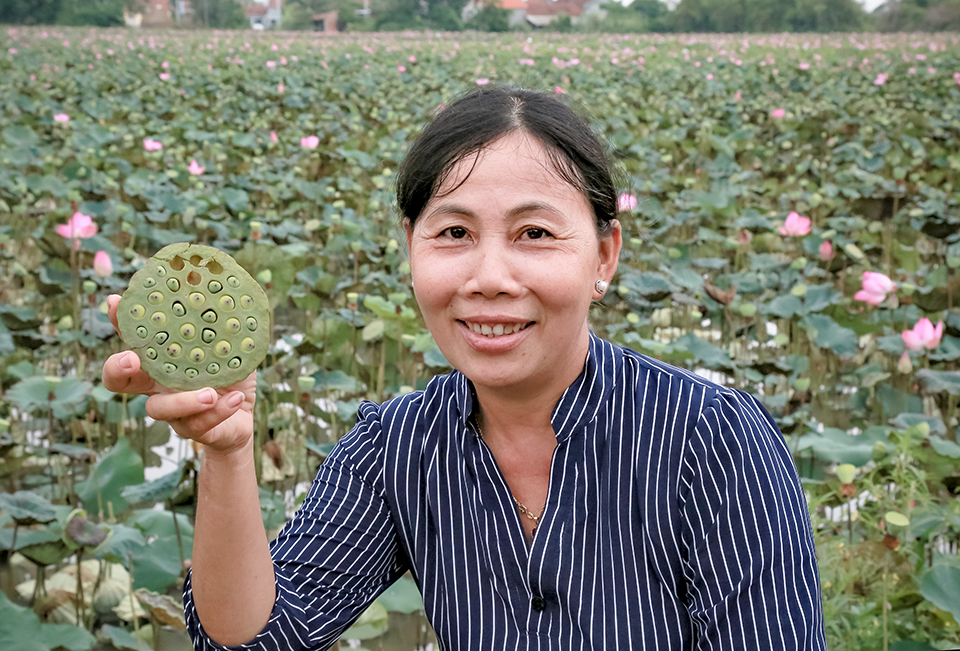
Tran Thi My Linh, 51-year-old. Photo: UN Women/Thao Hoang
Currency adrift – 50 years after the “Nixon shock”

Nikkei – 50 years ago a major event in the history of money occurred — the “Nixon shock” of August 15, 1971. The “floating exchange rate system” that became the norm after this spurred the development of the global postwar economy. However, it has also frequently caused crises in emerging countries. Recently “digital currencies” have begun to spread, and there are signs that the reserve currency system based on the dollar may be changing. How will the future of currency impact the global economy?
Tiếp tục đọc “Currency adrift – 50 years after the “Nixon shock””

