(CNN) Shortly after Donald Trump was elected President of the United States, Nobel laureate Toni Morrison wrote in The New Yorker: “Unlike any nation in Europe, the United States holds whiteness as the unifying force. Here, for many people, the definition of ‘Americanness’ is color.” Reflecting on efforts — largely by White men — to define themselves by sustaining that poisonous definition, Morrison argues that those “who are prepared to abandon their humanity out of fear of black men and women, suggest the true horror of lost status.”
Good morning. The Times reveals how Haiti became the poorest country in the Americas.
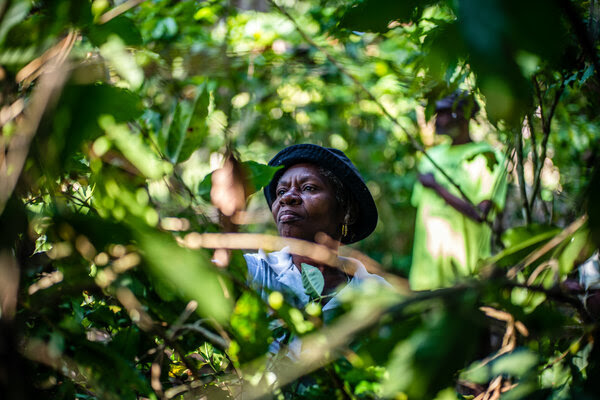
Adrienne Present harvesting coffee beans in Haiti.Federico Rios for The New York Times
Catherine Porter, New Yorl Times newsletter
Haiti is one of the poorest countries in the world, and a new Times investigative series explores why. One stunning detail: France demanded reparations from Haitians it once enslaved. That debt hamstrung Haiti’s economy for decades — and kept it from building even basic social services, like sewage and electricity.
The series is based on more than a year of reporting, troves of centuries-old documents and an analysis of financial records. I spoke to my colleague Catherine Porter, one of the four reporters who led the project, about what they found.
Why tell Haiti’s story now?
I’ve been covering Haiti since the earthquake in 2010, and returned dozens of times. Any journalist that spends time in Haiti continually confronts the same question: Why are things so bad here?
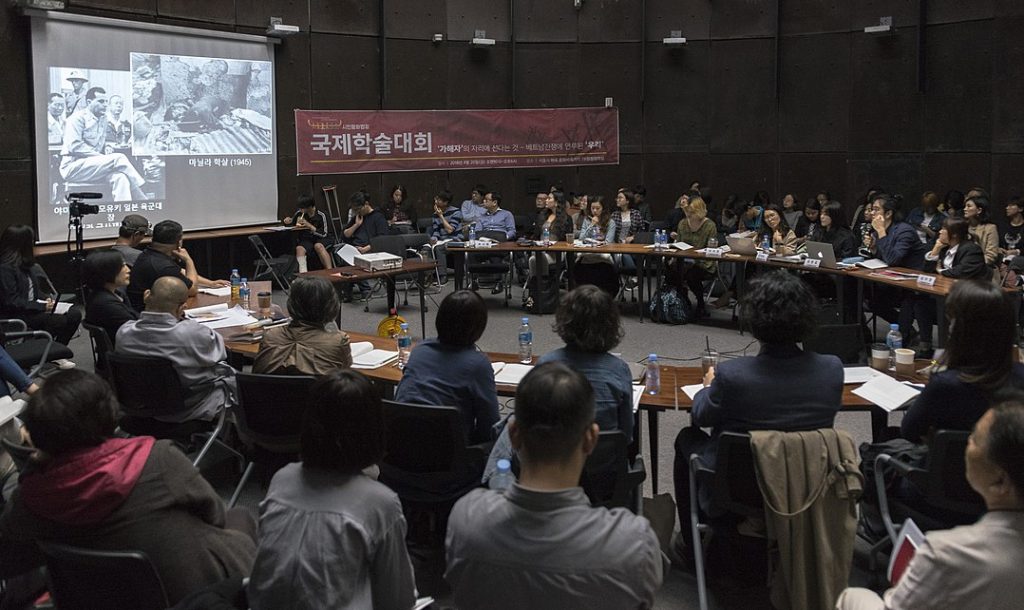
People’s Tribunal on War Crimes by South Korean Troops during the Vietnam War to hold by Minbyun and the Korea-Vietnam Peace Foundation. IMAGE BY JJW ON WIKIMEDIA COMMONS. (CC BY-SA 4.0)
In 2018, two survivors of massacre perpetrated by South Korean troops in Vietnam during the Vietnamese-American war, instigated the People’s Tribunal on War Crimes by South Korean Troops during the Vietnam War. This signalled a watershed moment in the history of civil activism and transitional justice in South Korea; yet, there is still much to be done.
Following the outbreak of conflict in Vietnam (1955-1975), U.S. President Lyndon Johnson initiated the Many Flags campaign to consolidate a united front against communism in Indochina. While several countries, including Thailand, Australia and New Zealand participated, South Korea contributed by far the largest number of troops after the U.S.: around 300,000 rotating troops by the end of the war.
Dictator Park Chung-hee sought to build a stable South Korean government, and so he agreed to take a leading role in the war in exchange for American military support in the Korean peninsula and economic support for Park’s ambitious development plans. The estimated $1 billion USD worth of American aid and other war-related income was a vital lifeline for the crumbling Korean economy.
It’s a Wild West out there for artificial intelligence. AI applications are increasingly used to make important decisions about humans’ lives with little to no oversight or accountability. This can have devastating consequences: wrongful arrests, incorrect grades for students, and even financial ruin. Women, marginalized groups, and people of color often bear the brunt of AI’s propensity for error and overreach.
The European Union thinks it has a solution: the mother of all AI laws, called the AI Act. It is the first law that aims to curb these harms by regulating the whole sector. If the EU succeeds, it could set a new global standard for AI oversight around the world.
But the world of EU legislation can be complicated and opaque. Here’s a quick guide to everything you need to know about the EU’s AI Act. The bill is currently being amended by members of the European Parliament and EU countries.
What’s the big deal?
The AI Act is hugely ambitious. It would require extra checks for “high risk” uses of AI that have the most potential to harm people. This could include systems used for grading exams, recruiting employees, or helping judges make decisions about law and justice. The first draft of the bill also includes bans on uses of AI deemed “unacceptable,” such as scoring people on the basis of their perceived trustworthiness.
China and Russia have grown increasingly close in recent years, including as trading partners, in a relationship that brings both opportunities and risks as Russia reels from tough new sanctions led by the West in response to its invasion of Ukraine. Total trade between China and Russia jumped 35.9% in 2021 last year to a record US$147.9 billion, according to Chinese customs data, with Russia serving as a major source of oil, gas, coal and agriculture commodities, and running a trade surplus with China.
Since sanctions were imposed in 2014 after Russia annexed Ukraine’s Crimea, bilateral trade has expanded by more than 50% and China has become Russia’s biggest export destination The two were aiming to boost total trade to US$200 billion by 2024, but according to a new target unveiled last month during Russian President Vladimir Putin’s visit to Beijing for the Winter Olympics, the two sides want bilateral trade to grow to US$250 billion.
When vladimir putin was first elected president of Russia in 2000, he changed little in the office he inherited from Boris Yeltsin. Yet in place of a pen on the desk, Mr Putin put a television remote control, one visitor noted. The new president would obsess over the media, spending the end of his days watching coverage of himself. One of his first moves was to bring under Kremlin control the country’s television networks, including ntv, an independent oligarch-owned channel, which had needled the new president with unflattering depictions of him as a dwarf in a satirical show called Kukly, or Puppets.
After more than two decades in power, today Mr Putin is the puppet master. The state controls the country’s television channels, newspapers and radio stations. The Kremlin gives editors and producers metodichki, or guidance on what to cover and how. As young audiences shift online, the Kremlin seeks to control the conversation there, leaning on social networks and news aggregators, blocking or undermining unco-operative digital media and flooding popular platforms, such as the messaging app Telegram, with state-approved content. Propaganda has long propped up Mr Putin’s regime. Now it fuels his war machine.
Since the president announced a “special military operation” in Ukraine on February 24th, control over information has become even tighter. Censorship laws bar reporting that cites unofficial sources. Calling the war a “war” is a crime. Protesters are detained for holding signs that contain eight asterisks, the number of letters in the Russian for “no to war”. Many Western social networks and platforms, including Facebook, Twitter and Instagram, have been banned or blocked. The last remaining influential independent media bastions have been pushed off air. Dozhd, an online tv station, has suspended its streams; Novaya Gazeta, a liberal newspaper whose editor recently won the Nobel Peace Prize, has halted publication; Echo Moskvy, a popular liberal radio station, no longer broadcasts from its longtime Moscow home on 91.2FM.
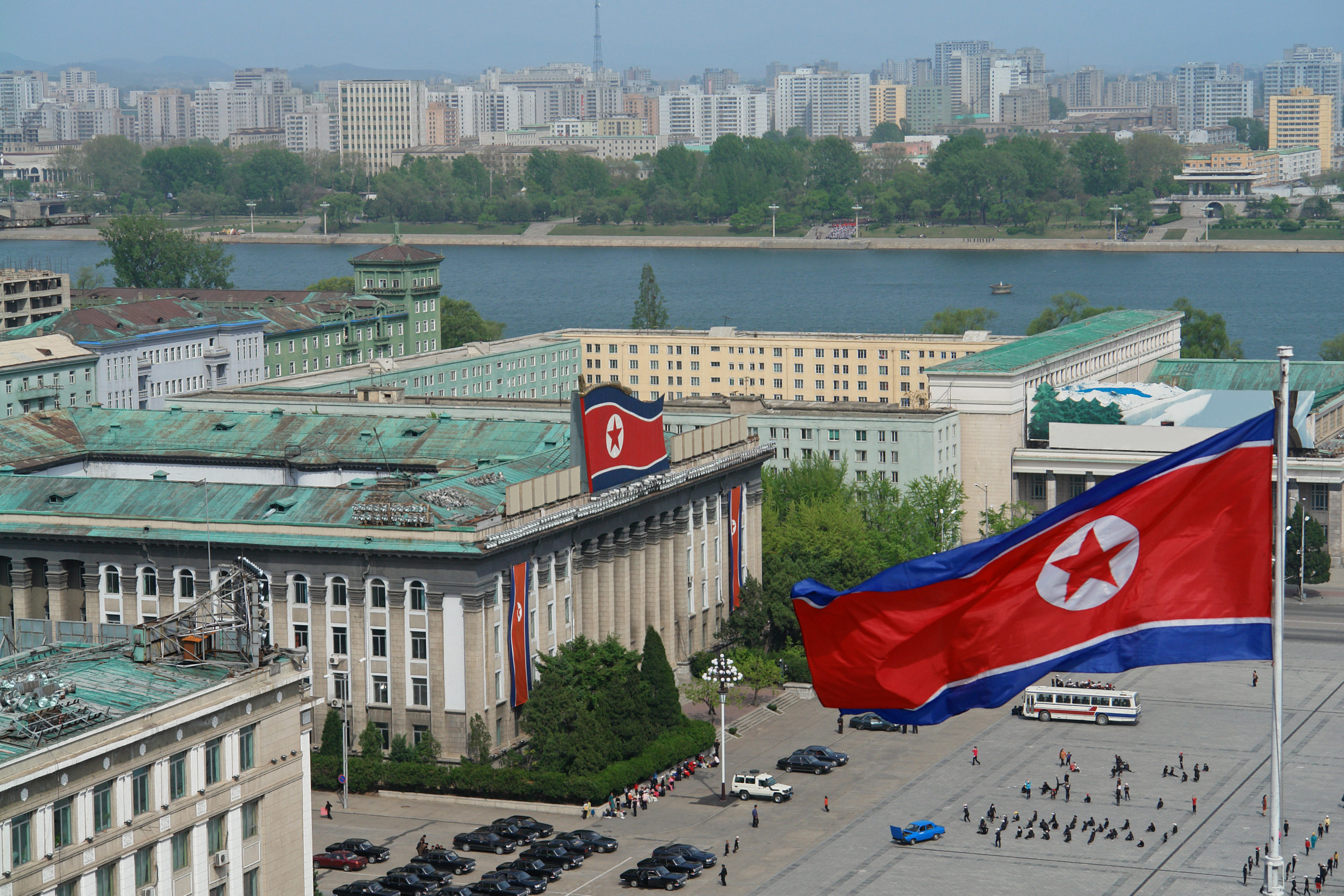
Make no mistake: North Korea leader Kim Jong Un truly believes he needs nuclear weapons.
For years, that need reflected a single objective: the protection and maintenance of his regime. A nuclear arsenal was a defensive tool—a deterrent—to ensure that no foreign power would attack his country and end the Cold War division of the Korean Peninsula. Kim’s rationale for possessing nuclear weapons seems to be shifting and his rhetoric and accompanying military developments indicate a new focus—the acquisition of a war-fighting capability.
Prices expected to continue to be high, but LNG may be pricing itself out of global markets
May 20, 2022 (IEEFA)—The fallout from the Russian invasion of Ukraine has disrupted the world’s liquefied natural gas (LNG) market, driving prices to record levels while likely positioning the industry for a significant downturn as emerging Asian markets are priced out of the market, according to a panel of IEEFA experts.
IEEFA’s analysts find that the disruption in the LNG markets has been truly global. Russia, which faces a series of international sanctions, is the world’s second-largest natural gas producer, its third-largest oil producer, and its sixth-largest coal producer. In addition, Russia provides Europe with more than one-third of its gas supply.
The UN secretary-general, António Guterres, has issued a stark warning concerning the “dismal litany of humanity’s failure to tackle climate disruption” in a speech in which he set out “five critical actions to jumpstart the renewable energy transition”.
Speaking at the launch of the World Meteorological Organisation’s State of the Global Climate 2021 Report, Guterres described the global energy system as “broken” and “bringing us ever closer to climate catastrophe”. He called on the world to “end fossil fuel pollution and accelerate the renewable energy transition, before we incinerate our only home”.
After months of flirting with it, Finland and Sweden have finally decided they want to tie the knot with NATO and join the military alliance. (Thanks again, Russian President Vladimir Putin.) The two countries are meeting with U.S. President Joe Biden on Thursday morning.
Joining NATO, however, isn’t a simple process, even for two developed democracies with strong militaries that seem like just the right fit for the alliance.
It takes unanimous consent from all 30 NATO members, ratified by votes in parliaments (and in the United States’ case, the Senate) across Europe and North America.
TTO – Xung quanh việc kỷ luật loạt quan chức Ủy ban Chứng khoán nhà nước, ý kiến của các chuyên gia, đại biểu Quốc hội đều bày tỏ đồng tình, và cho rằng đây chính là cuộc ‘đại phẫu’ rất cần thiết để thị trường chứng khoán phát triển lành mạnh.
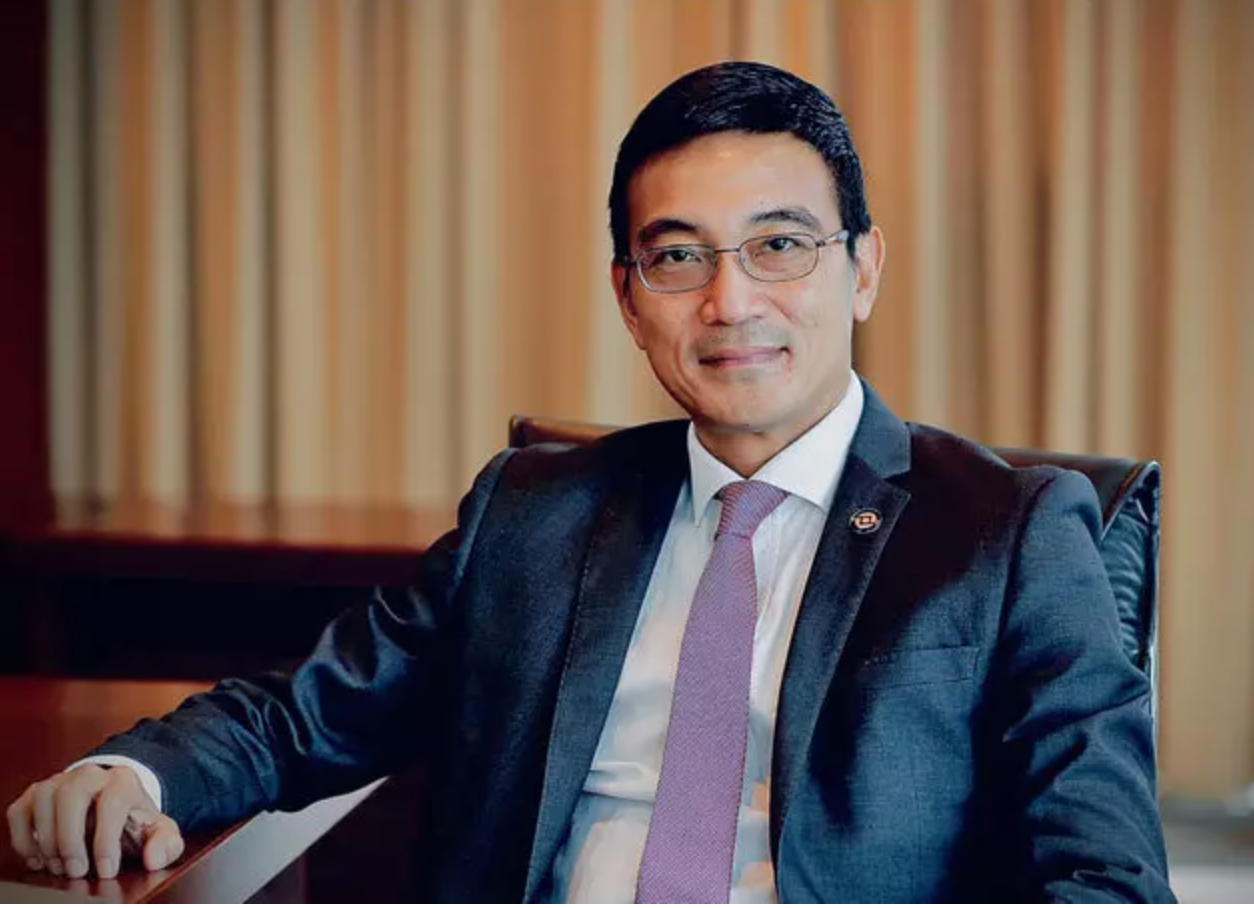
Ông Lê Hải Trà, tổng giám đốc Sở Giao dịch chứng khoán TP.HCM, đã bị khai trừ Đảng – Ảnh: HOSE
Ủy ban Kiểm tra Trung ương đã quyết định khai trừ khỏi Đảng ông Lê Hải Trà, tổng giám đốc Sở Giao dịch chứng khoán TP.HCM (HOSE), và cách tất cả các chức vụ trong Đảng đối với ông Trần Văn Dũng, chủ tịch Ủy ban Chứng khoán nhà nước.
Ngoài ra, Ủy ban Kiểm tra Trung ương còn kỷ luật cảnh cáo các ông: Vũ Bằng, nguyên chủ tịch Ủy ban Chứng khoán nhà nước; Nguyễn Thành Long, bí thư Đảng ủy Sở Giao dịch chứng khoán Hà Nội, chủ tịch hội đồng thành viên Sở Giao dịch chứng khoán Việt Nam; Nguyễn Sơn, bí thư Đảng ủy, chủ tịch hội đồng quản trị Trung tâm Lưu ký chứng khoán Việt Nam.
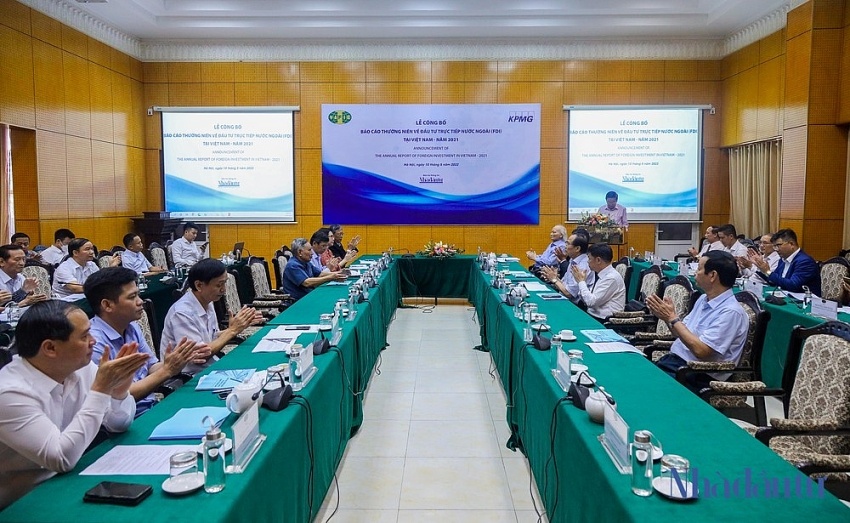
The Vietnam Association of Foreign-Invested Enterprises has just unveiled its first annual 2021 FDI report to provide a comprehensive assessment of the results of foreign direct investment attraction, the business activities of foreign-invested enterprises, and to analyse the nation’s investment environment.
The annual report on FDI in Vietnam has been released for the first time
Nguyen Anh Tuan, standing vice chairman of the Vietnam Association of Foreign-Invested Enterprises (VAFIE) said that the report also includes opinions and suggestions from economic experts, investors, and owners of foreign-invested enterprises (FIEs), which will be useful inputs for policymakers.
“It analyses the investment environment in line with the national administrative reform, thereby influencing policies and laws to increase innovation and improve the quality and socioeconomic efficiency of the sector,” said Tuan.
The annual report provides an overview of global and ASEAN FDI trends.
“Zelenskyy quoted Chaplin’s final speech in “The Great Dictator,” which was released in 1940, in the early days of World War II: “The hate of men will pass, and dictators die, and the power they took from the people will return to the people.”
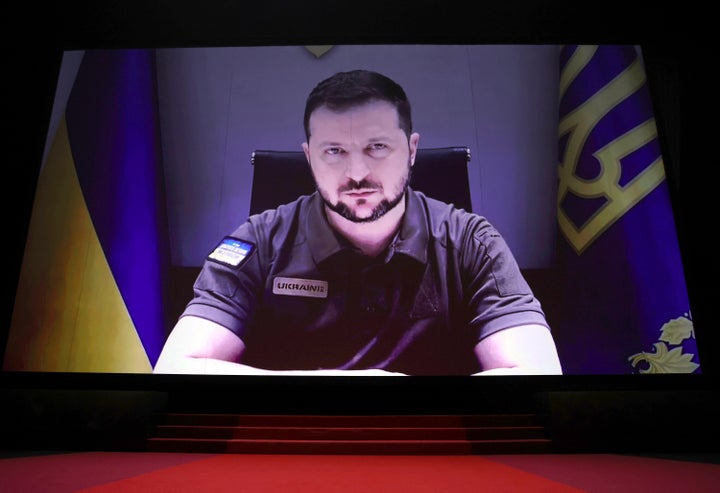
The 75th Cannes Film Festival kicked off Tuesday with a live satellite video address from Ukrainian President Volodymyr Zelenskyy.
May. 17, 2022, 04:09 PM EDT
President of Ukraine Volodymyr Zelenskyy appears via remote during the opening ceremony of the 75th international film festival, Cannes, southern France, Tuesday, May 17, 2022. (Photo by Vianney Le Caer/Invision/AP)