Cities like Haiphong in northern Vietnam have seen a recent boom in tech manufacturing.
The coastal port of Haiphong, Vietnam, used to be famous for aromatic noodle dishes and organized crime. Nowadays, it’s better known as a burgeoning industrial region, where electronics makers set up shop to escape the crowded south. Optimism abounds in a place like this. “We don’t just sell land, we sell the future,” Hoang Vinh Tuan, a manager at real estate developer Deep C Industrial Zones, told Rest of World.
TTCT – Sinh kế chắc chắn và ổn định là điều mà người dân bình thường mong muốn, nhất là trong hoàn cảnh nhiều bất trắc hiện nay.
Ảnh: breakthroughgroup.com
Lần đầu tiên trong lịch sử tài chính tiền tệ Việt Nam sau khi đất nước thống nhất xảy ra tình trạng người dân ùn ùn đi rút tiền có lẽ là năm 1998, khi cơ sở nước hoa Thanh Hương mất khả năng trả nợ với lãi suất hằng tháng cam kết lúc đấy lên đến hơn 10%/tháng.
Hàng trăm ngàn gia đình ở miền Nam rơi vào cảnh hỗn loạn và nhiều bi kịch gia đình đã xảy ra. Bẫy tài chính lúc đấy chỉ đơn giản là lấy khoản vay người sau trả cho người trước, đến khi chủ nợ hết khả năng vay thêm thì hệ thống đổ vỡ.
Mô hình đa cấp này, vốn đã có từ khởi thủy của tiền tệ, tồn tại đến giờ dưới nhiều tên gọi khác nhau, từ giải pháp tài chính linh hoạt, đầu tư tài chính cùng nhà đầu tư chuyên nghiệp, cho tới tài chính thông minh, thôi thì đủ thứ lời mời gọi làm giàu không khó, để rồi vẫn có không ít thảm kịch đã và sẽ xảy ra.
John Hemmings (john@pacforum.org) is Senior Director of the Indo-Pacific Foreign and Security Policy Program at the Pacific Forum.
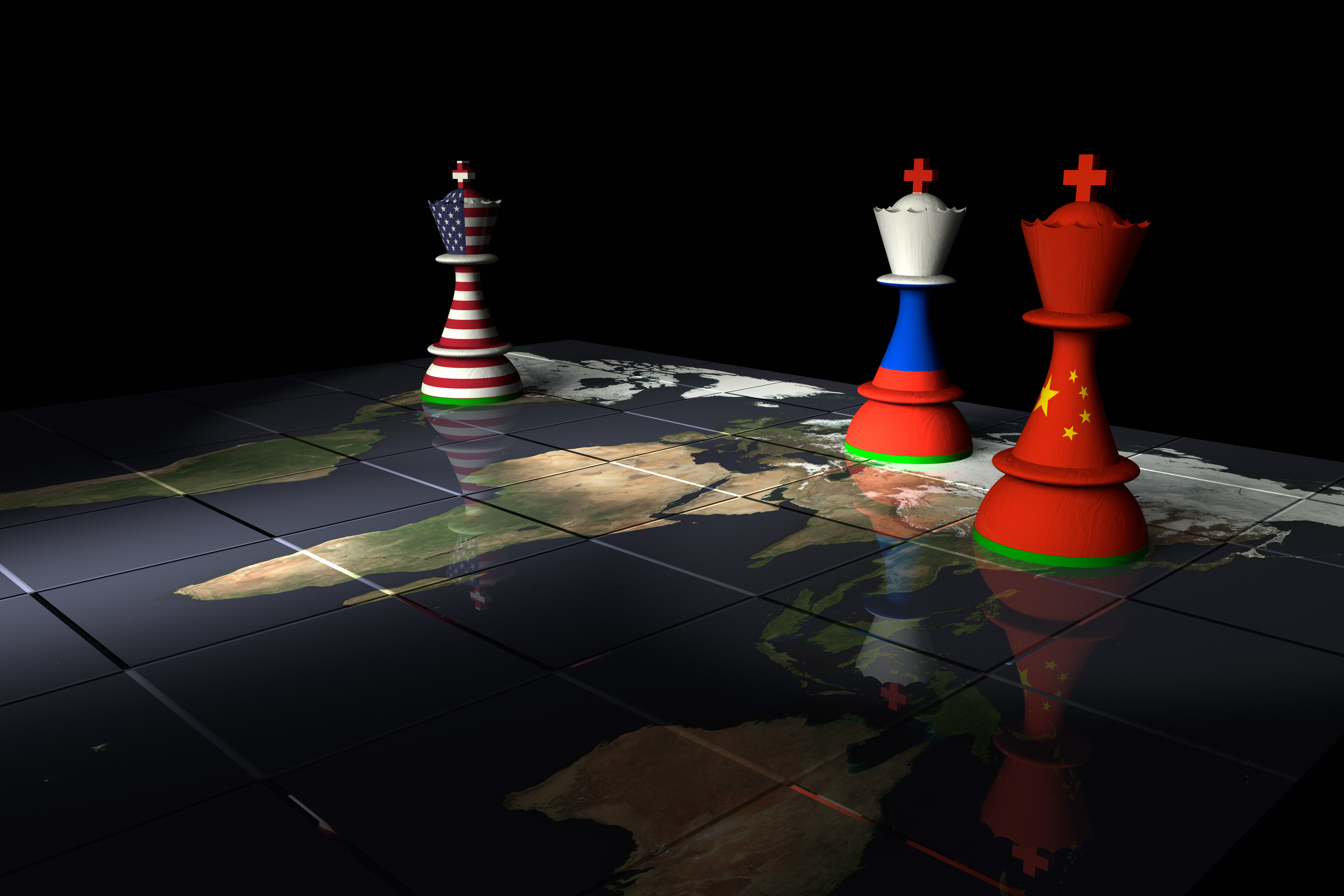
The Biden administration released America’s new National Security Strategy (NSS) on Oct. 12. For those who read such documents regularly, there were few surprises. Values were mentioned in the context of the United States’ position in the world and vis-a-vis perceived adversaries, such as Russia, Iran, and the People’s Republic of China, while the administration’s lines of effort were laid out in a typical ends, ways, and means format. There were also sections on each region of the world, where the strategies laid out a bit more context. Tiếp tục đọc “The new [US] National Security Strategy in the context of an unstated “cold war””→
Các quy định pháp luật hiện hành chủ yếu tập trung quản lý rất chặt các mạng xã hội trong nước. Một số quy định đã trở nên lạc hậu, bất cập, khiến cho các mạng xã hội trong nước gặp nhiều khó khăn. Các dịch vụ mạng xã hội nước ngoài chi phối đến gần 70% thị phần doanh thu quảng cáo trực tuyến.
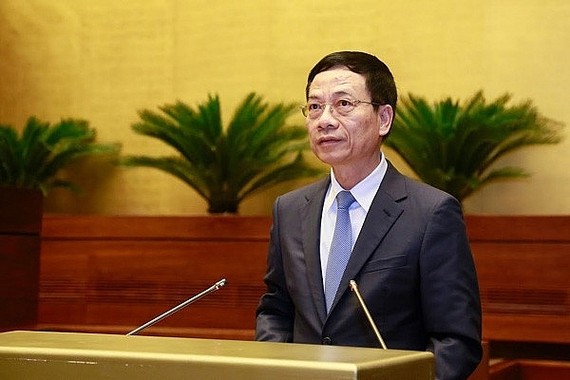
Bộ trưởng Bộ TT-TT Nguyễn Mạnh Hùng
Báo cáo trả lời chất vấn vừa được Bộ trưởng Bộ TT-TT Nguyễn Mạnh Hùng gửi đến ĐBQH nêu nhận định, các quy định pháp luật hiện hành chủ yếu tập trung quản lý rất chặt các mạng xã hội trong nước. Một số quy định đã trở nên lạc hậu, bất cập trước sự phát triển rất nhanh của Internet và công nghệ, khiến cho các mạng xã hội trong nước gặp nhiều khó khăn trong việc thu hút người dùng, phát triển kinh doanh.
TTCT – Trang chủ của Tân Hoa xã ngày 24-10 tràn ngập hình ảnh và tin tức về Đại hội lần thứ 20 của Đảng Cộng sản Trung Quốc (ĐCSTQ), với hình ảnh Tổng bí thư vừa đắc cử Tập Cận Bình chiếm những vị trí áp đảo và trang trọng nhất.
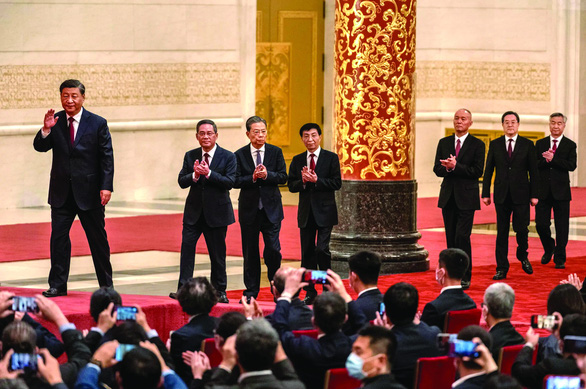
Thường vụ Bộ Chính trị ĐCSTQ ra mắt Đại hội 20, từ trái sang là các ông: Tập Cận Bình, Lý Cường, Triệu Lạc Tế, Vương Hỗ Ninh, Thái Kỳ, Đinh Tiết Tường và Lý Hi. Ảnh: Reuters
Trước đó một ngày, bài xã luận “Chung Hoa Luận”, tức do lãnh đạo cao nhất của Tân Hoa xã trực tiếp chấp bút, tựa đề: “Bảo đảm cơ bản những thắng lợi mới trên hành trình mới” đã điểm lại một loạt thành tựu phát triển của Trung Quốc trong 10 năm qua. Bài xã luận tất nhiên không quên đề cập vấn đề quan trọng nhất của Đại hội lần này. Khẩu hiệu chính trị “hai xác lập” – được ĐCSTQ thông qua từ năm 2018 – lại được nhấn mạnh: (1) xác lập vị trí hạt nhân của đồng chí Tập Cận Bình trong Trung ương Đảng; và (2) xác lập vai trò trọng tâm của tư tưởng Tập Cận Bình về chủ nghĩa xã hội đặc sắc Trung Quốc thời đại mới.
Ethiopian Government Agrees to Truce With Tigrayan Rebels
After two years of fighting, the Ethiopian government and rebel Tigray People’s Liberation Front (TPLF) agreed to end hostilities (WaPo), disarm, and restore “law and order,” said Olusegun Obasanjo, the Horn of Africa envoy for the African Union (AU). The AU-mediated truce has raised hopes for an end to a war that has killed tens of thousands of people and displaced millions (Reuters). The AU stepped in to mediate after a cease-fire declared by the government in March fell apart after five months. Obasanjo said the AU will monitor the implementation of the new peace deal, which stipulates that Ethiopia’s government will take control of Mekelle, the capital of the Tigray region, and that the TPLF will once again be recognized as a political party. Eritrea, which sent troops to fight alongside the Ethiopian government’s forces, was not part of the talks.
Analysis
“This is a huge breakthrough that involved major concessions from both sides, even if the parties punted the thorniest details to future peace talks,” the International Crisis Group’s Alan Boswell tells Reuters. “If they do stop fighting, then today will just be the start of what will surely prove a very bumpy, long, and difficult peace process.”
“The African Union-mediated deal in Ethiopia is important for watchers of regional organizations & world order. While too early to celebrate, AU shows the way when European regional institutions are weakening or busy fighting each other,” American University’s Amitav Acharya tweets.
TP HCM chỉ có thể cầm cự không quá một ngày nếu mất nước, bởi đô thị 10 triệu dân chưa có đủ nguồn dự phòng trong tình huống khẩn nguy.
Năm 1975, dân số TP HCM khoảng 3 triệu người. 47 năm sau, số người sinh sống tại thành phố là gần 10 triệu, chưa tính khách vãng lai. Để đáp ứng nhu cầu người dân và phát triển kinh tế của đô thị lớn nhất nước, hơn 4 thập niên qua, ngành cấp nước thành phố liên tục tăng công suất, từ 450.000 m3 lên 2,4 triệu m3 – hơn gấp 5 lần.
Thống kê thời gian gần đây cứ 5 năm, thành phố lại tăng một triệu người. Nếu tính mỗi người cần trung bình 200 lít nước một ngày, đô thị lớn nhất Việt Nam sẽ tiêu thụ thêm 365 triệu m3 nước mỗi năm – bằng gần 1/4 dung tích hồ Dầu Tiếng (1,5 tỷ m3). Đó là chưa kể nhu cầu về nước cho các hoạt động sản xuất, dịch vụ còn cao hơn nhiều so với nước sinh hoạt.
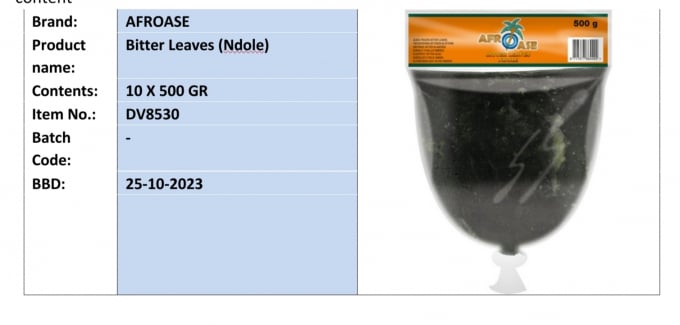
(VAN) The EU has warned that bitter leaves and some other agricultural products exported from Vietnam have exceeded the maximum residue level of many active ingredients and banned substances.
According to the Vietnam Sanitary and Phytosanitary Notification Authorities and Enquiry Point (SPS Vietnam Office), RASFF – Rapid Alert System for Food and Feed of the European Union (EU) has just sent a warning notice, stating that the product of frozen ground bitter leaves of An Van Co., Ltd. Thinh (Address: 60 Ly Thuong Kiet, Ward 1, Bao Loc City, Lam Dong Province) was found to have exceeded the maximum residue level (MRL) of many active ingredients and banned substances.
The product of frozen ground bitter leaves receives warning from the EU.
In which, some active ingredients have high residue levels such as: Thiamethoxam (54 mg/kg); Tebuconazole (26 mg/kg); Propiconazole (34 mg/kg); Diniconazole (86 mg/kg).
The country issuing the notification is the Netherlands, which has notified the consignee. Finland has initiated the recall of the product.
In addition to frozen ground bitter leaves, Vietnam has also received warning on tea exported to Hong Kong. This product contains three banned substances and pesticide residues exceeding EU regulations, including: Chlorfluazuron (0.11 mg/kg); Imidacloprid (0.15 mg/kg) and Chlorpyrifos (0.043 mg/kg).
Being the focal point for transparent information about SPS measures and regulations to WTO members, the Vietnam SPS Office has notified this issue to the Plant Protection Department and related units.
It is a commonplace observation that the 1982 UN Convention on the Law of the Sea establishes a framework for the Law of the Sea that is based upontwo different concepts. One is a zonal analysis, which takes the juridicalzones into which the seas are divided and stipulates the basic rules applica- ble to each of them in turn. The other is a topical analysis, taking some of themain activities on the seas, such as fishing, marine research and pollution,and again setting out the basic rules for each.
The framework is, however,incomplete, and a great deal is left open, not only to be worked out in moredetailed treaties but also to be governed by more general principles of inter-national law. In this way the 1982 regime will continue to develop to meet new challenges and changed circumstances.
In this monograph Dr Gavouneli explores these issues and offers an expertinsight into the jurisdictional developments that are clearly discernable aquarter-century after the adoption of the Convention. Her keen analysismoves from fundamental principles governing jurisdiction in internationallaw to shrewd reflections on the significance of current developments suchas the Proliferation Security Initiative and questions of jurisdiction over theinternational seabed area. This thoughtful text will be of real interest to allwho have a concern with the directions in which the contemporary Law of the Sea is growing.
Seoul Fires Back After Barrage of North Korean Missile Tests
North Korea fired a missile that crossed the Northern Limit Line, a maritime border with South Korea that Pyongyang does not recognize (CNN), for the first time since the 1950–53 Korean War. South Korea’s military called the launch “rare and intolerable” and responded by firing three missiles (Yonhap) into waters north of the line. North Korea’s missile was one of as many as twenty-three it test-fired into the seas off of South Korea’s east and west coasts today. The missile deployment was North Korea’s largest in a single day. The launches came after U.S.-South Korea military drills began on Monday. U.S. Defense Secretary Lloyd Austin is set to meet with his South Korean counterpart at the Pentagon tomorrow.
[1/3] The logo of Swiss bank Credit Suisse is seen at its headquarters in Zurich, Switzerland October 4, 2022. REUTERS/Arnd Wiegmann
This content was produced in Russia where the law restricts coverage of Russian military operations in Ukraine
MOSCOW, Oct 26 (Reuters) – Russia on Wednesday banned dealings in the shares or share capital of 45 banks or banking units, all either owned by parties in countries that Russia terms “unfriendly” or owned through foreign capital.
Western countries and allies, including Japan, have piled financial restrictions on Russia since it sent troops into Ukraine in late February. Moscow retaliated with obstacles for Western businesses and their allies leaving Russia, and in some cases seized their assets.
The list followed a decree issued on Aug. 5 by President Vladimir Putin banning dealings in stakes in the financial and energy sectors owned by parties in “unfriendly” countries unless specific permission was given. read more read more
Citi, the largest Wall Street bank to have a presence in Russia with an exposure of $8 billion, plans to wind down nearly all of the institutional banking services as it is unable to sell the business amid the recent sanctions-related laws. read more read more read more
Machinery and mechanical equipment top category of products shipped from region, whose month-on-month decline aligns with weakening in Chinese exportsUS customs chief insists ‘seeing good examples of compliance so far’ with recently implemented Uygur Forced Labour Prevention Act
Published: 2:00am, 25 Oct, 2022
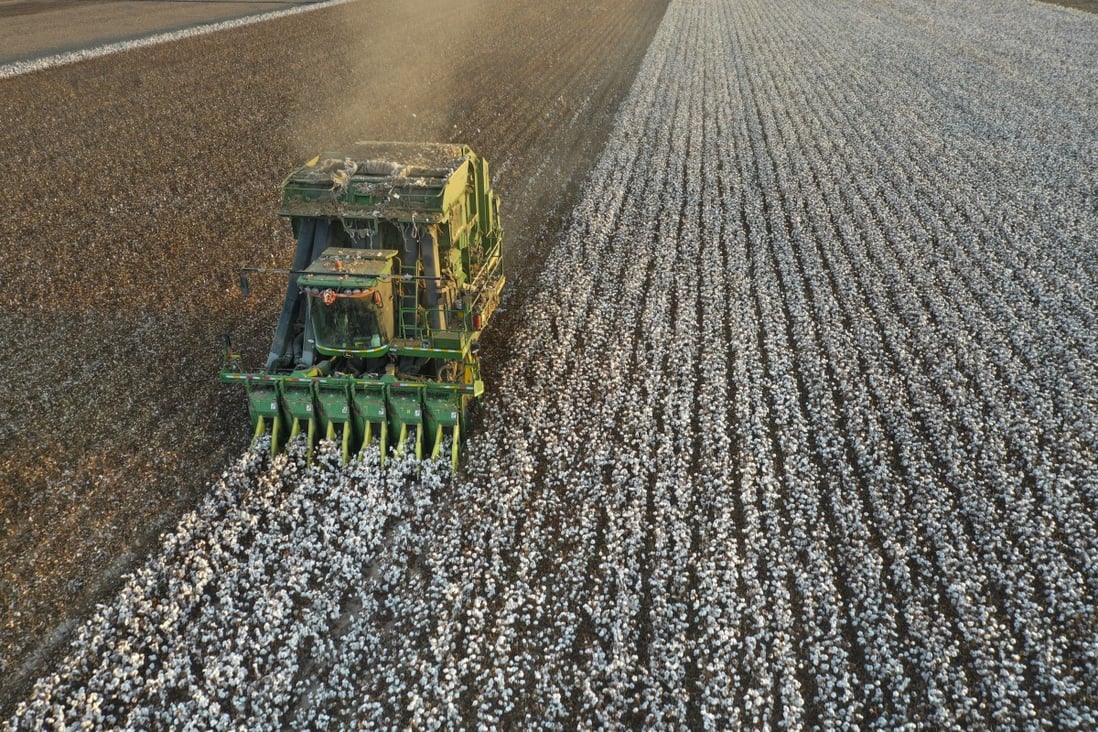
Xinjiang’s exports to the United States dropped in September after soaring for two consecutive months, but were still nearly three times as high as the same month last year, according to the latest Chinese customs data – despite a Washington law that seeks to ban goods from the far-west region of China due to forced labour allegations.
The shipments from Xinjiang to the US have appeared to continue even as officials from the US customs agency insist that they have been effectively enforcing the Uygur Forced Labour Prevention Act, which kicked in on June 21.
Companies from the Xinjiang Uygur autonomous region in September exported US$21.05 million worth of goods to the US, slashed by more than half compared with the figure for August, but more than double the tally in June, trade data showed.
The month-on-month decline of Xinjiang exports to the US was in line with the overall weakening of Chinese exports.
Vietnam currently benefits from China’s COVID-19 lockdowns and the geopolitical tensions between the United States and China — especially in electronics manufacturing. The country flirted with its own zero-COVID-19 policy and lockdowns in 2021 but changed course quickly to have two-thirds of its population vaccinated by December 2021.
News leaked that Apple would move its iPad production from China to Vietnam in June 2022. China’s Xiaomi also moved the production of some of its devices to Vietnam in June 2021 thanks to investments by DBG Technology, a subsidiary of Hong Kong’s DBG Electronics Investment Limited.
Samsung, an early entrant into Vietnam, invested in a US$670 million manufacturing plant in the northern province of Bac Ninh in 2014. It increased its investment to US$17.3 billion nationwide in a little over a decade. Intel, another early entrant, opened a US$1 billion semiconductor assembly and testing facility in Ho Chi Minh City in 2006. It made additional investments in 2019 and 2020, taking the total to US$1.5 billion. Indeed, all this Foreign Direct Investment (FDI) gave rise to a popular saying that ‘the US–China trade war is over and Vietnam is the winner’.