A federal judge spoke at Stanford Law School. Chaos ensued.

March 24, 2023, The New York Times, Good Morning
By David Leonhardt
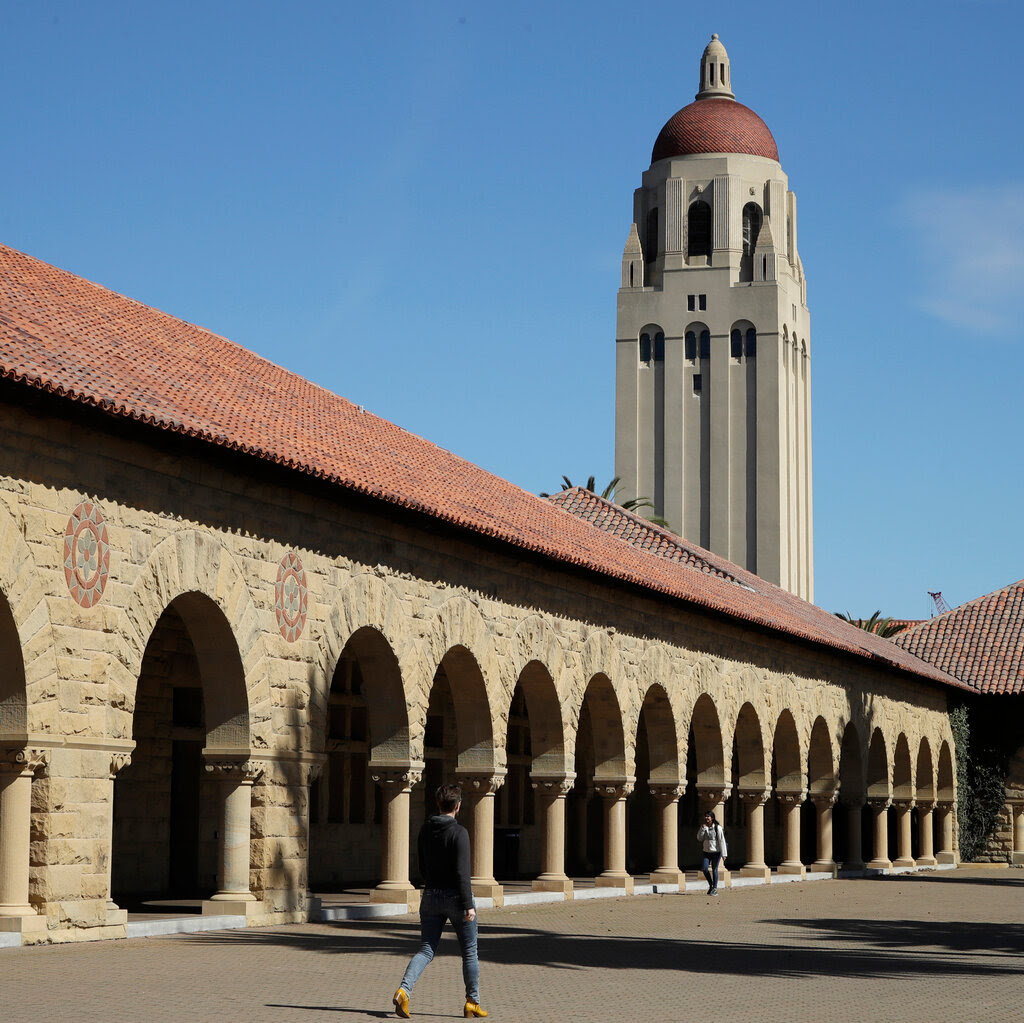
Stanford University.Ben Margot/Associated Press

A heckler’s veto
Stuart Kyle Duncan — a federal appeals court judge appointed by Donald Trump — visited Stanford Law School this month to give a talk. It didn’t go well.
Students frequently interrupted him with heckling. One protester called for his daughters to be raped, Duncan said. When he asked Stanford administrators to calm the crowd, the associate dean for diversity, equity and inclusion walked to the lectern and instead began her remarks by criticizing him. “For many people here, your work has caused harm,” she told him.
Tiếp tục đọc “A federal judge spoke at Stanford Law School. Chaos ensued.” →

TikTok CEO in the hot seat: 5 takeaways from his first appearance before US Congress

Catherine Thorbecke

By Catherine Thorbecke, CNN

Updated 5:12 PM EDT, Thu March 23, 2023

03:15New YorkCNN — 

In his first appearance before Congress on Thursday, TikTok CEO Shou Chew was grilled by lawmakers who expressed deep skepticism about his company’s attempts to protect US user data and ease concerns about its ties to China.

It was a rare chance for the public to hear from the Chew, who offers very few interviews. Yet his company’s app is among the most popular in America, with more than 150 million active users.

Here are the biggest takeaways from Thursday’s hearing.

Washington has already made up its mind about TikTok

The hearing, which lasted for more than five hours, kicked off with calls from a lawmaker to ban the app in the United States and remained combative throughout. It offered a vivid display of the bipartisan push to crack down on the popular short-form video app and the company’s uphill battle to improve relations with Washington.

Washington Republican Rep. Cathy McMorris Rodgers, the chair of the House Energy and Commerce Committee, opened Thursday’s hearing by telling Shou: “Your platform should be banned.”

23 TikTok STOCK

The US government is once again threatening to ban TikTok. What you should know

Chew used his testimony to stress TikTok’s independence from China and play up its US ties. “TikTok itself is not available in mainland China, we’re headquartered in Los Angeles and Singapore, and we have 7,000 employees in the U.S. today,” he said in his opening remarks.

“Still, we have heard important concerns about the potential for unwanted foreign access to US data and potential manipulation of the TikTok US ecosystem,” Chew said. “Our approach has never been to dismiss or trivialize any of these concerns. We have addressed them with real action.”

Tiếp tục đọc “TikTok CEO in the hot seat: 5 takeaways from his first appearance before US Congress” →

Summit for Democracy Snubs for Two Troublesome U.S. Allies

Foreign Policy Sitrep

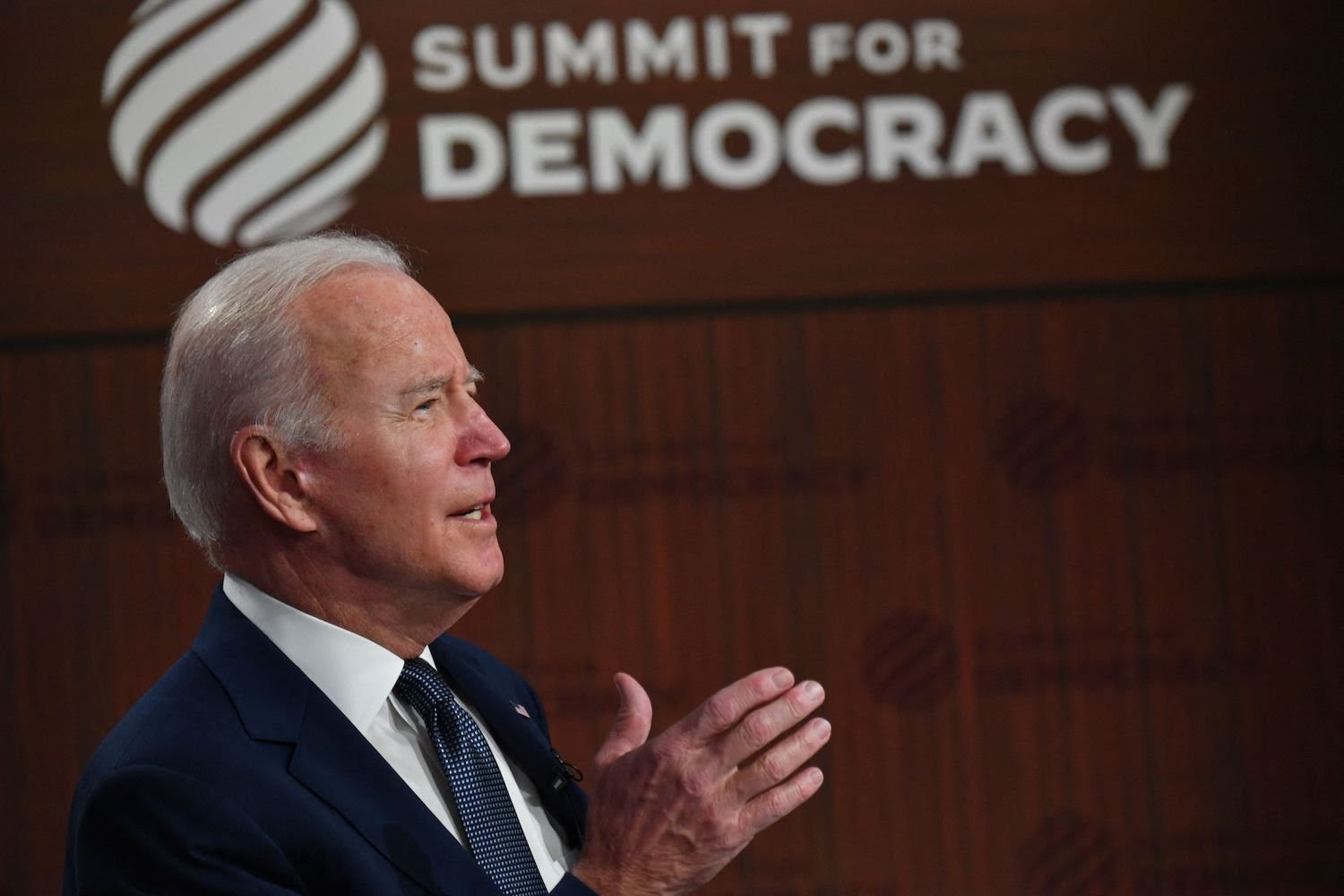
The Biden administration is inviting around 120 countries to join its Summit for Democracy next week, but two of its NATO allies aren’t getting a call.

Turkey and Hungary have been left off the invitation list for the major summit, which Team Biden bills as one of its hallmark foreign-policy initiatives, meant to shore up democracies worldwide and stanch the rise of autocracies.

Backsliding. The spurning of two NATO allies, confirmed by three U.S. officials who spoke to SitRep, reflects a mounting concern with the degree of democratic backsliding in Turkey and Hungary, even though Washington is relying on both to support the West’s strategy against Russia as the war in Ukraine rages on—and needs both to approve Finland and Sweden’s bids to join NATO as full-fledged allies.

Tiếp tục đọc “Summit for Democracy Snubs for Two Troublesome U.S. Allies” →

Xi and Putin Have the Most Consequential Undeclared Alliance in the World

It’s become more important than Washington’s official alliances today.

By Graham Allison, a professor of government at the Harvard Kennedy School.

MARCH 23, 2023, 5:42 PM

Chinese President Xi Jinping’s decision to visit Moscow this week in his first trip abroad since his reelection comes as no surprise to those who have been watching carefully. When one steps back and analyzes the relationship between China and Russia, the brute facts cannot be denied: Along every dimension—personal, economic, military, and diplomatic—the undeclared alliance that Xi has built with Russian President Vladimir Putin has become much more consequential than most of the United States’ official alliances today.

Tiếp tục đọc “Xi and Putin Have the Most Consequential Undeclared Alliance in the World” →

US Navy denying china’s claims of illegally entering waters

Al Jazeera English – 23-3-2023

The United States has denied Chinese claims that a US destroyer was driven out from waters around the contested Paracel Islands after it “illegally” entered the area.

China’s state media described the US ship as having trespassed in “Chinese territorial waters”.

The US Navy on Thursday disputed the PLA statement, saying the destroyer was conducting “routine operations” in the South China Sea and was not expelled by Chinese ships.

Al Jazeera’s Katrina Yu joins us live from Beijing to give us the latest updates.

Thấy gì từ các công trình nước sinh hoạt tập trung ở Tây Nguyên? (2 bài)

Bài 1 – Hàng trăm công trình không hiệu quả

Báo dân tộc – Lê Hường – 12:08, 08/06/2021

Những năm qua, vùng nông thôn các tỉnh khu vực Tây Nguyên, từ nhiều nguồn vốn khác nhau, hàng trăm công trình cấp nước sinh hoạt tập trung được đầu tư, xây dựng; nhưng, hiện nay số công trình hoạt động hiệu quả, chỉ chiếm một tỉ lệ rất nhỏ. Thực trạng này, gây lãng phí ngân sách nhà nước, đồng thời đời sống sinh hoạt của người dân vẫn tiếp tục gặp khó khăn.

Công trình nước sạch ở xã Ea Pô bỏ hoang

Nhiều công trình vừa đưa vào sử dụng đã ngưng hoạt động, nhiều công trình khác hư hỏng không được sử chữa dẫn đến bỏ hoang gây lãng phí… Trong khi đó, người dân vẫn phải sử dụng nguồn nước không đảm bảo để ăn uống, sinh hoạt. Đó là thực tế tồn tại lâu nay tại nhiều vùng nông thôn, miền núi của khu vực Tây Nguyên.

Tiếp tục đọc “Thấy gì từ các công trình nước sinh hoạt tập trung ở Tây Nguyên? (2 bài)” →

AR6 Synthesis Report: Climate Change 2023

The Intergovernmental Panel on Climate Change (IPCC) is the United Nations body for assessing the science related to climate change.

Summary for Policy Makers >>

Longer Report >>

More information >>

Headline Statements

Headline statements are the overarching conclusions of the approved Summary for Policymakers which, taken together, provide a concise narrative.

ACurrent Status and Trends
Observed Warming and its Causes
A.1Human activities, principally through emissions of greenhouse gases, have unequivocally caused global warming, with global surface temperature reaching 1.1°C above 1850–1900 in 2011–2020. Global greenhouse gas emissions have continued to increase, with unequal historical and ongoing contributions arising from unsustainable energy use, land use and land-use change, lifestyles and patterns of consumption and production across regions, between and within countries, and among individuals (high confidence). {2.1, Figure 2.1, Figure 2.2}.
Observed Changes and Impacts
A.2Widespread and rapid changes in the atmosphere, ocean, cryosphere and biosphere have occurred. Human-caused climate change is already affecting many weather and climate extremes in every region across the globe. This has led to widespread adverse impacts and related losses and damages to nature and people (high confidence). Vulnerable communities who have historically contributed the least to current climate change are disproportionately affected (high confidence). {2.1, Table 2.1, Figure 2.2 and 2.3} (Figure SPM.1)
Current Progress in Adaptation and Gaps and Challenges
A.3Adaptation planning and implementation has progressed across all sectors and regions, with documented benefits and varying effectiveness. Despite progress, adaptation gaps exist, and will continue to grow at current rates of implementation. Hard and soft limits to adaptation have been reached in some ecosystems and regions. Maladaptation is happening in some sectors and regions. Current global financial flows for adaptation are insufficient for, and constrain implementation of, adaptation options, especially in developing countries (high confidence). {2.2, 2.3}
Current Mitigation Progress, Gaps and Challenges
A.4Policies and laws addressing mitigation have consistently expanded since AR5. Global GHG emissions in 2030 implied by nationally determined contributions (NDCs) announced by October 2021 make it likely that warming will exceed 1.5°C during the 21st century and make it harder to limit warming below 2°C. There are gaps between projected emissions from implemented policies and those from NDCs and finance flows fall short of the levels needed to meet climate goals across all sectors and regions. (high confidence) {2.2, 2.3, Figure 2.5, Table 2.2}
BFuture Climate Change, Risks, and Long-Term Responses
Future Climate Change
B.1Continued greenhouse gas emissions will lead to increasing global warming, with the best estimate of reaching 1.5°C in the near term in considered scenarios and modelled pathways. Every increment of global warming will intensify multiple and concurrent hazards (high confidence). Deep, rapid, and sustained reductions in greenhouse gas emissions would lead to a discernible slowdown in global warming within around two decades, and also to discernible changes in atmospheric composition within a few years (high confidence). {Cross-Section Boxes 1 and 2, 3.1, 3.3, Table 3.1, Figure 3.1, 4.3} (Figure SPM.2, Box SPM.1)
Climate Change Impacts and Climate-Related Risks
B.2For any given future warming level, many climate-related risks are higher than assessed in AR5, and projected long-term impacts are up to multiple times higher than currently observed (high confidence). Risks and projected adverse impacts and related losses and damages from climate change escalate with every increment of global warming (very high confidence). Climatic and non-climatic risks will increasingly interact, creating compound and cascading risks that are more complex and difficult to manage (high confidence). {Cross-Section Box.2, 3.1, 4.3, Figure 3.3, Figure 4.3} (Figure SPM.3, Figure SPM.4)
Likelihood and Risks of Unavoidable, Irreversible or Abrupt Changes
B.3Some future changes are unavoidable and/or irreversible but can be limited by deep, rapid and sustained global greenhouse gas emissions reduction. The likelihood of abrupt and/or irreversible changes increases with higher global warming levels. Similarly, the probability of low-likelihood outcomes associated with potentially very large adverse impacts increases with higher global warming levels. (high confidence) {3.1}
Adaptation Options and their Limits in a Warmer World
B.4Adaptation options that are feasible and effective today will become constrained and less effective with increasing global warming. With increasing global warming, losses and damages will increase and additional human and natural systems will reach adaptation limits. Maladaptation can be avoided by flexible, multi-sectoral, inclusive, long-term planning and implementation of adaptation actions, with co-benefits to many sectors and systems. (high confidence) {3.2, 4.1, 4.2, 4.3}
Carbon Budgets and Net Zero Emissions
B.5Limiting human-caused global warming requires net zero CO2 emissions. Cumulative carbon emissions until the time of reaching net-zero CO2 emissions and the level of greenhouse gas emission reductions this decade largely determine whether warming can be limited to 1.5°C or 2°C (high confidence). Projected CO2 emissions from existing fossil fuel infrastructure without additional abatement would exceed the remaining carbon budget for 1.5°C (50%) (high confidence). {2.3, 3.1, 3.3, Table 3.1}
Mitigation Pathways
B.6All global modelled pathways that limit warming to 1.5°C (>50%) with no or limited overshoot, and those that limit warming to 2°C (>67%), involve rapid and deep and, in most cases, immediate greenhouse gas emissions reductions in all sectors this decade. Global net zero CO2 emissions are reached for these pathway categories, in the early 2050s and around the early 2070s, respectively. (high confidence) {3.3, 3.4, 4.1, 4.5, Table 3.1} (Figure SPM.5, Box SPM.1)
Overshoot: Exceeding a Warming Level and Returning
B.7If warming exceeds a specified level such as 1.5°C, it could gradually be reduced again by achieving and sustaining net negative global CO2 emissions. This would require additional deployment of carbon dioxide removal, compared to pathways without overshoot, leading to greater feasibility and sustainability concerns. Overshoot entails adverse impacts, some irreversible, and additional risks for human and natural systems, all growing with the magnitude and duration of overshoot. (high confidence) {3.1, 3.3, 3.4, Table 3.1, Figure 3.6}
CResponses in the Near Term
Urgency of Near-Term Integrated Climate Action
C.1Climate change is a threat to human well-being and planetary health (very high confidence). There is a rapidly closing window of opportunity to secure a liveable and sustainable future for all (very high confidence). Climate resilient development integrates adaptation and mitigation to advance sustainable development for all, and is enabled by increased international cooperation including improved access to adequate financial resources, particularly for vulnerable regions, sectors and groups, and inclusive governance and coordinated policies (high confidence). The choices and actions implemented in this decade will have impacts now and for thousands of years (high confidence). {3.1, 3.3, 4.1, 4.2, 4.3, 4.4, 4.7, 4.8, 4.9, Figure 3.1, Figure 3.3, Figure 4.2} (Figure SPM.1; Figure SPM.6)
The Benefits of Near-Term Action
C.2Deep, rapid and sustained mitigation and accelerated implementation of adaptation actions in this decade would reduce projected losses and damages for humans and ecosystems (very high confidence), and deliver many co-benefits, especially for air quality and health (high confidence). Delayed mitigation and adaptation action would lock-in high-emissions infrastructure, raise risks of stranded assets and cost-escalation, reduce feasibility, and increase losses and damages (high confidence). Near-term actions involve high up-front investments and potentially disruptive changes that can be lessened by a range of enabling policies (high confidence). {2.1, 2.2, 3.1, 3.2, 3.3, 3.4, 4.1, 4.2, 4.3, 4.4, 4.5, 4.6, 4.7, 4.8}
Mitigation and Adaptation Options across Systems
C.3Rapid and far-reaching transitions across all sectors and systems are necessary to achieve deep and sustained emissions reductions and secure a liveable and sustainable future for all. These system transitions involve a significant upscaling of a wide portfolio of mitigation and adaptation options. Feasible, effective, and low-cost options for mitigation and adaptation are already available, with differences across systems and regions. (high confidence) {4.1, 4.5, 4.6} (Figure SPM.7)
Synergies and Trade-Offs with Sustainable Development
C.4Accelerated and equitable action in mitigating and adapting to climate change impacts is critical to sustainable development. Mitigation and adaptation actions have more synergies than trade-offs with Sustainable Development Goals. Synergies and trade-offs depend on context and scale of implementation. (high confidence) {3.4, 4.2, 4.4, 4.5, 4.6, 4.9, Figure 4.5}
Equity and Inclusion
C.5Prioritising equity, climate justice, social justice, inclusion and just transition processes can enable adaptation and ambitious mitigation actions and climate resilient development. Adaptation outcomes are enhanced by increased support to regions and people with the highest vulnerability to climatic hazards. Integrating climate adaptation into social protection programs improves resilience. Many options are available for reducing emission-intensive consumption, including through behavioural and lifestyle changes, with co-benefits for societal well-being. (high confidence) {4.4, 4.5}
Governance and Policies
C.6Effective climate action is enabled by political commitment, well-aligned multilevel governance, institutional frameworks, laws, policies and strategies and enhanced access to finance and technology. Clear goals, coordination across multiple policy domains, and inclusive governance processes facilitate effective climate action. Regulatory and economic instruments can support deep emissions reductions and climate resilience if scaled up and applied widely. Climate resilient development benefits from drawing on diverse knowledge. (high confidence) {2.2, 4.4, 4.5, 4.7}
Finance, Technology and International Cooperation
C.7Finance, technology and international cooperation are critical enablers for accelerated climate action. If climate goals are to be achieved, both adaptation and mitigation financing would need to increase many-fold. There is sufficient global capital to close the global investment gaps but there are barriers to redirect capital to climate action. Enhancing technology innovation systems is key to accelerate the widespread adoption of technologies and practices. Enhancing international cooperation is possible through multiple channels. (high confidence) {2.3, 4.8}

‘It can be done. It must be done’: IPCC delivers definitive report on climate change, and where to now

theconversation.com

The world is in deep trouble on climate change, but if we really put our shoulder to the wheel we can turn things around. Loosely, that’s the essence of today’s report by the Intergovernmental Panel on Climate Change (IPCC).

The IPCC is the world’s official body for assessment of climate change. The panel has just released its Synthesis Report, capping off seven years of in-depth assessments on various topics.

The report draws out the key insights from six previous reports, written by hundreds of expert authors. They spanned many thousands of pages and were informed by hundreds of thousands of comments by governments and the scientific community.

Tiếp tục đọc “‘It can be done. It must be done’: IPCC delivers definitive report on climate change, and where to now” →

El Nino sẽ khiến mùa hè năm nay nắng nóng, khô hạn diện rộng

SKĐS – Chu kỳ La Nina chấm dứt để chuyển sang El Nino, dự báo mùa hè năm 2023 sẽ khắc nghiệt với khô hạn diện rộng, nắng nóng gay gắt với nền nhiệt cao.

Nắng nóng đến sớm

Theo Trung tâm Khí tượng thủy văn quốc gia nhận định, nắng nóng có khả năng xuất hiện cục bộ tại Tây Bắc Bộ, vùng núi phía Tây Bắc và Trung Trung Bộ trong nửa cuối tháng 3, đầu tháng 4/2023; riêng khu vực Nam Bộ có thể xuất hiện nhiều ngày nắng nóng, tập trung ở các tỉnh miền Đông Nam Bộ.

Cao điểm nắng nóng năm nay xuất hiện từ tháng 6 đến tháng 8, chủ yếu ở Bắc Bộ và Trung Bộ, cường độ nắng nóng có thể gay gắt hơn so với cùng thời kỳ năm 2022. Trong các tháng này, nhiệt độ trên phạm vi cả nước phổ biến ở mức cao hơn khoảng 0,5 độ C so với trung bình nhiều năm cùng thời kỳ.

Cũng theo cơ quan khí tượng, từ tuần sau, các hình thế thời tiết gây nắng nóng bắt đầu xuất hiện đó là vùng áp thấp nóng phía Tây mở rộng về nước ta, áp cao cận nhiệt đới ổn định và khối khí biển từ vịnh Bengal thổi tới theo hướng Tây Nam. Đối với Bắc Bộ và Trung Bộ, thời gian xảy ra nắng nóng dự báo khoảng từ ngày 21 đến ngày 24/03, còn Nam Bộ khả năng cường độ nắng sẽ tiếp tục duy trì.

El Nino sẽ khiến mùa hè năm nay nắng nóng, khô hạn diện rộng - Ảnh 2.
Mùa hè năm nay sẽ đến sớm và nắng nóng gay gắt hơn.

Tiếp tục đọc “El Nino sẽ khiến mùa hè năm nay nắng nóng, khô hạn diện rộng” →

Khủng hoảng đăng kiểm

VNE – Thứ hai, 13/3/2023, 09:00 (GMT+7)

4 tháng từ khi những bê bối trong đăng kiểm bị phát hiện, toàn ngành chao đảo trước khủng hoảng chưa từng có trong lịch sử gần 30 năm.

Tham khảo ý tưởng từ Reuters

Đi hai trạm đăng kiểm đều đóng cửa, anh Nguyễn Hữu Trung vượt 30 km từ nhà ở huyện Ứng Hoà tới trung tâm 29-06V tại Tam Hiệp, huyện Thanh Trì, Hà Nội. Trước mặt anh, ôtô xếp hàng dài gần hai km trên đường 70 dẫn vào nơi kiểm định. Chiếc xe 5 chỗ – “cần câu cơm” duy nhất nuôi sống cả gia đình, sẽ hết hạn đăng kiểm trong 4 ngày tới. Không có lựa chọn, anh đành nhập vào hàng xe, chờ đợi.

Tiếp tục đọc “Khủng hoảng đăng kiểm” →

Tăng cường năng lực sản xuất chương trình truyền hình tiếng dân tộc

A.T –  21:00 thứ ba ngày 27/10/2020 

(HNMO) – Thủ tướng Chính phủ vừa phê duyệt mục tiêu, nhiệm vụ tăng cường năng lực sản xuất chương trình truyền hình tiếng dân tộc giai đoạn 2021-2025.

Mục tiêu nhằm tăng cường công tác thông tin tuyên truyền về đường lối, chủ trương của Đảng, chính sách, pháp luật của Nhà nước đến với đồng bào dân tộc thiểu số, góp phần nâng cao hiệu lực, hiệu quả trong thực hiện chính sách dân tộc, phát huy giá trị, bản sắc văn hóa các dân tộc thiểu số, tăng cường đồng thuận xã hội, củng cố tăng cường khối đại đoàn kết các dân tộc, nâng cao niềm tin của đồng bào đối với Đảng và Nhà nước.

Nâng tổng thời lượng phát sóng trên 4 kênh VTV5, VTV5 Tây Nam Bộ, VTV5 Tây Nguyên và VTV5 Tây Bắc lên 96 giờ/ngày (mỗi kênh 24 giờ/ngày), trong đó tổng thời lượng sản xuất chương trình mới của 4 kênh đến năm 2025 là 13 giờ 30 phút/ngày/4 kênh.

Nâng tổng số ngôn ngữ sản xuất, phát sóng lên 27 (tăng 4 ngôn ngữ so với hiện nay) gồm: H’Mông, Thái, Dao, Mường, Sán Chí, Ê Đê, Jơ Rai, Ba Na, Xê Đăng, Jẻ Triêng, Raglai, K’Ho, S’Tiêng, Chăm, Khmer, Pa Cô – Vân Kiều, Cơ Tu, Cao Lan, Hà Nhì, H’Rê, Chu Ru, Chơ Ro, M’Nông, Tày, Hoa, Ca Dong và tiếng Việt.

Tiếp tục đọc “Tăng cường năng lực sản xuất chương trình truyền hình tiếng dân tộc” →

Vienna Convention on Diplomatic Relations (1961) & US Diplomatic Relations Act (1978) – Vienna Comvention on Consular Relations (1963)

  • Vienna Convention on Diplomatic Relations (1961)

Download from UN Website >>

  • [US] Diplomatic Relations Act (1978), to implement Vienna Convention on Diplomatic Convention

Download from goveinfo.gov >>

  • Vienna Convention on Consular Relations (1963)

Download from UN Website >>

  • Diplomatic and Consular Immunity: Guidance for Law Enforcementand Judicial Authorities (by ÚS Department of State, Office of Foreign Misions)

Download from Perma.cc >>

Nhìn lại 35 năm đổi mới chính sách tiền tệ và hoạt động của hệ thống ngân hàng Việt Nam

tạp chí ngân hàng – 01/06/2021

Trải qua 70 năm xây dựng, củng cố và phát triển (1951 – 2021), hệ thống ngân hàng Việt Nam đã không ngừng lớn mạnh và đạt được những thành tựu rất quan trọng, góp phần tích cực vào sự nghiệp xây dựng và bảo vệ Tổ quốc. Trong mỗi giai đoạn, sự đổi mới, phát triển của hoạt động ngân hàng đều gắn liền với vận mệnh của dân tộc, đồng thời kế thừa và phát huy truyền thống phát triển của Ngành. Đáng chú ý là, bước tiến quan trọng được ghi nhận từ năm 1986, khi Việt Nam bắt đầu thực hiện chính sách mở cửa nền kinh tế trước những khó khăn chồng chất của đất nước và diễn biến ngày càng phức tạp trên chính trường quốc tế.

Tiếp tục đọc “Nhìn lại 35 năm đổi mới chính sách tiền tệ và hoạt động của hệ thống ngân hàng Việt Nam” →

A translation problem – Americans use Fahrenheit, but many climate reports exclusively use Celsius.

March 21, 2023
By German Lopez, The Morning, New York Times
A thermometer reading in Death Valley National Park.Roger Kisby for The New York Times
Clear communication
The world’s top scientists released their latest report yesterday warning that the Earth is on pace for severe damage from climate change. But many Americans might have a hard time understanding the report because the analysis, like those before it, talks about temperatures exclusively in Celsius.
The U.S. is among just a few countries that still use Fahrenheit temperatures. And while Americans are a relatively small audience on a global scale, they are an important one for climate science: The U.S. has historically emitted more planet-warming greenhouse gases than any other country. Improving Americans’ understanding of the issue could be crucial to any push for changes.
Tiếp tục đọc “A translation problem – Americans use Fahrenheit, but many climate reports exclusively use Celsius.” →