Giữa lúc dịch bệnh căng thẳng, ngày càng có nhiều tiếng nói kêu gọi chú trọng phát triển y tế cơ sở. Nhưng y tế cơ sở là y tế nào, huyện hay xã?
Tôi đặt câu hỏi như vậy vì y tế Việt Nam phân thành ba cấp kỹ thuật: tuyến trung ương, tuyến tỉnh và tuyến y tế cơ sở. Tuy nhiên trong ngôn ngữ hàng ngày cũng như trong tư duy làm việc thì một cách không chính thức, hệ thống y tế được phân theo bốn cấp tương ứng với đơn vị hành chính: tuyến trung ương, tuyến tỉnh, tuyến huyện và tuyến xã. Vậy vai trò của y tế huyện nằm ở đâu?
TTCT – Mặc dù được đánh giá là quốc gia có tiềm năng về dược liệu, y học cổ truyền, sản xuất vắc xin và phát triển hóa dược, nhưng VN hiện vẫn phải nhập khẩu trên 90% nguyên liệu sản xuất thuốc. Đây là lý do ngành công nghiệp dược vẫn ở trong tình thế chông chênh.
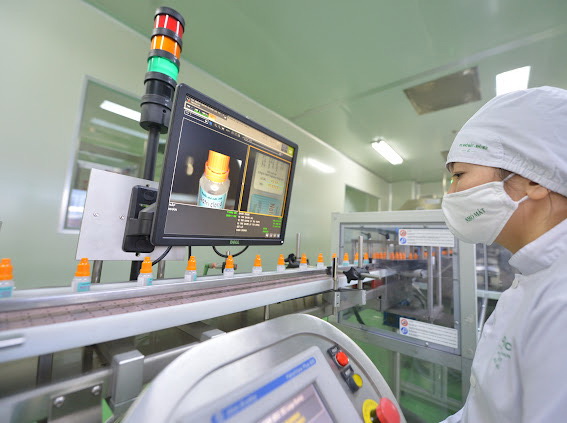
Dây chuyền sản xuất thuốc hiện đại tại Nhà máy Traphaco Hưng Yên. Ảnh: T.Trang
Theo phân loại của WHO, công nghiệp dược VN mới ở gần cấp độ 3, tức có công nghiệp dược nội địa, có sản xuất thuốc generic (thuốc sao chép) và xuất khẩu một số dược phẩm.
Còn theo phân loại 5 mức phát triển của Tổ chức Phát triển công nghiệp Liên Hiệp Quốc (UNIDO), công nghiệp dược VN mới ở mức 3 – “công nghiệp dược nội địa sản xuất đa số thành phẩm từ nguyên liệu nhập”.
Climate change can exacerbate a full 58% of the infectious diseases that humans come in contact with worldwide, from common waterborne viruses to deadly diseases like plague, our new research shows
With climate change influencing more than 1,000 transmission pathways like those and climate hazards increasingly globally, we concluded that expecting societies to successfully adapt to all of them isn’t a realistic option. The world will need to reduce the greenhouse gas emissions that are driving climate change to reduce these risks.
TTCT – Tình trạng thiếu thuốc, trang thiết bị y tế đang diễn ra ở nhiều nơi trong cả nước.
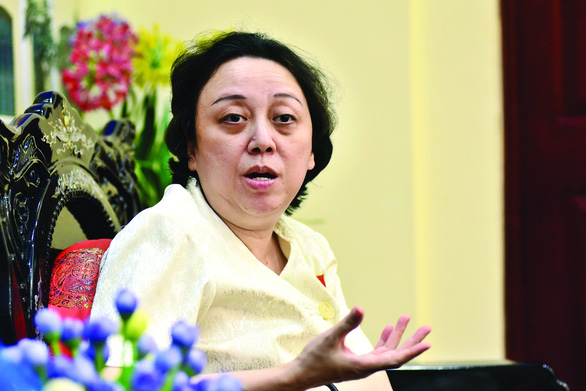
Tình trạng thiếu thuốc, trang thiết bị y tế đang diễn ra ở nhiều nơi trong cả nước. Các địa phương, bệnh viện (BV) vẫn loay hoay, hoạt động điều trị của các BV vốn đã khó càng thêm khó. Tuổi Trẻ Cuối Tuần trao đổi với phó giáo sư, dược sĩ Phạm Khánh Phong Lan, phó chủ tịch Hội Dược học Việt Nam, về việc đấu thầu, mua sắm thuốc, trang thiết bị y tế.
A large-scale study has highlighted the “triple burden” of child malnutrition in Southeast Asia – coexistence of undernutrition, micronutrient deficiencies and overweight/obesity.
The SEANUTS II study has emphasized an urgent need to improve food security and nutrition among children in Southeast Asia. Photo by FCV
These three burdens often coexist in the same country and can even occur in the same family.
The study of nearly 14,000 children aged six months to 12 years in Vietnam, Indonesia, Malaysia and Thailand was conducted between 2019 and 2021. The children were from urban and rural schools, community health centers and sub-district administrative organizations in the four countries.
This weekend marks the end of Pride month, as cities across the country host events to celebrate the L.G.B.T.Q. community.
It is also a fraught moment in public health: A global outbreak of monkeypox is causing concern, with many of the cases clustered around men who have sex with men.
Experts are now trying to strike a delicate balance, warning people who may be at higher risk, without stigmatizing a community that has often been scapegoated for health scares in the past.
Trong những ngày liên tục có các lãnh đạo, nhân viên ngành y bị bắt, tôi nhận được nhiều lời động viên, an ủi và cả câu hỏi rằng, chỗ chúng tôi “có xao động gì không”.
Tôi không xao động, không bối rối vì những sự việc ấy xảy ra dễ hiểu. Nhiều nguyên nhân dẫn đến hành vi phạm pháp trong ngành đã được nói đến từ lâu. Có thể kể đến: Mức đãi ngộ thấp dẫn tới tham nhũng vặt để “tự cứu lấy mình”; Bổ nhiệm lãnh đạo không đủ rõ ràng, thậm chí không căn cứ vào chuyên môn, mở đường cho “yếu tố” đồng tiền xuất hiện; Những kẽ hở của pháp luật như mời chào người ta phạm luật, không khác gì cái bẫy.
Giá thuốc là một cái bẫy, một nguyên nhân dẫn đến tham nhũng trong ngành y, điều mà những người lăn lộn trong ngành sẽ thấy rõ.
The annual meeting of the World Health Assembly (WHA) concluded on May 28. At the gathering, member states of the World Health Organization (WHO) made many decisions, some of which stood out as potential turning points for global health. The WHA did not ignore COVID-19, but member states primarily grappled with challenges that the pandemic created and that must be addressed beyond COVID-19. However, member states demonstrated as much caution as resolution in some of the most prominent decisions taken. This wariness creates uncertainty about the importance of these decisions as the WHO labors to put global health governance on more solid post-pandemic footing.
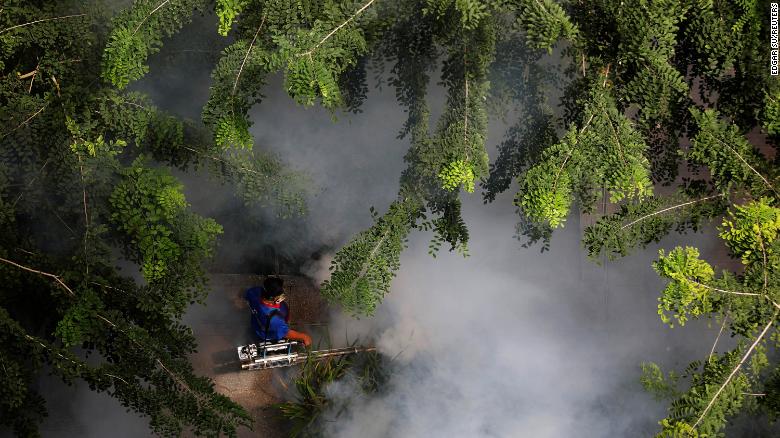
A worker fogs a housing estate for mosquitoes in Singapore on August 27, 2020.
(CNN)Singapore says it is facing a dengue “emergency” as it grapples with an outbreak of the seasonal disease that has come unusually early this year.
The Southeast Asian city-state has already exceeded 11,000 cases — far beyond the 5,258 it reported throughout 2021 — and that was before June 1, when its peak dengue season traditionally begins.
Experts are warning that it’s a grim figure not only for Singapore — whose tropical climate is a natural breeding ground for the Aedes mosquitoes that carry the virus — but also for the rest of the world. That’s because changes in the global climate mean such outbreaks are likely to become more common and widespread in the coming years.
A century ago, the colonial government was active in inoculating Vietnamese citizens against a variety of diseases.
While Vietnam’s recent massive COVID-19 vaccine efforts have proven a great success in reducing deaths and returning the country to some semblance of normalcy, it is hardly the first time a government here has stepped in to inoculate the population against dangerous contagions. About 100 years ago, the French managed a vigorous campaign to inoculate indigenous Vietnamese against a variety of diseases such as smallpox, cholera and tuberculosis as part of larger health and sanitation initiatives.
People enjoy beer at a Hanoi restaurant. Photo by ReutersTran Van Minh of HCMC says he has “a knack for drinking” and feels “uneasy” if he does not drink for two or three days.
The factory worker claims he is not an alcoholic though he goes out drinking several times a week and consumes around a dozen cans of beer each time or the equivalent in hard liquor.
“Like many others, I drink because it helps me forget my problems.”
Often he blacks out after getting too drunk and wakes up the next day without remembering what happened.
Minh is one of many Vietnamese men who claim they cannot survive without drinking alcohol.
A Nikkei reporter reflects on a milestone in the country’s path out of pandemic
Roadblocks in Ho Chi Minh City were common in October, but now Vietnam has eliminated almost all COVID restrictions for foreign and domestic travel. (Photo by Lien Hoang)
HO CHI MINH CITY — Last week after a trip to California, I returned to Vietnam with a COVID vaccine certificate, negative PCR test and smartphone tracing app in hand. The green-uniformed immigration officer at the airport asked for none of it. Inside his plexiglass cage, the 20-something officer gestured for me to pull down my mask for a second. I spent less than a minute and zero words at passport control and then was back outside on the balmy, car horn-filled streets of Ho Chi Minh City.
Hanoi (VNS/VNA) – Vietnam is in danger of missing the target of providing 93-95 percent of people in rural areas, and at least 95 percent in urban areas, access to clean water by 2025.
VNA Wednesday, April 27, 2022 10:18
Three members of a family get clean water from a tap in Bu Ren commune, in the southern province of Binh Phuoc. (Photo: VNA)
Data revealed at a conference in Hanoi on April 26 showed that only 84.2 percent of people in urban areas have access to clean water. That number is just 34.8 percent in rural areas.
The target was set under Resolution No. 16/2021/QH15, as part of the five-year socio-economic development plan for 2021-2025.
Nguyen Quang Dong, Director of the Institute for Policy Research and Media Development (IPS), already pointed out some reasons for the situation.
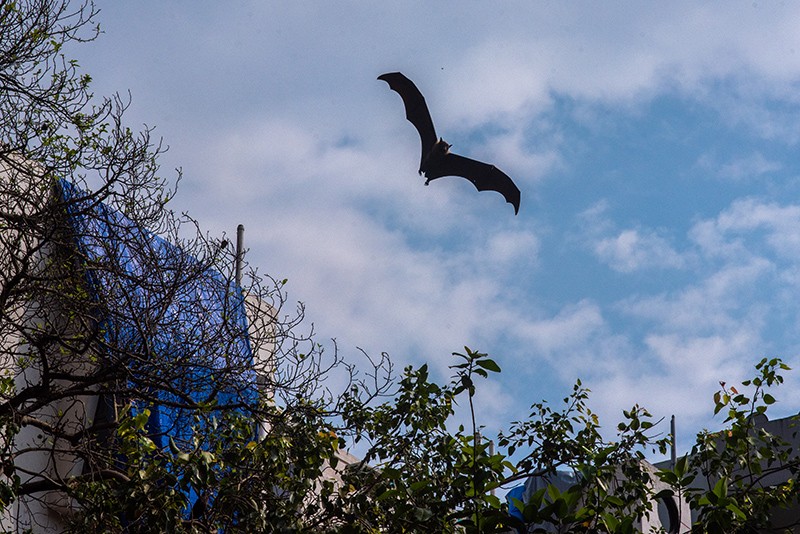
Bats will have a large contribution to virus transmission between species in the future, a modelling study finds.Credit: Pratik Chorge/Hindustan Times via Getty
Over the next 50 years, climate change could drive more than 15,000 new cases of mammals transmitting viruses to other mammals, according to a study published in Nature1. It’s one of the first to predict how global warming will shift wildlife habitats and increase encounters between species capable of swapping pathogens, and to quantify how many times viruses are expected to jump between species.
Many researchers say that the COVID-19 pandemic probably started when a previously unknown coronavirus passed from a wild animal to a human: a process called zoonotic transmission. A predicted rise in viruses jumping between species could trigger more outbreaks, posing a serious threat to human and animal health alike, the study warns — providing all the more reason for governments and health organizations to invest in pathogen surveillance and to improve health-care infrastructure.
The study is “a critical first step in understanding the future risk of climate and land-use change on the next pandemic”, says Kate Jones, who models interactions between ecosystems and human health at University College London.
The research predicts that much of the new virus transmission will happen when species meet for the first time as they move to cooler locales because of rising temperatures. And it projects that this will occur most often in species-rich ecosystems at high elevations, particularly areas of Africa and Asia, and in areas that are densely populated by humans, including Africa’s Sahel region, India and Indonesia. Assuming that the planet warms by no more than 2 °C above pre-industrial temperatures this century — a future predicted by some climate analyses — the number of first-time meetings between species will double by 2070, creating virus-transmission hotspots, the study says.
Marnie Hunter and Forrest Brown, CNN • Updated 1st March 2022
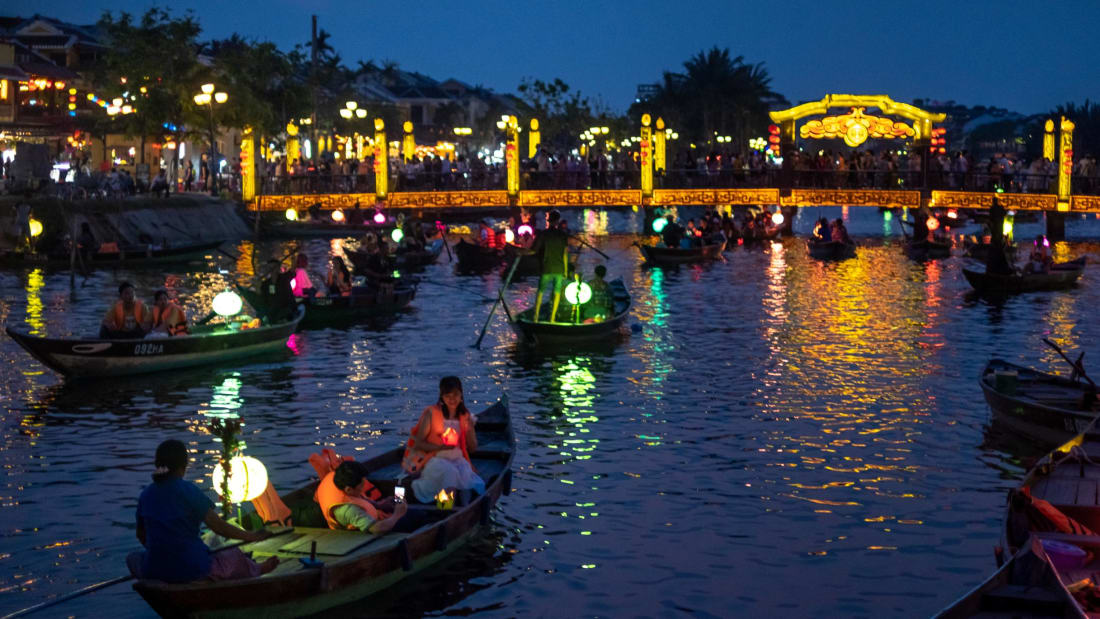
Tourists take boat tours through the Thu Bon River on April 24, 2021, in Hoi An, Vietnam. (Linh Pham/Getty Images)
(CNN) — Vietnam was the only destination added to the US Centers for Disease Control and Prevention’s highest-risk Level 4 category for travel on Monday.
The “very high” risk category still contains more destinations than all the other levels put together, with nearly 140 places now at Level 4. In early January, there were around 80 destinations listed there.
The CDC places a destination at “Level 4: Covid-19 Very High” risk when more than 500 cases per 100,000 residents are registered in the past 28 days.
To recap, a single destination was added to Level 4 on February 28: