Part I: Early Years and Escalation
Part II: Losses and Withdrawal
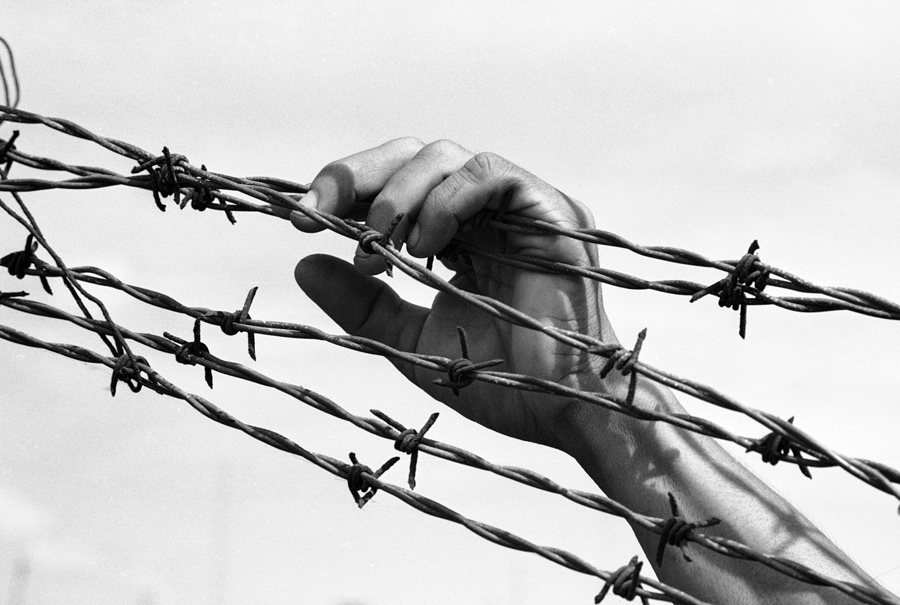
Part III: Hands of a Nation
The Atlantic, Alan Taylor, Apr 1, 2015
26 Photos
Conversations on Vietnam Development
Part I: Early Years and Escalation
Part II: Losses and Withdrawal
Part III: Hands of a Nation
The Atlantic, Alan Taylor, Apr 1, 2015
26 Photos
Part I: Early Years and Escalation
Part II: Losses and Withdrawal
Part III: Hands of a Nation
The Attlantic, Alan Taylor, Mar 31, 2015.
50 Photos
Early in 1968, North Vietnamese troops and the Viet Cong launched the largest battle of the Vietnam War, attacking more than 100 cities simultaneously with more than 80,000 fighters. After brief losses, U.S. and South Vietnamese forces regained lost territory, and dealt heavy losses to the North. Tactically, the offensive was a huge loss for the North, but it marked a significant turning point in public opinion and political support, leading to a drawdown of U.S. troop involvement, and eventual withdrawal in 1973. This photo essay, part two of a three-part series, covers the war years between 1968 and 1975.
Warning: Several of these photographs are graphic in nature.
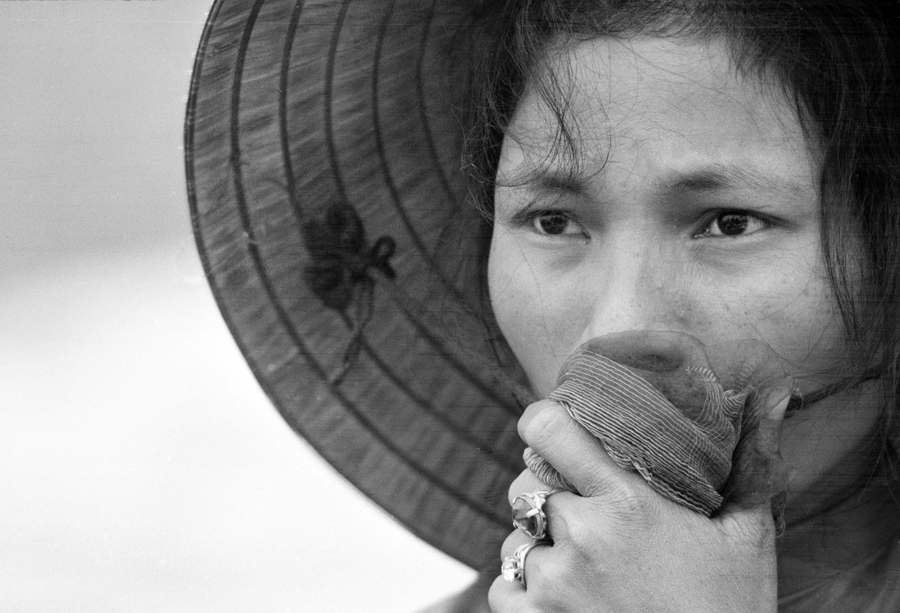
A young South Vietnamese woman covers her mouth as she stares into a mass grave where victims of a reported Viet Cong massacre were being exhumed near Dien Bai village, east of Hue, in April of 1969. The woman’s husband, father, and brother had been missing since the Tet Offensive, and were feared to be among those killed by Communist forces.#
Tiếp tục đọc “Vietnam War in photos, Part II: Losses and Withdrawal”
Part I: Early Years and Escalation
Part II: Losses and Withdrawal
Part III: Hands of a Nation
The Atlantic, Alan Taylor, Mar 30, 2015.
46 Photos
Fifty years ago, in March 1965, 3,500 U.S. Marines landed in South Vietnam. They were the first American combat troops on the ground in a conflict that had been building for decades. The communist government of North Vietnam (backed by the Soviet Union and China) was locked in a battle with South Vietnam (supported by the United States) in a Cold War proxy fight. The U.S. had been providing aid and advisors to the South since the 1950s, slowly escalating operations to include bombing runs and ground troops. By 1968, more than 500,000 U.S. troops were in the country, fighting alongside South Vietnamese soldiers as they faced both a conventional army and a guerrilla force in unforgiving terrain. Each side suffered and inflicted huge losses, with the civilian populace suffering horribly. Based on widely varying estimates, between 1.5 and 3.6 million people were killed in the war. This photo essay, part one of a three-part series, looks at the earlier stages of U.S. involvement in the Vietnam War, as well as the growing protest movement, between the years 1962 and 1967.
Warning: Several of these photographs are graphic in nature.
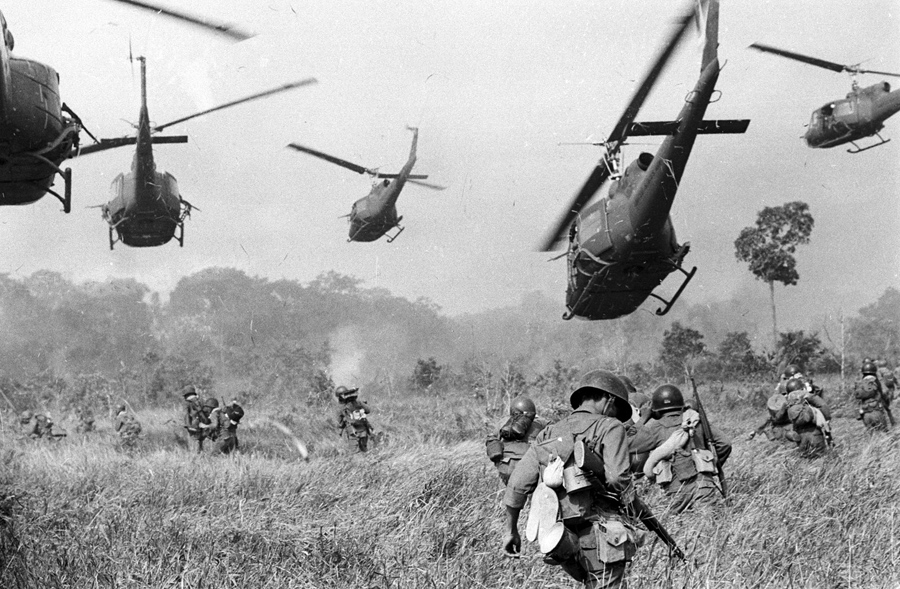
Hovering U.S. Army helicopters pour machine gun fire into a tree line to cover the advance of South Vietnamese ground troops in an attack on a Viet Cong camp 18 miles north of Tay Ninh, near the Cambodian border, in March of 1965.#
Tiếp tục đọc “Vietnam War in photos, Part I: Early Years and Escalation”

TIME Photo
Apr 30, 2015
It has been 40 years since the spring day when the last U.S. helicopters lifted up and, shortly after, the North Vietnamese army entered Saigon, deciding a conflict that had raged for years. News photographs from the time showed the world what was going on, from a country full of death in all its gruesome forms to peaceful protests across the ocean. Despite their age, those images have not lost their impact. Tiếp tục đọc “21 Iconic Photos of the Vietnam War”

1972
Activists meet in the Nam Can forest, wearing masks to hide their identities from one another in case of capture and interrogation. From here in the mangrove swamps of the Mekong Delta, forwarding images to the North was difficult. “Sometimes the photos were lost or confiscated on the way,” said the photographer.
Image: Vo Anh Khanh/Another Vietnam/National Geographic Books
Tiếp tục đọc “1965-1975 Another Vietnam: Unseen images of the war from the winning side”
PHNOM PENH (Reuters) – Cambodia said on Wednesday it was saddened and shocked by a “disrespectful” U.S. decision to rein back aid programmes because of perceived democratic setbacks and defended its record on democracy.
Cambodia’s national flags are seen as labourers work at a construction site in Phnom Penh, Cambodia, October 7, 2016. REUTERS/Samrang Pring
The White House said on Tuesday it was suspending or curtailing several Treasury, USAID and military assistance programmes that support Cambodia’s military, taxation department and local authorities – all of which, it said, shared blame for recent instability.
Tiếp tục đọc “Cambodia ‘shocked’ by ‘disrespectful’ U.S. aid cut, says democracy intact”
PHNOM PENH (Reuters) – With U.S.-Cambodian relations at a low and Chinese influence growing, Washington is trying a new way to win hearts and minds: sponsoring a well-known Cambodian musician to sing positive songs about America.

Singer Yorn Young poses for a picture before a news conference in Phnom Penh, Cambodia, March 6, 2018. REUTERS/Samrang Pring
“When there is tension, countries seek ways to ease it so arts and culture can help,” said 37-year-old Yorn Young, who launched his “Lovin’ USA” album in Phnom Penh on Tuesday. He was not worried if people thought it was propaganda, he added.
QUANG NGAI, Vietnam (Reuters) – Vietnam marked 50 years since the My Lai massacre on Friday in a memorial ceremony at the site of the killings that was attended by survivors of the massacre, their families, and around 60 U.S. Vietnam War veterans and anti-war activists.
Performers take part during the 50th anniversary of the My Lai massacre in My Lai village, Vietnam March 16, 2018. REUTERS/Kham
American soldiers killed 504 people on March 16, 1968, in Son My, a collection of hamlets between the central Vietnamese coast and a ridge of misty mountains, in an incident known in the West as the My Lai Massacre.
Tiếp tục đọc “Vietnam marks 50 years since U.S. massacre at My Lai”
Four Hours in My Lai
From Wikipedia, the free encyclopedia

Directed by Kevin Sim
Narrated by Mark Hallile
Country of origin United Kingdom
Original language(s): English
Original network: ITV
Original release: 2 May 1989 Tiếp tục đọc “Four Hours in My Lai”
Reuters
WED MAR 7, 2018 Minh Nguyen
U.S. sailors perform with victims of Agent Orange at a hospice, as part of the U.S aircraft carrier USS Carl Vinson visit in Danang, Vietnam March 7, 2018. REUTERS/Kham
DANANG, Vietnam (Reuters) – Sailors from a U.S. aircraft carrier on Wednesday visited a Vietnamese shelter for people suffering from the effects of Agent Orange, a chemical used by the U.S. military during the Vietnam War to destroy foliage. Tiếp tục đọc “U.S. sailors visit Vietnamese shelter for victims of Agent Orange”
Tham dự có Phó Đô đốc Philip G. Sawyer (Tư lệnh Hạm đội 7, Hạm đội Thái Bình Dương Hoa Kỳ, Hải quân Hoa Kỳ); ông Lâm Quang Minh (Giám đốc Sở Ngoại vụ) cùng lãnh đạo các cơ quan ban, ngành TP Đà Nẵng.

Nữ ca sĩ của ban nhạc hải quân Hoa Kỳ trổ tài hát nhạc Việt với hai ca khúc “Hello Việt Nam” và “Nối vòng tay lớn”. Ảnh: TÂM AN
Tiếp tục đọc “Những hình ảnh siêu dễ thương của hải quân Mỹ ở Đà Nẵng”
“Chuyến thăm không phải để ôn lại những ký ức đau thương mà là hàn gắn lại những vết thương chưa lành” – Chuck Searcy, một cựu binh Mỹ 73 tuổi, nói.
Tiếp tục đọc “Cựu binh Mỹ và 23 năm đi hàn gắn vết thương chiến tranh”
The first visit by a US aircraft carrier in four decades is “not of military focus”, but will see “cultural exchanges” between local experts and US sailors, said a US navy spokesman.

File Photo: The aircraft carrier USS Carl Vinson. (Courtesy US Navy, via REUTERS)
Goh Chiew Tong (Updated: )
DANANG, Vietnam: As the USS Carl Vinson docks at Danang port today (Mar 5) – the first time a United States navy aircraft carrier is visiting Vietnam in 40 years since the end of the Vietnam War – it will mark a further step in closer cooperation between the two nations, said a navy spokesperson.
Lieutenant Commander Tim Hawkins stressed that the historic port call was strictly “routine” in its objectives, and an opportunity for both nations to “learn from one another”. Tiếp tục đọc “USS Carl Vinson makes historic visit to Vietnam in ‘routine’ port call”
Chủ tịch nước Trần Đại Quang và Tổng thống Donald Trump tại tiệc chiêu đãi nhân chuyến thăm cấp nhà nước Việt Nam tháng 11-2017 – Ảnh: VOV
Tin từ Bộ Ngoại giao cho biết ngày 14-2, Chủ tịch nước Trần Đại Quang đã có cuộc điện đàm với Tổng thống Hoa Kỳ Donald Trump.
Cuộc điện đàm diễn ra trong bối cảnh quan hệ hai nước tiếp tục phát triển thực chất, hiệu quả, trên cơ sở tôn trọng độc lập, chủ quyền, toàn vẹn lãnh thổ và thể chế chính trị của nhau, vì lợi ích của nhân dân hai nước và đóng góp tích cực vào việc duy trì hòa bình, ổn định, hợp tác và phát triển ở khu vực và trên thế giới. Tiếp tục đọc “Tổng thống Mỹ Donald Trump chúc Tết người Việt Nam”
Cụ thể: Tại Bưu điện TP Đà Nẵng, Đội Kiểm tra bưu phẩm bưu kiện xuất nhập khẩu thuộc Chi cục Hải quan cửa khẩu Sân bay quốc tế Đà Nẵng (Cục Hải quan Đà Nẵng) phối hợp với Trung tâm khai thác và vận chuyển (Bưu điện TP Đà Nẵng) tạm giữ, bảo quản chờ xử lý; phối hợp với lực lượng công an thành phố đã phát hiện 4 bưu kiện:
– Bưu kiện chứa 1 quyển sách tựa đề “Where the ashes are – The Odyssey of a Vietnamese Family” của tác giả Nguyễn Quý Đức, được xuất bản tại Mỹ. Bưu phẩm được gửi từ Netherlands về Việt Nam ngày 15/1/2018. Nơi gửi: P.O.BOX 7085, 3109 AA Schiedam, Netherlands. Người nhận: Phan Ngọc Thanh Bình. Địa chỉ: 36 Hoàng Văn Thụ, Quận Hải Châu, Đà Nẵng, Việt Nam.
– Bưu kiện từ người gửi Phan Hồng Anh. Địa chỉ: 01-382 Warszawa UL. Szczotkarska 37A. Người nhận: Trần Ngọc Tuấn. Địa chỉ: 100 Hồ Tùng Mậu, Quận Liên Chiểu, Phường Hòa Minh, TP Đà Nẵng, Việt Nam. Hàng hóa vi phạm là 1 quyển sách có tựa đề “Chính trị bình dân” của tác giả Phạm Đoan Trang, được xuất bản tại Mỹ.
Tiếp tục đọc “Hải quan Đà Nẵng tịch thu hàng loạt sách có nội dung nhạy cảm chính trị”