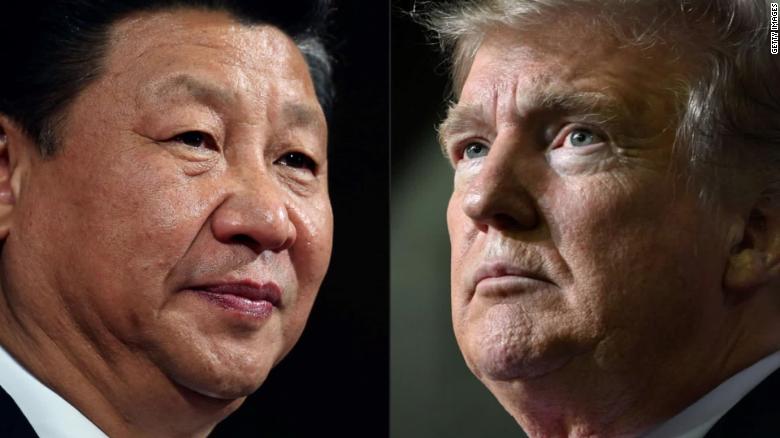
How the United States Can Effectively Contain China

| May 21, 2020

Pluralism and freedom vs. Communist autocracy

During his Senate confirmation hearing last week to be the next director of national intelligence, Texas Republican Rep. John Ratcliffe emphasized China is this country’s “greatest threat actor,” a status only confirmed by rising acrimony over Beijing’s handling of the coronavirus pandemic. But though tensions are rising in the South China Sea, where U.S. Navy missions challenge China’s unsubstantiated claims of hegemony over the region, an actual war between the two powers appears unlikely.

But are the United States and China on a path to a new Cold War?

Tiếp tục đọc “How the United States Can Effectively Contain China”

A China Strategy

CEPA

A China Strategy

Photo: The portrait of China's President Xi Jinping appears during a military parade to celebrate the 70th anniversary of the founding of a nation at the Tiananmen Square in Beijing, China on October 1, 2019. New weapons were unveiled at the largest military parade ever. ( The Yomiuri Shimbun ) Credit: REUTERS

Edward Lucas

December 7, 2020

icon-pdf

DOWNLOAD PDF

In an era of geopolitical competition, the West — the U.S.-led countries of the transatlantic alliance and their East Asian allies — lacks a strategy for dealing with its most formidable competitor: the People’s Republic of China (henceforth China). But the Chinese Communist Party (CCP) has a strategy for dealing with the West. It involves a long-term goal of “national rejuvenation”1 — making China the world’s most powerful country by 2050 — implemented with decisive leadership; a clear-eyed appreciation of Western diplomatic, economic, political, and social weaknesses; and effective means of exploiting them. These tactics, best characterized as “sharp power,”2 include censorship and manipulation of the information system, cyber operations, divide-and-rule diplomacy, leverage of trade and investment, and propaganda, plus military bluff and intimidation.

Tiếp tục đọc “A China Strategy”

CSBA: SEIZING ON WEAKNESS – Allied Strategy for competing with China’s globalizing military

January 4, 2021  Toshi YoshiharaJack Bianchi
Resources: Strategy & Policy

China’s military is going global. In the coming decade, the People’s Liberation Army (PLA) could be well-positioned to influence events and conduct a wide range of missions, including limited warfighting, beyond the Western Pacific. The United States and its close allies, who have enjoyed largely unobstructed access to the world’s oceans for the last three decades, will need to adjust to new military realities as the PLA makes its presence felt in faraway theaters.

In this study, Senior Fellow Toshi Yoshihara and Research Fellow Jack Bianchi argue that a deep study of China’s weaknesses as they relate to its worldwide ambitions is required to formulate an effective allied response. These weaknesses offer insights into the costs that Beijing will have to pay to go global. Importantly, the United States and its close allies enjoy agency over certain Chinese weaknesses, furnishing them leverage that, if exercised, could yield strategic dividends. The report concludes with a range of allied options that exploit China’s weaknesses to constrain and complicate the PLA’s global expansion.  

AUTHORS Toshi Yoshihara Senior Fellow, Jack Blanchi, Research Fellow

DOWNLOAD PDF

Download full “Seizing on Weakness: Allied Strategy for Competing With China’s Globalizing Military” report.

READ FULL PUBLICATION

Read the full publication “Seizing on Weakness: Allied Strategy for Competing With China’s Globalizing Military” report using our online e-reader tool.

How China sees the world

How China Sees the World

And how we should see China

Illustration
Karan Singh

https://358afed383d4909496d2c7460875e850.safeframe.googlesyndication.com/safeframe/1-0-37/html/container.html

  • Link Copied

I. The Forbidden City

On November 8, 2017, Air Force One touched down in Beijing, marking the start of a state visit hosted by China’s president and Communist Party chairman, Xi Jinping. From my first day on the job as President Donald Trump’s national security adviser, China had been a top priority. The country figured prominently in what President Barack Obama had identified for his successor as the biggest immediate problem the new administration would face—what to do about North Korea’s nuclear and missile programs. But many other questions about the nature and future of the relationship between China and the United States had also emerged, reflecting China’s fundamentally different perception of the world.

Tiếp tục đọc “How China sees the world”

Atlantic Council: Global Strategy 2021: An allied strategy for China

Atlantic Council

DOWNLOAD PDF

This strategy was produced in collaboration with experts from ten leading democracies.

Foreword

Following World War II, the United States and its allies and partners established a rules-based international system. While never perfect, it contributed to decades without great-power war, extraordinary economic growth, and a reduction of world poverty. But this system today faces trials ranging from a global pandemic and climate change to economic disruptions and a revival of great-power competition.

Tiếp tục đọc “Atlantic Council: Global Strategy 2021: An allied strategy for China”

To Counter China’s Rise, the U.S. Should Focus on Xi

A proposal for a full reboot of American strategy toward China.

Xi Jinping

Ju Peng/Xinhua via AP

By ANONYMOUS, Politico

01/28/2021 08:15 AM EST

The author is a former senior government official with deep expertise and experience dealing with China.

In 1946, the American diplomat George Kennan wrote a lengthy cable to Washington—since dubbed the “Long Telegram”—laying out the basis for the next several decades of U.S. policy toward the Soviet Union. He published his work as an article under the simple pseudonym “X.” In that spirit, a former senior government official with deep expertise and experience dealing with China has published with the Atlantic Council a bold and ambitious new U.S. strategy toward its next great global rival. It is similarly delivered anonymously, which the author requested, and POLITICO granted. Here the author describes the broad outlines of the strategy. The full memo is available here.

Tiếp tục đọc “To Counter China’s Rise, the U.S. Should Focus on Xi”

THE LONGER TELEGRAM – Toward a new American China strategy

by Anonymous

Atlantic Council

Key points

  • The single most important challenge facing the United States and the democratic world in the twenty-first century is the rise of an increasingly authoritarian and aggressive China under Xi Jinping. China has long had an integrated, operational strategy for dealing with the United States. The United States has so far had no such strategy with regard to China. This is a dereliction of national responsibility.
  • US strategy and policy toward China must be laser-focused on the fault lines among Xi and his inner circle–aimed at changing their objectives and behavior and thus their strategic course. Communist Party elites are much more divided about Xi’s leadership and vast ambitions than is widely appreciated.
  • The foremost goal of US strategy should be to cause China’s ruling elites to conclude that it is in China’s best interests to continue operating within the US-led liberal international order rather than building a rival order, and that it is in the Chinese Communist Party’s best interests to not attempt to expand China’s borders or export its political model beyond China’s shores.

DOWNLOAD PDF


Table of contents

Tiếp tục đọc “THE LONGER TELEGRAM – Toward a new American China strategy”

These three Pacific military flashpoints could shape Biden’s China strategy

Analysis by CNN Staff

Updated 0327 GMT (1127 HKT) January 29, 2021 CNN

(CNN)Any suggestion that the departure of former US President Donald Trump from Washington would provide a temporary pause in US-China tensions has been swiftly dispelled.In the short time since President Joe Biden was sworn into office, China has flown more than two dozen combat aircraft near to the self-ruled island of Taiwan and passed a law allowing its coast guard to fire on foreign vessels. Meanwhile, the US Navy has sent an aircraft carrier strike group into the South China Sea.Analysts say such moves are likely only the beginning of what is expected to be a potentially uneasy initial relationship between the new Biden administration and Beijing.

Tiếp tục đọc “These three Pacific military flashpoints could shape Biden’s China strategy”

Bà Trần Tố Nga và phiên tòa lịch sử: Tôi hoàn toàn không đơn độc

NGUYỄN THỤY PHƯƠNG 24/1/2021 6:00 GMT+7

TTCTMột nạn nhân chất độc da cam đơn thương độc mã đối mặt với 26 công ty hùng mạnh, thông qua một thiết chế luật pháp quốc tế, đòi công lý cho mình. Đó là hành trình hơn 10 năm bước vào cuộc tranh đấu của bà Trần Tố Nga, trong đó có hơn 6 năm theo đuổi 19 phiên tòa thủ tục đầy trắc trở, trong niềm tin kiên định rằng tội ác sẽ bị kết án, công lý không chỉ tới cho riêng mình bà mà sẽ mở đường cho rất nhiều nạn nhân chất độc da cam Việt Nam và trên thế giới. Tại Paris (Pháp), nhà nghiên cứu Nguyễn Thụy Phương (Tiến sĩ Giáo dục học, Giảng viên thỉnh giảng – Đại học Paris) trò chuyện cùng bà Trần Tố Nga trước ngày phiên tòa chính thức tiến hành (25-1-2021).

Bà Trần Tố Nga. Ảnh: Đức Trương – Hội Collectif Vietnam

Tiếp tục đọc “Bà Trần Tố Nga và phiên tòa lịch sử: Tôi hoàn toàn không đơn độc”

Bà Trần Tố Nga và phiên tòa lịch sử: “Một phiên tòa chính trị, lịch sử và độc nhất!”

NGUYỄN THỤY PHƯƠNG 24/1/2021 10:00 GMT+7

TTCTĐây là lời của luật sư William Bourdon, một trong ba luật sư người Pháp (cùng Bertrand Repolt, Amélie Lefebvre), đã đồng hành cùng bà Trần Tố Nga trong 10 năm bà đi tìm công lý. Họ sẽ bảo vệ bà trong phiên tòa sắp tới (ngày 25-1-2021 tại Pháp), cáo buộc 26 công ty hóa chất Mỹ về hành vi diệt chủng môi trường (écocide) trong cuộc chiến tranh ở Việt Nam.

Tuần hành của những bạn bè quốc tế ủng hộ bà Trần Tố Nga (Ảnh: Đức Trương – Hội Collectif Vietnam)

Vì đây là lần đầu tiên, nạn nhân duy nhất, đơn thương độc mã đối mặt với 26 công ty hùng mạnh, như Monsanto và Dow Chemical, thông qua một thiết chế luật pháp quốc tế. Tiếp tục đọc “Bà Trần Tố Nga và phiên tòa lịch sử: “Một phiên tòa chính trị, lịch sử và độc nhất!””

The Future of the U.S. and China

The Future of the U.S. and China Opening Session: The Global Chessboard

January 14, 2021 — Asia Society Northern California Executive Director Margaret Conley gives welcome remarks to the center’s signature one-day conference, The Future of the U.S. and. and China: Seeking Truth Through Facts, followed by opening remarks from Ambassador Eleni Kounalakis, lieutenant governor of California. Asia Society President and CEO Kevin Rudd then delivers a keynote address on the necessary frameworks for China and the United States to co-exist and continue collaboration, maintain competition, and prevent conflict. (31 min., 22 sec.)

Tiếp tục đọc “The Future of the U.S. and China”

What Does Vietnam Want from the US in the South China Sea?

The Diplomat

Despite seeking a balance between the superpowers, Vietnam desires more robust security ties with Washington.

Derek Grossman

By Derek GrossmanJanuary 04, 2021   

What Does Vietnam Want from the US in the South China Sea?
Sailors signal to an MH-60S Sea Hawk helicopter as it hovers over the flight deck of the guided-missile destroyer USS McCampbell during a training exercise in the South China Sea, July 22, 2016.Credit: Flickr/U.S. Navy

As the incoming Biden administration formulates its South China Sea strategy, one regional partner that looms large is Vietnam. Over the last few years, tensions between China and Vietnam in the South China Sea have remained high, impacting fishing and natural resource exploration in disputed waters. While the Biden administration is likely to continue the positive momentum in bilateral ties, it is less clear what specifically Hanoi seeks from Washington to help it effectively deter Beijing.

Tiếp tục đọc “What Does Vietnam Want from the US in the South China Sea?”

US Congress stings China with new Tibet law on the next Dalai Lama

The Hindustan Times

The Central Tibetan Administration welcomed the Tibetan Policy and Support Act passed by the US Congress, calling it a historic move and a clear message to China

WORLD Updated: Dec 22, 2020, 15:20 IST The Hindustan Times

Shishir Gupta

Shishir Gupta
Hindustan Times, New Delhi

The US Congress has passed a law that reaffirms the right of Tibetans to select the successor to His Holiness Dalai Lama.
The US Congress has passed a law that reaffirms the right of Tibetans to select the successor to His Holiness Dalai Lama.(Sonu Mehta/HT PHOTO)

The US Congress has passed a bill that reaffirms the right of Tibetans to choose a successor to their spiritual leader, the Dalai Lama. The law has been described by Dharamshala, the seat of the Tibetan government-in-exile, as a historic move and a clear message to China.

The Tibetan Policy and Support Act of 2020 (TPSA), which was passed by the US Senate, calls for the establishment of a US consulate in Tibet’s main city of Lhasa and underlines the absolute right of Tibetans to choose a successor to the Dalai Lama.

Tiếp tục đọc “US Congress stings China with new Tibet law on the next Dalai Lama”

US strikes at the heart of China’s bid to become a tech superpower

Analysis by Laura HeCNN Business

Updated 0947 GMT (1747 HKT) December 22, 2020

Trump administration dials up US-China tech tensions

Hong Kong (<a href="https://edition.cnn.com/2020/12/22/tech/smic-us-sanctions-intl-hnk/index.html&quot; target="_blank" CNN Business)

China had been counting on its biggest chipmaker to help the country eventually reduce its reliance on the likes of Intel (INTC) and Samsung (SSNLF). The United States just put those ambitions in jeopardy. Washington announced Friday that it will require US exporters to apply for a license before they can sell to Semiconductor Manufacturing International Corporation (SMIC). The US government claims that the chipmaker can use its tech to help China modernize its armed forces. SMIC (SIUIF) says it has no relationship with the Chinese military. But in a statement on Sunday, the company acknowledged that while the restrictions are unlikely to hurt its short-term operations, its loftier goals are in doubt. The new US rules will have “a material adverse effect” on its ability to develop highly advanced chips, it said.

Tiếp tục đọc “US strikes at the heart of China’s bid to become a tech superpower”

Con Đỗ Ba, bây giờ ra sao?

NNTôi tìm lại con của nhân chứng “My Lai massacre” giữa ánh đèn đêm le lói, ngồi nghe Chi kể chuyện, nghe cảm giác lạnh dọc xương sống…

My Lai Massacre, đó là cụm từ phía Mỹ lưu trong hồ sơ vụ thảm sát Mỹ Lai tại xã Tịnh Khê, TP Quảng Ngãi vào ngày 16/3/1968. Một nhân chứng sống sót được báo chí quốc tế và trong nước không ngừng nhắc tên là Đỗ Ba.

Nhân chứng Đỗ Ba thoát chết trong thảm sát Mỹ Lai năm 1968. Ảnh: TL.
Nhân chứng Đỗ Ba thoát chết trong thảm sát Mỹ Lai năm 1968. Ảnh: TL.

Nhưng còn một Đỗ Ba khác thì sống đời ẩn dật, vào định cư ở Trại phong Quy Hòa, tỉnh Bình Định, sau đó qua đời. Đầu tháng 9/2020, người con trai Đỗ Ba đột ngột gọi ra Đà Nẵng và nói giọng buồn bã: “Xin chú tìm giúp một nơi nương náu cho người em trai, xin chú giúp đỡ…!”. Tiếp tục đọc “Con Đỗ Ba, bây giờ ra sao?”