NLD – Mỹ tăng cường tập trận với các nước đồng minh ở khu vực Ấn Độ-Thái Bình Dương từ đầu năm đến nay trong bối cảnh Trung Quốc có hàng loạt động thái gây căng thẳng trong khu vực
—o0o—
hông báo trên trang Twitter hôm 8-4, Bộ Tư lệnh Ấn Độ -Thái Bình Dương cho biết các thủy thủ trên tàu USS Makin Island (Mỹ) đã tiến hành một cuộc diễn tập bắn đạn thật với lời kêu gọi đảm bảo “một khu vực Ấn Độ -Thái Bình Dương tự do và mở”.
Trước đó, tàu sân bay USS Theodore Roosevelt của Mỹ đã tiến hành tập trận cùng với Malaysia trong hai ngày 6 và 7-4. Đây là lần thứ hai nhóm tác chiến tàu sân bay Theodore Roosevelt tiến vào biển Đông để thực hiện nhiệm vụ trong năm 2021, lần đầu diễn ra hồi cuối tháng 1.
On March 25, 2021, the U.S. Treasury Department’s Office of Foreign Assets Control (“OFAC”) imposed additional sanctions in response to the ongoing crisis in Myanmar (also called Burma) by designating the country’s two largest military conglomerates: (1) Myanmar Economic Holdings Public Company Limited (“MEHL”) and (2) Myanmar Economic Corporation Limited (“MEC”).
Because Myanmar’s military controls significant segments of the country’s economy, including trading, natural resources, and consumer goods, through these two companies, these designations are the most consequential sanctions measures that the Biden Administration has taken to-date in response to the situation. By operation of OFAC’s “Fifty Percent Rule,” the sanctioned status of MEHL and MEC automatically flows to the dozens of their majority-owned subsidiaries that play critical roles throughout the country’s economy, implicating the Myanmar-based operations of numerous foreign companies that have touchpoints with the United States (over which the U.S. Government has enforcement jurisdiction). Recognizing the far-reaching impact, OFAC has concurrently issued four general licenses (regulatory exemptions) that provide blanket authorization to engage in certain categories of activities that would otherwise be prohibited—including the wind down of any existing transactions involving MEHL, MEC, or their majority-owned subsidiaries.
Atlanta (CNN)Video evidence suggests “it is extremely likely” that the same person was responsible for the three deadly shootings at massage parlors in the metro Atlanta area, police said Tuesday.Eight people were killed and one person was wounded in the attacks. Two of the shootings were at spas across the street from each other in northeast Atlanta and the other happened about 30 miles away in Cherokee County to the northwest of the city.”Video footage from our Video Integration Center places the Cherokee County suspect’s vehicle in the area, around the time of our Piedmont Road shootings,” the Atlanta Police Department said in a news release. “That, along with video evidence viewed by investigators, suggests it is extremely likely our suspect is the same as Cherokee County’s, who is in custody. Because of this, an investigator from APD is in Cherokee County and we are working closely with them to confirm with certainty our cases are related.”Officials in each jurisdiction said there were no immediate indications of motive.
[TĐH: Jane Fonda was an anti-Vietnam-War activist]
Washington [US], March 1 (ANI): At this year’s Golden Globes, American actor Jane Fonda received the prestigious Cecil B. DeMille Award.
According to Variety, the honour recognises Fonda’s illustrious career in film, one that saw her top the box office and cement her name in movie history by starring in such classics as ‘Klute,’ ‘The China Syndrome’ and ‘9 to 5.’More recently, Fonda has appeared in the Netflix series ‘Grace and Frankie’ as well as ‘Book Club’ and ‘Youth.’ The 83-year-old star’s other films include ‘The Electric Horseman,’ ‘Barefoot in the Park,’ ‘Coming Home, and ‘Julia.’One of her biggest commercial successes was the 1982 release of her first exercise video, ‘Jane Fonda’s Workout,’ which went on to sell 17 million copies and spawned several follow-ups.
Fonda has been equally well known for her political stances – protesting the Vietnam War, campaigning for civil rights, and advocating for feminist causes. Currently, Fonda is leading Fire Drill Fridays as part of a national movement to raise awareness about the climate crisis.
The Cecil B. DeMille Award is the highest honour given out by the Hollywood Foreign Press Association, the organisation behind the Globes. Past recipients include Robert De Niro, Sophia Loren, Sean Connery, Oprah Winfrey, Martin Scorsese, Jodie Foster, Steven Spielberg, and Meryl Streep. Last year’s honouree was Tom Hanks.
A 15-time nominee, Fonda has been awarded Golden Globes for seven-times.
The 78th Golden Globe Awards is taking place nearly two months later than normal, due to the impact of the COVID-19 pandemic on cinema and television.
This is the first bi-coastal ceremony, with Tina Fey hosting from the Rainbow Room in New York City, and Amy Poehler hosting from The Beverly Hilton in Beverly Hills, California. The nominees for Golden Globes were announced on February 3. (ANI)
Alexander Hamilton had no illusions about what would happen to Americans if the United States collapsed.
If the newly drafted Constitution wasn’t ratified, he warned in Federalist No. 8, a “War between the States,” fought by irregular armies across unfortified borders, was imminent. Large states would overrun small ones. “Plunder and devastation” would march across the landscape, reducing the citizenry to “a state of continual danger” that would nourish authoritarian, militarized
The following is a translation of the National Institute for South China Sea Studies assessment of the recently released U.S. maritime strategy, Advantage at Sea: Prevailing with Integrated All-Domain Naval Power. The China Maritime Studies Institute at the U.S. Naval War College made the translation.
The Prelude to All-Encompassing Maritime Competition Between China and the U.S. is about to Begin—An Appraisal of America’s Newest Maritime Strategy
By Shi Xiaoqin and Liu Xiaobo
On December 17, 2020, the U.S. Navy (USN), U.S. Marine Corps (USMC), and the U.S. Coast Guard (USCG) jointly issued a new maritime strategy entitled Advantage at Sea: Prevailing with Integrated All-Domain Naval Power. This tri-service strategy is a follow-on to A Cooperative Strategy for 21st Century Seapower, which the three services jointly issued in 2007 and 2015. Two characteristics of the document deserve attention: one, it directly regards China as an opponent and two, it simultaneously classifies China and Russia as opponents. Compared with the U.S. maritime strategy issued at the height of the Cold War in 1982, this document might be regarded as the first maritime strategy document issued after the inauguration of Sino-U.S. strategic competition.
Rush Limbaugh, the right-wing radio megastar whose slashing, divisive style of mockery and grievance reshaped American conservatism, denigrating Democrats, environmentalists, “feminazis” (his term) and other liberals while presaging the rise of Donald J. Trump, died on Wednesday at his home in Palm Beach, Fla. He was 70.
By Chuck Searcy February 15, 2021 | 07:40 am GMT+7Last month, completion of dioxin cleanup on a 5,300-square-meter tract of land at Bien Hoa airport marked a significant milestone.
Chuck Searcy
Officials of both the Vietnamese and U.S. governments could derive satisfaction from knowing that the Agent Orange/dioxin legacy of war is now being addressed, after a troubling post-war history of misinformation and controversy, accusations and doubts.
Not just public officials, but veterans and ordinary citizens of both countries can take pride in looking back over the remarkable transformation that has taken place in the past two decades, from early years of mistrust and recrimination to a positive, working partnership between Vietnam and the U.S. today.
That relationship is now built on mutual trust and respect.
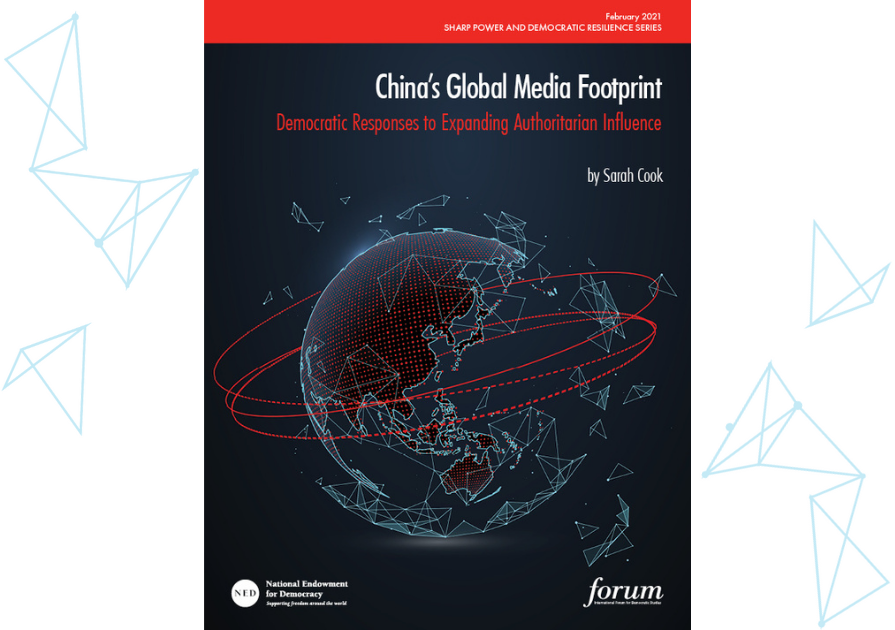
The Sharp Power and Democratic Resilience series aims to contextualize the nature of sharp power, inventory key authoritarian efforts and domains, and illuminate ideas for non-governmental action that are essential to strengthening democratic resilience.
Sarah Cook is research director for China, Hong Kong, and Taiwan at Freedom House. She directs the China Media Bulletin, a monthly digest providing news and analysis on media freedom developments related to China. Cook is the author of several Asian country reports for Freedom House’s annual publications, as well as four special reports about China.
This report describes the Chinese Communist Party’s (CCP) sharp power efforts to shape media content around the world. It also documents how nongovernmental actors contribute to a growing accumulation of activities aimed at countering Beijing’s media influence while protecting democratic institutions.
Leveraging propaganda, disinformation, censorship, and influence over key nodes in the information flow, Beijing’s expanding efforts to shape global narratives go beyond simply “telling China’s story.” Their sharper edge undermines democratic norms, erodes national sovereignty, weakens the financial sustainability of independent media, and violates local laws. An acknowledgment and understanding of the challenges that China’s party-state and related actors pose to media freedom globally—not only by China experts, but by the full array of nongovernmental actors engaged in the media, news, and technology sectors—must be central to a comprehensive response.
It is imperative that anyone engaged in the media space—be they journalists, regulators, technology firms, press freedom groups, or even news consumers—acknowledge the influence exerted by China’s authoritarian regime on the news and information circulating in their print publications, radio broadcasts, television programs, and social media feeds.
KEY IDEAS FOR NONGOVERNMENTAL RESPONSES:
Investigation and research: Academic institutions, think tanks, research entities, and donors should continue existing work and ensure resources are available to monitor and expose CCP media influence activities in a credible, professional, and sustained way in the coming years.
Action by media outlets: Local media should improve their awareness of the potential journalistic and political pitfalls of accepting Chinese state or proxy investment, paid supplements, or coproduction deals.
Civil society advocacy: International and local press freedom groups should consider whether and how to incorporate a CCP media influence dimension into current or future projects, with support from donors. Such initiatives could support internal capacity building, journalism trainings and education, media literacy, policy advocacy, and information sharing and coordination.
Technology sector collaboration: Technology firms should seek further opportunities to work with researchers and civil society in identifying emerging threats and problematic accounts tied to the Chinese party-state. They must also ensure that independent voices, activists, and content producers who are critical of the Chinese government have a clear avenue for appeal if they encounter problems on the companies’ platforms.
The report also highlights specific actions taken by media outlets and civil society to counter the CCP’s expanding global footprint. Categorized by sector, these responses illustrate ways for media, civil society, think tanks, and the technology sector to build resilience to sharp power across the information ecosystem.
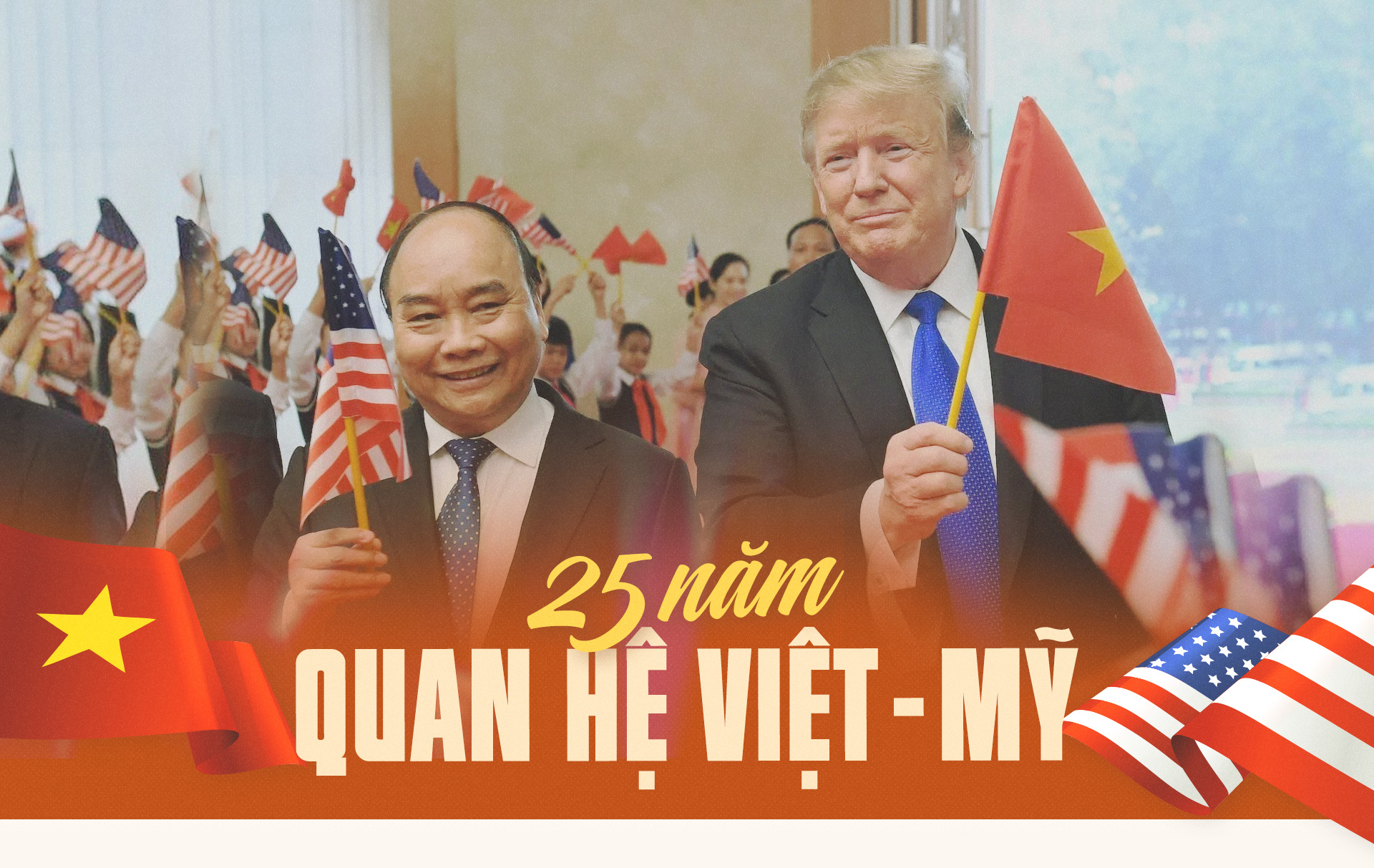
Ngày 12/7 vừa qua, Việt Nam và Hoa Kỳ kỷ niệm 25 năm bình thường hóa quan hệ ngoại giao. Cùng với sự phát triển mạnh mẽ của quan hệ song phương, sự phối hợp giữa hai nước trong việc khắc phục hậu quả CĐHH do Mỹ sử dụng trong chiến tranh ở Việt Nam cũng đã có những bước tiến đáng kể. Đó là kết quả của một quá trình vừa hợp tác vừa đấu tranh giải quyết những vấn đề còn tồn đọng để xây dựng một quan hệ tốt đẹp hơn. Chúng tôi xin điểm lại một số mốc chính của quá trình đó:
Đó là tên cuốn phóng sự ảnh mà giáo sư Nishimura Yoichi người Nhật Bản gửi tặng cho tôi. Cuốn sách dày gần 500 trang được in ba ngôn ngữ Anh, Nhật, Việt với hàng ngàn bức ảnh chân thực ghi lại hậu quả thảm khốc của cuộc chiến tranh hóa học do Mỹ gây ra trong cuộc chiến tranh ở Việt Nam.
Vị giáo sư 75 tuổi này đã từ lâu gắn bó với Việt Nam. Vợ chồng ông đã đến Làng hòa bình Từ Dũ tại Thành phố Hồ Chí Minh và ở đây nhiều năm. Ông đã dùng tiền lương hưu của mình để tặng quà cho những trẻ em khuyết tật bị nhiễm chất độc da cam/dioxin. Ông đã đi khắp dải đất hình chữ S suốt 63 tỉnh, thành để gặp gỡ, thăm hỏi, chia sẻ và ghi lại hàng ngàn bức ảnh chân thật, đời thường, sinh động của những nạn nhân CĐDC khuyết tật. Tiếp tục đọc “Pray Por VietNam – “Lời cầu nguyện cho Việt Nam””→
Đại dịch COVID-19 hoành hành đúng giai đoạn kỷ niệm 25 năm thiết lập quan hệ ngoại giao Việt Nam – Mỹ (11-7-1995 – 11-7-2020). Nhưng trong giai đoạn khó khăn, sự hợp tác hiệu quả Việt – Mỹ một lần nữa cho thấy hai nước tiếp tục đi những bước dài hợp tác.
Trong những tháng đầu năm, nền kinh tế toàn cầu đã trở nên ảm đạm vì COVID-19, song nó cũng mang lại những cơ hội hợp tác “ngàn năm có một” cho các doanh nghiệp đủ nhạy bén. Và câu chuyện của Công ty may mặc Dony – một doanh nghiệp Việt – là điển hình cho điều đó. Tiếp tục đọc “25 năm quan hệ Việt _ Mỹ”→
Ambassador Daniel Kritenbrink collaborated with Vietnamese rapper Wowy to make a song about the Lunar New Year vibe in Vietnam.
Throughout the song, the ambassador raps several Vietnamese lines to wish people a peaceful new lunar year.
He also lists what should be done throughout Tet in Vietnamese traditions, including preparing the yellow mai and peach plants, of which flowers are signature for home decoration during Tet in Vietnam, cleaning up the house to welcome guests, and giving li xi (lucky money) to children.
He ends the video with the line saying “Tet den roi” which means Tet has arrived.
This is the Ambassador’s fourth Tet in Vietnam, and he has always enjoyed this time of year. “Tet gives us an opportunity to slow down, reconnect with loved ones, and reflect on the passing year while looking ahead to the coming year,” said the U.S. Consulate General in HCMC.
“Our two countries cooperate closely on everything from security, trade, and education, to war legacies, energy, and health, and now we can add music to the list,” it added.
Tet is what Vietnamese calls Lunar New Year, which is so far the nation’s biggest holiday and most important occasion for family reunion.
Andrew Rhodes wrote this essay while a student at the U.S. Naval War College. It won the Strategic Research Paper category of the 2019 Chairman of the Joint Chiefs of Staff Strategic Essay Competition.
In the early 20th century, the visionary Marine officer Earl “Pete” Ellis compiled remarkable studies of islands in the Western Pacific and considered the practical means for the seizure or defense of advanced bases. A century after Ellis’s work, China presents new strategic and operational challenges to the U.S. position in Asia, and it is time for Washington to develop a coherent strategy, one that will last another 100 years, for the islands of the Western Pacific. It has become common to consider the second island chain as a defining feature of Pacific geography, but when Ellis mastered its geography, he saw not a “chain,” but a “cloud.” He wrote in 1921 that the “Marshall, Caroline, and Pelew Islands form a ‘cloud’ of islands stretching east and west.” His apt description of these archipelagoes serves well for a broader conception of the islands in, and adjacent to, traditional definitions of the second island chain. A new U.S. strategy should abandon the narrow lens of the “chain” and emphasize a broader second island cloud that highlights the U.S. regional role and invests in a resilient, distributed, and enduring presence in the Pacific.


![[eMagazine] Thông điệp ngầm của Mỹ trên biển Đông - Ảnh 1.](https://nld.mediacdn.vn/291774122806476800/2021/4/17/subtitle-1-1618643596201734135676.png "[eMagazine] Thông điệp ngầm của Mỹ trên biển Đông - Ảnh 1.")



:focal(1372x660:1373x661)/https://public-media.si-cdn.com/filer/16/f6/16f6f61a-0643-490b-b363-5ee6163b2a1b/leutze_westward_course_of_empire_copy.jpg)