Mỹ đi loạt bước rắn với TQ về Biển Đông ngay đầu 2022

PLO 14/01/2022 – 05:42

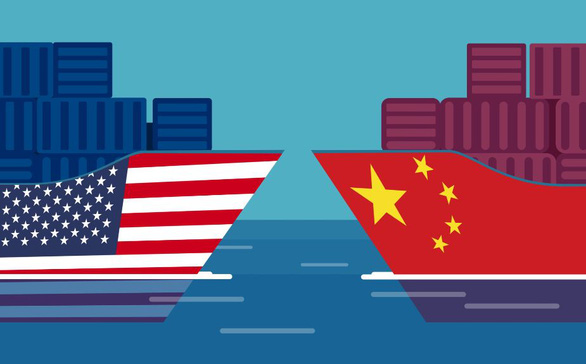
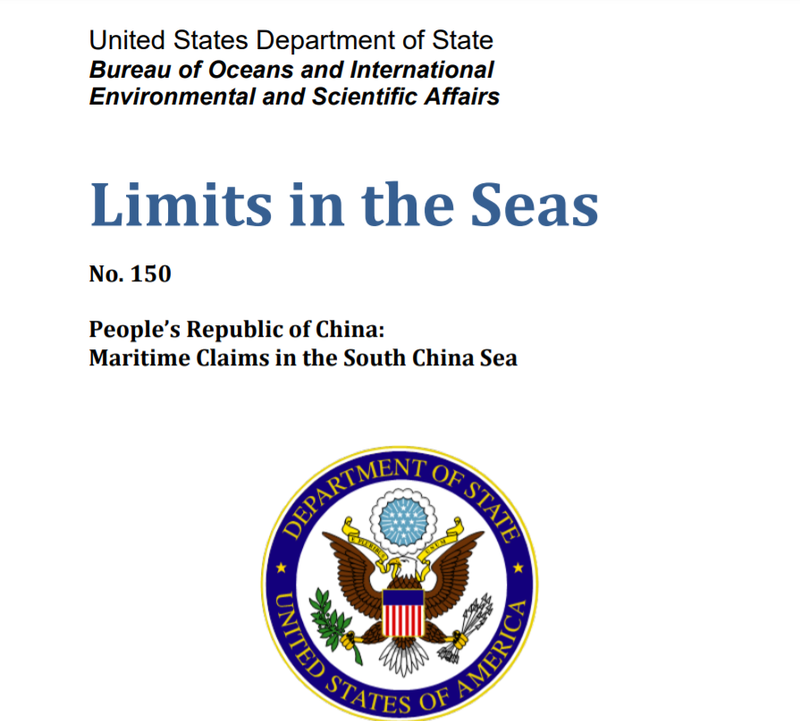
Mỹ đi loạt bước rắn với Trung Quốc về Biển Đông ngay đầu năm 2022 khi cùng lúc công bố báo cáo bác yêu sách chủ quyền của Bắc Kinh ở Biển Đông và điều hai nhóm tàu sân bay tới vùng biển này.

Mỹ đi loạt bước rắn với TQ về Biển Đông ngay đầu 2022 - ảnh 1
Báo cáo  “Limits in the Seas” (Giới hạn trên các vùng biển) của Mỹ.

Năm 2021 khép lại với sự kiện Tổng thống Mỹ Joe Biden ban hành Đạo luật Ủy quyền Quốc phòng (NDAA) vào ngày 27-12. Theo đó, Mỹ sẽ chi 770 tỉ USD cho chi tiêu quốc phòng, trong đó dành 7,1 tỉ USD cho chiến lược chống Trung Quốc ở khu vực Ấn Độ Dương – Thái Bình Dương.  Có lẽ đây là bước chuẩn bị cho một năm 2022 đầy căng thẳng giữa hai siêu cường ở khu vực Ấn Độ Dương – Thái Bình Dương, mà một trong những trọng tâm là ở Biển Đông.

Chưa đầy nửa tháng đầu của năm 2022, Mỹ đã có những động thái quyết liệt thách thức yêu sách chủ quyền phi pháp của Trung Quốc ở Biển Đông.

Tiếp tục đọc “Mỹ đi loạt bước rắn với TQ về Biển Đông ngay đầu 2022”

Đường đến Fulbright từ Mù Cang Chải

TTHành trình từ vùng cao Mù Cang Chải xa xôi đến FUV là cả một câu chuyện dài với nhiều cung bậc thăng trầm, đa dạng cảm xúc. 

Tủa cùng các bạn được cấp học bổng toàn phần (bao gồm học phí, nơi ở) cho năm học Đồng kiến tạo của ĐH này.

Tiếp tục đọc “Đường đến Fulbright từ Mù Cang Chải”

ASEAN and the new geopolitics of the Indo-Pacific

29 December 2021 Author: Amitav Acharya, American University

eastasiaforum.org

Southeast Asia is no stranger to strategic competition. But its ‘new geopolitics’ is different from those that existed during the Cold War.

China Premier Li Keqiang attends Southeast Asian leaders virtual summit Tuesday 26 October 2021 without Myanmar military leader Min Aung Hlaing after its top general failure of Myanmar's army to adhere to a peace road map it had agreed with the southeast Asian bloc following the coup in February.

In fighting communism, the United States extended its security umbrella to the region. This gave ASEAN members breathing space and allowed them to focus on economic growth and domestic stability. It also stimulated unity among Indonesia, Malaysia, Singapore, Thailand and the Philippines due to fear of being entangled in great power intervention. Aid and investment from Japan, a US ally and Asia’s then fastest rising economy, helped industrialise several Southeast Asian countries.

Now, China has displaced Japan as Asia’s largest economy and ASEAN’s largest trade partner. China’s GDP today is more than five times that of ASEAN’s combined. It spends five times more on defence. Unlike the Soviet Union, China is Southeast Asia’s immediate neighbour — a dragon breathing down its neck.

Tiếp tục đọc “ASEAN and the new geopolitics of the Indo-Pacific”

Has Washington’s Policy Toward Taiwan Crossed the Rubicon?

December 10, 2021  by Paul Heer, The National Interest

Testimony from officials in the State Department and Defense Department this week included subtle but important shifts in the U.S. policy toward Taiwan

The ground shifted under Washington’s policy toward Taiwan on December 8, a shift no less seismic for being subtle and semantic. During a hearing of the Senate Foreign Relations Committee, Assistant Secretary of Defense for Indo-Pacific Security Affairs Ely Ratner asserted that Taiwan is “a critical node within the first island chain (in the Western Pacific), anchoring a network of U.S. allies and partners … that is critical to the region’s security and critical to the defense of vital U.S. interests in the Indo-Pacific.”

Tiếp tục đọc “Has Washington’s Policy Toward Taiwan Crossed the Rubicon?”

US Congressional Research Service: China’s Political System in Charts – A Snapshot Before the 20th Party Congress

Read and download full report >>

Introduction

The political system of the People’s Republic of China (PRC or China) defies easy categorization. China is both a nation state and a Leninist “Party-state,” with the Party being the Communist Party of China (CPC or Party), also known as the Chinese Communist Party (CCP).

The political system operates under two “constitutions,” one for the Party, China’s dominant political institution, and one for the state.1 State institutions operate fundamentally differently from their Western counterparts. In the case of China’s national parliament, for example, because China eschews separation of powers, a third of the delegates are sitting senior Party and state officials, with China’s top leader, CPC General Secretary Xi Jinping, among them.2

The parliament, like every other political institution in China, both reports to the Party and includes a Party cell within it. Atop the political system is a leader, Xi, who is not subject to direct or competitive indirect election, and who has signaled an intention to remain in power indefinitely.3

As strategic competition between the United States and China has grown more acute in recent years, Congress has shown a strong interest in understanding China’s political system. In the 116th Congress, Members introduced 99 bills referencing the CPC, six of which were enacted into law.4 More than 100 such bills are pending in the 117th Congress. This report seeks to provide Congress with a detailed understanding of China’s political system ahead of the CPC’s 20th
National Congress, which is scheduled to convene in the second half of 2022.

The report openswith a discussion of how the CPC exercises its self-anointed leadership role in China’s Partystate.

The report then briefly discusses the ways the CPC has embedded its claim to Taiwan within China’s political system.

The main part of the report introduces readers to China’s major political institutions through 16 organization charts and accompanying explanatory text.

All individuals’ names are listed in Chinese style, with family names preceding given names. CRS Visual Information Specialist Mari Y. Lee created all the charts in this report.

Note on Sources and Language
Much of the information in this report is drawn from PRC sources, including Chinese-language official websites and Chinese-language reports from China’s state-controlled media. Where English translations of these sources are known to exist, CRS has endeavored to identify them in the footnotes. Because of the difficulty of tracing Romanized personal names back to their original Chinese characters, and because the names of Chinese political bodies can often be translated into English in multiple ways, CRS has included Chinese characters in the charts in this report for reference.

1. Although in English the Party-state refers to both documents as “constitutions,” the Chinese-language terms are different. The Party document is a “ zhangcheng章程.” The state document is a “ xianfa 宪法.” The Party constitution is also sometimes referred to in English as the Party “charter.” “Constitution of the Communist Party of China,” Xinhua, October 24, 2017, at http://www.xinhuanet.com//english/download/Constitution_of_the_Communist_Party_of_China.pdf; “Constitution of the People’s Republic of China,” at http://www.npc.gov.cn/englishnpc/constitution2019/constitution.shtml.
2.
“领导干部比例降低!一图看懂第十三届全国人大代表构成” (“The Proportion of Leadership Cadres Has Fallen! See the Composition of the 13th NPC Delegates in One Chart”), 新京报(Beijing News) via Huanqiu, March 4, 2018, at https://lianghui.huanqiu.com/article/9CaKrnK6PUS.
3. Chris Buckley and Adam Wu, “Ending Term Limits for China’s Xi Is a Big Deal. Here’s Why,” New York Times, March 10, 2018.
4. The six laws from the 116th Congress referencing the CPC are the Let Everyone Get Involved in Opportunities for National Service Act (P.L. 116-35), the National Defense Authorization Act for FY2020 (P.L. 116-92), the Uyghur Human Rights Policy Act of 2020 (P.L. 116-145), the Holding Foreign Companies Accountable Act (P.L. 116-222), Consolidated Appropriations Act, 2021 (P.L. 116-260 ), and the William M. (Mac) Thornberry National Defense Authorization Act for Fiscal Year 2021 (P.L. 116-283).

Read and download full report >>

India and Vietnam will define the future of Asia: Kurt Campbell

Japan to host next Quad summit in 2022, U.S. Indo-Pacific coordinator says

asia.nikkei.com

Kurt Campbell, the U.S. National Security Council Indo-Pacific coordinator speaks at the United States Institute of Peace on Nov. 19. (Screenshot)KEN MORIYASU, Nikkei Asia chief desk editorNovember 20, 2021 03:20 JST

NEW YORK — U.S. President Joe Biden’s administration views India and Vietnam as key countries to strengthen relations with, his Indo-Pacific point man said Friday.

India will be a key fulcrum player on the global stage in the 21st century, and successive American administrations have been united in that assessment, said Kurt Campbell, the National Security Council’s coordinator for the Indo-Pacific, at an event hosted by the Washington-based United States Institute of Peace.

“I’m very bullish about the future with India. I think we all recognize that the critical, crucial member in the Quad is India,” Campbell said, referring to the Quadrilateral Security Dialogue among the U.S., Japan, India and Australia.

->

Vietnam Airlines direct flight to US takes off next week

VNE – By Anh Minh, Doan Loan   November 16, 2021 | 07:25 pm GMT+7

Vietnam Airlines direct flight to US takes off next weekA Boeing 787-9 aircraft of Vietnam Airlines. Photo courtesy of Vietnam AirlinesNational flag carrier Vietnam Airlines will operate its first regular direct flight to the U.S. on November 28, achieving a dream conceived nearly two decades ago.

The flight will depart from HCMC in the evening and arrive at San Francisco 13 hours and 50 minutes later, CEO Le Hong Ha said at a press briefing Tuesday.

The return flight will leave San Francisco on the evening of November 29 (U.S. time) and arrive in HCMC on December 1, 16 hours and 40 minutes later.

Tiếp tục đọc “Vietnam Airlines direct flight to US takes off next week”

Chủ nghĩa khủng bố được nuôi dưỡng bởi điều gì?

ND – Thứ Bảy, 11-09-2021, 10:08

Khi không hiểu đối thủ, phương Tây “không có chiến lược” hữu hiệu nào. Ảnh: Lowy Institute

Ted Kaczynski, một cựu giáo viên ở Mỹ, từ năm 1978 đến 1995, đã tiến hành hàng loạt vụ đánh bom thư khủng bố khắp nước Mỹ đúng theo kiểu “sói đơn độc” cổ điển, đã dùng nguồn tài trợ nào để chế tạo bom? Anders Behring Breivik, kẻ thủ ác ngày 22/7/2011 ở Oslo – Na Uy, cũng chỉ là một nhân viên “cà là èng” ở một công ty vô danh, thì lấy đâu ra tiền để tiến hành khủng bố? Hai câu hỏi này đủ để trả lời cho vấn đề lớn hơn rất nhiều: “Tài chính có phải nền tảng nuôi dưỡng khủng bố tiên quyết nhất?”.

Tiếp tục đọc “Chủ nghĩa khủng bố được nuôi dưỡng bởi điều gì?”

Tiếng nói chung của thế giới về Biển Đông

Biên Phòng – Thanh Trúc 26/09/2021 – 14:13

Mới đây, Mỹ và Australia đã tiến hành cuộc tham vấn thường niên theo cơ chế “2+2” lần thứ 31, trong đó nhấn mạnh tới những quan ngại về Biển Đông, cũng như đề cao việc thượng tôn luật pháp quốc tế, bao gồm Công ước Liên hợp quốc về Luật Biển năm 1982 (UNCLOS).

(Từ trái qua phải) Bộ trưởng Quốc phòng Australia Peter Dutton, Ngoại trưởng Australia Marise Payne, Ngoại trưởng Mỹ Anthony Blinken, Bộ trưởng Quốc phòng Mỹ Lloyd Austin trong cuộc gặp tại Thủ đô Washington, Mỹ trong tuần trước. Ảnh: REUTERS

Tiếp tục đọc “Tiếng nói chung của thế giới về Biển Đông”

Hơn 750 căn cứ ở 80 nước: Mỹ lấn át Trung Quốc triển khai sức mạnh ở nước ngoài

PLO  – TRI TÚC23/09/2021 – 15:34

Quân đội Mỹ vận hành hơn 750 căn cứ hải ngoại trải khắp 80 quốc gia trong khi Trung Quốc chỉ có một căn cứ quân sự hải ngoại tại Djibouti.

Hơn 750 căn cứ ở 80 nước: Mỹ lấn át Trung Quốc triển khai sức mạnh ở nước  ngoài | Quân sự | PLO
Lính Mỹ rời căn cứ không quân Bargam ở Afghanistan hồi tháng 7. Ảnh: TWITTER

Với trọng tâm chiến lược của Mỹ hiện đang chuyển sang khu vực Ấn Độ Dương –Thái Bình Dương với mục đích chế ngự Trung Quốc, các lực lượng vũ trang Mỹ đang ráo riết vũ khí hóa khu vực châu Á-Thái Bình Dương vốn đang dần trở thành tâm điểm toàn cầu về rủi ro xảy ra xung đột lớn tiếp theo.

Tiếp tục đọc “Hơn 750 căn cứ ở 80 nước: Mỹ lấn át Trung Quốc triển khai sức mạnh ở nước ngoài”

Remarks by President Biden Before the 76th Session of the United Nations General Assembly

SEPTEMBER 21, 2021

United Nations Headquarters
New York, New York

10:01 A.M. EDT

THE PRESIDENT:  Mr. President, Mr. Secretary-General, my fellow delegates, to all those who dedicate themselves to this noble mission of this institution: It’s my honor to speak to you for the first time as President of the United States. 

We meet this year in a moment of — intermingled with great pain and extraordinary possibility.  We’ve lost so much to this devastating — this devastating pandemic that continues to claim lives around the world and impact so much on our existence. 

Tiếp tục đọc “Remarks by President Biden Before the 76th Session of the United Nations General Assembly”

Mười điều rút ra từ sự ra đời của Liên minh AUKUS

Nghiên cứu quốc tế –

Tác giả: Hoàng Anh Tuấn

Hiệp định Đối tác tăng cường an ninh ba bên giữa Mỹ, Anh và Australia (AUKUS) có phiên âm khá thú vị (ô kis) – “Hôn nhau cái nào” – đến mức Tổng thống Biden cũng cảm thấy thích thú khi phát âm tên liên minh mới trong bài diễn văn đánh dấu sự ra đời của AUKUS.

Tuy nhiên, việc thành lập AUKUS thì hoàn toàn nghiêm túc, chẳng “lãng mạn” chút nào, và là kết quả của những nỗ lực thương lượng không ngừng nghỉ trong nhiều tháng trước đó của quan chức cấp cao 3 nước, trước khi AUKUS chính thức ra đời ngày 15/9/2021 vừa qua.

Tạm thời có thể rút ra 10 nhận xét nhanh từ sự ra đời của AUKUS như sau:

Tiếp tục đọc “Mười điều rút ra từ sự ra đời của Liên minh AUKUS”

Global Strategy 2021: An Allied Strategy for China (The Atlantic Council)

Download pdf file >>

This strategy was produced in collaboration with experts from ten leading democracies.

Foreword

Following World War II, the United States and its allies and partners established a rules-based international system. While never perfect, it contributed to decades without great-power war, extraordinary economic growth, and a reduction of world poverty. But this system today faces trials ranging from a global pandemic and climate change to economic disruptions and a revival of great-power competition.

As Henry Kissinger has pointed out, world order depends on the balance of power and principles of legitimacy. The rise of Chinese power is straining both aspects of the existing rules-based system. China benefited from the system and does not seek to kick over the table as Hitler did with the 1930s international order, but China wants to use its power to change the rules and tilt the table to enhance its winnings. Beijing is directing its growing economic, diplomatic, and military heft toward revisionist geopolitical aims. While we once hoped that China would become what we considered a “responsible stakeholder” in a rules-based system, President Xi Jinping has led his country in a more confrontational direction.

Some analysts portray a new Cold War, but this historical metaphor misunderstands the nature of the new challenge. The Soviet Union was a direct military and ideological threat, and there was almost no economic or social interdependence in our relationship. With China today, we have half a trillion dollars in trade and millions of social interchanges. Moreover, with its “market-Leninist” system, China has learned to harness the creativity of markets to authoritarian Communist party control. It announced its intent to use this system to dominate ten key technologies by 2025. We and our allies are not threatened by the export of communism – few people are taking to the streets in favor of Xi Jinping thought – but by a hybrid system of interdependence. China has become the leading trading partner of more countries than the US. Partial decoupling on security issues like Huawei (discussed below) is necessary, but total decoupling from our overall economic interdependence would be extremely costly, and even impossible in the case of ecological interdependence such as climate change or future pandemics. For better and worse, we are locked in a “cooperative rivalry” in which we have to do two contradictory things at the same time.

Addressing the China challenge will require a collective effort on the part of the United States and its allies and partners, in which we leverage effectively our hard and soft power resources to defend ourselves and strengthen a rules-based system. Some pessimists look at China’s population size and economic growth rates and believe that the task is impossible. But on the contrary, if we think in terms our alliances, the combined wealth of the Western democracies – US, Europe, Japan – will far exceed that of China well into the century. A clear strategy with well-defined goals that neither under- nor over-estimates China is necessary for the current moment. Over the past two years, the Atlantic Council has convened high-level meetings of strategists and experts to produce just that.

In this paper, Global Strategy 2021: An Allied Strategy for China, Matthew Kroenig and Jeffrey Cimmino, along with expert collaborators from ten of the world’s leading democracies, propose a logical and actionable strategy for addressing the China challenge. The strategy articulates clear long- and short-term goals and several major strategic elements to help achieve those goals.

First, the paper calls for strengthening likeminded allies and partners and the rules-based system for a new era of great-power competition. This will require, for example, prioritizing innovation, repairing infrastructure, and establishing new institutions to bolster democratic cooperation. A successful strategy begins at home.

Second, likeminded allies and partners should defend against Chinese behavior that threatens to undermine core principles of the rules-based system. Executing this element will mean prohibiting China’s engagement in economic sectors vital to national security, countering Chinese influence operations, and deterring and, if necessary, defending against, Chinese military aggression in the Indo-Pacific.

Third, the authors recognize that China also presents an opportunity, and they recommend that likeminded allies and partners engage China from a position of strength to cooperate on shared interests and, ultimately, incorporate China into a revitalized and adapted rules-based system. Thus, efforts should be made to cooperate with China on issues of shared interests, including public health, the global economy, nonproliferation, and the global environment.

They argue that the desired endpoint of the strategy is not everlasting competition or the overthrow of the Chinese Communist Party, but rather to convince Chinese leaders that their interests are better served by cooperating within, rather than challenging, a rules-based international system. They pay attention to both the rivalry and the cooperative possibilities in the relationship.

The paper presents a sound strategic framework and a comprehensive and practical plan for the US and its democratic allies to follow as they address the China challenge. I encourage experts and officials from the United States and allied nations to study this thoughtful report. Following this strategy could help leading democracies cope with the China challenge and advance a revitalized rules-based system for years to come.

Download pdf file >>