Chuyên mục: UK
The mathematics of starvation: how Israel caused a famine in Gaza
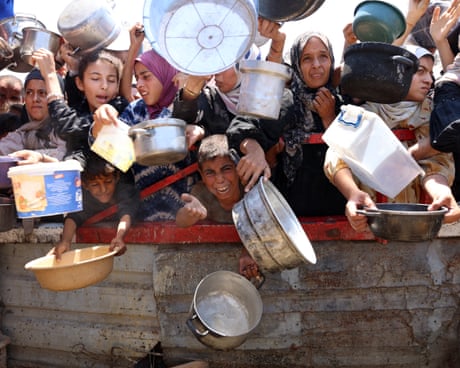
Israel controls the flow of food into Gaza. It has calculated how many calories Palestinians need to stay alive. Its data shows only a fraction has been allowed in
Emma Graham-Harrison Chief Middle East correspondentThu 31 Jul 2025 15.49 BSTShare
The mathematics of famine are simple in Gaza. Palestinians cannot leave, war has ended farming and Israel has banned fishing, so practically every calorie its population eats must be brought in from outside.
Israel knows how much food is needed. It has been calibrating hunger in Gaza for decades, initially calculating shipments to exert pressure while avoiding starvation.

“The idea is to put the Palestinians on a diet, but not to make them die of hunger,” a senior adviser to the then prime minister, Ehud Olmert, said in 2006. An Israeli court ordered the release of documents showing the details of those macabre sums two years later.
Cogat, the Israeli agency that still controls aid shipments to Gaza, calculated then that Palestinians needed an average minimum 2,279 calories per person per day, which could be provided through 1.836kg of food.
Today, humanitarian organisations are asking for an even smaller minimum ration: 62,000 metric tonnes of dry and canned food to meet basic needs for 2.1 million people each month, or around 1kg of food per person per day.
Tiếp tục đọc “The mathematics of starvation: how Israel caused a famine in Gaza”
Watch The British-Soviet Invasion of Iran (1941)
The Anglo-Soviet invasion of Iran (Operation Countenance) occurred in August 1941, during World War II.
The invasion was carried out jointly by the United Kingdom and the Soviet Union, aiming primarily to secure Iranian territory against Axis influence and protect critical supply routes.
Here’s a comprehensive overview:
Lead-Up and Reasons
Strategic Importance:
- Iran had a strategically critical position, particularly as a transportation corridor between the Allies and the Soviet Union.
- Iranian infrastructure, notably the Trans-Iranian Railway, offered a route for delivering vital supplies from the Allies (mostly Britain and the U.S.) to the USSR following Germany’s invasion (Operation Barbarossa) in June 1941.
Iranian Position and Axis Influence:
- Although officially neutral, the Iranian ruler Reza Shah Pahlavi sympathized with Germany, partially due to historical rivalry with Britain and Russia.
- Germany had established substantial diplomatic and commercial influence in Iran, with many German nationals working in strategic industries, raising fears of espionage and sabotage among the Allies.
Diplomatic Tensions:
- Britain and the Soviet Union demanded Iran expel German nationals perceived as threats; Iran hesitated or refused, increasing Allied suspicions and tension.
Invasion: Operation Countenance
Date and Execution:
Began on August 25, 1941, when British forces advanced from the south and west, while Soviet forces attacked from the north.
Rapid military operations overwhelmed Iran’s defenses, which were relatively weak and poorly equipped compared to the invading powers.
Key Events:
- British forces captured key oil fields in Khuzestan (Abadan), securing critical petroleum resources.
- Soviet troops quickly took control of northern provinces, including major cities such as Tabriz and Mashhad.
- Air and naval superiority allowed quick suppression of Iranian resistance.
Iranian Response: The Iranian army, despite fighting briefly in several locations, was rapidly overwhelmed, with significant casualties but limited overall resistance.
Tehran quickly realized the futility of resistance and began negotiations.
Tiếp tục đọc “Watch The British-Soviet Invasion of Iran (1941)”
Hereditary nobles have sat in Britain’s Parliament for centuries. Their time may be up
1 of 2 |
FILE – Members of the House of Commons and Lords during the State Opening of Parliament, in the House of Lords, in London, Tuesday, Nov. 7, 2023. (Aaron Chown/Pool Photo via AP, File)Read More
2 of 2 |
FILE – Member of the House of Lords take their seats in the Lords Chamber, ahead of the State Opening of Parliament, in the Houses of Parliament, in London, Wednesday, July 17, 2024. (Henry Nicholls/POOL via AP, File)Read More

By JILL LAWLESSUpdated 3:48 AM GMT+7, October 16, 2024Share
LONDON (AP) — Like his ancestors for centuries, the Earl of Devon serves in Parliament, helping to make the laws of the land. But not for much longer.
British lawmakers voted Tuesday to approve in principle a bill to strip hereditary aristocrats of the right to sit and vote in the House of Lords after more than 700 years. The Labour Party government says the decision will complete a long-stalled reform of Parliament’s upper chamber and remove an “outdated and indefensible” relic of the past.
“In the 21st century, there should not be places in our Parliament, making our laws, reserved for those who are born into certain families,” Constitution Minister Nick Thomas-Symonds said Tuesday as he opened debate on the bill in the House of Commons.
Tiếp tục đọc “Hereditary nobles have sat in Britain’s Parliament for centuries. Their time may be up”Tân thế giới “đòi nợ” cựu lục địa
cand – Thứ Sáu, 08/09/2023, 08:24
“Món nợ” hàng trăm năm qua mà nhiều thế hệ người châu Phi bị đưa sang châu Mỹ trên những chuyến tàu buôn nô lệ thế kỷ 18 và 19 đang được hậu duệ của những nô lệ năm xưa đòi các cựu thực dân châu Âu phải “thanh toán” một cách sòng phẳng, nhưng xem ra việc này còn cần phải có sự can thiệp của Tòa án công lý của Liên hợp quốc.
Dòng chảy nô lệ châu Phi
“Món nợ” nô lệ thời kỳ thực dân châu Âu đi chiếm đóng những vùng đất mới trên khắp thế giới, đặc biệt là các thuộc địa ở châu Phi và châu Mỹ đang được các hậu duệ của cả hai bên đặt lại trong nhiều tình huống khác nhau. Các cựu thực dân đi chiếm đóng các vùng đất mới mang danh nghĩa “khai phá”, hay “thám hiểm” các vùng đất hoang sơ năm xưa và họ tự hào xưng danh là “nhà thám hiểm”, nhà khai phá vùng đất và lấy tên mình đặt cho các vùng đất ấy, dù người bản xứ đã có cách đặt tên riêng của họ rồi.

What impact is Brexit having on the UK economy?
The UK’s trade has dropped in recent years, the pound has fallen considerably against the dollar and business investment is yet to return to its peak in 2016. While these factors are predicted to be a result of Brexit, ministers have blamed international issues.
The UK’s recent disastrous “mini” Budget can trace its origins back to Britain’s decision to leave the European Union. The economic costs of Brexit were masked by the Covid-19 pandemic and the crisis in Ukraine. But six years after the UK voted to leave, the effect has become clear. In this film, senior FT writers and British businesspeople examine how Brexit hit the UK economy, the political conspiracy of silence, and why there has not yet been a convincing case for a ‘Brexit dividend’.
British workers unite in largest strike in a generation
Al Jazeera English – 2-2-2023
Up to half a million British teachers, civil servants, train drivers and university lecturers have walked off their jobs to demand better pay and working conditions in the largest coordinated strike action in a generation as wages fail to keep pace with soaring inflation.
About 300,000 people on strike on Wednesday are teachers, according to the Trades Union Congress.
Teachers at schools across England and Wales formed picket lines as they called for higher salaries in demonstrations that have divided public opinion.
Al Jazeera’s Nadim Baba reports from the British capital, London.
The Brexit effect: how leaving the EU hit the UK
The Brexit effect: how leaving the EU hit the UK | FT Film
Financial Times – 18-10-2022
The UK’s recent disastrous “mini” Budget can trace its origins back to Britain’s decision to leave the European Union. The economic costs of Brexit were masked by the Covid-19 pandemic and the crisis in Ukraine. But six years after the UK voted to leave, the effect has become clear. In this film, senior FT writers and British businesspeople examine how Brexit hit the UK economy, the political conspiracy of silence, and why there has not yet been a convincing case for a ‘Brexit dividend’.
Họ tưởng chúng tôi là con nít
TƯỜNG ANH 25/08/2022 06:17 GMT+7
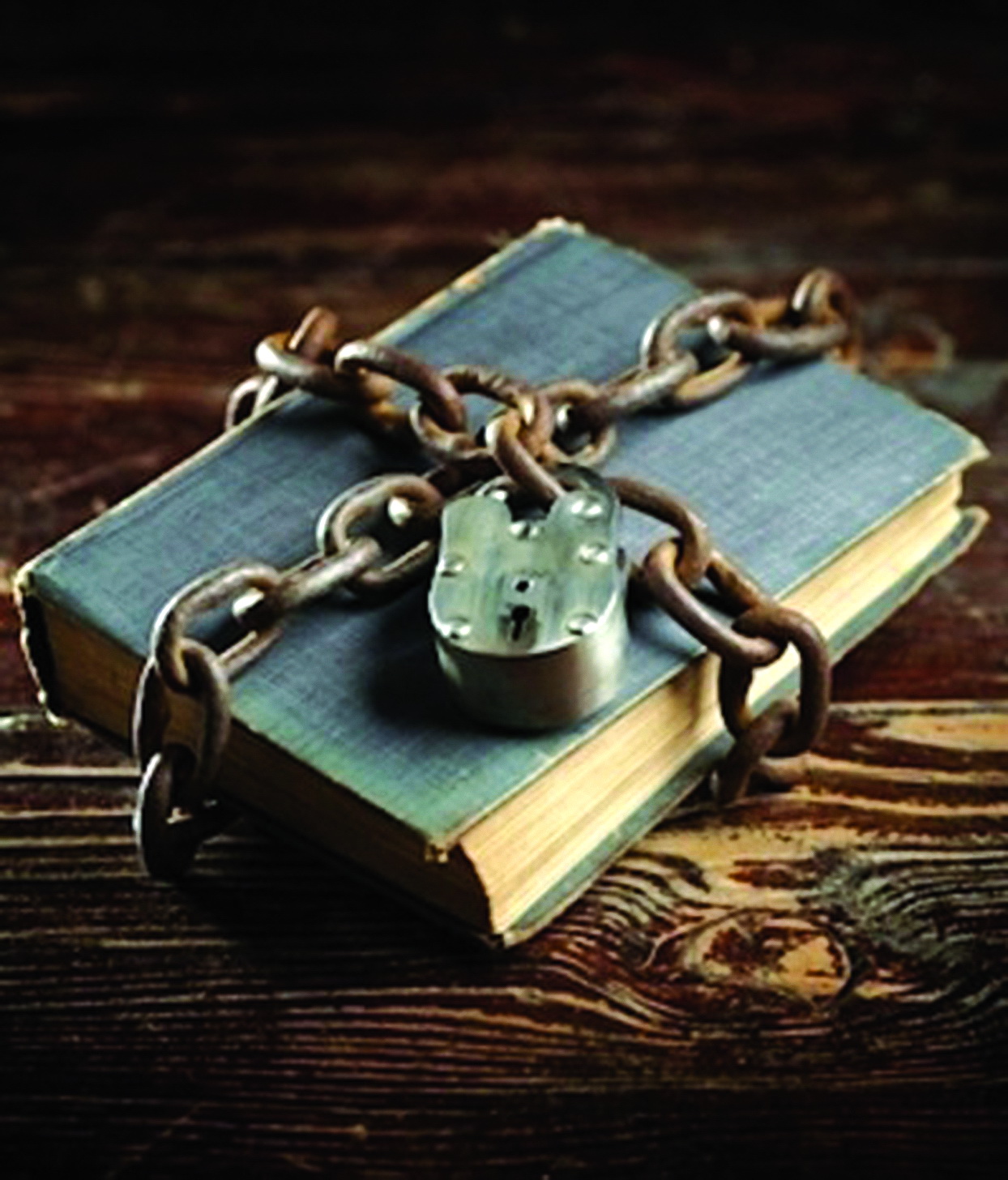
TTCT – Hơn 1.000 tác phẩm văn học đã bị đưa khỏi chương trình hoặc loại khỏi danh sách đọc bắt buộc của sinh viên nhiều đại học Anh.

Hơn 1.000 tác phẩm văn học đã bị đưa khỏi chương trình hoặc loại khỏi danh sách đọc bắt buộc của sinh viên nhiều đại học Anh. Trong số này có các kiệt tác của William Shakespeare, Charles Dicken, Jane Austen, Charles Bronte… và cả của những tác giả hiện đại mà sách của họ vừa được vinh danh, theo tường thuật hôm 10-8 của The Times.
Brexit: Cuộc ly hôn xấu xí?
SÁNG ÁNH 7/2/2020 11:02 GMT+7
TTCT – Anh quốc rốt cuộc đã rời Liên minh châu Âu (EU) vào ngày 31-1. Trong buổi họp cuối cùng tại Nghị viện EU, ông Nigel Farage – đại biểu Anh và là chính trị gia lãnh đạo cốt cán của phe Brexit – đọc một diễn văn máu lửa ăn mừng việc thoát khỏi “ách thống trị độc tài và hà hiếp” của EU, rồi cùng các bạn đại biểu Anh của ông đứng dậy phất lá cờ Union Jack. Chủ tọa lúc đó là bà Mairead McGuinness, phó chủ tịch Nghị viện EU và tình cờ là người… Ireland, đã cắt ngang câu phát biểu cuối của ông Farage và nói: “Đề nghị quý vị cất cờ lại và mang theo ra đi… Tạm biệt”.
![]() |
| Ảnh: Redbubble |
Hoạt cảnh này giống như tại một phiên tòa ly dị. Trong cuộc chia tay Brexit, Ireland có lẽ lại là quốc gia có nhiều vấn đề nhất với Anh vì là nước duy nhất có biên giới chung trên bộ, thông thương và trao đổi thường xuyên.
Too little, too late? Britain introduces rules to protect tech firms from overseas takeovers
PUBLISHED FRI, NOV 13 202010:19 AM EST UPDATED FRI, NOV 13 202012:10 PM ESTSam Shead@SAM_L_SHEAD CNBC
KEY POINTS
- The U.K. government has rolled out new rules to protect Britain’s innovative companies from being snapped up by other nations.
- But is it too little, too late? Arm was sold to Japan’s SoftBank in 2016 and DeepMind was sold to Google in 2014.
- Even though DeepMind and Arm are no longer British in some people’s eyes, there are a number of other fast-growing tech companies that very much are.

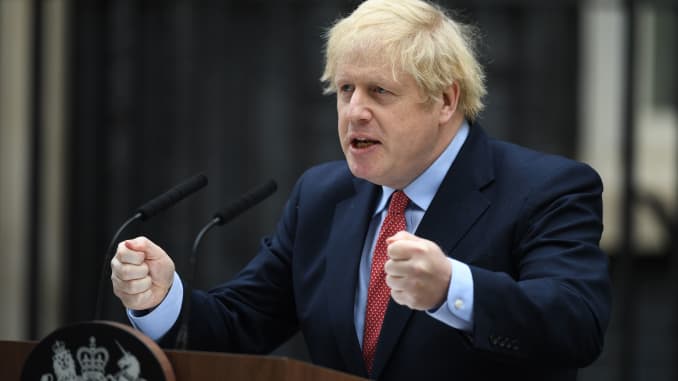
Britain’s Prime Minister Boris Johnson giving a statement in Downing Street in central London on April 27, 2020 after returning to work following more than three weeks off after being hospitalized with the Covid-19 illness.DANIEL LEAL-OLIVAS
LONDON – The U.K. government introduced new rules this week that are designed to protect Britain’s best and brightest companies from being gobbled up by other, potentially hostile, nations.
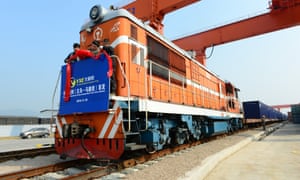
Tiếp tục đọc “Too little, too late? Britain introduces rules to protect tech firms from overseas takeovers”Silk Road route back in business as China train rolls into London
After 16 days and 7,456 miles, the locomotive’s arrival heralds the dawn of a new commercial era
When the East Wind locomotive rumbles into east London this week, it will be at the head of 34 carriages full of socks, bags and wallets for London’s tourist souvenir shops, as well as the dust and grime accumulated through eight countries and 7,456 miles.
The train will be the first to make the 16-day journey from Yiwu in west China to Britain, reviving the ancient trading Silk Road route and shunting in a new era of UK-China relations.
Due to arrive on Wednesday, the train will have passed through China, Kazakhstan, Russia, Belarus, Poland, Germany, Belgium and France before crossing under the Channel and arriving in the east end of London at Barking rail freight terminal.
Tiếp tục đọc “Silk Road route back in business as China train rolls into London”
UK political elite used poverty & immigration fears to secure leave vote
BRUEGEL: The bulk of UK Leave voters come from disadvantaged areas, and perceive immigration as a threat. But significant exceptions to this trend in England and most importantly in Scotland make it hard to draw a simple causal link between wealth, immigration, and voting patterns.
One of the dominant explanations of the UK’s Leave vote in the EU referendum is that the most disadvantaged parts of the country voted against EU membership to express their discontent against the ruling elite, as a headline inThe Guardian recently read: ‘If you’ve got money, you vote in… if you haven’t got money, you vote out.’
Tiếp tục đọc “UK political elite used poverty & immigration fears to secure leave vote”
Viet Nam, UK eye further bilateral trade
Viet Nam was striving to finalise its market economic institutions, change its growth model and improve its competitive edge, Ninh said. The country’s economy had maintained high growth rates and curbed inflation, he said, citing the expected national gross domestic product (GDP) growth of 6.5 per cent, the highest pace since 2011. Tiếp tục đọc “Viet Nam, UK eye further bilateral trade”
Nợ công trong vòng xoáy lịch sử – 8 kỳ
Kỳ 1: Lời cảnh báo của Thomas Jefferson
27/10/2014 08:45
(TNO) “Kể từ khi có lý thuyết về sự tồn tại vĩnh viễn của nợ (công), máu đã tưới đẫm trên trái đất và nhân loại bị đè bẹp trong những gánh nặng chất chồng” – Thomas Jefferson, tác giả bản Tuyên ngôn Độc lập và Tổng thống thứ 3 của Hoa Kỳ.
Thomas Jefferson – Tổng thống thứ 3 của Hoa Kỳ |
Nói về nợ nần trước hết phải nói đến Hợp chủng quốc Hoa Kỳ. Những “học thuyết” về nợ nần tung hoành ngang dọc suốt hàng thế kỷ, chọc thủng các định chế quốc gia, phủ sóng khắp các ngõ ngách của đời sống, từ trường học cho tới bàn ăn giường ngủ, đã biến nước Mỹ thành một biển nợ, một biển nợ sóng sau đè sóng trước, vĩnh viễn không bao giờ trả xong. Tiếp tục đọc “Nợ công trong vòng xoáy lịch sử – 8 kỳ”