Lồng ghép dân số vào xây dựng kế hoạch kinh tế-xã hội

Dân số và phát triển có mối quan hệ chặt chẽ.  Lồng ghép các chỉ tiêu dân số vào công tác lập kế hoạch phát triển sẽ giúp khai thác những lợi thế của dân số cho sự phát triển bền vững,và đảm bảo  các chương trình phát triển thích ứng với những biến đổi dân số, nhằm đáp ứng nhu cầu của các nhóm dân số trong hiện tại và cho cả thế hệ tương lai, thúc đẩy công bằng xã hội, xóa đói giảm nghèo thông qua tăng trưởng kinh tế bền vững trong bối cảnh phát triển bền vững. Tiếp tục đọc “Lồng ghép dân số vào xây dựng kế hoạch kinh tế-xã hội”

The science of happiness can trump GDP as a guide for policy

theconversation – For centuries, happiness was exclusively a concern of the humanities; a matter for philosophers, novelists and artists. In the past five decades, however, it has moved into the domain of science and given us a substantial body of research. This wellspring of knowledge now offers us an enticing opportunity: to consider happiness as the leading measure of well-being, supplanting the current favourite, real gross domestic product per capita, or GDP.

In the social sciences, data on individuals’ happiness are obtained from nationally representative surveys in which a question such as the following is asked:

Taken all together, how would you say things are these days, would you say that you are very happy, pretty happy, or not too happy?

There are many variants of this question. Instead of happiness, the question may be about your overall satisfaction with life, you might be asked to place yourself on a “ladder of life”. The common objective is to deliver an evaluation of the respondent’s life at the time of the survey. We can use the term “happiness” as a convenient proxy for this set of measures. Tiếp tục đọc “The science of happiness can trump GDP as a guide for policy”

Changing global patterns of poverty

Loewe, Markus / Nicole Rippin
Briefing Paper 3/2012

Bonn: German Development Institute / Deutsches Institut für Entwicklungspolitik (DIE)

die-gdi _ Global patterns of poverty do not look like they did twenty years ago. Many developing countries have been able to raise their average per-capita income over the last two decades; 18 have even trespassed the highly noticed – though arbitrary – ceiling differentiating between ‘low income’ and ‘middle income countries’ (LICs and MICs).

The latter event in particular has attracted much attention has the most populous countries are among those that ‘graduated’ – with the effect that 72 per cent of the extreme income-poor world-wide (defined by the 1.25 USD Purchasing Power Parity (PPP) poverty line) are now living in MICs. Donors increasingly wonder whether development co-operation should therefore focus more on the remaining LICs or rather explore new ways of assisting MICs in poverty alleviation.

We argue that whatever future development co-operation with MICs may look like, poverty eradication should take a central place in it. Even if per-capita income levels are rising in most countries, it is much too early to celebrate the end of global poverty: Tiếp tục đọc “Changing global patterns of poverty”

UNICEF thúc đẩy nghề công tác xã hội ở Việt Nam

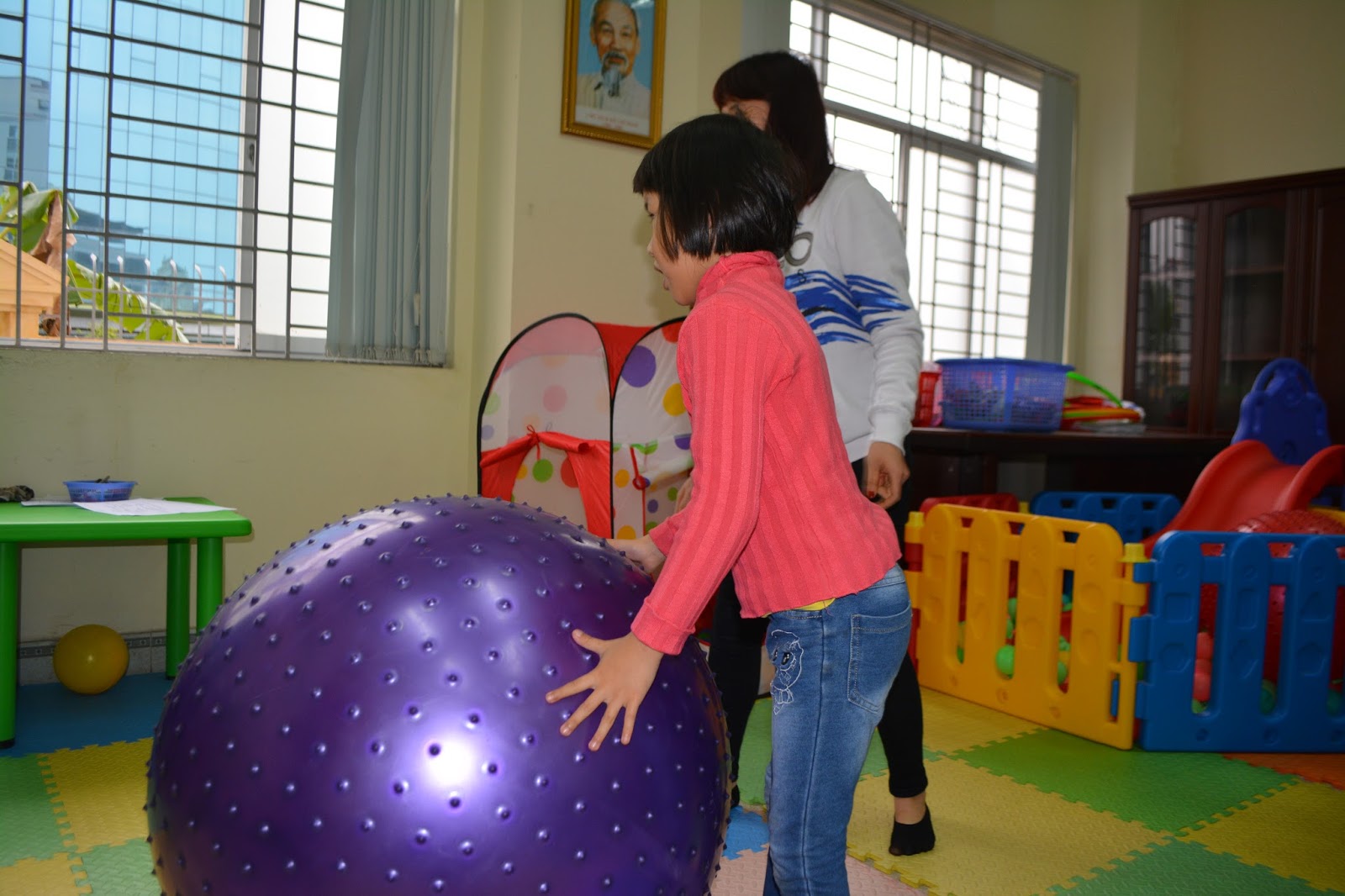
UNICEF – Nhảy lên ghế nhựa, cúi nhặt mấy con thú đồ chơi rồi lại nhảy xuống, sau đó bé Mai* lại chuyển sang chơi đùa với mấy quả bóng tập thể dục và các vòng nhựa nhiều màu. Tuy có vẻ thấm mệt nhưng Mai tỏ vẻ rất thích thú với các trò chơi này. Đây không phải là khu vui chơi bình thường cho trẻ em, và các trò chơi này cũng không phải là các trò chơi bình thường, mà đó là một phần của bài tập trị liệu mà Mai đang tham gia tại Phòng tâm lý trị liệu cho trẻ em rối nhiễu tâm trí tại tỉnh Quảng Ninh.

UNICEF Việt Nam\2016\Nguyễn Thị Thanh Hương

Tiếp tục đọc “UNICEF thúc đẩy nghề công tác xã hội ở Việt Nam”

Phụ nữ Việt Nam thực hiện được quyền về đất đai – Vietnam’s women farmers realize their land rights

Bà Nguyễn Thị Nhung tại căn nhà của mình ở Long An.
Bà Nguyễn Thị Nhung tại căn nhà của mình ở Long An. – ISDS

Tư vấn pháp luật giúp tăng quyền cho người sở hữu đất

“Giờ tôi rất vui vì các chị của tôi đều đã nhận được giấy chứng nhận quyền sử dụng đất.”

 
USAID – Tháng 4/2016 — Bà Nguyễn Thị Nhung, 52 tuổi, là một nông dân tại Long An, một tỉnh miền nam thuộc vùng đồng bằng sông Cửu Long. Khi bố bà qua đời năm 2014, bà muốn chia cho bốn người chị gái của mình mỗi người một phần đất canh tác. Do bà là người duy nhất đứng tên trên giấy chứng nhận quyền sử dụng đất cho cả phần đất ở và đất canh tác của bố mẹ nên bà có toàn quyền quyết định chia đất cho các chị em gái. Tiếp tục đọc “Phụ nữ Việt Nam thực hiện được quyền về đất đai – Vietnam’s women farmers realize their land rights”

Inequality is bad for growth of the poor

Recent economic thinking has discredited the idea that high inequality stimulates economic growth. Public investment in education is the key to both cutting inequality and achieving sustainable growth, argue Roy Van der Weide, Branko Milanovic and Mario Negre.

Branko Milanovic is Visiting Presidential Professor at the The Graduate Center, City University of New York, and senior scholar at the Luxembourg Income Study Centre. Roy Van der Weide works as an economist at the Poverty and Inequality Unit of the World Bank Research Department. Mario Negre is senior economist at the Poverty and Inequality Unit of the World Bank Research Department and senior researcher at the German Development Institute / Deutsches Institut für Entwicklungspolitik (DIE). Tiếp tục đọc “Inequality is bad for growth of the poor”

Cảm nhận thực tế về vệ sinh môi trường tại Việt Nam

Thứ Năm, ngày 26 tháng 6 năm 2014

Ở Việt Nam có khoảng 3,7 triệu người không có nhà vệ sinh và phải phóng uế bừa bãi tại nơi đang sinh sống; một con số đáng kinh ngạc cứ 4 người thì có 1 người phải đi vệ sinh trong bụi cây, trên sông hoặc trên cánh đồng. “Điều này thực sự là không thể chấp nhận được, hàng triệu người đang sống trong cảnh thiếu đi một nhu cầu thiết yếu nhất.” Aytek chia sẻ.

Tiếp tục đọc “Cảm nhận thực tế về vệ sinh môi trường tại Việt Nam”

Human Rights Guide to the SDGs?

What is the Human Rights Guide to the SDGs?

sdg.humanrights

The Guide illustrates the human rights anchorage of the 17 goals and provides concrete links between the 169 targets and the range of human rights instruments and labour standards.

Thereby, the Guide reaffirms that human rights instruments and the 2030 Agenda are tied together in a mutually reinforcing way: human rights offer a legally-binding framework as well as guidance for the implementation of the 2030 Agenda. In turn, the SDGs can contribute substantially to the realization of human rights.

How to use the Guide?

The Guide is the essential tool to:

  • Understand the interlinkages between human rights and the SDGs. Concretely, 156 of the 169 targets (more than 92%) are linked with human rights instruments and labour standards.
  • Develop a human rights-based approach to sustainable development programming, implementation as well as follow-up and review (monitoring, evaluation and reporting)

Tiếp tục đọc “Human Rights Guide to the SDGs?”

Mỗi gia đình, một nhà vệ sinh: Thay đổi thói quen cũ để bảo vệ cuộc sống ở miền Bắc Việt Nam

Thứ Năm, ngày 27 tháng 6 năm 2013

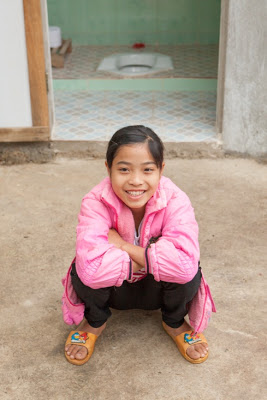
VNUNICEF – Xã quai Nưa, huyện Tuần Giáo– Cách đây không lâu, Lò Thị Trang, cũng làm y như những đứa trẻ khác trong bản của mình mỗi khi muốn đi vệ sinh.

Em đã từng đi xuống sông”, cô bé 12 tuổi cười khúc khích. “Chúng em đã không có nhà vệ sinh và thậm chí còn không biết nó là gì. Nhưng thực sự, em không ngại phải làm như thế. Tất cả mọi người trong bản đều xuống đồi để đi vệ sinh ở bờ sông: nên không ai lấy làm xấu hổ! Vào mùa mưa, điều đáng lo là đường đồi trở nên trơn hơn và chúng em phải cẩn thận từng bước chân để không bị ngã”.

 
Trang tự hào giới thiệu nhà vệ sinh hợp vệ sinh mới mà cha mẹ cô bé xây dựng, bên cạnh ngôi nhà của mình cách đây bảy tháng, Tại xã Quai Nưa, huyện Tuần Giáo, tỉnh Điện Biên.
© UNICEF Việt Nam/2013/Matthew Dakin

Tiếp tục đọc “Mỗi gia đình, một nhà vệ sinh: Thay đổi thói quen cũ để bảo vệ cuộc sống ở miền Bắc Việt Nam”

Harvard ư ? Những con “Zombie” xuất chúng

  •  WILLIAM DERESIEWICZ
  • RS – Thứ sáu, 15 Tháng 4 2016 17:05

Harvard ư? Những con “Zombie” xuất chúng

Ai chẳng muốn vào Harvard!
Những ngày gần đây, người dân Việt Nam lại được dịp hân hoan khi 1 học sinh trường Ams được Harvard cho học bổng tới 7 tỷ đồng.

Trái với niềm hoan hỉ tột độ khi một nước thế giới thứ ba có người được lọt vào tháp ngà Harvard, William Deresiewicz, từng là giáo sư Anh Văn 10 năm trường đại học danh tiếng Yale, một người không xa lạ gì với các trường đại học tinh hoa và “những con cừu xuất sắc” (Excellent Sheep), đã mang lại cho chúng ta một cái nhìn cận cảnh về“cuộc chạy đua điên rồ” đến các trường Top và những suy tư của ông về“một nền giáo dục đúng nghĩa” trong bài viết được Read Station chuyển ngữ này. Tiếp tục đọc “Harvard ư ? Những con “Zombie” xuất chúng”

Sustainable Development Goals Can Transform Small-Scale Forestry

15 March 2016

Alison Hoare

Senior Research Fellow, Energy, Environment and Resources – Eleanor GloverWebsite and Digital Coordinator, Energy, Environment and Resources

Governments can use the SDG framework to combat illegality and increase sustainability in this important sector.
Girls look on as a logging truck disembarks from a ferry in the Amazonian state of Para, Brazil. Photo via Getty Images.Girls look on as a logging truck disembarks from a ferry in the Amazonian state of Para, Brazil. Photo via Getty Images.

chathamhouse Small- and medium-sized forestry enterprises (SMFEs) make up a large proportion of the forest sector, accounting for over half the timber production and supporting hundreds of thousands of livelihoods in developing countries − over 50 per cent of the forest sector workforce. But they often operate outside the realms of the law – making them difficult to monitor and control, and providing a window for corruption and poor management practices. Consequently, SMFEs are often seen as a problem to eliminate rather than an opportunity for sustainable development. However, the Sustainable Development Goals (SDGs) offer an opportunity to change perceptions while also bringing more attention and resources to the small-scale sector. Tiếp tục đọc “Sustainable Development Goals Can Transform Small-Scale Forestry”

Bảo vệ những trẻ em Việt Nam chưa được khai sinh

VNUNICEF – Mai* – cô bé 12 tuổi sống giữa thành phố Hồ Chí Minh – thành phố lớn và phồn hoa nhất Việt Nam. Gia đình cô bé sống trong căn nhà rộng 10m2 được dựng lên bằng các tấm tôn. Cô bé sống với bố mẹ và 04 anh chị em – tất cả đều chưa từng tới trường hay đi khám sức khỏe, tiêm phòng hoặc tiếp cận với bất kỳ chương trình bảo trợ xã hội nào mà người nghèo ở Việt Nam thường được hưởng.

Tiếp tục đọc “Bảo vệ những trẻ em Việt Nam chưa được khai sinh”

Gender equality, the MDGs and the SDGs: Achievements, lessons and concerns

Naila Kabeer

Professor of Gender and Development at the Gender Institute – London School of Economics and Political Science (LSE)

theIGC – Following the formal announcement of the Sustainable Development Goals, Naila Kabeer reflects on lessons from the Millennium Development Goals through a feminist lens, which she argues were weakened by their very narrow interpretation of women’s empowerment. She writes that much more is needed to dismantle more resilient structures of inequality, and while the SDGs offer some grounds for cautious optimism, there is a continued lack of emphasis on rights.

This post forms part of a cross-blog series on the 2030 Agenda for Sustainable Development run by the IGC, Africa at LSE, and South Asia at LSE blogs. View more posts in this series. Tiếp tục đọc “Gender equality, the MDGs and the SDGs: Achievements, lessons and concerns”

Giáo dục song ngữ – Con đường đi đến phát triển bền vững – Bilingual education is a gateway to Sustainable Development

Với sự hỗ trợ của UNICEF tại Việt Nam từ năm 2008, Bộ Giáo dục và Đào tạo đã triển khai thành công sáng kiến giáo dục song ngữ dựa trên tiếng mẹ đẻ tại các tỉnh Lào Cai, Gia Lai và Trà Vinh. Báo cáo Đánh giá cuối kỳ của sáng kiến này đã nêu bật những bằng chứng cho thấy giáo dục song ngữ dựa trên tiếng mẹ đẻ là giải pháp phù hợp để nâng cao chất lượng giáo dục hoà nhập của Việt Nam. Tiếp tục đọc “Giáo dục song ngữ – Con đường đi đến phát triển bền vững – Bilingual education is a gateway to Sustainable Development”

Hỗ trợ sinh viên khuyết tật tiếp cận giáo dục đại học

Thứ Sáu, 01/04/2016 – 20:38

DT Theo kết quả khảo sát gần đây nhất thì đa phần người khuyết tật (NKT) Việt Nam có trình độ học vấn thấp, chưa đến 0,1% có trình độ đại học. Không chỉ vì nghèo khó nên ít NKT theo đuổi việc học, cái chính là vì môi trường giáo dục còn quá nhiều rào cản với NKT.

Bà Lưu Thị Ánh Loan cho biết chưa đến 0,1% NKT có trình độ đại học
Bà Lưu Thị Ánh Loan cho biết chưa đến 0,1% NKT có trình độ đại học Tiếp tục đọc “Hỗ trợ sinh viên khuyết tật tiếp cận giáo dục đại học”