
Những máy bơm chạy bằng năng lượng gió giúp nông dân ở Bà Rịa – Vũng Tàu đưa nước biển vào ruộng muối, tiết kiệm được công sức, tiền của.
Chuyên mục: Năng lượng – Energy
Germany’s Transition from Coal to Renewables Offers Lessons for the World

From Ensia (find the original story here), from an article commissioned by Courier; reprinted with permission.
August 1, 2017—Seventy-seven-year-old Heinz Spahn—whose blue eyes are both twinkling and stern—vividly recalls his younger days. The Zollverein coal mine, where he worked in the area of Essen, Germany, was so clogged with coal dust, he remembers, that people would stir up a black cloud whenever they moved. “It was no pony farm,” he says—using the sardonic German phrase to describe the harsh conditions: The roar of machines was at a constant 110 decibels, and the men were nicknamed waschbar, or “raccoons,” for the black smudges that permanently adorned their faces. Tiếp tục đọc “Germany’s Transition from Coal to Renewables Offers Lessons for the World”
Can coal miners become solar technician?
Nothing on Earth moves without energy, and most of the energy that people use is of the fossil variety: coal, oil, and natural gas. Although renewable energy is beginning to make inroads, fossil fuels still account for 78 percent of global final energy consumption as of 2014, according to REN21’s Global Status Report 2016. It is abundantly clear that a fundamental energy makeover is needed if we are to avoid climate chaos—especially with regard to coal, the dirtiest fuel of them all. Until recently, global coal production and use were still growing.
Advocates for renewable energy are typically consumed with matters like technology development, cost competitiveness, and policy support for deploying solar, wind, and other renewables. But the social dimension of the energy transition is just as crucial: in moving away from polluting sources of energy, we need to make sure that the workers who for decades have dug up coal aren’t left in the lurch. These are the people who have often paid with their health so that the rest of us could power air conditioners, refrigerators, TVs, and gadgets galore. Tiếp tục đọc “Can coal miners become solar technician?”
Thuế than ở Philippine tăng 400% thúc đẩy sự phát triển của năng lượng sạch
13.12.17
Mức tăng thuế than 400% vừa được phê duyệt ở Philipin cho chương trình tài khóa 2018 là một biện pháp kinh tế thận trọng sẽ thúc đẩy phát triển năng lượng sạch hơn và rẻ hơn, theo Viện Năng lượng Kinh tế và Phân tích Tài chính (IEEFA).
“Thuế than là một tín hiệu đáng mừng cho thấy chính phủ đang có ý định chuyển đổi
đất nước xa nhiên liệu hóa thạch không đáng tin cậy và tốn kém “, nhà phân tích của IEEFA
Sara-Jane Ahmed.
Mức thuế hiện nay là 10 Php sẽ tăng lên 50 Php/tấn vào năm 2018, 100 Php/tấn vào năm 2019, và 150 Php/tấn vào năm 2020. Việc tăng thuế này có thể dẫn đến khoản thu nhập thuế của 750 triệu Php vào năm 2018, 1,5 nghìn tỷ Php vào năm 2019, và 2,25 tỷ Php vào năm 2020. Sự thay đổi này đã được Nghị viện Philipin phê chuẩn và Hạ viện ngày hôm nay như là một phần của chương trình CẢI CÁCH TĂNG TRƯỞNG TOÀN DIỆN (TRAIN).
Nguồn doanh thu này có thể được sử dụng để đầu tư vào cơ sở hạ tầng, đặc biệt là nâng cấp hệ thống lưới điện và các hệ thống quản lý cung-cầu.
Tiếp tục đọc “Thuế than ở Philippine tăng 400% thúc đẩy sự phát triển của năng lượng sạch”
Renewable Energy Benefits: Measuring The Economics – Lợi ích kinh tế của năng lượng tái tạo
IRENA report
The need for scaling up renewables is now undisputed, and the full range of benefits they can bring has come to the fore in global discussions. As countries consider options at their disposal, understanding the socio-economic benefits of the transition to a renewable energy future is of vital importance. Renewable Energy Benefits: Measuring the Economics provides the first global quantification of the macroeconomic impacts of renewable energy deployment. It finds that doubling the share of renewables by 2030 would bring a range of positive impacts including an increase in global gross domestic product (GDP) up to 1.1 percent, improvement of global welfare by 3.7 percent and over 24 million people working in the renewable energy sector. This report provides the latest evidence that mitigating climate change through the deployment of renewable energy and achieving other socio-economic objectives are mutually beneficial. Thanks to the growing business case for renewable energy, an investment in one is an investment in both. A full understanding of these benefits can tip the balance towards low-carbon investments and future-proof our energy system.
Download full report http://www.irena.org/DocumentDownloads/Publications/IRENA_Measuring-the-Economics_2016.pdf
Increasing World’s Share of Renewable Energy Would Boost Global GDP up to $1.3 Trillion

Abu Dhabi, U.A.E., 16 January 2016 – Achieving a 36 per cent share of renewable energy in the global energy mix by 2030 would increase global gross domestic product (GDP) by up to 1.1 per cent, roughly USD 1.3 trillion, according to new analysis by the International Renewable Energy Agency (IRENA). Tiếp tục đọc “Increasing World’s Share of Renewable Energy Would Boost Global GDP up to $1.3 Trillion”
World Bank to cease financing upstream oil and gas after 2019
December 12, 2017 / 7:58 AM
Reuters Staff
PARIS (Reuters) – The World Bank will no longer finance upstream oil and gas projects after 2019, apart from certain gas projects in the poorest countries in exceptional circumstances, it said on Tuesday, drawing praise from environmental groups. Tiếp tục đọc “World Bank to cease financing upstream oil and gas after 2019”
54% of EU coal power is loss-making
Coal phase-out by 2030 could cut utility losses by €22 billion
More than half of all coal plants in the EU are loss-making, rising to 97% by 2030, finds a Carbon Tracker report launched today. It warns investors that utilities currently only plan to close 27% of capacity by then and that a complete phase-out of coal by 2030 could stem utility losses by €22 billion ($26bn).
Forthcoming air quality standards and carbon prices are pushing up coal operating costs while clean technology costs continue to fall. The report finds that building new onshore wind and solar PV projects will be cheaper than operating existing coal plants by 2024 and 2027 respectively.
“The changing economics of renewables, as well as air pollution policy and rising carbon prices, has put EU coal power in a death spiral. Utilities can’t do much to stop this other than drop coal or lobby governments and hope they will bail them out.”
Matt Gray, Carbon Tracker analyst and co-author of the report
Carbon Tracker analysed the profitability of every coal unit in the EU to look at the financial implications of a coal phase-out in Europe consistent with the goal of the Paris Agreement.
German utilities RWE and Uniper could avoid losses of €5.3bn and €1.7bn respectively by closing plants by 2030. This strategy would cut losses for all of Europe’s 15 largest coal plant operators, except Italy’s Enel and Romania’s CE Oltenia. Tiếp tục đọc “54% of EU coal power is loss-making”
Cứu dòng Mekong: Việt Nam nên tăng cường mua điện từ Lào?
Thủy điện không còn hấp dẫn và cơ hội của dòng Mekong
***
Cứu dòng Mekong: Việt Nam nên tăng cường mua điện từ Lào?
19:50 | Thứ năm, 07/12/2017
- Thủy điện không còn hấp dẫn và cơ hội sống sót của dòng Mekong
- Cứu sông Mekong từ chính sách phát triển năng lượng tái tạo
- Mekong: những cam kết trôi theo dòng nước
- Chính thức khởi động PNPCA với Pak Beng: Dòng Mekong đến gần hơn với cái chết?
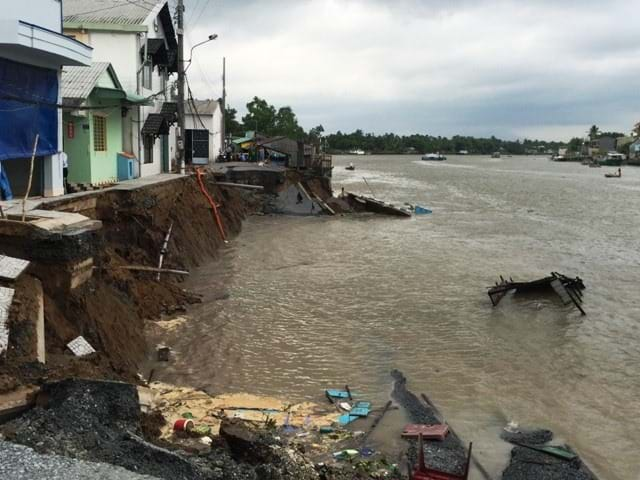
ĐBSCL hình thành là nhờ lượng phù sa của sông Mekong bồi đắp nên trong 6.000 năm qua. Việc xây thủy điện trên các dòng chính sông Mekong là một trong những nguyên nhân khiến ĐBSCL tăng sạt lở, dần “tan rã”. Ảnh: TL Tiếp tục đọc “Cứu dòng Mekong: Việt Nam nên tăng cường mua điện từ Lào?”
World’s Biggest Nuclear Fusion Reactor ITER Now 50 Percent Complete—Limitless Clean Energy by 2040?

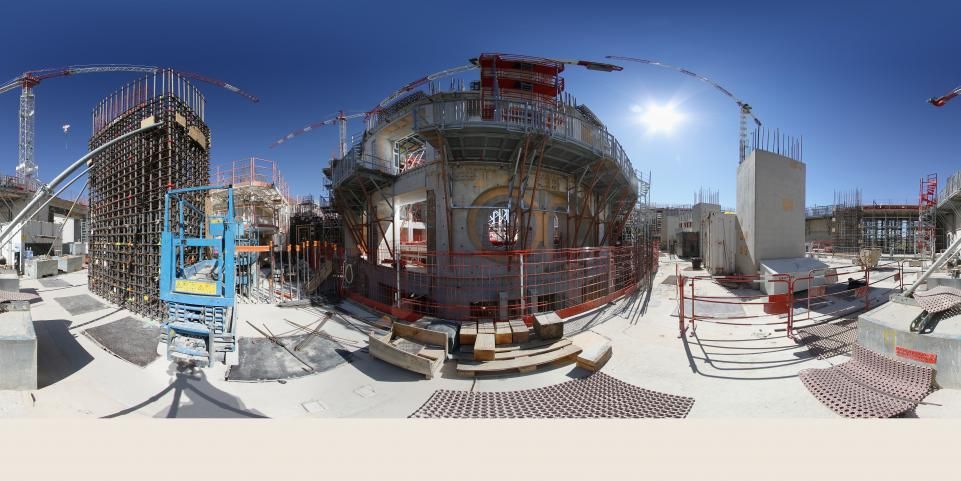
The world’s biggest fusion reactor is now 50 percent complete, with experts now estimating it will be ready for its first stage of operation in December 2025, with the first power plants up and running by 2040.
Fusion energy—the same process that powers the sun—potentially offers near limitless clean energy. If scientists can find a way to harness this source, it could provide enough electricity for millions of years.
Global Electric Car Sales Jump 63 %
-
China made more than half of EV purchases in the third quarter
-
Bloomberg New Energy Finance expects 1 million sold this year
Electric vehicles sales surged to a record in the third quarter, largely driven by strong demand in China.
Sales of battery electric vehicles and plug-in hybrids exceeded 287,000 units in the three months ended in September, 63 percent higher than the same quarter a year ago and up 23 percent from the second quarter, according to a report released Tuesday by Bloomberg New Energy Finance. China accounted for more than half of global sales as its market for electric cars doubled amid government efforts to curb pollution.
“The Chinese government is very focused on pushing up EV sales,” said Aleksandra O’Donovan, advanced transport analyst at BNEF and one of the authors of the report. “One reason for that is the local pollution levels in the cities, and a second is for China to build domestic heroes to compete internationally in this market.”
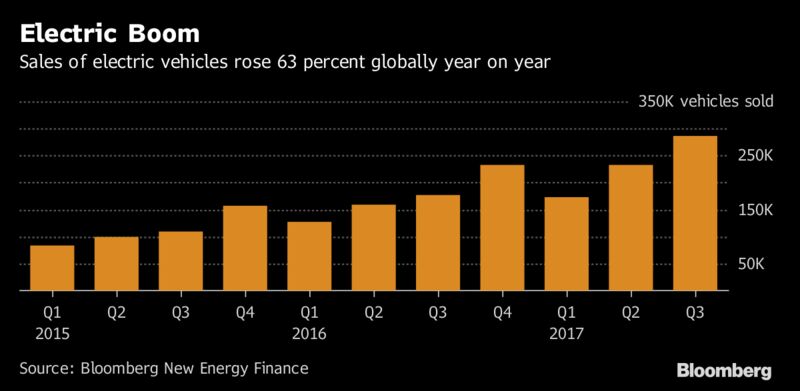
BNEF expects global EV sales to surpass 1 million units this year for the first time. The market for electrified transport is starting to pick up speed as charging infrastructure becomes more accessible and manufacturers roll out models with longer driving ranges. In 2017, many established carmakers from Jaguar Land Rover to Volvo Cars announced plans to bring electric versions of their vehicles to market in the next few years. Tiếp tục đọc “Global Electric Car Sales Jump 63 %”
APEC – Peer Review on Energy Efficiency in Vietnam (2009)
Nghị quyết 41: Động lực bứt phá cho ngành Dầu khí Quốc gia
08:16 |05/12/2017 Năng lượng Việt NamCuối năm 2015, khi thị trường dầu khí đang trong tình trạng khó khăn khi giá dầu thế giới suy giảm. Trong bối cảnh đó, Bộ Chính trị ra Nghị quyết số 41-QĐ/TW ngày 23-7-2015 về định hướng chiến lược phát triển ngành Dầu khí Việt Nam đến năm 2025 và đến nửa đầu năm 2035. Có thể kết luận rằng, Nghị quyết 41 của Bộ Chính trị là động lực bứt phá cho sự tăng trưởng trong ngành Dầu khí Việt Nam. Tiếp tục đọc “Nghị quyết 41: Động lực bứt phá cho ngành Dầu khí Quốc gia”
Loạt bài về nhiệt điện than trên trang Năng lượng Việt Nam
TĐH: Mình vừa thấy vài loạt bài rất interesting, hỗ trợ nhiệt điện than, trên trang Năng lượng Việt Nam của Hiệp hội Năng lượng Việt Nam. Đặt links ở đây để các bạn tiện tham khảo.
Vì sao Việt Nam cần phát triển nhiệt điện than? (Bài 1)
Vì sao Việt Nam cần phát triển nhiệt điện than? (Bài 2)
Vì sao Việt Nam cần phát triển nhiệt điện than? (Bài 3)
Vì sao Việt Nam cần phát triển nhiệt điện than? (Bài 4) Tiếp tục đọc “Loạt bài về nhiệt điện than trên trang Năng lượng Việt Nam”
German villages go 100% renewable

Local communities are at the forefront of the clean energy transition in Germany, with some villages relying 100% on renewables. EURACTIV Slovakia spoke to mayors there.
Neuerkirch and Külz are two small villages in Western Germany – of 300 and 500 souls respectively. And yet, they feel a part of something bigger that goes even beyond the country’s energy transition, the ‘Energiewende’. Tiếp tục đọc “German villages go 100% renewable”

