HBR.org _The global economy is in a massive transition from a fossil-fuel-based energy system to one using sophisticated renewable energy technologies. For tens of thousands of fossil fuel workers, though, the energy industry outlook is not promising. For coal industry workers, the future looks particularly bleak. However, research I conducted with Edward Louie of Oregon State University offers hope for a better future based on retraining workers. Our study (published in the journal Energy Economics) quantified the costs and benefits of retraining coal workers for employment in the rapidly expanding solar photovoltaic industry—and it explores different ways to pay for this retraining. Tiếp tục đọc “What If All U.S. Coal Workers Were Retrained to Work in Solar?”
Chuyên mục: Năng lượng tái tạo – Renewable energy
Vietnam’s solar power market: attractive but risky
Vietnam has great potentials for solar power
The electricity demand in Vietnam is predicted to increase by 11 percent per annum, or 20 billion kwh in the next years.
Under the 2011-2020 national electricity development plan, Vietnam would have 850 MW of solar electricity by 2020, 4,000 MW by 2025 and 12,000 MW by 2030. Tiếp tục đọc “Vietnam’s solar power market: attractive but risky”
Germany’s Transition from Coal to Renewables Offers Lessons for the World

From Ensia (find the original story here), from an article commissioned by Courier; reprinted with permission.
August 1, 2017—Seventy-seven-year-old Heinz Spahn—whose blue eyes are both twinkling and stern—vividly recalls his younger days. The Zollverein coal mine, where he worked in the area of Essen, Germany, was so clogged with coal dust, he remembers, that people would stir up a black cloud whenever they moved. “It was no pony farm,” he says—using the sardonic German phrase to describe the harsh conditions: The roar of machines was at a constant 110 decibels, and the men were nicknamed waschbar, or “raccoons,” for the black smudges that permanently adorned their faces. Tiếp tục đọc “Germany’s Transition from Coal to Renewables Offers Lessons for the World”
Can coal miners become solar technician?
Nothing on Earth moves without energy, and most of the energy that people use is of the fossil variety: coal, oil, and natural gas. Although renewable energy is beginning to make inroads, fossil fuels still account for 78 percent of global final energy consumption as of 2014, according to REN21’s Global Status Report 2016. It is abundantly clear that a fundamental energy makeover is needed if we are to avoid climate chaos—especially with regard to coal, the dirtiest fuel of them all. Until recently, global coal production and use were still growing.
Advocates for renewable energy are typically consumed with matters like technology development, cost competitiveness, and policy support for deploying solar, wind, and other renewables. But the social dimension of the energy transition is just as crucial: in moving away from polluting sources of energy, we need to make sure that the workers who for decades have dug up coal aren’t left in the lurch. These are the people who have often paid with their health so that the rest of us could power air conditioners, refrigerators, TVs, and gadgets galore. Tiếp tục đọc “Can coal miners become solar technician?”
Thuế than ở Philippine tăng 400% thúc đẩy sự phát triển của năng lượng sạch
Tiếp tục đọc “Thuế than ở Philippine tăng 400% thúc đẩy sự phát triển của năng lượng sạch”
Renewable Energy Benefits: Measuring The Economics – Lợi ích kinh tế của năng lượng tái tạo
IRENA report
The need for scaling up renewables is now undisputed, and the full range of benefits they can bring has come to the fore in global discussions. As countries consider options at their disposal, understanding the socio-economic benefits of the transition to a renewable energy future is of vital importance. Renewable Energy Benefits: Measuring the Economics provides the first global quantification of the macroeconomic impacts of renewable energy deployment. It finds that doubling the share of renewables by 2030 would bring a range of positive impacts including an increase in global gross domestic product (GDP) up to 1.1 percent, improvement of global welfare by 3.7 percent and over 24 million people working in the renewable energy sector. This report provides the latest evidence that mitigating climate change through the deployment of renewable energy and achieving other socio-economic objectives are mutually beneficial. Thanks to the growing business case for renewable energy, an investment in one is an investment in both. A full understanding of these benefits can tip the balance towards low-carbon investments and future-proof our energy system.
Download full report http://www.irena.org/DocumentDownloads/Publications/IRENA_Measuring-the-Economics_2016.pdf
Increasing World’s Share of Renewable Energy Would Boost Global GDP up to $1.3 Trillion
Abu Dhabi, U.A.E., 16 January 2016 – Achieving a 36 per cent share of renewable energy in the global energy mix by 2030 would increase global gross domestic product (GDP) by up to 1.1 per cent, roughly USD 1.3 trillion, according to new analysis by the International Renewable Energy Agency (IRENA). Tiếp tục đọc “Increasing World’s Share of Renewable Energy Would Boost Global GDP up to $1.3 Trillion”
Cứu dòng Mekong: Việt Nam nên tăng cường mua điện từ Lào?
***
Cứu dòng Mekong: Việt Nam nên tăng cường mua điện từ Lào?
19:50 | Thứ năm, 07/12/2017
- Thủy điện không còn hấp dẫn và cơ hội sống sót của dòng Mekong
- Cứu sông Mekong từ chính sách phát triển năng lượng tái tạo
- Mekong: những cam kết trôi theo dòng nước
- Chính thức khởi động PNPCA với Pak Beng: Dòng Mekong đến gần hơn với cái chết?
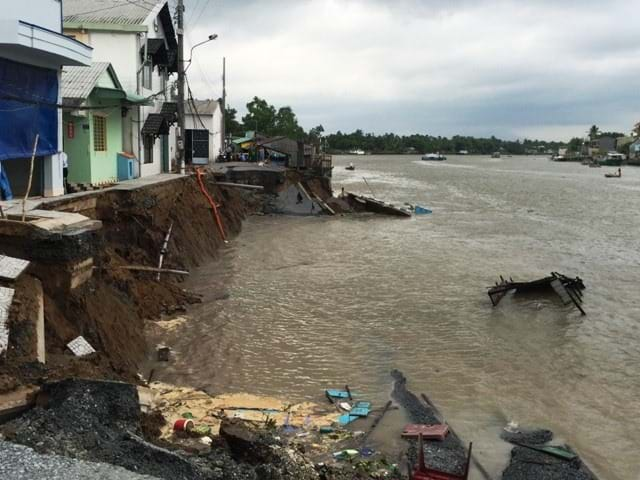
ĐBSCL hình thành là nhờ lượng phù sa của sông Mekong bồi đắp nên trong 6.000 năm qua. Việc xây thủy điện trên các dòng chính sông Mekong là một trong những nguyên nhân khiến ĐBSCL tăng sạt lở, dần “tan rã”. Ảnh: TL Tiếp tục đọc “Cứu dòng Mekong: Việt Nam nên tăng cường mua điện từ Lào?”
Global Electric Car Sales Jump 63 %
-
China made more than half of EV purchases in the third quarter
-
Bloomberg New Energy Finance expects 1 million sold this year
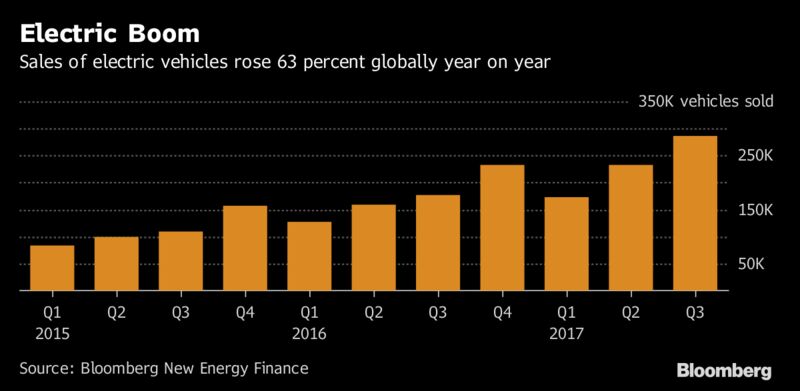
Electric vehicles sales surged to a record in the third quarter, largely driven by strong demand in China.
Sales of battery electric vehicles and plug-in hybrids exceeded 287,000 units in the three months ended in September, 63 percent higher than the same quarter a year ago and up 23 percent from the second quarter, according to a report released Tuesday by Bloomberg New Energy Finance. China accounted for more than half of global sales as its market for electric cars doubled amid government efforts to curb pollution.
“The Chinese government is very focused on pushing up EV sales,” said Aleksandra O’Donovan, advanced transport analyst at BNEF and one of the authors of the report. “One reason for that is the local pollution levels in the cities, and a second is for China to build domestic heroes to compete internationally in this market.”

BNEF expects global EV sales to surpass 1 million units this year for the first time. The market for electrified transport is starting to pick up speed as charging infrastructure becomes more accessible and manufacturers roll out models with longer driving ranges. In 2017, many established carmakers from Jaguar Land Rover to Volvo Cars announced plans to bring electric versions of their vehicles to market in the next few years. Tiếp tục đọc “Global Electric Car Sales Jump 63 %”
German villages go 100% renewable

Local communities are at the forefront of the clean energy transition in Germany, with some villages relying 100% on renewables. EURACTIV Slovakia spoke to mayors there.
Neuerkirch and Külz are two small villages in Western Germany – of 300 and 500 souls respectively. And yet, they feel a part of something bigger that goes even beyond the country’s energy transition, the ‘Energiewende’. Tiếp tục đọc “German villages go 100% renewable”
Australia in plans to export colossal amounts of wind and solar energy to Southeast Asia
An international consortium of energy companies has presented its plans to develop a 6 gigawatt (GW) solar and wind hybrid project in Western Australia, designed to export clean energy to Indonesia through subsea cables.
Western Australia is set to take advantage of its significant solar and wind resources to export renewable energy to Indonesia, contributing significantly to the country’s clean energy future and energy security through reducing reliance on imported fossil fuels.
The proposed project is called Asian Renewable Energy Hub (AREH) and is another mega energy project which underlines the significant opportunities that domestic renewable resources can provide for countries to become the ‘new’ energy exporters.
The hybrid power plant would be spread over 14,000 square km in flat desert land on the north-west coast of Australia.
It would comprise approximately 1,200 wind turbines supplied by Vestas, and 10 million solar panels with an aggregated capacity of 6GW – enough electricity to power more than 7 million households. Tiếp tục đọc “Australia in plans to export colossal amounts of wind and solar energy to Southeast Asia”
Hướng dẫn tài chính cho người làm chính sách: Năng lượng tái tạo và hạ tầng xanh (P1)
>> Phần 1: Giới thiệu về Hướng dẫn Tài chính cho người làm chính sách: Năng lượng tái tạo và hạ tầng xanh
>> Phần 2: Thẩm định tính khả thi cho dự án năng lượng tái tạo ở thị trường mới nổi
Giới thiệu về Hướng dẫn Tài chính
bloomberg_Hiệp định Khí hậu Paris vào tháng 12 năm 2015 tập trung chú ý vào nhu cầu huy động các dòng vốn tư nhân lớn cho vào các giải pháp khí hậu với tốc độ và quy mô cần thiết để chống lại biến đổi khí hậu ở mức độ cấp thiết.
Việc thực hiện các kế hoạch quốc gia về năng lượng sạch hoặc cơ sở hạ tầng “xanh” sẽ đòi hỏi mức độ đầu tư chưa từng có, không chỉ vì lý do khí hậu, thông qua quyết tâm đóng góp quốc gia (Nationally determined contributions – NDC), mà còn đảm bảo an ninh năng lượng và tiếp cận năng lượng cho những người thiếu thốn, cũng như cho phát triển bền vững.
Bây giờ, hơn bao giờ hết, một điều vô cùng quan trọng là các nhà hoạch định chính sách và các bên khác không-phải-nhà-tài-trợ phải cần hiểu và giao tiếp với cộng đồng tài chính để thiết lập các điều kiện hiệu quả ở cấp quốc gia, cấp mà việc đầu tư sẽ phải được thực hiện.
Là một đóng góp thực tiễn, Hướng dẫn Tài chính cung cấp cái nhìn tổng quan thực tiễn về bối cảnh tài chính – nguồn vốn, cách thị trường hoạt động, cách các giao dịch vận hành và rộng hơn nữa để thiết lập các điều khoản tài chính chung trong bối cảnh đặt ra.
Hướng dẫn này phản ánh những thay đổi gần đây về điều kiện thị trường, cơ cấu tài chính và các cuộc tranh luận chính sách có liên quan. Các chủ đề của Hướng dẫn bao gồm:
Tiếp tục đọc “Hướng dẫn tài chính cho người làm chính sách: Năng lượng tái tạo và hạ tầng xanh (P1)”
Vietnam’s Homegrown System for Saving Water

October 24, 2017
A young man returned home to invent an internet-integrated system that helps farmers produce more food with less water.
Tri Nguyen, CEO of MimosaTEK, was born and raised in Dalat, a city in the Central Highlands region of Vietnam, where the land is mountainous and fertile. He grew up surrounded by local farmers who planted a rich variety of products — from bell peppers and flowers to coffee and bananas. Tri moved to Ho Chi Minh City to work in the information technology sector as a young man, but when the opportunity came, he decided to return to his roots and start a strawberry farm with his friends in Dalat.
Tri turned to the local farmers to learn everything he could about growing strawberries. But he kept hearing something that didn’t seem right: The farmers instructed him to irrigate until water dripped out of the soil when he picked it up in his hands.
Tri did some research that confirmed his instincts: The farmers didn’t need to be using that much water. But when he told his neighbors, they insisted on continuing to overwater their crops. It was how they were taught and how they had farmed all their lives.
“I realized then that the farmers based their decisions on experiences instead of scientific data,” says Tri.
Smallholder and family farmers in Dalat water their crops based on what they see and feel. They don’t consult data on the weather or rainfall because they were never taught to do so. This is leading to excessive irrigation, which can stunt growth or kill crops, and deplete limited groundwater. Furthermore, Vietnam is still recovering from its strongest-ever drought, and every drop counts. Many of Dalat’s farmers are already suffering from water shortages. Tiếp tục đọc “Vietnam’s Homegrown System for Saving Water”
Trong khi Bắc Kinh phát triển Năng lượng tái tạo, thì các công ty Trung Quốc xây nhiệt điện than ở Việt Nam và các nước nghèo – As Beijing Joins Climate Fight, Chinese Companies Build Coal Plants
When China halted plans for more than 100 new coal-fired power plants this year, even as President Trump vowed to “bring back coal” in America, the contrast seemed to confirm Beijing’s new role as a leader in the fight against climate change.
But new data on the world’s biggest developers of coal-fired power plants paints a very different picture: China’s energy companies will make up nearly half of the new coal generation expected to go online in the next decade.
Skills and occupational needs in renewable energy and Green Buildings – Kỹ năng và nghề nghiệp cần thiết trong ngành năng lượng tái tạo và công trình xanh
This report brings together the findings from 33 countries and arises from a joint EC/ILO project on Knowledge sharing in early identification of skill needs.
Green Building
Download: Skills and occupational needs in green buildingpdf – 1.8 MB
This report brings together the findings from 34 countries and arises from a joint EC/ILO project on Knowledge sharing in early identification of skill needs.
</div