Toxic timebomb: why we must fight back against the world’s plague of plastic

We must reduce our dependence on plastics, especially single-use items, and seek out alternative materials

38 million pieces of plastic waste found on uninhabited South Pacific island

It’s everywhere. From the Mariana Trench to the floor of the Arctic Ocean, on tropical beaches and polar coasts. It’s in wildlife, seafood, sea salt and even on the surface of Mars. The world is blighted by plastic. Up to 12m tonnes of the stuff enters the world’s oceans every year (that’s one new tonne of plastic every three to 10 seconds) and it doesn’t go to that magical place called “away”.

Once in the oceans, it can float around for years, or even decades, before being swallowed by a bird or a whale. During that time, it can travel tens of thousands of kilometres, all the while absorbing contaminants from the sea water, concentrating them like a sponge. When wildlife ingest plastic, the brew of toxic chemicals can be transferred to the animal’s tissues with potentially dangerous consequences. Tiếp tục đọc “Toxic timebomb: why we must fight back against the world’s plague of plastic”

Bất cập trong quản lý và khai thác nước ngầm – 2 bài

Bất cập trong quản lý và khai thác nước ngầm – Bài 1

Ông Nguyễn Đăng Biển (bên phải) ở tổ 4, khu phố Phú Hưng.phường Phú Thịnh, thị xã Bình Long khoan giếng tại ấp Quản Lợi A, xã Tân Lợi (Hớn Quản)Ông Nguyễn Đăng Biển (bên phải) ở tổ 4, khu phố Phú Hưng.phường Phú Thịnh, thị xã Bình Long khoan giếng tại ấp Quản Lợi A, xã Tân Lợi (Hớn Quản)

01:33 PM – 05/05/2017

BP – Những năm gần đây, thời tiết diễn biến bất thường dẫn đến khô kiệt nguồn nước, ảnh hưởng sinh hoạt và phát triển sản xuất của người dân. Khi nước mặt cạn kiệt, các hồ chứa trơ đáy, giải pháp khoan để khai thác nước ngầm được cho là hiệu quả nhất, dẫn đến dịch vụ khoan giếng nở rộ và là nguyên nhân chính làm cạn kiệt nguồn nước cục bộ, gia tăng ô nhiễm các tầng chứa nước. Thậm chí làm ô nhiễm mạch nước ngầm do các giếng khoan không gặp nước đã không được trám lấp, về mùa mưa chất bẩn theo dòng nước chảy xuống giếng. Tiếp tục đọc “Bất cập trong quản lý và khai thác nước ngầm – 2 bài”

Vietnam’s Cat Ba archipelago faces threats from mammoth tourism project

Tuoi Tre News

Updated : 05/14/2017 16:01 GMT + 7

A model of the megaresort upon completion in Cat Ba Archipelago off the northern city of Hai Phong
The construction of a megaresort has been initiated in a popular archipelago off the northern Vietnamese city of Hai Phong, mounting pressure on the local environment recognized as the world’s biosphere reserve.

The Cat Ba ecotourism resort and entertainment complex in the namesake archipelago, developed by Vietnamese conglomerate Sun Group, was kick-started on Saturday, with total investment estimated at US$3 billion.

The project began with the construction of a seaport and station of an over-the-sea cable car system, 21km long, connecting Cat Hai and Cat Ba Towns.

The third terminal of the cable car is expected to be located near the administrative center of the Cat Ba National Park on the main island.

Aside from the transportation system, the project will also include three golf courses, an amusement park, and several components to leverage the tourism potential of local areas such as Qua Vang Cave, Lan Ha Bay, Viet Hai Village, and Cat Ong Island.

A clam farm, previously owned by residents in Cat Ba Archipelago, has been backfilled for the construction of the massive resort. Photo: Tuoi Tre

Le Khac Nam, vice-chairman of the Hai Phong People’s Committee, told Tuoi Tre (Youth) newspaper that local authorities and Sun Group had carried out multiple surveys and pooled feedback before laying out a plan for the project.

The building of the cable car as well as other constructions will only take place in the outer areas and along the coast, Nam said, claiming that it would not affect the Cat Ba biosphere reserve, which has always been strictly protected.

The resort complex plays a very essential role in developing tourism on Cat Ba, the official elaborated.

“Upon completion, the project will surely transform Cat Ba into a world-class tourist destination,” he added.

Meanwhile, Hoang Van Thap, director of the Cat Ba National Park, affirmed that he had not been asked to give any advice on the construction.

Thap added he had not been aware that some structures would be built within the park, where many rare animal and plant species are being protected.

A map showing the ecotourism project in Cat Ba Archipelago. Photo: Tuoi Tre

Developing tourism in the area requires careful consideration by competent agencies to ensure that the wildlife habitat will not be subject to any damage, Thap asserted.

Local conservationists are concerned that the Cat Ba langur species, the most endangered species in Vietnam being protected at the national park, would face multiple threats.

As of April, only 56 langurs had been recorded on Cat Ba.

According to Tran Thanh Liem, vice-chairman of the People’s Committee in Dong Bai Commune, Cat Hai District, among the 720 hectares of land needed to implement the project, 500 hectares is located in Dong Bai.

Two out of three villages in the commune have been relocated in order for the construction to take place, Liem said.

Bottom trawling a threat to the ocean, fishermen

vietnamnews

Update: May, 15/2017 – 16:48

Similar to using boats, a manual form of bottom trawling – which also makes use of huge nets that can cover a portion of nearshore sea – can drag in every form of sea life in that area, and a still common in the central province of Nghệ An. — VNA/VNS Photo Nguyễn Văn Nhật
CENTRAL REGION — Bottom trawling is a particularly destructive method of fishing, in which huge weighted nets are dragged on the sea floor, catching everything in their path.Nguyễn Văn Việt, a fisherman from Hoài Nhơn District in the province of Bình Định, said locals here considered bottom trawlers to be ‘sea demons.’

“The setup is either one trawler or two trawlers running in tandem, dragging a huge net with very fine holes, scooping up fish of all sizes. Other than the fact that all sea creatures are caught and bycatches are discarded, the ecosystem along the sea floor is irreparably damaged,” Việt said. Tiếp tục đọc “Bottom trawling a threat to the ocean, fishermen”

Where there’s a wall there’s a way: artists take aim at Sumatra’s palm oil industry

Guardian

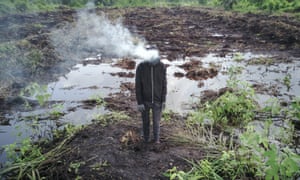
When smoke from Indonesia’s palm oil industry reached the studio of artist Ernest Zacharevic in Malaysia, a unique project was born. Intent on making the world reconsider the environment, Zacharevic sold one of his prints to raise funds for Splash and Burn, a public art campaign. The title is a play on the ‘slash and burn’ practices used by palm oil producers to clear land for farming

Global development is supported by

On a swampy patch of degraded forest land on the Indonesian island of Sumatra stands a hooded black figure, face obscured by plumes of smoke. Something strange is afoot.

Elsewhere, random limbs protrude eerily from unexpected places. A sun bear, piggybacking a startled child, traipses stoically across a foreign landscape. A miniature man settles into a hammock strung between two oil palm saplings. Tiếp tục đọc “Where there’s a wall there’s a way: artists take aim at Sumatra’s palm oil industry”

Laos prime minister concerned over banana plantations

channelnewsasia

The prime minister of Laos has voiced concern over widespread chemical usage on banana plantations after a Reuters report on Chinese-run farms in the Southeast Asian country.

A worker drives through a banana plantation operated by a Chinese company in the province of Bokeo in Laos April 25, 2017. REUTERS/Jorge Silva

REUTERS: The prime minister of Laos has voiced concern over widespread chemical usage on banana plantations after a Reuters report on Chinese-run farms in the Southeast Asian country.

Reuters reported that while the banana boom had brought economic benefits to the impoverished region, there was also strong concern at the use of chemicals – including the herbicide paraquat, which is banned in Laos. Tiếp tục đọc “Laos prime minister concerned over banana plantations”

Bọt trắng như tuyết bốc mùi, nổi dày đặc trên kênh Tàu Hủ sau trận mưa lớn

07:31 PM – 15/05/2017 Thanh Niên Online
Sau cơn mưa lớn thì trên kênh Tàu Hủ xuất hiện nhiều bọt trắng bất thườngc /// Ảnh: Phan Định
Sau cơn mưa lớn thì trên kênh Tàu Hủ xuất hiện nhiều bọt trắng bất thường Ảnh: Phan Định
Chiều 15.5, trên kênh Tàu Hủ xuất hiện nhiều bọt trắng, bốc mùi hôi thối. Mỗi khi có gió, bọt trắng lại bay khắp nơi.
Chiều 15.5, sau cơn mưa lớn thì trên kênh Tàu Hủ – đoạn giao giữa rạch Ruột Ngựa và kênh Lò Gốm (phường 16, quận 8, TP. HCM) xuất hiện nhiều bọt trắng bất thường.

Tiếp tục đọc “Bọt trắng như tuyết bốc mùi, nổi dày đặc trên kênh Tàu Hủ sau trận mưa lớn”

Human poo transformed into clean fuel for Kenya’s urban poor

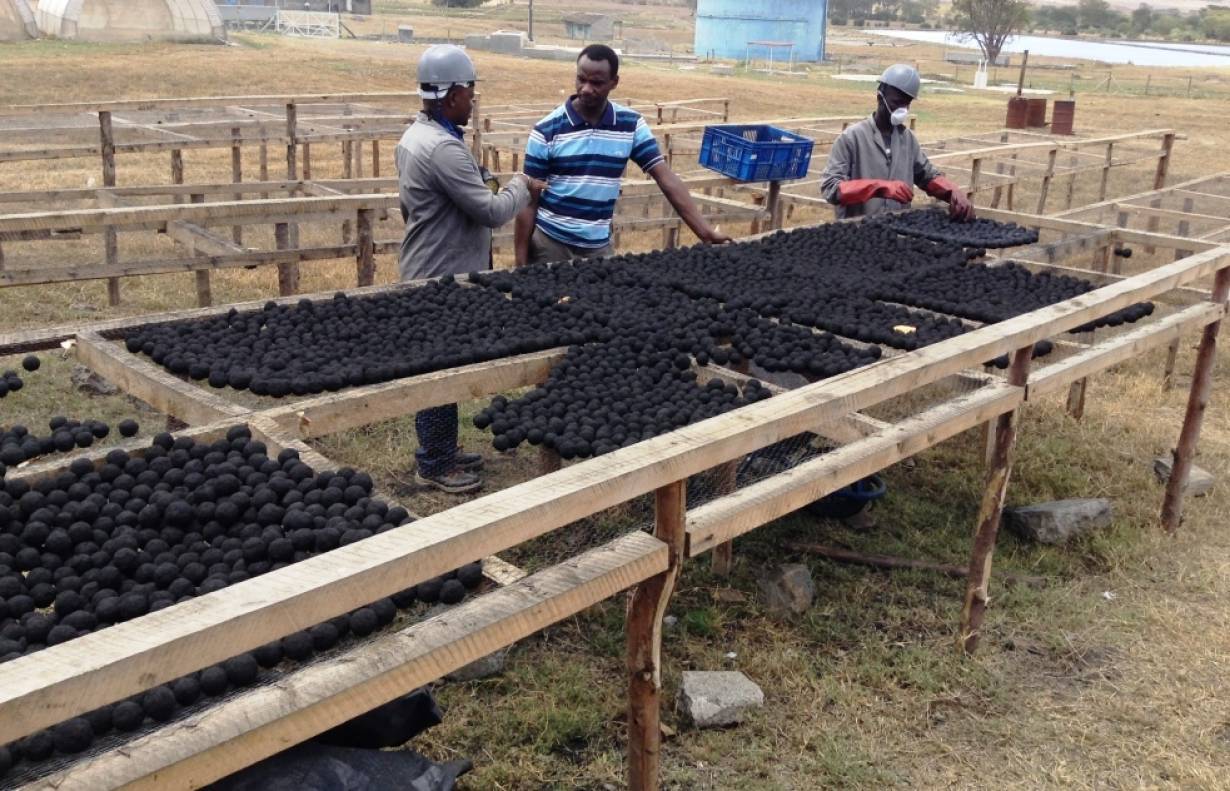
 Wet fuel briquettes made from human waste and sawdust are dried outside at the Nakuru Water and Sanitation Services Company plant in Nakuru, Kenya, April 8, 2017. TRF/ Be

 
by Benson Rioba | Thomson Reuters Foundation
Friday, 12 May 2017 13:38 GMT

Using human waste to make fuel briquettes tackles sanitation and health problems – and they even smell sweetBy Benson Rioba

NAKURU, Kenya, May 12 (Thomson Reuters Foundation) – Poultry farmer Josephine Mbithe used to get up three times a night to add charcoal to her stove just to keep her newborn chicks warm. But since she started using fuel briquettes made with human waste, the stove burns all night, leaving her to sleep in peace.

Mbithe is one of many Nakuru residents who have embraced the briquettes manufactured from human poo and sawdust collected around the town, northwest of Nairobi, in the Great Rift Valley. Tiếp tục đọc “Human poo transformed into clean fuel for Kenya’s urban poor”

THUẾ BẢO VỆ MÔI TRƯỜNG: Có thực vì môi trường?

TTCT– Thu thuế bảo vệ môi trường là để bảo vệ môi trường, không thể đóng vai trò nào khác.
Có thực vì môi trường?
Hình ảnh khu vực phía tây bán đảo Sơn Trà kế bãi biển Tiên Sa bị tàn phá. Ảnh phải chụp màn hình từ Google Map ngày 1-5. Ảnh trái chụp màn hình từ Google Map trước đó.

Lộ trình mà Chính phủ vạch ra để Luật thuế bảo vệ môi trường (BVMT) sửa đổi được thông qua chỉ trong bốn tháng: Tiếp tục đọc “THUẾ BẢO VỆ MÔI TRƯỜNG: Có thực vì môi trường?”

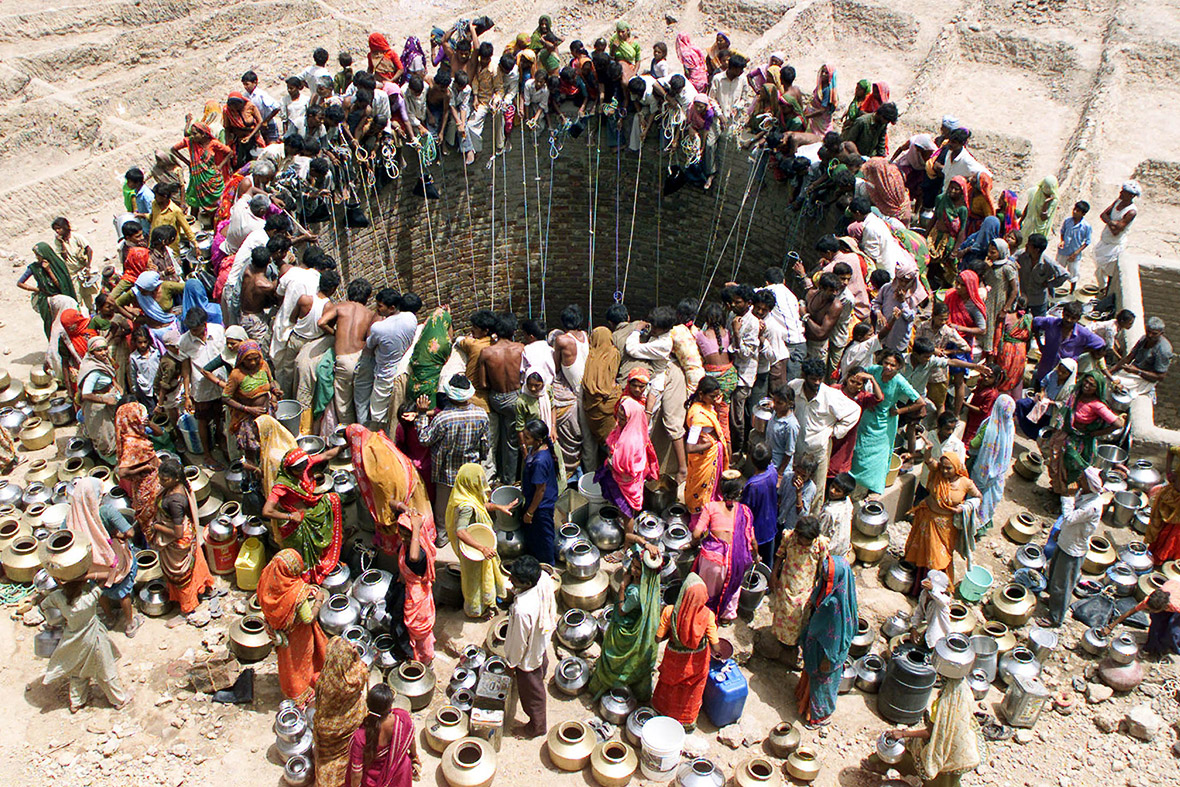
World Water Day 2017: 60 powerful photos to make you think twice about leaving the tap running

Ông Nguyễn Sự: Tôi nổi điên vì phát biểu của lãnh đạo Tổng cục Du lịch về Sơn Trà

09:35 – 13/05/2017

infonet.vn_“Đọc bài trên Infonet, thấy thái độ của ông Hà Văn Siêu và đoàn công tác của Tổng cục Du lịch khi họp giải quyết kiến nghị của Hiệp hội Du lịch Đà Nẵng về quy hoạch Khu du lịch quốc gia ở Sơn Trà, thêm câu phát biểu họ không cần thấy Voọc chà vá chân nâu nhưng quy hoạch của họ vẫn tốt mà tôi tức ngược lên tới ngực!” – Đó là câu mở đầu của ông Nguyễn Sự, nguyên Bí thư Thành ủy, Chủ tịch HĐND TP Hội An (Quảng Nam) khi gọi điện cho PV Infonet lúc 6h10 tối 12/5.

Ông Nguyễn Sự, nguyên Bí thư Thành ủy, Chủ tịch HĐND TP Hội An (Ảnh: HC)

Ông cho hay, mấy tháng qua ông theo dõi rất sát các diễn biến chung quanh vụ 40 móng biệt thự ở khu du lịch sinh thái biển Tiên Sa cũng như quy hoạch khu du lịch quốc gia ở Sơn Trà. Tuy nhiên ông đã từ chối đề nghị phỏng vấn của khá nhiều báo, vì ông nghĩ mình ở Hội An, không nên can thiệp vào việc của Đà Nẵng. Nhưng đến khi đọc bài tường thuật buổi làm việc của Tổng cục Du lịch với Hiệp hội Du lịch Đà Nẵng chiều 11/5 thì ông không thể im lặng được nữa mà gọi điện cho PV Infonet bày tỏ bức xúc: Tiếp tục đọc “Ông Nguyễn Sự: Tôi nổi điên vì phát biểu của lãnh đạo Tổng cục Du lịch về Sơn Trà”

Proposed dam to poses more threat to Vietnam’s Mekong Delta: conference

TUOI TRE NEWS

Updated : 05/13/2017 14:00 GMT + 7

The environment and lives of dozens of millions of people living in the Lower Mekong Basin are being threatened as the Mekong River is expected to see yet another hydropower dam construction, experts said at an international conference on Friday.

Experts all express concerns over the Laos-proposed Pak Beng dam, the latest to be built on the Mekong River, as they convened for a consultation process held by the Vietnam Mekong River Commission in the southern Vietnamese city of Can Tho. Tiếp tục đọc “Proposed dam to poses more threat to Vietnam’s Mekong Delta: conference”

Vietnam province fears ‘another Formosa’ as paper mill raises environmental concerns

TUOI TRE NEWS

Updated : 05/11/2017 13:33 GMT + 7

The construction site of the VNT19 pulp mill is seen in Quang Ngai Province, located in central Vietnam.

With the fish death disaster caused by wastewater dumped by a steel plant into the waters off central Vietnam still fresh in the minds of citizens, administrators in a province housing a paper mill are worried about giving history the opportunity to repeat itself.

The administration of the central province of Quang Ngai has called on the Ministry of Natural Resources and Environment to provide more detailed guidance on how to ensure the VNT19 pulp mill in Binh Son District will not become ‘another Formosa.’ Tiếp tục đọc “Vietnam province fears ‘another Formosa’ as paper mill raises environmental concerns”

Sơn Trà ký sự – Kỳ 4: Luận về Chà vá chân nâu và chùa Linh Ứng

NĐT – 09/05/2017 – 19:37 PM

Nhắc đến Sơn Trà, các phương tiện truyền thông, cả “lề phải” lẫn “lề trái”, đều nhất mực ngợi ca Voọc chà vá chân nâu và chùa Linh Ứng bãi Bụt. Trên truyền thông chưa thấy ai đề cập đến sự tương phản của hai “điểm nhấn” đó.

» Để voọc Sơn Trà còn đất sống
» Đừng để Sơn Trà bị “băm nát” và thu hẹp
» Sơn Trà ký sự – Kỳ 1: Chuyện về ông ‘thần rừng’
» Sơn Trà ký sự – Kỳ 2: Y cẩm dạ hành
» Sơn Trà ký sự – Kỳ 3: Mấu chốt của những vấn đề ‘nóng’ trên bán đảo Sơn Trà

Chúng tôi không mô tả về Chà vá chân nâu, vì người ta đã viết rất kỹ và chụp hình, quay phim rất rõ về loài động vật đặc biệt quý hiếm đang xếp vào danh mục cực kỳ nguy cấp này. Bạn đọc có thể dễ dàng tìm đọc và chiêm ngưỡng chúng trên mạng với đủ kiểu, đủ dáng, đủ mọi góc nhìn, góc chụp, góc quay.

Chỉ xin lưu ý là chúng chỉ ăn lá và hoa quả của những loài cây đặc hữu, là những loài cây chỉ có ở Sơn Trà, chỉ hít thở và sinh con đẻ cái trong hệ sinh thái của rừng nguyên sinh nơi đây. Chúng không ăn rặt một vài thứ như những con vật mà chúng ta nuôi, mà mùa nào, giờ nào chúng ăn những thứ gì trong những loài cây đặc hữu đó chúng ta không biết, không thể biết và không cần phải biết.

Toàn cảnh chùa Linh Ứng bãi Bụt

Tiếp tục đọc “Sơn Trà ký sự – Kỳ 4: Luận về Chà vá chân nâu và chùa Linh Ứng”

Protective forests are being slowly destroyed

Last update 08:10 | 08/03/2017
VietNamNet Bridge – Protective forests are being cut down at a high rate, despite laws that oversee such violations. 

environmental news, sci-tech news, vietnamnet bridge, english news, Vietnam news, news Vietnam, vietnamnet news, Vietnam net news, Vietnam latest news, Vietnam breaking news, vn news,  Binh Phuoc, deforestation, environment pollution

Many trees in the natural forests of the mountainous district of Da Krong in Quang Tri province have been chopped down. When reporters visited the site in late February, they could see felled trunks in disorder on the ground with sap still dripping.

Three forest rangers, present at the civil guard post, when asked why the forest was ruined, said they tried to persuade people to stop felling trees and reported the deforestation to relevant agencies, but the forest was still ravaged. Tiếp tục đọc “Protective forests are being slowly destroyed”