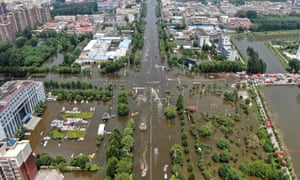
Green water – the rainwater available to plants in the soil – is indispensable for life on and below the land. But in a new study, we found that widespread pressure on this resource has crossed a critical limit.
The planetary boundaries framework – a concept that scientists first discussed in 2009 – identified nine processes that have remained remarkably steady in the Earth system over the last 11,700 years. These include a relatively stable global climate and an intact biosphere that have allowed civilisations based on agriculture to thrive. Researchers proposed that each of these processes has a boundary that, once crossed, puts the Earth system, or substantial components of it, at risk of upset.
Từ những mảnh ghép rời rạc trong quá khứ và hiện tại, liệu chúng ta có thể hiểu rõ về tình trạng lún ở Hà Nội hay không?
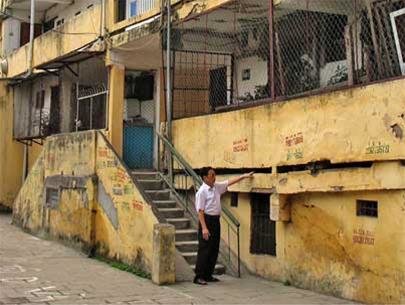
Lún ở khu tập thể năm tầng C1 Thành Công, quận Ba Đình, Hà Nội cách đây hơn 15 năm. Nguồn: Báo Tuổi trẻ
Nhưng có gì lạ với lún ở Hà Nội? Cách đây hơn 15 năm, Hà Nội đã từng chứng kiến cảnh tượng khó quên ở khu tập thể năm tầng C1 Thành Công, quận Ba Đình: mặt đất như muốn nuốt chửng hơn một nửa tầng một khiến toàn bộ tầng này chỉ còn nhô lên khỏi mặt đất chừng hơn một mét, phần cầu thang giữa hai đơn nguyên gãy gập theo đường gấp khúc, một vài cầu thang khác uốn cong theo chiều võng của tòa nhà khiến việc di chuyển được người dân sống ở đó miêu tả là “như leo thác”. Nhiều tờ báo như Tuổi trẻ, Nhân dân, CAND, Vietnamnet… vào thời điểm đó đã đồng thanh lên tiếng về hiện tượng này.
As the United States turns to electric vehicles, solar and wind for its clean energy transition, the demand for lithium – used in rechargeable batteries – is on the rise.
Kachin State’s Chipwi Township in northernmost Myanmar is known for its pristine forests and crystal-clear water.
But 10 years ago, local residents started noticing the patches of land that had been cleared on the lush mountains surrounding their town, which borders China’s Yunnan province. It started with one patch of land, where all the trees were cut down. Then others followed.
Soon locals saw heavy machinery being moved through their town, heading to those barren plots of land. Then workers started flooding in. They excavated the ground and left open pits, many filled with chemically-laced water, in areas once rich in woodland. The water near those sites was no longer clean.
It became obvious at that stage that the newcomers were looking for something underneath the ground – rare earth, which contains elements widely used in high-tech products like smartphones, computer components, electric vehicles and solar cells.
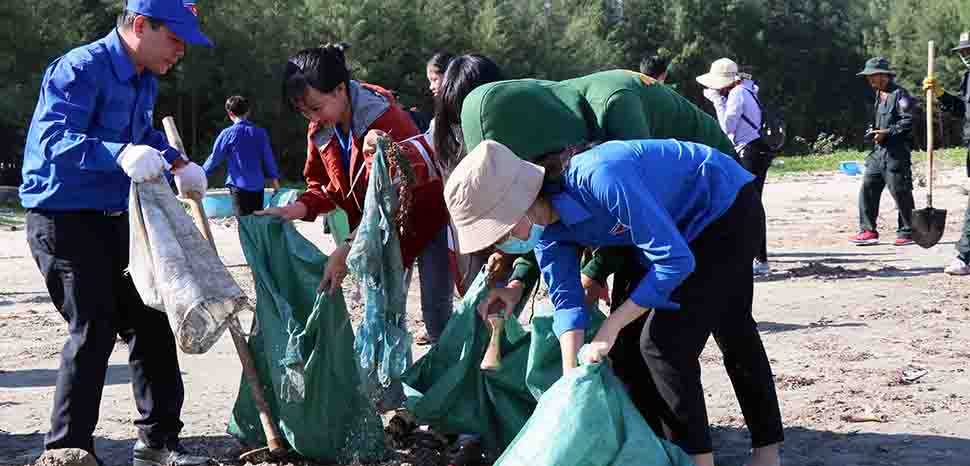
17-year-old Hoang Mai is a proud contributor to Vietnam’s Youth Union volunteer campaign. In a run-up to World Environment Day and its global theme, “Only One Earth” on June 5, she will connect with millions of other young citizens who are taking action to clean up the environment. The Youth Union has focused increasing attention on environmental protection through tree planting and eco-campaigns like “for a green Vietnam,” “let’s clean up the seas,” and “anti-plastic waste,” and recently marked the start of its ‘Green Summer’ campaign.
Vietnam’s rapid development from one of the five poorest countries in the world in 1985 to one of the world’s fastest growing economies has resulted in dramatic environmental consequences from polluted rivers, biodiversity loss, and air quality depletion.
BVR&MT – Trên toàn cầu, các dự án trồng cây đang trở thành xu hướng thịnh hành nhưng nhiều người đang dựa vào thói quen cũ là trồng rừng độc canh và gọi chúng là rừng.
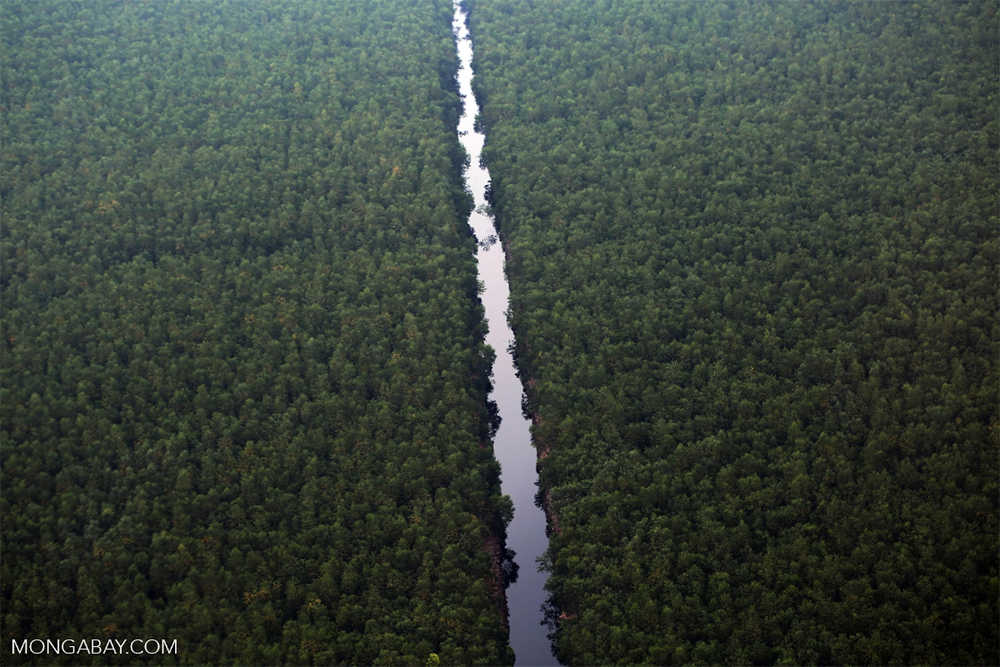
Các chuyên gia cho biết mặc dù các đồn điền độc canh thường khác biệt với mắt chúng ta như một khối nếu chúng ta nhìn thấy chúng từ mặt phẳng nhưng từ quan điểm màu sắc, chúng thường trùng lặp với rừng tự nhiên và do đó làm nhầm lẫn các thuật toán máy tính đang hoạt động với các điểm ảnh mờ. Hình ảnh: Rhett A. Butler / Mongabay
Cứ như thể một người dọn dẹp chuyên nghiệp đã được đưa vào khu rừng nhiệt đới. Tiếng chim hót và tiếng ếch nhái vắng lặng, những mái vòm lộn xộn được dọn sạch bong. Nơi từng là những đám dây leo và cây non hỗn độn nằm chen chúc dưới những dưới tán cây râm mát, giờ được thay thế bằng những cây có cùng chiều cao đứng ngăn nắp và xếp thành từng hàng ngay ngắn dưới cái nắng như thiêu đốt.
Đây là một dự án trồng rừng. Nhưng có điều gì đó rất sai.
Các cơ quan chính phủ Campuchia đã chào mời dự án trồng rừng Prey Lang là dự án lớn đầu tiên trong việc phục hồi tập trung vào khí hậu. Cục Lâm nghiệp Campuchia đã cấp cho nhà thầu Hàn Quốc Think Biotech nhượng quyền trồng 34.000 ha rừng mục đích rõ ràng là trồng cây và giảm nhẹ phát thải khí nhà kính. Nhưng những gì đã xảy ra trên mặt đất trông không giống như một chiến thắng trước biến đổi khí hậu.
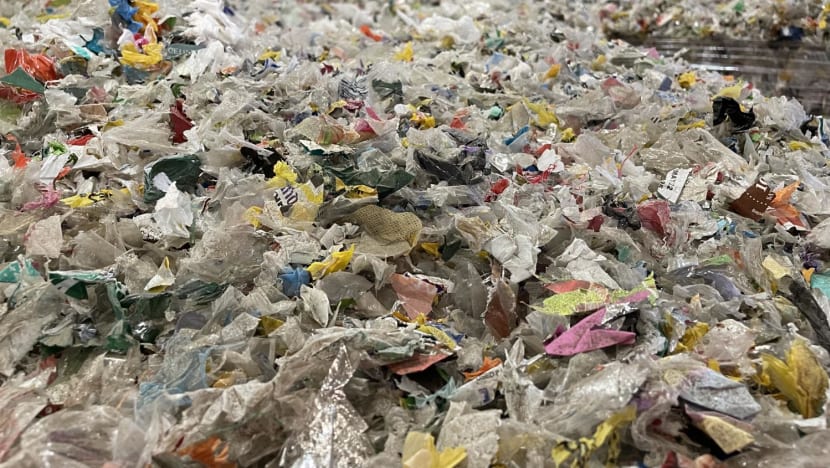
SYDNEY: Take a walk around Sydney’s city centre and chances are, it won’t take long before you find a recycling bin or a product made from recycled material.
While it may seem insignificant, it is a sign of how Australia’s packaging landscape is changing.
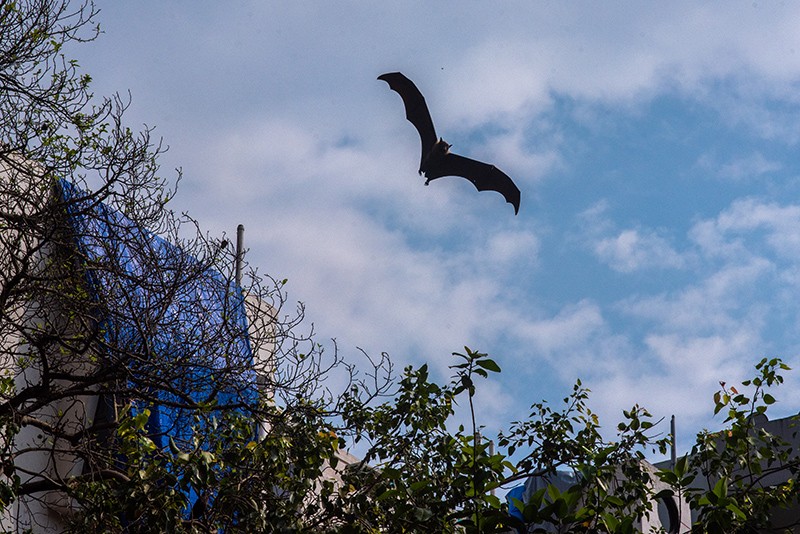
Bats will have a large contribution to virus transmission between species in the future, a modelling study finds.Credit: Pratik Chorge/Hindustan Times via Getty
Over the next 50 years, climate change could drive more than 15,000 new cases of mammals transmitting viruses to other mammals, according to a study published in Nature1. It’s one of the first to predict how global warming will shift wildlife habitats and increase encounters between species capable of swapping pathogens, and to quantify how many times viruses are expected to jump between species.
Many researchers say that the COVID-19 pandemic probably started when a previously unknown coronavirus passed from a wild animal to a human: a process called zoonotic transmission. A predicted rise in viruses jumping between species could trigger more outbreaks, posing a serious threat to human and animal health alike, the study warns — providing all the more reason for governments and health organizations to invest in pathogen surveillance and to improve health-care infrastructure.
The study is “a critical first step in understanding the future risk of climate and land-use change on the next pandemic”, says Kate Jones, who models interactions between ecosystems and human health at University College London.
The research predicts that much of the new virus transmission will happen when species meet for the first time as they move to cooler locales because of rising temperatures. And it projects that this will occur most often in species-rich ecosystems at high elevations, particularly areas of Africa and Asia, and in areas that are densely populated by humans, including Africa’s Sahel region, India and Indonesia. Assuming that the planet warms by no more than 2 °C above pre-industrial temperatures this century — a future predicted by some climate analyses — the number of first-time meetings between species will double by 2070, creating virus-transmission hotspots, the study says.
Thanh Niên – Khi nhu cầu về cát ở ĐBSCL càng lớn, dự báo lên tới hàng trăm triệu mét khối/năm thì việc quản lý, khai thác cát bền vững, hạn chế tác động môi trường, ảnh hưởng đến người dân là bài toán vô cùng nan giải.
Dưới cơn mưa tầm tã trắng cả sông Hậu, những xáng cạp khai thác cát vẫn gầm rú như những con quái vật làm náo động đoạn sông giáp ranh giữa tỉnh Vĩnh Long và TP.Cần Thơ. Mỗi khi chiếc cần cẩu vươn dài như một cánh tay khổng lồ quăng gầu sắt xuống sông, sóng nước tung tóe như một vụ nổ mìn. Tiếng động cơ rú lên, khói đen phả ra, từng gầu cát được cần cẩu lôi lên khỏi mặt nước, từ từ di chuyển sang ngang rồi há miệng nhả cát vào khoang của những chiếc xà lan đậu cặp bên. Ngay khi chiếc xà lan đầy khẳm cát, nhổ neo rời đi, lập tức một chiếc xà lan khác đang sắp tài gần đó lại thế chỗ “ăn cát”. Quanh khu vực mỏ cát, hàng chục chiếc xà lan khác đang neo chờ tới lượt. Cách đó chừng trăm mét là cồn Sơn, một cù lao nằm giữa sông Hậu, thuộc quận Bình Thủy, TP.Cần Thơ. Phía đuôi cồn, người dân đã đóng một hàng cọc dài hệt như một bức tường để ngăn sạt lở.
PHONG NHA, Vietnam, April 25 (Reuters) – Vietnamese logger turned jungle tour guide Ngoc Anh knows the value of trees.
For years he chopped them down illegally to sell as timber, often working with others to carry 100-kg logs out of a rapidly thinning forest.
But as extreme rainfall and floods increasingly devastated his community in the central province of Quang Binh, the 36-year-old read up on the ongoing climate and nature crises and turned instead to tourism and conservation.
Now, Ngoc Anh is one of 250 former loggers trained by an adventure tourism company to lead mostly foreign tourists through jungles and into some of the world’s largest cave systems in the Phong Nha-Ke Bang National Park, a UNESCO world heritage site.
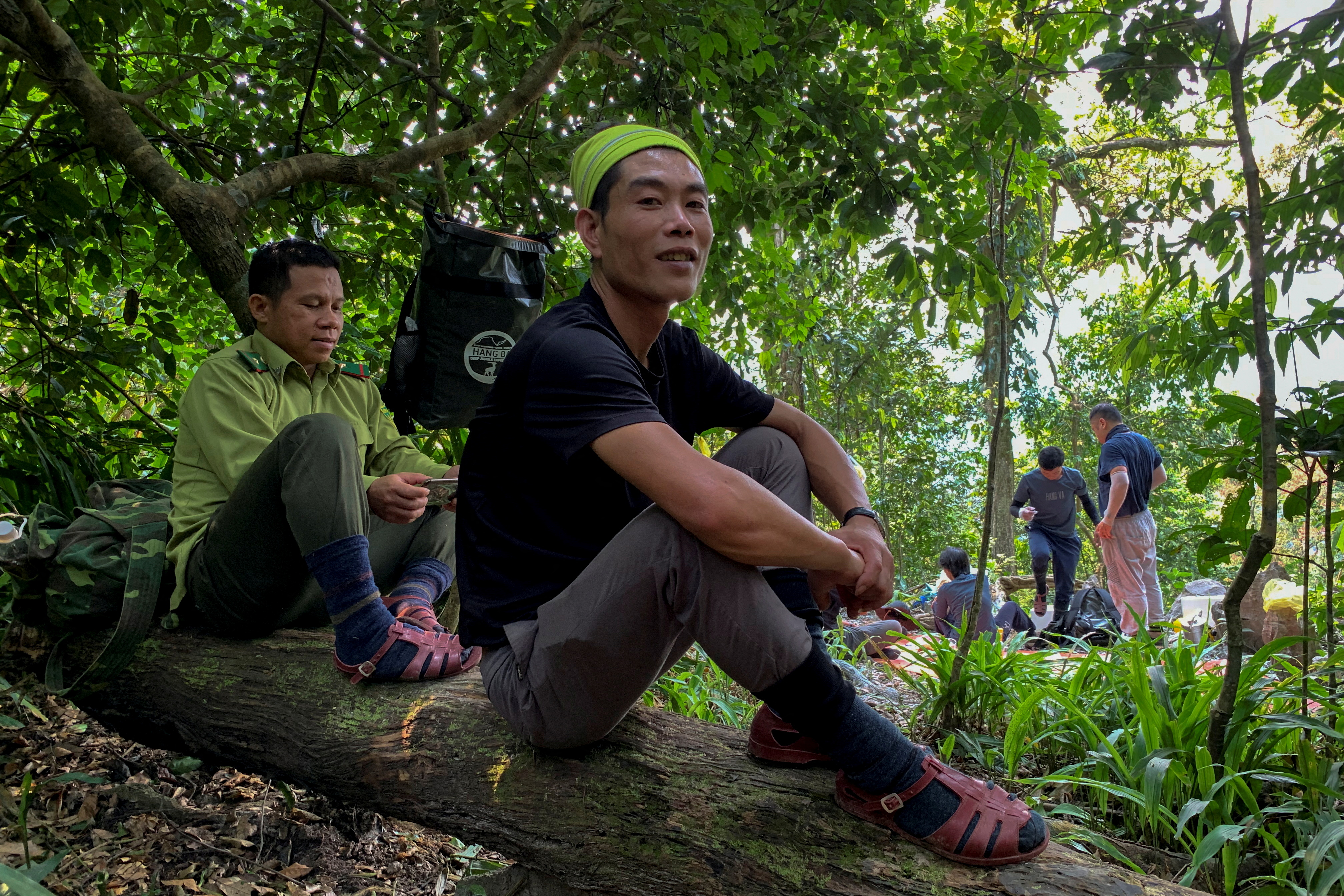
Nguyen Ngoc Anh, 36, who was an illegal logger turned forest protector poses at Phong Nha National Park, Quang Binh province, Vietnam, April 8, 2022. REUTERS/Hoang Trung
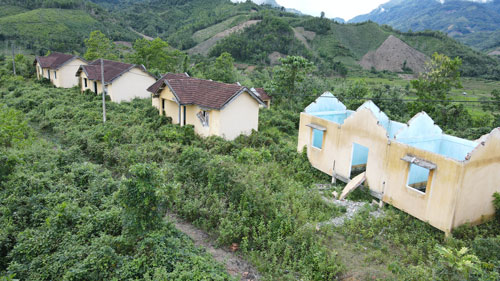
Sau 9 năm thu hồi đất để làm thủy điện Đắk Đrinh là tình trạng dân làng đánh nhau vì tranh giành đất, là khu tái định cư bỏ hoang, mục nát vì dân không ở.
Những ngôi nhà tái định cư bỏ hoang, không có người ở
Thủy điện Đắk Đrinh nằm trên địa bàn 2 tỉnh Kon Tum và Quảng Ngãi với công suất 125 MW. Năm 2013, để thực hiện dự án này, hàng trăm hộ dân của xã Đắk Nên, huyện Kon Plong, tỉnh Kon Tum đã phải nhường toàn bộ nhà cửa, đất đai của mình. Đến nay, sau 8 năm kể từ khi thủy điện hoàn thành, chi phí bồi thường vẫn chưa được giải quyết dứt điểm. Theo ông Trần Thanh Minh, Chủ tịch UBND xã Đắk Nên, huyện Kon Plông, chỉ riêng ở xã này thì chủ đầu tư vẫn còn nợ hơn 33 tỉ đồng tiền bồi thường, hỗ trợ các hộ bị ảnh hưởng.
The world may be facing a devastating “hidden” collapse in insect species due to the twin threats of climate change and habitat loss.
UCL’s Centre for Biodiversity & Environment Research has carried out one of the largest-ever assessments of insect declines around the world – assessing three-quarters of a million samples from around 6,000 sites.
The new study, published in Nature, finds that climate-stressed farmland possesses only half the number of insects, on average, and 25% fewer insect species than areas of natural habitat.
Insect declines are greatest in high-intensity farmland areas within tropical countries – where the combined effects of climate change and habitat loss are experienced most profoundly.
The majority of the world’s estimated 5.5 million species are thought to live in these regions – meaning the planet’s greatest abundances of insect life may be suffering collapses without us even realising.
Lowering the intensity of farming by using fewer chemicals, having a greater diversity of crops and preserving some natural habitat can mitigate the negative effects of habitat loss and climate change on insects.
Considering the choices we make as consumers – such as buying shade-grown coffee or cocoa – could also help protect insects and other creatures in the world’s most climate-vulnerable regions.





 CVD
CVD 