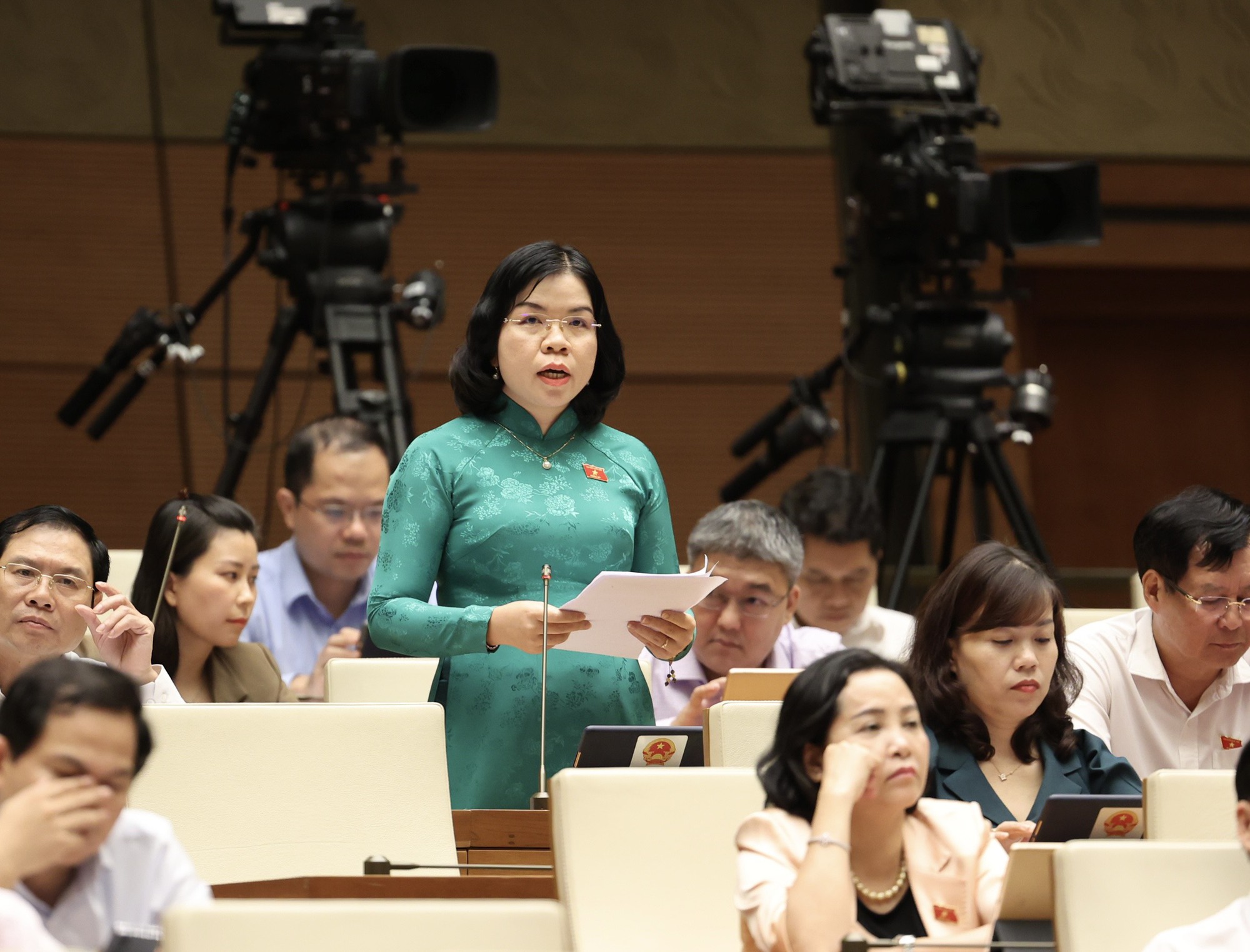
Thông tin trên được đại biểu Nguyễn Thị Ngọc Xuân (đoàn Bình Dương) nêu ra trong thảo luận về dự thảo luật Tài nguyên nước sửa đổi chiều 20.6.2023
Góp ý về việc cấp nước sạch cho người dân, đại biểu Nguyễn Thị Ngọc Xuân cho rằng nước sạch là một loại thực phẩm, hàng hóa đặc biệt, có tác động trực tiếp đến sức khỏe và mọi hoạt động thiết yếu khác của người dân.
Đại biểu Nguyễn Thị Ngọc Xuân (đoàn Bình Dương)
Tuy nhiên tại Việt Nam, tỷ lệ hộ dân được tiếp cận nước máy hiện nay chỉ chiếm khoảng 52%; đặc biệt, tỷ lệ này ở thành thị là 84,2%, trong khi tại nông thôn chỉ đạt 34,8%.
Theo ước tính của Quỹ Nhi đồng Liên Hiệp Quốc (UNICEF), Việt Nam có khoảng 52% trẻ em, tương đương với 17 triệu trẻ em chưa được sử dụng nước sạch. Thiếu nước sạch và vệ sinh kém được xem là nguyên nhân hàng đầu khiến 44% trẻ em bị nhiễm giun và 27% trẻ em dưới 5 tuổi bị suy dinh dưỡng.
Microplastics have permeated the region’s food chain, hitting countries like Indonesia and the Philippines the hardest. The programme Insight looks at the health risks and what is being done to boot plastic from our plates.
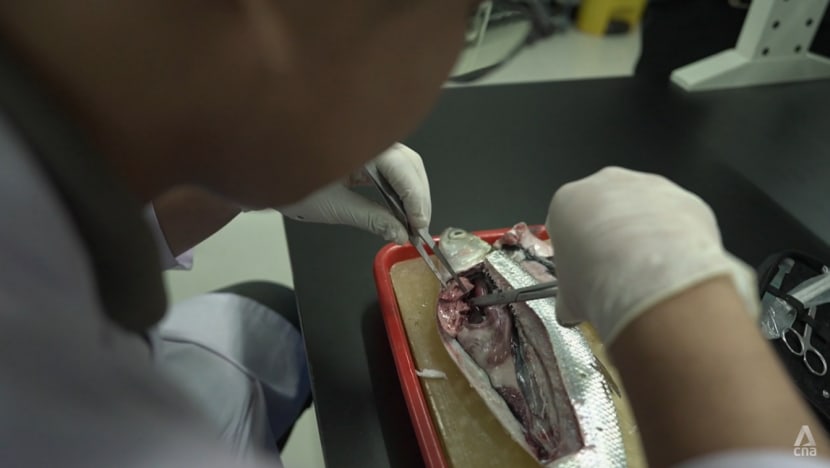
A study found that in nearly 94 per cent of fish sampled from Jakarta Bay, their gills and guts were laced with microplastics.
JAKARTA and MANILA: Milkfish — grilled, fried or floating in fragrant soup — is a staple on Indonesian dining tables. Its flesh is tender, its flavour delicately sweet.
What has no taste, however, would be the microplastics inside its body.
A study last year found that in nearly 94 per cent of fish sampled from Jakarta Bay, their gills and guts were laced with these toxic fragments, each no larger than five millimetres.
“If the microplastics are absorbed by fish and then consumed by humans, it means they’ll accumulate in humans,” warns Widodo Setiyo Pranowo, principal investigator at Indonesia’s National Research and Innovation Agency. “That’s dangerous.”
TN&MTXu hướng gọi đồ ăn trực tuyến đang làm gia tăng nhanh chóng lượng rác thải nhựa, tạo áp lực nặng nề đến môi trường toàn cầu.
“Núi” rác nhựa sau mỗi lần đặt đồ ăn trực tuyến
Thị trường giao đồ ăn trực tuyến tại Việt nam ngày càng hoạt động sôi nổi với nhiều thương hiệu. Vào năm 2018, Việt Nam chỉ có một vài thương hiệu giao thức ăn như Now, Lala (rút lui khỏi thị trường sau vài tháng hoạt động), Vietnammm (đã được Baemin mua lại) thì đến 2023, có ít nhất là 8 doanh nghiệp đang hoạt động trong ngành. Một số thương hiệu nổi bật có thể kể đến như: Shopee Food, GrabFood, GoFood, Baemin,…
Theo khảo sát của công ty nghiên cứu thị trường Q&Me, trong giai đoạn cách ly xã hội, có 75% người dân sống ở Hà Nội và TP. Hồ Chí Minh đã sử dụng dịch vụ đặt đồ ăn online giao tận nhà. Đến thời điểm hiện tại, thói quen đó vẫn được nhiều người duy trì bởi sự tiện ích mà nó đem lại.
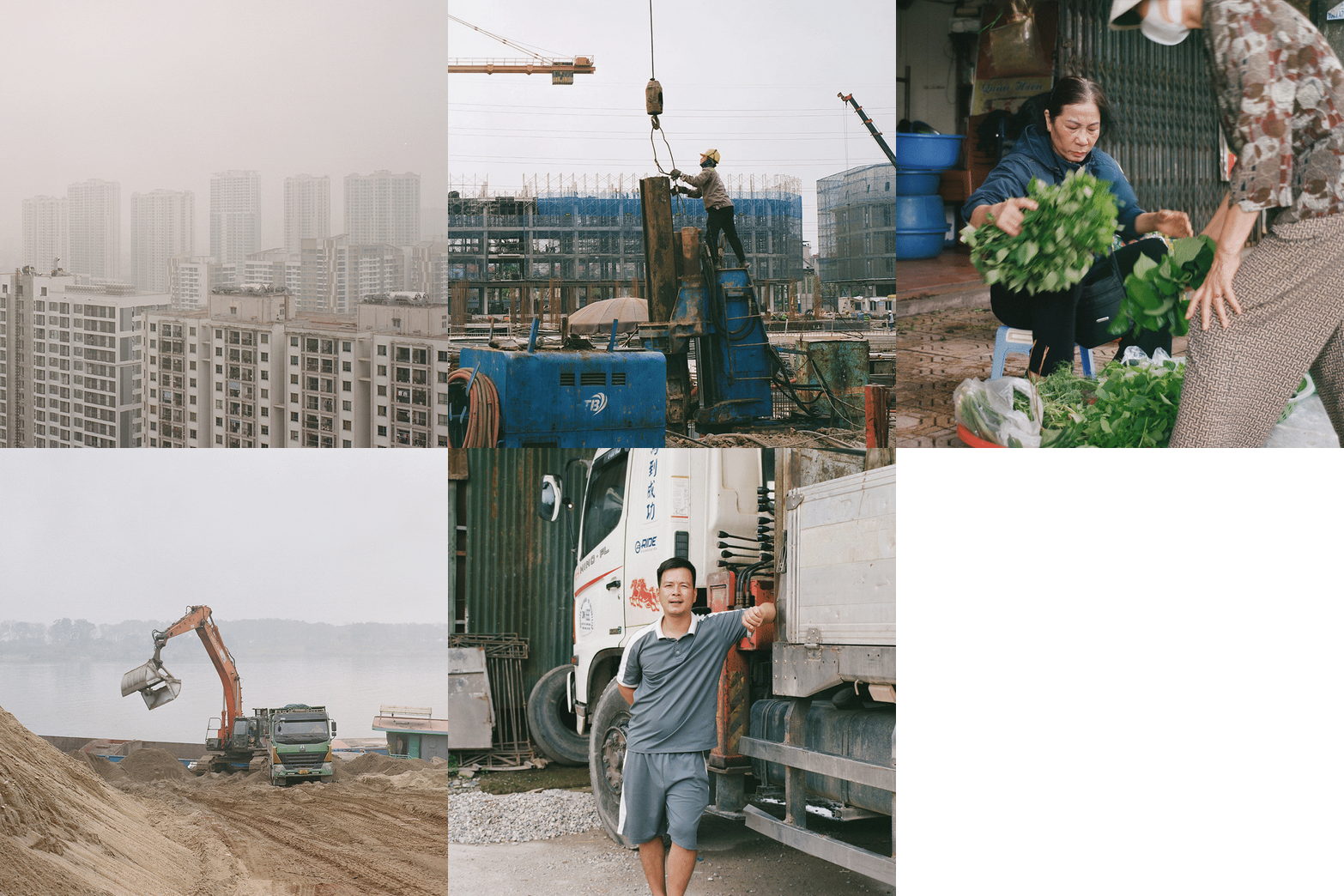
nbcnews.com Photos of the Vietnamese capital, home to almost 9 million people, show the environmental cost of the Southeast Asian nation’s explosive growth.
Hanoi, the capital of Vietnam, topped global air pollution charts over the winter.Spike Johnson for NBC News
June 29, 2025, 4:15 PM GMT+7 By Spike Johnson
HANOI, Vietnam — Hanoi has no horizon.
Blocky apartment towers dissolve into gray fog in the Vietnamese capital, as barges carrying sand inch down the Red River toward makeshift jetties. At street level, the city blurs as if it’s covered in film. The air stings your eyes and smells of chemicals, like chlorine but not quite. When the sun does punch through, it hangs like a red beach ball against the silver sky.
This winter, Hanoi topped global air pollution charts, not once, but repeatedly, exposing the environmental cost of Vietnam’s explosive growth, and briefly earning it the title of the world’s most polluted city.
Jonathan Hanitzsch rests after collecting trash off the coast of Hon Mot Island on Feb. 7, 2025, in Nha Trang, Vietnam. (AP Photo/Yannick Peterhans)
By YANNICK PETERHANS and ANIRUDDHA GHOSALUpdated 9:02 AM GMT+7, March 5, 2025Share
NHA TRANG, Vietnam (AP) — The gentle waves off the coast of central Vietnam’s Nha Trang obscure an open secret: The life-giving coral reefs below are dying. The waters are eerily devoid of fish. The bounty of the ocean is coming to an end.
This is why Binh Van — who fished in these waters for over two decades — now charters his boat to Vietnamese tourists wanting to experience the thrill of fishing in the deep waters of the South China Sea. But there is only squid, which is flourishing in oceans warmed by climate change, to catch. His passengers don’t mind as the boat moves away from Nha Trang’s twinkling beach resorts. But Van is pensive.
Nguyen Tuan Hai drives Rainbow Diver’s boat to Madonna Rock, Feb. 7, 2025, in Nha Trang, Vietnam. (AP Photo/Yannick Peterhans)
It wasn’t always like this. There was a time when he’d catch 70 kilograms (154 pounds) of fish, like tuna and grouper, in one night. He can’t make money on the squid.
A deep dive into the rationale behind some of Asia’s reclamation projects, the toll they take on our environment and communities, and the search for more sustainable alternatives.
Reclamation is seen as a solution for countries to deal with increasing land demands, by expanding their territory and rehabilitating previously uninhabitable lands or seas. Yet, the process guzzles an alarming amount of sand, causing massive environmental damage as well as a rise of transnational criminal syndicates trading in illegal sand.
Coastlines, ecosystems, and entire populations are now facing adverse impacts due to increased sand-mining activity, with one of the major driving forces being land reclamation. This practice of creating new land at sea is often touted as a solution to urban expansion and climate change.
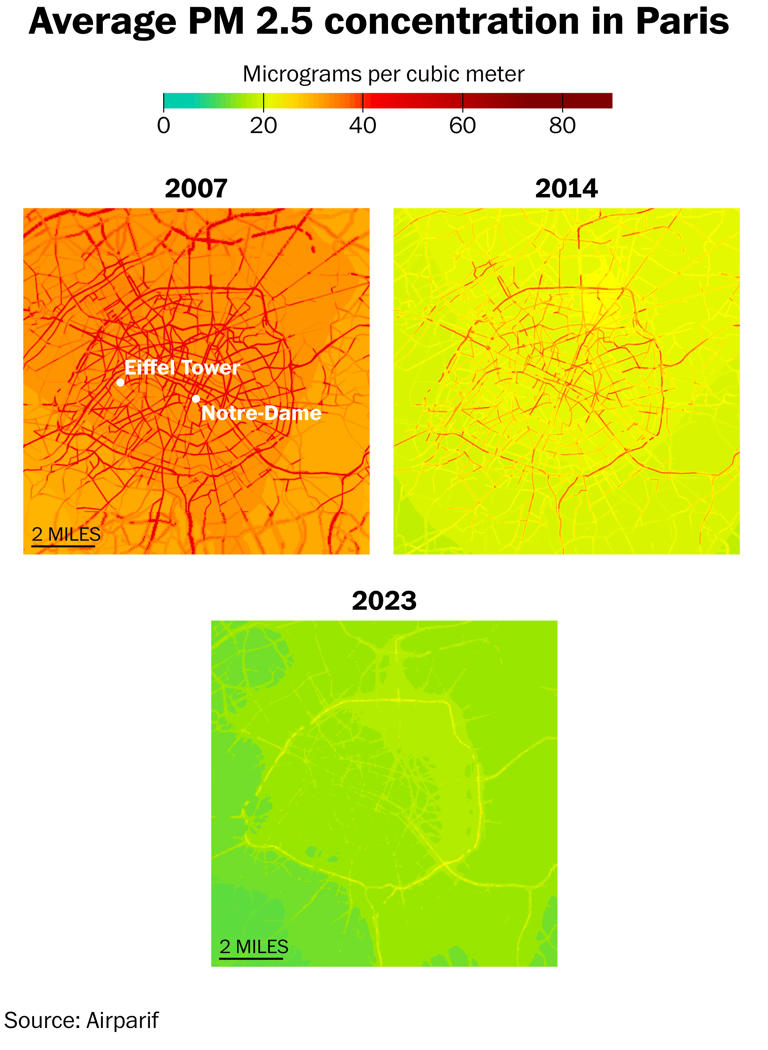
Over the past 20 years, Paris has undergone a major physical transformation, trading automotive arteries for bike lanes, adding green spaces and eliminating 50,000 parking spaces.
Part of the payoff has been invisible — in the air itself.
Airparif, an independent group that tracks air quality for France’s capital region, said this week that levels of fine particulate matter (PM 2.5) have decreased 55 percent since 2005, while nitrogen dioxide levels have fallen 50 percent. It attributed this to “regulations and public policies,” including steps to limit traffic and ban the most polluting vehicles.
Paris said au revoir to cars. Air pollution maps reveal a dramatic change.
Air pollution heat maps show the levels of 20 years ago as a pulsing red — almost every neighborhood above the European Union’s limit for nitrogen dioxide, which results from the combustion of fossil fuels. By 2023, the red zone had shrunk to only a web of fine lines across and around the city, representing the busiest roads and highways.
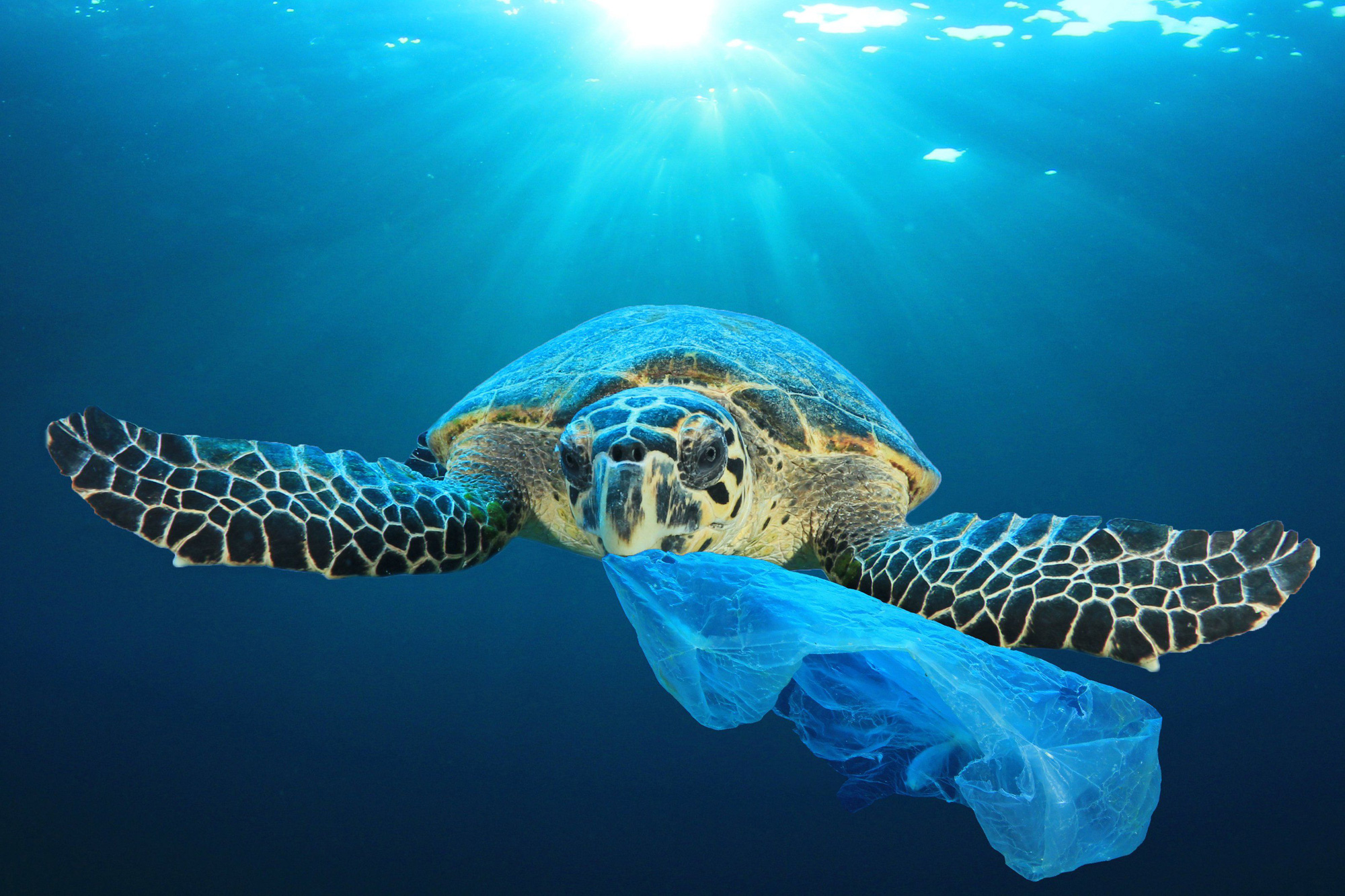
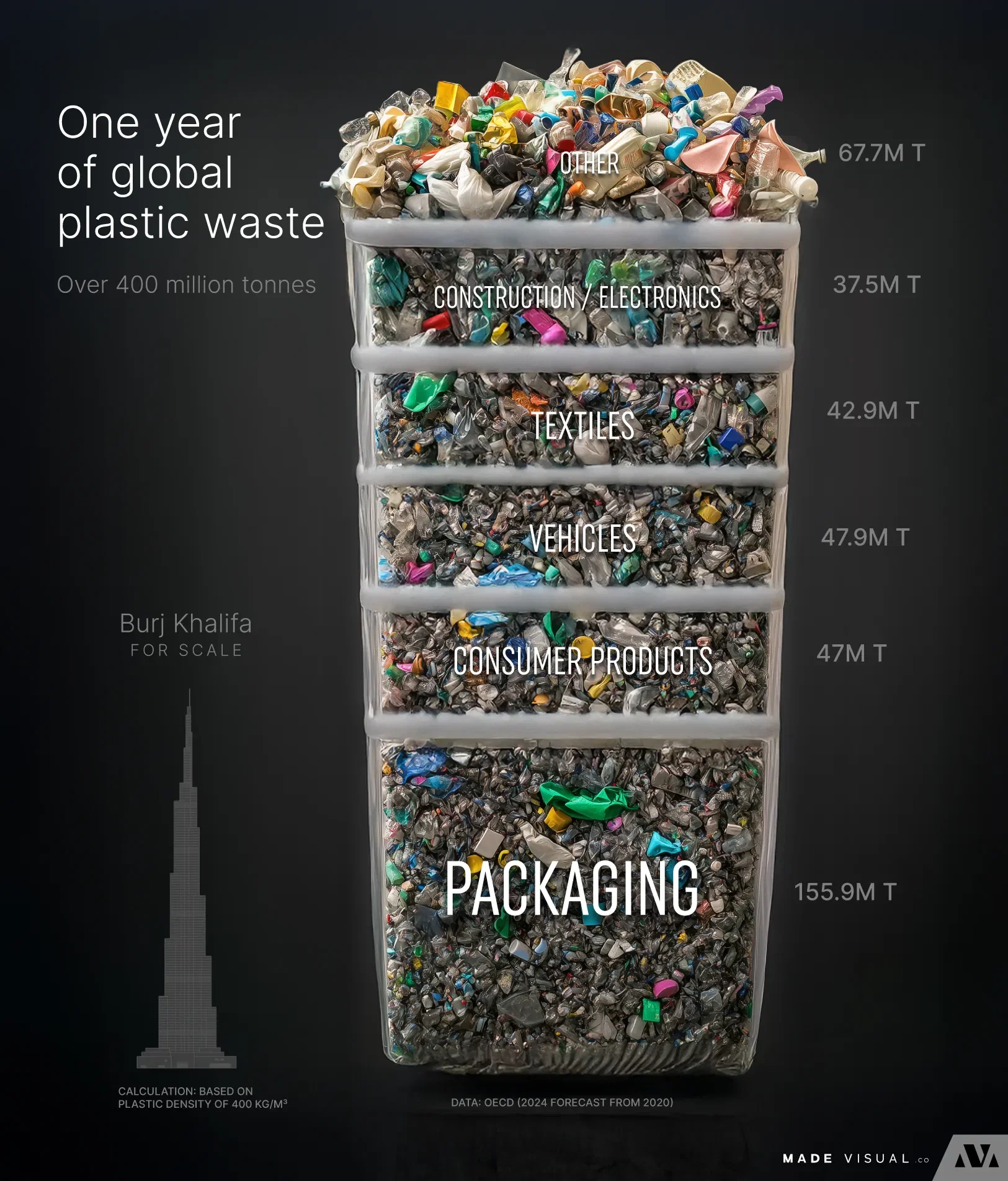
Over 400 million tonnes of plastic was projected to be wasted in 2024 according to an OECD report from 2020. Further, plastic waste is expected to nearly triple worldwide by 2060, with half of all waste expected to be in landfill while less than one-fifth of it will be recycled.
Unbelievably, if all this plastic waste were put in a kitchen bin and scaled up uniformly, this would double the height of the Burj Khalifa.
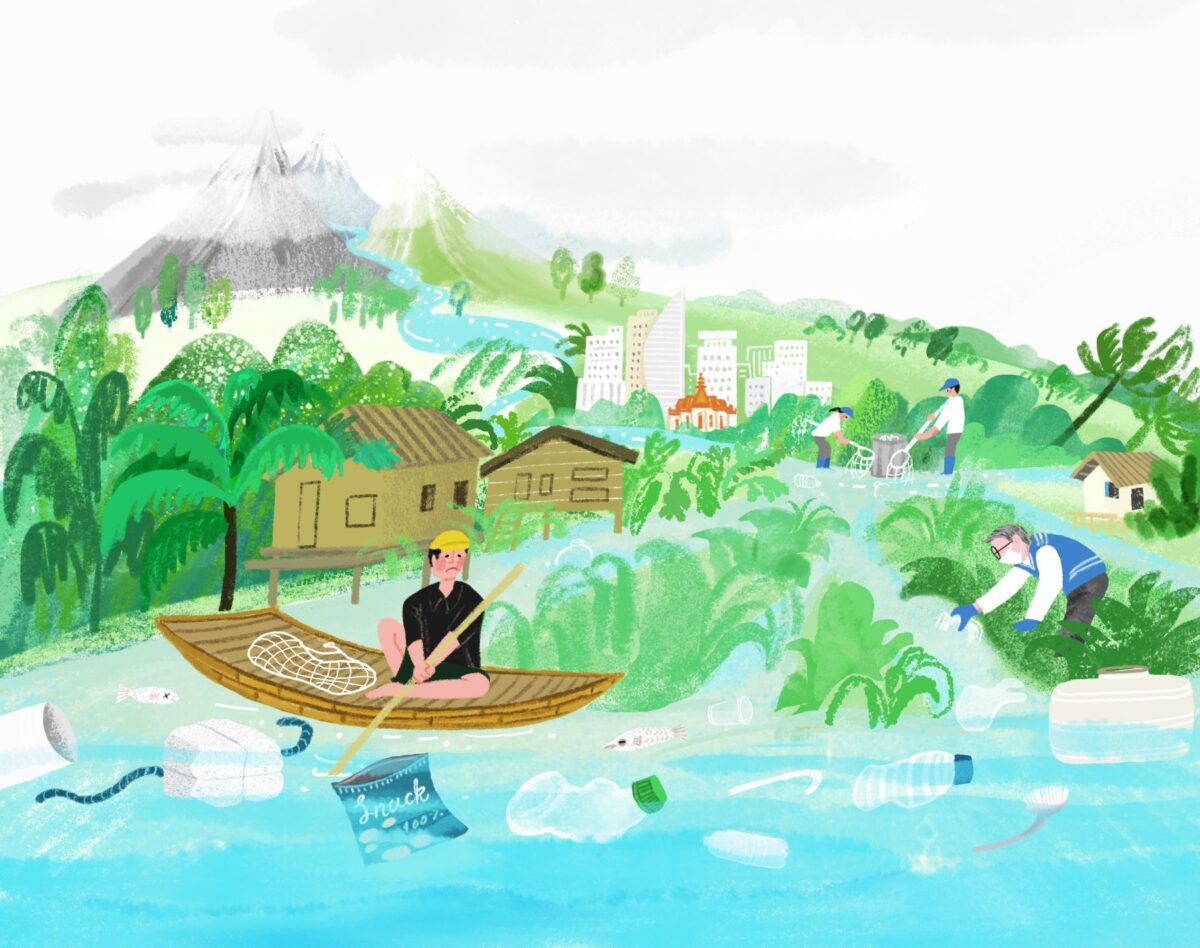
Plastic is now ubiquitous in the Mekong, Asia’s Mother of Rivers, and experts and local people are struggling to contain the risks to human health, biodiversity and livelihoods
ILLUSTRATION: Sunhee Park / Dialogue Earth
On Sơn Island in Viet Nam’s Mekong Delta, Le Trung Tin scatters fish feed into his ponds, where dozens of snakehead fish leap through the surface in synchronized bursts. “I taught them how to do that,” he says proudly, tossing another handful of feed at his fish.
The scene looks idyllic, but Le’s fish farm is a reluctant response to an escalating crisis. For decades, he made his living fishing the Hậu River, a distributary of the Mekong. But in recent years, plastic waste clogged his nets and strangled the fish. “I had no choice but to stop,” he says. “Everything was tangled – trash, nets, even the fish themselves. It was hopeless.”
Now, Le relies on enclosed ponds using filtered water to keep his fish alive. “I built this ecological environment free of plastic waste, chemical spills and [protected it from] extreme weather,” he says.
Le’s experience reflects the wider challenges facing the Mekong. Stretching over 4,300 kilometres from the Tibetan Plateau to the South China Sea, the river supports nearly 70 million people and some of the world’s most biodiverse ecosystems. Yet, it is one of the most plastic-polluted rivers in the world and among the 10 rivers in Asia that carry the vast majority of plastic to the sea. The Mekong dumps – by some estimates – tens of thousands of tonnes each year into the ocean, with plastic waste accumulating along its banks, tributaries and lakes.
Plastic enters the Mekong in myriad ways – agricultural runoff, unregulated dumping and a flood of single-use packaging from upstream countries like China and Myanmar. It accumulates in hotspots like Tonle Sap Lake in Cambodia and the wetlands of Vietnam’s Mekong Delta, where this plastic waste threatens biodiversity, food security and human health.
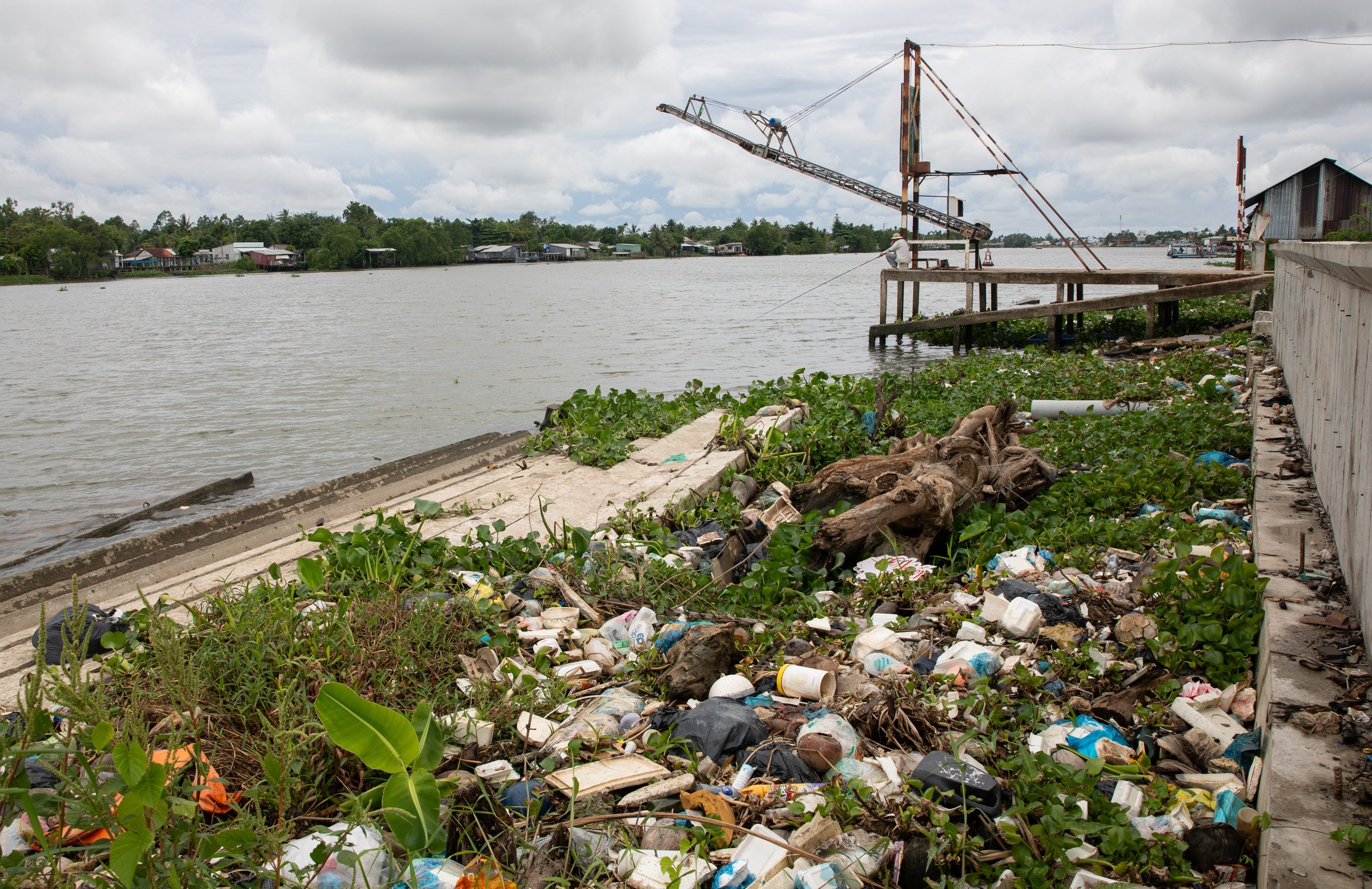
Plastics and other waste accumulate along the riverbank near the city of Can Tho in Vietnam’s Mekong Delta region. PHOTO: Anton L. Delgado / Dialogue Earth
Fruits of spoil: Laos’ forests disappearing as fruit farms flourish
Mekong eyes – 16 December 2024 at 9:27 (Updated on 16 December 2024 at 15:40)
The country’s improved railway connectivity facilitates fruit exports to China but has also sparked a boom in foreign-owned banana and durian farms, leading to forest clearance
A Chinese-owned banana plantation on land that was once forested, located in Attapeu province, southern Laos, in August 2024.
ATTAPEU, LAOS — The new high-speed railway has enabled faster fruit exports from Laos to China, attracting more investment in large-scale plantations. However, this growth has come at the cost of deforestation.
Bananas and the “king of tropical fruit” – durians – are very popular in China, but they typically ripen within a few days of harvesting.
However, that problem was resolved with the launch of the Laos-China Railway in 2021, which has enabled landlocked Laos to deliver its fruit quickly to China’s 1.4 billion consumers.
The Vietnamese capital Hanoi has taken the top spot for air pollution among global cities, according to the Air Quality Index (AQI) operated by leading air-quality technology company IQAir on February 12, 2025. Persistent smog has residents and tourists alike worried about whether the hazardous air may be causing long-term damage to human health.
Bất chấp các quy định nghiêm ngặt của EU về tái chế nhựa, đường đi của chất thải nhựa được vận chuyển từ EU đến Việt Nam lại không được giám sát chặt chẽ. Một tỷ lệ lớn nhựa xuất khẩu của châu Âu không thể tái chế và bị thải ra ngoài tự nhiên.
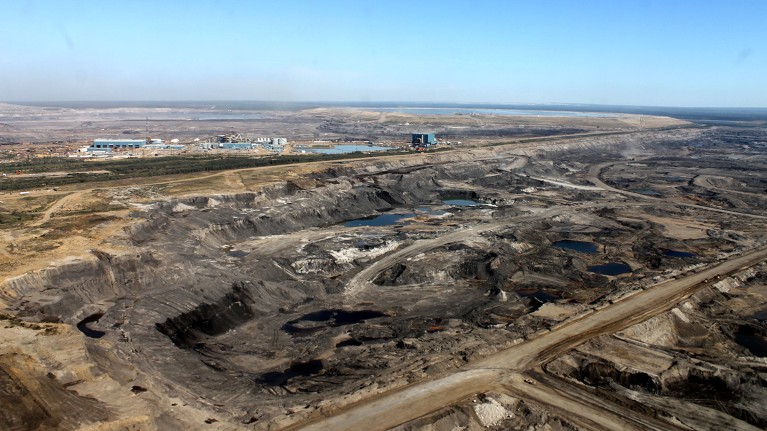
Innovative aircraft-based technique records carbon emissions not tracked before from the industrial region
Researchers flew an aeroplane over the oil sands in Alberta, Canada, to measure all of their carbon-based emissions. Credit: John Liggio, Andrea Darlington and Andrew Elford
Canada’s controversial oil-producing tar sands generate a substantial amount of unaccounted-for carbon-based emissions that can affect air quality, according to measurements taken by aircraft. The sands release more of these pollution-causing gases than megacities such as Los Angeles, California, and about the same as the rest of Canada’s human-generated sources combined — including emissions from motor traffic and all other industries.
“No rules have been broken, or guidelines exceeded here,” says Janetta McKenzie, an oil and gas analyst for the Pembina Institute, a think tank in Calgary, Canada. “But that speaks to some issues in our rules and our guidelines.”How a dangerous stew of air pollution is choking the United States
The team that conducted the study — led by environmental engineer Drew Gentner at Yale University in New Haven, Connecticut, and chemist John Liggio at the federal agency Environment and Climate Change Canada (ECCC) in Toronto — used an innovative approach to measure all the carbon-based molecules in the air over oil sands in the province of Alberta. The researchers factored out greenhouse gases such as carbon dioxide and instead tracked only molecules important to air quality, many of which haven’t been monitored at the oil sands before. These carbon-based gases can seed particulate pollution in the air and react with other chemicals to form ground-level ozone.
Pollution in our waterways is not only dangerous and unsanitary for humans but it also affects wildlife. That’s why it is so exciting to see an initiative aimed at preventing such waste.
The Australian city of Kwinana has designed a simple and cost-effective solution to deal with the discharge of waste from drainage systems. The town has put nets on the outlet of drainage pipes.
These nets stop waste and pollutants from leaving the sewers, preventing garbage transported by rain waters from contaminating the town’s local water reserve. It is a simple filtering system and it works like a charm.



/img/iea/3oOpZZzb6W/drainage-picture-2.jpg)


