Chuyên mục: Artificial Intelligence (AI)
Inside the Jordan refugee camp that runs on blockchain
technologyreview
Syrian refugees could regain legal identities that were lost when they fled their homes.
A few times a month, Bassam pushes a shopping cart through the aisles of a grocery store stocked with bags of rice, a small selection of fresh vegetables, and other staples. Today he’s wearing a black sweater tucked into denim jeans, which are themselves tucked into calf-high boots caked in mud. The Tazweed Supermarket, where he’s shopping, is on the periphery of a 75,000-person refugee camp in the semi-arid Jordanian steppe, six and a half miles from the Syrian border.
Recommended for You
Tiếp tục đọc “Inside the Jordan refugee camp that runs on blockchain”
Military applications of Artificial Intelligent
Advances in artifcial intelligence (AI), deep-learning, and robotics are enabling new military capabilities that will have a disruptive impact on military strategies. The effects of these capabilities will be felt across the spectrum of military requirements – from intelligence, surveillance, and reconnaissance to offense/defense balances and even on to nuclear weapons systems themselves.
In this package, five top experts in AI and its potential uses in autonomous weapons and sensing systems weigh in on the moral and practical challenges of managing the explosion of military AI research and development around the world. The goal: to keep fast-paced advances in machine learning from sparking a worldwide AI arms race that poses a new existential risk to humanity.
|
The promise of AI—including its ability to improve the speed and accuracy of everything from logistics and battlefield planning to human decision making—is driving militaries around the world to accelerate research and development. Here’s why. |
Malaysian police adopt Chinese AI surveillance technology
Startup Yitu targets Southeast Asia with wearable face-recognition cameras
Yitu opened its first overseas office in Singapore in January to tap Southeast Asia’s growing market for AI-driven surveillance technology. REUTERS/Edgar Su © Reuters
KUALA LUMPUR — Chinese surveillance and security startup Yitu Technology has made its first foray into Malaysia, supplying wearable cameras with artificial intelligence-powered facial-recognition technology to a local law enforcement agency. Tiếp tục đọc “Malaysian police adopt Chinese AI surveillance technology”
FOSSASIA Summit 2018: OpenTechSummit March 22-25, 2018
OpenTechSummit March 22-25, 2018 Singapore
FOSSASIA Summit 2018:
The Open Conversational Web” with Open Source AI at Asia’s Leading Open Technology Conference
FOSSASIA teams up with Science Centre Singapore and Lifelong Learning Institute for Asia’s premier open technology summit. The FOSSASIA OpenTechSummit is taking place from March 22-25, 2018 under the tagline “The Open Conversational Web” with a strong focus on Artificial Intelligence and Cloud for the Industry 4.0. More than 200 speakers will fly in to present at the event. International exhibitors will showcase their latest advancements and meet developers in a careers fair.
The FOSSASIA Open Tech Summit is an annual tech event featuring tech icons from around the world since 2009. The event is all about the latest and greatest open source technologies and their impact and applications on business and society. With more than 3,000 attendees the FOSSASIA Summit is the biggest gathering of Open Source developers and businesses in Asia. A great feature of 2018 is the expanded exhibition space where tech businesses, SMEs and startups converge with developers and customers and meet potential candidates in a careers fair. Tiếp tục đọc “FOSSASIA Summit 2018: OpenTechSummit March 22-25, 2018”
Schools are teaching 10 million girls to code
Editor’s note: This is a guest blog by Hadi Partovi, tech entrepreneur and investor, and CEO of the education non-profit Code.org.

Today, for the International Day of Women and Girls in Science, we celebrate the progress made towards reducing the gender gap in computer science, and we urge schools worldwide to help balance the scales in this critical 21st century subject.
Tiếp tục đọc “Schools are teaching 10 million girls to code”
Quên chuyện Robot giết người đi – Tính thiên vị là mối nguy hiểm thực sự của trí tuệ nhân tạo hiện nay.
English: Forget Killer Robots—Bias Is the Real AI Danger
John Giannandrea, người đứng đầu lĩnh vực nghiên cứu trí tuệ nhân tạo (AI- Artificial Intelelligence) tại Google quan ngại về các hệ thống máy thông minh học những định kiến của con người.
Người đứng đầu phòng AI của Google không lo lắng về các robot giết người siêu thông minh. Thay vào đó, John Giannandrea quan tâm đến nguy cơ có thể ẩn nấp bên trong các thuật toán trong việc học của máy móc được sử dụng để thực hiện hàng triệu quyết định mỗi phút.
Giannandrea phát biểu trước một cuộc họp gần đây của Google về mối quan hệ giữa con người và hệ thống AI “Câu hỏi về tính an toàn thực sự, nếu bạn muốn gọi cái tên, là nếu chúng ta đưa vào hệ thống này dữ liệu thiên về một hướng, hệ thống sẽ có tính thiên vị”.
Vấn đề thiên vị trong việc học của máy móc gần như trở nên quan trọng hơn khi công nghệ lan rộng đến các lĩnh vực quan trọng như y học và luật pháp, và nhiều người không có mọt hiểu biết sâu về kỹ thuật được giao nhiệm vụ sử dụng các thiết bị một cách hiệu quả. Một số chuyên gia cảnh báo rằng sự thiên vị trong thuật toán đã phổ biến rộng rãi trong nhiều ngành công nghiệp và hầu như không ai cố gắng để xác định hoặc sửa chữa điều này (đọc bài “Những thuật toán thiên vị có ở khắp nơi, và dường như không ai quan tâm“).
Tiếp tục đọc “Quên chuyện Robot giết người đi – Tính thiên vị là mối nguy hiểm thực sự của trí tuệ nhân tạo hiện nay.”
Những vấn đề pháp lý thực tế của Trí tuệ nhân tạo – Artificial Intelligent
|
English: Artificial Intelligence: The Real Legal Issues Nếu bạn đang đọc bài này, rất có thể bạn sẽ bắt gặp khái niệm Trí tuệ Nhân tạo – AI/Artificial Intelligent trong các nghiên cứu của mình. Giống như hầu hết các vấn đề thời thượng, có rất nhiều bài viết về chủ đề này chia thành hai loại – tài liệu hoặc giả định một mức độ kiến thức dựa trên khoa học máy tính hoặc thông thường hơn là phần mềm bán hàng được cải trang dạng mỏng mà không truyền tải được nhiều. Bài báo này dựa trên bài thuyết trình mà tôi trình bày tại Hội nghị thường niên của SCL Viện Kỹ thuật London vào tháng 6 và hy vọng sẽ cung cấp cho những người không có kiến thức và kinh nghiệm (và người có một ít kiến thức) một nền tảng vững chắc để có thể dựa vào đó để có những hiểu biết và đánh giá thực tiễn về những rủi ro pháp lý khi sử dụng trí tuệ nhân tạo. Vì vậy, bài viết sẽ hy vọng sẽ được tiếp cận được với những người có tư duy pháp lý khi quan tâm đến công nghệ này. Những rủi ro pháp lý mà tôi đã phân loại thành “Thách thức nguyên nhân – hệ quả” và “Thách thức về Dữ liệu lớn” Tiếp tục đọc “Những vấn đề pháp lý thực tế của Trí tuệ nhân tạo – Artificial Intelligent” |
Artificial Intelligence: The Real Legal Issues
lexology_If you’re reading this, the chances are that you will have come across the concept of Artificial Intelligence in your prior researches. Like most issues “du jour“, a lot has been written on the topic which falls into two categories – material either presupposes a level of prior computer- science based knowledge or; more commonly is thinly disguised salesware which doesn’t convey a lot.
Tiếp tục đọc “Artificial Intelligence: The Real Legal Issues”
Progress in AI isn’t as Impressive as You Might Think
A new report gauges how far we’ve come, dampening ideas that machines are approaching human-type intelligence.
technologyreview_With so much excitement about progress in artificial intelligence, you may wonder why intelligent machines aren’t already running our lives.
Key advances have the capacity to dazzle the public, policymakers, and investors into believing that human-level machine intelligence may be just around the corner. But a new report (PDF), which tries to gauge actual progress being made, attests that this is far from true. The findings may help inform the discussion over how AI will affect the economy and jobs in the coming years.
“There’s no question there have been a number of breakthroughs in recent years,” says Erik Brynjolfsson, a professor at the MIT Sloan School of Management and one of the authors of the report. “But it’s also clear we are a long way from artificial general intelligence.”
Brynjolfsson points to remarkable advances in image classification and voice recognition. But computers trained to perform these tasks cannot do much else, and they cannot adapt if the nature of the task changes slightly or if they see something completely unfamiliar.
The report is part of an ongoing effort, called the AI Index, to quantify progress in artificial intelligence and identify areas where more is still needed. The other authors are Yoav Shoham, a professor at Stanford; Raymond Perrault, a researcher at SRI; Jack Clark, director of policy at OpenAI; and Calvin LeGassick, project manager for the AI Index.
Tiếp tục đọc “Progress in AI isn’t as Impressive as You Might Think”
Research group, including Vietnamese, makes world’s smallest ‘living robot’
![]() |
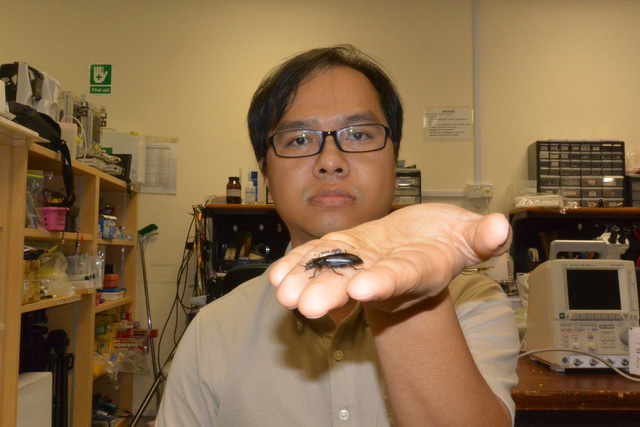
| The remote-controlled robot weighs only 1 gram, and cost US$7.4 to make. |
A research team consisting of two Vietnamese has created an ‘insect-computer hybrid,’ or a kind of ‘living robot’ the size of a beetle.
The research team from Singapore-based Nanyang Technological University (NTU) is led by professor Hirotaka Sato, specializing in the research and development of living robots, two Vietnamese, Vo Doan Tat Thang and Bui Xuan Hien, and Singapore undergraduate Yong Wen Melvin.
Thang is a post doctoral researcher under the Fellowship for Research at Biological Machine Laboratory at NTU, while Hien is an undergrad. Tiếp tục đọc “Research group, including Vietnamese, makes world’s smallest ‘living robot’”
Vietnam feels impact of 4.0 industrial revolution

Duc Giang Chemical & Detergent Powder JSC is a leading chemical manufacturer. A detergent factory of Duc Giang, it once employed 100 workers, but now runs with 10-15 workers. Tiếp tục đọc “Vietnam feels impact of 4.0 industrial revolution”
6 cách phát hiện tin giả mạo – fake news
English: 6 tips to debunk fake news stories by yourself
“Dưới đây là danh sách các cách để bạn có thể tự phát hiện những tin giả mạo mà dành cho người nghiệp dư hay các nhà báo chưa được đào tạo về kỹ năng kiểm tra xác minh hay kiểm tra sự thực.”
Việc tìm kiếm sự thật bắt đầu vào thời điểm khi ngày càng có nhiều vụ nổi lên từ việc các kênh truyền thông lâu năm bị đánh lừa về vụ tấn công tại Paris.
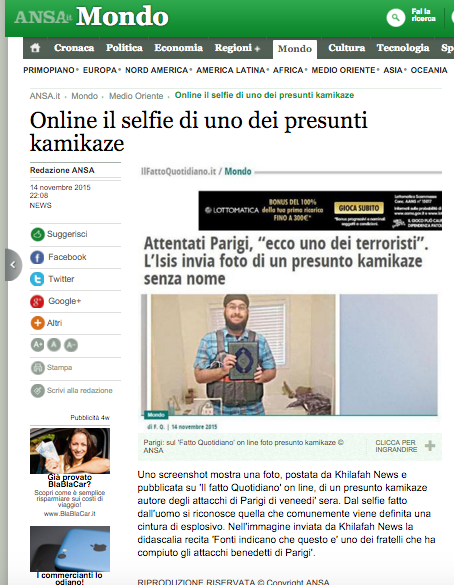
Ví dụ kỳ quái nhất có lẽ là bức ảnh với nụ cười lớn của Veerender Jubbal, một người đàn ông theo đạo Sikh sống ở Canada, gắn trong bộ trang phục trong một bức ảnh của một kẻ cầm đầu các cuộc tấn công. Ảnh chụp trên trang nhất của La Razón ở Tây Ban Nha, được thực hiện tại Ý bởi hãng tin ANSA và Sky TG24. Vào thời điểm viết bài này, chín ngày sau đó, bức ảnh giả mạo vẫn còn ở trên tài khoản Twitter của Sky TG24, mà có gần 2 triệu người theo dõi và 2 triệu người chuyển đi
Artificial Intelligence’s Language Problem
technologyreview_About halfway through a particularly tense game of Go held in Seoul, South Korea, between Lee Sedol, one of the best players of all time, and AlphaGo, an artificial intelligence created by Google, the AI program made a mysterious move that demonstrated an unnerving edge over its human opponent.
IBM’s Watson AI Recommends Same Treatment as Doctors in 99% of Cancer Cases – Watson Của IBM Đưa ra Cách Trị 99% Ca Ung Thư như ý BS
David Ramos/Getty Images
In Brief
- Watson recommended treatment plans that matched suggestions from oncologists in 99 percent of the cases it analyzed and offered options doctors missed in 30 percent of them.
- AI could be revolutionary for healthcare as it can process many more research papers and case files than any human doctor could manage.
Paging Dr. Watson
Artificial intelligence (AI) is about more than just the promise of a robot butler — it can actually save lives. AI’s contribution to the healthcare industry and in medical research could be hugely significant. IBM sees that and wants Watson, its AI technology, at the forefront of this development. Tiếp tục đọc “IBM’s Watson AI Recommends Same Treatment as Doctors in 99% of Cancer Cases – Watson Của IBM Đưa ra Cách Trị 99% Ca Ung Thư như ý BS”