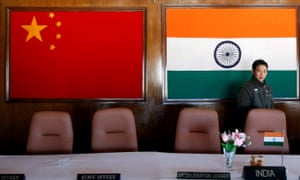
General says Himalayan standoff could become larger conflict with China, which Pakistan would then use to its advantage
The flags of China and India are displayed at a conference room used for meetings between military commanders on the Indo-China border. India’s army chief the country should be ready in case of war. Photograph: Adnan Abidi/Reuters
Associated Press
Wednesday 6 September 2017 21.07 EDT Last modified on Wednesday 6 September 2017 21.12 EDT
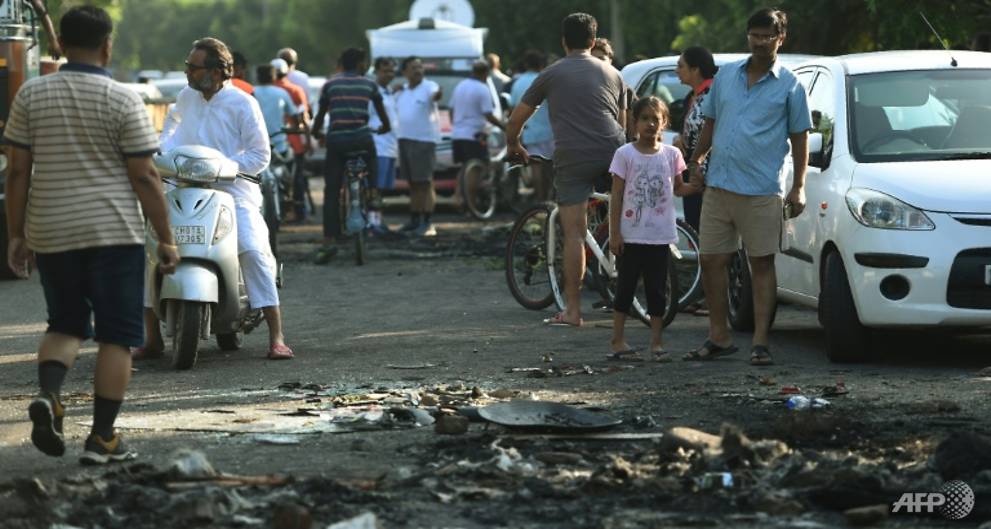
Scorch marks from items set on fire are seen on a road in Panchkula, after Singh’s followers went on a rampage following a court’s decision to convict him of rape. (Photo: AFP/Money Sharma)
27 Aug 2017 02:09AM
SIRSA: Hundreds of troops on Saturday (Aug 26) laid siege to the headquarters of a sect led by a controversial Indian guru whose conviction for rape triggered deadly clashes that have killed at least 36 people.
BrahMos supersonic missiles in India. Photo by Reuters
The purchase of defense equipment ‘is in line with Vietnam’s peaceful national defense policies.’
Vietnam is developing defense cooperation with India to allow the country to pursue its defense policies, foreign ministry spokeswoman Le Thi Thu Hang said at a press briefing on Thursday.
Trích từ bài phát biểu của Đức Đạt Lai Lạt Ma ở Dharamsala [Ấn Độ] với một nhóm lớn những con dân Tây Tạng của Ngài vào ngày 27 tháng Ba năm 2006. Đức Đạt Lai Lạt Ma đã cảnh báo nguy cơ trầm trọng nhất đối với sự sống còn của bản sắc Tây Tạng đồng thời nhấn mạnh công cuộc giáo dục hiện đại là không thể thiếu để duy trì văn hóa Phật giáo Tây Tạng cũng như duy trì tính dân tộc trong những hoàn cảnh khó khăn nhất của lịch sử Tây Tạng.
Tôi luôn luôn nói rằng, quần chúng nhân dân Tây Tạng ở Tây Tạng mới là chủ nhân thật của vận mệnh Tây Tạng, và khoảng một trăm năm mươi ngàn người Tây Tạng lưu vong ở đây [Dharamsala, Ấn Độ] [1] chỉ đại diện cho nhân dân để hoàn thành sự thật của chính nghĩaTây Tạng, để hành động như những người phát ngôn tự do và như những người đại diện tượng trưng của nhân dân.
Cho đến nay, quần chúng nhân dân ở Tây Tạng vẫn còn ở trong trạng thái đau khổ vì hậu quả bị tước đoạt tự do của họ. Mặc dù vậy, ngay cả khi đối diện với những hiểm nguy đến với cuộc sống của họ, trong mọi phương diện họ vẫn kiên định giữ vững sứ mệnh cao cả về sắc tộc của họ và niềm tin chung vào viễn cảnh tương lai của người Tây Tạng, vẫn giữ vững trong tâm trí các quyền lợi của họ với tư cách là một dân tộc.
THALVUPADU, Sri Lanka — Stanley Cruz, a fisher in this beachside village on the island of Mannar off Sri Lanka’s northwestern coast, stands with his bare feet in the sand, holding up a green net between his hands.
“This is the kind of net, you see. Last week, we lost many hundreds of these. Twelve of us fishers, when we went out to get them in the morning they were gone,” he says.
He points toward the waters behind him: the Palk Strait, a narrow body of water separating Sri Lanka from the south Indian state of Tamil Nadu. Cruz was out the night before, laying his nets in the sea, just like thousands of other fishers from both sides of the strait. But when he went to get them in the morning, they were gone. Tiếp tục đọc “Asia Is Trawling for a Deadly Fishing War”→
DEHRADUN: Pheti Kimoda village of Jaunpur area in Tehri has been selected for running a pilot project for strengthening climate resilience of forest-based communities.
The village was one of the top ranking sites featured in the vulnerability-risk assessment of the climate change wing of the forest depts. The villagers were found to be suffering from lack of clean drinking water and health facilities, agriculture problems, migration and poor socio-economic conditions.
Apr 4, 2017GAUHATI, INDIA – India said Tuesday that China should not interfere in its internal affairs, as the Dalai Lama began a weeklong visit to India’s remote northeast that Beijing has protested.
The Tibetan spiritual leader was greeted by cheering supporters as he arrived in Arunachal Pradesh. China claims the partly ethnically Tibetan Himalayan state as its own territory, and warned last month of “severe damage” to relations with India and increased regional instability if the Dalai Lama proceeds with his trip. Tiếp tục đọc “India-China row deepens as Dalai Lama arrives in NE India”→
Chinese Defence Minister Chang Wanquan speaks at the Xiangshan Forum, in Beijing, China, October 11, 2016. China Daily/via REUTERS
BEIJING: Chinese Defence Minister Chang Wanquan left on Sunday for official visits to Sri Lanka and Nepal, the Defence Ministry said, trips that could unnerve neighbouring India.
China is vying to increase its influence in Nepal, which serves as a natural buffer between China and India, challenging India’s long-held position as the dominant outside power in the landlocked nation.
China has also invested heavily in Sri Lanka, funding airports, roads, railways and ports, and including the island nation of 21 million people on its “One Belt, One Road” mission to create a modern-day “Silk Road” across Asia. Tiếp tục đọc “Chinese defence minister to visit Sri Lanka, Nepal”→
A man comforted his sick daughter at a hospital in Muzaffarpur, India, in 2013.Credit Kuni Takahashi for The New York Times
NEW DELHI — Three years ago, Dr. Rajesh Yadav, an investigator with the India Epidemic Intelligence Service, moved to the city of Muzaffarpur, the site of one of the country’s most mysterious outbreaks. And he waited.
Every year in mid-May, as temperatures reached scorching heights, parents took children who had been healthy the night before to the hospital. The children awakened with a high-pitch cry in the early morning, many parents said.
Then the youths began having seizures and slipping into comas. In about 40 percent of cases, they died.
Every year in July, with the arrival of monsoon rains, the outbreak ended as suddenly as it began.
Beginning in 1995, investigations variously ascribed the phenomenon to heat stroke; to infections carried by rats, bats or sand flies; or to pesticides used in the region’s ubiquitous lychee orchards. But there were few signposts for investigators.
A woman walks past a billboard featuring an image of an island in South China Sea on display with Chinese words that read: “South China Sea, our beautiful motherland, we won’t let go an inch” in Weifang in east China’s Shandong province. (Chinatopix via AP/-)
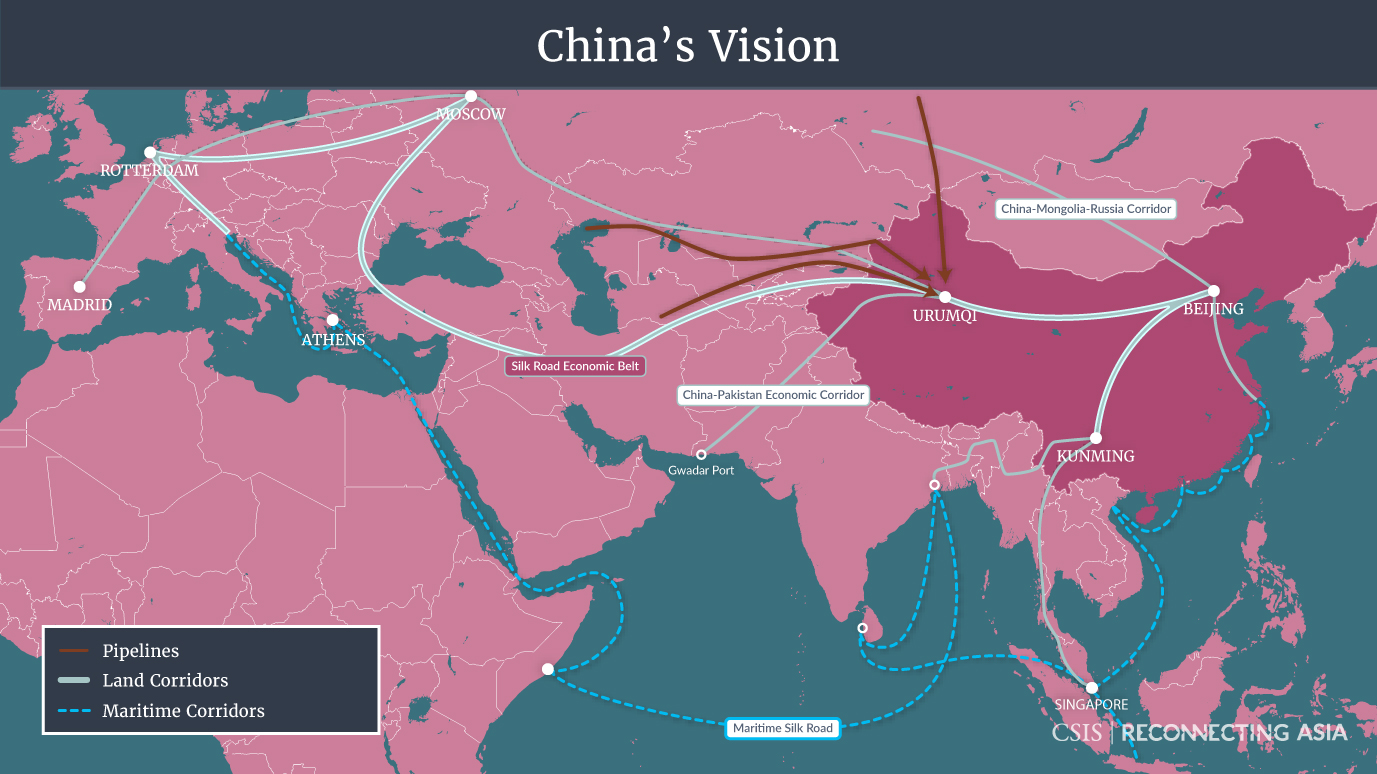
Một cuộc đua địa kinh tế đang diễn ra để định hình tương lai Châu Á. Các cường quốc khu vực đang thúc đẩy các kế hoạch tham vọng về xây dựng các tuyến đường bộ, đường tàu, đường ống dẫn và các cơ sở hạ tầng cứng khác trên khắp khu vực. Dựa các nguồn tin chính thức, các chuyên gia CSIS đã xây dựng các bản đồ dưới đây để minh hoạ cho một số các tầm nhìn cạnh tranh này. Mỗi bản đồ tóm lược một cách chung nhất những ưu tiên chính về cơ sở hạ tầng của các nước lớn trong cuộc đua. Tổng thể, các bản đồ này cho thấy trước một cuộc cạnh tranh rộng khắp như chính khu vực này. Và khi cuộc cạnh tranh diễn ra, các bản đồ dưới đây sẽ được mở rộng và cập nhập.








 CVD
CVD 