
Tội lỗi của Mỹ với nạn nhân chất độc da cam Việt Nam là rất rõ ràng.
VN cần kiện Mỹ, và nên kiện Mỹ trước Tòa án Hình sự Quốc tế (ICC) và Tòa án Công lý Quốc tế (ICJ). Tiếp tục đọc “Mỹ phải chịu trách nhiệm cho nạn nhân chất độc da cam Việt Nam”
Conversations on Vietnam Development

Tội lỗi của Mỹ với nạn nhân chất độc da cam Việt Nam là rất rõ ràng.
VN cần kiện Mỹ, và nên kiện Mỹ trước Tòa án Hình sự Quốc tế (ICC) và Tòa án Công lý Quốc tế (ICJ). Tiếp tục đọc “Mỹ phải chịu trách nhiệm cho nạn nhân chất độc da cam Việt Nam”
Families of victims, human rights groups call for ‘expeditious surrender and transfer of custody’ of Duterte to the ICC.

By Ted Regencia Published On 11 Mar 202511 Mar 2025
Manila, Philippines – Almost three years after leaving the presidency, former President Rodrigo Duterte has been arrested by Philippine authorities in Manila, upon the request of the International Criminal Court (ICC) at The Hague, which is investigating allegations of “crimes against humanity” committed during his six years in power.
Duterte was immediately taken into police custody on Tuesday at the Manila international airport following his arrival from Hong Kong, in a move hailed by human rights groups as “a critical step for accountability in the Philippines”.
Tiếp tục đọc “Why has the Philippines arrested ex-President Duterte on ICC warrant?”
Al Jazeera – 17-9-2024
From the Gaza war to Ukraine – the role of international law has been under intense scrutiny recently. What exactly is international law? How does it work? And what’s the point of it, if so often it doesn’t seem to lead to the accountability and justice that many people want? Sandra Gathmann takes #AJStartHere to The Hague – the home of the International Court of Justice (ICJ) and International Criminal Court (ICC) – to explain.
Tiếp tục đọc “What’s the point of international law?”By Caitlin Hu, CNN
Updated 9:03 PM EDT, Fri March 17, 2023
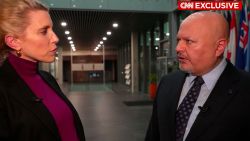
ICC chief prosecutor reacts to Putin arrest warrant
The International Criminal Court’s chief prosecutor believes Russian President Vladimir Putin could stand trial for alleged crimes committed during Russia’s war in Ukraine, he told CNN on Friday, despite Moscow’s arguments that it is not subject to the court’s decisions.
In an interview with CNN’s Clarissa Ward, Chief Prosecutor Karim Khan pointed to historic trials of Nazi war criminals, former Yugoslavian President Slobodan Milošević, and former Liberian leader Charles Taylor, among others.
“All of them were mighty, powerful individuals and yet they found themselves in courtrooms,” he said.
Tiếp tục đọc “The ICC issued arrest warrants on Friday for Putin and Russian official Maria Lvova-Belov”The ICC was created to bring justice to the world’s worst war criminals, but debate over the court still rages.
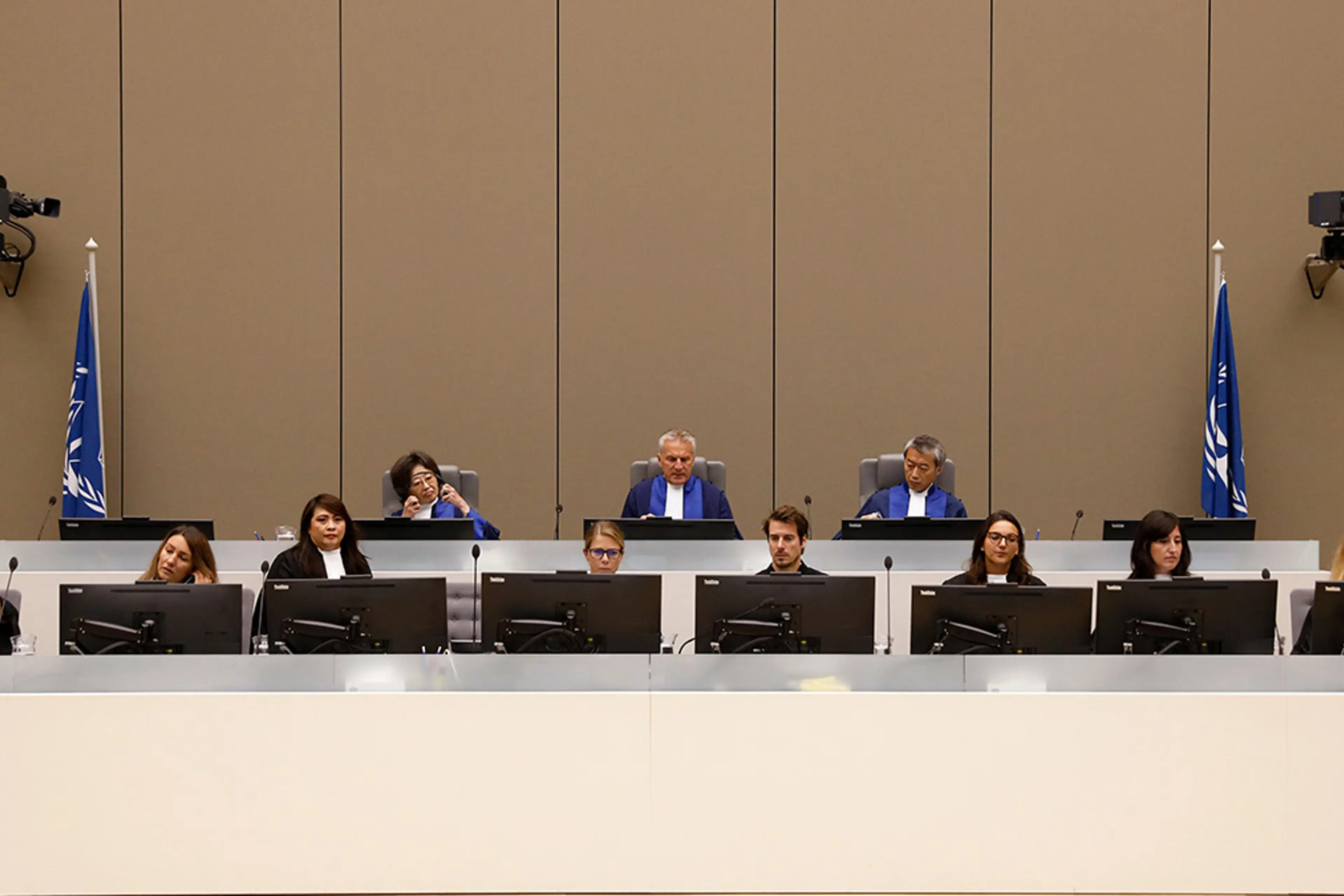
WRITTEN BY Claire Klobucista
UPDATED Last updated March 28, 2022 2:00 pm (EST)
Summary
The International Criminal Court (ICC), established in 2002, seeks to hold to account those guilty of some of the world’s worst crimes. Champions of the court say it deters would-be war criminals, bolsters the rule of law, and offers justice to victims of atrocities. But, since its inception, the court has faced considerable setbacks. It has been unable to gain the support of major powers, including the United States, China, and Russia, who say it undermines national sovereignty. Two countries have withdrawn from the court, and many African governments complain that the court has singled out Africa. U.S. opposition to the ICC hardened under President Donald Trump, and although the Joe Biden administration has taken a more conciliatory approach, tensions remain.
In the aftermath of World War II, the Allied powers launched the first international war crimes tribunal, known as the Nuremberg Trials, to prosecute top Nazi officials. It wasn’t until the 1990s, however, that many governments coalesced around the idea of a permanent court to hold perpetrators to account for the world’s most serious crimes. The United Nations had previously set up ad hoc international criminal tribunals to deal with war crimes in the former Yugoslavia and Rwanda, but many international law experts considered them inefficient and inadequate deterrents.
Author Sang-Hyun Song, President of the International Criminal Court.
December 2012, No. 4 Vol. XLIX, Delivering Justice
“Determined to put an end to impunity for the perpetrators of the most serious crimes of concern to the International Community as a whole and thus contribute to the prevention of such crimes“
Preamble of the Rome Statute
On 24 September 2012, the United Nations General Assembly held a High-level Meeting on the Rule of Law at the National and International Levels during which numerous delegates spoke about the importance of the International Criminal Court (ICC). In the Declaration adopted at the meeting, States recognized “the role of the International Criminal Court in a multilateral system that aims to end impunity and establish the rule of law”.1 In my remarks to the Assembly on 1 November 2012, I welcomed this statement, which echoed many earlier characterizations of the Court’s role.2
The crux of the ICC role lies in enforcing and inducing compliance with specific norms of international law aimed at outlawing and preventing mass violence.
Confronted with the extensive perpetration of unspeakable atrocities after the Second World War, the international community articulated an unparalleled call for justice. It sought to put an end to such crimes through, inter alia, the adoption of the Convention on the Prevention and Punishment of the Crime of Genocide, the four Geneva Conventions and the Nuremberg Principles.
Written by Lauren Wolfe, read by Kelly Burke and produced by Jessica Beck. The executive producer was Max Sanderson
Fri 11 Nov 2022 05.00 GMT Last modified on Fri 11 Nov 2022 17.40 GMT
Across the country, fact-finding teams are tirelessly gathering evidence and testimony about Russian atrocities, often within hours of troops retreating. Turning this into convictions will not be easy, or quick, but the task has begun
The families of some 9/11 victims are still pursuing compensation from those complicit in the attacks – but is Sudan, already ravaged by years of US sanctions, really the right target?
the guardian – Mon 12 Sep 2022 05.00 BST
Written and read by Nesrine Malik, produced by Jessica Beck and Cheyanne Bryan. The executive producer was Danielle Stephens
This article was originally published in August 2021.
Archive: The Guardian, ITV news
Tiếp tục đọc “‘Is this justice?’: why Sudan is facing a multibillion-dollar bill for 9/11 – podcast”
Al Jazeera English – 28-6-2020
The Trump administration has imposed sanctions on the International Criminal Court. But why now? Start Here looks into the case.
Why is the US targeting the International Criminal Court?

Updated 6:13 PM ET, Fri March 15, 2019
Washington (CNN) – Secretary of State Mike Pompeo announced the US will deny or revoke visas for International Criminal Court staff.
The move is meant to deter a potential investigation by the judicial body into alleged war crimes and crimes against humanity committed by US troops in Afghanistan.
Pompeo, speaking from the State Department Friday, said the restrictions include “persons who take or have taken action to request or further such an investigation.” He said the policy had already taken effect, but declined to say who had been restricted or would face future restrictions. Tiếp tục đọc “US denying visas to International Criminal Court staff”
Christoph Flügge warns over ‘shocking’ moves by Trump administration and Turkey
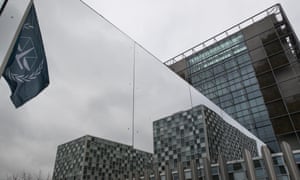
A senior judge has resigned from one of the UN’s international courts in The Hague citing “shocking” political interference from the White House andTurkey.
Christoph Flügge, a German judge, claimed the US had threatened judgesafter moves were made to examine the conduct of US soldiers in Afghanistan. Tiếp tục đọc “UN court judge quits The Hague citing political interference”
First posted on UNCLOSforum.wordpress.com on Aug. 6, 2014
Tuyên cáo về các Nguyên tắc Luật Quốc tế về Liên hệ Hữu nghị và Hợp tác giữa các Quốc gia theo đúng Hiến chương Liên hợp quốc (“Tuyên cáo”) được Đại hội đồng Liên hợp quốc thông qua ngày 17 tháng 10 năm 1970 quy định “Nguyên tắc rằng mọi Quốc gia, trong các liên hệ quốc tế, tự kiềm chế không dùng hăm dọa hay sử dụng vũ lực chống lại toàn vẹn chủ quyền hoặc độc lập chính trị của bất kỳ Quốc gia nào hoặc dưới bất kỳ hình thức nào trái ngược với các mục đích của Hiến chương Liên hợp quốc.”
Bản Tuyên cáo tuyên bố: Tiếp tục đọc “3 Hình tội Chiến tranh xâm lược của Trung quốc đối với nhân dân Việt Nam”
First posted on UNCLOSforum.wordpress.com on Aug. 5, 2014
Read full text with full citations, Word 2007 >>
Read full text with full citations, Word 97-2003 >>
Due to technical difficulties, the following text has no footnotes and no citations.
____
China’s 3 Crimes of War of Aggression against the Vietnamese People
The UN General Assembly’s Declaration on Principles of International Law concerning Friendly Relations and Co-operation among States in accordance with the Charter of the United Nations (Oct. 17, 1970) (hereinafter “the Declaration”) provided, inter alia, “The principle that States shall refrain in their international relations from the threat or use of force against the territorial integrity or political independence of any State or in any other manner inconsistent with the purposes of the United Nations”.
The Declaration announced: Tiếp tục đọc “China’s 3 Crimes of War of Aggression against the Vietnamese People”
First posted on UNCLOSforum.wordpress.com on July 27, 2014
This is the law for China leaders and every political or military leader in the world.
The Vietnamese version follows the English version.
Amendments to the Rome Statute of the International Criminal
Court on the Crime of Aggression
1. Article 5, paragraph 2, of the Statute is deleted.
2. The following text is inserted after article 8 of the Statute:
Article 8 bis -Crime of aggression
1. For the purpose of this Statute, “crime of aggression” means the planning, preparation, initiation or execution, by a person in a position effectively to exercise control over or to direct the political or military action of a State, of an act of aggression which, by its character, gravity and scale, constitutes a manifest violation of the Charter of the United Nations. Tiếp tục đọc “Amendments to the Rome Statute of the International Criminal Court on the Crime of Aggression – Tu chính án Đạo luật Rome của Tòa Hình sự Quốc tế về Tội Xâm Lược”
Reuters Apr 24, 2017
HONG KONG/THE HAGUE – A Philippine lawyer said he filed a complaint against President Rodrigo Duterte and senior officials at the International Criminal Court (ICC) on Monday, accusing them of crimes against humanity in a nationwide anti-drugs crackdown.
Attorney Jude Sabio said in the 77-page complaint that Duterte “repeatedly, unchangingly and continuously” committed crimes against humanity and that under him, killing drug suspects and other criminals has become “best practice.”
Sabio is the lawyer for Edgar Matobato, a man who has testified in the Philippines Senate that he was part of a hit squad that operated on Duterte’s orders. Tiếp tục đọc “Lawyer for Philippines hit man files complaint against Duterte in international court”
 CVD
CVD 