Dân lấp “ổ voi” gây tai nạn, bị cán bộ truy “ai cho phép làm”

GiadinhNet – “Ổ voi” xuất hiện nhiều năm, gây ra nhiều vụ tai nạn nhưng không được đơn vị quản lý đường bộ sửa chữa. Khi dân bức xúc tự mang bê tông ra trám đường thì bị cán bộ đến dọa đòi lập biên bản xử phạt hành chính.

Đây là câu chuyện xảy ra ở khu vực km24, QL70 qua huyện Bảo Thắng, tỉnh Lào Cai được chia sẻ và bình luận nhiều trên mạng xã hội mấy ngày qua.

Theo đó, khi nhìn thấy hành động đẹp của người dân, một Facebooker tên là Vương Mạnh đã ghi hình và đẩy lên mạng xã hội. Tiếp tục đọc “Dân lấp “ổ voi” gây tai nạn, bị cán bộ truy “ai cho phép làm””

Women and politics in East Asia

19 June 2016
Author: Katharine H.S. Moon, Wellesley CollegeEastasiaforum – This is supposed to be the Asian century, with East Asian countries leading the way. The world admires many East Asian countries for their miraculous economic growth, democracy-building and cultural innovation. But can East Asia also provide a model for developing women’s rights and political power? East Asia has no coherent pattern to boast or export.https://i0.wp.com/www.eastasiaforum.org/wp-content/uploads/2016/06/Moon-400x280.jpgEast Asians are known for creating wealth nationally and personally but this does not necessarily produce women’s political empowerment or participation. One of the poorest countries in the world, Rwanda, sits atop the very wealthy Nordic states, the United States and newly rich Asia with the highest female representation in national politics worldwide.
In East Asia, the Philippines boasts the highest representation of women in political institutions. Nearly 30 per cent of the Philippines’ lower house is occupied by women, and women form a quarter of the upper house. In local politics, women also fare well, with 17 out of 80 provinces having voted for female governors in 2013. Since 2010, women have also made up 40–45 per cent of the highest civil service positions. Tiếp tục đọc “Women and politics in East Asia”

Phân biệt chủng tộc và kích động bài Việt chỉ làm cho xã hội Campuchia bất ổn

HỒNG THỦY 06:52 13/10/15

(GDVN) – Sam Rainsy và Hun Sen đều khẳng định mình và chính đảng của mình không phân biệt chủng tộc, không theo đuổi chủ nghĩa dân tộc cực đoan. Vậy xin hai ngài…

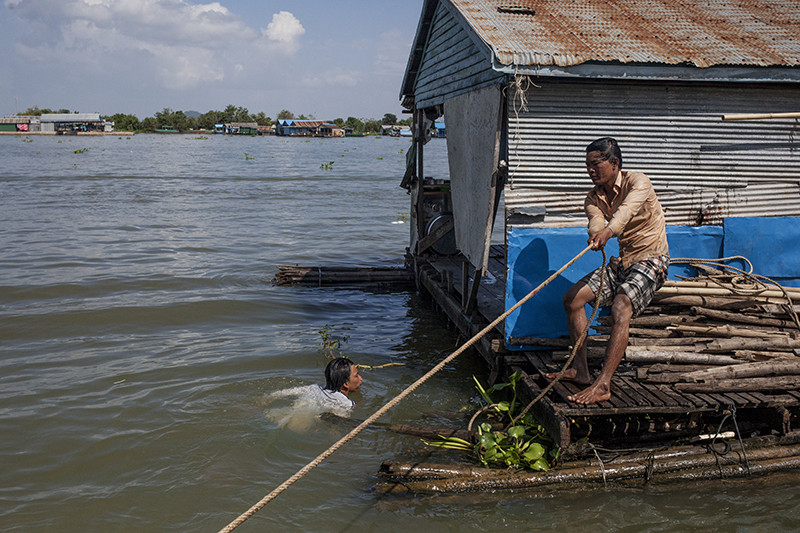
Một hộ gia đình Campuchia gốc Việt phải dời nhà nổi của mình lên khúc sông cạn hơn theo yêu cầu của chính quyền địa phương, giải tỏa khúc sông cho lễ hội năm 2017. Ảnh: The Cambodia Daily.

Cơ chế bảo vệ người tố cáo tham nhũng theo luật hiện hành của Việt Nam

ENGLISH: Corruption whistleblowers protection mechanism under current laws

Hướng đến minh bạch (HD)[1]

Đầu mối quốc gia của Tổ chức Quốc tế Minh bạch (Transparency International – TI) tại Việt Nam

Tố cáo là một quyền cơ bản của công dân đã được ghi nhận trong Hiến pháp của Việt Nam và cũng đồng thời là một kênh quan trọng giúp các cơ quan chính phủ tiếp cập thông tin, phát hiện và xử lý những trường hợp vi phạm pháp luật. Việt Nam từ lâu đã thừa nhận quyền của người tố cáo nói chung và người tố cáo tham nhũng nói riêng trong nhiều văn bản pháp luật khác nhau. Tuy nhiên, nhiều điều luật mới chỉ là nguyên tắc, chưa cụ thể và còn phân tán trong các văn bản pháp luật khác nhau có hiệu lực pháp lý khác nhau. Tiếp tục đọc “Cơ chế bảo vệ người tố cáo tham nhũng theo luật hiện hành của Việt Nam”

Vietnam: Corruption whistleblowers protection mechanism under current laws

vietnamlawmagazine

Towards Transparency (TT)[1] 

National Contact of Transparency International (TI) in Vietnam

Denunciation is a fundamental right of citizens that is recognized in the Constitution of Vietnam and also a crucial channel for government agencies to access information about, detect and handle violations of the law. Vietnam has long recognized the rights of whistleblowers in general and corruption whistleblowers in particular in many different legal instruments. However, many legal provisions are just principles, non-specific and scattered in various legal instruments of different legal effects. Tiếp tục đọc “Vietnam: Corruption whistleblowers protection mechanism under current laws”

New guidance on how to include human rights defenders in National Action Plans on business & human rights

For human rights defenders to be able to safely work on business and human rights issues, both States and businesses must contribute to a safe and enabling environment for such work, whilst desisting from and sanctioning any actions that might restrict or threaten that environment. NAPs provide an important vehicle for the articulation and coordination of the law, policies, and actions required to foster and protect such an environment.

…..

The Guiding Principles reinforce the State duty to protect by articulating how existing
international law should be applied in the realm of business and human rights. According to Principle 1, “States must protect against human rights abuse within their territory and
/or jurisdiction by third parties, including business enterprises. Given the increasing
prevalence of private corporations involved in violations against human rights defenders, it is thus crucial that States use NAPs to adopt laws and policies that enforce their specific
obligations to protect the rights of defenders
.
 The Declaration does not establish special rights for defenders but rather acknowledges that the roledefenders play, and the risks they face, require specific legislative and policy responses byStates to ensure that they can work in an environment where their rights are protected.

Tiếp tục đọc “New guidance on how to include human rights defenders in National Action Plans on business & human rights”

Tại sao phụ nữ nắm chìa khóa cho thành công kinh tế ở Đông Nam Á

ENGLISH: Why women hold the key to South-East Asia’s economic success

A woman rides on a bicycle past an electronic board showing the graph of the recent fluctuations of the exchange rates between the Japanese yen against the U.S. dollar (top L and R) outside a brokerage in Tokyo, Japan, January 7, 2016. The yen hit multi-month highs against its peers on Thursday while commodity-linked currencies took a fresh hit after China guided the yuan lower for two days in a row, fuelling anxiety about China's economy and its policy intentions.
Nhìn chung, họ kiếm được ít hơn 10% so với nam giới cho các công việc như nhau ở phần lớn các ngành công nghiệp. REUTERS/Yuya Shino

Hơn 50 năm trước, Charlotte Whitton, một người hoạt động về nữ quyền và là thị trưởng nữ đầu tiên của một thành phố lớn ở Canada, đã chế giễu hài hước rằng: “Bất cứ điều gì phụ nữ làm, họ phải làm tốt gấp đôi đàn ông để được đánh giá là giỏi bằng phân nửa”. Charlotte Whitton đã  gửi đến thế giới nơi mà phụ nữ còn đã bị xem là thấp kém, phụ nữ từng bị coi là chỉ đến trường để hoàn thành việc học thay vì học ở các trường luật, nếu họ có cơ hội được đến trường. Tiếp tục đọc “Tại sao phụ nữ nắm chìa khóa cho thành công kinh tế ở Đông Nam Á”

Phụ nữ và con gái trong chương trình Khoa Học Công Nghệ: Điều bắt buộc

 Women and Girls Imperative to Science & Technology Agenda

Lakshmi Puri

Lakshmi Puri là Trợ lý Phó Tổng Thư ký Liên Hợp Quốc và Phó Giám đốc điều hành của Ủy Ban Phụ Nữ của Liên Hợp Quốc

ipsnews _ LIÊN HIỆP QUỐC, 08 Tháng Hai 2016 (IPS) – Bạn có thể tưởng tượng cả một ngày mà không cần truy cập vào điện thoại di động, máy tính xách tay, hoặc thậm chí với internet? Trong thế giới thay đổi nhanh chóng của chúng ta, bạn có thể hoạt động mà không có công nghệ trong tầm tay của bạn?

Điều này là không thể đo đếm được không chỉ đối với hầu hết chúng ta, mà còn trên toàn thế giới – đặc biệt là đối với nhiều nước đang phát triển – việc sử dụng và tiếp cận công nghệ không phải là thứ sẵn có, và chắc chắn không phải là một đặc quyền. Điều này đặc biệt đúng đối với phụ nữ và trẻ em gái. Tiếp tục đọc “Phụ nữ và con gái trong chương trình Khoa Học Công Nghệ: Điều bắt buộc”

Tại sao Việt Nam cần trẻ em gái

Mette Frost Bertelsen's picture


Available in English

Tuần trước, tôi đọc các bài viết về Malala, cô gái 14 tuổi người Pakistan bị bắn vào đầu khi đang trên xe buýt của trường để trả thù cho sự tham gia tích cực của cô trong việc thúc đẩy các quyền về giáo dục của trẻ em gái tại Pakistan. Cùng ngày hôm đó, tôi đã giúp một người bạn biên tập các đoạn chú thích cho loạt ảnh về những cô gái rất trẻ trên toàn thế giới (một số chỉ mới 5 tuổi) nhưng đã bị ép kết hôn với những người đàn ông già hơn rất nhiều vì lý do kinh tế hoặc tập quán văn hóa. Tiếp tục đọc “Tại sao Việt Nam cần trẻ em gái”

‘Những thành kiến hoá thạch’ về phái nữ qua chữ viết (bộ nữ)

Tản mạn về từ Hán Việt (phần 5)
Nguyễn Cung Thông
nguyencungthong@yahoo.com

Nếu chúng ta chỉ nghe đọc hay viết các chữ đẹp hay mỹ (mỹ nhân – người đẹp, mỹ cảnh – cảnh đẹp) theo mẫu tự La Tinh thì không thấy vết tích hay nhận ra phái nữ hay phái nam; tuy nhiên khi viết chữ Hán liên hệ ra thì tình hình lại khác hẳn: các chữ Hán trên ngàn năm nay đã mang trong đó một thành kiến xem thường phái nữ (thành kiến hoá thạch – fossilised prejudice). Tiếp tục đọc “‘Những thành kiến hoá thạch’ về phái nữ qua chữ viết (bộ nữ)”

When a woman of ethnic minority says to “vote wisely”

VE – By Kim Thuy, Ha Phuong   April 29, 2016 | 08:04 am GMT+7


Local farmer Lo thi Bat who grows arrowroot to support her family with help from the project. Photo by ActionAid

One day, Tieu, a Giay ethnic minority woman, stepped out of her house to visit a neighbor without asking for her husband’s permission, her husband threatened to abandon her.

She had never before dared to do that during two decades of marriage. This time, Tieu did it on purpose. “I wanted to see how my husband would react. I wanted freedom,” said Tieu.

Tiếp tục đọc “When a woman of ethnic minority says to “vote wisely””

Phụ nữ và Các Mục tiêu Phát triển Bền Vững – Việt Nam hướng tới bình đẳng giới năm 2030

Phụ nữ và Các Mục tiêu Phát triển Bền Vững - Việt Nam hướng tới bình đẳng giới năm 2030

Description:

Ngày 25 tháng 9  năm 2015, các quốc gia thành viên Liên Hợp Quốc đã thông qua lộ trình hướng tới phát triển bền vững đến năm 2030. Trong Chương trình Nghị sự Phát triển Bền vững năm 2030 và các Mục tiêu Phát triển Bền vững (SDG), bình đẳng giới và trao quyền cho phụ nữ được công nhận là một phương tiện quan trọng giúp thúc đẩy phát triển bền vững thông qua một mục tiêu phát triển độc lập (SDG5) cũng như các vấn đề giới được lồng ghép trong các mục tiêu còn lại. Tiếp tục đọc “Phụ nữ và Các Mục tiêu Phát triển Bền Vững – Việt Nam hướng tới bình đẳng giới năm 2030”

5 ways public-private partnerships can promote gender equality

blog.worldbank – From my corner of the World Bank, the development objective of promoting gender equality can seem vague or unrelated to what we do. We can give three cheers for our colleagues who focus on gender issues for successfully developing and releasing  the World Bank’s new Gender Equality, Poverty Reduction and Inclusive Growth Strategy — and then return to our work of closing the infrastructure financing gap and helping governments prioritize their infrastructure projects.

But are there areas in our own work on public-private partnerships (PPPs) where we can and should evaluate the role gender plays? Based on the quantity of literature my colleagues at the PPP Infrastructure Resource Center (PPIRC) have amassed in version 1.0 of their impact of PPPs on gender inclusion page of their website, the answer is yes. Tiếp tục đọc “5 ways public-private partnerships can promote gender equality”

Situation of women journalists in Asia-Pacific, 20 years after the Beijing Declaration

Date: 23 June 2015

PRESS RELEASE

asiapacific.unwomen – Bangkok, Thailand – There are more women media professionals than ever in many countries across Asia-Pacific, but they still represent only three out of 10 newsroom staff, often earn less than their male counterparts and are subject to sexual harassment, while struggling to reach decision-making positions.

Participants during the launch. Photo: Lance Woodruff

These are some of the findings in “Inside the News: Challenges and Aspirations of Women Journalists in Asia and the Pacific”, a study launched yesterday by UNESCO, UN Women and the International Federation of Journalists (IFJ) at the Foreign Correspondents’ Club of Thailand.

“Inside the News” highlights how issues of gender impact the lives and work of journalists in the region, with case studies drawn from the personal accounts of media professionals in Cambodia, India, Malaysia, Nepal, Pakistan, Sri Lanka and Vanuatu.

Gái bán dâm phải chịu cảnh ức hiếp: Ai cứu?

Thứ 5, 06:50, 17/12/2015

VOV.VNVì hành nghề mại dâm bị coi là phạm pháp nên nhiều chị em bị bạo hành không dám báo công an hay cơ quan chức năng, vì sợ mình cũng bị bắt.

Phụ nữ bán dâm tại Việt Nam đang phải chịu hai dạng kỳ thị. Thứ nhất là do bán dâm bị coi là “tệ nạn xã hội”; và thứ hai, sự kỳ thị sâu xa hơn là bất bình đẳng giới ở Việt Nam.

gai ban dam phai chiu canh uc hiep: ai cuu? hinh 0
Phụ nữ bán dâm đường phố dễ bị bạo hành hơn cả (ảnh Internet)

Tiếp tục đọc “Gái bán dâm phải chịu cảnh ức hiếp: Ai cứu?”