Understanding Causes for Wrongful Convictions in Vietnam: a View from the Top and the Bottom of the Iceberg

Abstract

Wrongful convictions have severe consequences and effects on the values, dignity, and self-esteem of the innocent and their beloved ones. While Vietnam is implementing the rule of law to ensure the protection of citizens’ fundamental rights, recent and serious wrongful conviction cases suggest a need to enhance the effectiveness and credibility of criminal justice reform. Using several cases for examples from Vietnam, this study examines two levels of factors that contribute to wrongful convictions: (i) the acknowledged causes (the top of the iceberg) and (ii) the hidden roots (beneath the surface). In addition, we compare the case of Vietnam to the findings from other Asian nations, notably those of East Asia. We conclude that the causes for wrongful convictions are embedded in the criminal justice process and culture, and eradication of wrongful convictions requires careful planning and innovative reforms that address the root causes of the problems. Relevant policy and practical recommendations are offered to deal with the factors leading to wrongful convictions in Vietnam.

Introduction

In recent years, Vietnam’s criminal justice system has been more effective in addressing human rights and responding to transnational crimes and maintaining national security. New legislation in Vietnam’s criminal justice system sets the goals of safeguarding justice and human rights first and foremost, a component of which requires reduction of wrongful convictions. Wrongful convictions have weakened public trust in the criminal justice system, violated human rights, and affected the integrity of the rule of law. Yet, at the domestic level, wrongful convictions are still persistent.

Vietnamese legal scholars have started examining wrongful convictions, particularly after the Communist Party of Vietnam (CPV) called for judicial reforms in the 2000s (Dao, 2020; Thai, 2020). These scholars have paid little attention, however, to the fundamental reasons that lead to wrongful convictions. While the CPV encouraged the combination of inquisitorial and adversarial models in criminal proceedings, the legal ideology to identify and recognize hidden factors of wrongful convictions has not been seriously considered in the process. In other words, the hidden factors contributing to wrongful convictions are still not reviewed and assessed alongside the surface elements of wrongful convictions in Vietnam.
Tiếp tục đọc “Understanding Causes for Wrongful Convictions in Vietnam: a View from the Top and the Bottom of the Iceberg”

Nguyên nhân ảnh hưởng đến việc phát triển án lệ và giải pháp khắc phục

21/12/2022 10:49 | 4 tháng trước

(LSVN) – Án lệ chính thức trở thành một loại nguồn luật trong hệ thống pháp luật nước ta kể từ khi Nghị quyết số 03/2015/NQ-HĐTP ngày 28/10/2015 của Hội đồng Thẩm phán Tòa án nhân dân tối cao về quy trình lựa chọn, công bố và áp dụng án lệ có hiệu lực pháp luật. Trong quá trình áp dụng, mặc dù Hội đồng Thẩm phán Tòa án nhân dân tối cao đã ban hành Nghị quyết số 04/2019/NQ-HĐTP ngày 18/6/2019 thay thế Nghị quyết số 03/2015/NQ-HĐTP và Tòa án nhân dân tối cao ban hành nhiều văn bản chỉ đạo tăng cường công tác phát triển án lệ, nhưng cho đến nay, số lượng án lệ được ban hành còn hạn chế, chưa đáp ứng kỳ vọng của Tòa án nhân dân tối cao và nhu cầu của đời sống pháp lý. Trong phạm vi bài viết này, tác giả phân tích thực trạng ban hành án lệ của Tòa án nhân dân tối cao; nguyên nhân ảnh hưởng đến việc phát triển án lệ và đề xuất giải pháp khắc phục.

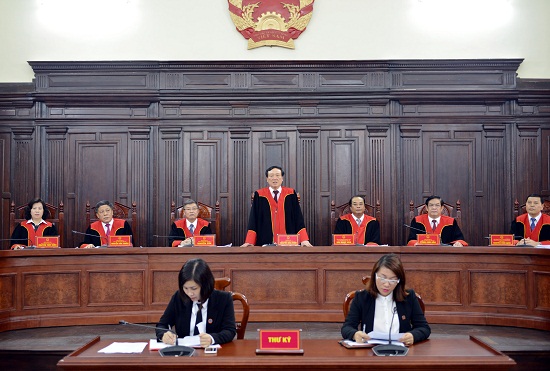
Ảnh minh họa.

Tiếp tục đọc “Nguyên nhân ảnh hưởng đến việc phát triển án lệ và giải pháp khắc phục”

International Arbitration Yearbook 2022-2023


Welcome to the 16th edition of the “Baker McKenzie International Arbitration Yearbook.” We are pleased to bring you our analysis of notable developments in international arbitration over the past year from over 45 jurisdictions worldwide.

As with the editions before it, the 2022-2023 Yearbook looks at important legislative and case law updates from each jurisdiction. This includes:

• New arbitral rules from major institutions including the AAA, CAM-CCBC, CEPANI, DIAC and the SCC
• The ongoing reform of arbitration legislation to reflect international best practice, with recent developments in Italy, Japan, Luxembourg, the United Kingdom and Vietnam
• The continued effects of the European Court of Justice’s decision in Achmea
• The decision of a number of European states to withdraw from the Energy Charter Treaty and the accession of new parties to the ICSID convention
• The latest case law on the recognition and enforcement of foreign arbitral awards under the New York Convention, which has now been ratified in 172 jurisdictions worldwide
• New requirements from several institutions to disclose the sources of third-party funding, and the expansion of financing options for arbitration parties in Hong Kong

In this year’s edition we have introduced a new chapter on the arbitration framework in the OHADA area, which includes 17 African states.

I trust you will find our coverage of these, and many other important topics, to be of interest. Such breadth of coverage is only possible because of Baker McKenzie’s truly global presence. Our international arbitration team is the largest, busiest and most ranked arbitration team in the world and is ranked in the top 10 arbitration teams globally by Global Arbitration Review. With over 200 practitioners, we have acted in more hearings than any other firm, in every major center, allowing us to offer unrivaled insights into the state of arbitration right across the globe.

Finally, we extend our thanks to Ben Roe, Markus Altenkirch and Maria Barros Mota, to our editorial team Cathy Keegan, Sarah Fox and Paul Allanigue, and to our vast network of colleagues and friends who have contributed to this international team effort.

Ed Poulton
Global Chair, International Arbitration

Tiếp tục đọc “International Arbitration Yearbook 2022-2023”

Rút bảo hiểm một lần – Lương hưu chệch ‘đường ray’

VNE – Thứ hai, 20/3/2023, 00:00 (GMT+7)

Rút bảo hiểm một lần

Nguyễn Khắc Giang

Nguyễn Khắc Giang – Tiến sĩ Khoa học Chính trị

Lúc mới ra trường, tôi gửi tiền vào một quỹ lớn. Mức nộp tương đương 22% thu nhập mỗi tháng, tôi đóng 6% còn cơ quan góp 16%. Quỹ có số dư vào khoảng 36 tỷ USD, và số lượng khách hàng lên đến hàng chục triệu.

Tuy nhiên, quỹ lại không công bố báo cáo tài chính, và chỉ cho phép nhận vốn và lãi hàng tháng sau khi tôi bước qua tuổi nghỉ hưu. Nghĩa là tôi sẽ phải chờ khoảng 35 năm mới biết khoản đầu tư của mình hiệu quả ra sao. Quỹ cũng thường than thở về nguy cơ mất thanh khoản, vỡ quỹ, trong khi không có cam kết đáng kể về rủi ro trượt giá đồng tiền do lạm phát.

Nếu có cơ hội, theo bạn, tôi có nên rút khỏi quỹ hay không?

Tiếp tục đọc “Rút bảo hiểm một lần – Lương hưu chệch ‘đường ray’”

Vienna Convention on Diplomatic Relations (1961) & US Diplomatic Relations Act (1978) – Vienna Comvention on Consular Relations (1963)

  • Vienna Convention on Diplomatic Relations (1961)

Download from UN Website >>

  • [US] Diplomatic Relations Act (1978), to implement Vienna Convention on Diplomatic Convention

Download from goveinfo.gov >>

  • Vienna Convention on Consular Relations (1963)

Download from UN Website >>

  • Diplomatic and Consular Immunity: Guidance for Law Enforcementand Judicial Authorities (by ÚS Department of State, Office of Foreign Misions)

Download from Perma.cc >>

The Judges’ Book

The Judges’ Book features excerpted scholarship from UC Hastings Faculty geared specifically towards judges, judicial business, and issues likely to come before American courts for resolution.

Volume 1 (2017)

PDF

Table of Contents

PDF

Introduction
David Faigman

PDF

Foreword
Marsha S. Berzon

PDF

Administrative Law: Historical Origins of America’s Administrative Exceptionalism
Reuel Schiller

PDF

Administrative Law: The Importance of Regional Administration to Federalism
Dave Owen

PDF

Bankruptcy: Activist Investors and Chapter 11
Jared A. Ellias

PDF

Civil Procedure: Certifying an Opt-In Class under Rule 23
Scott Dodson

PDF

Civil Procedure: How to Apply Diversity Jurisdiction in a Multiparty Case
Scott Dodson

PDF

Civil Procedure: Class Action Fee and Cost Awards
Morris Ratner

PDF

Criminal Law: Clarifying “Wrongfulness” in Insanity Cases
Kate E. Bloch and Jeffrey Gould

PDF

Evidence: Admissibility vs. Weight in Scientific Testimony
David Faigman

PDF

Federal Law Enforcement: Law Enforcement as Political Question
Zachary S. Price

PDF

Patent Law: Finding Space for State Authority to Regulate Patents
Robin Feldman

PDF

Patent Law: How Big Pharma Delays Generic Entry
Robin Feldman

PDF

Federal Tax Law: The Costs of Cliff Effects in the Internal Revenue Code
Manoj Viswanathan

PDF

Appendix: Notable Faculty Publications 2016

Tiếp tục đọc “The Judges’ Book”

The ICC issued arrest warrants on Friday for Putin and Russian official Maria Lvova-Belov

Russia scoffs but Putin could stand trial for alleged war crimes, ICC chief prosecutor says

By Caitlin Hu, CNN

Updated 9:03 PM EDT, Fri March 17, 2023

Karim Khan ICC vpx

ICC chief prosecutor reacts to Putin arrest warrant

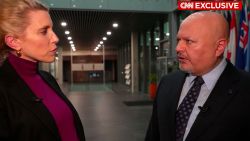
The International Criminal Court’s chief prosecutor believes Russian President Vladimir Putin could stand trial for alleged crimes committed during Russia’s war in Ukraine, he told CNN on Friday, despite Moscow’s arguments that it is not subject to the court’s decisions.

In an interview with CNN’s Clarissa Ward, Chief Prosecutor Karim Khan pointed to historic trials of Nazi war criminals, former Yugoslavian President Slobodan Milošević, and former Liberian leader Charles Taylor, among others.

“All of them were mighty, powerful individuals and yet they found themselves in courtrooms,” he said.

Tiếp tục đọc “The ICC issued arrest warrants on Friday for Putin and Russian official Maria Lvova-Belov”

Baby formula marketing ‘pervasive, misleading and aggressive’ – UN report

news.un.org

A mother carrying her newborn baby.

© UNSPLASH/Holie Santos

A mother carrying her newborn baby.

Facebook Twitter Print Email

Health

Parents and pregnant women globally are exposed to aggressive marketing for baby formula milk, according to a report launched jointly by two UN agencies on Tuesday.

How marketing of formula milk influences our decisions on infant feeding, the first report in a series by the World Health Organization (WHO) and the UN Children’s Fund (UNICEF), draws on interviews with parents, pregnant women, and health workers in eight countries.

More than half of those surveyed acknowledged that they had been targeted by formula milk companies.

Invasive marketing

UNICEF and WHO maintain that the $55 billion formula milk industry uses systematic and unethical marketing strategies to influence parents’ infant feeding decisions and exploitative practices that compromise child nutrition and violate international commitments.

“This report shows very clearly that formula milk marketing remains unacceptably pervasive, misleading and aggressive,” said WHO Director-General Tedros Adhanom Ghebreyesus, calling for regulations on exploitative marketing to be “urgently adopted and enforced to protect children’s health.”

The report found not only that industry marketing techniques include unregulated and invasive online targeting, but also sponsored advice networks and helplines; offered promotions and free gifts; and influenced health workers’ training and recommendations.

Barriers to breastfeeding

The report underlines that the industry often delivers misleading and scientifically unsubstantiated information to parents and health workers and also violates the International Code of Marketing of Breast-milk Substitutes – a landmark public health agreement to protect mothers from aggressive marketing by the baby food industry.

Having surveyed 8,500 parents and pregnant women, and 300 health workers globally, the report found that exposure to formula milk marketing reached 84 per cent of all women surveyed in the United Kingdom; 92 per cent in Viet Nam and 97 per cent in China – increasing their likelihood of choosing formula feeding.

“False and misleading messages about formula feeding are a substantial barrier to breastfeeding, which we know is best for babies and mothers,” said UNICEF Executive Director Catherine Russell.

Formula milk industry spends billions each year to influence your decision about what to feed your baby.

WHO/UNICEF

Tiếp tục đọc “Baby formula marketing ‘pervasive, misleading and aggressive’ – UN report”

Khoảng trống trong ‘tấm khiên’ bảo vệ người tiêu dùng tài chính

Lưu Minh Sang (*) – Thứ Ba, 3/01/2023

Kinh tế Sài Gòn OnlineNgười tiêu dùng tài chính là nhóm đối tượng dễ bị tổn thương vì phần lớn họ luôn phải đối diện với rất nhiều rủi ro trong quá trình sử dụng các sản phẩm dịch vụ tài chính, như là nạn nhân của các vụ lừa đảo phát hành trái phiếu, thao túng chứng khoán, cưỡng ép mua bảo hiểm, cho vay nặng lãi… trong năm nay. Thế nhưng, tấm khiên bảo vệ quyền lợi của họ đang bị thủng nhiều chỗ…

Sơ hở là có thể mất tiền

Tại Việt Nam, người tiêu dùng tài chính đang đối diện đầy đủ những rủi ro trải dài ở hầu hết các lĩnh vực tài chính, từ ngân hàng, chứng khoán đến bảo hiểm và công nghệ tài chính. Nhìn một cách khái quát, người tiêu dùng tài chính đang đối diện với sáu nhóm rủi ro chính như sau:

Tiếp tục đọc “Khoảng trống trong ‘tấm khiên’ bảo vệ người tiêu dùng tài chính”

The North Atlantic Treaty

Washington D.C. – 4 April 1949

  • 04 Apr. 1949
  • |Last updated: 10 Apr. 2019 14:16

The Parties to this Treaty reaffirm their faith in the purposes and principles of the Charter of the United Nations and their desire to live in peace with all peoples and all governments.
They are determined to safeguard the freedom, common heritage and civilisation of their peoples, founded on the principles of democracy, individual liberty and the rule of law. They seek to promote stability and well-being in the North Atlantic area.
They are resolved to unite their efforts for collective defence and for the preservation of peace and security. They therefore agree to this North Atlantic Treaty :

Article 1

The Parties undertake, as set forth in the Charter of the United Nations, to settle any international dispute in which they may be involved by peaceful means in such a manner that international peace and security and justice are not endangered, and to refrain in their international relations from the threat or use of force in any manner inconsistent with the purposes of the United Nations.

Tiếp tục đọc “The North Atlantic Treaty”

Nigeria: Shell settles lawsuit in the Netherlands for €15 million over oil spillages in Niger Delta

Four Nigerian Farmers Take Oil Giant Shell to Court

View full case here

business-humanrights.org

A unique court case, brought by four Nigerian victims of Shell oil spills, in conjunction with Friends of the Earth Netherlands, begins on Thursday 3rd December in the court at The Hague. This is the first time in history that a Dutch company has been brought to trial before a Dutch court for damages abroad. The Nigerian farmers and fishers, who lost their livelihoods after oil from leaking Shell pipelines streamed over their fields and fishing ponds, are claiming compensation from the Anglo-Dutch oil giant…Shell denies all responsibility and contends that the Dutch court has no jurisdiction over its Nigerian subsidiary.

“Shell to pay 15 mln euros in settlement over Nigerian oil spills”, 24 Dec 2022

Shell will pay 15 million euros ($15.9 million) to communities in Nigeria that were affected by multiple oil pipeline leaks in the Niger Delta, the oil company on Friday said in a joint statement with the Dutch division of Friends of the Earth.

The compensation is the result of a Dutch court case brought by Friends of the Earth, in which Shell’s Nigerian subsidiary SPDC last year was found to be responsible for the oil spills and was ordered to pay for damages to farmers.

The money will benefit the communities of Oruma, Goi and Ikot Ada Udo in Nigeria, that were impacted by four oil spills that occurred between 2004 and 2007.

“The settlement is on a no admission of liability basis, and settles all claims and ends all pending litigation related to the spills,” Shell said.

An independent expert had confirmed that SPDC has installed a leak detection system on the KCTL Pipeline in compliance with the appeal court’s orders, the company added…

The case was brought in 2008 by four farmers and environmental group Friends of the Earth, seeking reparations for lost income from contaminated land and waterways in the region, the heart of Nigeria’s oil industry.

After the appeals court’s final ruling last year, Shell said it continued to believe the spills were caused by sabotage.

But the court said Shell had not proven “beyond reasonable doubt” that sabotage had caused the spill, rather than poor maintenance.

Timeline

Rule of Law and Development

UN.org

In the Declaration of the High-level Meeting on the Rule of Law, Member States noted that “the rule of law and development are strongly interrelated and mutually reinforcing, that the advancement of the rule of law at the national and international levels is essential for sustained and inclusive economic growth, sustainable development, the eradication of poverty and hunger and the full realization of all human rights and fundamental freedoms, including the right to development, all of which in turn reinforce the rule of law”. They therefore called for consideration of that interrelationship in the post-2015 international development agenda. At the international level, the body of international instruments, including those concerning international trade and finance, climate change and protection of the environment and the right to development, establishes internationally agreed standards which support sustainable development.

At the national level, the rule of law is necessary to create an environment for providing sustainable livelihoods and eradicating poverty. Poverty often stems from disempowerment, exclusion and discrimination. The rule of law fosters development through strengthening the voices of individuals and communities, by providing access to justice , ensuring due process and establishing remedies for the violation of rights . Security of livelihoods, shelter, tenure and contracts can enable and empower the poor to defend themselves against violations of their rights. Legal empowerment goes beyond the provision of legal remedies and supports better economic opportunities.

Tiếp tục đọc “Rule of Law and Development”

Intellectual property in Vietnam: One Little Pig and a Big Bad Lawsuit

vietnambriefing.com  

December 15, 2022Posted byVietnam BriefingWritten byMark BarnesReading Time:4 minutes

Intellectual property (IP) law reform and enforcement in Vietnam has been at the center of a broad range of trade agreements the country has signed onto. But change has been slow, and enforcement has been lacking. Here’s how a spat between a cartoon wolf and a cartoon pig could change that.


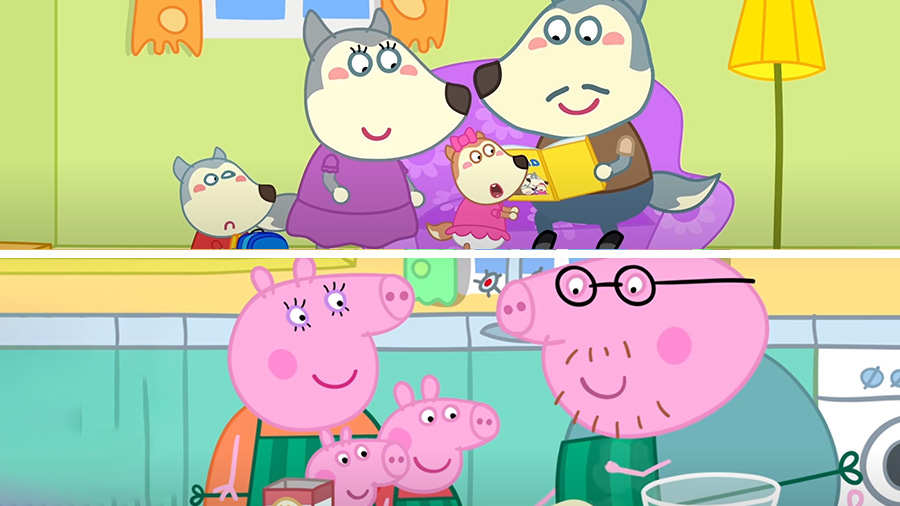
The owners of the UK’s Peppa Pig, EOne, are suing Vietnam’s Sconnect, the owners of popular YouTube cartoon Wolfoo, alleging trademark and copyright infringement. More specifically, EOne is alleging Sconnect created Wolfoo to look and feel like Peppa Pig to imply the two cartoons were connected.

In its complaint, EOne claims that parts of Wolfoo’s audio have been taken directly from episodes of Peppa Pig and that images of Peppa Pig herself appear on items like clocks and watering cans in the background of Wolfoo videos.

This is currently before the courts in the UK.

But the courts have not been EOne’s only means of recourse.

YouTube, for example, took down 2,000 Wolfoo videos from August to October this year for copyright infringement at the request of EOne. This cost Sconnect US$2 million in lost revenue up to October, according to their own estimates.

In response, Sconnect has made overtures to the Vietnamese government looking for support. It has also countersued in Vietnam and has launched a lawsuit in Russia where, earlier in the year, a copyright infringement case brought by EOne was dismissed in response to sanctions imposed over the war in the Ukraine.

Tiếp tục đọc “Intellectual property in Vietnam: One Little Pig and a Big Bad Lawsuit”