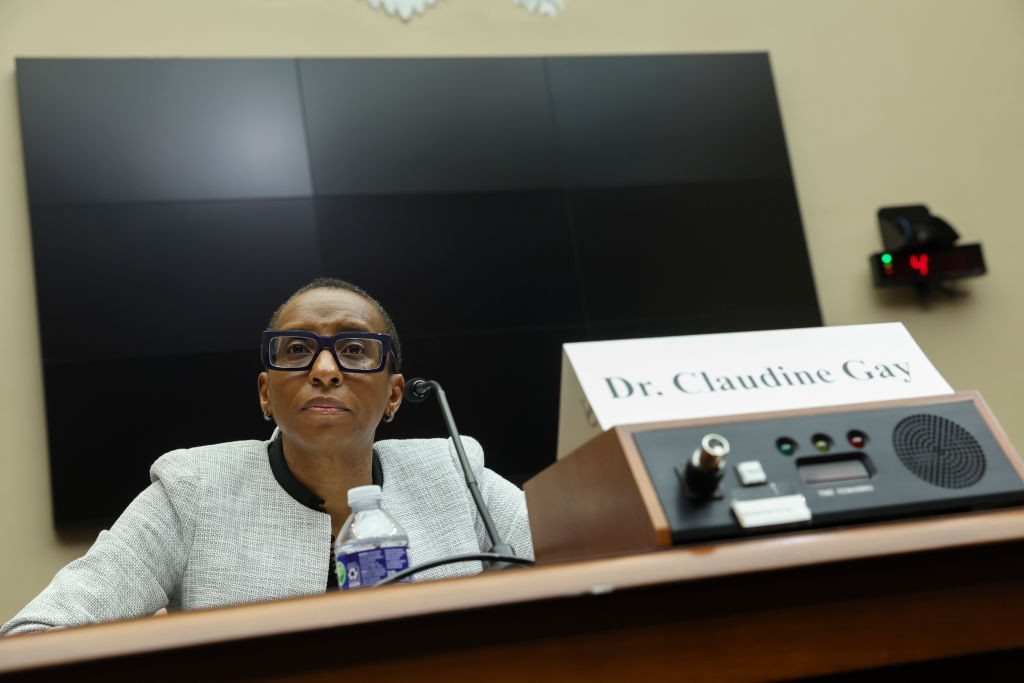
Dr. Claudine Gay testifying before the House Education and Workforce Committee at the Rayburn House Office Building on December 05, 2023 in Washington, DC. She has since resigned from her post as President of Harvard University.Kevin Dietsch—Getty Images
The end of Claudine Gay’s brief and turbulent presidency at Harvard has hardly put an end to controversies about elite university leadership and governance. Bill Ackman, the “activist” donor and Harvard graduate, is calling for further resignations from the Harvard Corporation, while baiting MIT’s President, Sally Kornbluth, with the Shakespearean query: “et tu?” Meanwhile, Mark Rowan, the board member who engineered the takedown of the University of Pennsylvania’s erstwhile president, Elizabeth McGill—the first of the Washington three to step down—has now been pressing his advantage in calling for major reforms of an academic nature at Penn. Philanthropy and academic freedom are colliding in ways that have the potential to undermine the true purpose and mission of our universities.
As much as these, and some other, donors have appeared to embody popular discontent with those at the pinnacle of higher education, it is easy to forget that not long ago the scandals around these universities had to do with donors who used their gifts as leverage to secure admission for their children, making visible the problematic relationship between some individual philanthropy and private interests. We all called for firewalls then but seem now to have forgotten those critiques of the relationship between private interests and higher education.
The former president of the European Commission, who played a crucial role in the construction of the European Union, died on Wednesday at age 98.
Le Monde with AFP Published on December 28, 2023, at 10:39 am (Paris)
A ‘builder’ of Europe
European Council President Charles Michel said Delors “led the transformation of the European Economic Community towards a true Union.”
“A great Frenchman and a great European, he went down in history as one of the builders of our Europe,” Michel posted on social media.
Current European Commission chief Ursula von der Leyen said Delors had “shaped entire generations of Europeans, including mine” and was “a visionary who made our Europe stronger.”
European Central Bank chief Christine Lagarde highlighted Delors’s role for the single European market and “the path he laid out towards our single currency, the euro.” Europe, she said, “has lost a true statesman.”
‘Statesman with a French destiny’
French President Emmanuel Macron called his fellow countryman a “tireless creator of our Europe.” Posting on X, formerly Twitter, Macron said “his commitment, his ideals and his rectitude will always inspire us.” Delors was “a statesman with a French destiny,” Macron added.
Olivier Faure, head of the Parti Socialiste, of which Delors was a member, said, “A giant has left us.” Delors, who served as finance minister under President François Mitterrand, a Socialist, sought to “overcome tragedy by building a durable peace” after World War II ravaged Europe, Faure added.
‘Founding father’
“Modern Europe today loses its founding father,” said Enrico Letta, a former Italian prime minister who currently heads the Jacques Delors Institute created by the ex-Commission chief.
Writing on X, Italian Foreign Minister Antonio Tajani praised “a personality who showed, on the basis of Christian values, the path of strengthening Europe.”
‘What many thought impossible’
Belgium’s Prime Minister Alexander De Croo also hailed the EU’s “founding father”, whose “project for a stronger and more secure union remains hugely relevant for the Europe of tomorrow.”
Spanish Prime Minister Pedro Sanchez said that Delors “always believed in a united, open and prosperous” Europe. “He worked to make what many thought impossible a reality,” Sanchez wrote on X.
‘Visionary’
German Chancellor Olaf Scholz hailed Delors as a “visionary” and an “architect of the EU as we know it.” Delors fought for European unity “like few others”, Scholz added in a message posted on X, urging Europeans to continue his work for the continent’s benefit.
US Secretary of State Antony Blinken described Delors as a “visionary statesman.” “Delors transformed Europe through tireless service to the idea of a Europe whole and free,” Blinken wrote on X.
“In the UK we’ve seen suspension of students and staff from their universities. We’ve seen cancelling of events … of student activities like protests and sit-ins. We’ve seen a few cases of students that were arrested. We’ve seen students whose visas are threatened to be revoked.“
Across parts of academia, concerns are mounting that the Israel-Gaza war is having a chilling effect on academic freedom. In the second of two episodes of The Conversation Weekly exploring how the war is affecting life at universities, we speak to an Israeli legal scholar, now based in the UK, about the pressures that academics and students are facing to rein in their views about the war.https://embed.acast.com/60087127b9687759d637bade/65804f3a3c61a300185b8044
In the two months since the October 7 Hamas attack on Israel and subsequent Israeli war on Gaza, Neve Gordon is worried that there’s been a major clampdown on academic freedom in the US, Europe and Israel.
After teaching for 17 years in southern Israel, Gordon moved to the UK in 2016 and he’s now a professor of human rights and humanitarian law at Queen Mary University of London. His research looks at the laws of war with a special focus on Israel-Palestine, and on definitions of antisemitism.
He’s also the vice-president at the British Society for Middle Eastern Studies and chair of its committee on academic freedom. In this role, he’s been following the impact of the conflict on free speech at universities, and recently hosted an international webinar on the issue.
In the UK we’ve seen suspension of students and staff from their universities. We’ve seen cancelling of events … of student activities like protests and sit-ins. We’ve seen a few cases of students that were arrested. We’ve seen students whose visas are threatened to be revoked.
In Israel, Gordon told us he was aware of 113 cases in Israel of students and staff who have been suspended or dismissed, and at least ten students who have been arrested for their criticism of Israel’s attack on Gaza. “We have several students sitting behind bars for Facebook or tweets that basically express empathy for the suffering of the Palestinians,” he says.
All this, Gordon says, is having a chilling effect across academia.
I’m getting phone calls from friends in different universities in different countries saying that they want to cancel their Israel-Palestine course for next semester because they’re afraid that things that they will say in class can be interpreted by students as antisemitic.
Listen to the full interview with Neve Gordon on The Conversation Weekly podcast, where you can also listen to the first of our two episodes on the way the Israel-Gaza war is affecting life at universities, focusing on what’s been happening at one American public university.
Trong bối cảnh các nguồn lực tài chính ở vùng dân tộc thiểu số rất hạn hẹp, nguồn lực tự nhiên ngày càng suy kiệt thì cơ hội vươn lên với từng cá nhân, từng gia đình, cơ hội phát triển với các vùng dân tộc thiểu số nằm ở nguồn lực con người. Tuy nhiên, trẻ em ở vùng trũng về giáo dục này khó có cơ hội vươn lên, nếu chính sách giáo dục cho vùng dân tộc thiểu số chưa thay đổi cách tiếp cận.
Tỷ lệ trẻ không đi học ở các DTTS Khmer, Mông và các dân tộc ít người khác cao gấp 4-7 lần so với trẻ thuộc nhóm người Kinh – Hoa, Tày, Thái, Mường, Nùng.Ảnh: Shutter
VNE – By Thanh Hang December 5, 2023 | 03:30 pm GMT+7
Still images from a video posted on social media show a teacher being cornered and picked at by her students at Van Phu Secondary School in Tuyen Quang Province in November 2023.
A group of seventh graders at a school in northern Vietnam locked their classroom to corner a music teacher, who they threw objects at while screaming.
The incident took place last week at Van Phu Secondary School in Tuyen Quang Province and was videotaped.
The classes not only help Jrai ethnic people in the village learn to read and write, but also contribute to raising people’s awareness and responsibility in protecting the national borders.
Many JRai students have to bring their children to literacy classes. — VNA/VNS Photo
GIA LAI — Border soldiers in the Tây Nguyên (Central Highlands) province of Gia Lai are assuming the role of teachers to eliminate illiteracy among local ethnic people.
The residential area of Suối Khôn in the border commune of Ia Mơ, Chu Prông District has 561 residents of the Jrai ethnic minority group, with most of them being very poor.
Currently, there are 71 illiterate people, accounting for 10 per cent of the area’s population.
Ia Lốp Border Guard Station opened classes to teach people and the soldiers are their teachers.
The classes not only help Jrai ethnic people in the village learn to read and write, but also contribute to raising people’s awareness and responsibility in protecting the national borders.
To get to Suối Khôn Residential Area, it takes more than two hours to travel from the city of Pleiku to Ia Pier Commune, then through a dirt road of more than ten kilometres full of mud and slush.
Lieutenant Colonel Nguyễn Văn Thành, secretary of the station’s Party Committee, said that there were 71 Jrai ethnic people who were illiterate, of which 45 people wanted to learn.
The station’s leaders decided to open classes to teach the illiterate people.
Since earlier this year, Ia Lốp Border Guard Station has organised two four-month literacy classes for the Jrai ethnic minority with 25 students.
The teachers are soldiers including Lieutenant Colonel Vũ Văn Hoàng, who teaches math, and Captain Nguyễn Văn Luân, who teaches Vietnamese language.
The entire programme uses literacy learning materials compiled by the Ministry of Education and Training.
The classes, which take place three evenings per week, received the professional support of Hoàng Hoa Thám Primary School in neighbouring Ia Piơr Commune.
Captain Nguyễn Văn Luân said that the journey of mobilising people to come to class encountered many hardships.
“The weather conditions here are very harsh. People mainly work in agriculture and their lives are very difficult,” Luân said.
“Ethnic minorities often feel an inferiority complex and have low self-esteem so they are timid in communication,” Luân said.
“Therefore, we had to go to each household to mobilise and encourage them to boldly come to class,” the captain said.
Soldiers cum teachers of Ia Lốp Border Guard Station come directly to local residents’ houses to urge them to attend literacy classes. — VNA/VNS Photo
Getting people to come to school was difficult, and maintaining class size was even more difficult.
Lieutenant Colonel Vũ Văn Hoàng said that the classes started in the evening, but in the afternoon the teachers had to go to each house to remind people of the class.
Because the students’ ages ranged from 16 to 60, organising classes and teaching methods must be flexible, especially during the crop season. Students have to work hard during the day so many of them cannot attend classes in the evening, said Hoàng.
“So to maintain the classes, the border guard soldiers had to come to help people with farm work or take care of their children to help them feel secure and focus on their studies,” said Hoàng.
Change of life
Kpui H’Lép, 27, is one of the outstanding students. After only four months of studying, she was able to read and write fluently.
H’Lep happily said: “Before, I was illiterate, very self-conscious and shy. I was always oppressed when doing business and criticised when doing housework.”
“But now it is different. I learned how to read and calculate. I thanked the teachers for helping me and other people in the village to have a better life,” she said.
Another student, Rơ Lan H’Cúc, 26, residing in Sâm Village, Ia Piơr Commune, has a two-year-old daughter whom she has to carry to evening classes.
Rơ Lan H’Cúc often sits at the back of the class but is very diligent and serious.
“I regretted not being literate earlier. Now I have the opportunity to learn many things from teachers. The teachers not only taught us how to read and write but also gave us books, pens, babysitting and farming instructions,” Rơ Lan H’Cúc said.
“I am very grateful to the teachers,” she said.
Suối Khôn residential area was formed in 2003. Most of residents are the Jrai ethnic minority.
Since its formation until now, this residential area has not yet received basic investment in electricity, roads, and schools, and people haven’t fully benefited from social security policies.
The reason is because this land belongs to the administrative boundaries of Ia Mơ Commune but the population is managed by another commune, Ia Piơr Commune.
Hà Văn Tin, vice chairman of the People’s Committee of Ia Piơr Commune, Chu Prông District, said that the authorities of Ia Piơr and Ia Mơ communes and the people in the area hoped that the competent authorities would soon allow the establishment of Khôl Village under Ia Mơ Commune according to a project since April 2022.
This is a condition for Suối Khôn Residential Area to be better managed and develop in the future, Tin said. — VNS
Soldiers of the Ia Lốp Border Guard Station teach literary classes for JRai ethnic minority people. — VNA/VNS Photo
Sáng 26/10, Cục Kiểm ngư và Trường Cao đẳng Công nghệ kinh tế & Thủy sản tổ chức khai giảng các lớp kiểm ngư chính quy khóa I, năm học 2023 – 2024.
Đây là 2 lớp đào tạo kiểm ngư chính quy đầu tiên ở Việt Nam. Ảnh: Đinh Mười.
Trong đó, lớp cao đẳng Kiểm ngư có 20 sinh viên, thời gian đào tạo là 2,5 năm còn lớp trung cấp Kiểm ngư có 28 sinh viên với thời gian đào tạo là 2 năm. Đây là 2 lớp đào tạo nghề kiểm ngư chính quy đầu tiên trên toàn quốc.
Việc tổ chức được 2 lớp đào tạo kiểm ngư khóa I được xem là một trong những việc làm cụ thể để thực hiện nội dung trong quyết định số 81 năm 2023 của Thủ tướng Chính phủ về việc ban hành kế hoạch hành động chống khai thác hải sản bất hợp pháp, không báo cáo và không theo quy định, trong đó yêu cầu: “Khẩn trương thành lập Kiểm ngư địa phương theo quy định của Luật Thủy sản năm 2017 và Luật Tổ chức chính quyền địa phương theo thẩm quyền của tỉnh”.
Teachers in Hong Kong are leaving in record numbers. About 6,550 resigned or retired in the last academic year, almost twice the average prior to 2021. One possible reason? The National Security Law. Changes to the curriculum and limits on what can be discussed have left liberal-minded educators feeling stifled. Teachers are also worried that they risk censure should class discussions run afoul of the law. At the same time, thousands of students have also dropped out of Hong Kong schools, as the emigration wave continues. Some classrooms now sit empty. How will Hong Kong schools emerge from this shake up, and what will they look like after?
00:00 Introduction 01:35 Hong Kong teachers are quitting in record numbers 05:06 The National Security Law and how it affected education 14:47 Teachers under pressure 19:42 Recent changes to school curriculum 24:01 Heightened scrutiny in classrooms 27:04 The emigration wave and falling student enrolment 38:15 More mainland students entering Hong Kong 42:49 Future of Hong Kong’s education sector
“It’s important to note that being intersex is not a disease, disorder, or condition…It’s estimated that around 2% of individuals worldwide fit into the intersex category”
So, what is intersex?
Intersex is an umbrella term used to categorize various reproductive and sexual anatomy differences that don’t fit the usual male or female definitions. In short, intersex individuals may have chromosomes, genitals, or internal reproductive organs that don’t fit into the typical male or female category or may possess characteristics of both male and female sexes.
Intersex, by definition, is when someone generally appears to be one sex but has the dominant anatomy of the other sex or when someone is born in between the typical male and female sexes. An example of this would be a female-presenting person having mostly male anatomy. Another example of someone born intersex is someone born with an in-between presentation of male and female genitals, such as someone born with a larger-than-usual clitoris and without a vaginal opening or someone who has been born with a scrotum that is divided into a labia-like form. A person may also be born with mosaic genetics or cells with XX and XY chromosomes.
While intersex is usually detected and assigned at birth, intersex anatomy isn’t always present then. Sometimes a person must reach the age of puberty before discovering they’re intersex. Some people may not even discover that they’re intersex until adulthood, when they discover that they’re infertile. In rare instances, intersex people are only diagnosed after they have passed away and are discovered through an autopsy.
For the 2023-2024 academic year, the central Đà Nẵng City also set out VNĐ408 billion ($16.72 million) for tuition exemptions for kindergarten, general and continuing education.
Primary students entered the new school year at Đức Trí School in Đà Nẵng City on September 5. — VNA/VNS Photo Văn Dũng
HÀ NỘI — Several localities across the country are leading the initiative to fully cover tuition fees for general education, aiming to alleviate the burdens on families and reduce the number of students dropping out of school.
In the 2023-2024 school year, northern Hải Phòng City plans to spend more than VNĐ400 billion (US$16.4 million) from the local budget for a tuition waiver programme applicable to every student in the city.
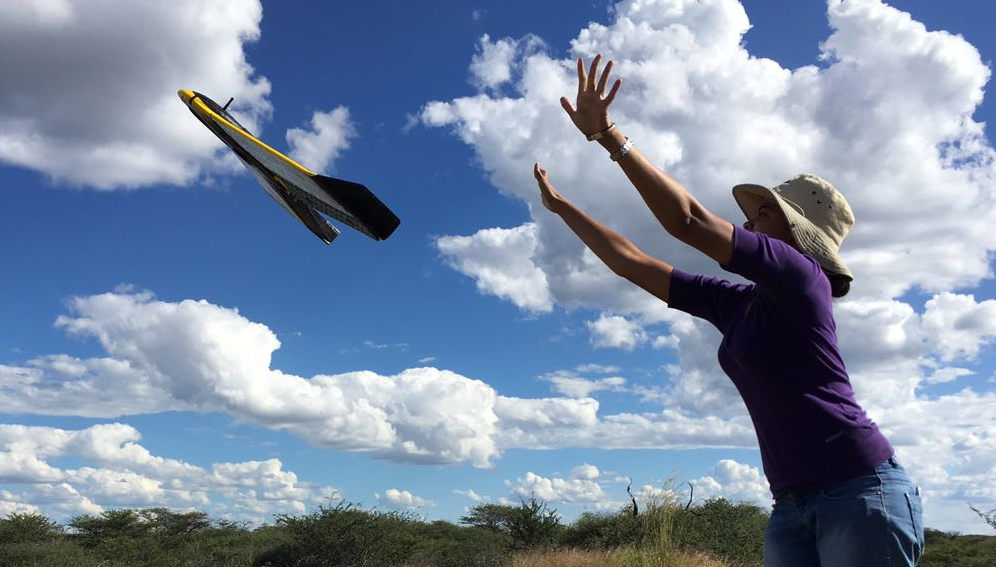
A Namibian female researcher flying a drone to capture images in the field. Perceptions around quality of global South research ‘need to change’, a panel of research funders and observers heard during the science summit on the sidelines of the UN General Assembly. Copyright: Miggan91(CC BY-SA 4.0)
Speed read
Perceptions around quality of global South research ‘need to change’
Equitable partnerships key to research impact – report
North-South funding imbalances ‘must be challenged’
The quality and applicability of research done by institutions in low- and middle-income countries needs to be more broadly recognised, a panel of research funders and observers heard as part of a science summit held on the sidelines of the UN General Assembly.
“When researchers in the global North produce research, it’s understood as if it was universal, whereas when research is done in the global South, then it’s only local and applicable to those settings,” Andrea Ordonez Llanos, executive director of Southern Voice, a network of think tanks in the global South, told the panel discussion on Thursday (21 September).
Hơn 10 năm làm chương trình Dân tộc thiểu số của viện iSEE là 10 năm của học hỏi và bồi đắp thêm tri thức về phát triển. Những lý thuyết, những phương pháp tiếp cận chúng tôi viết trong tài liệu này là những kết quả của quá trình phản tư và học liên tục để lựa chọn chứ không phải là thứ được chọn ngay tại thời điểm khai sinh của chương trình năm 2008. Trong cả tiến trình ấy, điểm neo chúng tôi lại để chất vấn, phản tư, và học hỏi là những giá trị của iSEE – Tự do, Bình đẳng, Khoan dung – và tầm nhìn về vấn đề mà iSEE muốn thay đổi, là vẻ đẹp trong cách nghĩ, cách sống của các thành viên nhóm Tiên phong và cộng đồng của các anh chị tại địa phương.
Trên chặng đường hoạt động và xây dựng chương trình Dân tộc thiểu số, chúng tôi đi lên từ những nghiên cứu dưới góc tiếp cận nhân học, lấy trải nghiệm và hoạt động của cộng đồng các tộc người thiểu số làm trung tâm. Trong quá trình này, chúng tôi đã nhìn thấy chính mình trong những phê phán về tư duy phát triển của số đông. Chúng tôi dần tích lũy tri thức và thấu hiểu hơn những trở ngại mang tính hệ thống đối với các nhóm dân tộc thiểu số. Một trong những trở ngại lớn nhất là sự chấp nhận một cách thiếu phê phán trên diện rộng đối với tư duy tiến hoá luận, lối suy nghĩ cho rằng họ luôn mặc nhiên ở nấc thang phát triển thấp hơn so với người Kinh. Với niềm tin mạnh mẽ vào tính chủ thể và năng lực văn hoá của cộng đồng, và nhất là những thay đổi do chính cộng đồng tạo ra, trong hơn một thập kỷ qua, chúng tôi đã có cơ hội đồng hành và trải nghiệm hành trình Tự hào – Tự tin- Tự chủ với cộng đồng các dân tộc thiểu số trên lãnh thổ Việt Nam. Mục tiêu của chúng tôi là cùng với họ bồi đắp khát vọng tạo dựng một tương lai chung, nơi câu chuyện của cộng đồng các dân tộc thiểu số được chia sẻ, lắng nghe, thấu hiểu, và trở thành một nguồn cảm hứng cho suy tư về bình đẳng và phát triển. Hành trình này của chúng tôi đi qua rất nhiều thách thức, với nhiều hoài nghi từ bên ngoài cũng như sự phản tư từ chính những người xây dựng và tham gia. Đó cũng là tiến trình tất yếu để thử thách và củng cố niềm tin vào sức mạnh của cộng đồng, cũng chính là triết lý phát triển mà chúng tôi đã và đang theo đuổi.
Tài liệu này là một phần trong nỗ lực tái hiện và chia sẻ rộng rãi triết lý phát triển ấy. Với cấu trúc 4 phần có liên hệ chặt chẽ và phản ánh lẫn nhau, chúng tôi bắt đầu với phần Đặt vấn đề lý giải những băn khoăn và lựa chọn vào thời điểm bắt đầu, tiếp đến giới thiệu các Lý thuyết nền tảng mà chúng tôi đã may mắn được tiếp cận và học hỏi. Phần 3 minh họa các Chiến lược và hành động mà Viện iSEE đã vận dụng các lý thuyết trong triển khai thực tế cùng với cộng đồng. Cuối cùng, phần 4 tổng kết những Bài học kinh nghiệm chúng tôi tự đúc kết sau chặng đường hơn một thập kỷ.
Chúng tôi vô cùng biết ơn các nhà nghiên cứu TS. Phạm Quỳnh Phương, TS. Hoàng Cầm, TS. Nguyễn Thu Giang đã truyền cảm hứng và giúp chúng tôi tiếp cận với các lý thuyết từ những ngày đầu tiên. Chúng tôi trân trọng sự ủng hộ và hợp tác của các tổ chức đối tác như Đại sứ quán Ireland, Đại sứ quán Canada, Đại sứ quán Hà Lan, Ủy ban Dân tộc, Tổ chức CCFD Terre-Solidaire, Tổ chức CARE Quốc tế tại Việt Nam, Tổ chức Oxfam tại Việt Nam, Tổ chức Plan International Việt Nam, Trung tâm xây dựng năng lực cộng đồng CECEM v.v. Chúng tôi chân thành cảm ơn các đồng nghiệp và các tư vấn đã đặt nền móng, cùng xây dựng và chia sẻ trong suốt những năm qua. Cuối cùng, xin gửi lời cảm ơn đặc biệt nhất tới các thành viên Mạng lưới Tiên Phong vì tiếng nói của người dân tộc thiểu số đã tin tưởng và đồng hành với chúng tôi trên hành trình học hỏi và hiện thực hóa niềm tin của mình. Trong quá trình hoàn thành tài liệu này, chúng tôi được tham vấn và hỗ trợ rất nhiều từ các chuyên gia và các thế hệ lãnh đạo iSEE – ThS. Lê Quang Bình, Th.S Lương Minh Ngọc và Th.S Lương Thế Huy. Chúng tôi cũng nhận được sự hỗ trợ nhiệt tình của TS. Nguyễn Thu Giang trong vai trò hiệu đính.
Chúng tôi hy vọng độc giả sẽ tìm được những kiến thức và kinh nghiệm bổ ích qua những chia sẻ của mình, và hơn thế nữa, có thêm động lực để tiếp tục tìm tòi và khám phá những cách làm mới để tạo ra sự phát triển có ý nghĩa.
GD&TĐ – Câu chuyện cả làng góp tiền cho nam sinh nghèo đi học không chỉ dừng lại trong thôn Thượng Tứ, nhiều người dân gần đó hay tin cũng đến ủng hộ.
Bùi Đình Thắng đạt 27,75 điểm khối C tại kỳ thi tốt nghiệp THPT 2023.
Chỉ sau ít ngày kể từ khi thông báo được phát trên loa truyền thanh thôn Thượng Tứ (xã Bùi La Nhân, huyện Đức Thọ, Hà Tĩnh), số tiền ủng hộ cho Thắng đi học đại học và chữa bệnh cho mẹ đã được hơn 100 triệu đồng.
Ấm áp tình làng nghĩa xóm
20giờ ngày 25/7, hơn 300 hộ dân thôn Thượng Tứ đã có mặt tại nhà văn hóa thôn để nghe thông báo của ông Nguyễn Minh Nhật – Bí thư Chi bộ kiêm Trưởng ban Mặt trận thôn Thượng Tứ. Đã lâu lắm rồi, bà con trong thôn mới có cuộc họp đông đủ như vậy.
Ngay khi người dân có mặt đông đủ, ông Nhật thông tin ngay về việc em Bùi Đình Thắng là con em trong thôn vừa đạt 27,75 điểm khối C trong Kỳ thi tốt nghiệp THPT vừa qua. Thắng là một trong hai học sinh của thôn đạt điểm cao trong kỳ thi năm nay.
Tại đây, ông Nhật cho biết: “Đạt số điểm cao nhưng cháu Thắng có nguy cơ bỏ dở ước mơ vào giảng đường đại học. Hiện mẹ cháu là chị Lê Thị Thanh Tú đang hôn mê sâu do bị u màng não ác tính. Gia đình cháu rất khó khăn, cần sự giúp đỡ của bà con lối xóm. Với tinh thần lá lành đùm lá rách, lá rách ít đùm lá rách nhiều, mong bà con chúng ta chung tay hỗ trợ gia đình cháu vượt qua giai đoạn này”.
Hiện nay chính sách tín dụng cho sinh viên mới chỉ hướng đến đối tượng là giúp sinh viên nghèo khó khăn vay vốn tại ngân hàng chính sách. Trong khi đó, đối tượng muốn vay vốn đi học không chỉ có sinh viên nghèo. Điều này đang đặt ra cho các trường đại học (ĐH) bài toán về cân bằng nguồn lực tài chính của người học và học phí.
Học phí không ngừng tăng
Nghị định 81 của Chính phủ về cơ chế học phí cho học sinh, sinh viên giai đoạn 2021 – 2025 có hiệu lực từ năm 2021. Nhưng đến nay chưa triển khai do ảnh hưởng của dịch COVID-19. Tuy nhiên, từ năm nay, dự định sẽ áp dụng mức học phí mới, tuy không tăng cao đột ngột theo lũy tiến cộng dồn 3 năm nhưng cũng là 2 năm. Vì vậy học phí là gánh nặng với nhiều sinh viên gia đình có thu nhập trung bình, trung bình khá ở vùng ngoại thành.
Theo quy định, học phí sẽ tăng dần đều hằng năm 10%. Như vậy học phí năm học cuối (năm thứ tư) tăng gần 45% so với năm thứ nhất.