Nợ, trả nợ và khủng hoảng

TS. Vũ Quang Việt Thứ Năm,  9/2/2017, 11:14 

Nhà máy xơ sợi Đình Vũ đã ngừng hoạt động từ giữa năm 2015, bị âm vốn chủ sở hữu 528 tỉ đồng (tại thời điểm cuối năm 2015), chưa kể nợ phải trả gần 7.000 tỉ đồng.

(TBKTSG) – LTS: Bộ Tài chính đang lấy ý kiến đóng góp cho dự thảo Luật Quản lý nợ công. Trên cơ sở đó, TBKTSG xin giới thiệu bài viết của TS. Vũ Quang Việt như một góp ý cho dự thảo này.

Nợ công của Việt Nam là vấn đề tranh cãi từ lâu. Nợ của Chính phủ và của doanh nghiệp nhà nước (DNNN) chủ yếu dựa vào tín dụng ngân hàng và phát hành trái phiếu. Cả hai loại nợ này có lẽ cho đến nay ít dựa vào đánh giá khả năng trả nợ mà dựa vào kế hoạch chỉ tiêu (hay lệnh) của cơ quan chủ quản. Nợ chính phủ đòi hỏi tăng thuế để trả nợ. Nợ doanh nghiệp đòi hỏi doanh nghiệp phải giảm đầu tư vì áp lực trả nợ. Cả hai đều kìm hãm tăng trưởng trong nền kinh tế. Tiếp tục đọc “Nợ, trả nợ và khủng hoảng” →

Venezuela’s crisis explained from the beginning

Aljazeera

A look at the country’s ongoing protests against the government of President Maduro and the current political situation.

STORY HIGHLIGHTS

Caracas, the capital of Venezuela, saw almost daily demonstrations from April to June, some of which turned violent.

The opposition accuses President Nicolas Maduro of moving towards a dictatorship, and want him to resign. But Maduro says the opposition is conspiring with foreign entities, specifically the United States, to destabilise the country.

Here is how it all started. Tiếp tục đọc “Venezuela’s crisis explained from the beginning” →

Nhờ đâu Mường Thanh coi trời bằng vung?

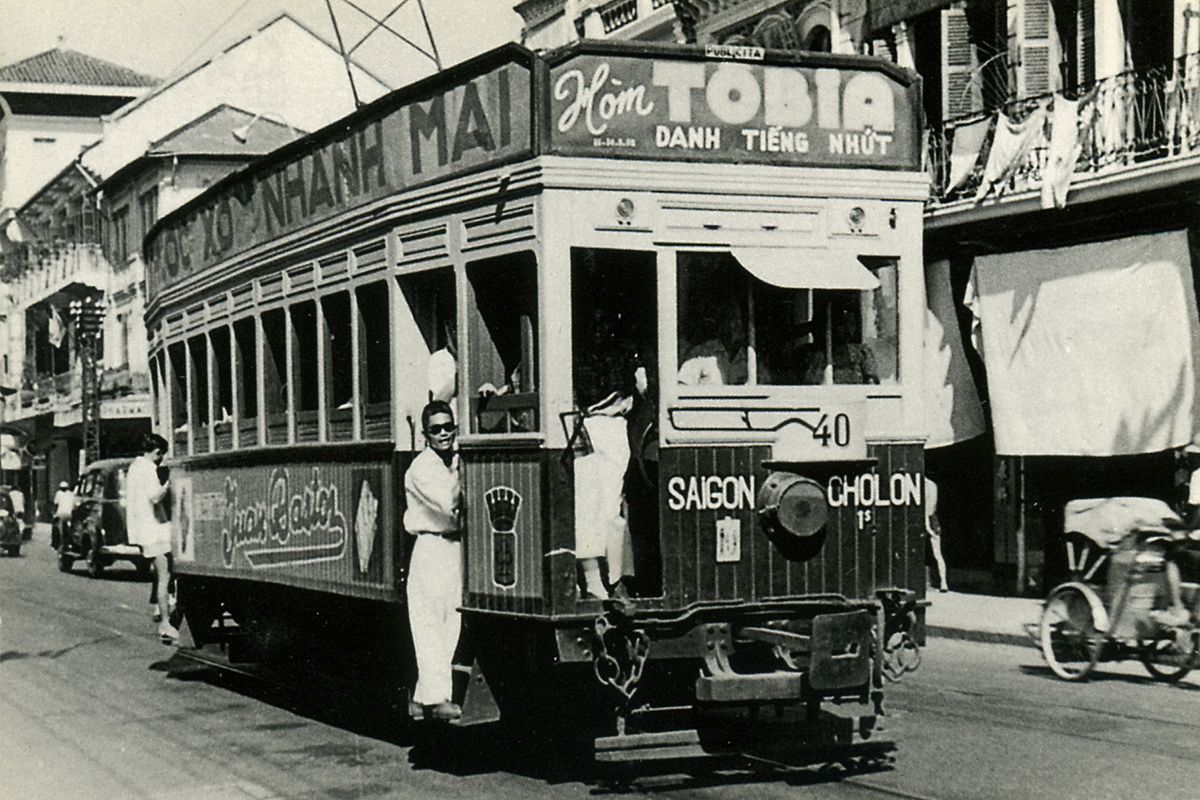
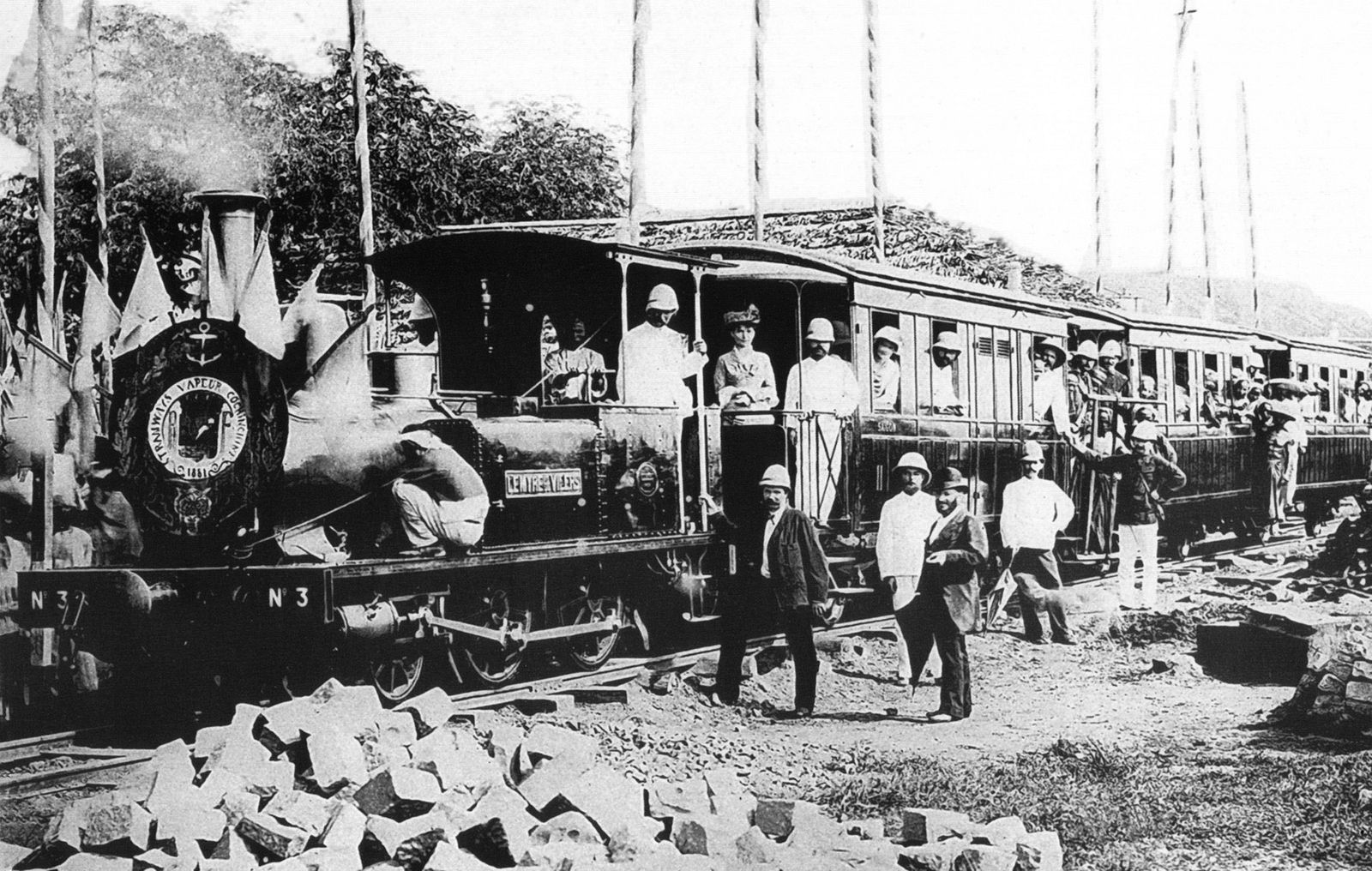
A Throwback to Saigon’s Original Tramway Network

As ever-increasing levels of traffic congestion and air pollution turn many of Ho Chi Minh City’s road junctions into choking bottlenecks, many hopes are pinned on plans to construct a new urban railway network in the southern metropolis. Yet urban railways are hardly a new concept in this city, which was once home to one of Southeast Asia’s largest urban tramway networks.

Indochina’s first mechanized rail-guided transportation system was the one-meter gauge Saigon–Cho Lon “high road” steam tramway, operated by the Societe Generale des Tramways a Vapeur de Cochinchine (SGTVC) and opened to the public on December 27, 1881.

Tiếp tục đọc “A Throwback to Saigon’s Original Tramway Network” →

Air pollution tanks South Asia’s cities in liveability rankings

eco-business.com 

Bad air has pulled South Asian cities down The Economist Intelligence Unit’s Global Liveability Ranking while political stability has nudged Hong Kong above Singapore. How did the rest of the region fare?

A man carries firewood past the smoking stacks of brick kilns Dhaka

A man carries firewood past the smoking stacks of brick kilns in Dhaka, Bangladesh. The capital city has among the worst air quality in the world. Image: Scott Randall, CC BY-NC-ND 2.0By Hannah Koh

Nepal capital Kathmandu fell two positions to 129th place while Dhaka dropped two places to 139th spot in this year’s Global Liveability Ranking by The Economist Intelligence Unit (EIU), which assessed living conditions in 140 cities.
Tiếp tục đọc “Air pollution tanks South Asia’s cities in liveability rankings” →

Vietnam set to trial Direct Corporate Power Purchase Agreement

By Oliver Massmann*    August 9, 2018 | 10:14 am GMT+7

Vietnam set to trial Direct Corporate Power Purchase Agreement

Workers check solar panels of a project in Vietnam. Photo by VnExpress/Annie Le

Vietnam’s plan to pilot a direct power purchase agreement for renewable energy in 2019 has drawn keen interest from investors.

On June 12 this year, at a seminar on renewable energy, the Electricity Regulatory Authority of Vietnam (ERAV) discussed and disclosed information about such a pilot DPPA.

Generally, a DPPA is an agreement between a power generator and a corporate customer in which power is physically delivered and sold to the customer for its operation.

Tiếp tục đọc “Vietnam set to trial Direct Corporate Power Purchase Agreement” →

Việt Nam phải khao khát thoát “sách đen” về rửa tiền!

03/04/2015 11:08

(Congluan.vn) – Rửa tiền, tài trợ khủng bố đang là vấn đề khiến cả thế giới đau đầu. Theo thống kê của Qũy tiền tệ quốc tế – IMF, số tiền tội phạm “rửa” hàng năm khoảng 1.000-1.500 tỉ USD, trong đó 70% là tiền mặt. Đáng chú ý, Việt Nam nằm trong sách đen về rửa tiền.

Tiếp tục đọc “Việt Nam phải khao khát thoát “sách đen” về rửa tiền!” →

Tập đoàn FLC và chuỗi sai phạm

Air conditioner makers battle for Vietnam’s red-hot market

asia.nikkei.com

Ascendant middle class gravitates toward high-performance models

Daikin air conditioners on display in a Hanoi store. Strong growth in recent years has created soaring demand from first-time buyers. (Photo by Atsushi Tomiyama)

HANOI/OSAKA — Air conditioner manufacturers around the world are locking horns in Vietnam, whose market has become the second largest in Southeast Asia as rapid economic growth supports a burgeoning middle class.

Vietnam’s market for the cooling systems ranked as Asia’s eighth largest in 2011, excluding Japan and China, with about 660,000 units sold. But the country surpassed Thailand in 2015, and sales of 1.98 million units in 2016 lifted the nation into third behind India and Indonesia. Tiếp tục đọc “Air conditioner makers battle for Vietnam’s red-hot market” →

“Sóng ngầm” ở Côn Đảo – 3 bài

***

“Sóng ngầm” ở Côn Đảo: Bài 1: Khu K – Điểm nóng tranh chấp

SGGP 

Côn Đảo hiện không tổ chức chính quyền cấp xã, thị trấn mà chỉ có 1 cấp huyện và được chia thành 9 khu. Gần đây, trên đảo đã có thêm 1 khu nữa – khu K – không phải là tên đơn vị hành chính, mà chỉ để gọi một khu đất vàng đang phát sinh tranh chấp giữa người dân và chính quyền.

Một góc khu K ở Côn Đảo

Nhắc tới Côn Đảo nhiều người nghĩ ngay đến hòn đảo xa xôi từng là nơi giam cầm hàng chục ngàn chiến sĩ cách mạng và đồng bào yêu nước trong suốt hơn 1 thế kỷ (từ năm 1862 – 1975), gắn liền với biệt danh “Địa ngục trần gian”. Thế nhưng đáng tiếc thay, sự quản lý lỏng lẻo về đất đai, cùng sự cửa quyền, xa dân của một bộ phận cán bộ có trách nhiệm đã khiến nhiều người dân nơi đây ngày càng bất an. Tiếp tục đọc ““Sóng ngầm” ở Côn Đảo – 3 bài” →

China plans super-grid for clean power in Asia

Financial times

As hydropower hits problems, China plans renewable energy for region

The Belt and Road Initiative (BRI), China’s ambitious outbound investment strategy which links at least 65 countries along terrestrial and maritime trade corridors, will open massive new opportunities for trade and investment in frontier markets. Energy infrastructure investments are a backbone of BRI, so aligning these investments with sustainable development goals is necessary for China to navigate regional patchworks of social, environmental and economic priorities. Tiếp tục đọc “China plans super-grid for clean power in Asia” →

The History of Electrification

Edison Tech Center

The power grid started with long distance transmission and soon led to interconnected systems, these are some of the landmark early power generation sites.
Background
List of important early power sites
Sites by geography (interactive maps)

The power grid as we know it began with isolated power generation systems across the world starting in the 1870s. The growth and unification of the systems into an interconnected AC power ‘grid’ helped raise the quality of life of people from all classes.

Direct Current Beginnings:

DC power systems dominated in the 1870’s and 1880s. “Small” systems were sold to factories around the world, both in urban areas, and remote undeveloped areas for industrial/mining use. Thomas Edison, Charles Brush, and Werner von Siemenslead the industry in DC systems. DC systems powered factories and small downtown areas but did not reach 95% of residents. Electric lighting was a luxury found only in hotels and other businesses as well as in the mansions of people like George Westinghouse and J.P. Morgan. Tiếp tục đọc “The History of Electrification” →

Milestones in the development the power system in Vietnam

EVN

  • Construction of the first 35 kV power line in the North

In January 1958, the first 35 kV power line (Hanoi – Pho Noi) was built and in the third quarter of the same year was inaugurated and successfully energized. This was a remarkable milestone in the development of the Vietnam power network.

  • Construction of the first large scale thermal power plant in the North

  Tiếp tục đọc “Milestones in the development the power system in Vietnam” →

Satellite Images Can Harm the Poorest Citizens

theatlantic

In Ho Chi Minh City, computer analysis of orbital images overlooks some urban communities. To represent them, cities will have to put boots on the ground.

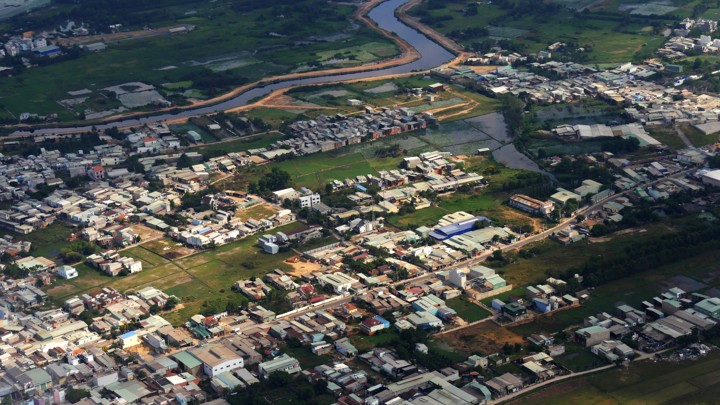
An aerial view of the outskirts of Ho Chi Minh CityAn aerial view of the outskirts of Ho Chi Minh CityRAKSYBH / SHUTTERSTOCK

Mapping a city’s buildings might seem like a simple task, one that could be easily automated by training a computer to read satellite photos. Because buildings are physically obvious facts out in the open that do not move around, they can be recorded by the satellites circling our planet. Computers can then “read” these satellite photographs, which are pixelated images like everyday photographs except that they carry more information about the light waves being reflected from various surfaces. That information can help determine the kind of building material and even plant species that appears in an image. Other patterns match up with predictable objects, like the straight lines of roads or the bends of rivers.

It turns out to be more complicated than that. When three different research groups (including my own at the University of Southern California) processed almost the same images of Ho Chi Minh City’s rapid urbanization during the 2000s, we produced different results. All three groups agreed on the location of the city center, but mine mapped the city’s periphery differently. That’s the place where most megacities in the global South exhibit their most dramatic physical growth. In particular, we identified more of the informal, self-built housing in the swampier southern area of the city.
Tiếp tục đọc “Satellite Images Can Harm the Poorest Citizens” →

Bài học từ thất bại bảo tồn Tê giác Java tại Việt Nam

BVR&MT – Khi xác con tê giác Java cuối cùng được phát hiện tại Việt Nam vào năm 2010 tại Vườn Quốc gia Cát Tiên, câu chuyện đã trở thành một “bi kịch” trong giới bảo tồn.

Thiếu quyết tâm chính trị trong việc ra quyết định bảo tồn, thiếu thông tin chính xác về số lượng cá thể tê giác còn lại, thiếu nỗ lực bảo tồn trọng tâm… rất nhiều nguyên nhân được xác định và đã trở thành bài học đắt giá cho các nỗ lực bảo tồn các loài động vật ăn cỏ lớn khác. Kết luận trên từ báo cáo “Bài học từ việc mất đi hoa tiêu: Tê giác Javan Rhinoceros sondaicus annamiticus tuyệt chủng tại Việt Nam” được thực hiện bởi nhóm các nhà khoa học từ nhiều quốc gia, được đăng tải trên tạp chí Biological Conservation, hy vọng sẽ trở thành bài học cho những nỗ lực bảo tồn hiện tại và trong tương lai, đặc biệt đối với khu vực Đông Nam Á.

Tê giác Java cuối cùng ở Việt Nam. (Ảnh: WWF)

Tê giác Java cuối cùng ở Việt Nam. (Ảnh: WWF) Tiếp tục đọc “Bài học từ thất bại bảo tồn Tê giác Java tại Việt Nam” →