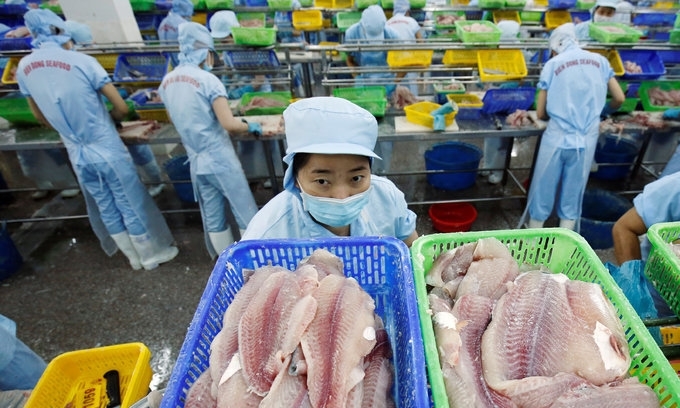
Workers make fillets of catfish at a factory in the southern city of Can Tho. (Photo: Kham)
“Thanks to the successful COVID-19 containment, Vietnam’s growth would be among the highest in the world”, Era Dabla Norris, mission chief to Vietnam and division chief in the IMF’s Asia and Pacific department, was quoted as saying at the end of the team’s virtual mission to Vietnam from October 15 to November 13.
Vietnam is shaping up as Southeast Asia’s single economic success story in the coronavirus era, maintaining steady positive growth as other economies struggle to recover, said Nikkei Asia in a recent journal.
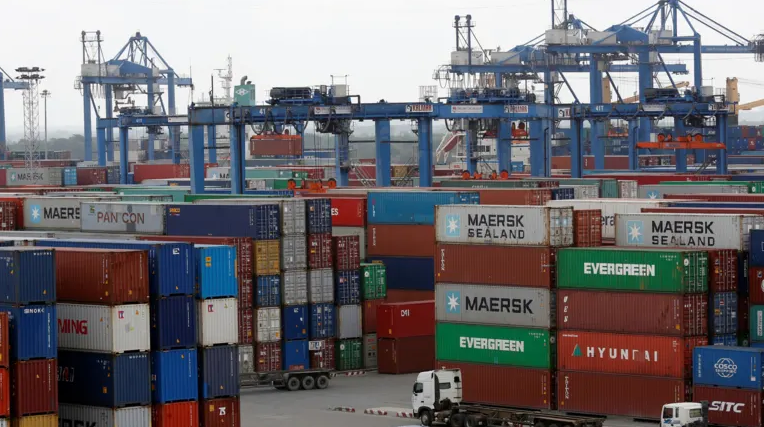
With more goods going out of Vietnam, big container ships have begun stopping there directly, cutting transport costs and time for exporters. (Photo: Reuters)
By Dat Nguyen November 18, 2020 | 08:37 am GMT+7 vnexpressAn aerial view of the Vietnam-Singapore Industrial Parks in southern Binh Duong Province. Photo courtesy of Becamex IDC Corp.Chinese manufacturing companies accounted for 88 percent of $1.57 billion poured into Vietnam’s industrial parks in the first nine months, showing an increasing shifting trend to Vietnam.
Among 20 key investments in the north and south regions, 15 were made by companies from mainland China, Taiwan or Hong Kong, according to a recent report by real estate consultancy Savills.
Companies from Hong Kong participated in eight deals with a total investment of nearly $700 million, while those from mainland China were involved in four deals worth over $300 million.
Companies from Taiwan invested in three deals worth $380 million in the north.
The biggest investments include the $333 million of Taiwanese electronics producer Wistron Corporation and its subsidiary. Wistron is a major laptop producer that has secured land in the northern province of Ha Nam.
The other Chinese companies were in the sectors of electronics, textile and garment, plastic, rubber, and paper.
Among the remaining five non-Chinese investments, two were from Singapore and the rest from Thailand, Japan and South Korea.
Vietnam is seeing rising demand for industrial land amid the establishment and expansion of multinationals as they seek to diversify their supply chains.
The country’s 280 industrial parks posted an occupancy of 70.1 percent in the first 10 months, and another 89 parks are being constructed, according to the Ministry of Planning and Investment.
Data from Savills shows that industrial parks in the northern Bac Ninh Province, the southern Dong Nai and Binh Duong Province are recording high occupancy rate of 94-99 percent, showing a need for an increase in supply.Related News:
By Nguyen Quy November 17, 2020 | 07:58 am GMT+7 vnexpressWomen practice aerobics to beats coming off a smartphone at a Covid-19 quarantine camp in Lao Cai Province, northern Vietnam, February 17, 2020. Photo by VnExpress/Giang Huy.
Vietnam has moved up 12 places to 73rd out of 167 economies in a global prosperity ranking, ahead of several Asian peers.
With an overall score of 58.3 points, Vietnam ranked 13th out of 29 economies in the Asia-Pacific region, according to the Prosperity Index 2020 published Monday by London-based think tank Legatum Institute.
TĐH: There are many intangible benefits from foreign direct investments (FDI) – employment and jobs for the local population, increased education, increased professional skills, better law enforcement and legal process, better working and living conditions in general for the locality… Not just taxes. Tax is a small part of the benefit package. If we need to lower/exempt taxes to compete, then let’s do that to compete. If the entire gang of Asia or Southeast Asia countries agree not to use taxes to compete, then that is “an agreement not to compete,” in a national scene that would constitute a violation of antitrust (anti-competition) law, harmful to consumers and to the economy. The economic principle should not be different in the international scene. (But of course, we need to compete both in business environment and in financial benefits such as taxation and land lease).
By Dat Nguyen, Quynh Trang November 16, 2020 | 08:07 am GMT+7 vietnamnetWorkers seen in a foreign-invested air conditioner manufacturing plant in the northern province of Hung Yen in December 2019. Photo by VnExpress/Vien Thong.
Competing for foreign investment with tax incentives will end up hitting governments’ revenues and be a lose-lose situation for all ASEAN members, experts warn.
The average corporate income tax rate in Southeast Asia has fallen from 25.1 percent in 2010 to 21.7 percent this year, showing that countries are competing with one another in a “race to the bottom” by offering aggressive tax incentives to foreign multinationals, a recent report by Oxfam, a global organization working on poverty alleviation, and its partners said.
Mergers and acquisitions in Vietnam are forecast to change from the beginning of next year, when three amended laws will come into effect at the same time.
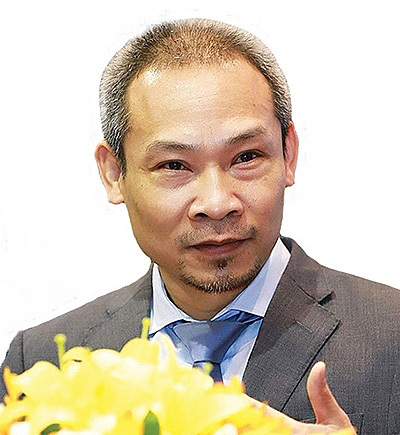
Deputy Director of the Central Institute of Economic Management Phan Duc Hieu, spoke with VIR’s Khanh An about impact of the laws on enterprises, investment, and securities on the M&A market.
Deputy Director of the Central Institute of Economic Management Phan Duc Hieu.
How do you estimate the impact of the amended laws on enterprises, investment, and securities on capital contributions and share purchases activities?
Deputy Prime Minister Trinh Dinh Dung has approved the first phase of the Long Thanh International Airport in the southern province of Dong Nai.
A rendering of the proposed Long Thanh International Airport in the southern province of Dong Nai. – Photo courtesy of Airports Corporation of Vietnam
The project has four component projects such as headquarters of State management agencies, flight management services, essential airport facilities, and other works.
Major works such as airport buildings, the aircraft apron, passenger terminals, and cargo terminals will be built by the Airport Corporation of Vietnam (ACV), which operates 21 airports across the country.
ACV has to raise funding for the construction.
The first phase of the airport, expected to cost more than US$4.6 billion, is projected to be completed by 2025.
The investment was approved by the National Assembly in 2017, which also issued a resolution on compensation and resettlement of and support for affected individuals and organisations.
Prime Minister Nguyen Xuan Phuc urged Dong Nai Province authorities to hand over the required lands in October so that construction of the airport could begin early next year.
He also set a deadline for assessing cleared land for compensation purposes by the end of this month.
The Ministry of Transport should work closely with the province to promptly resolve all challenges to ensure the project remains on schedule, he said.
The airport work requires more than 5,000ha of land and more than 364ha elsewhere to build two resettlement sites.
Around 4,800 households and 26 organisations are expected to be relocated to make way for it.
Spread over a total area of more than 5,580ha, the airport will straddle six communes in Long Thanh District. It is expected to cost VNĐ336.63 trillion ($14.47 billion), with the construction divided into three phases.
In the first phase one runway with a length of 4,000m, taxiways, an apron, and a passenger terminal with other auxiliary works involving a total floor area of 373,000 sq.m will be built to serve 25 million passengers and 1.2 million tonnes of cargo each year.
The airport is expected to have four runways, four passenger terminals and other auxiliary works to ensure a capacity of 100 million passengers and 5 million tonnes of cargo a year by 2040.
Tan Son Nhat International Airport in HCM City, the country’s largest, has been seriously overloaded for years, both in the air and on the ground.
The Ministry of Transport said Long Thanh International Airport is a key national project that would have a significant impact on the southern key economic region. VNS
Remittances to Vietnam are set to fall for the first time since 2009 to $15.7 billion this year over Covid-19 impacts.
However, even though this is a 7.6 percent drop from last year’s 17 billion USD, Vietnam will remain the ninth biggest remittance beneficiary in the world, according to a recent report by the World Bank.
In the East Asia and Pacific region, the country is forecast to rank third behind China (59.5 billion USD) and the Philippines (33.3 billion USD).
This year’s remittance is estimated at 5.8 percent of Vietnam’s GDP, compared to 6.5 percent last year.
The dip reverses an upward trend that’s lasted two decades, starting at a mere 1.3 billion USD in 2000./.VNA
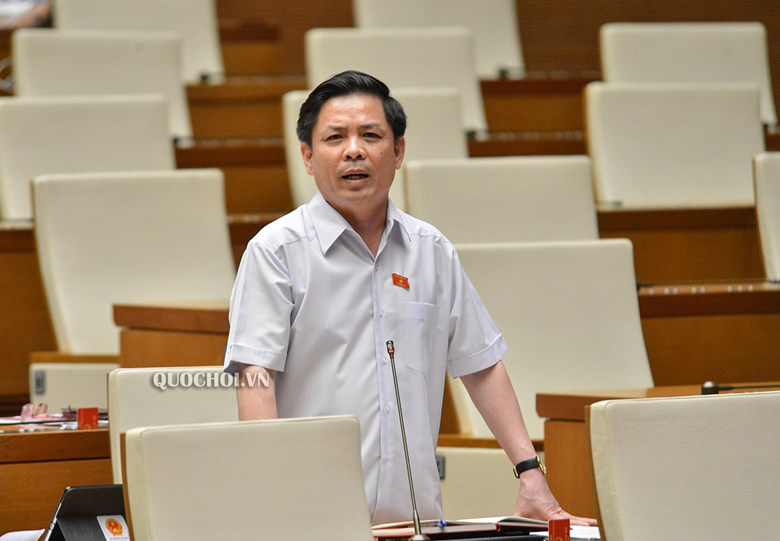
TTO – Trước Quốc hội, Bộ trưởng Bộ Giao thông vận tải Nguyễn Văn Thể thừa nhận việc triển khai các dự án đường sắt đô thị ‘đã bộc lộ nhiều vấn đề, đặc biệt vấn đề chậm tiến độ’.
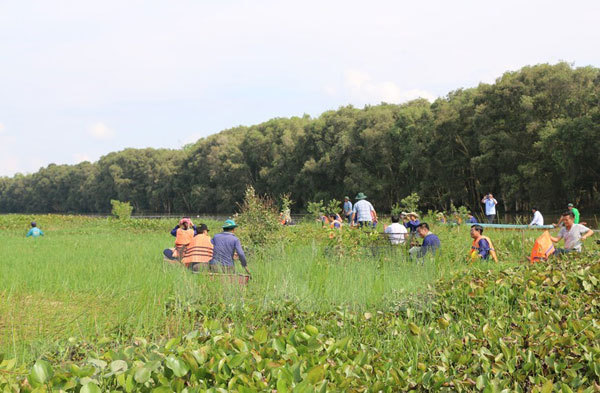
Besides contemplating the beauty of nature in Tram Chim National Park in Dong Thap Province, visitors to the park can also experience a day in life of farmers in the west of Vietnam.
Tourists visiting Tram Chim National Park in Dong Thap Province experience fishermen’s life. Photos: VNA
The public debt to GDP ratio has been controlled well and has decreased in recent years. But the public debt repayment to budget revenue ratio has steadily increased because of many due debts.
Debt repayment obligatio
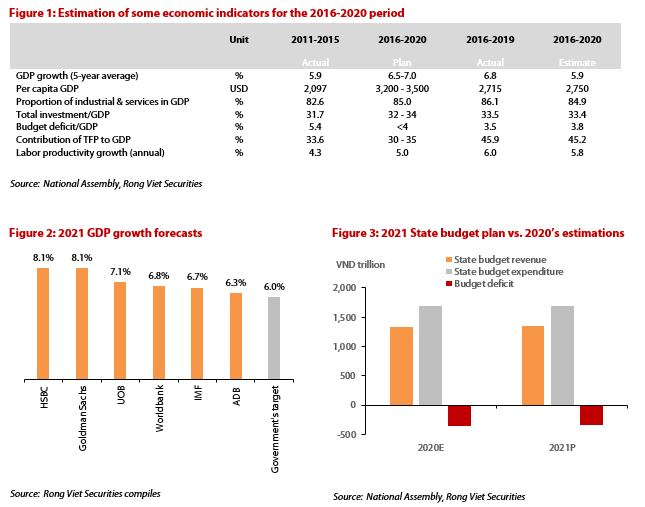
The government estimates that the public debt will be about 56.8 percent of GDP by the end of 2020; the government’s debt will be 50.8 percent; the government’s direct debt repayment obligation to state budget revenue ratio will be 24.1 percent; and the national foreign debt, 47.9 percent of GDP.
The government is taking a cautious view in setting its development goals for 2021, which is understandable due to lingering risks from the Covid-19 pandemic.
The Vietnamese National Assembly (NA)’s year-end meeting, scheduled to last for more than three weeks from October 20 to November 17, will focus on reviewing socio-economic development in 2020 and decide important matters related to socio-economic issues and the state budget for the next year.
Due to the Covid-19 pandemic, Vietnam’s GDP is estimated to grow at 2.0-3.0% in 2020 versus a target of 6.8% for the year.
This would result in the GDP growth rate averaging 5.9% over the 2016-2020 period, which falls short of the 5-year period target of 6.5-7.0%. Per capita GDP is estimated at US$2,750 in 2020, which also misses the target of US$3,200-3,500 by 2020.
“Coastal urban area” is a phrase that is appearing increasingly in the print and electronic media.
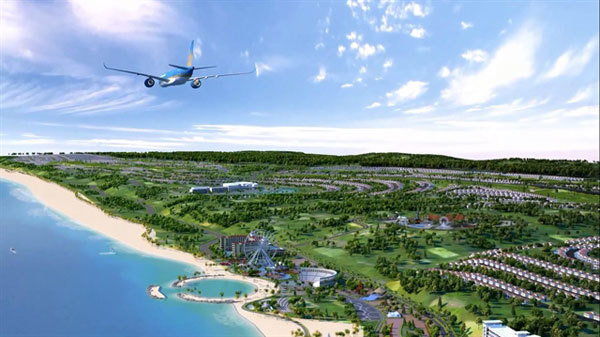
Rendering of NovaWorld Phan Thiet project in Binh Thuan Province. Photo: haiphathome.vn
It began after the launch of a series of large-scale coastal developments like NovaWorld Phan Thiet in Binh Thuan Province and NovaWorld Binh Chau in Ba Ria-Vung Tau in recent times and some even started offering their products for sale.
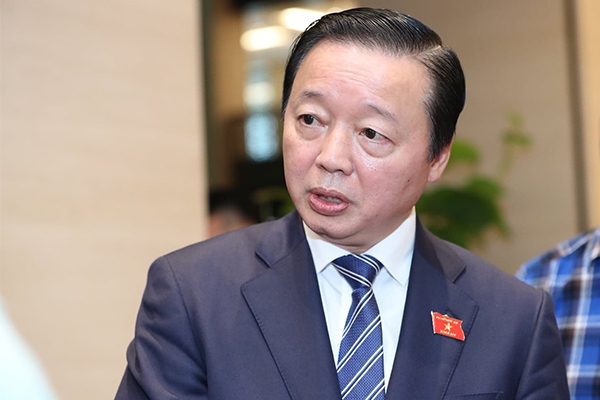
Answering the local press on the sidelines of the National Assembly session, Minister of Natural Resources and the Environment Tran Hong Ha said the principle of his ministry is ‘not to develop small-scale hydropower at any cost’.
Many experts believe that the historic floods in the central region some days ago were the results of climate change. How does the draft of the amended law on environmental protection address the issue?
Minister of Natural Resources and the Environment Tran Hong Ha
The issues related to climate change, natural disasters and floods are mentioned in many laws. The reason behind recent floods is extreme climate change. All the indicators exceed the indicators of the floods in history.
Prime Minister Nguyen Xuan Phuc asked the Ministry of Transport to propose a feasible plan for the North-South high-speed railway, considering this the backbone of the national strategy on railway development by 2050.
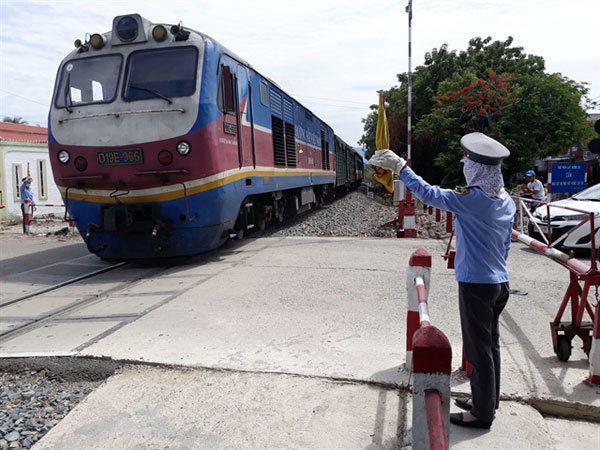
A train in Ninh Phuoc District, Ninh Thuan Province. — VNA/VNS Photo
The high-speed line, inter-provincial, inter-regional and urban railway networks must also be added to the strategy, he said.
He was speaking at a Government meeting on Wednesday on the development strategy for Vietnam’s railway towards 2050.


 An aerial view of the Vietnam-Singapore Industrial Parks in southern Binh Duong Province. Photo courtesy of Becamex IDC Corp.Chinese manufacturing companies accounted for 88 percent of $1.57 billion poured into Vietnam’s industrial parks in the first nine months, showing an increasing shifting trend to Vietnam.
 Women practice aerobics to beats coming off a smartphone at a Covid-19 quarantine camp in Lao Cai Province, northern Vietnam, February 17, 2020. Photo by VnExpress/Giang Huy.
 Workers seen in a foreign-invested air conditioner manufacturing plant in the northern province of Hung Yen in December 2019. Photo by VnExpress/Vien Thong.