10 năm đưa “mạng nhện” xuống đất

TTO – Nhiều người dân TP.HCM khi được hỏi vẫn không quên hình ảnh những bó dây điện, cáp viễn thông nặng trĩu sà xuống những đường phố những năm trước đây. Các bó dây rối nùi, chằng chịt khiến người dân lo sợ sẽ đổ ập xuống khi qua lại. Nhưng hiện tại đã khác, những “mạng nhện” khổng lồ này đã vắng bóng dần, nhưng ít ai biết để đưa mạng lưới này từ trên trời xuống đất, thành phố phải trải qua một thập kỷ với nhiều nỗ lực từ các bên liên quan. Tiếp tục đọc “10 năm đưa “mạng nhện” xuống đất” →

In Defense of Bảo Tàng Địa Chất, Saigon’s Most Neglected Museum

By (un)conventional standards, Saigon’s Geological Museum may warrant a score of 1.3/9, but if one considers it as a source of whimsy, it’s a solid 8.2/9.For years, Saigoneer’s editorial staff has discussed visiting and writing about the Geological Museum (Bảo tàng Địa chất), but it never got done. I’ve lived here for half a decade, and when I moved to a new neighborhood a year ago my daily walk to the office took me past the museum; yet I still had never entered. Then, on a whim, one random Tuesday morning several weeks ago, I went. The result? I didn’t think I could love Saigon more than I already did, and yet…

The Collection

When a meteor, a hulking hunk of prehistoric mass, shreds through Earth’s atmosphere and slams into the surface, the impact vaporizes terrestrial scraps of minerals and sends debris into the sky. The molten globs float like glassy raindrops and fall thousands of kilometers away. Buried under layers of rock laid over millions of years, occasionally the shiny shards work their way to the surface; shimmering examples of Earth’s immensity and the intensity of time. Have you ever seen one? If not, you can.

A case filled with these tektites awaits in District 1 alongside literal pieces of lava, impressions made by long-extinct sea creatures straight out of a science-fiction movie, and wood transformed to stone. Can you imagine, wood to stone! What was once a tiny seed and then a towering tube of pulp pumping sap to a canopy of soft leaves made into solid rock by the geological machinations of our exceedingly strange planet. No one seems to care. Tiếp tục đọc “In Defense of Bảo Tàng Địa Chất, Saigon’s Most Neglected Museum” →

Đường đến trường “nơi tận cùng” Mù Căng Chải

TTO – Một lần đi trên con đường trơn trượt, ngập ngụa bùn đất, chưa kể phải lội qua 4 con suối lớn chảy xiết và hơn chục khe suối nhỏ mới tới được trường học của các em nhỏ vùng cao để quý trọng hơn từng mét đường bê tông mà công trình “Con đường em đến trường” thực hiện ở Yên Bái.

Vượt hơn 35km đường rừng, sương mù bảng lảng quanh sườn núi, chốc chốc phía xa, đám mây đen bất chợt kéo đến, ánh mắt lo lắng hiện rõ trên gương mặt đồng nghiệp dù bao năm tác nghiệp miền núi và có tiếng “tay lái lụa” chẳng khác gì trai bản. Tiếp tục đọc “Đường đến trường “nơi tận cùng” Mù Căng Chải” →

Beyond Declining Battery Prices: 6 Ways to Evaluate Energy Storage in 2021

greentechmedia.com

Balance of systems, software, supply chain constraints, and reliability and performance guarantees all weigh on total costs.

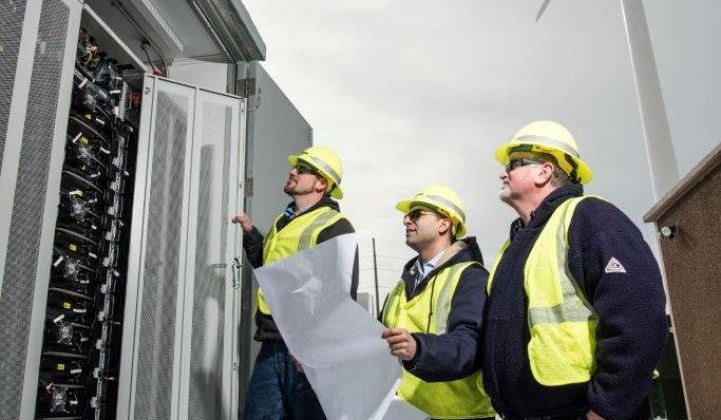
Batteries make up only a slice of energy storage system costs. (Credit: Ameren)

Batteries make up only a slice of energy storage system costs. (Credit: Ameren)

The energy storage market in the United States is booming, with 476 megawatts of new projects installed in the third quarter of 2020 alone, up 240 percent over the second quarter, according to industry analysts at Wood Mackenzie. 2021 is expected to be another record-breaking year for storage, but with technological innovation accelerating across the market, renewable energy asset owners need to carefully select safe and reliable systems to protect their storage investments. As the market accelerates, these are a few of the essential questions asset owners should be asking.

1. Evaluate pricing beyond the cell

When analysts speak about declines in storage pricing, they are referring to battery pricing, which continues to decline every year. Bloomberg New Energy Finance’s latest report states that current lithium-ion pricing stands at about $137 per kilowatt-hour and will drop as low as $100 per kWh by 2023.

However, purchasers of energy storage systems may see substantially higher prices for their projects, depending on a range of factors. For example, the lowest pricing for lithium-ion batteries is generally available for either a major supply contract or for very large-scale deployments of 500 megawatt-hours and above. Since most projects today are not that large, that $137 per kWh figure will be closer to $150 to $170 per kWh, and perhaps as high as $200 to $210 per kWh on the battery-pack level, depending on the size of the project.
Tiếp tục đọc “Beyond Declining Battery Prices: 6 Ways to Evaluate Energy Storage in 2021” →

Key Considerations for Adoption of Technical Codes and Standards for Battery Energy Storage Systems in Thailand.

Executive Summary

The deployment of battery energy storage systems (BESS) is rapidly increasing throughout the world. This technology presents many opportunities for increasing contributions of variable renewable energy technologies, providing ancillary services, enabling energy access to remote areas, and increasing resilience during grid power outages. At the same time, BESS has not been widely deployed and operated in many contexts. The use of BESS requires codes and standards similar to those for other inverter-based technologies but may also necessitate special safety considerations in specific contexts. As countries in Asia consider the inclusion of BESS in their power systems to meet policy objectives, renewable energy goals, increase resilience, and expand energy access, there is an opportunity to learn from the experiences of other regions and jurisdictions that have developed more advanced storage markets and practices.

This report presents global best practices of codes, standards, and interconnection procedures developed to support the safe and reliable deployment of BESS. Several relevant case studies highlight current efforts to ensure safe operation of BESS and showcase potential pathways for adoption of relevant codes and standards. Specifically, this report is intended to support the Thailand Office of Energy Regulatory Commission (OERC) and other stakeholders in their efforts to develop technical codes and standards to govern the installation and operation of BESS; it may also be utilized as a guide for other countries as interest in the deployment of BESS technologies continues to grow. Coupled with well-defined regulatory objectives, market incentives, permitting procedures, and technical review processes, the adoption of technical codes and standards that govern the design, construction, installation, and operation of BESS can help provide regulatory certainty, as well as reduce barriers to investment. Such codes and standards also ensure BESS deployment will meet national, regional, and local goals, while maintaining a reliable grid, and ensuring public safety.

Finally, a robust BESS market can support the increased adoption of variable renewable energy generation technologies to meet Thailand’s energy portfolio goals. This report has been prepared by the National Renewable Energy Laboratory (NREL) with support from the U.S. Agency for International Development (USAID) Regional Development Mission for Asia, and in collaboration with USAID Clean Power Asia.

Download full report https://www.nrel.gov/docs/fy21osti/78780.pdf

Cuộc chuyển mình của công nghiệp phụ trợ – Từ chiếc xe gắn máy đến con ốc vít: Làm gì có thiên tài đại nhảy vọt!

TRUNG TRẦN 24/1/2021 7:00 GMT+7

TTCT – Sự phát triển của nền sản xuất quốc gia và các doanh nghiệp tư nhân nội địa thực sự tạo ra của cải vật chất luôn đi kèm với một đòi hỏi bắt buộc: một nền công nghiệp hỗ trợ đủ mạnh. Đây cũng đã là điều được nêu rõ trong dự thảo văn kiện Đại hội Đảng XIII.

Trong mục “Về cơ cấu lại nền kinh tế gắn với đổi mới mô hình tăng trưởng”, dự thảo viết: “Phát triển công nghiệp chưa đáp ứng được yêu cầu công nghiệp hóa, hiện đại hóa, chủ yếu phát triển theo mục tiêu ngắn hạn, thiếu tính bền vững; chưa tạo ra được ngành công nghiệp trong nước có năng lực cạnh tranh cao, chưa có ngành công nghiệp mũi nhọn đóng vai trò dẫn dắt. Tiếp tục đọc “Cuộc chuyển mình của công nghiệp phụ trợ – Từ chiếc xe gắn máy đến con ốc vít: Làm gì có thiên tài đại nhảy vọt!” →

Đi tìm mô hình kinh tế mới: Hết thời xem lợi nhuận là tối thượng?

NGUYỄN VẠN PHÚ 21/12/2020 9:09 GMT+7

TTCT – Cách đây đúng 50 năm, vào ngày 13-9-1970, nhà kinh tế học nổi tiếng Milton Friedman tung ra bài viết với tựa đề như một tuyên ngôn cho giới kinh doanh: “Trách nhiệm xã hội của doanh nghiệp là tăng lợi nhuận”. Bài viết này đã đặt nền tảng cho những ý tưởng về một nền kinh tế thị trường tự do mà sau đó đã ảnh hưởng sâu đậm đến nhiều thế hệ doanh nhân, nhà quản lý và các chính khách. Tổng thống Mỹ Ronald Reagan và Thủ tướng Anh Margaret Thatcher được cho là đã xây dựng những chính sách kinh tế vĩ mô dựa trên ý tưởng này.

Tuy nhiên lối suy nghĩ này cũng gây ra những hệ lụy khốc liệt cho xã hội và đến nay người ta lại loay hoay tìm một nhãn quan khác.

Một tuyên ngôn của kinh tế thị trường

Năm 1970, tư tưởng “lợi nhuận là mục đích tối hậu” của Milton Friedman đã gây sốc cho nhiều người: nó trắng trợn quá, nó tham lam quá. 

Tham lam là tốt. Khát vọng chung của các cổ đông chỉ là ngày càng giàu lên, và thế là tốt – Quan điểm của Milton Friedman gây sốc cho nhiều người. (Ảnh: PBS)

Tiếp tục đọc “Đi tìm mô hình kinh tế mới: Hết thời xem lợi nhuận là tối thượng?” →

Expansion of Hoa Binh hydropower plant begins in northern Vietnam

Monday, January 11, 2021, 14:36 GMT+7 tuoitre

Expansion of Hoa Binh hydropower plant begins in northern Vietnam
Prime Minister Nguyen Xuan Phuc speaks at the ground-breaking ceremony of the expansion project of Hoa Binh Hydropower Plant, Hoa Binh Province, January 10, 2021 in this supplied photo.

Vietnam’s Prime Minister Nguyen Xuan Phuc attended the ground-breaking ceremony of the expansion project of Hoa Binh Hydropower Plant in northern Hoa Binh Province on Sunday morning.

Tiếp tục đọc “Expansion of Hoa Binh hydropower plant begins in northern Vietnam” →

Southeast Asia’s longest road tunnel opens

By Nguyen Dong   January 11, 2021 | 01:27 pm GMT+7 vnexpressSoutheast Asia's longest road tunnel opensA staff stands inside the Hai Van Tunnel 2, January 10, 2021. Photo by VnExpress/Nguyen Dong.
Hai Van Tunnel 2 in central Vietnam has opened to traffic Monday after four years of construction.

Connecting Thua Thien-Hue Province with central hub Da Nang, the tunnel of 6.2 kilometers (3.85 miles) is the longest road tunnel in Southeast Asia and helps reduce traffic pressure on Hai Van Road Tunnel 1.

Tiếp tục đọc “Southeast Asia’s longest road tunnel opens” →

Digital trade in the Asia-Pacific

HF-logo-RGB-hz - top cropped
Welcome to our final newsletter of 2020. We would like to take this opportunity to thank you for your support and interest in our work over the year. We will return in early January and in the meantime wish you an enjoyable festive break and every success in 2021. 
New white paper: Digital trade in the Asia-Pacific
Deborah ElmsDeborah Elms
22 December 2020
Digital trade in Asia-Pacific
As we move into 2021, what are the key issues facing digital trade in Asia? The Covid-19 pandemic has disrupted global trade and upended many longstanding business models. Firms are rapidly shifting to develop or expand digital capabilities to manage highly altered supply and demand pressures. Despite the growing importance of digital trade, the ability of governments to tackle a range of issues of relevance to managing the online environment still lags behind the speed of innovation for firms. Effective and efficient regulatory policies can support continuing economic growth in the digital economy. Given the overwhelming importance of small firms to every country in Asia, failure to create supportive policies will impede the region’s attempt to advance sustainable and inclusive development. This new paper from the Hinrich Foundation – the first in a series of six reports on digital trade in the Asia-Pacific authored by Dr Deborah Elms, Executive Director at the Asian Trade Centre – identifies eight issues that governments and firms across the region will need to tackle to reap the full benefits of the digital opportunity.
DOWNLOAD REPORT
Share this paper on Twitter, Facebook and LinkedIn.
HEAR FROM THE AUTHOR
Podcast EDM visual
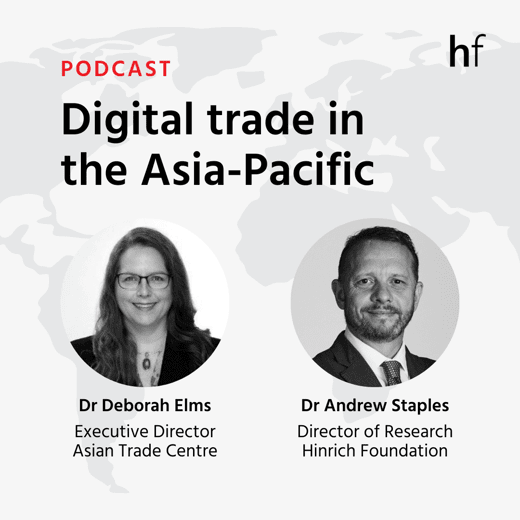
In this short podcast our Director of Research, Dr Andrew Staples, invites Dr Deborah Elms to provide an overview of paper and to highlight the importance of the RCEP agreement for digital trade in Asia.
LISTEN TO PODCAST
Share this podcast on Twitter, Facebook and LinkedIn.
INTERVIEW WITH RESEARCH FELLOW Hinrich Foundation Research Fellow, Alex Capri, discusses his latest paper with Dr Staples. Released last week, Techno-nationalism and corporate governance examines how the US-China tech cold war has politicized the business environment for multinationals and the implications for corporate governance. Techno-nationalism, he observes, now requires firms to evaluate or restructure their cross-border operations to reduce risks.
Techno-nationalism and corporate governance
IN CASE YOU MISSED IT While 2020 proved to be challenging for all of us, it was also a productive year for our research fellows. Please find below a selection of our most read articles and papers on the key issues impacting global trade in 2020 including the coronavirus pandemic, geopolitical tensions and the US-China trade war, the emergence of “techno-nationalism,” the US presidential election and the signing of the Regional Comprehensive Economic Partnership (RCEP). 
STEPHEN OLSON-b&w
Stephen OlsonKeep RCEP in perspectiveThree trade issues to watch under a Biden Presidency
Alex capri b&w photo-circle-1
Alex CapriTechno-nationalism and corporate governanceTechno-nationalism and diplomacyTechno-nationalism and the US-China tech innovation raceStrategic US-China decoupling in the tech sector
alan_dupont_b&w circular
Alan Dupont New Cold War: De-risking US-China conflict
Stewart-Paterson-Headshot-2
Stewart Paterson Four trade trends post COVID-19 and how they will affect growth
The Hinrich Foundation is committed to advancing sustainable global trade. We welcome your support to share our commentaries and analyses. 

Please encourage others to subscribe to our newsletter and follow Hinrich Foundation on Twitter, LinkedIn and Facebook. Contact us for any inquiries. Visit hinrichfoundation.com for more articles, reports and analysis.

Tự do hóa thị trường điện Châu Âu: nửa ly nước đầy

English: Liberalisation of the European electricity markets: a glass half full

 Năm 2016, chỉ thị đầu tiên về tự do hóa thị trường điện châu Âu (năm 2006) kỷ niệm 20 năm ngày ban hành. Chúng ta có thể rút ra kết luận gì từ hai thập kỷ tự do hóa thị trường điện? Một số nhà quan sát, thậm chí những người có tiếng, [1] cũng đang tranh luận rằng thử nghiệm này là một thất bại.Theo định kỳ, các hội nghị được tổ chức tại Brussels hoặc các thủ đô khác để thảo luận về những cải cách mới được cho là cần thiết để cứu ngành điện châu Âu. Ủy ban Châu Âu đề xuất những thay đổi sau khi tham khảo ý kiến ​​của các bên liên quan trên thị trường. [2]

Bài báo đưa ra một quan điểm lạc quan hơn đó là: tự do hóa ngành điện của châu Âu đã hoàn thành hầu hết các mục tiêu ban đầu của chỉ thị. Phải thừa nhận rằng có thể và sẽ cần phải cải tiến, nhưng chúng ta đã đi được một chặng đường dài. Vì vậy, ly nước đã đầy một nửa. Trong thời điểm nghi ngờ về sự thành công của hội nhập châu Âu, ngành điện cho chúng ta nhiều cơ sở để hài lòng.

1. Các mục tiêu ban đầu của quá trình tự do hóa ngành điện Châu Âu Tiếp tục đọc “Tự do hóa thị trường điện Châu Âu: nửa ly nước đầy” →

Chiếu Cà Mau – Nam Sơn Trần Văn Chi

mekog-cuulong

Năm nào trúng mùa, mẹ tôi đặt một đôi chiếu Bông và đôi chiếu Cỗ theo kích thước và màu sắc riêng do bà chọn. Bà nói: Để “ăn Tết” với người ta! Hồi đó sống dưới quê, nhà chỉ dám xài chiếu trắng. Sáng nào ngủ dậy, mẹ cũng dặn phải cuốn chiếu lại đem cất trong buồng (phòng ngủ). Thỉnh thoảng thấy mẹ đem chiếu ra sông giặt rồi đem phơi nắng. Còn chiếu Bông bà để dành, chỉ trải khi nhà có khách hoặc có lễ lộc.

Tiếp tục đọc “Chiếu Cà Mau – Nam Sơn Trần Văn Chi” →

Vietnam Currency Investigation: Strategy and Policy Implications

November 2, 2020 CSIS

The Office of the United States Trade Representative (USTR) on October 2 launched two investigations of Vietnam under Section 301 of the Trade Act of 1974, including one into alleged currency undervaluation. The president has repeatedly complained about Vietnam’s large trade surplus with the United States, and the USTR action is one of several launched by the administration targeting Vietnam’s currency practices. But the administration has also touted the growing security partnership with Vietnam, which shares U.S. anxieties about China, and the trade actions could run counter to the broader strategic alignment between Hanoi and Washington.

Q1: What is Section 301 and why is Vietnam being investigated?

Tiếp tục đọc “Vietnam Currency Investigation: Strategy and Policy Implications” →

What does the ‘rescue’ of Vietnam Airlines reveal?

22/11/2020    15:07 GMT+7 vietnamnet

The national airline of Vietnam finally saw “the light at the end of the tunnel” when the National Assembly agreed with the Government’s proposal for solutions to help Vietnam Airlines overcome difficulties caused by the Covid-19 pandemic.

In the resolution of the 10th session, the 14th National Assembly approved two options. Firstly, the State Bank of Vietnam refinances and extends no more than two times for credit institutions (excluding those under special control) to allow Vietnam Airlines to borrow additional capital to serve production and business activities.

Thấy gì qua cuộc ‘giải cứu’ Vietnam Airlines
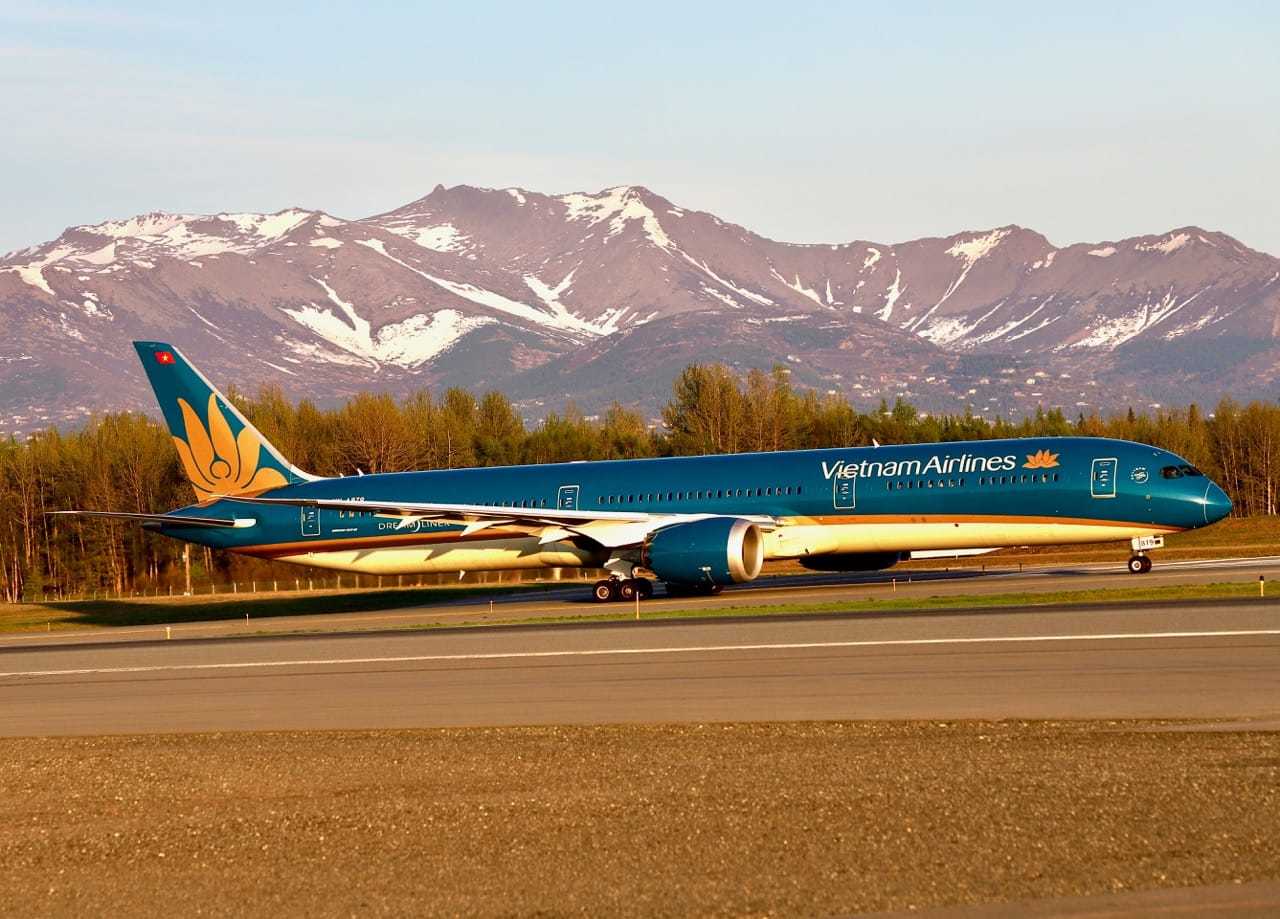
A Vietnam Airlines flight from Alaska brought Vietnamese citizens back to their home country in May. Photo: Ted Stevens Anchorage Airport, Alaska

At the same time, Vietnam Airlines is allowed to offer additional shares to existing shareholders to increase its charter capital. The Government will assign the State Capital Investment Corporation (SCIC) to buy shares in Vietnam Airlines on behalf of the Government under the right to buy shares of state shareholders in the mode of transfer of rights to buy. This investment is rated in Group A projects.

Tiếp tục đọc “What does the ‘rescue’ of Vietnam Airlines reveal?” →