Despite reforms, mining for EV metals in Congo exacts steep cost on workers

washingtonpost.com
After revelations of child labor and treacherous conditions in many cobalt mines, automakers and mineral companies said they would adhere to international safety standards

The Shabara artisanal mine, where cobalt and copper are dug out by hand, near the Congolese boomtown of Kolwezi.

By Katharine Houreld and  Arlette Bashizi

Aug. 4 at 5:00 p.m.

Correspondent Katharine Houreld and photographer Arlette Bashizi traveled together across southeastern Congo, visiting industrial and artisanal mines in the country’s three largest cobalt mining towns. Houreld is The Washington Post’s East Africa bureau chief, based in Nairobi, with responsibilities stretching from the Horn of Africa to the continent’s southern tip. Bashizi is a Congolese photographer, based in Goma, focusing on issues related to health, environment and culture.

FUNGURUME, Democratic Republic of Congo — Alain Kasongo, burly and goateed, worked for four years driving the heavy trucks that hauled away tons of cobalt ore from a gaping hole at one of the biggest mines in Congo. The vibrations from the equipment and the jolts of driving over rough ground during his 12-hour shifts could be bone-rattling, he said. Finally, the pain in his spine grew so unbearable that he needed surgery.

His older brother, Patchou Kasongo Mutuka, worked the same job at the same mine. He suffered the same injury and required the same surgery — as did 13 other drivers of excavators and trucks at the mine who were interviewed. They lifted their shirts to reveal surgical scars and spread out carefully folded medical records confirming their accounts. They in turn named seven more colleagues who had suffered the same fate, all within a two-year period.

“It hurt so badly when I went home, I would lie awake at night,” said Alain Kasongo, 43, displaying bumps and ridges on his body from what he said were three operations.

Tiếp tục đọc “Despite reforms, mining for EV metals in Congo exacts steep cost on workers”

Rà soát tiến độ 16 dự án của miền Tây ĐBSCL vay vốn ODA

plo.vn

Bố trí 2,53 tỷ USD vốn ODA cho 16 dự án khu vực ĐBSCL

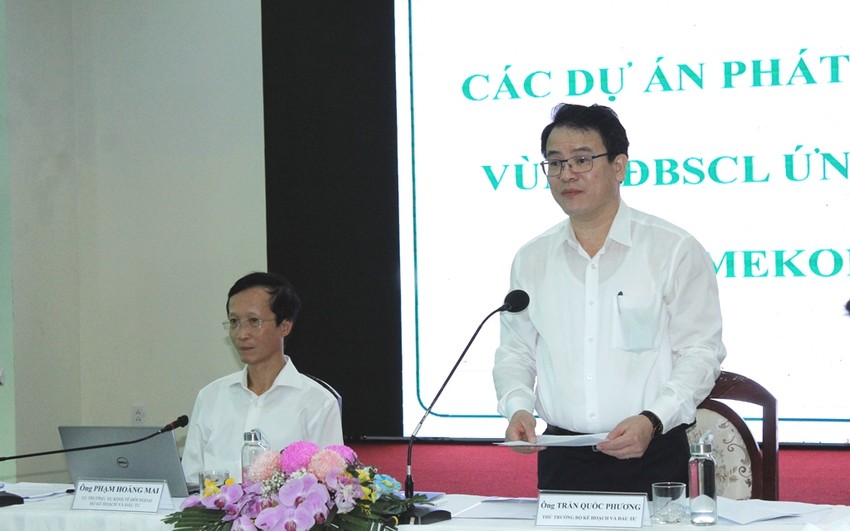
(PLO)-  Họp rà soát tiến độ 16 dự án phát triển bền vững vùng ĐBSCL ứng phó với biến đổi khí hậu (Mekong DPO), Bộ KH&ĐT mong các dự án này sẽ được phê duyệt đề xuất trong quý III này.

Ngày 15-7, tại TP Cần Thơ, Bộ KH&ĐT chủ trì hội nghị với 13 tỉnh, thành vùng đồng bằng sông Cửu Long (ĐBSCL) và bộ, ngành liên quan để rà soát, thúc đẩy tiến độ các dự án phát triển bền vững vùng ĐBSCL ứng phó với biến đổi khí hậu (Mekong DPO), gồm 16 dự án.

Thứ trưởng Bộ KH&ĐT Trần Quốc Phương cho biết 3 tháng qua, tiến độ chuẩn bị các dự án Mekong DPO đã có những chuyển biến tích cực.

Cụ thể, đề xuất dự án của Bộ GTVT đã được Thủ tướng phê duyệt đề xuất. Nhiều đề xuất dự án đã được các địa phương điều chỉnh, bổ sung, hoàn thiện căn cứ góp ý của các cơ quan có liên quan và gửi lại Bộ KH&ĐT, Bộ Tài chính.

Tiếp tục đọc “Rà soát tiến độ 16 dự án của miền Tây ĐBSCL vay vốn ODA”

Cần có cơ chế giữ chân nhà đầu tư quốc tế (cho điện gió)

Note: “Tập đoàn Orsted, Tập đoàn năng lượng lớn nhất Đan Mạch và nhà phát triển điện gió ngoài khơi lớn nhất thế giới, mới đây đã tuyên bố giảm mục tiêu tham vọng và rút khỏi thị trường Việt Nam.

petrovietnam.petrotimes.vn

Năng lượng gió thì vô hạn nhưng nguồn lực đầu tư, vốn thì hữu hạn. Nếu không có những chính sách, cơ chế cụ thể thì nguồn lực đầu tư này sẽ chuyển từ Việt Nam sang những khu vực khác trên thế giới.

Các tổ chức quốc tế đánh giá Việt Nam có tiềm năng về điện gió lớn nhất Đông Nam Á, vượt xa các quốc gia khác. Hội đồng năng lượng gió toàn cầu (GWEC) đã ước tính, Việt Nam có khoảng 600 GWh điện gió chưa khai thác, gồm 300 GWh điện gió ngoài khơi và 300 GWh điện gió trên bờ.

Tiếp tục đọc “Cần có cơ chế giữ chân nhà đầu tư quốc tế (cho điện gió)”

Trung Quốc đã giảm thiểu ô nhiễm không khí như thế nào?

vietcleanair.vn

Nửa thập kỷ trước, Bắc Kinh từng là thành phố thuộc nhóm ô nhiễm không khí nhất thế giới. Tính trên toàn Trung Quốc, tình trạng khói mù dày đặc xuất hiện ở 25/31 tỉnh thành, bao phủ hơn 100 thành phố lớn hoặc cấp trung, lan rộng trên diện tích 1,4 triệu km2 và ảnh hưởng đến hơn 800 triệu người.

Cuộc “khủng hoảng” khói mù này buộc chính phủ Trung Quốc khởi động “cuộc chiến tổng lực” với các biện pháp mạnh tay hơn và mang tính hệ thống, thông qua Kế hoạch hành động phòng chống ô nhiễm không khí giai đoạn 2013-2017, được ban hành vào tháng 9/2013.

Kế hoạch này đặt ra mục tiêu hàm lượng PM10 (bụi mịn đường kính 10 micromet trở xuống) tại các thành phố từ cấp địa khu trở lên phải giảm ít nhất 10% so với năm 2012, hàm lượng PM2.5 tại khu vực Kinh Tân Hà phải giảm khoảng 25%. Riêng đối với Bắc Kinh, hàm lượng PM2.5 phải giảm từ mức gần 90 xuống còn khoảng 60 microgram/m3 sau 5 năm theo kế hoạch.

Đây không phải những mục tiêu dễ đạt được. Tuy nhiên, theo số liệu chính thức được công bố cuối năm 2017, Bắc Kinh dường như đã đạt được mọi mục tiêu lớn được đề ra trong kế hoạch hành động năm 2013. Ngoài việc hàm lượng PM2.5 giảm xuống còn 58 microgram/m3 (tương đương giảm 35,6% so với năm 2013), hàm lượng lưu huỳnh điôxit (SO2), nitơ điôxit (NO2), PM10 trong không khí cũng lần lượt giảm 70%, 18% và 22%.

Trung Quốc đã làm gì để thoát khỏi tình trạng ô nhiễm không khí

    1. Minh bạch thông tin về ô nhiễm không khí

Tiếp tục đọc “Trung Quốc đã giảm thiểu ô nhiễm không khí như thế nào?”

Quy hoạch tổng thể về năng lượng quốc gia thời kỳ 2021 – 2030, tầm nhìn đến năm 2050

(Chinhphu.vn) – Phó Thủ tướng Trần Hồng Hà ký Quyết định số 893/QĐ-TTg phê duyệt Quy hoạch tổng thể về năng lượng quốc gia thời kỳ 2021 – 2030, tầm nhìn đến năm 2050.

27/07/2023  17:33

Quy hoạch tổng thể về năng lượng quốc gia thời kỳ 2021 - 2030, tầm nhìn đến năm 2050 - Ảnh 1.
Quy hoạch tổng thể về năng lượng quốc gia thời kỳ 2021 – 2030, tầm nhìn đến năm 2050.

Mục tiêu tổng quát của Quy hoạch là bảo đảm vững chắc an ninh năng lượng quốc gia, đáp ứng yêu cầu phát triển kinh tế – xã hội và công nghiệp hóa, hiện đại hóa đất nước, bảo đảm quốc phòng, an ninh, nâng cao đời sống của nhân dân, bảo vệ môi trường sinh thái.

Thực hiện thành công chuyển đổi năng lượng góp phần quan trọng đáp ứng mục tiêu phát thải ròng bằng “0” vào năm 2050. Ngành năng lượng phát triển hài hoà giữa các phân ngành với hạ tầng đồng bộ và thông minh, đạt trình độ tiên tiến của khu vực, phù hợp với xu thế phát triển khoa học công nghệ của thế giới.

Phát triển ngành công nghiệp năng lượng độc lập tự chủ; hình thành hệ sinh thái công nghiệp năng lượng tổng thể dựa trên năng lượng tái tạo, năng lượng mới, hướng tới trở thành một trung tâm công nghiệp năng lượng sạch và xuất khẩu năng lượng tái tạo của khu vực.

Tiếp tục đọc “Quy hoạch tổng thể về năng lượng quốc gia thời kỳ 2021 – 2030, tầm nhìn đến năm 2050”

Hơn 300.000 tài khoản đăng kí sử dụng, nhiều quận tại TP.HCM sắp có xe đạp công cộng

danviet.vn Thứ hai, ngày 13/03/2023 16:39 PM (GMT+7)

Sau hơn một năm thí điểm ở trung tâm quận 1 (TP.HCM), xe đạp công cộng đã thu hút hơn 300.000 tài khoản đăng ký sử dụng. Mô hình này nhận nhiều phản hồi tích cực và mong muốn nhân rộng từ người dân.

Hơn 300.000 tài khoản đăng kí sử dụng, nhiều quận tại TP.HCM sắp có xe đạp công cộng

Hơn 300.000 tài khoản đã đăng kí, TP.HCM dự kiến mở rộng mô hình xe đạp công cộng trong năm 2023

Xe đạp công cộng thu hút người dân TP.HCM

Thời gian qua, nhiều người dân đi lại khu vực trung tâm TP.HCM đã quen thuộc với hình ảnh dãy xe đạp cộng cộng được bố trí trên vỉa hè nhiều tuyến đường, có màu xanh đẹp mắt. Để sử dụng xe đạp, người dân chỉ cần tải ứng dụng, quét mã code mở khóa.

Chị Võ Thị Mai Hoa (28 tuổi, nhân viên văn phòng, ngụ Bình Thạnh), cho biết là công việc văn phòng, làm việc với máy tính nên chị ít có thời gian vận động. Bởi vậy, dịp cuối tuần chị Hoa thường vào quận 1 để cà phê với bạn bè sẽ thỉnh thoảng lại ghé thuê xe. Đây là hình thức vừa tập thể dục, vừa có thể ngắm phố phường, giúp thư thái đầu óc sau thời gian làm việc căng thẳng.

Tiếp tục đọc “Hơn 300.000 tài khoản đăng kí sử dụng, nhiều quận tại TP.HCM sắp có xe đạp công cộng”

17 billion USD needed to build railway connecting to seaports

As much as 17 billion USD is needed to build two railway routes connecting to seaports, namely Lao Cai-Hanoi-Hai Phong and Bien Hoa-Vung Tau, according to the Ministry of Transport (MoT).

Monday, July 17, 2023 at 17:06

17 billion USD needed to build railway connecting to seaports

A pre-feasibility study is underway for the Bien Hoa-Vung Tau route with 1,435mm gauge tracks. It is 128km long with a total investment of 6.2 billion USD.

Meanwhile, the detailed planning of the 380km-long Lao Cai-Hanoi-Hai Phong project has been basically completed at a cost of about 11 billion USD.

According to the MoT, a large amount of the money for the two projects will come from the public investment fund.

Due to their big investment, the two projects have been included in the list of those that call for foreign investment in the 2021-2025 period, the ministry said, adding that it is preparing for capital mobilisation so that construction of the projects will start before 2030.

VNA

RELATED NEWS

Railway sector’s revenue up 17% in H1

Forming a policy framework to develop the railway sector

Railway, seaport networks need to be arteries of economy: Deputy PM

Vietnam to have 16 more railway lines by 2030

Railway sector identifies major pillars in 2023

Thailand: Moving from punishment to treatment of people who use drugs

news.un.org Health

People who use drugs in Thailand are receiving more help to reduce the harm caused by their habit thanks to a change in formerly punitive drug laws and support from the UN Office on Drugs and Crime (UNODC).

“I first started taking drugs when I was 15,” says 49-year-old Prapat Sukkeaw. “I smoked marijuana, but it was laced with heroin. I felt like I was floating, and it meant that I could forget about all the problems that I faced as a teenager. It was a beautiful feeling.”

Prapat Sukkeaw is one of an estimated 57,000 people who currently injects drugs in Thailand. His drugs of choice, marijuana and heroin, reflect a period in Thailand’s recent history when both illegal narcotics were the main stimulants being trafficked out of the storied Golden Triangle, a remote and somewhat inaccessible region which includes northern Thailand as well as Myanmar and Laos.

49-year-old Prapat Sukkeaw has used drugs since the age of 15.

UN News/Daniel Dickinson

49-year-old Prapat Sukkeaw has used drugs since the age of 15.

Employed by a non-governmental organization (NGO), he has on occasion wanted to give up heroin due to pressure from family and friends. Now, he has recognized that, even if he admits to being addicted, taking drugs “is my preference and my right”. He has now started taking the synthetic drug methamphetamine, as heroin has become progressively more expensive.

Tiếp tục đọc “Thailand: Moving from punishment to treatment of people who use drugs”

“The Mekong is Dying”: How China’s River Diplomacy Neglects Locals, Exacerbates Climate Change

File image of the aerial view of the Jinghong Hydropower Station on the Lancang River, the Chinese part of the Mekong River, in Jinghong city, Xishuangbanna Dai Autonomous Prefecture, southwest China’s Yunnan province. Imaginechina Limited / Alamy Stock Photo

Chinaglobalsouth.com

The rainy season would usually start in May, but this was late June and it was still not raining much. Niwat Roykaew, who grew up on the bank of the Mekong River in Thailand’s northern Chiang Rai province, noticed. 

Born and raised in the Chiang Khong district, Roykaew, 63, was taught to observe the Mekong River to tell the season. But, in the past two decades, the river has become unpredictable like it has “pulsated out of tune”.

Niwat Roykaew is a Thai activist who campaigns for China to share data about water restrictions by its dams upstream.

“The water would get high for two days, then on the third day it would suddenly drop, even during the rainy season,” said Roykaew. 

Local residents like him knew that this delay could mean another year of drought. Since at least 2019, that’s what has happened: the monsoon rain is late, and when it comes, it departs early.

The Mekong River’s water levels in the lower basin, including in Thailand, are now very unstable, being heavily affected both by climate change and hydropower dams upstream that are mostly powered by China, according to local residents, activists, and experts.

Tiếp tục đọc ““The Mekong is Dying”: How China’s River Diplomacy Neglects Locals, Exacerbates Climate Change”

EVN đang mua điện giá bao nhiêu?

ERAV.vn

EVN mua điện từ nhiều nguồn như thủy điện, nhiệt điện than, điện gió, điện mặt trời, tuabin khí, nhập khẩu. Trong đó, thủy điện đang có giá rẻ nhất, còn nhiệt điện than lại rất đắt do giá than cao.

Điện than đang đắt lên

Thông tin từ Tập đoàn Điện lực Việt Nam (EVN) cho thấy, giá mua điện bình quân các loại hình nguồn trong 3 tháng đầu năm 2023 là 1.844,9 đồng/kWh. Đây là thời điểm giá bán điện vẫn ở mức 1.864,44 đồng/kWh. Như vậy, giá mua điện của EVN gần ngang bằng với giá bán điện của tập đoàn này khi chưa được điều chỉnh tăng.

Nếu cộng thêm các chi phí khác như phân phối, truyền tải, dịch vụ phụ trợ, điều độ… thì giá điện mua vào sẽ cao hơn giá bán ra. 

Biểu đồ dưới đây cho thấy nhiệt điện than có giá lên tới gần 2.000 đồng/kWh. Nguyên nhân là giá than vẫn duy trì ở mức cao.


Ngoài ra, EVN còn mua gián tiếp trên thị trường điện. Mức giá cụ thể như biểu đồ dưới đây cho thấy giá điện than cũng lên tới hơn 2.100 đồng/kWh.

Tiếp tục đọc “EVN đang mua điện giá bao nhiêu?”

Nam Thủy Bắc Điều – tham vọng chuyển nước nhiều tranh cãi của Trung Quốc

VNE – Thứ ba, 30/8/2022, 19:00 (GMT+7)

Nam Thủy Bắc Điều – tham vọng chuyển nước nhiều tranh cãi của Trung Quốc

Nam Thủy Bắc Điều là đại dự án đưa nước từ các con sông miền nam tới miền bắc khô hạn của Trung Quốc, nhưng gây nhiều tranh cãi về môi trường.

Sơ đồ các tuyến dẫn nước trong dự án Nam Thủy Bắc Điều. Nguồn dữ liệu: Global Times

Hãng thông tấn Xinhua của Trung Quốc cho biết dự án Nam Thủy Bắc Điều, hệ thống vận chuyển nước lớn nhất thế giới, đưa nước từ miền nam lên miền bắc Trung Quốc xuyên qua lòng sông Hoàng Hà, được thử nghiệm thành công ngày 25/8. Đợt thử nghiệm được tiến hành nhằm đánh giá quá trình vận hành toàn bộ 155 đơn vị và đưa toàn bộ đại dự án vào hoạt động.

Tiếp tục đọc “Nam Thủy Bắc Điều – tham vọng chuyển nước nhiều tranh cãi của Trung Quốc”

As livelihoods clash with development, Vietnam’s Cần Giờ mangroves are at risk

Mongabay – by Lam Nguyen and Danielle Keeton-Olsen on 28 February 2023

  • Cần Giờ, a coastal district of Ho Chi Minh City, is home to a 75,740-hectare (187,158-acre) mangrove forest, planted and maintained as part of post-war reforestation efforts.
  • The district’s residents largely depend on aquaculture, shellfish gathering and small-scale ecotourism for their livelihoods.
  • The government and developers hope to market the area as an ecotourism city based on its natural beauty and post-war success story, but major projects could disrupt Cần Giờ’s precarious balance between ecosystems and livelihoods.
  • All names of sources in Cần Giờ have been changed so people could speak freely without fearing repercussions from authorities.

Tiếp tục đọc “As livelihoods clash with development, Vietnam’s Cần Giờ mangroves are at risk”

Ten hydroelectric reservoirs reach ‘dead level’

vietnamplus.vn

Hydroelectric reservoirs’ water levels are lower than annual averages, according to a May 10 report from Vietnam Electricity Group (EVN), and 10 are either close to or under the ‘dead level’.

Current water levels at Lai Chau hydroelectric reservoir. (Photo: kinhtedothi.vn)

Hanoi (VNS/VNA) – Hydroelectric reservoirs‘ water levels are lower than annual averages, according to a May 10 report from Vietnam Electricity Group (EVN), and 10 are either close to or under the ‘dead level’.

During the monitoring of the national electricity system in April and early May, prolonged intense heat waves across a wide area led to a significant increase in electricity consumption.

Even though the early May heatwave in the northern region only lasted a few days, it resulted in very high levels of power capacity and electricity consumption throughout the country.

For instance, the total power consumption on May 6, albeit a Saturday, reached 43,300 megawatts, while the total energy consumption reached 895 million kilowatts per hour (kWh).

Forecast for the upcoming months of May, June, and July indicates that the northern region will enter the peak period of hot weather, resulting in an increasing trend of electricity consumption, surpassing the planned operation of the national power system approved by the Ministry of Industry and Trade.

Meanwhile, the hydrological situation of reservoirs in recent months has experienced unfavourable fluctuations, significantly lower than the multi-year average.

Many hydropower reservoirs across the country are facing water shortages, with several hydropower reservoirs in the central and southern regions experiencing low water levels.

According to the EVN, 10 are close or under the “dead level”, which means that the total consumption is under 4,500 megawatts.

These reservoirs are Lai Chau, Tri An, Ialy, Ban Chat, Huoi Quang, Trung Son, Buon Kuop, Buon Tua Srah, Srepok 3, and Song Ba Ha.

The remaining electricity production in the entire system is 4.5 billion kWh, which is 1.6 billion kWh lower than the planned amount and 4.1 billion kWh lower than the same period in 2022.

According to the forecast by the National Centre for Hydro-Meteorological Forecasting (NCHMF), as El Nino is expected to occur in the later months of 2023, there will be higher temperatures and lower rainfall compared to the multi-year average, which will further contribute to a decreasing trend in water inflow to reservoirs during the second half of the year.

To deal with this situation, EVN asked its customers to tighten energy-saving consumption, especially in the noon and evening hours.

EVN recommends putting air conditioners at a reasonable level, between 26 to 27 degrees Celsius, and avoiding using multiple high-capacity electrical devices simultaneously./.