China is Southeast Asia’s biggest public funder of clean energy with US$2.7bn in investment

eco-business.com

Indonesia received the most funding from China over the last decade, according to a new report by Zero Carbon Analytics. But uncertainties caused by US-driven tariff plans could see Southeast Asian countries retract green investments, said an analyst.

Cirata floating solar Indonesia
China’s PowerChina Huadong Engineering Corporation Limited constructed the Cirata floating solar plant in West Java, Indonesia. Image: PLN Nusantara

By Hannah Alcoseba Fernande June 4, 2025

China is the leading source of public clean energy investments in Southeast Asia over the last decade, channeling over US$ 2.7 billion into projects across the region, according to a report by international research organisation Zero Carbon Analytics.

Tiếp tục đọc “China is Southeast Asia’s biggest public funder of clean energy with US$2.7bn in investment”

Will Vietnam deepen ties with China because of Trump tariffs?

China has set its sights on the Global South, and on ASEAN – the Association of Southeast Asia Nations – one of the fastest growing regions in the world.

ASEAN’s fastest growing economy is now facing serious headwinds from Trump tariffs. As Vietnam sent a team to Washington to negotiate, China stepped up its diplomatic efforts here. Trade and investment between the 2 countries had been steadily growing despite differences in the South China Sea. Is this a new chapter in complex Vietnam-China relations? Tiếp tục đọc “Will Vietnam deepen ties with China because of Trump tariffs?”

Dalai Lama says successor will be born in ‘free world’ outside of China

Aljazeera.com

Tibetan spiritual leader says in a new book that his people’s aspiration for freedom cannot be indefinitely delayed.

The Dalai Lama offers blessings to his followers at his Himalayan residence in the northern hill town of Dharamshala, India, on December 20, 2024 [Priyanshu Singh/Reuters]

Published On 11 Mar 202511 Mar 2025

The Dalai Lama has said that his successor will be born in the “free world” outside of China.

In a new book released on Tuesday, the 89-year-old spiritual leader of Tibetan Buddhism says that he will be reincarnated outside of Tibet, which is an autonomous region of China.

“Since the purpose of a reincarnation is to carry on the work of the predecessor, the new Dalai Lama will be born in the free world so that the traditional mission of the Dalai Lama – that is, to be the voice for universal compassion, the spiritual leader of Tibetan Buddhism, and the symbol of Tibet embodying the aspirations of the Tibetan people – will continue,” the Dalai Lama, who fled Tibet for India in 1959, writes in Voice for the Voiceless.

China considers Tibet, which has alternated between independence and Chinese control over the centuries, as an integral part of the country and views movements advocating greater autonomy or independence as threats to its national sovereignty.

Beijing has labelled the current Dalai Lama, who was identified as the reincarnation of his predecessor at two years old, a “separatist” and insisted on the right to appoint his successor after his death.

The Dalai Lama, who stepped down as the political leader of the Tibetan government-in-exile in 2011 to focus on his spiritual role, has denied advocating Tibetan independence and argued for a “Middle Way” approach, which would grant the mainly Buddhist territory greater autonomy.

In his book, the Dalai Lama writes that he has received numerous petitions from people in and outside Tibet asking him to ensure that his lineage continues, and says that Tibetan people’s aspirations for freedom cannot be denied indefinitely.

“One clear lesson we know from history is this: If you keep people permanently unhappy, you cannot have a stable society,” he writes.

Source: Al Jazeera and news agencies

China and Cambodia ink deal for massive canal project that has raised environmental concerns

thestar.com

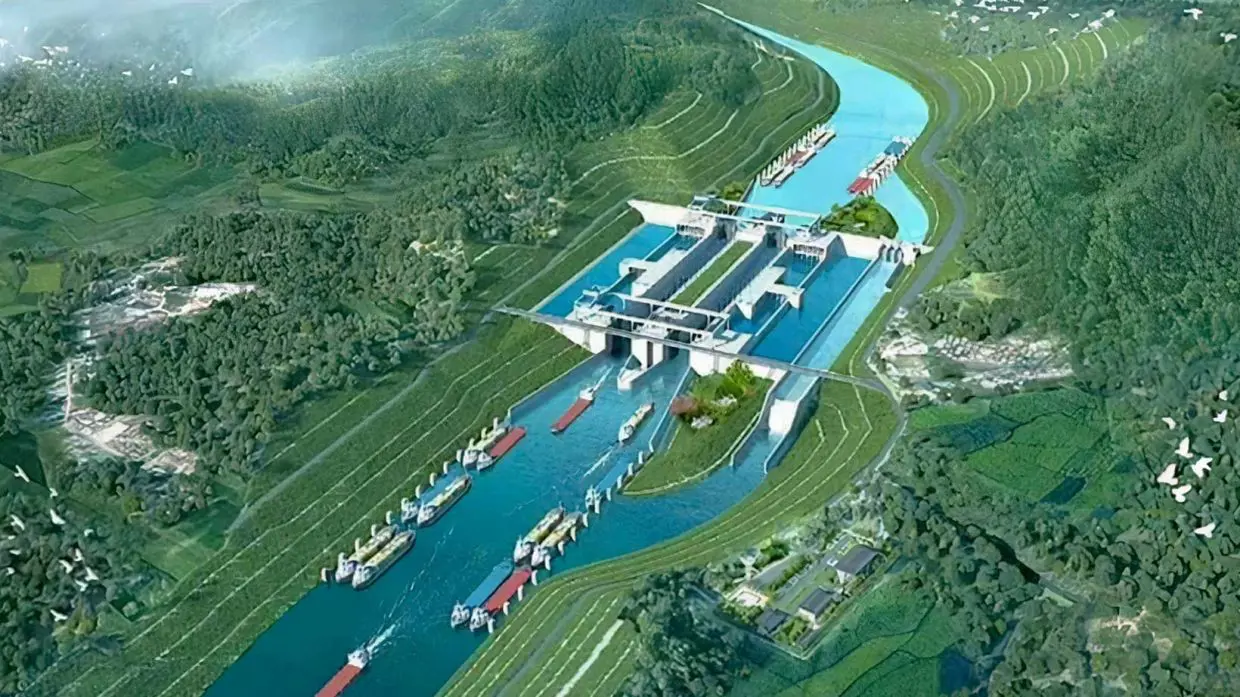
PHNOM PENH, Cambodia (AP): Cambodia and China have signed a US$1.2 billion deal to finance an ambitious canal project that aims to boost trade efficiency by linking a branch of the Mekong River near Phnom Penh to a port on the Gulf of Thailand, the Cambodian government agency heading the project has announced,

The deal to fund the Funan Techo Canal was signed Thursday during the state visit to Cambodia of Chinese President Xi Jinping, the agency said in a news release. Xi returned home Friday after a three-nation Southeast Asian tour that also included Vietnam and Malaysia.

Tiếp tục đọc “China and Cambodia ink deal for massive canal project that has raised environmental concerns”

China plans to build the world’s largest dam – but what does this mean for India and Bangladesh downstream?

theconversation.com

Published: April 8, 2025 5.33pm BST

Author Mehebub SahanaLeverhulme Early Career Fellow, Geography, University of Manchester

China recently approved the construction of the world’s largest hydropower dam, across the Yarlung Tsangpo river in Tibet. When fully up and running, it will be the world’s largest power plant – by some distance.

Yet many are worried the dam will displace local people and cause huge environmental disruption. This is particularly the case in the downstream nations of India and Bangladesh, where that same river is known as the Brahmaputra.

The proposed dam highlights some of the geopolitical issues raised by rivers that cross international borders. Who owns the river itself, and who has the right to use its water? Do countries have obligations not to pollute shared rivers, or to keep their shipping lanes open? And when a drop of rain falls on a mountain, do farmers in a different country thousands of miles downstream have a claim to use it? Ultimately, we still don’t know enough about these questions of river rights and ownership to settle disputes easily.

The Yarlung Tsangpo begins on the Tibetan Plateau, in a region sometimes referred to as the world’s third pole as its glaciers contain the largest stores of ice outside of the Arctic and Antarctica. A series of huge rivers tumble down from the plateau and spread across south and south-east Asia. Well over a billion people depend on them, from Pakistan to Vietnam.

Tiếp tục đọc “China plans to build the world’s largest dam – but what does this mean for India and Bangladesh downstream?”

Tổng Bí thư, Chủ tịch nước Trung Quốc Tập Cận Bình thăm cấp Nhà nước tới VN từ ngày 14/4 – Những câu chuyện đặc biệt của Chủ tịch Trung Quốc Tập Cận Bình với Việt Nam

Tổng Bí thư, Chủ tịch nước Trung Quốc Tập Cận Bình thăm cấp Nhà nước tới Việt Nam từ ngày 14/4

11/04/2025 | 09:22

TPO – Nhận lời mời của Tổng Bí thư Tô Lâm, Chủ tịch nước Lương Cường, Tổng Bí thư, Chủ tịch nước Trung Quốc Tập Cận Bình sẽ thăm cấp Nhà nước tới Việt Nam từ ngày 14 đến 15/4, Bộ Ngoại giao thông báo.

Chuyến thăm diễn ra vào thời điểm Việt Nam và Trung Quốc kỷ niệm 75 năm thiết lập quan hệ ngoại giao (18/1/1950 – 18/1/2025).

Tiếp tục đọc “Tổng Bí thư, Chủ tịch nước Trung Quốc Tập Cận Bình thăm cấp Nhà nước tới VN từ ngày 14/4 – Những câu chuyện đặc biệt của Chủ tịch Trung Quốc Tập Cận Bình với Việt Nam”

Trung Quốc nói sẵn sàng đàm phán với Mỹ

VNE – Thứ năm, 10/4/2025, 14:49 (GMT+7)

Trung Quốc hôm nay cho biết nước này sẵn sàng đàm phán với Mỹ, nhưng cũng không sợ hãi nếu Mỹ tiếp tục đe dọa áp thuế.

Cờ Mỹ và Trung Quốc. Ảnh: Reuters

Ngày 10/4, khi được hỏi về việc liệu Mỹ và Trung Quốc đã bắt đầu đàm phán thuế nhập khẩu hay chưa, người phát ngôn Bộ Thương mại Trung Quốc He Yongqian cho biết nước này sẵn sàng đàm phán với Mỹ, nhưng phải trên cơ sở bình đẳng và tôn trọng lẫn nhau. Ông khẳng định “việc gây sức ép, đe dọa, bắt nạt” không phải là cách hành xử đúng với Trung Quốc.

Tiếp tục đọc “Trung Quốc nói sẵn sàng đàm phán với Mỹ”

South China Sea: Escalating tensions between China and the Philippines

Al Jazeera English – 3-4-2025

The South China Sea is one of the most contested waterways in the world.

Hundreds of kilometres from its mainland, China appears to be increasingly asserting its dominance in this strategically important maritime trade route.

Many of the maritime disputes involve areas claimed by both the Philippines and Beijing.

Flashpoints are becoming more frequent, including collisions between coastguard boats and other vessels.

101 East joins the Philippine coastguard and witnesses firsthand skirmishes with the Chinese navy in the disputed waters.

Why the US and China battle for influence in South America

South China Morning Post – 9-3-2025

US President Donald Trump has made South America a priority for his administration, citing concerns about China’s growing influence in the region. Through Beijing’s Belt and Road Initiative, China has invested heavily in major projects in the region, particularly related to lithium reserves, transport and energy infrastructure. As a result, China has replaced the US as South America’s main trading partner over the past two decades. Early into his second term, Trump attempted to strong-arm control back in the US’ favour by threatening to seize the Panama Canal away from China’s growing influence. However, experts suggest his methods will not be enough to turn the momentum, as China’s flexible business approach and significant investments have reshaped the continent’s landscape.

Vietnam targets Chinese dolls over South China Sea ‘map’

South China Morning Post – 20-3-2025

Vietnam is stepping up inspections of a line of children’s toys over concerns that imagery on the face of one product resembles a map China uses to stake its claim to disputed areas in the South China Sea. The investigation was launched after local media reported that a version of widely sold Baby Three toys, many of which are made in China, featured a design that was viewed as similar to Beijing’s maritime map.

Impact of Trump 2.0 on Southeast Asia’s Energy Geopolitics

Fulcrum.sg Published 3 Mar 2025 Mirza Sadaqat Huda

Trump’s rent-seeking foreign policy pertaining to energy and critical minerals will force Southeast Asian countries to do what they least desire: making a choice between China and the US.

The Trump administration’s insular and rent-seeking foreign policy will significantly alter the geopolitics of energy transition in Southeast Asia. This will manifest in two ways. First, the potential cessation of US involvement in the region’s energy sector will heighten fears of China’s dominance in energy infrastructure projects — including the ASEAN Power Grid (APG). Second, Trump’s intentions of using critical minerals as a bargaining chip for providing military assistance, if applied to the ASEAN region, will impact the regional vision for sustainable mineral development.

The shutting down of the United States Agency for International Development (USAID), an important player in the energy sector, will intensify existing fears of China’s dominance in electricity transmission and generation. As shown in Table 1, China provided approximately US$534 million in aid to the region’s energy sector in 2022, accounting for more than a quarter of the total share. Comparatively, the US provided only US$23.7 million, or 1 per cent of total energy-related aid to Southeast Asia. In addition, the China Southern Power Grid Company and State Grid Corporation of China own and operate significant portions of the national grids in Laos and the Philippines, respectively.

China Leads in Energy Aid

Table 1 Energy-related aid to Southeast Asia 2022 (excerpt) (USD, in %)

Donor Amount Contribution
China 534 million 26
ADB 368 million 18
Germany 274 million 13
Canada 231 million 11
South Korea 211 million 10
Japan 167 million 8
World Bank 90.0 million 4
EU Institutions 42.3 million 2
France 42.2 million 2
AIIB 34.8 million 2
United States 23.7 million 1

The table is modified from Lowy Institute’s (2024) Southeast Asia Aid Map.

Tiếp tục đọc “Impact of Trump 2.0 on Southeast Asia’s Energy Geopolitics”

Fruits of spoil: Laos’ forests disappearing as fruit farms flourish (2 parts)

Fruits of spoil: Laos’ forests disappearing as fruit farms flourish

Mekong eyes – 16 December 2024 at 9:27 (Updated on 16 December 2024 at 15:40)

The country’s improved railway connectivity facilitates fruit exports to China but has also sparked a boom in foreign-owned banana and durian farms, leading to forest clearance

A Chinese-owned banana plantation on land that was once forested, located in Attapeu province, southern Laos, in August 2024.

The report was produced with support from the Pulitzer Center’s Rainforest Investigations Network (RIN) and Internews’ Earth Journalism Network as part of the “Ground Truths” collaborative reporting project on soils. 

ATTAPEU, LAOS — The new high-speed railway has enabled faster fruit exports from Laos to China, attracting more investment in large-scale plantations. However, this growth has come at the cost of deforestation.

Bananas and the “king of tropical fruit” – durians – are very popular in China, but they typically ripen within a few days of harvesting.

However, that problem was resolved with the launch of the Laos-China Railway in 2021, which has enabled landlocked Laos to deliver its fruit quickly to China’s 1.4 billion consumers.

Tiếp tục đọc “Fruits of spoil: Laos’ forests disappearing as fruit farms flourish (2 parts)”

Tóm tắt tình hình Biển Đông năm 2024

Nghiên cứu Quốc tế – 03/02/2025 – 17:24

Những diễn biến lớn ở Biển Đông trong năm 2024 không báo hiệu điều tốt lành cho năm 2025.

Nguồn: Carl Thayer, “The State of the South China Sea: Coercion at Sea, Slow Progress on a Code of Conduct,” The Diplomat, 27/01/2025

Biên dịch: Nguyễn Thị Kim Phụng

Có bốn diễn biến chính định hình môi trường an ninh ở Biển Đông năm 2024: (1) Trung Quốc gia tăng hành vi cưỡng ép đối với tàu thuyền và máy bay của hải quân Philippines; (2) Philippines thông qua chiến lược phòng thủ biển mới; (3) Việt Nam tăng cường hoạt động xây dựng tại quần đảo Trường Sa; và (4) đàm phán về Bộ Quy tắc Ứng xử (COC) tiến triển chậm chạp.
Tiếp tục đọc “Tóm tắt tình hình Biển Đông năm 2024”

What’s happening in Myanmar?


Al Jazeera English
– 1- 2- 2025

Myanmar’s military regime is under pressure, four years after it seized back power in a coup. The military has lost significant territory and a patchwork of anti-military groups now control different parts of the country. What’s happening? Who are the groups fighting against the military? And could the regime actually fall? #AJStartHere with Sandra Gathmann explains

Tiếp tục đọc “What’s happening in Myanmar?”