Ngày nay, chúng ta thường xuyên được chứng kiến những màn đối đầu ngoại giao xung quanh vấn đề Tân Cương. Trong khi nhiều nước liên tục chỉ trích, thậm chí trừng phạt Trung Quốc vì vấn đề người Duy Ngô Nhĩ, thì Trung Quốc bác bỏ cáo quốc và luôn bảo vệ ”sự thống nhất toàn vẹn Trung Quốc”, tố cáo ”chủ nghĩa ly khai Duy Ngô Nhĩ” bị các nước phương Tây lợi dụng chống Trung Quốc.
Nhưng nếu để ý, sẽ thấy một nước lớn là Nga lại khá im tiếng trong vấn đề này, không hùa theo chống Trung Quốc, nhưng cũng không công khai ủng hộ Trung Quốc về vấn đề Tân Cương. Có gì khó lý giải ở đây? Điều đó hoàn toàn lý giải được nếu biết được lịch sử vùng đất Tân Cương từ những năm 1930-1950, để thấy rằng: không ai khác ngoài Stalin và Liên Xô đã đỡ đầu cho Tân Cương độc lập. Và thậm chí trước kia, chính Đảng Cộng sản Trung Quốc của Mao Trạch Đông từng ủng hộ Tân Cương ly khai khỏi Trung Hoa.
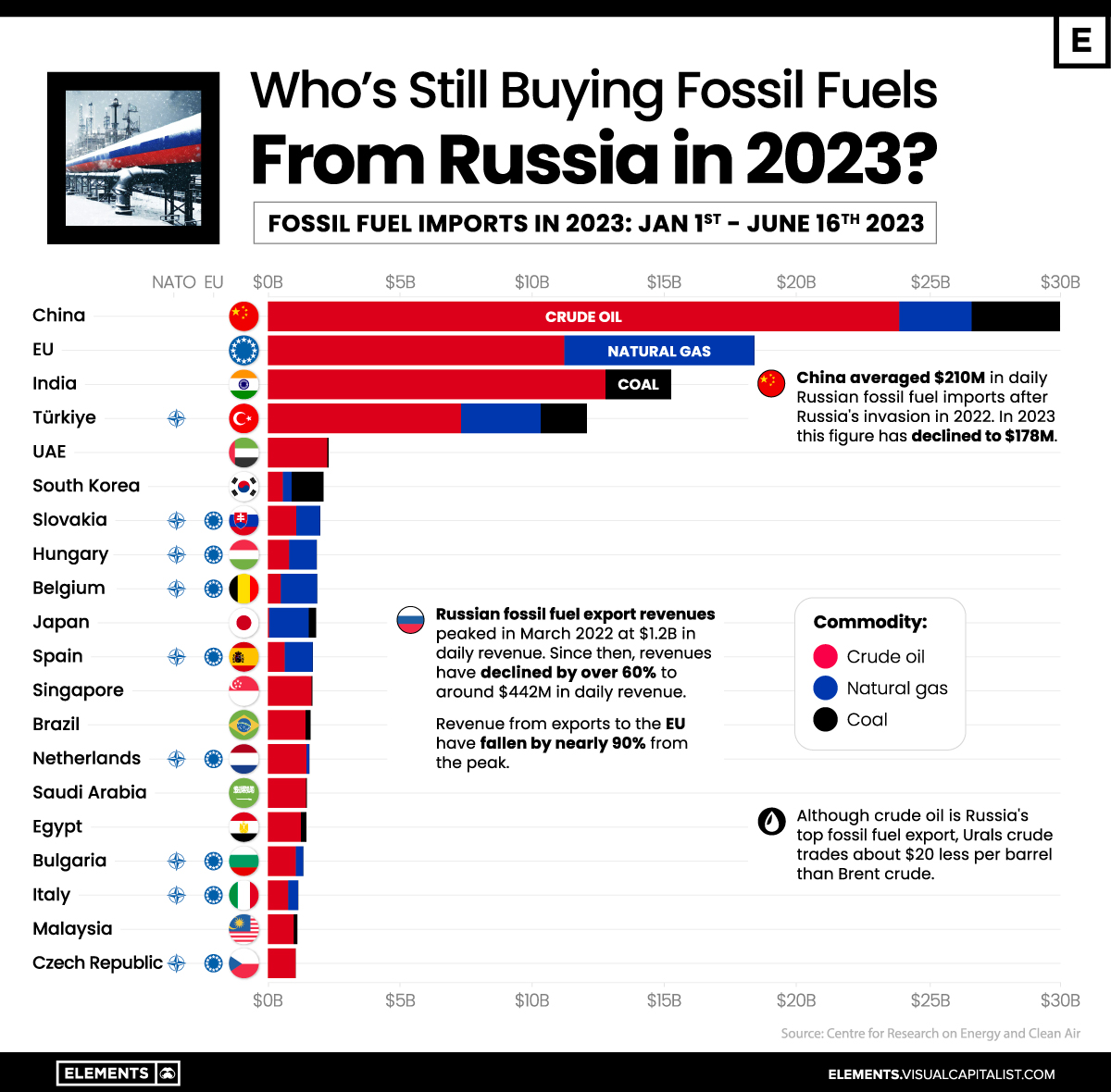
While Russia’s revenues from fossil fuel exports have declined significantly since their peak in March of 2022, many countries are still importing millions of dollars a day worth of fossil fuels from Russia.
Revenue from fossil fuels exported to the EU has declined more than 90% from their peak, but in 2023 the bloc has still imported more than $18 billion of crude oil and natural gas so far.
This graphic uses data from the Centre for Research on Energy and Clean Air (CREA) to visualize the top-importing countries of fossil fuels from Russia so far this year.
China Remains Russia’s Top Fossil Fuel Importer
China continues to be Russia’s top buyer of fossil fuels, with imports reaching $30 billion in 2023 up until June 16, 2023.
With nearly 80% of China’s fuel imports being crude oil, Russia’s average daily revenues from Chinese fossil fuel imports have declined from $210 million in 2022 to $178 million in 2023 largely due to the falling price of Russian crude oil.
Following China are EU nations collectively, which despite no longer importing coal from Russia since August of 2022, still imported $18.4 billion of fossil fuels in a 60/40 split of crude oil and natural gas respectively.
Country
Russian Fossil Fuel Imports* (Total)
Crude Oil
Natural Gas
Coal
China
$30B
$23.9B
$2.7B
$3.3B
EU
$18.4B
$11.2B
$7.2B
$0
India
$15.2B
$12.8B
$0
$2.5B
Türkiye
$12.1B
$7.3B
$3B
$1.7B
UAE
$2.3B
$2.3B
$0
$0
South Korea
$2.1B
$0.6B
$0.3B
$1.2B
Slovakia
$2.0B
$1.1B
$0.9B
$0
Hungary
$1.9B
$0.8B
$1.1B
$0
Belgium
$1.9B
$0.5B
$1.4B
$0
Japan
$1.8B
$0
$1.5B
$0.3B
Spain
$1.7B
$0.6B
$1.1B
$0
Singapore
$1.7B
$1.7B
$0
$0
Brazil
$1.6B
$1.4B
$0
$0.2B
Netherlands
$1.6B
$1.5B
$0.1B
$0
Saudi Arabia
$1.5B
$1.4B
$0
$0
Egypt
$1.4B
$1.3B
$0
$0.2B
Bulgaria
$1.3B
$1.1B
$0.3B
$0
Italy
$1.2B
$0.8B
$0.4B
$0
Malaysia
$1.1B
$1.0B
$0
$0.1B
Czech Republic
$1.0B
$1.1B
$0
$0
*Over the time period of Jan 1, 2023 to June 16, 2023 in U.S. dollars
After China and the EU bloc, India is the next-largest importer of Russian fossil fuels, having ramped up the amount of fossil fuels imported by more than 10x since before Russia’s invasion of Ukraine, largely due to discounted Russian oil.
Türkiye is the only other nation to have imported more than $10 billion worth of Russian fossil fuels in 2023, with every other country having imported fewer than $3 billion worth of fuels from Russia this year.
Navigating the Crude Reality of Oil Exports
Although crude oil is Russia’s chief fossil fuel export, the nation’s Urals crude traded at a $20 per barrel discount to Brent crude throughout most of 2023. While this discount has narrowed to around $16 following Russia’s announcement of further oil export cuts of 500,000 bpd (barrels per day), the price of Urals crude oil remains just 40 cents below the $60 price cap put in place by G7 and EU nations.
Throughout most of the ongoing war in Ukraine, a truism has held across most of the American political spectrum, from left to right, about the second-order effects of the conflict’s outcome. A Ukrainian victory would strengthen the position of the United States vis-à-vis China globally, while a Russian victory would achieve the opposite.
It is easy to see how takes like this gain such a strong foothold. Analysts are quick to apply sweeping, abstract constructs to their assessments of major world events. This time, that has meant a supposed worldwide faceoff between authoritarianism and democracy. Beyond such considerations, many have tried to imagine the Ukraine conflict’s effects on Chinese thinking about Taiwan. Here again, it is supposed that a Ukrainian victory against a vastly larger invading adversary would be deflating for China, lowering the risk of any near-term attempt to take control of Taiwan by force. And a Russian victory, which now seems quite unlikely, would produce the opposite effect.
A leaked junta memo shows three Chinese firms appealing to Nay Pyi Taw to arrange liquified natural gas imports from Russia amid economic turmoil in Myanmar.
By FRONTIER
A leaked document from the junta’s Ministry of Electric Power reveals that three Chinese energy companies appealed to the junta for help importing liquified natural gas from the Russian government, as the regime’s economic policies wreak havoc on the energy sector.
The document, in the form of a memo, indicates a meeting took place on July 25 in Nay Pyi Taw with representatives from MoEP, Hong Kong-listed VPower and Chinese state-owned firms CNTIC and Genertec. (VPower is also part-owned by CITIC, another Chinese state-owned investment firm).
China and Russia have grown increasingly close in recent years, including as trading partners, in a relationship that brings both opportunities and risks as Russia reels from tough new sanctions led by the West in response to its invasion of Ukraine. Total trade between China and Russia jumped 35.9% in 2021 last year to a record US$147.9 billion, according to Chinese customs data, with Russia serving as a major source of oil, gas, coal and agriculture commodities, and running a trade surplus with China.
Since sanctions were imposed in 2014 after Russia annexed Ukraine’s Crimea, bilateral trade has expanded by more than 50% and China has become Russia’s biggest export destination The two were aiming to boost total trade to US$200 billion by 2024, but according to a new target unveiled last month during Russian President Vladimir Putin’s visit to Beijing for the Winter Olympics, the two sides want bilateral trade to grow to US$250 billion.
The Ukraine war is complicating the calculus of China’s energy security and the prospect of a new energy deal with Russia
Can Beijing afford to be close to a Moscow that is increasingly politically and economically isolated?
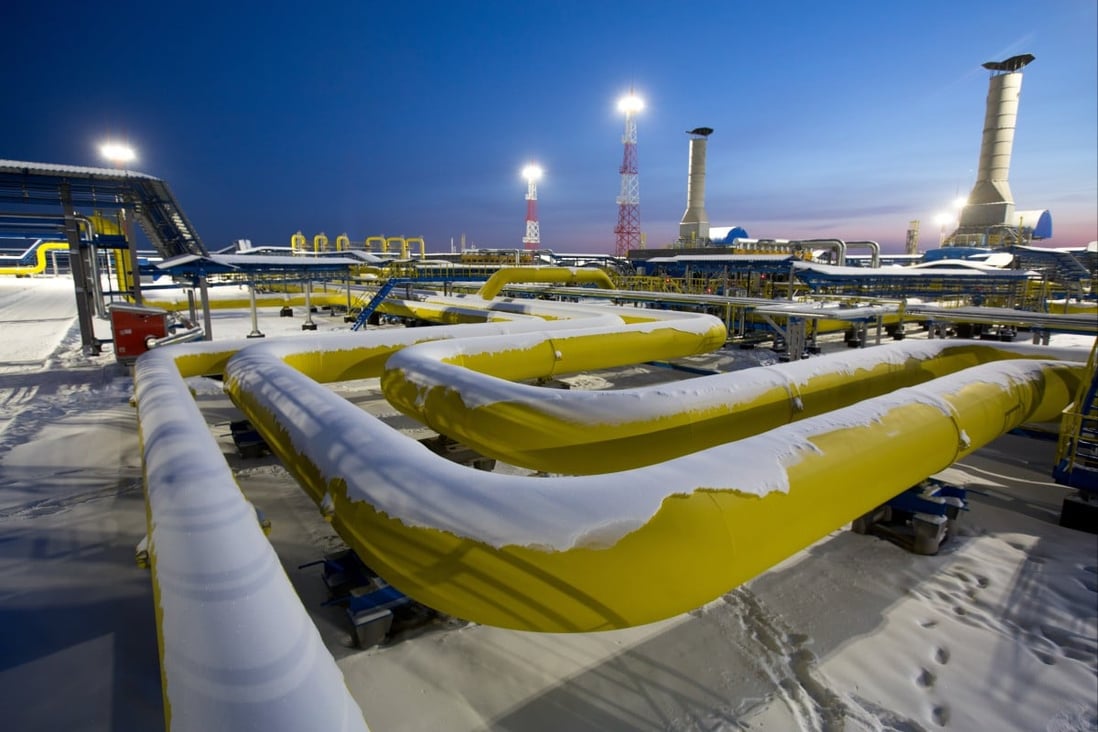
Snow covers sections of connected pipework at the Gazprom PJSC Atamanskaya compressor station, part of the Power Of Siberia gas pipeline extending to China, near Svobodny, in the Amur region, Russia, in 2019. Photo: Bloomberg
Two recent developments reveal the possibility of a new energy agreement between China and Russia. First, Russian gas giant Gazprom PJSC announced a contract to design the Soyuz Vostok pipeline across Mongolia towards China. Second, Beijing is reported to be discussing with its state-owned companies opportunities to buy stakes in Russian energy companies, and is also looking at a Power of Siberia 2 pipeline to China.
With the exit of international energy companies from Russia following its invasion of Ukraine, Germany’s decision to halt the certification process of the Kremlin-backed Nord Stream 2 pipeline, and rounds of sanctions on Russia, there are certainly new opportunities for the Chinese government and companies to strengthen their position in the Russian market.
However, even as domestic, regional and global factors may push China towards a new energy deal with Russia, Beijing could also face a range of challenges.
Firstly, Beijing’s ambition to be carbon-neutral by 2060 and replace much coal with gas is one of the most important domestic factors prompting China to further improve its relations with Russia.
Russian gas exports – whether liquefied natural gas or pipeline gas delivered through the original Power of Siberia, for example – would help China reduce greenhouse gas emissions as the country makes a green transition.
Secondly, the withdrawal of Western energy companies such as BP and Shell from Russia due to the Ukraine war creates opportunities for Chinese energy companies, especially state-owned ones, to invest in Russia and diversify their portfolio.
Thirdly, while China also imports gas from Turkmenistan, Russian gas is one of the cheapest options for Chinese consumers, making a new energy deal with Russia that much more attractive.
However, there could also be obstacles to such a deal. One problem could be the political and economic uncertainties now looming over Russia; the deterioration of the Russian business environment under current sanctions might discourage Chinese companies from investing in Russia.
Particularly, sanctions led by Washington seem to inspire caution in Beijing and Chinese companies. For example, the state-run Sinopec Group recently suspended talks about a major petrochemical investment and a gas marketing venture in Russia, apparently heeding a government call to tread carefully with Russian assets.
NEW YORK — Welcome to Nikkei Asia’s podcast: Asia Stream.
Every week, Asia Stream tracks and analyzes the Indo-Pacific with a mix of interviews and original reporting by our correspondents from across the globe.
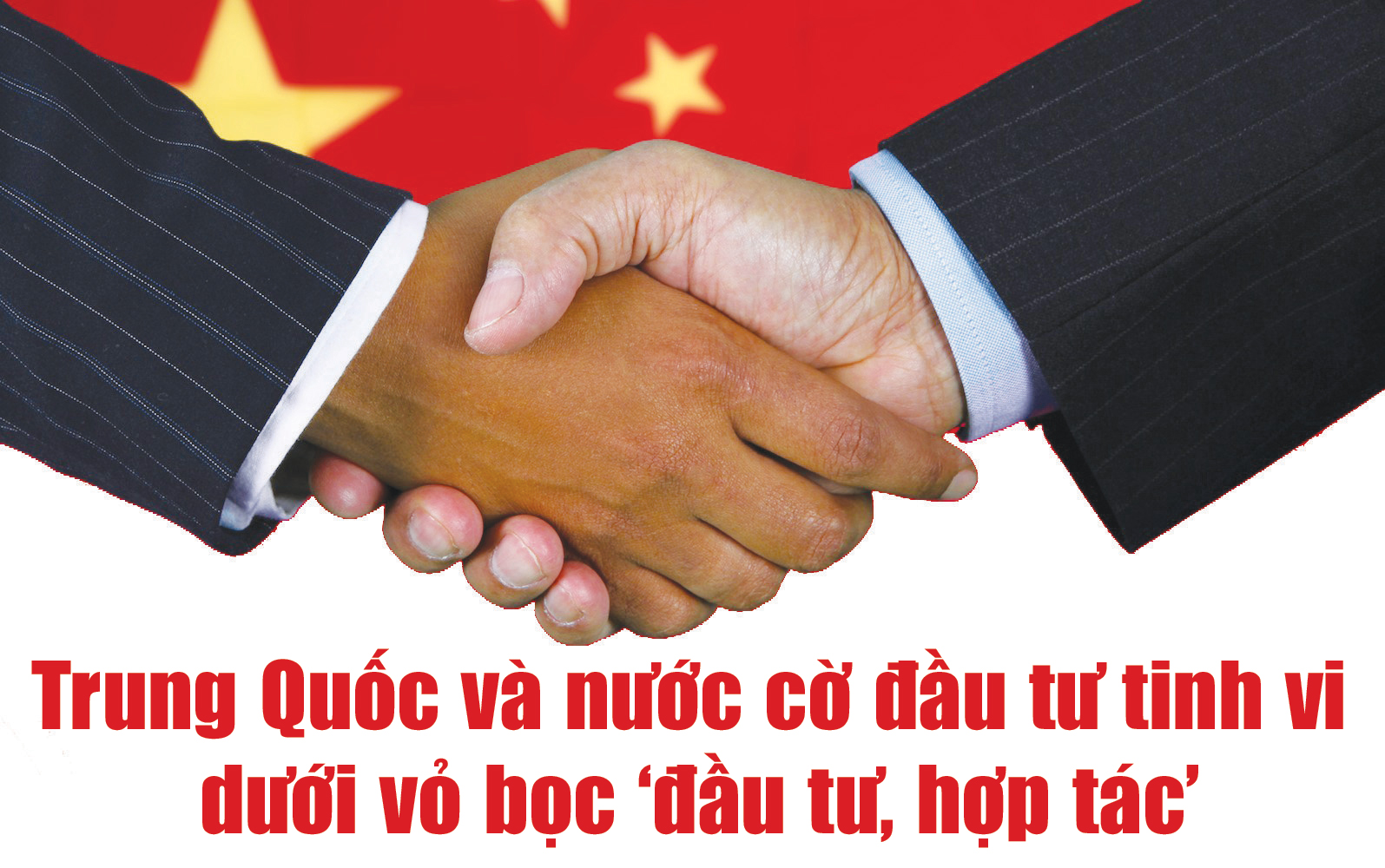
PN – Khoác vỏ bọc “đầu tư, hợp tác”, hàng loạt dự án thuê đất ở nước ngoài theo kiểu “đôi bên cùng có lợi” thực chất chỉ mang đến lợi ích đơn phương cho Trung Quốc, trong khi kinh tế, an ninh và ổn định chính trị của các quốc gia về lâu dài bị đe dọa nghiêm trọng.
5 USD/ha và cuộc “xâm lăng” thầm lặng
Năm 2015, Trung Quốc gây chú ý với kế hoạch thuê đất vùng Siberia, vùng lãnh thổ lớn nhất của Nga. Trung Quốc hiểu rõ lợi thế 1,35 tỷ dân áp đảo dân số 144 triệu người của Nga, với tỷ lệ tương quan 10:1.
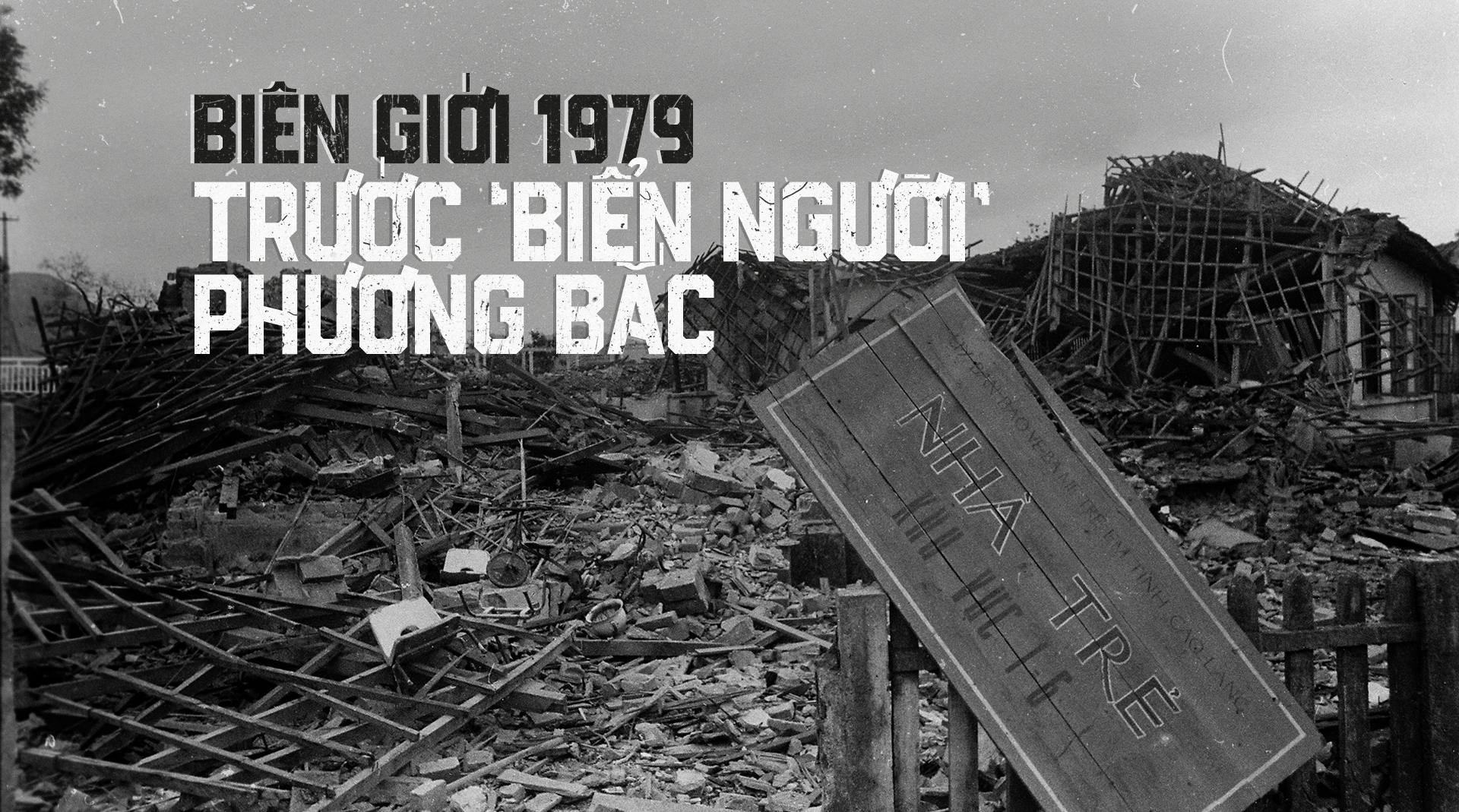
600.000 quân Trung Quốc được huy động để thực hiện một cuộc phá hoại rộng lớn trên đất Việt Nam. Mọi chuyện không như ý muốn của kẻ thù.
***
VNE – Nhiều năm sau này, người trong vùng vẫn kể về cái đêm con trai cô Dén chết. Đoàn người sơ tán từ thị xã Cao Bằng, lần rừng về cầu Tài Hồ Sìn, tìm đường xuôi về Bắc Kạn, Thái Nguyên, những vùng chiến sự chưa lan tới. Gặp một trại lính Trung Quốc, đoàn người bấm nhau đi thật khẽ. Đúng lúc, từ phía nhà cô Dén có tiếng ọ ọe của trẻ con. Thằng bé bú no nê và được ủ ấm, đã thức giấc. Cô Dén loay hoay tìm cách để nó thôi khóc. Tiếp tục đọc “Biên giới 1979 trước “biển người” phương Bắc”→
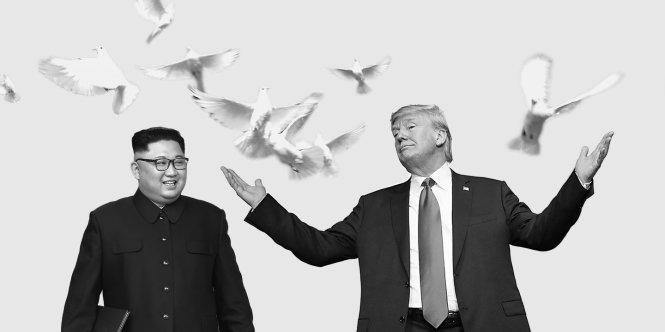
TTCT – 8h30 sáng thứ ba 26-2, ông Kim Jong Un rời ga Đồng Đăng lên xe trực chỉ Hà Nội. Trước đó, vào nửa đêm (giờ Việt Nam), ông Donald Trump từ chiếc Air Force One đăng dòng tweet: “Trên đường tới Việt Nam cho cuộc gặp của tôi với Kim Jong Un. Hướng tới một thượng đỉnh rất kết quả”. Sân khấu sáng đèn rực chiếu lên hai ông này. Tuy nhiên, trong cánh gà còn những ai nữa?
Ảnh: The Intercept
Một hội nghị thượng đỉnh luôn là màn phô diễn quan hệ với công chúng (PR), ông Kim và ông Trump thừa biết cách thu hút sự chú ý, nhất là khi ông Trump nguyên là nhà sản xuất kiêm “chủ sô” của chương trình truyền hình thực tế nổi tiếng The Apprentice, còn ông Kim thì hưởng lợi thế “hữu xạ tự nhiên hương” nhờ chính bức màn bí ẩn bao quanh ông, gia đình dòng họ ông, và đất nước ông. Tiếp tục đọc “Thượng đỉnh Mỹ – Triều: Sân ga không chỉ hai người”→
Bộ Ngoại giao Mỹ cho biết họ đã áp đặt trừng phạt đối với Cục Phát triển Thiết bị Trung Quốc, cơ quan phụ trách cung cấp vũ khí và các thiết bị quân sự cho quân đội Trung Quốc, và Giám đốc của cục là ông Li Shangfu vì đã tham gia vào “các hoạt động giao dịch lớn” với cơ quan xuất khẩu vũ khí Rosoboronexport của Nga.
Máy bay chiến đấu Su-35 của Nga là một trong những loại phi cơ được các nước trên thế giới để ý.
TTO – Đầu tháng 7-2017, Viện Nghiên cứu hòa bình quốc tế Stockholm đã cảnh báo tình hình hiện đại hóa vũ khí hạt nhân vẫn tiếp tục diễn ra trên thế giới.
Mỹ bắn thử tên lửa đạn đạo liên lục địa Minuteman III đêm 26-4-2017 – Ảnh: Không quân Mỹ
Không có quốc gia sở hữu vũ khí hạt nhân nào sẵn sàng từ bỏ kho vũ khí hạt nhân trong tương lai gần. Các nước đều tiếp tục phát triển hoặc triển khai thêm các hệ thống vũ khí mới hoặc tuyên bố sẽ làm như thế Chuyên viên Shannon Kile (Viện Nghiên cứu hòa bình quốc tế Stockholm)
Chín nước gồm năm nước thường trực Hội đồng Bảo an Liên Hiệp Quốc và Ấn Độ, Pakistan, Israel, Triều Tiên đang sở hữu 14.935 đầu đạn hạt nhân, trong đó đã triển khai 4.150 đầu đạn. Tiếp tục đọc “Vũ khí hạt nhân – 7 kỳ”→
Phần 1: Những đối tác “mắt khép hờ”
Phần 2: Đầu tư và thâu tóm
***
Phần 1: Những đối tác “mắt khép hờ”
DUY VĂN 16.03.2017, 10:43
TTCT – Chuyến thăm ba nước Trung Á của Tổng thống Nga Vladimir Putin vừa khép lại tuần trước đã đặt vùng đất chiến lược về địa chính trị này vào sự chú ý mới: nơi giao cắt và chồng lấn ảnh hưởng của ba thế lực siêu cường đang lăm le phân chia lại thế giới.
Tuesday 7 March 2017 00.45 EST Last modified on Tuesday 7 March 2017 17.00 EST
China is reportedly considering plans to build a 1,000km (620 mile) pipeline to pump water all the way from Siberia to its drought-stricken northwest.
According to reports in the Chinese media, urban planners in Lanzhou, the capital of Gansu province, have drawn up proposals to pipe water into the chronically parched region from Russia’s Lake Baikal, the deepest freshwater lake on earth.


 China
China EU
EU India
India Türkiye
 UAE
UAE South Korea
 Slovakia
 Hungary
 Belgium
 Japan
Japan Spain
Spain Singapore
 Brazil
 Netherlands
 Saudi Arabia
 Egypt
Egypt Bulgaria
 Italy
Italy Malaysia
 Czech Republic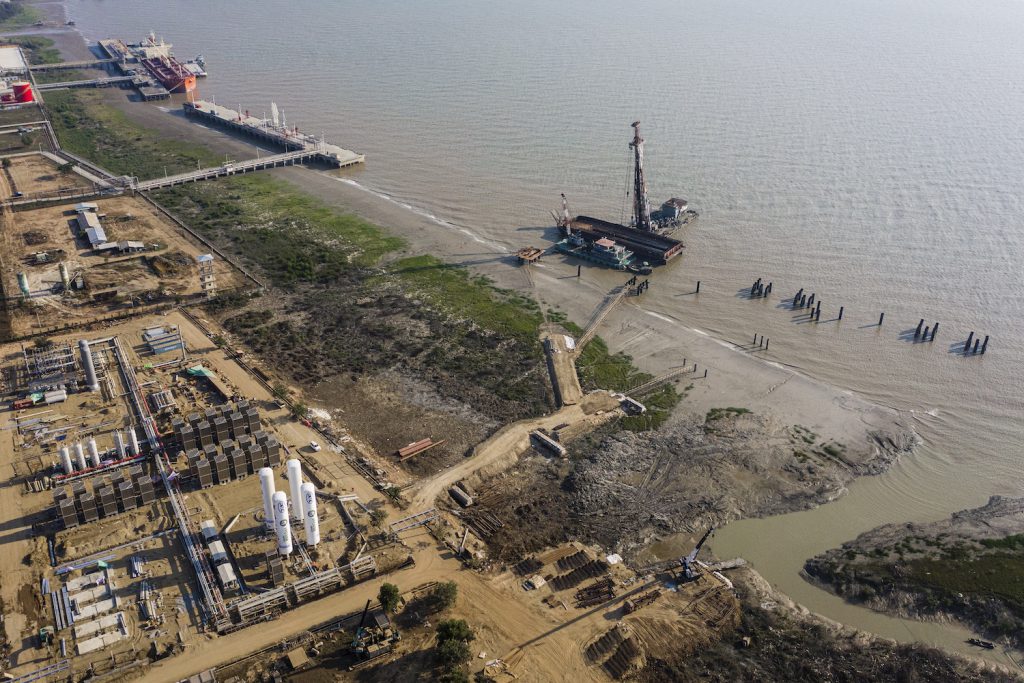




 CVD
CVD 