More travellers are visiting an unusual destination – Afghanistan. Since 2021, the war-torn nation has seen tourism rise more than 900 per cent. Some attribute the change to official data reporting a sharp drop in violence and increased flight connections from major cities like Dubai. Most foreign visitors are from China, reportedly because of proximity and relative ease of obtaining tourist visas. The tourism buzz has undoubtedly brought economic benefits, but others worry the nation’s efforts to draw visitors amount to propaganda hiding the dark side of Taliban rule.
By Adnan Aamir, Marwaan Macan-Markar, Shaun Turton and Cissy Zhou – AUGUST 10, 2022
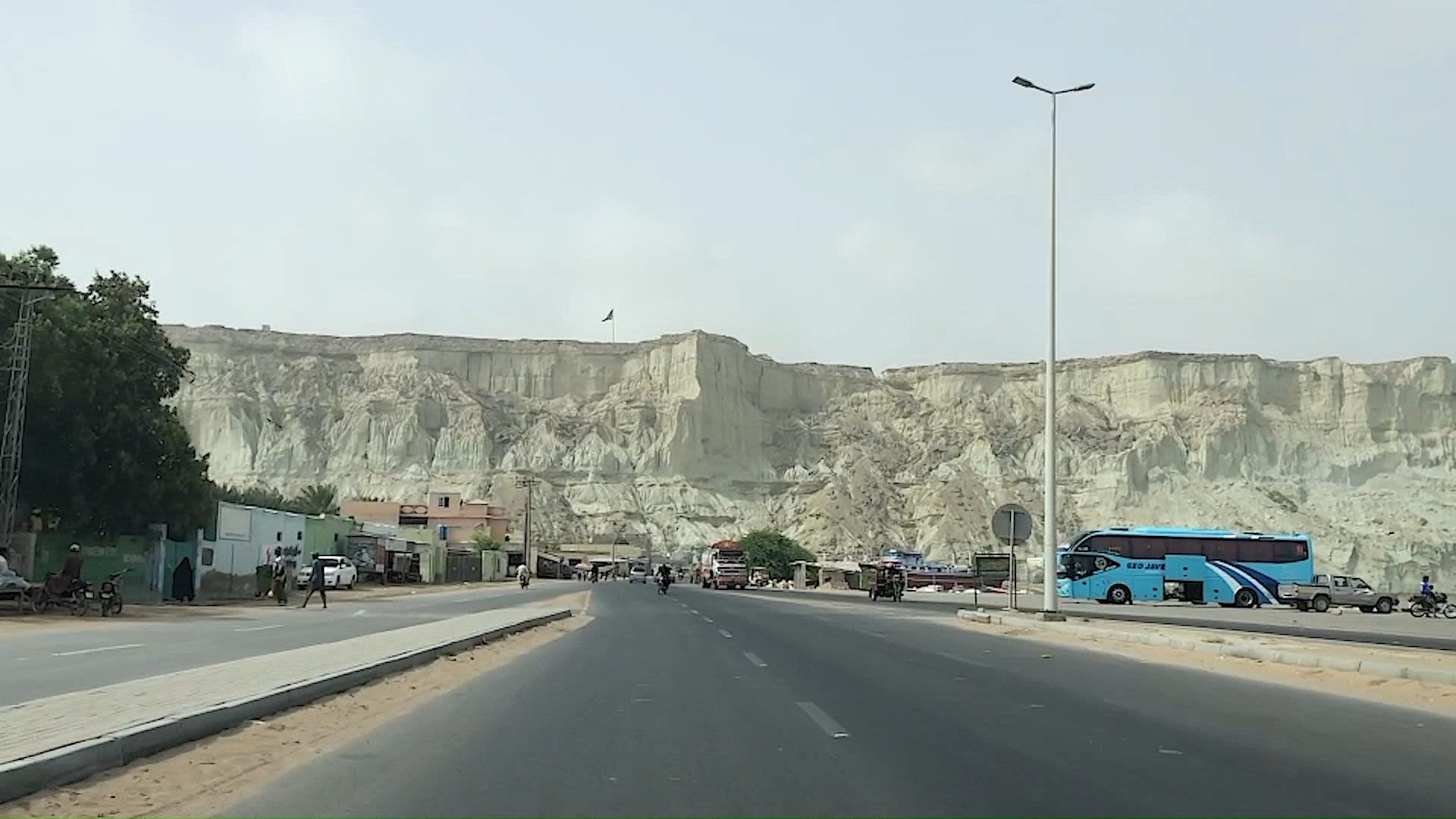
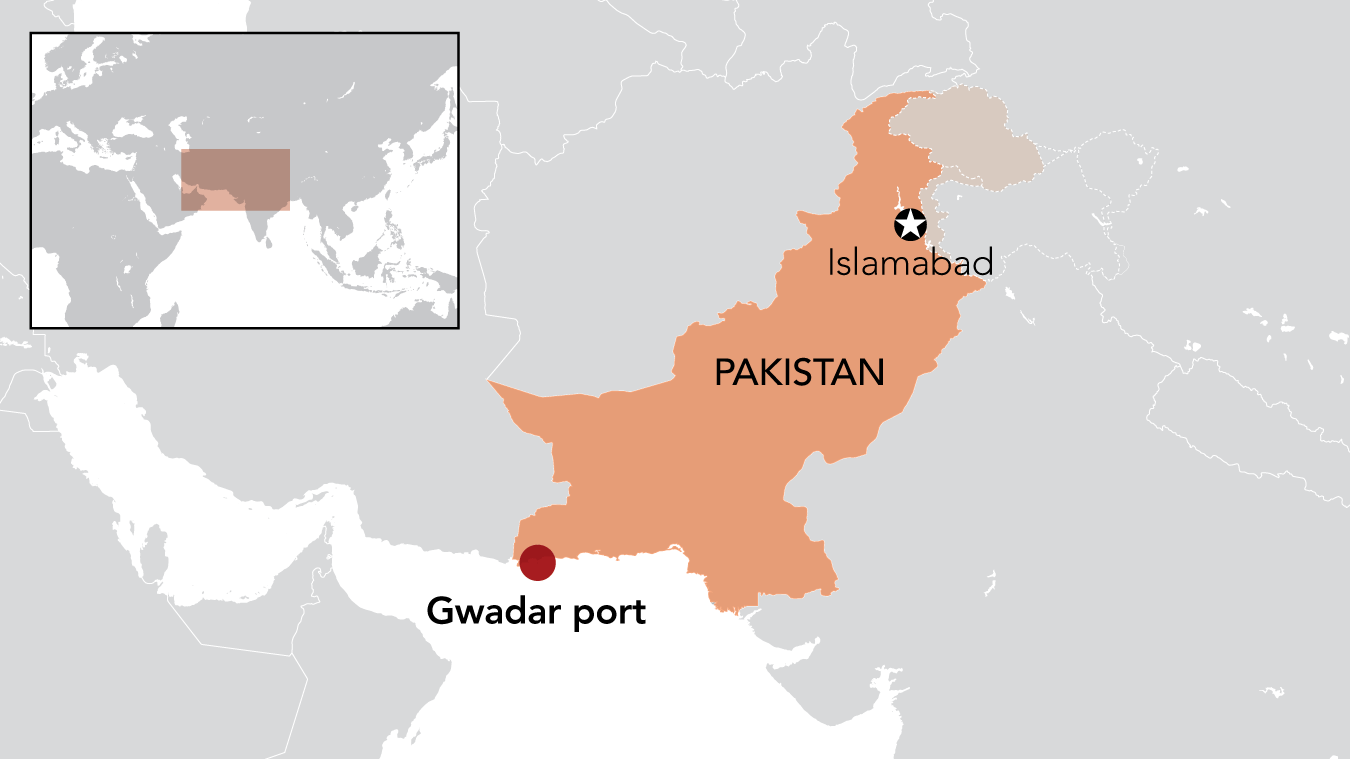
The drive to Pakistan’s port of Gwadar takes seven and a half hours from Karachi via the Makran coastal highway. Much of the 600-km route is deserted, with no restaurants, restrooms or even fuel stations. On a recent journey, around 200 vehicles in total could be counted during the entire drive.
Arriving in the city on Pakistan’s Indian Ocean coast, Chinese and Pakistani flags are ubiquitous, and Chinese-financed construction projects loom, but the city is spookily devoid of economic activity. Near the seafront, broad avenues are curiously empty of vehicles. Inside the city center, the roads are narrow, congested and covered with foul smelling drain water, with few multistory buildings aside from the Chinese-built port compound.
It is hard to visualize Gwadar as the launch pad of a new global paradigm, but that is what Beijing would have the world believe.
Nine years ago it was plucked out of obscurity — a backwater in Pakistan’s restive Balochistan region — and presented as China’s commercial window onto the Indian Ocean, a hub for regional integration under the Belt and Road Initiative, which was to harness the juggernaut of the Chinese economy to the goal of Asian economic development.
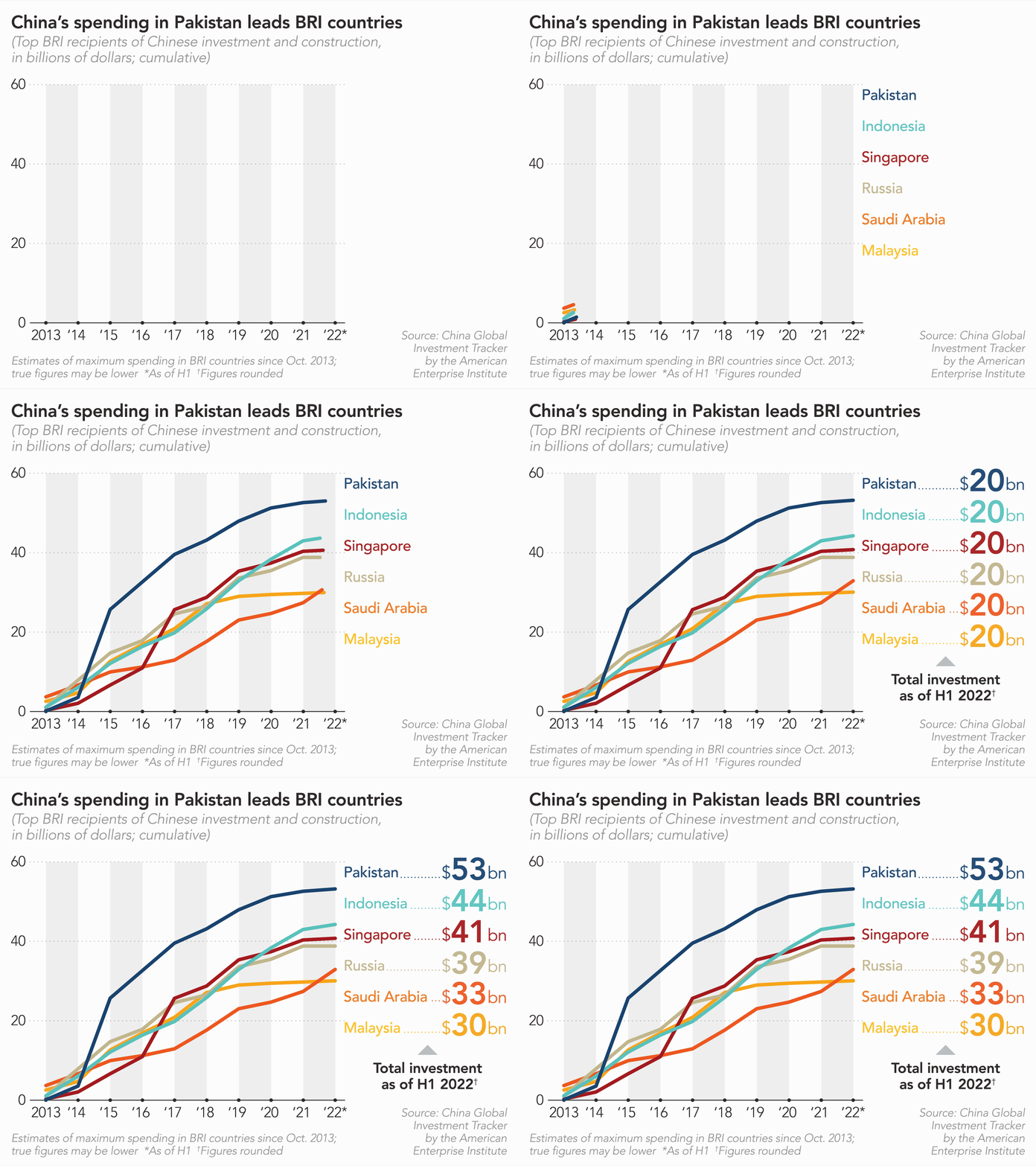
The BRI is an audacious program of lending, aid and infrastructure contracts totaling over $880 billion, according to the American Enterprise Institute.
The initiative, which includes pledges to 149 countries, aims to promote Chinese-led regional integration — and sow economic dependence on Beijing.
First announced in a speech by Chinese President Xi Jinping in 2013 as the “Silk Road,” the BRI was fleshed out in April 2015 with the announcement of the China-Pakistan Economic Corridor (CPEC), stretching from Gwadar to the Chinese city of Kashgar, in Xinjiang. The CPEC showcased the China-Pakistan “all-weather friendship” with $46 billion in pledged funds that has since grown to $50 billion. It was to be the backbone of the now renamed Belt and Road Initiative.
NEW YORK — Welcome to Nikkei Asia’s podcast: Asia Stream.
Every week, Asia Stream tracks and analyzes the Indo-Pacific with a mix of interviews and original reporting by our correspondents from across the globe.
TTO – Đầu tháng 7-2017, Viện Nghiên cứu hòa bình quốc tế Stockholm đã cảnh báo tình hình hiện đại hóa vũ khí hạt nhân vẫn tiếp tục diễn ra trên thế giới.
Mỹ bắn thử tên lửa đạn đạo liên lục địa Minuteman III đêm 26-4-2017 – Ảnh: Không quân Mỹ
Không có quốc gia sở hữu vũ khí hạt nhân nào sẵn sàng từ bỏ kho vũ khí hạt nhân trong tương lai gần. Các nước đều tiếp tục phát triển hoặc triển khai thêm các hệ thống vũ khí mới hoặc tuyên bố sẽ làm như thế Chuyên viên Shannon Kile (Viện Nghiên cứu hòa bình quốc tế Stockholm)
Chín nước gồm năm nước thường trực Hội đồng Bảo an Liên Hiệp Quốc và Ấn Độ, Pakistan, Israel, Triều Tiên đang sở hữu 14.935 đầu đạn hạt nhân, trong đó đã triển khai 4.150 đầu đạn. Tiếp tục đọc “Vũ khí hạt nhân – 7 kỳ”→
Huỳnh Hoa Chủ Nhật, 28/1/2018, 07:40
Cảng nước sâu Hambantota ở Ấn Độ Dương. Do không trả được lãi vay của Trung Quốc, Sri Lanka buộc phải nhượng cho Bắc Kinh quyền sử dụng hải cảng này 99 năm. Ảnh: Wikipedia
(TBKTSG) – Gần đây ngày càng có nhiều quốc gia ở Đông Nam Á và Nam Á rơi vào bẫy nợ của Trung Quốc: vì không trả được nợ mà phải nhượng đất nhượng biển, hoặc làm theo những yêu cầu chính trị và ngoại giao của Bắc Kinh. Với đại dự án “Một vành đai, một con đường” (BRI – Bell and Road Initiative) đi qua nhiều nước mà Chủ tịch Trung Quốc Tập Cận Bình đang ra sức quảng bá, dự đoán sẽ có thêm nhiều nước mắc vào chiếc bẫy này.
Câu chuyện Sri Lanka
Tháng 12 năm ngoái, Chính phủ Sri Lanka phải cho một doanh nghiệp nhà nước Trung Quốc thuê hải cảng Hambantota trên bờ Ấn Độ Dương 99 năm để “cấn trừ” bớt khoản nợ mà nước này đã vay để phát triển khu vực hẻo lánh này. Tiếp tục đọc “Chiến lược “ngoại giao bẫy nợ” của Trung Quốc”→
Người dân Pakistan, mở tiệc iftar mừng kết thúc mùa chay Ramadan trên đường phố Lahore, trước văn phòng của tập đoàn viễn thông Trung Quốc Huawei. Ảnh: Internet
(TBKTSG) – Trương Dương (Zhang Yang) – một doanh nhân của tỉnh Trùng Khánh phía tây nam Trung Quốc – thường lên các diễn đàn trực tuyến tìm những người có máu kinh doanh và dũng cảm, có thể gạt bỏ các mối lo về an ninh để cùng với ông đi làm ăn ở Pakistan.
Ông Trương, 48 tuổi, là một trong số ngày càng đông những người Trung Quốc tiên phong đi tìm cơ hội ở nước Pakistan bên kia dãy núi Himalaya, nơi Bắc Kinh đã cam kết đầu tư 57 tỉ đô la Mỹ vào các dự án cơ sở hạ tầng như là một phần trong đại dự án “Một vành đai, một con đường” mà Chủ tịch Trung Quốc Tập Cận Bình mới công bố gần đây.
Vox_Since 2014, China has been building islands in the middle of the South China Sea. What were once underwater reefs are now sandy islands complete with airfields, roads, buildings, and missile systems. In less than two years, China has turned seven reefs into seven military bases in the South China Sea, one of the most contentious bodies of water in the world.
href=””>United Nations Law of the Seas, which says a country’s territory extends 200 miles off its shores, an area called the exclusive economic zone, or EEZ. Any trade or resources that fall in a country’s EEZ belong to that country; they’re its sovereign territory. Any area that is not in an EEZ is considered international waters and subject to UN maritime law, meaning it’s shared by everyone. Every country in the region, which includes Malaysia, the Philippines, Brunei, and Vietnam, bases its claim to the South China Sea on the UN’s EEZ laws — except China.
China argues it has a historical claim to the South China Sea, dating back to naval expeditions in the 15th century. After World War II, the Japanese Empire lost control of the South China Sea, and China took advantage of the moment to reclaim it. On maps, it started drawing a dashed line that encompassed most of the South China Sea. This line became its official claim and is known today as the Nine-Dash Line, because it always has nine dashes. In 1973, when the UN law established EEZs, China reaffirmed its Nine-Dash Line, refusing to clarify the line’s boundaries and rejecting other countries’ claims.
Since then, tensions have built around who rightfully owns the South China Sea. The dispute has centered on the Spratly Islands, an archipelago at the heart of the South China Sea. Currently, China, Malaysia, the Philippines, and Vietnam claim some part of the Spratly Island chain. They’ve asserted their claims by putting small buildings, ports, and even some people on what are essentially rocks in the middle of the ocean.
But the Spratlys are very important, because whichever country can successfully claim themcan extend its EEZ to include them, thus gaining miles of precious sovereign territory. This is why China began building up islands in 2014. By turning these rocks into military bases, the Chinese are now able to support hundreds of ships, bolstering their presence in the region. They are using fishing boats, surveillance ships, and navy destroyers to set up blockades around other countries’ islands and defend their own. This is all done very cautiously and in small steps in order to avoid sparking a wider conflict.
Since China began building islands, the disputes have not become violent.But tensions are building in the region. As China deploys more of its military to the Spratlys, other countries are getting nervous and building up their own islands. It’s a complex situation that will continue to gain international attention, for better or for worse.
DT – Trong bối cảnh ngân sách khó khăn, mới đây, TS. Lê Xuân Nghĩa cho rằng, có thể chấp nhận vay đồng Nhân dân tệ làm đường cao tốc Bắc Nam để tránh rủi ro về tỷ giá”. Tuy nhiên, nguồn vốn vay từ Trung Quốc có thực sự mang lại lợi ích?
Bài dịch dưới đây là một Chương trong quyển sách nhan đề Bá Chủ: Kế Hoạch Của Trung Quốc Để Thống Trị Á Châu và Thế Giới, xuất bản năm 2000, và được Dân Biểu Quốc Hội Hoa Kỳ Dana Rohrabacher đánh giá là “có giá trị hơn cả các sự thuyết trình của Cơ Quan Tình Báo Trung Ương (CIA)”. Tiếp tục đọc “Bản đồ thế giới của bá quyền Trung Quốc”→
Năm 2006, một báo cáo được trình bày trong Bộ Tổng tham mưu quân đội Trung Quốc đã đánh giá tình hình khu vực và quốc tế ảnh hưởng đến Trung Quốc. Trong đó quan hệ Việt Trung được trình bày ngay đầu tiên.
Tại thời điểm vai trò của Pakistan trong cuộc chiến chống chủ nghĩa cực đoan và chủ nghĩa khủng bố bị đặt một dấu hỏi lớn, cả thế giới đang theo dõi quyết định của Bắc Kinh về quan hệ với Islamabad.
Pakistani PM Sharif has inaugurated a two-day China-Pakistan Economic Corridor summit in Islamabad, hailing the project as a milestone for his country. But opposition to the project is increasing amid new conflicts.
Addressing the inaugural session of the two-day CPEC Summit in the Pakistani capital Islamabad on Monday, August 29, Prime Minister Nawaz Sharif said the project would be a “game-changer” for Pakistan. He said the CPEC would also bring peace and prosperity to the entire region. Tiếp tục đọc “China’s economic corridor creating new conflicts in Pakistan”→



 Người dân Pakistan, mở tiệc iftar mừng kết thúc mùa chay Ramadan trên đường phố Lahore, trước văn phòng của tập đoàn viễn thông Trung Quốc Huawei. Ảnh: Internet
_-_IMG_1104.jpg)


 CVD
CVD 