By Jakob Askou Bøss, Senior Vice President for Corporate Strategy and Stakeholder Relations, Ørsted and Jennifer Layke, Director of Global Energy Program, World Resources Institute
The technologies and the capital are available to accelerate the green energy transition, but the global transformation from fossil fuels to clean energy is not moving forward quickly enough. Governments need to adjust their institutional and regulatory framework to pave the way for the necessary private investments to get the job done.
Electric bus in Hangzhou, China. Photo by Shankar S./Flickr
In his speech to the UN General Assembly on September 22, 2020, President Xi Jinping of China announced that China will scale up its Nationally Determined Contribution (NDC) to tackling climate change by adopting more vigorous policies and measures in an effort to peak carbon dioxide emissions before 2030 and reach carbon neutrality before 2060.
The announcement is among the most significant signs of progress concerning countries’ efforts to mitigate climate change since agreeing to the Paris Agreement in 2015. Further clarifications on the exact commitment will be needed, and it is likely that even more ambition will be needed in future. Here are four key questions and answers about this important development.
1. What Exactly Is New?
The announcement marks the first time that China has set a concrete long-term target of carbon neutrality. This means that by 2060, the country will either stop carbon dioxide emissions altogether, or — more likely — use various means to remove an equivalent amount of any remaining emissions.
WASHINGTON (September 22, 2020)— Today in remarks delivered before the United Nations General Assembly, President Xi Jinping made a surprise announcement that China aims to achieve carbon neutrality before 2060 and to peak carbon emissions before 2030. This is the first time Chinese leadership has made a commitment about reaching net zero emissions.
Following is a statement from Helen Mountford, Vice President, Climate and Economics, World Resources Institute:
“President Xi sent an extremely important signal today with his unexpected announcement that China will strive for carbon neutrality by 2060 and strengthen its national climate commitment including peaking emissions before 2030. The devil will be in the details and China should set more specific near-term targets and an earlier peaking date, but China’s direction of travel toward a zero-carbon future is coming into focus. Tiếp tục đọc “China Aims For Carbon Neutrality By 2060”→
Vietnam’s greenhouse gas emissions are set to grow significantly by 2030, under an updated climate plan submitted to the UN.
The country’s large cement sector is factored into the plan for the first time, which experts welcomed. But they said the overall target was not substantially more ambitious than the previous version.
Under the new plan, Vietnam committed to cut its emissions growth by 9% or nearly 84 million tonnes of CO2 by 2030 compared with business as usual projections, using a 2014 baseline. Emissions are still expected to grow by 844 million tonnes of CO2 during that time.
My Khe beach in Da Nang City, July 2020. Photo by VnExpress/Nguyen Dong.
With Storm Noul set to make landfall in central provinces Friday afternoon, Vietnamese authorities are preparing to evacuate half a million to safety.
As of Wednesday afternoon, the eye of the tropical storm lay around 680 km to the southeast of Vietnam’s Hoang Sa (Paracel) Islands off the central coast, packing winds of 70 kph.
On Wednesday, the storm is expected to move west-northwest at a speed of 15 kph and further intensify.
By Viet Anh September 16, 2020 | 10:02 am GMT+7 vnexpressThe Xayaburi dam in the lower Mekong River in Laos. Photo by CK Power/Handout via AFP.
Germany has provided equipment to the Mekong River Commission to monitor the environmental impacts of two mainstream dams on the lower reaches of the Mekong River.
The equipment, worth around $600,000, meant to help monitor the impacts of Laos’s Xayaburi and Don Sahong dams, was handed over on Tuesday as part of the German government’s support for the MRC’s Joint Environment Monitoring of Mekong Mainstream Hydropower Projects (JEM) program, which is now in the pilot stage.
Minister of Planning and Investment Nguyen Chi Dung has urged localities in the south-east and Mekong Delta regions to develop transport infrastructure by diversifying the sources of and effectively using capital over the next five years.
Vam Cong Bridge across Hau River in the Mekong Delta. VNA/VNS Photo
Speaking at a conference on socio-economic development in the two regions, he called on them to lay out their objectives and priorities for public investment in 2021-25 to ensure “focused and effective investment.”
An embankment section in Tran Van Thoi District of Ca Mau Province in early August, 2020. Photo by VnExpress/Trung Dung.
With its coastal embankment threatened by collapse, Ca Mau Province is seeking urgent solutions to save residential areas and farmland.
The province entered a state of emergency Thursday to respond to any damage occurring as a three kilometer (1.86 miles) coastal embankment along its western coast nears the point of collapse due to wave impact.
Authorities have identified four sections as “especially threatened,” measuring 610 and 315 m each in U Minh District, and 1,900 m and 500 m each in Tran Van Thoi District.
“Those sections receive no forest protection. During extreme weather spells, waves would break directly against the embankment, putting it at great risk,” To Quoc Nam, deputy director of the province’s Department of Agriculture and Rural Development, said.
He confirmed the department is looking into investment projects to help counter the situation.
Trung Nguyen boarded up his brother’s convenience store in Abbeville, La., on Wednesday.Kathleen Flynn/Reuters
Hurricane Laura shares something in common with both Hurricane Florence, a 2018 storm that killed 52 Americans, and Hurricane Katrina, which struck Louisiana 15 years ago this week. All three changed from more typical hurricanes into severe ones in just a day or two.
Thursday, August 20, 2020, 10:32 GMT+7 tuoitrenews
A map details the location of the future My An-Cao Lanh road in the road network of Vietnam’s Mekong Delta region. Graphic: Tuoi Tre
Vietnam’s prime minister has approved a proposal by the Ministry of Planning and Investment and the Ministry of Finance to construct a key road in the Mekong Delta using official development assistance (ODA) loans from South Korea.
HONOLULU (29 July 2020)—In recent years, relations with Southeast Asia have emerged as an important pillar of US engagement with the Indo-Pacific region. The Association of Southeast Asian Nations (ASEAN) is central to US foreign policy in the region, with a growing focus on the five countries bound together by the Mekong River—Cambodia, Lao PDR, Myanmar, Thailand, and Vietnam.
Fishing boats are unloaded on Tonle Sap Lake, which is fed by the Mekong River in Cambodia. Conservationists warn that dam construction on the Mekong could threaten the food supply of more than 40 million people who rely on fish from the river as an important source of protein. Photo: Jason South/Fairfax Media/Getty Images.
As they emerge from a tumultuous history, these countries must confront new elements of great-power competition even as their youthful populations push for economic growth and integration into the wider region and the world. Among other impacts, urbanization, infrastructure expansion, and climate change all affect the Mekong River, the natural resources along its banks, and the 240 million people who live in the region.
Vietnam’s Communist Party leadership has instituted a top-down reform of the country’s electricity sector in response to the need to shift away from coal and its growing list of associated problems.
The country’s new energy strategy puts greater emphasis on renewables, including wind and solar, abandoning a decade-long commitment to investing in and subsidizing coal.
The move is also helped by recent technological developments that have made generating renewable power at scale more economically feasible than ever.
A village in Vinh Long Province, boasting over a thousand historic kilns, is the largest brick manufacturer in the Mekong Delta.
Located across the canal in Mang Thit District of Vinh Long Province, the century-old village is known as the biggest and most famous brick manufacturer in the Mekong Delta. Around 1,300 kilns remain in operation, spread across a total 3,000 hectares.
(TN&MT) – Ngày 24/7/2020, Thủ tướng Chính phủ đã phê duyệt Đóng góp do quốc gia tự quyết định (NDC) cập nhật của Việt Nam. Bằng nguồn lực trong nước, đến năm 2030 Việt Nam sẽ giảm 9% tổng lượng phát thải khí nhà kính so với Kịch bản phát triển thông thường (BAU) quốc gia, tương đương 83,9 triệu tấn CO2tđ.
Mức đóng góp 9% này có thể được tăng lên thành 27% so với BAU quốc gia (tương đương 250,8 triệu tấn CO2tđ) khi nhận được hỗ trợ quốc tế thông qua hợp tác song phương, đa phương và các cơ chế trong khuôn khổ Thỏa thuận Paris về biến đổi khí hậu. NDC cập nhật của Việt Nam xác định các biện pháp giảm nhẹ phát thải khí nhà kính giai đoạn 2021-2030 và các nhiệm vụ chiến lược về thích ứng với biến đổi khí hậu, các giải pháp thích ứng nhằm giảm thiểu thiệt hại do các tác động liên quan đến những thay đổi của khí hậu gây ra trong tương lai được xác định cụ thể cho từng lĩnh vực. Tiếp tục đọc “Hoàn thành cập nhật Đóng góp do quốc gia tự quyết định (NDC): Nâng mức đóng góp của Việt Nam cho ứng phó với BĐKH toàn cầu”→



 The Xayaburi dam in the lower Mekong River in Laos. Photo by CK Power/Handout via AFP.

 Trung Nguyen boarded up his brother’s convenience store in Abbeville, La., on Wednesday.Kathleen Flynn/Reuters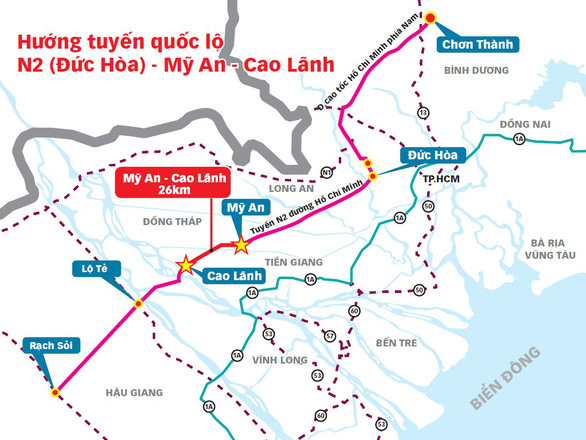


 CVD
CVD 