Laos allows private firms to study building power line to Vietnam

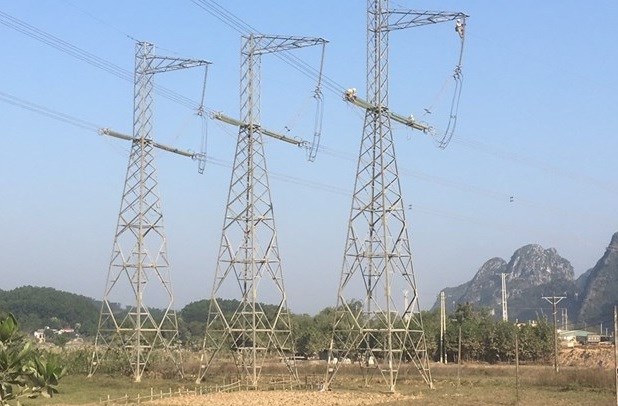
The Lao Government has given the green light for two private companies to carry out a feasibility study on the construction of a 220kV transmission line which would carry electricity from five dams in northern Laos to Vietnam.

VNA Tuesday, February 08, 2022 14:55 

Laos allows private firms to study building power line to Vietnam hinh anh 1
Illustrative image (Photo: VNA)

If the study is approved, the line will transmit electricity from Nam Ou dams No.3, 4, 5, 6 and 7 through Luang Prabang and Phongsaly provinces to Vietnam.

Tiếp tục đọc “Laos allows private firms to study building power line to Vietnam”

How Peatlands Can Advance Climate Action in Southeast Asia

WRI.org

Topic Forest and Landscape Restoration Region Asia

Southeast Asia is home to over 54% of the world’s peatlands — tropical wetlands which have a major role to play in climate action. But they are being deforested rapidly: Around 25 million hectares of tropical peatlands in Southeast Asia have been deforested and drained over the last three decades alone, and only 6% of peatlands remain untouched.

This is a major blow to the region. These terrestrial wetland ecosystems help regulate water flow by capturing rainwater during the wet season and slowly releasing it during the dry season. They are also key habitats for endangered and rare species of both plants and animals, and are essential for the livelihoods of local communities.

Additionally, they are an important carbon store in the global carbon cycle; more than three-fourths of global peat carbon stocks (52 Gigatons) are stored in Southeast Asian peatlands. Their destruction warrants global attention.

Tiếp tục đọc “How Peatlands Can Advance Climate Action in Southeast Asia”

Tương lai của miền Tây

Đọc thêm: Phát triển ĐBSCL – TĐH >>

Trương Chí Hùng

Trương Chí Hùng

Nhà văn, VNExpress

Bằng là bạn học cấp hai của tôi. Hết lớp 9, Bằng thôi học dù thành tích đứng thứ nhì toàn trường.

Chú Sáu, ba của Bằng, lúc đó nói, nhà ruộng đất nhiều, cần gì học, ở nhà làm ruộng cũng sống khỏe re. Ở tuổi 16, Bằng không nghĩ được gì nhiều, người lớn nói sao nghe vậy. Vài năm sau, Bằng trở thành lao động trụ cột trong nhà. Một mình cậu quán xuyến hai mẫu ruộng, mỗi năm canh tác ba vụ, của ăn không thiếu. Rồi Bằng lấy vợ, sanh con, xây dựng một gia đình như bao gia đình khác ở quê tôi.

Tiếp tục đọc “Tương lai của miền Tây”

What Does “Net-Zero Emissions” Mean? 8 Common Questions, Answered

WRI.org

The latest climate science is clear: Limiting global warming to 1.5 degrees C (2.7 degrees F) is still possible. But to avoid the worst climate impacts, global greenhouse gas (GHG) emissions will need to drop by half by 2030 and reach net-zero around mid-century.

Recognizing this urgency, a rapidly growing number of national government, local government and business leaders are making commitments to reach net-zero emissions within their jurisdictions or businesses. To date, over 80 countries have communicated such “net-zero targets,” including the world’s largest emitters (China, the United States, the European Union and India). On top of that, hundreds more regions, cities and businesses have set targets of their own.

Tiếp tục đọc “What Does “Net-Zero Emissions” Mean? 8 Common Questions, Answered”

Key Themes for the Global Energy Economy in 2022

oxfordenergy.org

We start with a review of short-term issues in the oil, gas and electricity markets. Bassam Fattouh and
Andreas Economou consider the outlook for oil demand over the next 12 months and discuss the ability
of OPEC+ producers to manage a gradual increase in production to balance the market, even as
demand growth is expected to soften. Their conclusion is that the oil price will remain within a $70-90
per barrel range, while refilling depleted storage will be a key issue. Price volatility, in light of
considerable uncertainty about both supply and demand, as well as political responses to high prices
will remain dominant issues in 2022. Anupama Sen, David Robinson and Rahmat Poudineh then
discuss government responses to current electricity price volatility, using the UK and Spain as examples
of different responses to providing protection for low-income consumers. They see the issue becoming
increasingly relevant as the energy transition progresses and suggest that government intervention
could become less and less effective unless energy policy is well designed.
In a somewhat similar vein, Mike Fulwood and Jack Sharples consider the outlook for gas prices and
supply to Europe and the implications for the global LNG market. Replenishing European storage will
be a critical issue in 2022, with LNG supply, Asian demand and pipeline exports from Russia being key
drivers to watch.

Tiếp tục đọc “Key Themes for the Global Energy Economy in 2022”

‘Acidifying, warming seas affecting seafood supplies’

scidev.net

Japanese amberjack

A school of Japanese amberjack at the north-east coast of Taiwan. A new report warns that ocean warming and acidification are affecting the behaviour of fish. Copyright: Vincent C. Chen(CC BY SA 4.0)

Speed read

  • Warming, acidification of the oceans changing shoal behaviour in fish
  • Shoal behaviour key to fish survival and seafood supplies
  • Fish species moving towards the poles, changing temperate ecosystems

By: Claudia Caruana

[NEW YORK] Ocean acidification and global warming are interfering with the way fish interact in groups, posing a threat to their survival which could affect seafood supplies, researchers say.

Marine ecosystems worldwide have shown an increased dominance of warm water species following seawater temperature rise, with parallel changes in the species composition of fish catches since the 1970s, according to a report by the Intergovernmental Panel on Climate Change (IPCC).

Tiếp tục đọc “‘Acidifying, warming seas affecting seafood supplies’”

Mekong group urges better water management collaboration as record drought persists

VNE – By Reuters   January 14, 2022 | 09:57 am GMT+7

Mekong group urges better water management collaboration as record drought persistsA canal runs dry in An Giang Province of Vietnam’s Mekong Delta, March 2020. Photo by VnExpress/Huu Khoa

The Mekong River Commission on Thursday called on China and Southeast Asian to better coordinate management of Mekong hydropower dams and reservoirs after three years of record low flows and extra dry conditions.

The Mekong River’s flow dropped to the lowest levels in more than six decades from 2019 to 2021 due to an increased number of reservoirs, dams and other water storage, a worsening of the climate situation and unusually low rainfall, a new MRC river flow report showed.

Dry conditions in the past three years have affected navigation, river ecosystems and riverbank stability in the region where tens of millions of people depend on the Mekong for their livelihoods.

Tiếp tục đọc “Mekong group urges better water management collaboration as record drought persists”

Corporate Financing of Nature Based Solutions: What Next?

In this commentary, we share some perspectives on how to ensure high-ambition and high-integrity with respect to demand for and supply of credits. Crucially, we argue that companies’ investments in NBS should only qualify for consideration as carbon credits if the company can demonstrate that it is doing all that it should to eliminate carbon emissions from its operations and value chains, aligned with Science-Based Targets. The remainder of this commentary describes why, and how this would work.

WRI.org

April 5, 2021 By Andrew Steer and Craig Hanson

More than 1,500 companies have committed to net-zero emissions by mid-century, as have 11,000 cities and at least $9 trillion in private assets under management. This raises crucial questions as to how much offsetting of carbon can take place in mid-century and, more importantly, how much can take place on the path to get there. The January 2021 report of the Taskforce on Scaling the Voluntary Carbon Market suggested a market of 1-5 Gigatons of CO2e by 2030, with perhaps two-thirds directed at Nature Based Solutions (NBS), meaning that tens of billions of dollars of investment in NBS are potentially at stake.

Tiếp tục đọc “Corporate Financing of Nature Based Solutions: What Next?”

Giải pháp giúp nông dân ĐBSCL thoát khỏi ‘vòng kim cô’ cây lúa

Vân Phong – 16/12/2021 19:32

(KTSG Online) – GS Võ Tòng Xuân – Hiệu trưởng Trường Đại học Nam Cần Thơ – cho rằng việc giao chỉ tiêu GDP từ chính quyền cấp trên xuống cấp dưới với đơn vị là tấn lúa khiến nhiều nông dân ở khu vực đồng bằng sông Cửu Long (ĐBSCL) phải trồng lúa mà không được làm những việc khác, từ đó dần mắc trong “vòng kim cô” mang tên cây lúa.

Quan điểm này được GS Võ Tòng Xuân nêu tại tọa đàm “Đồng bằng sông Cửu Long: Thuận thiên bền vững, vượt đại dịch” sáng 16-12.

Nông dân ĐBSCL đang thu hoạch lúa. Ảnh: Trung Chánh

Tiếp tục đọc “Giải pháp giúp nông dân ĐBSCL thoát khỏi ‘vòng kim cô’ cây lúa”

Choáng ngợp với đề xuất đầu tư dự án điện

baodautu.vn

Đã có 55 địa phương gửi đề xuất tới Bộ Công thương để bổ sung đầu tư các dự án điện mới vào Dự thảo Quy hoạch Điện VIII với tổng công suất hơn 440.000 MW.TIN LIÊN QUAN

Tổng công suất nguồn điện mới được 55 địa phương này đề nghị đầu tư trong giai đoạn tới lên tới con số hơn 440.000 MW.

Đua đầu tư nguồn điện

Sau khi Văn phòng Chính phủ có công văn gửi các địa phương yêu cầu báo cáo tổng hợp các đề xuất bổ sung nguồn điện và lưới điện chưa được phê duyệt để Bộ Công thương tổng hợp, chuẩn bị cho Hội nghị trực tuyến với các địa phương của Chính phủ, các địa phương đã hưởng ứng rất nhiệt tình.

Nguồn tin của Báo Đầu tư cho hay, tới nay đã có 55 địa phương gửi đề xuất tới Bộ Công thương.

Đáng chú ý là, tổng công suất nguồn điện mới được 55 địa phương này đề nghị đầu tư trong giai đoạn tới lên tới con số hơn 440.000 MW.

Chẳng hạn, Ninh Thuận, địa phương đi đầu trong phát triển năng lượng tái tạo với điện mặt trời, điện gió 3 năm qua, đã đề nghị bổ sung vào Dự thảo Quy hoạch Điện VIII tổng công suất 42.595 MW nguồn điện mới.

Tiếp tục đọc “Choáng ngợp với đề xuất đầu tư dự án điện”

Năng lượng trong biến đổi khí hậu: Giải pháp cho Việt Nam ?

TS – 30/11/2021 07:30 –

Cho đến nay, ngay cả những quốc gia tiên tiến về KH&CN vẫn chưa có giải pháp nào coi là hoàn hảo về một nguồn năng lượng xanh không phát thải carbon.


TS. Trần Chí Thành là một chuyên gia về công nghệ hạt nhân và an toàn hạt nhân. Ảnh: Thanh Nhàn.

Tuy nhiên, ngay cả khi không tồn tại giải pháp nào hoàn hảo thì vẫn có những lựa chọn tối ưu – nghĩa là vừa đảm bảo an ninh năng lượng mà vẫn hạn chế phát thải, TS. Trần Chí Thành, Viện trưởng Viện Năng lượng nguyên tử Việt Nam, cho biết như vậy qua góc nhìn của một chuyên gia về công nghệ hạt nhân và an toàn hạt nhân.

Tiếp tục đọc “Năng lượng trong biến đổi khí hậu: Giải pháp cho Việt Nam ?”

Responding to Coronavirus: Low-carbon Investments Can Help Economies Recover

WRI.org

By Helen Mountford 

Windmills running in the background of a dense forest.
Cover Image by: Camila Fernández León

The COVID-19 pandemic is first and foremost a human tragedy, infecting more than 120,000 and killing more than 4,200 people as of March 12, 2020. The loss of human life is heart-breaking and set to continue ticking upwards.

The virus has also hit society like a global tsunami, disrupting travel, cutting off communities, shuttering factories and shaking up economic markets. The global manufacturing sector has suffered its worst contraction since the 2009 recession. Goldman Sachs forecasts zero earnings growth for U.S. companies, while airlines and cruise lines are reeling as people opt to stay home.

Unsurprisingly this major global disruption is leading to lower energy demand, which in turn reduces global greenhouse gas emissions. China’s industrial output has dropped 15% to 40% since the crisis began, leading to a roughly 25% drop in emissions over that same period.

Tiếp tục đọc “Responding to Coronavirus: Low-carbon Investments Can Help Economies Recover”

Tài chính khí hậu: Tiền đi đâu, về đâu?

LÊ MY 18/11/2021 15:10 GMT+7

TTCT Cách đây 12 năm, các nước giàu có cùng đưa ra một cam kết tốt đẹp để giúp các nước nghèo thích ứng với biến đổi khí hậu, cùng con số long lanh 100 tỉ USD viện trợ mỗi năm. Lời hứa hoa mỹ hóa ra lại thành quả táo bất hòa, mà hệ quả của nó tới nay vẫn còn.

 Một ngôi nhà tạm bị hư hại ở Bangladesh, trong khu vực ven biển đang bị đe dọa bởi xói mòn và xâm nhập mặn. Ảnh: Getty

“Chúng tôi không xin tiền bố thí, chúng tôi yêu cầu tiền bồi thường cho những thiệt hại gây ra bởi thói hoang phí của các quốc gia phát triển. Những kẻ đã thải ra lượng khí thải carbon này, gây ra các hiện tượng khí hậu, phải trả tiền” – Molwyn Joseph, bộ trưởng môi trường của quốc đảo Antigua và Barbuda, nói với báo Financial Times ngày 3-11.

Tiếp tục đọc “Tài chính khí hậu: Tiền đi đâu, về đâu?”

Nhiều thủy điện ồ ạt xả lũ, dân trở tay không kịp

Plo.vn

Thứ Tư, ngày 1/12/2021 – 06:30

(PLO)- Nhiều thủy điện ở Tây Nguyên thuộc lưu vực sông Ba bất ngờ xả lũ xuống hạ du, gây ngập nặng nhiều vùng ở Phú Yên, người dân không kịp ứng phó.

Thông tin với Pháp Luật TP.HCM, ông Trần Hữu Thế, Chủ tịch UBND tỉnh Phú Yên, cho hay đến tối 30-11, nhiều vùng ven sông Ba thuộc TP Tuy Hòa, các huyện Phú Hòa, Sơn Hòa, Tây Hòa, Đông Hòa đã bị ngập nặng. Hàng ngàn căn nhà bị ngập sâu trong nước, hàng loạt xã, khu dân cư bị lũ cô lập. Quốc lộ 25, quốc lộ 29 từ TP Tuy Hòa đi Tây Nguyên, phần lớn các tuyến giao thông trọng yếu đã bị tê liệt, ách tắc do ngập sâu trong nước, sạt lở.

Tiếp tục đọc “Nhiều thủy điện ồ ạt xả lũ, dân trở tay không kịp”

Can the world’s most polluting heavy industries decarbonize?

Grist.org

The production of steel, cement, and ammonia emit about one-fifth of all human-caused CO2. Technologies are emerging to decarbonize these problem industries, but analysts warn that big challenges remain.

A blast furnace at a steel mill in Salzgitter, Germany.
A blast furnace at a steel mill in Salzgitter, Germany. PLUS49 / CONSTRUCTION PHOTOGRAPHY / AVALON / GETTY IMAGES

This story was originally published by Yale Environment 360 and is reproduced here as part of the Climate Desk collaboration.

We know how to decarbonize energy production with renewable fuels and land transportation with electric vehicles. Blueprints for greening shipping and aircraft are being drawn up. But what about the big industrial processes? They look set to become decarbonization holdouts — the last and hardest CO2 emissions that we must eliminate if we are to achieve net-zero emissions by mid-century. In particular, how are we to green the three biggest globally-vital heavy industries: steel, cement, and ammonia, which together emit around a fifth of anthropogenic CO2? 

Our modern urban environments are largely constructed from concrete — which is made from cement — and steel. Most of our food is grown through the application of fertilizer made from ammonia. These most ubiquitous industrial materials are produced at huge expense of energy and carbon dioxide emissions. 

Tiếp tục đọc “Can the world’s most polluting heavy industries decarbonize?”