Trong 18 tháng vừa qua, do sự hạn chế đi lại của đại dịch Covid, sự quan tâm chú ý đến các vấn đề môi trường trong khu vực ở hầu hết các khía cạnh đều ít nhiều bị hạn chế hoặc lơ là. Đây có thể là lý do vì sao chúng ta đã không kịp nhận biết khi một doanh nghiệp nhà nước của Việt Nam, Công ty Xây dựng Sông Đà 6, khởi động việc xây dựng đập Sê Kông A (hay còn gọi là đập Sê Kông 1) tại CNDCND Lào.
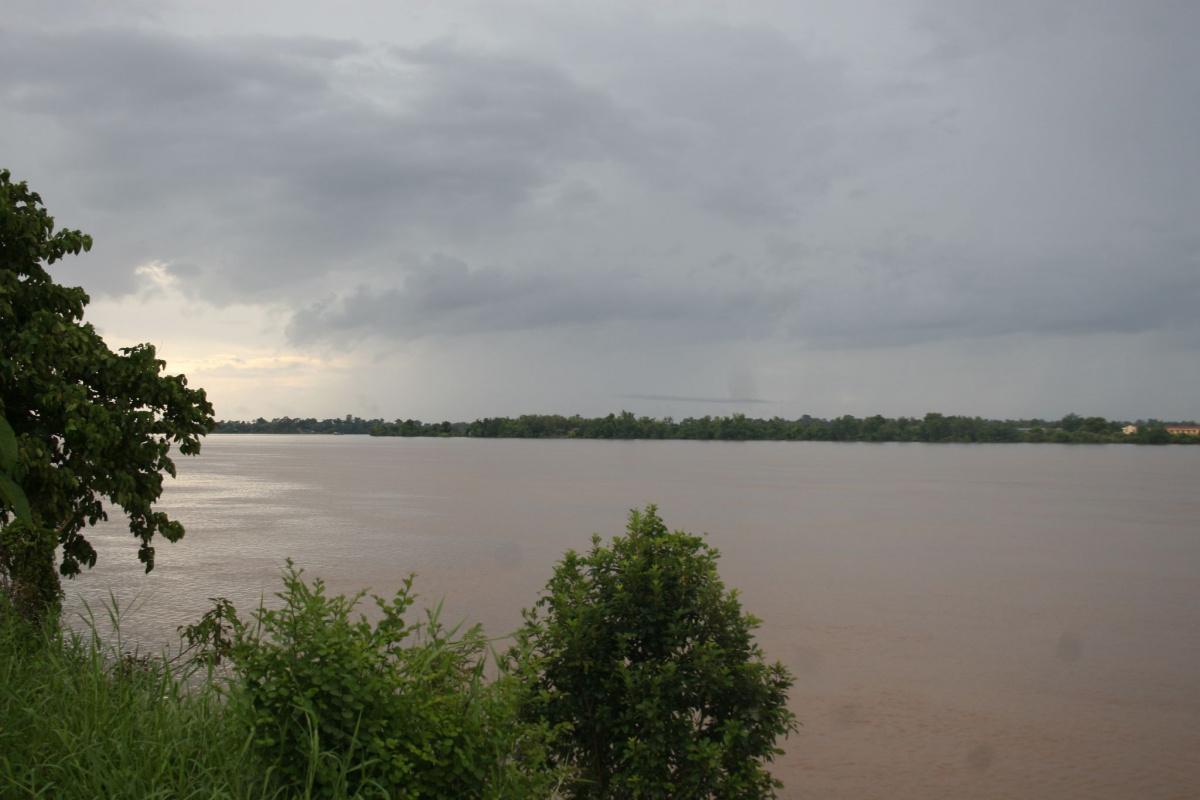
Nếu được xây dựng ở vị trí này trên dòng chính sông Sê Kông, con đập sẽ cắt hầu hết sự kết nối của Sê Kông với dòng chính Mê Công, và vì vậy sẽ chặn đứng sự di cư của nhiều loài cá lên vùng sinh sản ở thượng nguồn. Sông Sê Kông là dòng nhánh lớn cuối cùng trong hệ thống sông Mê Công hầu như còn chảy thông suốt và việc xây dựng đập Sê Kông A sẽ đe dọa trực tiếp đến trữ lượng cá và an ninh lương thực khu vực: https://nhipcaudautu.vn/phong-cach-song/dap-se-kong-1-de-doa-dong-bang-song-cuu-long-3323435/.
Anh lái xe nghêu ngao hát: “Dù có đi bốn phương trời, mà vẫn ngỡ đang ở Nhổn…” lúc chúng tôi chạy tránh thị trấn Sapa để vượt đèo Ô Quy Hồ sang Bình Lư đi Sìn Hồ (Lai Châu). Không chỉ chúng tôi, những người từng yêu Sapa nay đều hầu như không còn ai muốn chui vào “đống bê tông lổn nhổn” ấy nữa, dù nó ngay trước mặt.
Nếu lấy mốc 1897 chính quyền Pháp mở cuộc điều tra dân số đầu tiên về các tộc người vùng núi cao, từ đó Sapa được phát hiện, tính đến nay tròn 120 năm. Tôi lên đó đầu những năm 90 thế kỷ trước, rồi còn vài lần nữa, nhưng không sao nhớ nổi chuyện mỗi lần, hơn 30 năm rồi còn gì.
Sapa có ba giá trị lớn: khí hậu, cảnh quan và cuộc sống người thiểu số. Ảnh: Thanh Vy
We need only call to mind the first half of 2022 for an array of the extreme, energy-related global challenges we all face. Around the world, local versions of climate change effects—the temperatures, wildfires, droughts, storms, flooding—underscore how important it is for us to transition away from our overdependence on fossil fuels. And our energy sources don’t just have environmental implications but security ones as well. The Russian invasion of Ukraine is the latest rendition of the resource curse. At the heart of it all, fossil fuels are what enabled and amplified the murderous narcissism we see in Vladimir Putin and created a country with an unbalanced and unhealthy domestic economy able to profoundly destabilize energy flows and prices around the world.
The South China Sea (SCS) brings together its own assortment of these complex challenges and factors. Competing security concerns, resource needs, and nationalisms shape the motivations of the claimants. Much of the attention and conflict has centred on the oil and gas in the seabed. Estimates of SCS hydrocarbon volumes vary; only some of these resources are proven reserves that have been confirmed and measured, and are actually recoverable. But even in more generous assessments, the SCS only provides us with a small percentage of the global total of oil and gas reserves, and even less of the overall energy mix if we include non-fossil-fuel energy sources.
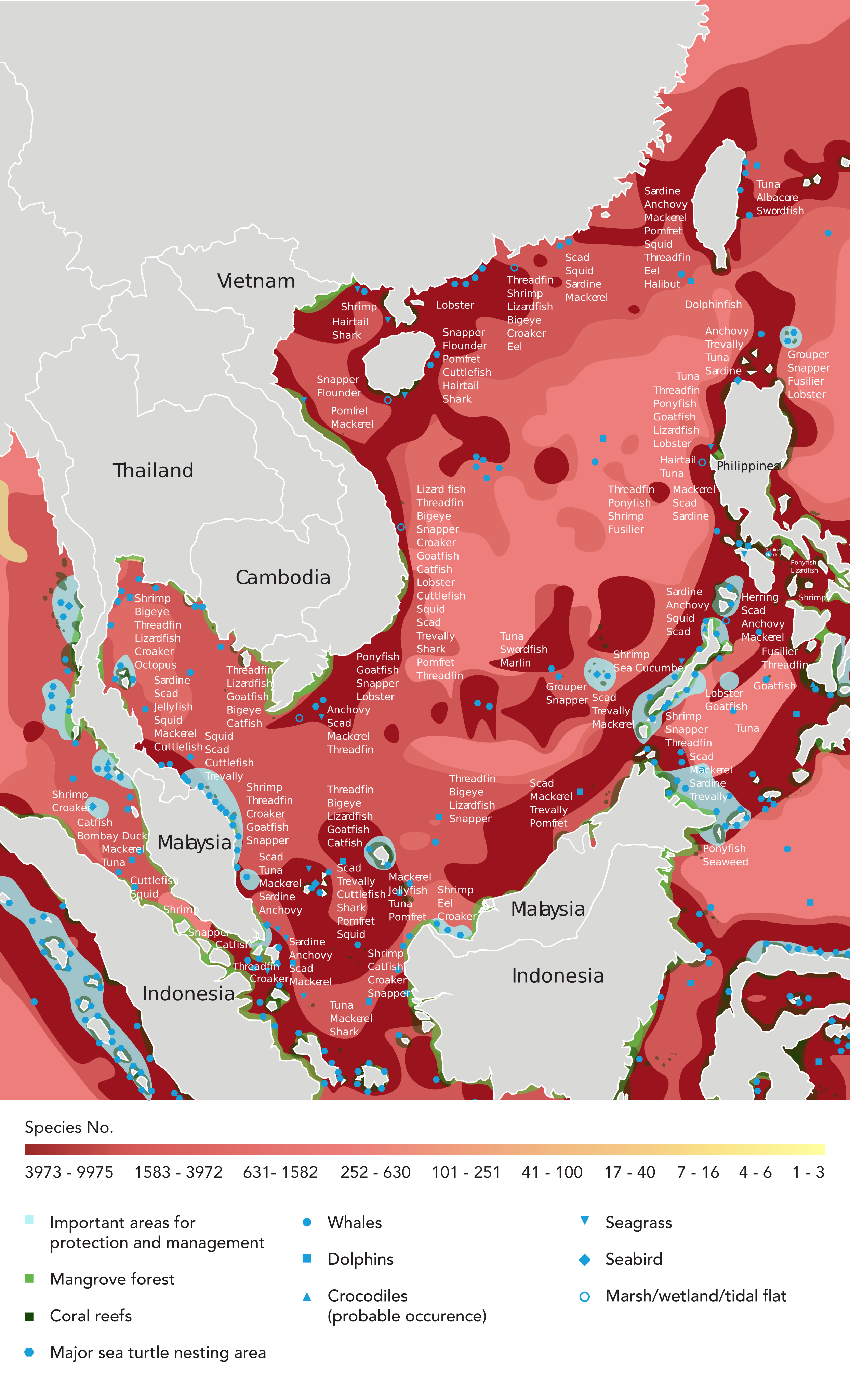
Beyond hydrocarbons, in a two-way tie with the adjacent Coral Triangle, the SCS has the highest level of marine biodiversity in the world. SCS fisheries feed and employ millions of people in the region. It’s true that conflict over these living marine resources also drives the territorial disputes in the region, and a wide variety of human activity degrades the SCS ecosystem. Yet drilling for hydrocarbons in the SCS threatens this vulnerable marine habitat even more, while also clearly contributing to geopolitical and security tensions in the region—and to climate change.
Given how destabilizing oil and gas pursuits have been for the SCS since the 1970s, we might ask ourselves whether we want to keep drilling for fossil fuels there. Do the costs and risks outweigh the benefits?
Download this 21-page report (button above) from Dr. Tabitha Grace Mallory, an inaugural John H. McArthur Research Fellow, an initiative of the Asia Pacific Foundation of Canada, and the Founder of China Ocean Institute and Affiliate Professor, Jackson School of International Studies, University of Washington.
Below, explore the rich marine biodiversity of the South China Sea, one of the most hotly-contested maritime jurisdictions on the planet, in this original map created by the author and APF Canada graphic designer Chloe Fenemore, based on historical and contemporary maps cited in the full report.
Tabitha Grace Mallory is the Founder of China Ocean Institute and Affiliate Professor, Jackson School of International Studies, University of Washington. Dr. Mallory specializes in Chinese foreign and environmental policy. She conducts research on China and global ocean governance and has published work on China’s fisheries and oceans policy.
Dr. Mallory is an inaugural John H. McArthur Research Fellow, an initiative of the Asia Pacific Foundation of Canada launched in 2021 to provide research opportunities for exceptional, mid-career scholars who are working on programs and research areas with direct relevance to Canada and Canada’s interests in Asia.
Các cuộc biểu tình đòi những nước giàu bồi thường gây biến đổi khí hậu đã được tổ chức tại 450 địa điểm trên toàn thế giới trước thềm COP27.
Ngày 23-9, các nhà hoạt động trẻ vì khí hậu đã tổ chức cuộc biểu tình tại 450 địa điểm trên toàn thế giới để thể hiện sự quan ngại của họ về tác động nóng lên toàn cầu và yêu cầu tăng viện trợ cho các nước nghèo chịu hậu quả của biến đổi khí hậu, theo hãng tin AP.
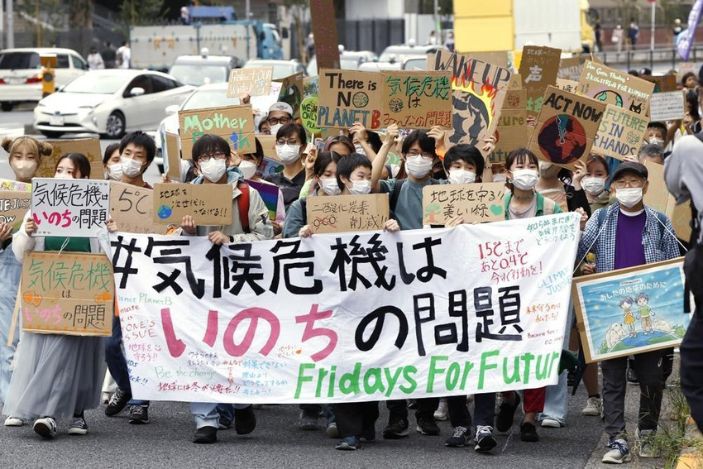
Những người biểu tình tập trung tại các tuyến đường ở những thành phố lớn như: Jakarta (Indonesia), Tokyo (Nhật), Rome (Ý), Berlin (Đức)… mang theo biểu ngữ và áp phích với các khẩu hiệu như “Chúng tôi lo lắng về cuộc khủng hoảng khí hậu”, “Vẫn chưa phải là quá muộn”,…
Các cuộc biểu tình trên được tổ chức bởi phong trào thanh niên “Ngày thứ Sáu vì tương lai” (Fridays for Future), lấy ý tưởng từ nhà hoạt động môi trường trẻ tuổi người Thụy Điển – cô Greta Thunberg.
Cuộc biểu tình về khí hậu ở thủ đô Tokyo (Nhật) ngày 23-9, người biểu tình cầm biểu ngữ với nội dung “Khủng hoảng khí hậu và vấn đề sống còn”. Ảnh: AP
The costs of doing nothing vastly outweigh the costs of decarbonising a global economy which, since the Industrial Revolution, has been powered by fossil fuels. That may seem self-evident today, when catastrophic fires and floods offer daily reminders of how expensive continued inaction on climate change is. But 15 years ago, that insight was ground-breaking.
The 2006 Stern Review on the Economics of Climate Change, for which I was a senior economist, was the first time a G7 government had used economic analysis to spell out the case for urgently reducing greenhouse gas emissions. A decade and a half on, its conclusions and recommendations are as valid as ever.
New data on forest fires confirms what we’ve long feared: Forest fires are becoming more widespread, burning nearly twice as much tree cover today as they did 20 years ago.
Using data from a new study by researchers at the University of Maryland, we calculated that forest fires now result in 3 million more hectares of tree cover loss per year compared to 2001 — an area roughly the size of Belgium — and accounted for more than a quarter of all tree cover loss over the past 20 years.
Floods, droughts, tropical storms, and heat waves are severely testing the resilience of a region with a lot of vulnerable people.
Two people on a makeshift raft during flooding in Pakistan. People make their way along a waterlogged street in a residential area after a heavy monsoon rainfall in Hyderabad, Pakistan, on Aug. 24. AKRAM SHAHID/AFP VIA GETTY IMAGES
AUGUST 24, 2022, 5:07 PM
High temperatures, frequent droughts, torrential rains, and other extreme weather events this summer have throttled Asia, forced industries to shut down, slowed global business, disrupted food supplies, and upended the lives of ordinary people living in some of the world’s most populous countries and densely packed cities.
For months, countries across the Asia-Pacific have been experiencing a mix of heavier rains and higher temperatures, creating unpredictable weather patterns. When the rains aren’t falling a lot—as in Pakistan, where eight monsoon cycles have left thousands of people homeless—they aren’t falling at all, causing energy shortages as droughts have seriously restricted access to hydroelectric power. Record-breaking temperatures in China, for example, have sparked intense wildfires in the country’s center and dried up rivers that cities bank on to power industries and homes.
International efforts, such as the Paris Agreement, aim to reduce greenhouse gas emissions. But experts say countries aren’t doing enough to limit dangerous global warming.
Summary
Countries have debated how to combat climate change since the early 1990s. These negotiations have produced several important accords, including the Kyoto Protocol and the Paris Agreement.
Governments generally agree on the science behind climate change but have diverged on who is most responsible and how to set emissions-reduction goals.
Experts say the Paris Agreement is not enough to prevent the global average temperature from rising 1.5°C. When that happens, the world will suffer devastating consequences, such as heat waves and floods.
Over the last several decades, governments have collectively pledged to slow global warming. But despite intensified diplomacy, the world could soon face devastating consequences of climate change.
Through the Kyoto Protocol and the Paris Agreement, countries agreed to reduce greenhouse gas emissions, but the amount of carbon dioxide in the atmosphere keeps rising, heating the Earth at an alarming rate. Scientists warn that if this warming continues unabated, it could bring environmental catastrophe to much of the world, including staggering sea-level rise, record-breaking droughts and floods, and widespread species loss.
Dozens of countries made new commitments during a UN climate conference known as COP26 in November 2021. Still, experts, activists, and citizens remain concerned that these pledges are not ambitious enough.
What are the most important international agreements on climate change?
The writer is executive director of International Energy Agency
As the global energy crisis continues to hurt households, businesses and entire economies worldwide, it’s important to separate fact from fiction. There are three narratives in particular that I hear about the current situation that I think are wrong — in some cases dangerously so.
The first is that Moscow is winning the energy battle. Russia is undoubtedly a huge energy supplier and the increases in oil and gas prices triggered by its invasion of Ukraine have resulted in an uptick in its energy income for now. But its short-term revenue gain is more than offset by the loss of both trust and markets that it faces for many years to come. Moscow is doing itself long-term harm by alienating the EU, its biggest customer by far and a strategic partner. Russia’s place in the international energy system is changing fundamentally, and not to its advantage.
Hai ngày sau công bố điểm chuẩn, Hoàng Thu Giang (một nữ sinh tại Thái Bình) vẫn chưa thể vượt qua cú sốc “đầu đời” rằng mình đã trượt đại học dù em được 25 điểm và đăng ký 8 nguyện vọng.
Thí sinh dự thi tốt nghiệp THPT năm 2021. Ảnh: Huyên Nguyễn
Điểm cao vẫn trượt đại học
Nhận kết quả điểm thi tốt nghiệp THPT, Hoàng Thu Giang khá vui mừng khi em được 25 điểm tổ hợp A00 (Toán, Lí, Hoá). Với mức điểm này, Giang tự tin đăng ký vào ngành Công nghệ thông tin và ngành Kinh tế. Em sắp xếp nguyện vọng ưu tiên hai nhóm ngành này có mức điểm tương đương điểm của mình năm trước, sau đó thêm nguyện vọng vào một số ngành “chống trượt” với mức điểm chuẩn năm ngoái thấp hơn điểm của Giang vài điểm.
“Sau khi nghiên cứu điểm chuẩn của năm 2020, em khá tự tin khi đăng ký nguyện vọng năm nay ở tổ hợp A00 vào các ngành Kinh tế, Công nghệ thông tin. Thế nhưng sau khi xem điểm chuẩn năm 2020, em mới tá hỏa vì cả 8 nguyện vọng của em đều trượt hết. Ngay cả ngành “chống trượt” cũng tăng gần 3 điểm so với năm ngoái”, Giang chia sẻ.
Giang kể thêm: “Em không thể tin nổi vào mắt mình khi chỉ thiếu 0,25 điểm để đỗ nguyện vọng số 8, còn nguyện vọng số 7 vào Quản trị Kinh doanh của Học viện Chính sách và Phát triển cũng tăng 3 điểm nên em cũng thiếu 0,5 điểm”, Giang nói.
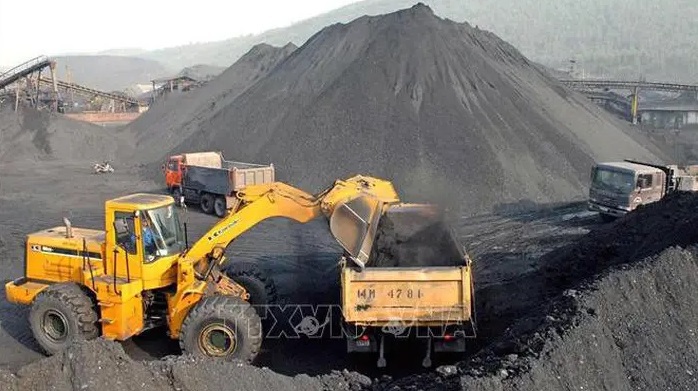
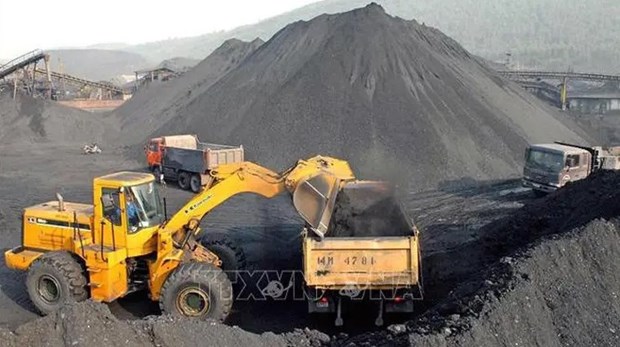
Vietnam’s coal imports are forecast to rise to meet domestic production demand, according to a draft strategy for developing the coal industry in Vietnam recently introduced by the Ministry of Industry and Trade (MoIT).
Hanoi (VNA) – Vietnam’s coal imports are forecast to rise to meet domestic production demand, according to a draft strategy for developing the coal industry in Vietnam recently introduced by the Ministry of Industry and Trade (MoIT).
Accordingly, Vietnam will import about 50-83 million tonnes of coal per year during the period from 2025 to 2035, with the volume gradually falling to about 32-35 million tonnes by 2045.
The data from the MoIT shows domestic coal consumption increased rapidly from 27.8 million tonnes in 2011 to 38.77 million tonnes in 2015, and about 53.52 million tonnes in 2021.
The volume of coal consumed at present has more than doubled compared to 2011, mainly for electricity production.
The demand for primary energy, including coal, will continue to increase, possibly peaking in the 2030-2035 period, the ministry said.
Vietnam’s coal demand will be around 94-97 million tonnes in 2025, and peak at 125-127 million tonnes in 2030, mainly due to the increase in demand for power generation, and the cement, metallurgy and chemical industries.
The ministry also predicted that the demand for energy after 2040 will decline due to the energy transition process to meet emission reduction targets.
The paper provides a wealth of data about the current state of the nuclear industry and the potential for its growth over the next ten to twenty years, while also considering important questions about the geopolitical dimensions which underpin the relationships between the exporters and importers of nuclear technology and the ties, such as financing and provision of services in the nuclear energy value chain, which bind them over multiple decades
See full paper here at Oxford Institute for Energy Studies
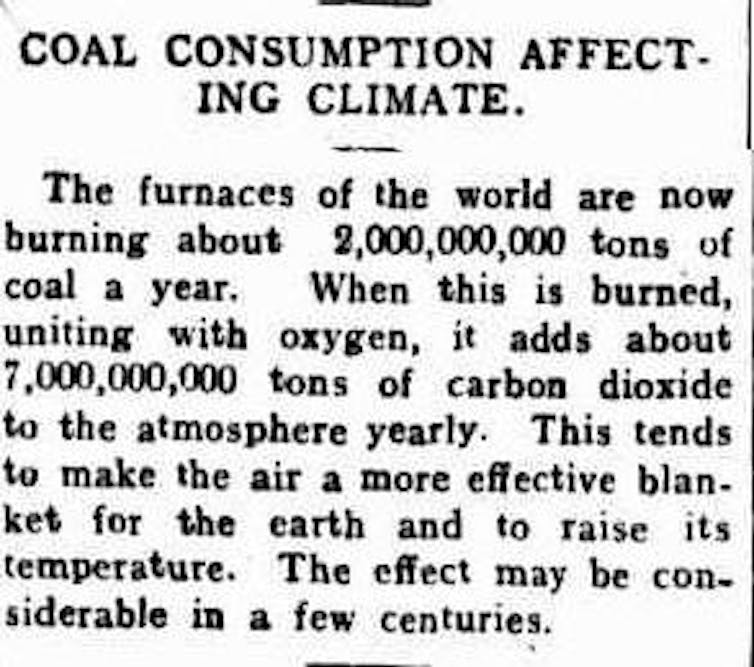
On August 14 1912, a small New Zealand newspaper published a short article announcing global coal usage was affecting our planet’s temperature.
This piece from 110 years ago is now famous, shared across the internet this time every year as one of the first pieces of climate science in the media (even though it was actually a reprint of a piece published in a New South Wales mining journal a month earlier).
So how did it come about? And why has it taken so long for the warnings in the article to be heard – and acted on?
This short 1912 article made the direct link between burning coal and global temperature changes. The Braidwood Dispatch and Mining Journal, National Library of Australia
The fundamental science has been understood for a long time
American scientist and women’s rights campaigner Eunice Foote is now widely credited as being the first person to demonstrate the greenhouse effect back in 1856, several years before United Kingdom researcher John Tyndall published similar results.
Her rudimentary experiments showed carbon dioxide and water vapour can absorb heat, which, scaled up, can affect the temperature of the earth. We’ve therefore known about the relationship between greenhouse gases and Earth’s temperature for at least 150 years.
when it comes to the Paris Agreement and climate action; namely that when individuals change their behaviour by consuming differently they can drive industries to change, as those industries are then caught between a ‘greening’ consumer demand and international and governmental policies focusing on climate action.
Back in the 1980s, everyone was talking about the hole in the ozone layer, so what happened, and what can the international agreement to ban CFCs teach us about the importance of multilateral cooperation when it comes to climate action?
What exactly is the ozone layer?
The ozone layer is the part of the Earth’s atmosphere that protects the planet from ultraviolet radiation. It’s found in the Stratosphere which is around 10-50km above the surface of the earth. Think of it as a layer of sunscreen that protects us from all manner of harmful rays. Without it, life on Earth would be extremely unpleasant.
The Earth is approximately 1.1℃ warmer than it was at the start of the industrial revolution. That warming has not been uniform, with some regions warming at a far greater pace. One such region is the Arctic.
A new study shows that the Arctic has warmed nearly four times faster than the rest of the world over the past 43 years. This means the Arctic is on average around 3℃ warmer than it was in 1980.
This is alarming, because the Arctic contains sensitive and delicately balanced climate components that, if pushed too hard, will respond with global consequences.
Why is the Arctic warming so much faster?
A large part of the explanation relates to sea ice. This is a thin layer (typically one metre to five metres thick) of sea water that freezes in winter and partially melts in the summer.
The sea ice is covered in a bright layer of snow which reflects around 85% of incoming solar radiation back out to space. The opposite occurs in the open ocean. As the darkest natural surface on the planet, the ocean absorbs 90% of solar radiation.
When covered with sea ice, the Arctic Ocean acts like a large reflective blanket, reducing the absorption of solar radiation. As the sea ice melts, absorption rates increase, resulting in a positive feedback loop where the rapid pace of ocean warming further amplifies sea ice melt, contributing to even faster ocean warming.






 CVD
CVD