Muốn bán tín chỉ carbon, trước tiên phải có uy tín về bảo vệ rừng

laodong.vn

Quảng Nam vừa được Chính phủ đồng ý thí điểm kinh doanh tín chỉ carbon (CO2). Đây là tín hiệu vui cả cho sự phát triển kinh tế lẫn công tác bảo vệ môi trường, bảo vệ rừng.

Muốn bán tín chỉ carbon, trước tiên phải có uy tín về bảo vệ rừng
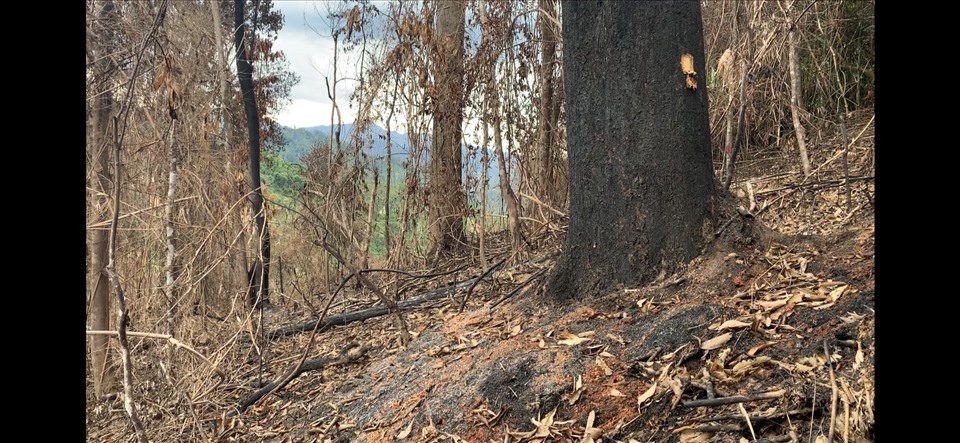
Một vụ đốt rừng để trồng rừng vừa xảy ra giữa tháng 5.2021 tại huyện Phước Sơn, Quảng Nam. Ảnh: Huy Kha

UBND Quảng Nam cho biết, Văn phòng Chính phủ vừa có Công văn gửi cho Bộ NN&PTNT và chính quyền tỉnh này về việc đồng ý cho phép Quảng Nam lập đề án thí điểm kinh doanh tín chỉ carbon.

Theo Bộ NN&PTNT, mỗi năm Việt Nam có thể bán ra thị trường thế giới 57 triệu tín chỉ carbon. Nếu được giá bán 5 USD/tín chỉ, thì mỗi năm Việt Nam có thể thu về hàng trăm triệu USD.

Trong đó, Quảng Nam với 628.000 ha rừng tự nhiên, mỗi năm có khả năng bán được 1 triệu tín chỉ carbon ra thị trường thế giới. Nếu thành công với đề án này thì bình quân mỗi năm tỉnh này sẽ thu được từ 5 triệu đến 10 triệu USD.

Tiếp tục đọc “Muốn bán tín chỉ carbon, trước tiên phải có uy tín về bảo vệ rừng”

Cà phê Tây Nguyên – Những cơn khát

tiasang – Võ Kiều Bảo Uyên

Thiếu nước đang đe dọa cây cà phê ở Tây Nguyên, nhưng ở chiều ngược lại, cây cà phê cũng đẩy vùng đất này đối mặt với những cơn khát do các hoạt động canh tác thiếu bền vững.

Cây cà phê héo rũ vì khát nước ở Đắk Lắk. Ảnh: Thành Nguyễn

Vài tháng trong năm, khi cây cà phê chưa vào vụ, bà Hoa(*) sẽ rời quê nhà Đắk Lắk, Tây Nguyên xuống các thành phố phía Nam tìm các công việc thời vụ. Đây là cách một người phụ nữ 50 tuổi kiếm thêm thu nhập khi rẫy cà phê của gia đình bà mấy năm liền năng suất kém do thiếu nước.

“Trong thôn nhiều người cũng đi. Phải đi, vì mình đâu có tin tưởng được là đến mùa sẽ có trái thu hoạch”, nông dân người Thái này nói trong một cuộc phỏng vấn hồi tháng 11 năm ngoái, khi đang làm bảo vệ cho một tòa nhà ở TP.HCM, cách quê bà hơn 300km.

Hạn hán vào mùa khô năm 2020 làm 4 hecta cà phê của bà bị rụng bông, héo cành, không đậu trái. Nhưng đó chưa phải là thứ tệ nhất mà bà Hoa chứng kiến, toàn bộ miếng rẫy đã chết khát trong trận hạn hán lịch sử bốn năm trước đó.

Tiếp tục đọc “Cà phê Tây Nguyên – Những cơn khát”

Secretary-General’s remarks to the General Assembly on the request of an Advisory Opinion of the International Court of Justice on the Obligations of States in Respect of Climate Change [as delivered]

29 March 2023

Excellencies,

Ladies and gentlemen,

Earlier this month, the Intergovernmental Panel on Climate Change – IPCC – confirmed that humans are responsible for virtually all global heating over the last 200 years.

The IPCC report shows that limiting temperature rise to 1.5-degree is achievable, but time is running out.

The window is rapidly closing to avoid the worst impacts of the climate crisis. 

Tiếp tục đọc “Secretary-General’s remarks to the General Assembly on the request of an Advisory Opinion of the International Court of Justice on the Obligations of States in Respect of Climate Change [as delivered]”

Ten photographs that made the world wake up to climate change

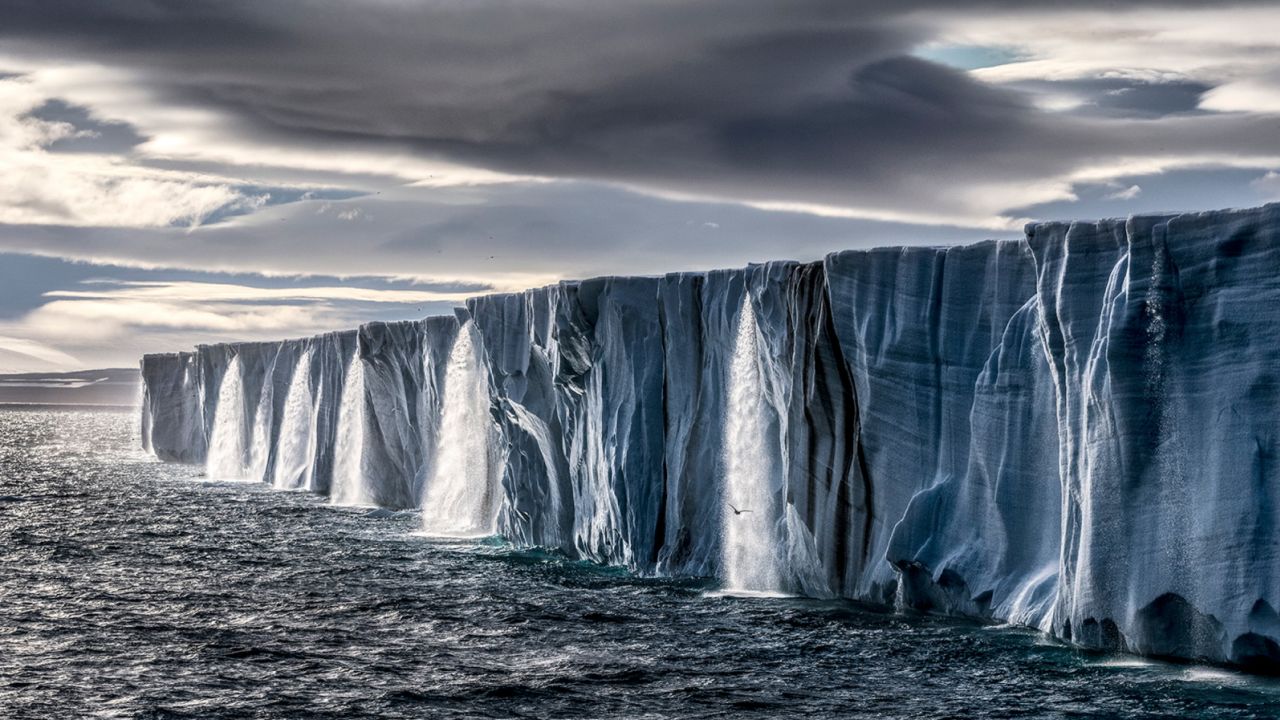
Waterfalls pour off a Nordaustlandet ice cap in Svalbard, Norway, during an unusually warm summer in 2014.

Waterfalls pour off a Nordaustlandet ice cap in Svalbard, Norway, during an unusually warm summer in 2014.Courtesy of Paul Nicklen

Ten photographs that made the world wake up to climate change

By Nell Lewis, CNN

Published 4:34 AM EDT, Wed March 29, 2023

Editor’s Note: Call to Earth is a CNN editorial series committed to reporting on the environmental challenges facing our planet, together with the solutions. Rolex’s Perpetual Planet initiative has partnered with CNN to drive awareness and education around key sustainability issues and to inspire positive action.CNN — 

Water cascading from a wall of ice with gray brushstrokes of clouds overhead makes for a beautiful image – but the story behind it is one of destruction; Earth’s glaciers are melting at an unprecedented rate due to human-caused climate change.

Canadian photographer Paul Nicklen remembers taking the photograph. It was August 2014, and temperatures in Svalbard, Norway, were unusually warm – hovering above 70 degrees Fahrenheit (21 degrees Celsius). As he came around the corner of an ice cap on Nordaustlandet island, he saw more than a dozen waterfalls pouring off its face.

“It was the most poetic, beautiful scene I’d ever seen, but it was also haunting and scary,” he recalls. The picture came to symbolize the realities of climate change and became Nicklen’s best-selling fine art image. It appeared multiple times in National Geographic, was used by Al Gore in his climate talks, and graced the cover of Pearl Jam’s 2020 album “Gigaton,” the title of which refers to the unit used to calculate ice mass.

Its beauty is central to its impact, believes Nicklen. “When you take a photograph that is in focus, properly exposed, moody and powerful, it creates a visceral reaction,” he says. “It has to be beautiful and engaging, it has to invite you in … and it has to have a conservation message.”

In 2014, Nicklen, along with his wife Cristina Mittermeier, and later joined by Andy Mann (both also award-winning photographers), co-founded the nonprofit organization SeaLegacy, which uses film and photography to raise awareness of climate issues and help protect the planet.

“Photography is one of the most effective and powerful tools we have to tell complex stories, like the story of climate change,” says Mittermeier.

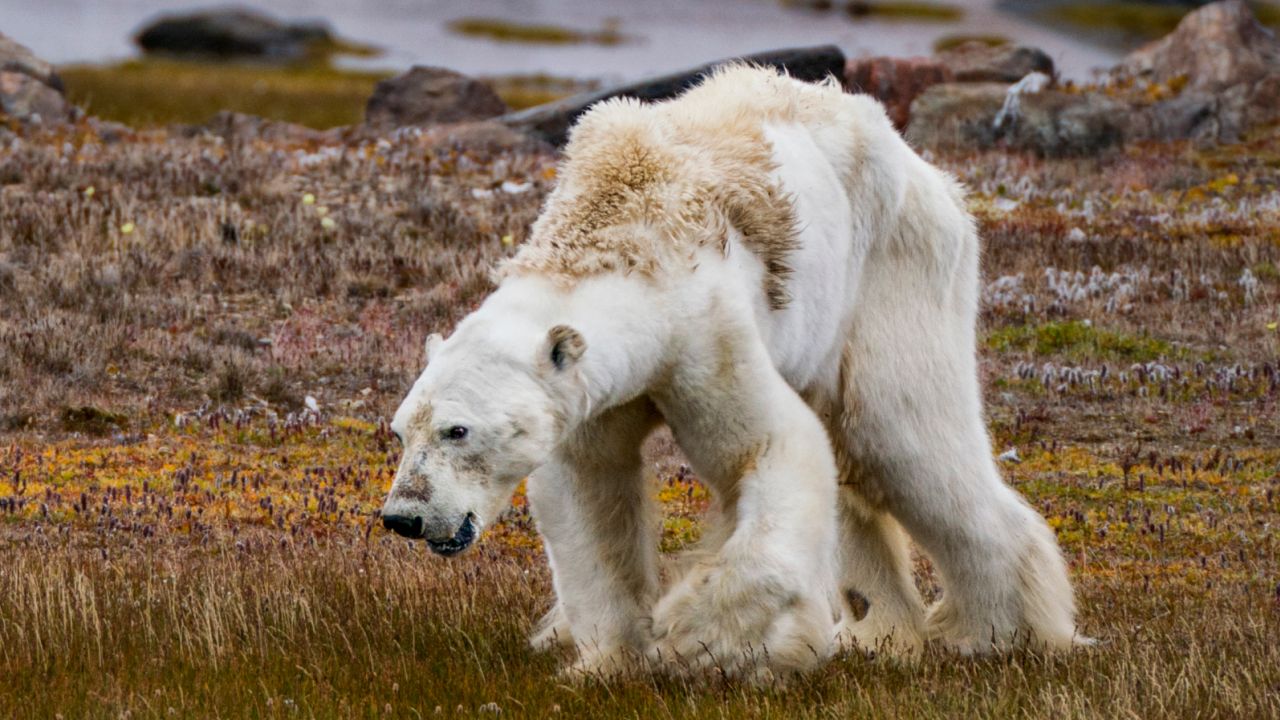
An emaciated polar bear staggers on the search for food. The photograph, taken in 2017, received widespread attention, sparking a conversation around climate change.

An emaciated polar bear staggers on the search for food. The photograph, taken in 2017, received widespread attention, sparking a conversation around climate change.Courtesy of Cristina Mittermeier

Tiếp tục đọc “Ten photographs that made the world wake up to climate change”

China’s Weak Carbon Market Hits a New Roadblock — Data Fraud

bloomberg.com

It took more than a decade for Europe’s carbon market to start cutting emissions, but the world no longer has the luxury of waiting that long for the world’s biggest polluter to improve its system

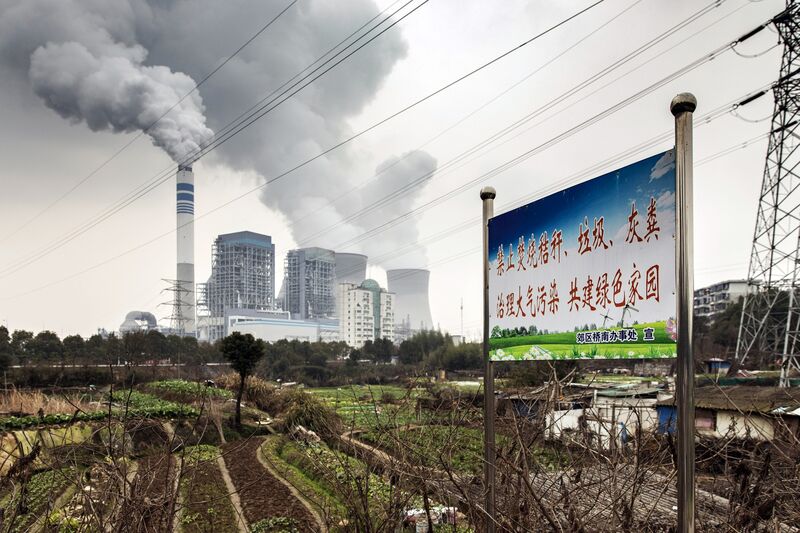
Emissions rise from cooling towers at a coal-fired power station in China.
Emissions rise from cooling towers at a coal-fired power station in China.Photographer: Qilai Shen/Bloomberg

ByBloomberg News 18 April 2022 at 17:00 GMT+7

China’s carbon market, hindered by low prices and thin trading, has struggled to become a useful tool in the country’s efforts to rein in its world-leading emissions. Now, accusations of data fabrication and questions over verification methods have added a new roadblock.More fromBloombergGreen

A recent provincial inspection unearthed widespread problems with emissions data submitted by power plants, who have to pay for every ton of carbon dioxide they generate that exceeds an allocated amount. Four consulting firms that help utilities prepare their submissions were criticized last month in connection with negligence or falsifying data.

Tiếp tục đọc “China’s Weak Carbon Market Hits a New Roadblock — Data Fraud”

AR6 Synthesis Report: Climate Change 2023

The Intergovernmental Panel on Climate Change (IPCC) is the United Nations body for assessing the science related to climate change.

Summary for Policy Makers >>

Longer Report >>

More information >>

Headline Statements

Headline statements are the overarching conclusions of the approved Summary for Policymakers which, taken together, provide a concise narrative.

ACurrent Status and Trends
Observed Warming and its Causes
A.1Human activities, principally through emissions of greenhouse gases, have unequivocally caused global warming, with global surface temperature reaching 1.1°C above 1850–1900 in 2011–2020. Global greenhouse gas emissions have continued to increase, with unequal historical and ongoing contributions arising from unsustainable energy use, land use and land-use change, lifestyles and patterns of consumption and production across regions, between and within countries, and among individuals (high confidence). {2.1, Figure 2.1, Figure 2.2}.
Observed Changes and Impacts
A.2Widespread and rapid changes in the atmosphere, ocean, cryosphere and biosphere have occurred. Human-caused climate change is already affecting many weather and climate extremes in every region across the globe. This has led to widespread adverse impacts and related losses and damages to nature and people (high confidence). Vulnerable communities who have historically contributed the least to current climate change are disproportionately affected (high confidence). {2.1, Table 2.1, Figure 2.2 and 2.3} (Figure SPM.1)
Current Progress in Adaptation and Gaps and Challenges
A.3Adaptation planning and implementation has progressed across all sectors and regions, with documented benefits and varying effectiveness. Despite progress, adaptation gaps exist, and will continue to grow at current rates of implementation. Hard and soft limits to adaptation have been reached in some ecosystems and regions. Maladaptation is happening in some sectors and regions. Current global financial flows for adaptation are insufficient for, and constrain implementation of, adaptation options, especially in developing countries (high confidence). {2.2, 2.3}
Current Mitigation Progress, Gaps and Challenges
A.4Policies and laws addressing mitigation have consistently expanded since AR5. Global GHG emissions in 2030 implied by nationally determined contributions (NDCs) announced by October 2021 make it likely that warming will exceed 1.5°C during the 21st century and make it harder to limit warming below 2°C. There are gaps between projected emissions from implemented policies and those from NDCs and finance flows fall short of the levels needed to meet climate goals across all sectors and regions. (high confidence) {2.2, 2.3, Figure 2.5, Table 2.2}
BFuture Climate Change, Risks, and Long-Term Responses
Future Climate Change
B.1Continued greenhouse gas emissions will lead to increasing global warming, with the best estimate of reaching 1.5°C in the near term in considered scenarios and modelled pathways. Every increment of global warming will intensify multiple and concurrent hazards (high confidence). Deep, rapid, and sustained reductions in greenhouse gas emissions would lead to a discernible slowdown in global warming within around two decades, and also to discernible changes in atmospheric composition within a few years (high confidence). {Cross-Section Boxes 1 and 2, 3.1, 3.3, Table 3.1, Figure 3.1, 4.3} (Figure SPM.2, Box SPM.1)
Climate Change Impacts and Climate-Related Risks
B.2For any given future warming level, many climate-related risks are higher than assessed in AR5, and projected long-term impacts are up to multiple times higher than currently observed (high confidence). Risks and projected adverse impacts and related losses and damages from climate change escalate with every increment of global warming (very high confidence). Climatic and non-climatic risks will increasingly interact, creating compound and cascading risks that are more complex and difficult to manage (high confidence). {Cross-Section Box.2, 3.1, 4.3, Figure 3.3, Figure 4.3} (Figure SPM.3, Figure SPM.4)
Likelihood and Risks of Unavoidable, Irreversible or Abrupt Changes
B.3Some future changes are unavoidable and/or irreversible but can be limited by deep, rapid and sustained global greenhouse gas emissions reduction. The likelihood of abrupt and/or irreversible changes increases with higher global warming levels. Similarly, the probability of low-likelihood outcomes associated with potentially very large adverse impacts increases with higher global warming levels. (high confidence) {3.1}
Adaptation Options and their Limits in a Warmer World
B.4Adaptation options that are feasible and effective today will become constrained and less effective with increasing global warming. With increasing global warming, losses and damages will increase and additional human and natural systems will reach adaptation limits. Maladaptation can be avoided by flexible, multi-sectoral, inclusive, long-term planning and implementation of adaptation actions, with co-benefits to many sectors and systems. (high confidence) {3.2, 4.1, 4.2, 4.3}
Carbon Budgets and Net Zero Emissions
B.5Limiting human-caused global warming requires net zero CO2 emissions. Cumulative carbon emissions until the time of reaching net-zero CO2 emissions and the level of greenhouse gas emission reductions this decade largely determine whether warming can be limited to 1.5°C or 2°C (high confidence). Projected CO2 emissions from existing fossil fuel infrastructure without additional abatement would exceed the remaining carbon budget for 1.5°C (50%) (high confidence). {2.3, 3.1, 3.3, Table 3.1}
Mitigation Pathways
B.6All global modelled pathways that limit warming to 1.5°C (>50%) with no or limited overshoot, and those that limit warming to 2°C (>67%), involve rapid and deep and, in most cases, immediate greenhouse gas emissions reductions in all sectors this decade. Global net zero CO2 emissions are reached for these pathway categories, in the early 2050s and around the early 2070s, respectively. (high confidence) {3.3, 3.4, 4.1, 4.5, Table 3.1} (Figure SPM.5, Box SPM.1)
Overshoot: Exceeding a Warming Level and Returning
B.7If warming exceeds a specified level such as 1.5°C, it could gradually be reduced again by achieving and sustaining net negative global CO2 emissions. This would require additional deployment of carbon dioxide removal, compared to pathways without overshoot, leading to greater feasibility and sustainability concerns. Overshoot entails adverse impacts, some irreversible, and additional risks for human and natural systems, all growing with the magnitude and duration of overshoot. (high confidence) {3.1, 3.3, 3.4, Table 3.1, Figure 3.6}
CResponses in the Near Term
Urgency of Near-Term Integrated Climate Action
C.1Climate change is a threat to human well-being and planetary health (very high confidence). There is a rapidly closing window of opportunity to secure a liveable and sustainable future for all (very high confidence). Climate resilient development integrates adaptation and mitigation to advance sustainable development for all, and is enabled by increased international cooperation including improved access to adequate financial resources, particularly for vulnerable regions, sectors and groups, and inclusive governance and coordinated policies (high confidence). The choices and actions implemented in this decade will have impacts now and for thousands of years (high confidence). {3.1, 3.3, 4.1, 4.2, 4.3, 4.4, 4.7, 4.8, 4.9, Figure 3.1, Figure 3.3, Figure 4.2} (Figure SPM.1; Figure SPM.6)
The Benefits of Near-Term Action
C.2Deep, rapid and sustained mitigation and accelerated implementation of adaptation actions in this decade would reduce projected losses and damages for humans and ecosystems (very high confidence), and deliver many co-benefits, especially for air quality and health (high confidence). Delayed mitigation and adaptation action would lock-in high-emissions infrastructure, raise risks of stranded assets and cost-escalation, reduce feasibility, and increase losses and damages (high confidence). Near-term actions involve high up-front investments and potentially disruptive changes that can be lessened by a range of enabling policies (high confidence). {2.1, 2.2, 3.1, 3.2, 3.3, 3.4, 4.1, 4.2, 4.3, 4.4, 4.5, 4.6, 4.7, 4.8}
Mitigation and Adaptation Options across Systems
C.3Rapid and far-reaching transitions across all sectors and systems are necessary to achieve deep and sustained emissions reductions and secure a liveable and sustainable future for all. These system transitions involve a significant upscaling of a wide portfolio of mitigation and adaptation options. Feasible, effective, and low-cost options for mitigation and adaptation are already available, with differences across systems and regions. (high confidence) {4.1, 4.5, 4.6} (Figure SPM.7)
Synergies and Trade-Offs with Sustainable Development
C.4Accelerated and equitable action in mitigating and adapting to climate change impacts is critical to sustainable development. Mitigation and adaptation actions have more synergies than trade-offs with Sustainable Development Goals. Synergies and trade-offs depend on context and scale of implementation. (high confidence) {3.4, 4.2, 4.4, 4.5, 4.6, 4.9, Figure 4.5}
Equity and Inclusion
C.5Prioritising equity, climate justice, social justice, inclusion and just transition processes can enable adaptation and ambitious mitigation actions and climate resilient development. Adaptation outcomes are enhanced by increased support to regions and people with the highest vulnerability to climatic hazards. Integrating climate adaptation into social protection programs improves resilience. Many options are available for reducing emission-intensive consumption, including through behavioural and lifestyle changes, with co-benefits for societal well-being. (high confidence) {4.4, 4.5}
Governance and Policies
C.6Effective climate action is enabled by political commitment, well-aligned multilevel governance, institutional frameworks, laws, policies and strategies and enhanced access to finance and technology. Clear goals, coordination across multiple policy domains, and inclusive governance processes facilitate effective climate action. Regulatory and economic instruments can support deep emissions reductions and climate resilience if scaled up and applied widely. Climate resilient development benefits from drawing on diverse knowledge. (high confidence) {2.2, 4.4, 4.5, 4.7}
Finance, Technology and International Cooperation
C.7Finance, technology and international cooperation are critical enablers for accelerated climate action. If climate goals are to be achieved, both adaptation and mitigation financing would need to increase many-fold. There is sufficient global capital to close the global investment gaps but there are barriers to redirect capital to climate action. Enhancing technology innovation systems is key to accelerate the widespread adoption of technologies and practices. Enhancing international cooperation is possible through multiple channels. (high confidence) {2.3, 4.8}

‘It can be done. It must be done’: IPCC delivers definitive report on climate change, and where to now

theconversation.com

The world is in deep trouble on climate change, but if we really put our shoulder to the wheel we can turn things around. Loosely, that’s the essence of today’s report by the Intergovernmental Panel on Climate Change (IPCC).

The IPCC is the world’s official body for assessment of climate change. The panel has just released its Synthesis Report, capping off seven years of in-depth assessments on various topics.

The report draws out the key insights from six previous reports, written by hundreds of expert authors. They spanned many thousands of pages and were informed by hundreds of thousands of comments by governments and the scientific community.

Tiếp tục đọc “‘It can be done. It must be done’: IPCC delivers definitive report on climate change, and where to now”

El Nino sẽ khiến mùa hè năm nay nắng nóng, khô hạn diện rộng

SKĐS – Chu kỳ La Nina chấm dứt để chuyển sang El Nino, dự báo mùa hè năm 2023 sẽ khắc nghiệt với khô hạn diện rộng, nắng nóng gay gắt với nền nhiệt cao.

Nắng nóng đến sớm

Theo Trung tâm Khí tượng thủy văn quốc gia nhận định, nắng nóng có khả năng xuất hiện cục bộ tại Tây Bắc Bộ, vùng núi phía Tây Bắc và Trung Trung Bộ trong nửa cuối tháng 3, đầu tháng 4/2023; riêng khu vực Nam Bộ có thể xuất hiện nhiều ngày nắng nóng, tập trung ở các tỉnh miền Đông Nam Bộ.

Cao điểm nắng nóng năm nay xuất hiện từ tháng 6 đến tháng 8, chủ yếu ở Bắc Bộ và Trung Bộ, cường độ nắng nóng có thể gay gắt hơn so với cùng thời kỳ năm 2022. Trong các tháng này, nhiệt độ trên phạm vi cả nước phổ biến ở mức cao hơn khoảng 0,5 độ C so với trung bình nhiều năm cùng thời kỳ.

Cũng theo cơ quan khí tượng, từ tuần sau, các hình thế thời tiết gây nắng nóng bắt đầu xuất hiện đó là vùng áp thấp nóng phía Tây mở rộng về nước ta, áp cao cận nhiệt đới ổn định và khối khí biển từ vịnh Bengal thổi tới theo hướng Tây Nam. Đối với Bắc Bộ và Trung Bộ, thời gian xảy ra nắng nóng dự báo khoảng từ ngày 21 đến ngày 24/03, còn Nam Bộ khả năng cường độ nắng sẽ tiếp tục duy trì.

El Nino sẽ khiến mùa hè năm nay nắng nóng, khô hạn diện rộng - Ảnh 2.
Mùa hè năm nay sẽ đến sớm và nắng nóng gay gắt hơn.

Tiếp tục đọc “El Nino sẽ khiến mùa hè năm nay nắng nóng, khô hạn diện rộng”

A translation problem – Americans use Fahrenheit, but many climate reports exclusively use Celsius.

March 21, 2023
By German Lopez, The Morning, New York Times
A thermometer reading in Death Valley National Park.Roger Kisby for The New York Times
Clear communication
The world’s top scientists released their latest report yesterday warning that the Earth is on pace for severe damage from climate change. But many Americans might have a hard time understanding the report because the analysis, like those before it, talks about temperatures exclusively in Celsius.
The U.S. is among just a few countries that still use Fahrenheit temperatures. And while Americans are a relatively small audience on a global scale, they are an important one for climate science: The U.S. has historically emitted more planet-warming greenhouse gases than any other country. Improving Americans’ understanding of the issue could be crucial to any push for changes.
Tiếp tục đọc “A translation problem – Americans use Fahrenheit, but many climate reports exclusively use Celsius.”

The United Nations declaration on the rights of peasants and other people working in rural areas

globalagriculture.org

The UNDROP Declaration (1) adopted by the General Assembly of the United Nations on December 17, 2018 reaffirms the UN Declarations on the right to development (2) , the rights of indigenous peoples (3) and the universality of all human rights. It recognises the special relationship and interaction among peasants and other groups working in rural areas and their contribution to conserving and improving biodiversity as well as their own and world-wide food security.

Article 1 of the Declaration defines peasants as any person who engages in small-scale agricultural production for subsistence and/or for the market, who relies significantly on family, household or other non-monetarized labour and who has a special dependency on the land.

It recognises that peasants and people working in rural areas, including youth and the ageing, are migrating to urban areas due to a lack of incentives and the drudgery of rural life, due to insecure land tenure, discrimination and the lack of access to productive resources, financial services and information. The Declaration is based on a concern that peasants and rural workers are burdened with environmental degradation and climate change and suffer disproportionately from poverty, hunger and malnutrition. This Declaration is an important contribution to the advancement of a paradigm for development where the agency of peasants, indigenous and forest peoples is at its foundation.

Tiếp tục đọc “The United Nations declaration on the rights of peasants and other people working in rural areas”

Giành giật ĐBSCL với ‘cát tặc’

Trúc Tùng – 31/10/2022 16:25 GMT+7

thanhnien.vn

Ở Đồng bằng sông Cửu Long (ĐBSCL), chỉ riêng năm 2011, lượng cát khai thác là 50 triệu tấn, dẫn đến hệ lụy không có giặc ngoại xâm mà đất đai vẫn bị mất dần. Theo ước tính của Bộ NN-PTNT, mỗi năm ĐBSCL bị mất 500ha, chỉ vài chục năm sau, diện tích ĐBSCL sẽ mất đi một nữa.

Nhu cầu về cát cho xây dựng ở ĐBSCL hiện rất lớn, trong khi nguồn cát bồi đắp từ sông Mê Kông ngày một ít đi
ĐÌNH TUYỂN

Nguồn tài nguyên quý hiếm không thể tái sinh

Một “mỏ cát” thường được hình thành vài trăm năm, thậm chí cả ngàn năm, nên nhiều nhà khoa học cho rằng đây là loại tài nguyên không tái tạo vì khi nó bị mất đi thì rất khó và rất lâu mới hình thành một khối lượng cát giá trị khai thác.

Cát sa mạc hình thành do sự ma sát, bào mòn chủ yếu do gió nên bị tròn nhẵn, mất khả năng kết dính với các loại vữa xi măng nên gần như không sử dụng cho xây dựng, nhiều quốc gia có sa mạc như ở vùng Trung Đông vẫn phải nhập cát về xây dựng.

Tiếp tục đọc “Giành giật ĐBSCL với ‘cát tặc’”

Threat of rising seas to Asian megacities could be way worse than we thought, study warns

Tara Subramaniam

By Tara Subramaniam, CNN

Published 8:48 PM EST, Tue March 7, 2023

Read full study >>

The study predicts Asian megacities such as Manila, the capital of the Philippines, are particularly at risk from rising sea levels.

The study predicts Asian megacities such as Manila, the capital of the Philippines, are particularly at risk from rising sea levels.Dante Diosina Jr/Anadolu Agency/Getty ImagesHong KongCNN — 

Parts of Asia’s largest cities could be under water by 2100 thanks to rising sea levels, according to a new study that combines both the impact of climate change with natural oceanic fluctuations.

Sea levels have already been on the rise due to increasing ocean temperatures and unprecedented levels of ice melting caused by climate change.

But a report published in the journal Nature Climate Change offers fresh insight and stark warnings about how bad the impact could be for millions of people.

Tiếp tục đọc “Threat of rising seas to Asian megacities could be way worse than we thought, study warns”

High Seas Treaty secured after marathon UN talks

‘This is a massive success for multilateralism,’ UN General Assembly President Csaba Kőrösi says.

Red Sea’s ‘Super Corals’ Prove Resistant To Rising Ocean Temperatures
High Seas Treaty will place 30 percent of the seas into protected areas by 2030 | Lukasz Larsson Warzecha/Getty Images

BY JONES HAYDEN, politco.eu

MARCH 5, 2023 9:49 AM CET

More than 100 countries reached agreement on a United Nations treaty to protect the high seas, following marathon talks at U.N. headquarters in New York that ended late Saturday.

The High Seas Treaty will put 30 percent of the planet’s seas into protected areas by 2030, aiming to safeguard marine life.

“This is a massive success for multilateralism. An example of the transformation our world needs and the people we serve demand,” U.N. General Assembly President Csaba Kőrösi tweeted after the U.N. conference president, Rena Lee, announced the agreement.

Tiếp tục đọc “High Seas Treaty secured after marathon UN talks”

Mapped: Asia’s Biggest Sources of Electricity by Country

element.visualcapitalist.com

Mapped: Asia’s Biggest Sources of Electricity by Country

Mapped: Asia’s Biggest Sources of Electricity by Country

The International Energy Agency (IEA) predicts that Asia will account for half of the world’s electricity consumption by 2025, with one-third of global electricity being consumed in China.

To explore how this growing electricity demand is currently being met, the above graphic maps out Asia’s main sources of electricity by country, using data from the BP Statistical Review of World Energy and the IEA.

A Coal-Heavy Electricity Mix

Although clean energy has been picking up pace in Asia, coal currently makes up more than half of the continent’s electricity generation.

No Asian countries rely on wind, solar, or nuclear energy as their primary source of electricity, despite the combined share of these sources doubling over the last decade.

 % of total electricity mix, 2011% of total electricity mix, 2021 
Coal55%52% 
Natural Gas19%17%
Hydro12%14%
Nuclear5%5%
Wind1%4%
Solar0%4%
Oil6%2%
Biomass1%2%
Total Electricity Generated9,780 terawatt-hours15,370 terawatt-hours

The above comparison shows that the slight drops in the continent’s reliance on coal, natural gas, and oil in the last decade have been absorbed by wind, solar, and hydropower. The vast growth in total electricity generated, however, means that a lot more fossil fuels are being burned now (in absolute terms) than at the start of the last decade, despite their shares dropping.

Following coal, natural gas comes in second place as Asia’s most used electricity source, with most of this demand coming from the Middle East and Russia.

Zooming in: China’s Big Electricity Demand

Tiếp tục đọc “Mapped: Asia’s Biggest Sources of Electricity by Country”

The Push to Conserve 30 Percent of the Planet: What’s at Stake?

See how six countries are faring amid efforts to protect 30 percent of the planet’s land and waters by 2030, and what will be saved if they succeed. 

Article by Lindsay Maizland, CFR

Last updated March 6, 2023 1:16 pm (EST)

Forests cover Bhutan, which has protected 50 percent of its land. Sergi Reboredo/VW Pics/Universal Images Group/Getty Images

During the 2022 UN biodiversity conference, COP15, countries reached a landmark agreement that aims to reverse the unprecedented destruction of nature. One of the agreement’s twenty-three targets, known as 30×30, aims to protect at least 30 percent of the planet’s land and water by 2030. That goal, which almost doubles the target for 2020 that was set through the UN process more than a decade ago, was the inspiration behind a 2023 UN agreement to protect biodiversity in the high seas, the international waters that comprise more than half the world’s oceans. So far, nearly 16 percent of all land and inland waters have been protected, as have 8 percent of marine areas. 

Protected areas are those that are designated and managed in order to achieve conservation goals, according to the UN Convention on Biological Diversity. Human activities, such as farming, resource extraction, and settlement, are generally allowed in these areas as long as they are done sustainably. But there are no formal mechanisms to monitor these activities, and countries report their own progress with limited oversight.

One of the main motivations for the goal is to protect biodiversity, which refers to the variety of all living things on Earth and the natural systems they form. In recent decades, animal populations have plummeted and more species have gone extinct than ever before. This loss has sweeping consequences for livelihoods, economic growth, medicine, food systems, and climate resilience. To put a price on it, the world lost $4–20 trillion per year [PDF] from 1997 to 2011 because of changes in how humans use land, according to the Organization for Economic Cooperation and Development.

Conservation is also critical to achieving climate goals. Forests, peatlands, and oceans are carbon sinks, meaning they absorb massive amounts of planet-warming carbon dioxide. When they’re destroyed, all that carbon goes back into the atmosphere. Some ecosystems can also guard against climate disasters. Coral reefs and mangroves, for example, form natural barriers against extreme storms.

Protected Areas and Wilderness Around the World

*Land estimated to be habitat unmodified by humans. Areas that are important for biodiversity can occur within and outside of these areas.

Notes: Includes terrestrial areas only. Data for protected areas in China, Estonia, India, Ireland, New Zealand, and Turkey is not complete due to limited reporting.

Sources: Protected Planet; UN Environment Program World Conservation Monitoring Center.

The 30×30 goal is a global target. More than one hundred countries have voiced support, but that doesn’t mean they’ve pledged to protect 30 percent of their own land and waters. Experts say that’s not necessarily a bad thing. “The hope is that each nation will set the most ambitious goal that it can,” says the Pew Charitable Trusts’ Masha Kalinina.

Tiếp tục đọc “The Push to Conserve 30 Percent of the Planet: What’s at Stake?”