I am an attorney in the Washington DC area, with a Doctor of Law in the US, attended the master program at the National School of Administration of Việt Nam, and graduated from Sài Gòn University Law School. I aso studied philosophy at the School of Letters in Sài Gòn.
.
I have worked as an anti-trust attorney for Federal Trade Commission and a litigator for a fortune-100 telecom company in Washington DC.
I have taught law courses for legal professionals in Việt Nam and still counsel VN government agencies on legal matters.
I have founded and managed businesses for me and my family, both law and non-law.
I have published many articles on national newspapers and radio stations in Việt Nam.
In 1989 I was one of the founding members of US-VN Trade Council, working to re-establish US-VN relationship.
Since the early 90's, I have established and managed VNFORUM and VNBIZ forum on VN-related matters; these forums are the subject of a PhD thesis by Dr. Caroline Valverde at UC-Berkeley and her book Transnationalizing Viet Nam.
I translate poetry and my translation of "A Request at Đồng Lộc Cemetery" is now engraved on a stone memorial at Đồng Lộc National Shrine in VN.
I study and teach the Bible and Buddhism. In 2009 I founded and still manage dotchuoinon.com on positive thinking and two other blogs on Buddhism.
In 2015 a group of friends and I founded website CVD - Conversations on Vietnam Development (cvdvn.net).
I study the art of leadership with many friends who are religious, business and government leaders from many countries.
I have written these books, published by Phu Nu Publishing House in Hanoi:
"Positive Thinking to Change Your Life", in Vietnamese (TƯ DUY TÍCH CỰC Thay Đổi Cuộc Sống) (Oct. 2011)
"10 Core Values for Success" (10 Giá trị cốt lõi của thành công) (Dec. 2013)
"Live a Life Worth Living" (Sống Một Cuộc Đời Đáng Sống) (Oct. 2023)
I practice Jiu Jitsu and Tai Chi for health, and play guitar as a hobby, usually accompanying my wife Trần Lê Túy Phượng, aka singer Linh Phượng.
Wednesday, October 28, 2020, 16:44 GMT+7 Tuoitrenews
The logo of the multinational electric power company AES is seen at an office in Santiago, Chile June 4, 2019. Photo: Reuters
HANOI — AES Corp. will sign a deal with PetroVietnam Gas GAS.HM to develop a $2.8 billion liquefied natural gas (LNG) import terminal and a power plant in Vietnam, U.S. Secretary of State Mike Pompeo said on Wednesday.
China says decision was ‘necessary’ after the US declared several more Chinese media outlets to be ‘foreign missions’
The US media firms affected are the American Broadcasting Corporation (ABC), the Los Angeles Times, Newsweek, Feature Story News, the Bureau of National Affairs and Minnesota Public Radio Photograph: Richard Vogel/APStaff and agencies
Mon 26 Oct 2020 16.42 GMT
China has tightened the rules on a number of US media outlets, in a move it said was “necessary and reciprocal” after Chinese journalists in America were hit with restrictions last week.
The US media firms affected are the American Broadcasting Corporation (ABC), the Los Angeles Times, Newsweek, Feature Story News, the Bureau of National Affairs and Minnesota Public Radio.
A foreign ministry spokesman, Zhao Lijian, said in a statement that the requirements were “legitimate and justified self-defense in every sense”.
“What the United States has done is exclusively targeting Chinese media organizations driven by the cold war mentality and ideological basis,” Zhao added.
The moves are the latest in a series of tit-for-tat measures between Beijing and Washington.
Last week the US designated a further six Chinese media organisations as propaganda outlets that answer to the state.
The department earlier imposed rules on nine outlets including the official Xinhua news agency and China Global Television Network.
China has denounced the regulations and retaliated by expelling US citizens who work for major news organisations, including the New York Times, the Washington Post and the Wall Street Journal.
In May the US shortened the visa for Chinese journalists in America to 90 days, and last month the Foreign Correspondents’ Club of China said Beijing was no longer renewing press credentials for US media employees in the country.
This week, the U.S. government for the first time imposed economic penalties on Chinese businesses for their behavior in the South China Sea. The Commerce Department placed 24 Chinese companies on the Entity List. The list restricts exports of certain goods to companies and individuals that threaten U.S. national security or foreign policy priorities. According to Commerce Secretary Wilbur Ross, the 24 companies (22 of which are state-owned enterprises) were selected because they “played a significant role” in China’s construction of artificial bases in the Spratly Islands. The State Department, meanwhile, announced that it would not issue visas to Chinese nationals “responsible for, or complicit in, either the large-scale reclamation, construction, or militarization of disputed outposts in the South China Sea, or the PRC’s use of coercion against Southeast Asian claimants to inhibit their access to offshore resources.”
Updated 0946 GMT (1746 HKT) October 27, 2020US Secretary of State Mike Pompeo (right) is greeted by US Ambassador to India Kenneth Juster upon his arrival at an airport in New Delhi on October 26, 2020.
Hong Kong (CNN)The United States and India have reaffirmed their defensive and security relationship, as Washington continues to rally allies in Asia amid concerns over increased Chinese military activity in the region.During a press conference Tuesday in the Indian capital, US Secretary of Defense Mark Esper and his Indian counterpart Rajnath Singh announced the signing of the Basic Exchange and Cooperation Agreement (BECA), enabling greater information-sharing and further defense cooperation between the two countries.”The defense ties between our two nations remains a key pillar of our overall bilateral relationship,” said Esper. “Based on our shared values and common interests, we stand shoulder to shoulder in support of a free and open Indo-Pacific for all, particularly in light of increasing aggression and destabilizing activities by China.”The agreement, said Singh furthered the two sides ongoing commitment to the “law and freedom of navigation in the international seas” while “upholding the territorial integrity and sovereignty of all states.”Both India and the US are due to participate in the upcoming Malabar naval exercises which will be held in the Indian Ocean next month. The drills will feature all members of the so-called Quad, an informal alliance of the US, India, Japan and Australia, which has been proposed by some as a potential “Asian NATO,” intended to counterbalance Chinese military strength in the region. Tiếp tục đọc “India signs defensive agreement with US following Himalayan standoff with China”→
Hong Kong (CNN)Tens of thousands of US and Japanese troops will begin a massive island-landing exercise in the Pacific this week as part of joint military operations seen as a warning to China that Washington backs Tokyo over Beijing’s claim to Japanese-controlled islands.Speaking aboard a Japanese warship Monday, Lt. Gen. Kevin Schneider, commander of US Forces Japan, said the exercises would demonstrate the ability of the US-Japan alliance “to deliver combat troops to defend the Senkakus or respond to other crises or contingencies.”Both Tokyo and Beijing claim the Senkaku Islands, known as the Diaoyus in China, as their own, but Japan has administered them since 1972.Tensions over the uninhabited rocky chain, 1,200 miles (1,900 kilometers) southwest of Tokyo, have simmered for years, and with claims over them dating back centuries, neither Japan nor China is likely to back down.Chinese vessels have been spending record amounts of time in the waters around the islands this year, drawing condemnation from Tokyo.The US-Japan exercises, named Keen Sword 21, have been held biennially for more than 30 years. This year’s exercises run through to November 5.
The United States has made the global fight against human trafficking a policy priority and employs a whole-of-government approach to stop human traffickers, protect victims, and prevent this crime.
Combating human trafficking requires a comprehensive, multidisciplinary effort. Within government, this means the participation and coordination among agencies with a range of responsibilities, including criminal enforcement, labor enforcement, victim outreach and services, public awareness, education, trade policy and promotion, international development and programs, customs and immigration, intelligence, and diplomacy. Coordinated federal efforts that incorporate state, local, and tribal entities; the private sector; civil society; survivors; religious communities; and academia are essential to an integrated response to human trafficking that leverages resources and amplifies results.
By Nike ChingUpdated October 25, 2020 01:41 PM VOA
STATE DEPARTMENT – U.S. Secretary of State Mike Pompeo and Defense Secretary Mark Esper departed for India Sunday to strengthen bilateral security cooperation as Washington looks to confront Chinese geopolitical and economic challenges in the Indo-Pacific region.
On December 12, 2019, Malaysia made a partial submission to the UN Commission on the Limits of the Continental Shelf (CLCS) outlining the northern part of its purported extended continental shelf in the South China Sea. It set off a flurry of diplomatic notes from other claimants and interested parties. China lodged its objections the very same day. A few months later, the Philippines weighed in. Then China again followed by Vietnam and so on. The salvos have continued for nearly a year. To date, 12 countries have joined this back and forth via notes to the CLCS. This also coincided with a general review by Washington of the U.S. position on South China Sea claims. Secretary of State Mike Pompeo on July 13 clarified that the United States agrees with the merits of the 2016 decision in the Philippines’ arbitration case against China.
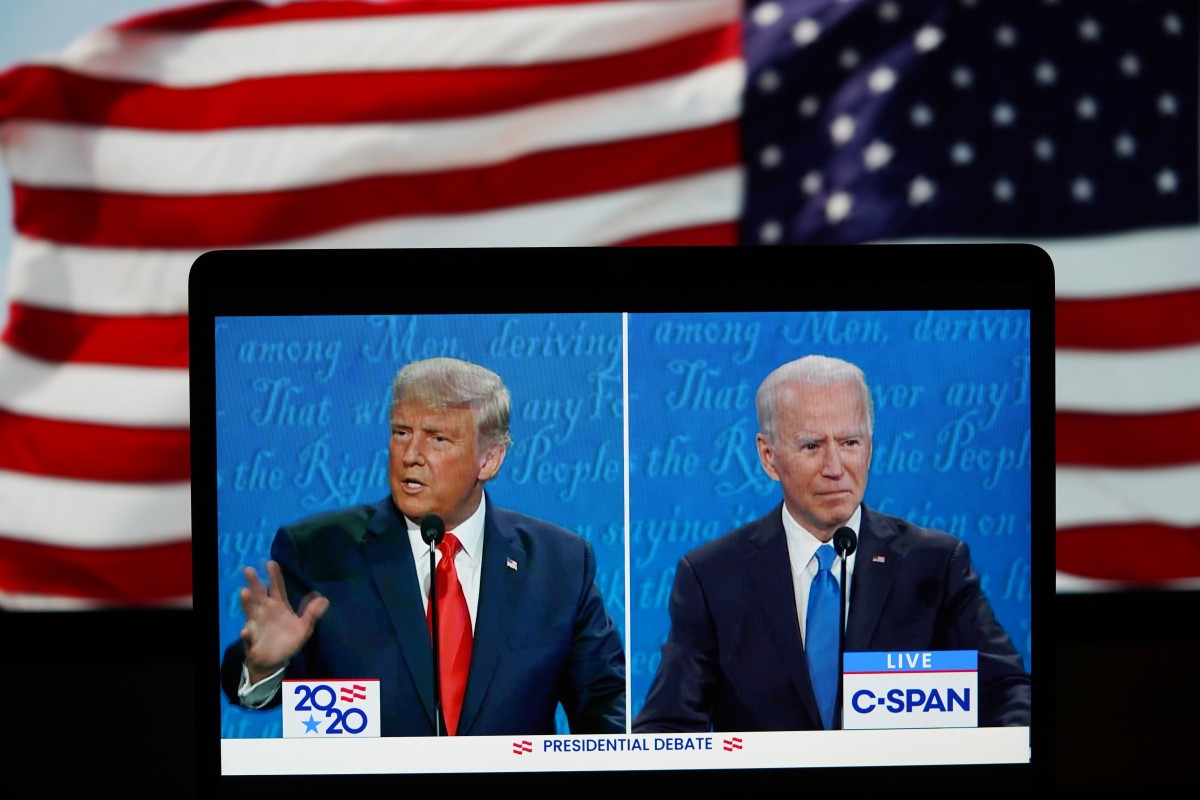
Both Donald Trump and Joe Biden have promised to take a tough stance on China. Photo: Xinhua
As the US presidential candidates sparred over how to counter China, the country’s leader Xi Jinping was making clear that a newly emboldened country would not back down from a fight.
In a speech marking the 70th anniversary of China’s entry into the Korean war – the only military conflict between Chinese and American forces – Xi outlined in no uncertain terms that the “century of humiliation” Beijing said it suffered at the hands of Western aggressors was long gone.
By Phan Anh October 24, 2020 | 07:55 am GMT+7 vnexpreszA restaurant on Cua Dai Beach of central Quang Nam Province is demolished by waves and coastal erosion, October 2020. Photo by VnExpress/Dac Thanh.
In a country that is among the most exposed to natural hazards, Vietnam’s coastline often bears the brunt. Resilient Shores lays out a resilience strategy that can guide Vietnam through the decisive actions it must take to safeguard the prosperity of future generations from climate change and disaster risks.
File photo of two US-made Taiwanese F-16 fighter jets. (Photo: AFP/Sam Yeh)
22 Oct 2020 05:44PM
BEIJING: China threatened on Thursday (Oct 22) to retaliate against the latest US arms sale to Taiwan, as the island welcomed the weapons package but said it was not looking to get into an arms race with Beijing.
The Trump administration has ramped up support for Taiwan through arms sales and visits by senior US officials, adding to tensions between Beijing and Washington, already heightened by disagreements over the South China Sea, Hong Kong, human rights and trade.
By Reuters October 23, 2020 | 08:11 am GMT+7 vnexpressA boat of rice in a canal in Hau Giang Province in Vietnam’s Mekong Delta, March 13, 2020. Photo by VnExpress/Nguyet Nhi.
China on Thursday signed an agreement with the Mekong River Commission (MRC) to share year-round data on the flow of its portion of the vital waterway.
The move came amid concern that Chinese dams may be causing drought downstream in Southeast Asia.
A push for more data from China’s portion of the Mekong River – which Beijing calls the Lancang River – intensified this year after U.S. government criticism that 11 Chinese dams were “hoarding” water and hurting livelihoods downstream, an accusation Beijing denies.
(CNN Business) The United States government has labeled six more Chinese media companies operating in the US as foreign missions in the latest round of tit-for-tat between Beijing and Washington over restrictions on journalists.US Secretary of State Mike Pompeo announced the decision at a press briefing on Wednesday, saying that the six media companies were “substantially or effectively controlled by a foreign government.””We’re not placing any restrictions on what these outlets can publish in the United States,” Pompeo said. “We simply want to ensure that American people, consumers of information, can differentiate between news written by a free press and propaganda distributed by the Chinese Communist Party itself. They’re not the same thing.”The US operations of Yicai Global, Jiefang Daily, Xinmin Evening News, Social Sciences in China Press, Beijing Review and Economic Daily will all be affected by the decision, according to a release from State Department spokesperson Morgan Ortagus.
Alan Crawford, DebWu, Colum Murphy and Ian KingFri, October 23, 2020, 12:42 AM GMT+7·11 mins read. Yahoo!Finance
The U.S.-China Conflict Over Chips Is About to Get Uglier
(Bloomberg) — On a scorching hot day in late August, representatives of Taiwan’s government and industry crowded into the clinical cool of a state-of-the-art semiconductor facility for a symbolic moment in the global tech conflict.

 US Secretary of State Mike Pompeo (right) is greeted by US Ambassador to India Kenneth Juster upon his arrival at an airport in New Delhi on October 26, 2020.


 A restaurant on Cua Dai Beach of central Quang Nam Province is demolished by waves and coastal erosion, October 2020. Photo by VnExpress/Dac Thanh.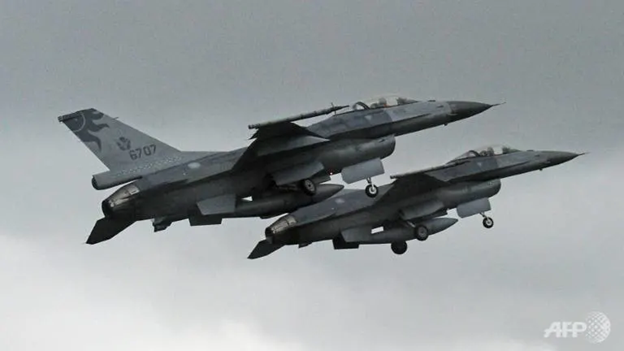

 A boat of rice in a canal in Hau Giang Province in Vietnam’s Mekong Delta, March 13, 2020. Photo by VnExpress/Nguyet Nhi.


 CVD
CVD 