I am an attorney in the Washington DC area, with a Doctor of Law in the US, attended the master program at the National School of Administration of Việt Nam, and graduated from Sài Gòn University Law School. I aso studied philosophy at the School of Letters in Sài Gòn.
.
I have worked as an anti-trust attorney for Federal Trade Commission and a litigator for a fortune-100 telecom company in Washington DC.
I have taught law courses for legal professionals in Việt Nam and still counsel VN government agencies on legal matters.
I have founded and managed businesses for me and my family, both law and non-law.
I have published many articles on national newspapers and radio stations in Việt Nam.
In 1989 I was one of the founding members of US-VN Trade Council, working to re-establish US-VN relationship.
Since the early 90's, I have established and managed VNFORUM and VNBIZ forum on VN-related matters; these forums are the subject of a PhD thesis by Dr. Caroline Valverde at UC-Berkeley and her book Transnationalizing Viet Nam.
I translate poetry and my translation of "A Request at Đồng Lộc Cemetery" is now engraved on a stone memorial at Đồng Lộc National Shrine in VN.
I study and teach the Bible and Buddhism. In 2009 I founded and still manage dotchuoinon.com on positive thinking and two other blogs on Buddhism.
In 2015 a group of friends and I founded website CVD - Conversations on Vietnam Development (cvdvn.net).
I study the art of leadership with many friends who are religious, business and government leaders from many countries.
I have written these books, published by Phu Nu Publishing House in Hanoi:
"Positive Thinking to Change Your Life", in Vietnamese (TƯ DUY TÍCH CỰC Thay Đổi Cuộc Sống) (Oct. 2011)
"10 Core Values for Success" (10 Giá trị cốt lõi của thành công) (Dec. 2013)
"Live a Life Worth Living" (Sống Một Cuộc Đời Đáng Sống) (Oct. 2023)
I practice Jiu Jitsu and Tai Chi for health, and play guitar as a hobby, usually accompanying my wife Trần Lê Túy Phượng, aka singer Linh Phượng.
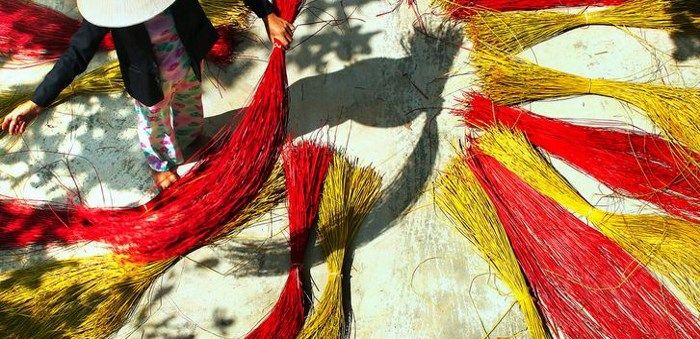
Năm nào trúng mùa, mẹ tôi đặt một đôi chiếu Bông và đôi chiếu Cỗ theo kích thước và màu sắc riêng do bà chọn. Bà nói: Để “ăn Tết” với người ta! Hồi đó sống dưới quê, nhà chỉ dám xài chiếu trắng. Sáng nào ngủ dậy, mẹ cũng dặn phải cuốn chiếu lại đem cất trong buồng (phòng ngủ). Thỉnh thoảng thấy mẹ đem chiếu ra sông giặt rồi đem phơi nắng. Còn chiếu Bông bà để dành, chỉ trải khi nhà có khách hoặc có lễ lộc.
Bài viết của Giáo sư, Tiến sĩ Trần Hồng Quân cựu Bộ trưởng Bộ Đại học, Trung học chuyên nghiệp và Dạy nghề, cựu Bộ trưởng Bộ Giáo dục và Đào tạo.
RỪNG (1)
Năm 1984 tôi đi thăm khu rừng mà Đắc lắc cho trường Đại học Tây nguyên làm cơ sở nghiên cứu và thực tập cho ngành Lâm nghiệp. Đi bằng xe Jeep quân dụng. Cây rừng dầy đặc kín khung trời, toàn cây to vài người ôm không xuể. Đến một con suối, chúng tôi xuống thưởng ngoạn. Dấu chân voi rừng to đến ngạc nhiên. Tôi gang tay đo thử. Đồng chí bảo vệ người dân tộc bất ngờ ra lệnh phải lên xe. Anh lên đạn khẩu tiểu liên cầm theo. Có mùi khét của hổ. Con suối là nơi nhiều thú rừng đến uống nước. Kể cũng hơi sợ nhưng thấy rừng mà mê.
CCSI (Columbia Center on Sustainable Settlement, Columbia University) hosted an online discussion with George Kahale on issues surrounding valuation in ISDS disputes, which has become the most dangerous aspect of ISDS, as evidenced by the many enormous damages awards of recent years.
This discussion was open to all government officials, civil society, international organizations, and academics.
George Kahale is the chairman of Curtis, Mallet-Prevost, Colt & Mosle LLP. He has represented many governments and State companies in international transactions and disputes, including several of the world’s largest and best known international arbitrations.
Climate change is one of the biggest challenges that the world faces. A United Nations report has cautioned that greenhouse gas emissions due to human activity are at a record high, “with no signs of slowing down.” Many nations are recording weather extremes, higher average temperatures and rising seas. Meanwhile, the first wave of increasing numbers of climate refugees points to how a changing environment will reshape human life.
Amnesty report accuses sites of openly signalling they will bow to authoritarian regimes
A person using Facebook at a cafe in Hanoi, Vietnam, last month. Photograph: Kham/ReutersRebecca Ratcliffe South-east Asia correspondentTue 1 Dec 2020 00.01 GMT
23
Facebook and YouTube are complicit in “censorship and repression on an industrial scale” in Vietnam, according to a report by Amnesty International that accuses the platforms of openly signalling that they are willing to bow to the wishes of authoritarian regimes.
Biden’s top envoy says China decoupling was a ‘mistake’ but ASEAN nations will still be pressed to pick superpower sides By DAVID HUTTNOVEMBER 28, 2020 Asia Times
The incoming Joe Biden administration is expected to be more dependable and predictable than Donald Trump’s, a potential cause for relief among Southeast Asian governments that have struggled to read and react to the outgoing US president’s mercurial leadership.
(CNN)The Iranian nuclear scientist assassinated east of Tehran was shot by a remote-controlled machine gun operating out of another car, the semi-official Fars News Agency said Sunday.With top Iranian officials blaming Israel, Supreme Leader Ayatollah Seyyed Ali Khamenei and others have promised revenge for the Friday killing of Mohsen Fakhrizadeh, who was the country’s chief nuclear scientist.There were conflicting accounts from Iranian news agencies about how the attack unfolded.The Fars News report said Fakhrizadeh was traveling with his wife in a bulletproof car, alongside three security personnel vehicles, when he heard what sounded like bullets hitting a vehicle, and he exited the car to determine what had happened.When he got out, a remote-controlled machine gun opened fire from a Nissan stopped about 150 meters (164 yards) from Fakhrizadeh’s car, the agency said.
The two governments have been reduced to trading insults and taunts, closing consulates, and mounting demonization campaigns for the benefit of their respective domestic audiences.James A. WarrenPublished Nov. 27, 2020 5:12AM ET
U.S.-China relations have been on a generally downward trajectory since it became apparent during the later Obama years that America’s longstanding policy of diplomatic and economic engagement had failed to bring China around to embrace democratic institutions or accept the rules-based international order led by the United States. On all fronts—diplomatic, military, and commercial—the relationship has been an exceptionally bumpy ride since Donald Trump assumed office. With the advent of COVID-19, international relations scholars and professional China watchers say, things have gone rapidly from bad to worse.
Having secured an alliance with Philippine President Rodrigo Duterte during a state visit to Beijing in 2016, Chinese President Xi Jinping underlined it when he visited Manila in 2018, promising a new chapter in the two nations’ diplomatic ties and vowing to turn the disputed South China Sea into “a sea of peace”.
The suggestion was that China had been in contact with the archipelago long before Europeans arrived and named it Las Islas Filipinas after Spain’s King Felipe II. It was also a way for Xi to bolster China’s claims in the South China Sea – based on its “nine-dash line” and long contested by the Philippines, Vietnam, Malaysia, Brunei and Indonesia.
The problem is that the evidence suggests Zheng never set foot in the future Philippine islands.
“All the scholars all over the world are unanimous: Zheng He never visited the Philippines,” Antonio Carpio said in an online lecture earlier this month, calling Xi’s anecdote “totally false”. The former Philippine Supreme Court justice also presented official Chinese records that debunk Beijing’s “historical maritime rights” over the South China Sea – thereby raising new questions about its standing in the region as tensions escalate.
On Monday, the US raised the stakes, saying “Beijing’s claims to offshore resources” across most of the disputed seas were “completely unlawful”. US Secretary of State Mike Pompeo added that the world would “not allow Beijing to treat the South China Sea as its maritime empire.” In response, Beijing accused Washington of unnecessarily inflaming the situation.
Earlier, the US deployed the warships USS Nimitz and USS Ronald Reagan to assert what it calls its freedom of navigation in the waters. A sailor on one of the ships told Al Jazeera that the operations could last for weeks. China held a large-scale naval exercise in the area from July 1 to 5.
‘History vs facts on the ground’
Historical records may not favour China in the continuing debate on the control of the South China Sea, through which as much as $5.3 trillion in global trade passes annually.
Refuting the Chinese president’s claim, Carpio presented evidence from China’s own Naval Hydrographic Institute, chronicling Zheng’s visit to the then-Cham Kingdom of central Vietnam. A translation mixup of the kingdom’s Chinese name incorrectly referred to it later as a Philippine island.
A 2019 Ancient History Encyclopedia article also traced Zheng’s expeditions in the early 1400s as far as Arabia and Africa, but nowhere in the story did it mention Zheng’s supposed visit to the Philippines.
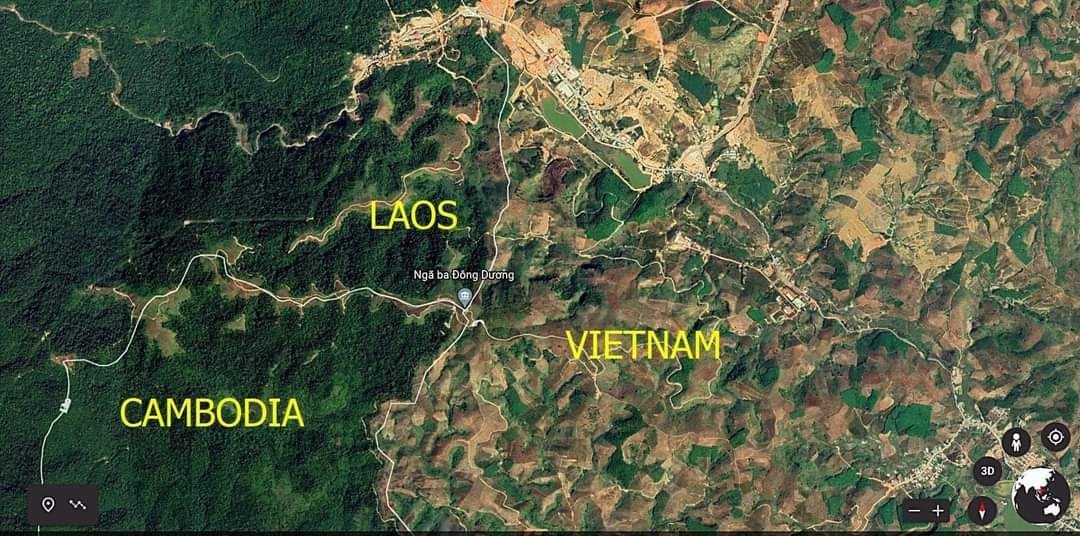
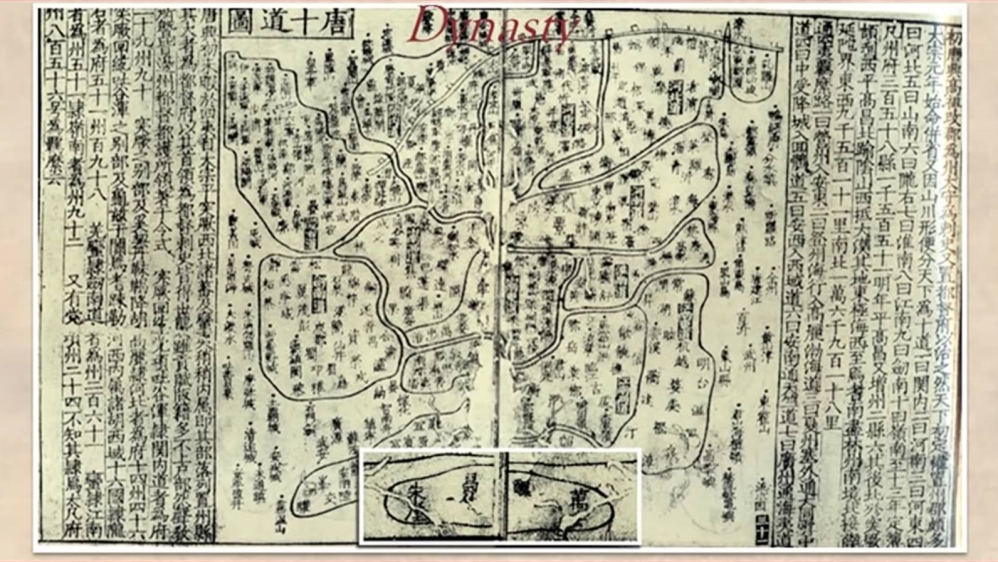
To further disprove China’s claim of “historical rights”, Carpio presented several ancient Chinese maps, dating as far back as 900 years ago, to the Song and Tang dynasties. All the maps showed that China’s southernmost territory was the island of Hainan.
Additionally, the 1947 Constitution of the Republic of China, also identified Hainan as the country’s southernmost part, raising questions over what would later emerge as the “nine-dash line” claim.
Regardless of the historical evidence, the reality is that China already “controls almost all the facts on the ground” and now has a “real and credible foothold” in the South China Sea, said Thomas Benjamin Daniel, senior foreign policy expert at Malaysia’s Institute of Strategic and International Studies (ISIS Malaysia).
Still, Daniel and other analysts urge China and other stakeholders in the region to abide by the principles and spirit of international law, to keep the peace and avoid situations that would lead “down a very dangerous road.”https://platform.twitter.com/embed/index.html?dnt=true&embedId=twitter-widget-0&frame=false&hideCard=false&hideThread=false&id=1280864233396285443&lang=en&origin=https%3A%2F%2Fwww.aljazeera.com%2Fnews%2F2020%2F7%2F16%2Fchinas-own-records-debunk-historic-rights-over-disputed-seas&theme=light&widgetsVersion=ed20a2b%3A1601588405575&width=550px
‘Nine-dash line’
For years, China has anchored its South China Sea claims on the “nine-dash line”, under which it lays claim to almost 90 percent of the disputed waters as far south as the coasts of Malaysian Borneo and Brunei. Images published by China showed the imaginary line almost hugging the shores of neighbouring countries.
Using the controversial line, Beijing has been ramping up activities in the South China Sea, starting with the Paracel Islands in the 1970s and 1980s, the Spratly Islands in the 1990s, and the Scarborough Shoal in the early 2000s.
Chester Cabalza, a security analyst and fellow at the National Defence University in Beijing, said China has been strategic in approaching the “South China Sea conundrum”. He added that the ongoing coronavirus pandemic has only provided the country even more opportunities to advance its interests.
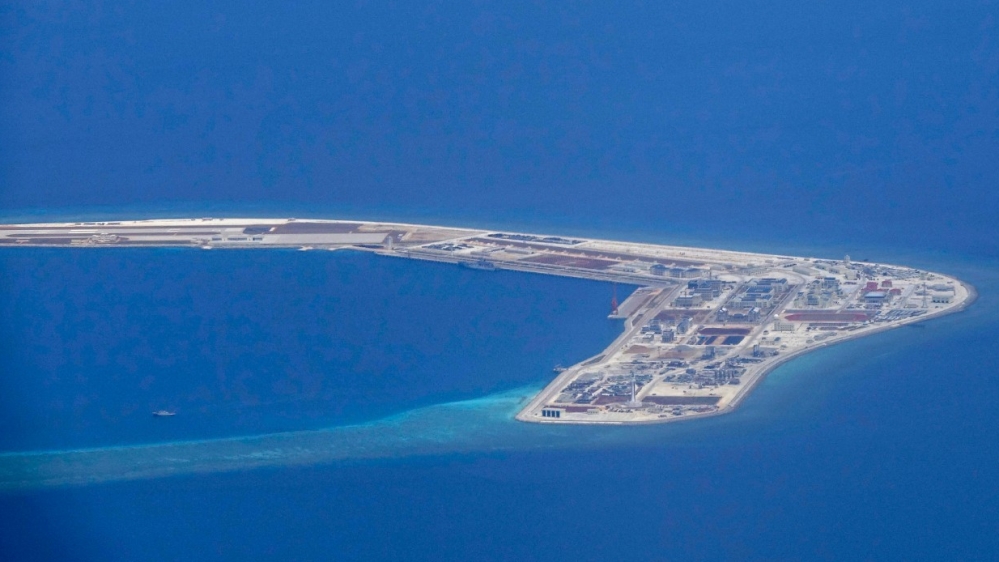
“It seems like China is winning,” he told Al Jazeera, noting how it had militarised the disputed waters by developing rocks and atolls into islands in recent years.
ISIS Malaysia’s Daniel added that China “is playing the long game”, as it attempts to solidify and “normalise” its regional maritime position.
The Hague ruling
Beijing’s approach encountered resistance in 2016 with the landmark ruling of the Permanent Court of Arbitration in The Hague, which declared that China’s “historical rights” had no legal basis.
The ruling also said that the rocks and the partly submerged features on which China had built its naval and aerial facilities, were within the 200 nautical-mile (370.4km) Exclusive Economic Zone of the Philippines, as defined by the UN. An EEZ is an area where only the country it belongs to can fish and explore natural resources, although safe passage is granted to foreign vessels.
The court also established the EEZs of Malaysia, Brunei, Indonesia and Vietnam, boosting their positions in relation to China.
Furthermore, the court said China’s reclaimed areas and artificial islands were not entitled to a 12-nautical-mile (22.2km) territorial sea, because they were not habitable in their original form. As such, freedom of navigation and overflight are allowed in those areas.
China refused to participate in the arbitration case, dismissing the ruling as “null and void”.
It has also continued to expand its facilities in the South China Sea, including a three-km (1.86-mile) military-grade runway, barracks and radars on Mischief Reef, which is within the Philippine EEZ.
Maritime incidents have also escalated, with a Vietnamese boat being sunk in April, an incident blamed on a Chinese surveillance vessel. All eight fishermen survived. In June 2019, at least 22 Filipino fishermen were left to drown when their fishing boat was rammed under suspicious circumstances by an alleged Chinese militia boat. They were later rescued by Vietnamese fishermen.
On Tuesday, Malaysia revealed that Chinese coastguard and navy ships had encroached into its waters at least 89 times between 2016 and 2019. Earlier this year, there were also reports of a Chinese government survey ship “tagging” a Malaysian oil-exploration vessel within the Malaysian EEZ.
Cabalza, of the National Defence University in Beijing, described China’s behaviour as “schizophrenic”, as it tries to employ both confrontation and cooperation in dealing with its neighbours.
‘Code of Conduct’
As part of its effort to defuse tensions in the region, the Association of the Southeast Asian Nations (ASEAN) has been pressing China for years to reach agreement on the so-called Code of Conduct, which would govern countries’ behaviour in the South China Sea.
Differences between members – some of whom have no claim to the sea but are close to China – mean there has been little headway made.
Cabalza says the 10-nation bloc must present a more unified voice before it takes on China, which prefers bilateral negotiation, adding that ASEAN nations “should not become submissive” in negotiating an equitable deal with Beijing.
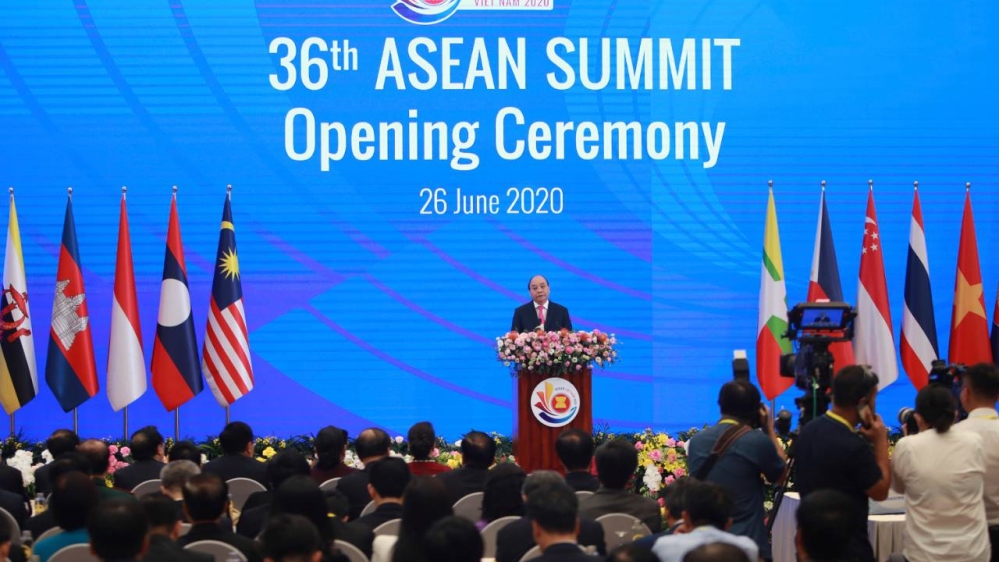
On June 26, ASEAN leaders held a virtual summit hosted by Vietnam, in which they declared that the 1982 United Nations oceans treaty should be the foundation for sovereign rights and entitlements in the South China Sea. However, the leaders were unable to make significant progress on the Code of Conduct.
Daniel says he is “not very optimistic” that an agreement can be reached soon to help ease tension.
“ASEAN is an association of 10 member states with different national and foreign priorities, that makes decisions based on consensus. Consensus here often means the lowest common denominator.”
In the absence of a consensus, the increased presence of the US in the South China Sea could prove a useful counterweight.
Daniel said the “marked increase” of US freedom of navigation operations and sharper rhetoric, show that Washington wants to remain relevant in the region.
On Wednesday, Pompeo issued another statement saying the US would “support countries all across the world who recognise that China has violated their legal territorial claims as well – or maritime claims as well.”
Meanwhile, Carpio said the world’s navies should be encouraged to sail through the South China Sea and exercise freedom of navigation – to deliver a message to Beijing that it does not control the area.
He also urged Malaysia, Brunei, Indonesia and Vietnam to help the Philippines in explaining that China’s claim of “historical right” is “totally false.”
“We should continue resorting to the rule of law, because we have no other choice,” Carpio said.
The China Coast Guard (CCG) and Royal Malaysian Navy (RMN) are involved in another standoff over hydrocarbon exploration in the South China Sea. China Coast Guard ship 5402 harassed a drilling rig and its supply ships operating just 44 nautical miles from Malaysia’s Sarawak State on November 19. Malaysia deployed a naval vessel in response, which continues to tail the 5402. The incident seems to have followed two weeks of increasing tensions between the CCG and RMN in the area.
Good morning. Biden introduces his foreign policy team. The Dow breaks 30,000. And Pennsylvania is banning alcohol sales.
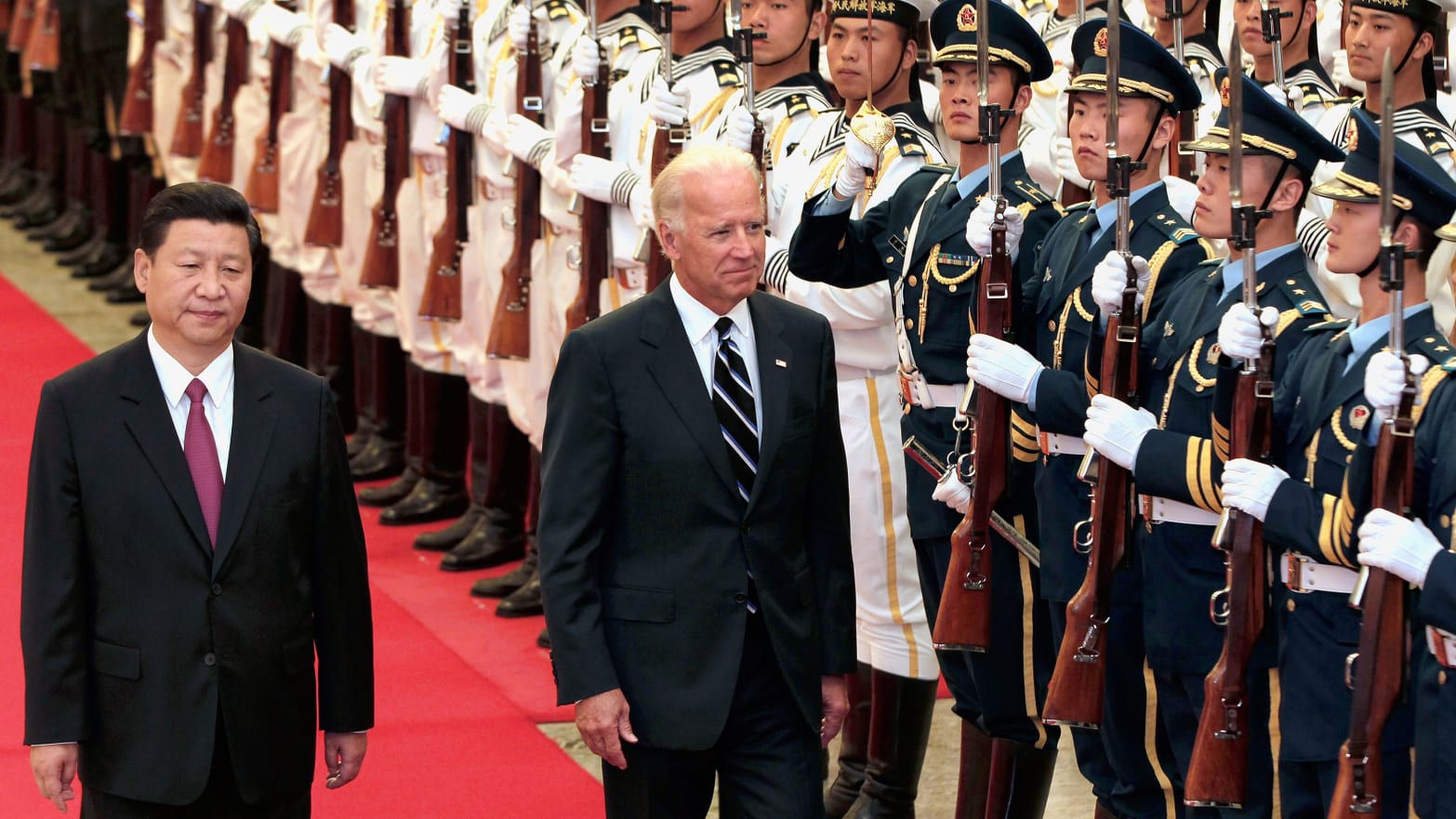
Joe Biden with Xi Jinping in Beijing in 2011.Peter Parks/Agence France-Presse — Getty Images
How Biden will confront China
The presidents who came just before Donald Trump took a mostly hopeful view of China. Barack Obama, Bill Clinton and the two George Bushes all tried to integrate China into the global economy and political system. Doing so, they believed, could persuade China to accept international rules and become more democratic.
China used access to the world’s markets to grow richer on its own terms. It rejected many international rules — on intellectual property, for example — while becoming more authoritarian at home. As a recent Times story puts it, China has adopted “increasingly aggressive and at times punitive policies that force countries to play by its rules.”
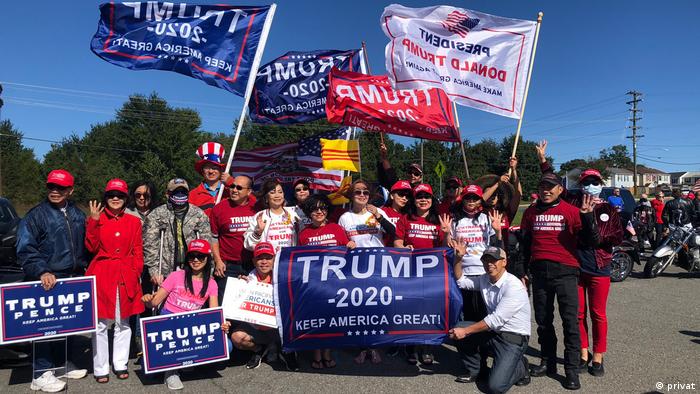
Among Asian Americans, Vietnamese Americans stand out in one regard: Their support for Donald Trump. But younger critics are trying to change their minds.
The Eden Center in Falls Church, Virginia, is a typical American strip mall, with more than 120 tiny restaurants, beauty salons and electronic retailers. Most of the stores in this mall are run by Vietnamese Americans. In the middle of the parking lot hang two gigantic flags — one American, and the other of South Vietnam, a country that ceased to exist with the fall of Saigon in 1975.
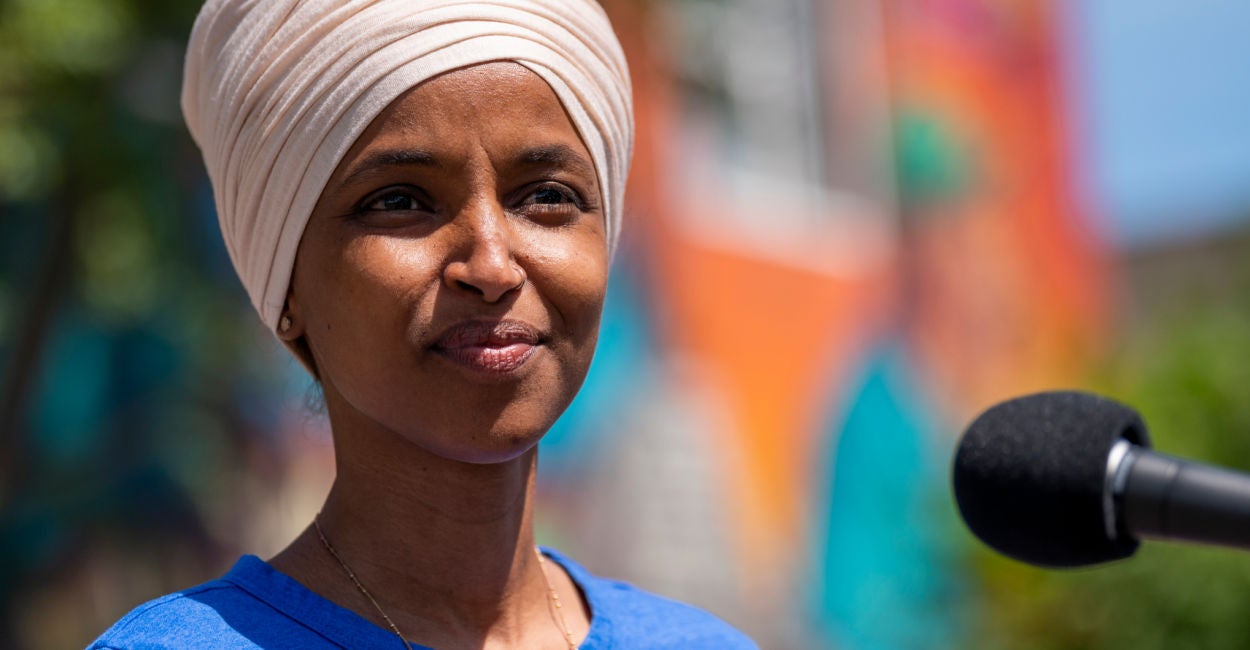
Rep. Ilhan Omar, D-Minn. pictured on Aug. 11 Minneapolis, Minnesota, criticized Sen. Tom Cotton’s speech on the Pilgrims. (Photo: Stephen Maturen/Getty Images)
____________
Will Americans still be celebrating Thanksgiving 100 years from now?
This year marks the 400th anniversary of the Pilgrims’ arrival in America. The moment, which deserved wider recognition, was celebrated in an excellent speech by Sen. Tom Cotton, R-Ark.
“A great American anniversary is upon us,” Cotton said on Nov. 18. “Regrettably, we haven’t heard much about this anniversary of the Mayflower; I suppose the Pilgrims have fallen out of favor in fashionable circles these days. I’d therefore like to take a few minutes to reflect on the Pilgrim story and its living legacy for our nation.”
Cotton delivered a fitting tribute to the Pilgrims and their story of faith and perseverance, which is so intertwined with the Thanksgiving holiday and the values we cherish most.
The left is actively working to undermine the integrity of our elections. Read the plan to stop them now. Learn more now >>
Perhaps predictably, the speech was attacked by media outlets and Rep. Ilhan Omar, D-Minn., who hurled an ad hominem attack at Cotton on Twitter.
Of course, it was The New York Times editorial board that was so “terrified” of Cotton’s opinions that it slapped an apology on an editorial he wrote for it about riots and fired the editor responsible for publishing it to appease woke staffers.
Omar’s comment, as utterly unserious as it was, demonstrates the great crisis confronting modern Americans.
She is not alone in dismissing the Pilgrim story or Thanksgiving as a whole. Many of our elite institutions—and now, elected officials—have a knee-jerk reaction to attack or dismiss much of our hsitory.
Clearly, a steady drumbeat of woke ideologues in the media and on Twitter have convinced enough people to view the Pilgrim story as another example of oppressor against oppressed, of racist versus antiracist.
How did this happen?
It’s unclear what “actual history” Omar was referring to, but perhaps something akin to it is Howard Zinn’s “A People’s History of the United States,” a work often celebrated by her left-wing allies. In this book, Zinn created a dishonest, distorted, and ultimately shallow picture of the Pilgrim arrival in America.
As Mary Grabar, author of “Debunking Howard Zinn,” wrote for The Federalist in 2019, Zinn deconstructs the Pilgrims’ “first” Thanksgiving to advance his Marxist ideas of oppressors versus oppressed.
In these simplistic narratives, the Pilgrims are portrayed as wicked oppressors and the native people as angelic, oppressed victims. This is the narrative now being peddled in elementary schools around the country.
In her critique of Zinn-inspired literature used in Portland, Oregon, public schools, Grabar wrote:
It makes a cartoonish presentation of myriad people groups from the Bahamas and South America to New Mexico and New England. They are falsely oversimplified as universally peace-loving, Mother Earth-respecting, generous, and welcoming. All Indian tribes are lumped together as a mass of childlike people oppressed by the greedy capitalist explorers and settlers.
It’s no surprise that in 2020, Portland became an epicenter of Jacobin-like rioters, who targeted statues of George Washington and countless others while making absurd demands to abolish the police.
Here we see the fruits of a generation raised on Zinn.
While it is likely pointless to convince the vandals who attack statues and businesses that their views are misguided, we need to take the propaganda that has undermined our country and driven fellow citizens to lunacy and extremism seriously.
Thanksgiving is in the beginning stages of receiving the Columbus Day treatment. We can’t underestimate the threat of a few militant voices amplified by America’s elite culture-shaping institutions.
Columbus was once nearly universally admired in America, his holiday only questioned by an odd collection of left-wing radicals and, at an even early date, white nationalists who resented the celebration of a Catholic and Italian-born hero.
All of these virtues are anathema to woke social justice warriors, who want to purge religion from the public square, obliterate the “Western-prescribed” traditional nuclear family, and redefine love of country as a mask for hatred of others.
This year’s Mayflower anniversary, as Cotton eloquently explained, is particularly noteworthy:
[T]he Thanksgiving season is upon us and once again we have much to give thanks for. But this year we ought to be especially thankful for our ancestors, the Pilgrims, on their four hundredth anniversary. Their faith, their bravery, their wisdom places them in the American pantheon. Alongside the Patriots of 1776, the Pilgrims of 1620 deserve the honor of American founders.
As Cotton noted in his speech, prominent Americans of ages past have made speeches marking the centuries since the landing at Plymouth. Perhaps the most famous is by New England statesman Daniel Webster, whose Plymouth Oration of 1820—delivered on “Forefathers Day”—was one of the most important steps in turning the New England story into a national story.
Webster’s speech was both deeply conservative and “progressive” at the same time. He explained how the Pilgrim forefathers laid down the foundation, the building blocks of what would become a country attached to both self-government and religious liberty.
The Pilgrim experience of fleeing religious repression and inaugurating their newly founded community in the New World with a simple, 200-word Mayflower Compact affirming the rule of law set in motion the inertia for a people rooted in but diverging from their European origins.
However, Webster’s speech was not merely a celebration of the past. He called on his generation and the generations to come to perpetuate and extend what we had been given: the great gift of free government.
The speech was mixed with a general, genuine, and unquestionable love of country, with a specific demand for what needed to be changed—the abominable institution of slavery in particular.
It is perhaps a symbol of Webster’s triumph that it is a senator from Arkansas, a Southerner and not a New Englander, who delivered a great oration in celebration of the Pilgrims for the fourth-century mark in a republic where slavery has long been buried.
In his own words, Cotton proudly declared:
Some—too many—may have lost the civilizational self-confidence needed to celebrate the Pilgrims … But I for one still have the pride and confidence of our forebears, so here today, I speak in the spirit of that cabin and I reaffirm that old Compact.
The future of our country, and the continuity of ideas and institutions that we should all be deeply grateful for, depend on Thanksgiving.
If we fail to cherish the special achievements of 1620, Americans a century from now will look forward through the lens of grievance and back with a feeling of contempt.


 George Kahale III




![A ruling at The Hague in 2016 tossed out Beijing's 'nine-dash line' claim in the South China Sea [File: Andy Wong/AP]](https://www.aljazeera.com/wp-content/uploads/2020/07/6f6dc0f898114f2991eaabc9a19a814d_18.jpeg?resize=770%2C513)

 Joe Biden with Xi Jinping in Beijing in 2011.Peter Parks/Agence France-Presse — Getty Images