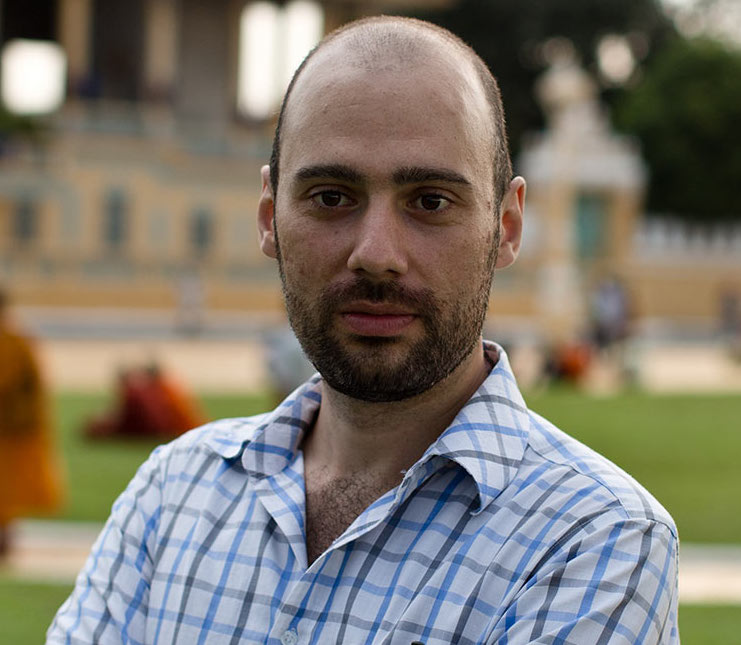
I am an attorney in the Washington DC area, with a Doctor of Law in the US, attended the master program at the National School of Administration of Việt Nam, and graduated from Sài Gòn University Law School. I aso studied philosophy at the School of Letters in Sài Gòn.
.
I have worked as an anti-trust attorney for Federal Trade Commission and a litigator for a fortune-100 telecom company in Washington DC.
I have taught law courses for legal professionals in Việt Nam and still counsel VN government agencies on legal matters.
I have founded and managed businesses for me and my family, both law and non-law.
I have published many articles on national newspapers and radio stations in Việt Nam.
In 1989 I was one of the founding members of US-VN Trade Council, working to re-establish US-VN relationship.
Since the early 90's, I have established and managed VNFORUM and VNBIZ forum on VN-related matters; these forums are the subject of a PhD thesis by Dr. Caroline Valverde at UC-Berkeley and her book Transnationalizing Viet Nam.
I translate poetry and my translation of "A Request at Đồng Lộc Cemetery" is now engraved on a stone memorial at Đồng Lộc National Shrine in VN.
I study and teach the Bible and Buddhism. In 2009 I founded and still manage dotchuoinon.com on positive thinking and two other blogs on Buddhism.
In 2015 a group of friends and I founded website CVD - Conversations on Vietnam Development (cvdvn.net).
I study the art of leadership with many friends who are religious, business and government leaders from many countries.
I have written these books, published by Phu Nu Publishing House in Hanoi:
"Positive Thinking to Change Your Life", in Vietnamese (TƯ DUY TÍCH CỰC Thay Đổi Cuộc Sống) (Oct. 2011)
"10 Core Values for Success" (10 Giá trị cốt lõi của thành công) (Dec. 2013)
"Live a Life Worth Living" (Sống Một Cuộc Đời Đáng Sống) (Oct. 2023)
I practice Jiu Jitsu and Tai Chi for health, and play guitar as a hobby, usually accompanying my wife Trần Lê Túy Phượng, aka singer Linh Phượng.
Rights group says Chinese policing programme selects people for arrest for ‘everyday, lawful’ behaviour.
A Chinese police officer standing near what is officially called a ‘vocational education centre’ in Yining, Xinjiang Uighur Autonomous Region, September 4, 2018 [File: Thomas Peter/Reuters]
9 Dec 2020
A big-data program in China’s Xinjiang “arbitrarily selects” Muslims for detention, flagging behaviour such as wearing a veil, studying the Quran or going on the Hajj pilgrimage as reasons for arrest, according to Human Rights Watch (HRW).
A common hypersonic glide body launches from Pacific Missile Range Facility in Kauai, Hawaii on March 19, 2020, during a flight experiment. Australia and the U.S. are teaming up on hypersonic weapons development. (Courtesy of the U.S. Navy)
MELBOURNE, Australia — Australia and the United States are partnering to develop and test an air-launched hypersonic cruise missile under the bilateral Southern Cross Integrated Flight Research Experiment program, or SCIFiRE, the two countries announced Monday.
The Mekong Delta region is set to get over 300 kilometers of expressways in the next five years as the government seeks to boost connectivity and economic growth.
“What happened was unexpected, our colleague was wrong, and we apologize on his behalf,” a female flight attendant said on her Facebook page.
Promising to strictly follow the rules and not cause any similar incidents in future, many also expressed the hope people will stop criticizing and even abusing them on social networks and in real life.
“We have been worried at work as some of our colleagues have been discriminated against and abused. I want to repeat we are sorry for what happened,” another flight attendant wrote on Facebook.
A flight attendant posts on his Facebook page, using the #WeApologize hashtag on December 2, 2020.
Previously, local news said verbal abuse and ostracism were reported by Vietnam Airlines staff. On December 3, a stranger attacked an attendant with a burning cigarette while the uniformed victim was waiting at a red light.
These posts from Vietnam Airlines flight attendants have attracted attention from netizens, who have shown encouragement and support, hoping the staff would overcome the upheaval soon.
The soured image of Vietnam Airlines attendants in the public eye was by
Under Covid-19 prevention protocols, flight crews must isolate themselves on returning to Vietnam. But the flight attendant, “patient 1342,” who returned to Vietnam from Japan on November 14 and entered quarantined for four days at a facility managed by Vietnam Airlines in HCMC’s Tan Binh District, went to another quarantine area and contracted the virus from a crew member who had returned from Romania.
Vietnam Airlines staff on a flight during the Covid-19 pandemic. Photo by Tien Phong Newspaper.
After two tests showed he was negative for the coronavirus, he was let go but told to isolate himself at home.
But he came into contact with his mother and two friends, including an English language teacher who stayed with him for a few days.
On November 29, 15 days after he returned from Japan, he tested positive for the virus, and the next day the teacher did too. The latter had meanwhile spread the virus to a nephew and a student of his.
On December 3, local police said the flight attendant could be charged with “spreading dangerous infectious diseases to humans.”
Vietnam has recorded 1,358 Covid-19 cases so far, 119 still active. Thirty-five have succumbed to the disease, many of them elderly with underlying conditions like diabetes or kidney failure.Related News:
By Vu Ngoc December 3, 2020 | 06:36 pm GMT+7 vnexpressSatellite photo shows North Island, part of the Paracel Islands in the East Sea, September 2017. Photo by Planet Labs via Reuters.Vietnam Thursday asked China to stop escalating tensions with actions that exacerbate violations of Vietnam’s sovereignty over the Hoang Sa and Truong Sa archipelagos.
The American and Chinese flags are displayed outside a hotel in Beijing on May 14, 2019. (File photo: AFP/Greg Baker)
(Updated: )
WASHINGTON: Washington issued new entry rules for Chinese Communist Party (CCP) members travelling to the United States, the New York Times reported on Thursday (Dec 3), citing the State Department.
The new policy – which took immediate effect on Wednesday – caps visas of Communist Party members and their immediate families to one month and a single entry into the country, the report said.
“For decades we allowed the CCP free and unfettered access to US institutions and businesses while these same privileges were never extended freely to US citizens in China,” a State Department spokesperson said in a statement quoted by the Times.
Applicants had previously been able to obtain 10-year visitor visas. The report estimated the new restrictions could theoretically apply to around 270 million people.
Taipei [Taiwan], December 3 (ANI): Despite the attempts by the authoritarian Chinese Communist Party (CCP) to curb freedom of expression, right to information, association and religion in Tibet, there has been a rise in domestic social media giving platform to voices challenging the government-sponsored news.
Aerial photo taken on April 8, 2020 shows the Xiaochantan dock in Yangpu, south China’s Hainan Province. As a state-level development zone established in 1992 in the northwest of Hainan, the Yangpu Economic Development Zone is expected to develop into a growth point of Hainan’s high-quality development and a pilot zone of Hainan free trade port. (Xinhua/Pu Xiaoxu)
BEIJING, Dec. 3 (Xinhua) — The State Council, China’s cabinet, has made arrangements to step up implementation of the Regional Comprehensive Economic Partnership (RCEP).
Washington DC [US], December 3 (ANI): The US government has issued an order to block cotton imports from a Xinjiang governmental organisation in China due to the ongoing human rights abuses of Uyghurs, the Department of Homeland Security (DHS) said on Wednesday.
“The US Department of Homeland Security announced today that US Customs and Border Protection (CBP) personnel at all US ports of entry will detain shipments containing cotton and cotton products originating from the Xinjiang Production and Construction Corps (XPCC),” the release said on Wednesday.
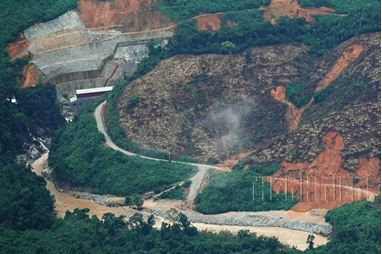
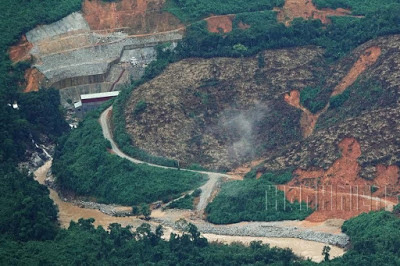
Thủy điện Rào Trăng 3, nhìn từ máy bay trực thăng. Ảnh: internet
Cứ “Đến hẹn lại lên”, trong hơn thập kỷ qua, cứ đến mùa mưa bão thì miền Trung lại phải chịu ngập lũ tang thương, năm sau cao hơn năm trước, như một định mệnh. Những khổ nạn ấy, người ta thường đổ cho “thiên tai” như biến đổi khí hậu chẳng hạn. Điều đó tuy không sai, nhưng ngoài nguyên nhân khách quan do thiên tai đó, còn có nguyên nhân chủ quan là “nhân tai” (nhân họa) do con người gây ra. Sở dĩ người ta né tránh nói đến nhân tai là để giấu dốt, chối bỏ trách nhiệm.
Thế giới tư nhiên vận động có quy luật tương đối ổn định. Do con người tác động vào khiến cho nó biến đổi theo tỷ lệ thuận – tác động nhiều nó biến đổi nhiều và ngược lại.
Thủy điện Rào Trăng 3 trên thượng nguồn sông Bồ nhìn từ máy bay trực thăng
Không biết cây rừng – một loại sinh vật không biết nói, không biết than không biết khóc – ngoài cách phản ứng gián tiếp với con người bằng mặc kệ lũ lụt hoành hành, còn có cách nào nữa không, nhưng cầm chắc là có biết đi nữa chúng nó cũng không lường nổi “cái mốc đổi đời 1945” lại đưa cả bà con họ hàng chúng đến chỗ tuyệt diệt như hôm nay. Trong vài thập kỷ lại đây chúng đã chịu một cuộc “Cải cách rừng núi” long trời lở đất gấp vạn lần CCRĐ, mà hình như đến giờ này cũng đâu đã kết thúc.
Các chuyên gia khí tượng cho biết miền Trung mưa triền miên trong những ngày qua dẫn tới lũ lịch sử là do tác động của nhiều hình thái thời tiết nguy hiểm. Tuy nhiên, có nhiều phân tích cho rằng thiên tai tại Việt Nam hiên nay và những năm gần đây với tình hình ngày càng trầm trọng là do phá rừng và làm thủy điện.
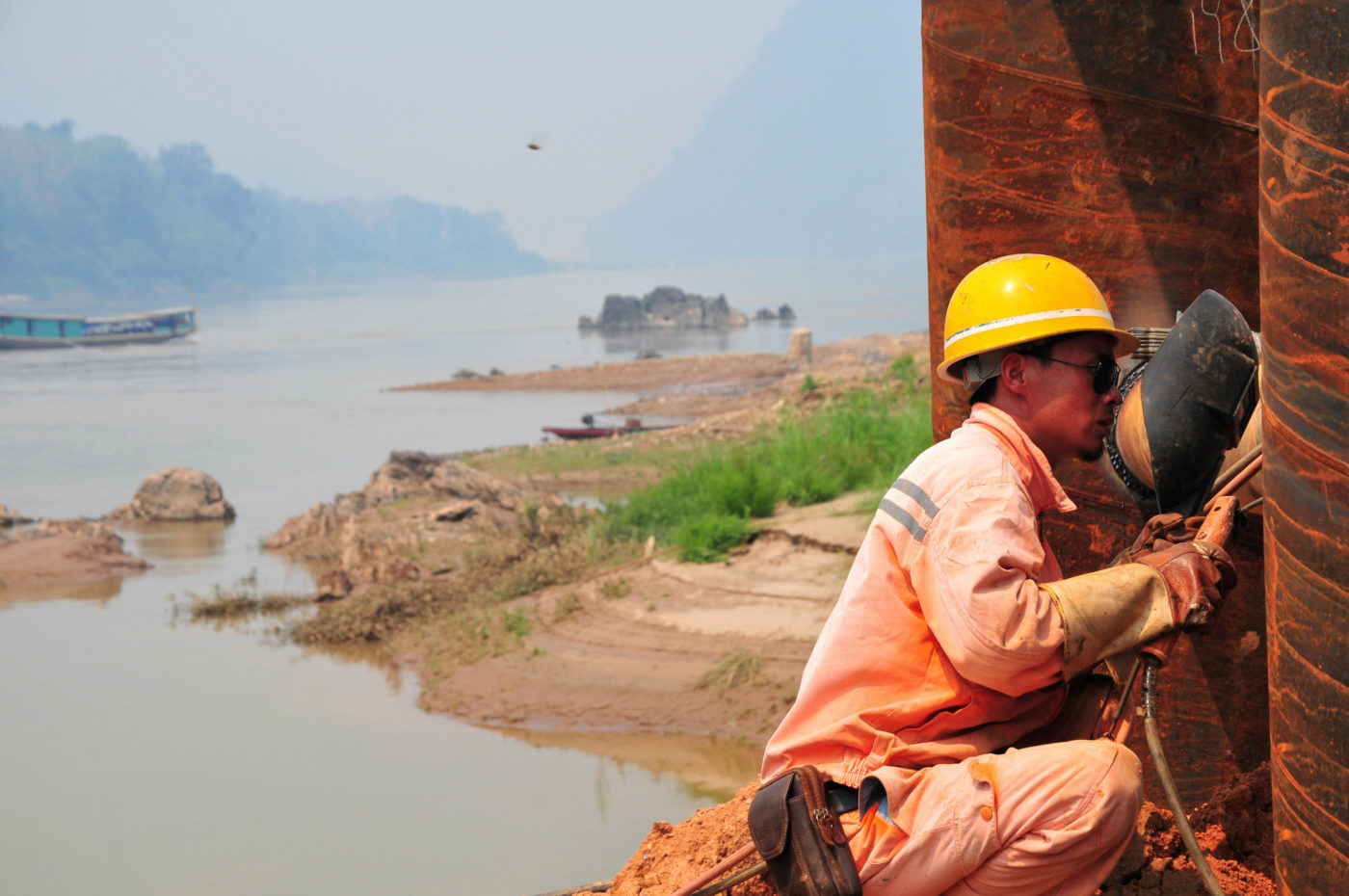
Một người thợ hàn làm việc trên cầu bắt ngang sông Mekong,
một phần của đường sắt cao tốc Trung Hoa-Lào. [Ảnh: Alamy]
Tác giả của Dưới Bóng Rồng (In the Dragon’s Shadow) nói với China Dialogue về ảnh hưởng ngày càng tăng của Trung Hoa và các dự án hạ tầng đầy tranh cãi trong khu vực.
Với các hệ quả lớn lao cho các cuộc bầu cử sắp tới ở Myanmar cùng với việc Hoa Kỳ nhảy vào việc cai quản dòng sông, khu vực Mekong đã trở thành một nơi tranh chấp cho các mục tiêu rộng lớn hơn của Trung Hoa ở Đông Nam Á (ĐNA).
Quyển sách mới của Sebastian Strangio, Dưới Bóng Rồng: ĐNA trong Thế kỷ Trung Hoa, dựa trên hơn một thập niên tường trình trong khu vực để khám phá ảnh hưởng của Trung Hoa từ Lào cho đến Indonesia. Đặc biệt là khu vực Mekong, có biên giới và lịch sử lâu dài với nước nầy và đang chụp lấy các dự án hạ tầng cơ sở quan trọng được Trung Hoa và các chánh phủ sở tại hậu thuẫn.
Sebastian Strangio, tác giả của Dưới Bóng Rồng: ĐNA trong Thế kỷ Trung Hoa
China Dialogue nói chuyện với Strangio về những thách thức mà Myanmar, Việt Nam, Cambodia, Thái Lan và Lào đang đối mặt.
Cuộc phỏng vấn được hiệu đính và cô động cho rõ ràng.
!–more–>
China Dialogue: Khi cuộc bầu cử ở Myanmar đến gần, đầu tư vào hạ tầng cơ sở của Trung Hoa đóng một vai trò nổi bật đối với nguy cơ của đảng Liên minh Dân chủ Quốc gia (National League for Democracy (NLD)). Làm thế nào NLD có thể quay mặt với các dự án hạ tầng cơ sở có ảnh hưởng lớn của Trung Hoa trong tương lai gần?
Strangio: Kể từ khi cuộc khủng hoảng Rohingya bùng nổ giữa 2016 và 2017, phản ứng của các quốc gia Tây phương đối với việc đàn áp khủng khiếp và man rợ nầy đã tạo bất hòa với Myanmar và cho phép Trung Hoa lấy lại phần đất đã mất trong thời gian nước nầy mở cửa về phía Tây trong năm 2011-12.
Trung Hoa đã đi một bước dài với ý định làm sống lại các dự án hạ tầng cơ sở bị đình chỉ và đẩy mạnh mục tiêu dài hạn của họ để thiết lập một hành lang trên bộ từ Yunnan (Vân Nam) đến Ấn Độ Dương. Đã có một số tiến bộ trong các dự án nầy, và Hành lang Kinh tế Trung Hoa-Myanmar được thiết lập như một hạng mục bao quát cho nhiều dự án hạ tầng cơ sở và kết hợp nầy.
Trên thực tế, không thực hiện được bao nhiêu. Cái ấn tượng chung của mọi người là chánh phủ Myanmar rất cẩn thận về các hệ quả của các dự án nầy. Mặc dù lệ thuộc nặng nề vào Trung Hoa, họ rất tinh tế để bảo đảm rằng các dự án nầy phục vụ quyền lợi của Myanmar. Tôi nghĩ chúng ta đã thấy việc tái thương lượng dự án cảng Kyaukpyu và cắt chi phí khoảng 6 tỉ USD. Chiến thắng gần như chắc của NLD trong các cuộc bầu cử sẽ duy trì mối liên hệ đầm ấm, nhưng tôi không nghĩ Trung Hoa sẽ được mọi thứ. Chánh phủ ở Naypyitaw rất cẩn trọng và lo ngại về việc quá lệ thuộc vào Beijing.
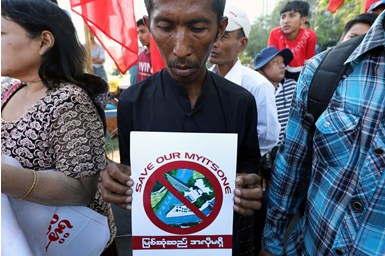
China Dialogue: Ông nghĩ chánh phủ Myanmar tức giận như thế nào về dự án đập Myitsone, với ảnh hưởng văn hóa và môi trường của nó?
Strangio: Một trong những lý do khiến đập Myitsone là cột thu lôi cho việc chống đối là vì việc đình chỉ là hành động công khai đầu tiên của chánh phủ để củng cố ràng buộc với Tây phương sau nhiều năm cô lập.
Chuyện hiếm thấy là người thiểu số như Kachin và người Burman đa số có thể đồng ý về – một vấn đề nhạy cảm của cả nước. Dự án Myitsone là một biểu tượng của chánh phủ bỏ qua quyền hạn và quyền lợi của các dân tộc thiểu số – trong việc phân phối điện bất công. Và sông Irrawaddy cũng là biểu tượng văn hóa của Myanmar, cái nôi của các nền văn minh cận đại. Ý nghĩ cho rằng nó sẽ bị bóp nghẹt bởi dự án đập khổng lồ của Trung Hoa cũng gây lo ngại lớn lao cho người đa số Burman.
Chánh phủ NLD ở trong tình thế khó khăn vì Trung Hoa muốn dự án tiếp tục lại và họ đã gây nhiều áp lực. Nhưng điều nầy sẽ gây thiệt hại lớn lao cho NLD vì dự án không được biết nhiều. Có thể nó sẽ được thu hẹp hay hủy bỏ để thay bằng các dự án thủy điện nhỏ hơn.
Ý kiến chống đập trong ngày cuối của chuyến viếng thăm Yangon của Xi Jinping
hồi tháng 1 năm 2020. [Ảnh: Alamy]
China Dialogue: Đồng bằng sông Cửu Long (ĐBSCL) ở rất xa 11 đập trên dòng chánh Mekong của Trung Hoa, nhưng thiêt hại nhiều nhất. Làm thế nào Việt Nam và các quốc gia Mekong khác có thể vận dụng việc cai quản xuyên biên giới tốt hơn để chống lại việc phát triển tàn phá trên Mekong?
Strangio: Rất khó vì đôi khi các đập của Trung Hoa là chuyện đã rồi (fait accompli). Đó là một thách thức vì các đập nầy đã được xây, thiệt hại đã xảy ra và các đập ở trong lãnh thổ Trung Hoa. Rất khó để kềm chế một siêu cường chỉ bằng luật lệ.
Nay, Trong Hoa có lợi thế lớn lao. [Các quốc gia Mekong] dựa vào nước chảy về phía nam của Trung Hoa. Nhưng tôi không rõ liệu Trung Hoa có ưu thế trong vấn đề nầy hay không. Với việc gia tăng công bố nhắm vào việc Trung Hoa bóp nghẹt dòng chảy sông Mekong, mặc dù có nghi vấn về kết quả của nghiên cứu, áp lực quốc tế lên vấn đề nầy càng ngày càng tăng. Đó có thể là lý do khiến Trung Hoa bắt đầu đáp ứng các quốc gia ở hạ lưu với lời hứa hợp tác chia sẽ dữ kiện. Nhưng tất cả hợp tác sẽ xảy ra tùy thuộc vào Beijing.
Rất khó để biết tổ chức nào như Ủy hội Sông Mekong, mà Trung Hoa không phải là thành viên, thật sự có thể làm để bó tay của Beijing. Tốt nhất, nó là một phần của chiến lược rộng lớn hơn nhằm làm áp lực với Trung Hoa về vấn đề nầy. Có cơ hội tốt để mọi thứ được cải thiện, và Trung Hoa sẽ minh bạch hơn về cái gì đang xảy ra với các đập ở thượng lưu, nhưng tôi nghĩ tất cả sẽ được thực hiện theo điều kiện của Trung Hoa.
China Dialogue: Hợp tác Hoa Kỳ-Mekong khá mới mẽ, ông nghĩ các quốc gia Mekong có thể được gì?
Strangio: Chánh phủ Hoa Kỳ đang tìm cách đối phó với Trung Hoa và không có gì ngạc nhiên với cam kết tài chánh và hứa hẹn cho khu vực, nhưng thành thật mà nói, nó là một tỉ lệ rất nhỏ so với cái mà Trung Hoa cung cấp qua cơ chế Hợp tác Lancang-Mekong (LMC), đi ra ngoài thủy học và chia sẻ dữ kiện. LMC đã trở thành một trụ cột chánh của BRI (Sáng kiến Vành đai và Con đường) và bao gồm các đặc khu kinh tế khổng lồ, cầu, đường sắt, đường ống và lưới điện.
Tôi thấy đây có vẻ là một dự án rất được hoan nghênh về phần của Hoa Kỳ, nhưng còn rất xa để chống lại ảnh hưởng lân cận của Trung Hoa với khu vực Mekong.
China Dialogue: Trong quyển sách, ông giải thích chi tiết về những thay đổi đã xảy ra trong thành phố Sihanoukville của Cambodia do đầu tư của Trung Hoa. Trong vài tuần qua, các nhà vận động môi trường đã bị bắt. Xã hội dân sự Cambodia có thể làm gì để chống lại?
Strangio: Nói thẳng ra, không có bao nhiêu. Chánh phủ Cambodia chưa bao giờ chấp nhận tính pháp lý của xã hội dân sự Cambodia trong việc lấy quyết định, cho dù đó là các dự án hạ tầng cơ sở hay việc cai quản. Trong quá khứ, có một ít không gian vì có sự hiện diện của các quốc gia viện trợ Tây phương và các quốc gia khác như Nhật Bản, giúp đỡ cho nhu cầu của chánh phủ. Nhưng điều đó đã thay đổi với sự trỗi dậy của Trung Hoa ở Cambodia.
Chánh phủ luôn luôn vạch các đường đỏ chung quanh các quyền lợi chánh trị được cố thủ và cái chúng ta đang thấy là những đường đỏ hội tụ vào không gian dân chủ còn lại. Các nhóm xã hội dân sự nay đối mặt với thách thức môi trường nhiều hơn 5 năm trước.
China Dialogue: Ở Lào, một trong những chi phí môi trường của đầu tư Trung Hoa là sự lệ thuộc vào các đồn điền độc canh ở phía bắc. Làm thế nào để chánh phủ Trung Hoa khuyến khích đầu tư có trách nhiệm hơn?
Strangio: Câu hỏi của anh giả thiết rằng chánh phủ Trung Hoa biết vấn đề và muốn sửa nó. Với các đồn điền chuối và dưa hấu trên khắp nước Lào, sự bất mãn được tạo ra thường do thái độ của các nhà thầu Trung Hoa.
Việc sử dụng hóa chất độc hại gây ra vấn đề y tế trong các cộng đồng, và chánh phủ Lào loan báo cấm sử dụng trong năm 2017, giới hạn các đồn điền chuối. Đây là một vấn đề rộng lớn hơn của chánh phủ [Trung Hoa].
Các dự án như thế có khuynh hướng làm xấu đi hình ảnh của chánh phủ. Mặc dù chánh phủ Trung Hoa kiểm soát trực tiếp, Beijing ở quá xa. Ngay nếu các nhà làm luật và hoạch định chánh sách ở Beijing thừa nhận các ảnh hưởng tiêu cực đối với người dân địa phương, các đường dây liên lạc quá mỏng để họ có thể điều khiển các dự án như thế.
China Dialogue: Sau khi sách được xuất bản, câu hỏi về kinh Kra, một kinh đào khổng lồ qua vùng núi ở phía nam Thái Lan nối Vịnh Thái Lan với Biển Andaman, lại ngẩng đầu lên trong chánh trị Thái. Từ khi đại sứ Trung Hoa đề nghị tài trợ dự án nầy như một phần của BRI trong năm 2018, nó quan trọng như thế nào trong các tham vọng lớn hơn của Trung Hoa trong Ấn Độ Dương?
Strangio: Nó là một trong những cái mà chánh phủ Trung Hoa muốn thấy tiến triển, nhưng tôi nghĩ họ cảm thấy rằng ngay trong tình huống tốt nhất, đây là một dự án khổng lồ liên quan đến nhiều năm thương lượng – chưa nói đến việc xây cất lớn lao phi thường. Tôi nghi ngờ chánh phủ Thái sẽ quan tâm đến sự tiến triển nầy. Việc phê chuẩn một ủy ban của [Thủ tướng] Prayut để xem xét dự án như một biện pháp để quăng cho Trung Hoa một cục xương.
Chi phí tổng cộng của dự án và các hệ quả về an ninh, cắt đứt người Hồi ở miền nam Thái Lan với phần còn lại của quốc gia, làm cho dự án nầy hầu như không thể tiến triển. Tôi nghĩ Trung Hoa muốn xúc tiến, nhưng tôi nghĩ họ không thực tế. Họ có nhiều kế hoạch để giảm sự lệ thuộc của họ vào Eo biển Malacca, và nhiều cái họ đang làm ở Myanmar trực tiếp liên hệ đến việc nầy: xây một hành lang trên bộ đến Ấn Độ Dương, tạo một lối thông thương ra biển về phía tây mà họ không có.
Sơ lược về tác giả
Tyler Rodney là chủ bút khu vực Đông Nam Á (ĐNA) của China Dialogue ở Bangkok, chú trọng đến khu vực Mekong. Tyler cộng tác với nhiều nhật báo, tạp chí, và đài phát thanh trên khắp Trung Hoa và ĐNA.
Muốn biết rừng nguyên sinh phòng hộ bị tàn phá thế nào, chư vị cứ gõ: “Nạn phá rừng” thì Goole đáp ứng ngay. Bài viết nầy tôi có dụng ý góp phần tranh luận về cây tạo nên “Rừng phòng hộ” và “Cây công nghiệp”.

![A Chinese police officer standing near what is officially called a 'vocational education centre' in Yining, Xinjiang Uighur Autonomous Region, September 4, 2018 [File: Thomas Peter/Reuters]](https://www.aljazeera.com/wp-content/uploads/2020/12/2020-12-09T055221Z_578150358_RC2HJK9XGVSS_RTRMADP_3_CHINA-RIGHTS-XINJIANG-e1607501922191.jpg?resize=770%2C513)
/cloudfront-us-east-1.images.arcpublishing.com/mco/4UTP67S2SJA55NMBBXWOOOTJEM.jpg)


 Satellite photo shows North Island, part of the Paracel Islands in the East Sea, September 2017. Photo by Planet Labs via Reuters.Vietnam Thursday asked China to stop escalating tensions with actions that exacerbate violations of Vietnam’s sovereignty over the Hoang Sa and Truong Sa archipelagos.