China authorises coast guard to fire on foreign vessels

Al Jareeza
Legislation also allows demolition of other countries’ structures built on Chinese-claimed reefs.

A Philippine fisherman watches a China Coast Guard vessel patrolling the disputed Scarborough Shoal [File: Erik De Castro/Reuters]

23 Jan 2021

China has passed a law that for the first time explicitly allows its coast guard to fire on foreign vessels, a move that could make the contested South China Sea and nearby waters more choppy.

Tiếp tục đọc “China authorises coast guard to fire on foreign vessels”

Japan weighs in on South China Sea dispute, adding to pressure on Beijing

Permanent mission to UN sends note saying China’s territorial baselines on some islands and reefs fail to satisfy conditions in United Nations conventionIt also accuses China of restricting freedom of navigation and overflight

Laura Zhou

Laura Zhou in Beijing

Published: 7:51pm, 21 Jan, 2021 SCMP

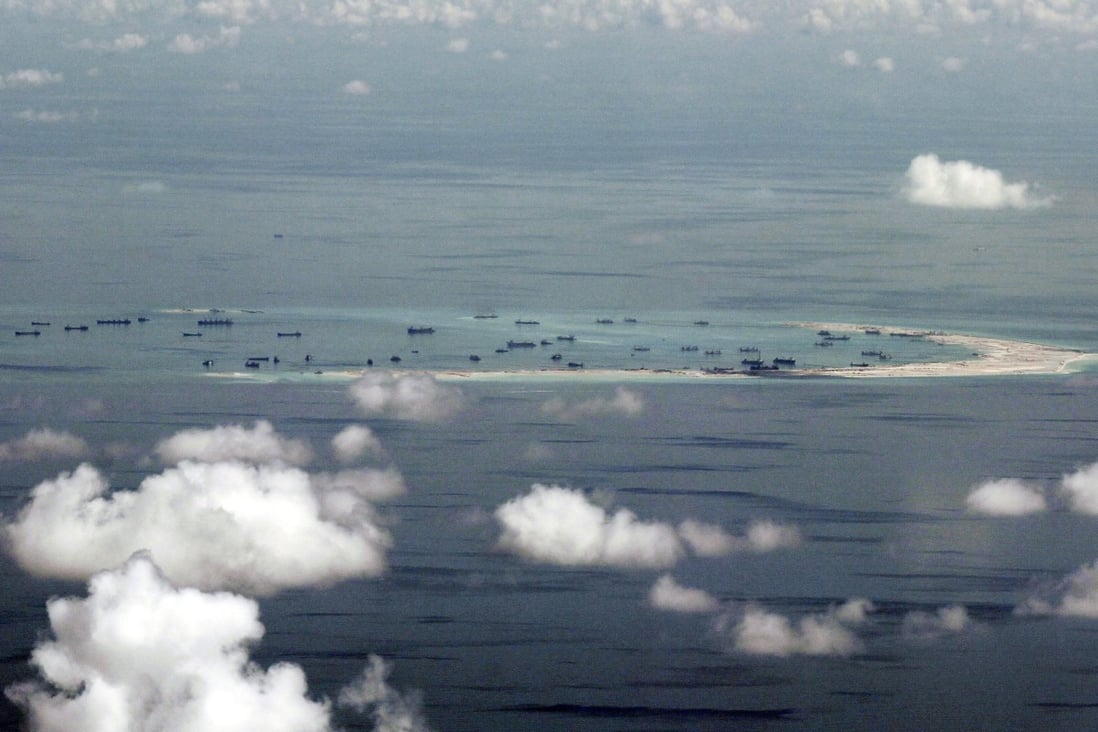
Japan’s diplomatic note made reference to China’s protests against the overflight of Japanese aircraft at Mischief Reef. Photo: AP

Japan’s diplomatic note made reference to China’s protests against the overflight of Japanese aircraft at Mischief Reef. Photo: AP

Japan has joined a battle of diplomatic notes over the South China Sea dispute, adding to pressure on Beijing over its expansive claims in the strategically important waterway.

Tiếp tục đọc “Japan weighs in on South China Sea dispute, adding to pressure on Beijing”

Scepticism about vaccines clouds outlook for defeating coronavirus


 John CarterSenior Editor, Political Economy
23 January 2021

Hello again, 

Having overcome the challenges of developing coronavirus vaccines and begun the process of distributing them worldwide, a crucial question has cropped up: will people in high-risk areas voluntarily take the jab? In this issue of Global Impact, we explore the resistance to vaccinations amid concerns about quality, effectiveness and possible side effects. 

Bhavan Jaipragas, Senior Correspondent, Asia Desk

You can bring the vaccine to the people, but will they take the jab?
 
In the span of a year, Singapore has gone from being hailed as the gold standard in curbing the Covid-19 pandemic to suffering an embarrassing surge of cases among migrant workers to once again reasserting itself as a success story.What lies ahead for the wealthy Southeast Asian city state in its fight against the virus may well be a harbinger of what’s to come for the rest of Asia – and the world. One big problem on the horizon is “vaccine hesitancy” among sceptical Singaporeans who argue they don’t need to be inoculated since the country has done such a good job keeping the numbers down.
Tiếp tục đọc “Scepticism about vaccines clouds outlook for defeating coronavirus”

How China Is Weaponizing the Belt and Road Initiative

September 8, 2020 — Asia Society Policy Institute Vice President for International Diplomacy and Security Daniel Russel examines some of the findings of ASPI’s new report Weaponizing the Belt and Road Initiative. The report explores relevant Chinese doctrine, highlights the involvement of China’s People’s Liberation Army with the BRI, and assesses the potential military and geostrategic advantages China accrues from BRI ports and other projects. (9 min., 59 sec.)

To download the report visit: https://asiasociety.org/policy-institute/weaponizing-belt-and-road-initiative

The Future of the U.S. and China

The Future of the U.S. and China Opening Session: The Global Chessboard

January 14, 2021 — Asia Society Northern California Executive Director Margaret Conley gives welcome remarks to the center’s signature one-day conference, The Future of the U.S. and. and China: Seeking Truth Through Facts, followed by opening remarks from Ambassador Eleni Kounalakis, lieutenant governor of California. Asia Society President and CEO Kevin Rudd then delivers a keynote address on the necessary frameworks for China and the United States to co-exist and continue collaboration, maintain competition, and prevent conflict. (31 min., 22 sec.)

Tiếp tục đọc “The Future of the U.S. and China”

Small but mighty, Pacific states have led the charge for banning nuclear weapons

Emily Defina, The Guardian

A global treaty prohibiting nuclear weapons becomes international law today. But the fight to rid the world of these dismal weapons continues.

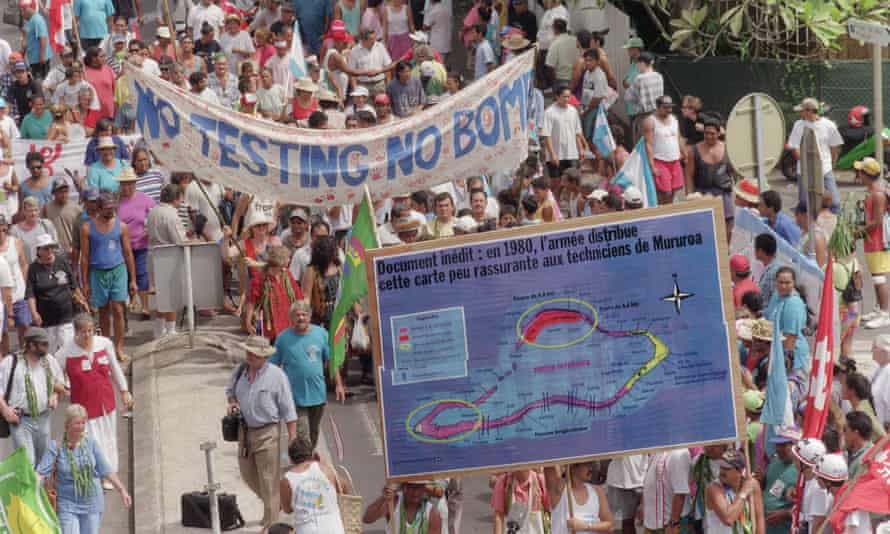
Anti-nuclear protesters march in Pape’ete, the capital of Tahiti in French Polynesia, in 1995, denouncing French nuclear testing on Mururoa atoll.

Anti-nuclear protesters march in Pape’ete, the capital of Tahiti in French Polynesia, in 1995, denouncing French nuclear testing on Mururoa atoll. Photograph: Romeo Gacad/AFPSupported by

Thu 21 Jan 2021 19.00 GMT

In 1995, thousands of people marched peacefully hand-in-hand through the Tahitian capital of Pape’ete. The palm-lined streets were awash with songs of protest.

On a nearby shorefront, Cook Islanders had just arrived by traditional voyaging canoe: a vaka. They were there to deliver a message of solidarity with their island neighbours, en route to the nuclear test site of Moruroa.

Now that nuclear weapons are illegal, the Pacific demands truth on decades of testing Read more

These warriors, sailing at the forefront of the Pacific’s fight against nuclear weapons, delivered their message of peaceful resistance with prayers, songs and hakas.

Tiếp tục đọc “Small but mighty, Pacific states have led the charge for banning nuclear weapons”

How Japan can lead a free and open Indo-Pacific

  • Jan 12, 2021
The foreign ministers of India, Japan and Australia and the U.S. secretary of state, photographed with Prime Minister Yoshihide Suga, took part in the Indo-Pacific 'Quad' meeting in Tokyo in October. | POOL / VIA REUTERS
The foreign ministers of India, Japan and Australia and the U.S. secretary of state, photographed with Prime Minister Yoshihide Suga, took part in the Indo-Pacific “Quad” meeting in Tokyo in October. | POOL / VIA REUTERS

The year 2020 was filled with geopolitical and geoeconomic changes that represented a major shift in world history, with the COVID-19 pandemic and the U.S. presidential election leading the way.

How effectively each nation can control the spread of infections within its own borders is likely to significantly affect the transformation of the global economy and power balance in the post-coronavirus era.

Tiếp tục đọc “How Japan can lead a free and open Indo-Pacific”

United States Strategic Framework for the Indo-Pacific

Statement from National Security Advisor Robert C. O’Brien

 NATIONAL SECURITY & DEFENSE

 Issued on: January 12, 2021


National Security Council 

Today, the White House is publishing the recently declassified United States Strategic Framework for the Indo-Pacific. For the last 3 years, this document has provided overarching strategic guidance for implementing the 2017 National Security Strategy within the world’s most populous and economically dynamic region. Approved in February 2018 for implementation across Executive Branch departments and agencies, the document is being released to communicate to the American people and to our allies and partners, the enduring commitment of the United States to keeping the Indo-Pacific region free and open long into the future.

You can read the full statement here.

You can read United States Strategic Framework for the Indo-Pacific here.

From macaques to crabs, wildlife faces threat from face masks

12 Jan 2021 11:50AM(Updated: 12 Jan 2021 11:58AM) CNA

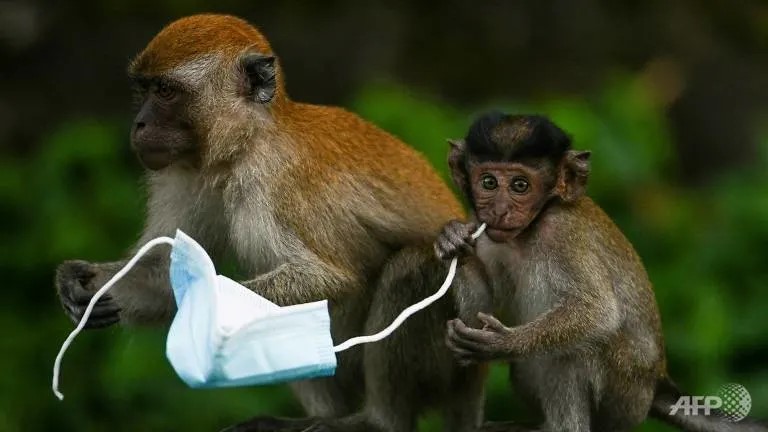
KUALA LUMPUR: Masks that helped save lives during the COVID-19 pandemic are proving a deadly hazard for wildlife, with birds and marine creatures ensnared in the staggering number of discarded facial coverings littering animal habitats.

Tiếp tục đọc “From macaques to crabs, wildlife faces threat from face masks”

Expansion of Hoa Binh hydropower plant begins in northern Vietnam

Monday, January 11, 2021, 14:36 GMT+7 tuoitre

Expansion of Hoa Binh hydropower plant begins in northern Vietnam
Prime Minister Nguyen Xuan Phuc speaks at the ground-breaking ceremony of the expansion project of Hoa Binh Hydropower Plant, Hoa Binh Province, January 10, 2021 in this supplied photo.

Vietnam’s Prime Minister Nguyen Xuan Phuc attended the ground-breaking ceremony of the expansion project of Hoa Binh Hydropower Plant in northern Hoa Binh Province on Sunday morning.

Tiếp tục đọc “Expansion of Hoa Binh hydropower plant begins in northern Vietnam”

Southeast Asia’s longest road tunnel opens

By Nguyen Dong   January 11, 2021 | 01:27 pm GMT+7 vnexpressSoutheast Asia's longest road tunnel opensA staff stands inside the Hai Van Tunnel 2, January 10, 2021. Photo by VnExpress/Nguyen Dong.

Hai Van Tunnel 2 in central Vietnam has opened to traffic Monday after four years of construction.

Connecting Thua Thien-Hue Province with central hub Da Nang, the tunnel of 6.2 kilometers (3.85 miles) is the longest road tunnel in Southeast Asia and helps reduce traffic pressure on Hai Van Road Tunnel 1.

Tiếp tục đọc “Southeast Asia’s longest road tunnel opens”

What are Vietnam’s options for dealing with plastic waste?

By Viet Anh    January 5, 2021 | 11:54 am GMT+7 vnexpressWhat are Vietnam's options for dealing with plastic waste?Plastic waste at a private collecting site in Go Vap District, HCMC, August 2019. Photo by VnExpress/Thanh Nguyen.Vietnam should set up legal framework for recycling plastic waste, reduce plastic use and find new materials to replace non-recyclable plastics, according to experts.

“The best solution would be recycling as much plastic waste as you can,” George Huber, professor of chemical and biological engineering, University of Wisconsin-Madison, the U.S., said when asked about possible options for Vietnam.

In the U.S., there are hundreds of material recovery facilities (MRFs) where people can leave everything that can be recycled, he said.

Either workers or robots sort the materials, including plastic, and palletize them and they are later sold to secondary recycling people who do further sorting and turn them into pellets.

There is a whole market for these pellets for making new products.

For instance, there is a company called Placon that produces food and medical packaging and other types of plastic from MRFs.

They buy recycled PET bottles and thermoform them, thus keeping over one billion PET bottles out of landfills each year.

Huber said: “This is called closed-loop recycling. They produce the ecostar plastic which is a recycled plastic.”

Technologies used by companies like Placon are pretty similar, usually involving floating. They put plastics in water, and some float while others sink. They then purify the floating plastic and grind it to make pellets. There are many things that can be made from recycled plastic.

Highlighting another good recycling model, Professor Michael Braungart, founder of Internationale Umweltforschung GmbH, an environmental research institution based in Hamburg, Germany, said the U.S.’s Envision Plastics is the only company in the world that makes polypropylene approved by the U.S. Food and Drug Administration for making food-grade packaging.

In Italy, a company called Aquafil has reprocessed around 15,000 tons of nylon from driftnets in oceans to make clothing, carpets and other products, he said.

Associate Professor Duong Hai Minh of the department of mechanical engineering, National University of Singapore, said Vietnam could consider the option of converting plastic waste into aerogels, which are used in billion-dollar engineering applications such as heat and sound insulation, oil spill cleaning, fruit preservation, air pollution filtering, personal care products, and wastewater treatment.

He said this is a cost-effective and eco-friendly method since no toxic solvent is used or discharged into the environment, and it requires 70 percent less energy.

Aerogels can be reused and recycled.

Moreover, the technology can also be used on a range of wastes like paper, old clothes, rubber tires, fly ash, metal, and agricultural and food wastes.

For the first time aerogels have been made from PET, the same plastic used to make water and soft drink bottles.

“The technology might be available in April 2021,” Minh said.

He said there are various options for Vietnam for dealing with plastic that are used in Singapore such as incinerating or converting it into low-value products (chair, bag, umbrella, etc).

In incineration plants, waste is burned and the smoke quality is controlled to ensure it does not damage the air quality. The ash is used in construction as a less toxic option.

Huber said some plastics like pure PET and pure PE could be recycled but most could not, and there are also losses in the plastic recycling process. So any plastic recycling needs to be combined with long-term plans to deal with plastic wastes like incineration and landfills (where minimal leakage occurs), he said.

When incinerating, heat and energy could be recovered, then plastic does not leak into the environment and could be controlled in one location, he said.

There are companies in the U.S. burning plastic waste to generate electricity and heat and generating small volumes of ash that eventually go into landfills, he said.

“I think landfilling should be the less preferred option.”

Professor Carl Redshaw of the University of Hull, the U.K., said a number of technologies are being trialed for converting plastic waste into high-value useful products.

For instance, radiation-induced degradation, microbes, metal-based nanoparticles, and activated carbon could all turn waste into liquid fuel, pyrolysis (thermal degradation) could turn plastics into energy while the use of photo-catalysis (use of light to drive a reaction) has shown that even non-degradable plastics such as polyethylene could be converted into other useful materials, he said.

A recent report in a scientific journal illustrated how discarded drinking cups could be converted into other useful chemicals though most of these technologies are at an embryonic stage and require more investment, he added.

How to apply in Vietnam

Huber said the first step for Vietnam to recycle plastic wastes is to be able to sort them depending on their original components. Some would have to go to landfills or be burned, while the infrastructure to collect waste plastics has to be developed, he said.

If the country wants to have a similar system as the U.S., it needs to have secondary recyclers who could turn plastic into pellets and make products from them, he pointed out.

But all these involve a very large initial cost, and it takes five to eight years to recoup it before the operation becomes profitable, he said.

The legal framework is crucial, he said.

In the U.S., many material recovery facilities are owned by municipalities and states make laws. It is illegal to send certain kinds of plastics to landfills.

As for the burning option, Huber said companies need to have air pollution control equipment to make sure the smoke does not have any dangerous chemicals.

It is important that these facilities are designed in a way to minimize air pollution, he said.

In the U.S., the Environmental Protection Agency sets regulations.

Rules to prevent air pollution are vital, especially in developing countries, Huber said.

Dr Alex Ibhadon, reader in catalysis and reactor engineering, University of Hull, the U.K., said society needs plastics to create products and jobs.

Southeast Asia in general is producing more and more plastics while Europe is producing less and less, and it is not easy for Vietnam to close thousands of companies in the plastic industry, he pointed out.

Vietnamese people should reuse over and over again the plastics they already have, he said.

In the U.K., supermarkets need to produce reusable carrier bags and some charge customers for carrier bags as an encouragement to re-use, something Vietnam as a country could learn from, he said.

Experts said another way to reduce the plastics is by using new materials.

Braungart said Vietnam could learn from Novamont, an Italian company that makes plastics from starch for single use that easily degrades and is good for the environment.

It makes bioplastics from starches, cellulose, vegetable oils, and their combinations, and ideally Vietnam should decide that all the plastics ending up in the environment needs to be biodegradable, he said.

Redshaw said he and his colleagues produce polymers from renewable resources such as corn starch.

He said there are now a number of biodegradable polymers on the market like Sigma Aldrich’s poly (lactide), poly (glycolide) and their copolymers, and a number of biodegradable natural polymers.

A number of U.K. small enterprises have ongoing projects that they hope to bring to the market soon, he said.

“No doubt companies in countries such as Vietnam are thinking along these lines too.”

Vietnam needs to offer large incentives to entice the industrial sector, specifically the producers of petroleum-derived plastics, to invest in infrastructure that would allow them to make the switch to some of the greener alternatives, he said.

There is also a need to change people’s mindset on how to use plastic, and this could be achieved by good communication and having efficient protocols in place, he said.

Emphasizing the significance of the legal framework, Dr Ibhadon said the Vietnamese government should have a policy that makes plastic recycling a legally enforceable requirement and set up recycling centers throughout the country for various types of plastics.

It must take the lead in reducing plastic use and enforce recycling as a partnership between itself, plastic producers and consumers, he added.