I am an attorney in the Washington DC area, with a Doctor of Law in the US, attended the master program at the National School of Administration of Việt Nam, and graduated from Sài Gòn University Law School. I aso studied philosophy at the School of Letters in Sài Gòn.
.
I have worked as an anti-trust attorney for Federal Trade Commission and a litigator for a fortune-100 telecom company in Washington DC.
I have taught law courses for legal professionals in Việt Nam and still counsel VN government agencies on legal matters.
I have founded and managed businesses for me and my family, both law and non-law.
I have published many articles on national newspapers and radio stations in Việt Nam.
In 1989 I was one of the founding members of US-VN Trade Council, working to re-establish US-VN relationship.
Since the early 90's, I have established and managed VNFORUM and VNBIZ forum on VN-related matters; these forums are the subject of a PhD thesis by Dr. Caroline Valverde at UC-Berkeley and her book Transnationalizing Viet Nam.
I translate poetry and my translation of "A Request at Đồng Lộc Cemetery" is now engraved on a stone memorial at Đồng Lộc National Shrine in VN.
I study and teach the Bible and Buddhism. In 2009 I founded and still manage dotchuoinon.com on positive thinking and two other blogs on Buddhism.
In 2015 a group of friends and I founded website CVD - Conversations on Vietnam Development (cvdvn.net).
I study the art of leadership with many friends who are religious, business and government leaders from many countries.
I have written these books, published by Phu Nu Publishing House in Hanoi:
"Positive Thinking to Change Your Life", in Vietnamese (TƯ DUY TÍCH CỰC Thay Đổi Cuộc Sống) (Oct. 2011)
"10 Core Values for Success" (10 Giá trị cốt lõi của thành công) (Dec. 2013)
"Live a Life Worth Living" (Sống Một Cuộc Đời Đáng Sống) (Oct. 2023)
I practice Jiu Jitsu and Tai Chi for health, and play guitar as a hobby, usually accompanying my wife Trần Lê Túy Phượng, aka singer Linh Phượng.
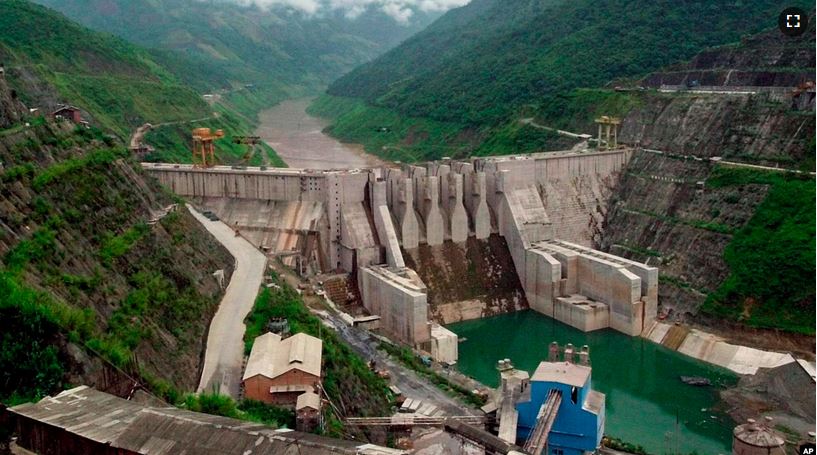
Đập Đại Triều Sơn chặn sông Mekong ở tỉnh Vân Nam, TQ.
Ủy hội sông Mekong (MRC) hôm thứ Sáu 12/2 cho hay mực nước của sông Mekong đã hạ thấp xuống mức “đáng lo ngại”, một phần do lượng xả bị hạn chế từ các đập thủy điện của Trung Quốc ở thượng nguồn. MRC kêu gọi Bắc Kinh chia sẻ tất cả dữ liệu của họ về lưu lượng nước.
Dòng sông cũng là tuyến đường thủy quan trọng đã chuyển sang màu xanh lam dọc theo biên giới Thái-Lào, thay vì có màu nâu đục thường thấy. Điều này báo hiệu về mực nước nông và lượng phù sa giàu dinh dưỡng bị giảm xuống thấp – một phần do hạn chế về lượng nước xả từ đập Cảnh Hồng ở tỉnh Vân Nam của Trung Quốc, ủy hội liên chính phủ MRC nói.
The following is a translation of the National Institute for South China Sea Studies assessment of the recently released U.S. maritime strategy, Advantage at Sea: Prevailing with Integrated All-Domain Naval Power. The China Maritime Studies Institute at the U.S. Naval War College made the translation.
The Prelude to All-Encompassing Maritime Competition Between China and the U.S. is about to Begin—An Appraisal of America’s Newest Maritime Strategy
By Shi Xiaoqin and Liu Xiaobo
On December 17, 2020, the U.S. Navy (USN), U.S. Marine Corps (USMC), and the U.S. Coast Guard (USCG) jointly issued a new maritime strategy entitled Advantage at Sea: Prevailing with Integrated All-Domain Naval Power. This tri-service strategy is a follow-on to A Cooperative Strategy for 21st Century Seapower, which the three services jointly issued in 2007 and 2015. Two characteristics of the document deserve attention: one, it directly regards China as an opponent and two, it simultaneously classifies China and Russia as opponents. Compared with the U.S. maritime strategy issued at the height of the Cold War in 1982, this document might be regarded as the first maritime strategy document issued after the inauguration of Sino-U.S. strategic competition.
Rush Limbaugh, the right-wing radio megastar whose slashing, divisive style of mockery and grievance reshaped American conservatism, denigrating Democrats, environmentalists, “feminazis” (his term) and other liberals while presaging the rise of Donald J. Trump, died on Wednesday at his home in Palm Beach, Fla. He was 70.
By Chuck Searcy February 15, 2021 | 07:40 am GMT+7Last month, completion of dioxin cleanup on a 5,300-square-meter tract of land at Bien Hoa airport marked a significant milestone.
Chuck Searcy
Officials of both the Vietnamese and U.S. governments could derive satisfaction from knowing that the Agent Orange/dioxin legacy of war is now being addressed, after a troubling post-war history of misinformation and controversy, accusations and doubts.
Not just public officials, but veterans and ordinary citizens of both countries can take pride in looking back over the remarkable transformation that has taken place in the past two decades, from early years of mistrust and recrimination to a positive, working partnership between Vietnam and the U.S. today.
That relationship is now built on mutual trust and respect.
CỘNG HÒA XÃ HỘI CHỦ NGHĨA VIỆT NAM Độc lập – Tự do – Hạnh phúc —————
Số: 2427/QĐ-TTg
Hà Nội, ngày 22 tháng 12 năm 2011
QUYẾT ĐỊNH
PHÊ DUYỆT CHIẾN LƯỢC KHOÁNG SẢN ĐẾN NĂM 2020, TẦM NHÌN ĐẾN NĂM 2030
THỦ TƯỚNG CHÍNH PHỦ
Căn cứ Luật Tổ chức Chính phủ ngày 25 tháng 12 năm 2001;
Luật Khoáng sản số 60/2010/QH12 ngày 17 tháng 11 năm 2010;
Căn cứ Nghị quyết số 02-NQ/TW ngày 25 tháng 4 năm 2011 của Bộ Chính trị về định hướng chiến lược khoáng sản và công nghiệp khai khoáng đến năm 2020, tầm nhìn đến năm 2030;
Căn cứ Chiến lược phát triển kinh tế – xã hội 2011 – 2020;
Xét đề nghị của Bộ trưởng Bộ Tài nguyên và Môi trường,
QUYẾT ĐỊNH:
Điều 1. Phê duyệt “Chiến lược khoáng sản đến năm 2020, tầm nhìn đến năm 2030” với những nội dung chính như sau:
Observer Research Foundation (ORF) is an independent think tank based in Delhi, India. The foundation has three centres in Mumbai, Chennai and Kolkata. ORF provides potentially viable inputs for policy and decision-makers in the Indian Government and to the political and business communities of India. ORF started out with an objective of dealing with internal issues of the economy in the wake of the 1990s reforms. However, today its mandate extends to security and strategy, governance, environment, energy and resources, economy and growth.
Origins
ORF was founded in part by the Dhirubhai Ambani family; it claims to operate independently, though.[1] According to some reports, until 2009, 95% of the foundation’s budget was provided by Reliance Industries, however, it is now estimated to be around 65% as the foundation diversified its source of finance to government, foreign foundations, and others.[2]
When the United Kingdom (UK) releases the highly anticipated integrated review of its foreign, defence, security and development policy in March, it will mark the first formal iteration of the UK’s Indo-Pacific strategy. This brief explores the dynamics that are driving the UK’s tilt to the Indo-Pacific. It identifies three key drivers that are prompting the shift: a reappraisal of China, the economic fallout of Brexit, and the UK’s close ties with the US. It explores the emerging trends in this churn—across security, trade, development, and diplomatic domains—and highlights the opportunities they afford the India-UK relationship.
Attribution: Harsh V Pant and Tom Milford, The UK Shifts to the Indo-Pacific: An Opportunity for India-UK Ties,” ORF Issue Brief No. 444, February 2021, Observer Research Foundation.
Introduction
The ‘Indo-Pacific’ concept is a recognition that the Indian and Pacific Ocean regions are intertwined and should be treated as one strategic space. Its very idea is an affirmation that because of how globalisation works, regional issues—from climate change to piracy—require regional cooperation. For example, it was the need for massive disaster relief following the Indian Ocean earthquake and tsunami in 2004 that was the genesis of the Quadrilateral initiative (of India, Japan, the US and Australia—or Quad). On what is perhaps a deeper level, the ‘Indo-Pacific’ idea is a recognition that the Indo-Pacific is the defining geopolitical theatre of the century: it is not only home to the fastest growing economies and military powers in the world, but it is also littered with land and maritime disputes that will require careful management to maintain stability.
To be sure, there is no consensus around the geographic scope of the Indo-Pacific. Some define it as the entire region that stretches from the eastern shores of Africa to the western coast of the US; others view it as beginning from India, and eastwards. Drawing the precise geographic borderlines, however, becomes less important when regarding the Indo-Pacific as, foremost, a geostrategic concept. As states conceptualise their geostrategic imperatives and weigh the threats they face, the geographic contours of the Indo-Pacific will only continue to evolve.
The Sharp Power and Democratic Resilience series aims to contextualize the nature of sharp power, inventory key authoritarian efforts and domains, and illuminate ideas for non-governmental action that are essential to strengthening democratic resilience.
Sarah Cook is research director for China, Hong Kong, and Taiwan at Freedom House. She directs the China Media Bulletin, a monthly digest providing news and analysis on media freedom developments related to China. Cook is the author of several Asian country reports for Freedom House’s annual publications, as well as four special reports about China.
This report describes the Chinese Communist Party’s (CCP) sharp power efforts to shape media content around the world. It also documents how nongovernmental actors contribute to a growing accumulation of activities aimed at countering Beijing’s media influence while protecting democratic institutions.
Leveraging propaganda, disinformation, censorship, and influence over key nodes in the information flow, Beijing’s expanding efforts to shape global narratives go beyond simply “telling China’s story.” Their sharper edge undermines democratic norms, erodes national sovereignty, weakens the financial sustainability of independent media, and violates local laws. An acknowledgment and understanding of the challenges that China’s party-state and related actors pose to media freedom globally—not only by China experts, but by the full array of nongovernmental actors engaged in the media, news, and technology sectors—must be central to a comprehensive response.
It is imperative that anyone engaged in the media space—be they journalists, regulators, technology firms, press freedom groups, or even news consumers—acknowledge the influence exerted by China’s authoritarian regime on the news and information circulating in their print publications, radio broadcasts, television programs, and social media feeds.
KEY IDEAS FOR NONGOVERNMENTAL RESPONSES:
Investigation and research: Academic institutions, think tanks, research entities, and donors should continue existing work and ensure resources are available to monitor and expose CCP media influence activities in a credible, professional, and sustained way in the coming years.
Action by media outlets: Local media should improve their awareness of the potential journalistic and political pitfalls of accepting Chinese state or proxy investment, paid supplements, or coproduction deals.
Civil society advocacy: International and local press freedom groups should consider whether and how to incorporate a CCP media influence dimension into current or future projects, with support from donors. Such initiatives could support internal capacity building, journalism trainings and education, media literacy, policy advocacy, and information sharing and coordination.
Technology sector collaboration: Technology firms should seek further opportunities to work with researchers and civil society in identifying emerging threats and problematic accounts tied to the Chinese party-state. They must also ensure that independent voices, activists, and content producers who are critical of the Chinese government have a clear avenue for appeal if they encounter problems on the companies’ platforms.
The report also highlights specific actions taken by media outlets and civil society to counter the CCP’s expanding global footprint. Categorized by sector, these responses illustrate ways for media, civil society, think tanks, and the technology sector to build resilience to sharp power across the information ecosystem.
Lesbian, gay, bisexual, transgender and intersex (LGBTI) rights have become an important topic of discussion in the development sector in recent years. Moving from the provision of HIV and AIDS care for the disproportionate number of LGBT people affected, through to same-sex marriage legalisation, the landscape has shifted to promote an LGBTI-inclusive approach in many areas. This is supported by a series of international and national human rights provisions affirming all people’s rights to nondiscrimination, freedom of expression and freedom from violence. In some contexts, these changes have been possible due to shifts in social norms towards greater tolerance and acceptance of LGBTQI people. Norm change has largely been the result of long-term and increasingly visible and vibrant activist engagement, drawing on strategies such as media coverage, peer interventions, ally-building and institutional training. This guide reviews some of the literature on the norm changes that are leading to greater acceptance of and less discrimination towards LGBTQI people, focusing on low income countries in the global South.
This topic guide is primarily intended for policy-makers and practitioners who may not be familiar with a queer theory approach to norms. It provides an overview of some important ideas and ways of thinking about how gendered social norms affect LGBTQI people in developing countries, moving the discussion beyond a rights-based approach to be more inclusive of all kinds of non-normative sexualities and genders. The guide aims to summarise the main theoretical points of a queer approach to gender norms, to identify the key issues and challenges affecting LGBTQI people, and to provide some examples of where norm change has happened.
Ambassador Daniel Kritenbrink collaborated with Vietnamese rapper Wowy to make a song about the Lunar New Year vibe in Vietnam.
Throughout the song, the ambassador raps several Vietnamese lines to wish people a peaceful new lunar year.
He also lists what should be done throughout Tet in Vietnamese traditions, including preparing the yellow mai and peach plants, of which flowers are signature for home decoration during Tet in Vietnam, cleaning up the house to welcome guests, and giving li xi (lucky money) to children.
He ends the video with the line saying “Tet den roi” which means Tet has arrived.
This is the Ambassador’s fourth Tet in Vietnam, and he has always enjoyed this time of year. “Tet gives us an opportunity to slow down, reconnect with loved ones, and reflect on the passing year while looking ahead to the coming year,” said the U.S. Consulate General in HCMC.
“Our two countries cooperate closely on everything from security, trade, and education, to war legacies, energy, and health, and now we can add music to the list,” it added.
Tet is what Vietnamese calls Lunar New Year, which is so far the nation’s biggest holiday and most important occasion for family reunion.
Police in the central province of Quang Tri on February 10 launched legal proceedings against two men for compiling and spreading documents with defamatory contents via social networks.
Phan Bui Bao Thi (Photo: laodong.vn)
The documents were posted on Facebook accounts like Thu Ha and Hoang Le, and such fanpages as Ly Duong Tu, Quang Tri 357, and Tin Quang Tri 246 (Quang Tri news 246).
Those articles, photos and video clips have contents defaming and insulting the prestige of individuals, including some leaders of Quang Tri province, ministries and centrally-run agencies.
They have harmed the leaders’ prestige and dignity as well as the role, position and function of State agencies for a long time, triggering concern among Party members, officials and the public, while affecting political security in the locality.
Local competent forces on February 4 stopped 56-year-old Le Anh Dung, residing in An Phu ward, district 2, Ho Chi Minh City, while he was on the way from Dong Ha city, Quang Tri province, to HCM City.
They found documents stored in Dung’s mobile phone proving that he had directly published the documents on social networks.
Dung’s accomplice is Phan Bui Bao Thi, 50, from Son Tra district, the central city of Da Nang, who is working at the Giao duc & Thoi dai (The Education and Times) newspaper.
Thi confessed that he and Dung wrote many articles defaming Quang Tri leaders and posted more than 10,000 pages on social networks.
The local police on February 5-6 decided to detain the duo for abusing the rights to freedom and democracy, and violating the State’s interests, as well as legal rights and interests of organisations and individuals as prescribed in Article 331 of the Penal Code./.VNA
Andrew Rhodes wrote this essay while a student at the U.S. Naval War College. It won the Strategic Research Paper category of the 2019 Chairman of the Joint Chiefs of Staff Strategic Essay Competition.
In the early 20th century, the visionary Marine officer Earl “Pete” Ellis compiled remarkable studies of islands in the Western Pacific and considered the practical means for the seizure or defense of advanced bases. A century after Ellis’s work, China presents new strategic and operational challenges to the U.S. position in Asia, and it is time for Washington to develop a coherent strategy, one that will last another 100 years, for the islands of the Western Pacific. It has become common to consider the second island chain as a defining feature of Pacific geography, but when Ellis mastered its geography, he saw not a “chain,” but a “cloud.” He wrote in 1921 that the “Marshall, Caroline, and Pelew Islands form a ‘cloud’ of islands stretching east and west.” His apt description of these archipelagoes serves well for a broader conception of the islands in, and adjacent to, traditional definitions of the second island chain. A new U.S. strategy should abandon the narrow lens of the “chain” and emphasize a broader second island cloud that highlights the U.S. regional role and invests in a resilient, distributed, and enduring presence in the Pacific.
WASHINGTON — The extensive chains of Pacific islands ringing China have been described as a wall, a barrier to be breached by an attacker or strengthened by a defender. They are seen as springboards, potential bases for operations to attack or invade others in the region. In a territorial sense, they are benchmarks marking the extent of a country’s influence.
“It’s truly a case of where you stand. Perspective is shaped by one’s geographic and geostrategic position,” said Andrew Erickson, a professor with the China Maritime Studies Institute at the Naval War College.
During his Senate confirmation hearing last week to be the next director of national intelligence, Texas Republican Rep. John Ratcliffe emphasized China is this country’s “greatest threat actor,” a status only confirmed by rising acrimony over Beijing’s handling of the coronavirus pandemic. But though tensions are rising in the South China Sea, where U.S. Navy missions challenge China’s unsubstantiated claims of hegemony over the region, an actual war between the two powers appears unlikely.
But are the United States and China on a path to a new Cold War?
In an era of geopolitical competition, the West — the U.S.-led countries of the transatlantic alliance and their East Asian allies — lacks a strategy for dealing with its most formidable competitor: the People’s Republic of China (henceforth China). But the Chinese Communist Party (CCP) has a strategy for dealing with the West. It involves a long-term goal of “national rejuvenation”1 — making China the world’s most powerful country by 2050 — implemented with decisive leadership; a clear-eyed appreciation of Western diplomatic, economic, political, and social weaknesses; and effective means of exploiting them. These tactics, best characterized as “sharp power,”2 include censorship and manipulation of the information system, cyber operations, divide-and-rule diplomacy, leverage of trade and investment, and propaganda, plus military bluff and intimidation.




/arc-anglerfish-arc2-prod-mco.s3.amazonaws.com/public/WXZMPTS72JAG5MXYLYQDNCD2ZA.jpg)