
You might not know it from the headlines, where crises around the world compete for attention, but Yemen lays tragic claim to the world’s largest humanitarian crisis and aid operation. Two-thirds of the population, or 20.7 million people, need humanitarian assistance in 2021. Multiple emergencies have pummeled the country: violent conflict, an economic blockade, currency collapse, flooding and the COVID-19 pandemic in a country where only half of health facilities are operational.
Tiếp tục đọc “Yemen: The world’s largest humanitarian crisis”Tác giả: Trần Đình Hoành
I am an attorney in the Washington DC area, with a Doctor of Law in the US, attended the master program at the National School of Administration of Việt Nam, and graduated from Sài Gòn University Law School. I aso studied philosophy at the School of Letters in Sài Gòn.
.
I have worked as an anti-trust attorney for Federal Trade Commission and a litigator for a fortune-100 telecom company in Washington DC.
I have taught law courses for legal professionals in Việt Nam and still counsel VN government agencies on legal matters.
I have founded and managed businesses for me and my family, both law and non-law.
I have published many articles on national newspapers and radio stations in Việt Nam.
In 1989 I was one of the founding members of US-VN Trade Council, working to re-establish US-VN relationship.
Since the early 90's, I have established and managed VNFORUM and VNBIZ forum on VN-related matters; these forums are the subject of a PhD thesis by Dr. Caroline Valverde at UC-Berkeley and her book Transnationalizing Viet Nam.
I translate poetry and my translation of "A Request at Đồng Lộc Cemetery" is now engraved on a stone memorial at Đồng Lộc National Shrine in VN.
I study and teach the Bible and Buddhism. In 2009 I founded and still manage dotchuoinon.com on positive thinking and two other blogs on Buddhism.
In 2015 a group of friends and I founded website CVD - Conversations on Vietnam Development (cvdvn.net).
I study the art of leadership with many friends who are religious, business and government leaders from many countries.
I have written these books, published by Phu Nu Publishing House in Hanoi:
"Positive Thinking to Change Your Life", in Vietnamese (TƯ DUY TÍCH CỰC Thay Đổi Cuộc Sống) (Oct. 2011)
"10 Core Values for Success" (10 Giá trị cốt lõi của thành công) (Dec. 2013)
"Live a Life Worth Living" (Sống Một Cuộc Đời Đáng Sống) (Oct. 2023)
I practice Jiu Jitsu and Tai Chi for health, and play guitar as a hobby, usually accompanying my wife Trần Lê Túy Phượng, aka singer Linh Phượng.
Gọi tên 4 loại cà phê Arabica tại Việt Nam (10 most expensive coffees in the world)

Ly cà phê Arabica bạn đang uống có thể đến từ một nơi xa xôi nào đó, hoặc cũng có thể là tinh hoa được đúc kết từ chính những vùng đất quen thuộc tại Việt Nam. Rất nhiều điều thú vị đằng sau 4 giống cà phê Arabica được ưa chuộng trên thế giới đang được trồng tại quốc gia có gần 90% diện tích đất trồng cà phê Robusta đang chờ bạn khám phá.
Tiếp tục đọc “Gọi tên 4 loại cà phê Arabica tại Việt Nam (10 most expensive coffees in the world)”
FACT SHEET: Indo-Pacific Strategy of the United States
FEBRUARY 11, 2022•SPEECHES AND REMARKS
“We envision an Indo-Pacific that is open, connected, prosperous, resilient, and secure—and we are ready to work together with each of you to achieve it.”
President Joe Biden
East Asia Summit
October 27, 2021
The Biden-Harris Administration has made historic strides to restore American leadership in the Indo-Pacific and adapt its role for the 21st century. In the last year, the United States has modernized its longstanding alliances, strengthened emerging partnerships, and forged innovative links among them to meet urgent challenges, from competition with China to climate change to the pandemic. It has done so at a time when allies and partners around the world are increasingly enhancing their own engagement in the Indo-Pacific; and when there is broad, bipartisan agreement in the U.S. Congress that the United States must, too. This convergence in commitment to the region, across oceans and across political-party lines, reflects an undeniable reality: the Indo-Pacific is the most dynamic region in the world, and its future affects people everywhere.
That reality is the basis of the Indo-Pacific Strategy of the United States. This strategy outlines President Biden’s vision to more firmly anchor the United States in the Indo-Pacific and strengthen the region in the process. Its central focus is sustained and creative collaboration with allies, partners, and institutions, within the region and beyond it.
The United States will pursue an Indo-Pacific region that is:
China’s civilian fleet
07 FEBRUARY 2022
By: Reporter, defenceconnect.com.au
The role of commercial fishing vessels in disrupting military activities is not new. However, the democratisation of military technology has enabled civilians and clandestine military operators to play an expanding role in the modern hybrid maritime battlespace.
Tiếp tục đọc “China’s civilian fleet”CLOSING THE GAP: US-European Cooperation on China and the Indo-Pacific


byAndrew Small, Bonnie S. Glaser, Garima Mohan
Summary
The Biden administration took office with the intention of making partnership with Europe a central element of its China strategy. This paper assesses what has been achieved in the first year of these efforts, and what to expect in 2022. Despite some of points of contention, such as the disputes over the security pact between Australia, the United Kingdom, and the United States (AUKUS), European and US officials ended the year in a more optimistic place on the transatlantic China and Indo-Pacific agendas than they were at the start. Over the course of 2021, the two sides put in place new structures—from the EU-US Trade and Technology Council (TTC) to the Indo-Pacific high-level consultations—that have helped to get the right issues on the table and pushed their bureaucracies to deal with each other in ways that they had not before. Instead of a thin layer of periodic dialogues on China, there is an increasingly thick web of interactions, from working-level groups in different policy areas to leader-level exchanges. The EU and the United States also removed many of the obstacles to their joining forces more effectively on economic goals, particularly with the deal on steel and aluminum tariffs. Meanwhile, without raising excessively high expectations of a new coalition government that will not depart radically from its predecessor, the change in Berlin should also provide a stronger basis for cooperation on China than was present during the final phase of Chancellor Angela Merkel’s government.
All this needs to be translated into results this year. The gap between the EU and the United States is less in their analysis of China and more in the level of urgency with which they treat the challenge. Where the United States is in the process of making China the animating factor for its grand strategy, Europe is not, and the crisis with Russia will not make it likelier in the months ahead. Yet the actor that has done most to narrow the urgency gap between Europe and the United States has been China. Much as its escalatory sanctions in 2021 derailed its contentious Comprehensive Agreement on Investment with the EU, Beijing’s treatment of Lithuania is helping to expedite European plans to address economic coercion and supply-chain risks that might otherwise have taken years.
Economic coercion is one of several issues that are a priority for EU-US cooperation this year. The transatlantic agenda on China and the Indo-Pacific is a very expansive one and, although there is value to this breadth, the two sides will need to pick a few areas that merit an additional political push. While in an ideal world these would all be positive-sum efforts, such as aligning their infrastructure finance initiatives to compete more effectively with China’s Belt and Road Initiative (BRI), Europe and the United States will unavoidably have to deal with the sharp edges of Chinese power too. In all these efforts, the transatlantic agenda is only one component of a wider framework of cooperation that also involves their major partners in the Indo-Pacific. From the Quad to the TTC, one of the key goals for this year will be for these allies to stitch their efforts together with a view to driving outcomes rather than creating even more complex consultation structures.
There are also long-running goals for the United States and Europe that transcend administrations. There were striking shifts between the Obama, Trump, and Biden administrations but there has been more underlying consistency in what both sides need from each other in dealing with the China challenge than in many other policy fields. Considerable long-term planning is possible regardless of the potential political oscillations in the years ahead.
DOWNLOAD THE PDF
DOWNLOAD DOCUMENT Closing the Gap: US-European Cooperation on China and the Indo-Pacific
Tương lai của miền Tây
Đọc thêm: Phát triển ĐBSCL – TĐH >>

Trương Chí Hùng
Nhà văn, VNExpress
Bằng là bạn học cấp hai của tôi. Hết lớp 9, Bằng thôi học dù thành tích đứng thứ nhì toàn trường.
Chú Sáu, ba của Bằng, lúc đó nói, nhà ruộng đất nhiều, cần gì học, ở nhà làm ruộng cũng sống khỏe re. Ở tuổi 16, Bằng không nghĩ được gì nhiều, người lớn nói sao nghe vậy. Vài năm sau, Bằng trở thành lao động trụ cột trong nhà. Một mình cậu quán xuyến hai mẫu ruộng, mỗi năm canh tác ba vụ, của ăn không thiếu. Rồi Bằng lấy vợ, sanh con, xây dựng một gia đình như bao gia đình khác ở quê tôi.
Tiếp tục đọc “Tương lai của miền Tây”2021 Corruption Perception Index
Vietnam ranks 87/180
Score Country Rank
- 88Denmark1
- 88Finland1
- 88New Zealand1
- 85Norway4
- 85Singapore4
- 85Sweden4
- 84Switzerland7
- 82Netherlands8
- 81Luxembourg9
- 80Germany10
- 78United Kingdom11
- 76Hong Kong12
- 74Austria13
- 74Canada13
- 74Estonia13
- 74Ireland13
- 74Iceland13
- 73Australia18
- 73Belgium18
- 73Japan18
- 73Uruguay18
- 71France22
- 70Seychelles23
- 69United Arab Emirates24
- 68Bhutan25
- 68Taiwan25
- 67Chile27
- 67United States of America27
- 65Barbados29
- 64Bahamas30
- 63Qatar31
- 62Korea, South32
- 62Portugal32
- 61Spain34
- 61Lithuania34
- 59Israel36
- 59Latvia36
- 59Saint Vincent and the Grenadines36
- 58Cabo Verde39
- 58Costa Rica39
- 57Slovenia41
- 56Italy42
- 56Saint Lucia42
- 56Poland42
- 55Botswana45
- 55Dominica45
- 55Fiji45
- 55Georgia45
- 54Czech Republic49
- 54Malta49
- 54Mauritius49
- 53Cyprus52
- 53Grenada52
- 53Rwanda52
- 53Saudi Arabia52
- 52Oman56
- 52Slovakia56
- 49Armenia58
- 49Greece58
- 49Jordan58
- 49Namibia58
- 48Malaysia62
- 47Croatia63
- 46Cuba64
- 46Montenegro64
- 45China66
- 45Romania66
- 45Sao Tome and Principe66
- 45Vanuatu66
- 44Jamaica70
- 44Tunisia70
- 44South Africa70
- 43Ghana73
- 43Hungary73
- 43Kuwait73
- 43Senegal73
- 43Solomon Islands73
- 42Benin78
- 42Burkina Faso78
- 42Bulgaria78
- 42Bahrain78
- 41Belarus82
- 41Timor-Leste82
- 41Trinidad and Tobago82
- 40India85
- 40Maldives85
- 39Colombia87
- 39Ethiopia87
- 39Guyana87
- 39Kosovo87
- 39Morocco87
- 39North Macedonia87
- 39Suriname87
- 39Tanzania87
- 39Vietnam87
- 38Argentina96
- 38Brazil96
- 38Indonesia96
- 38Lesotho96
- 38Serbia96
- 38Turkey96
- 37Gambia102
- 37Kazakhstan102
- 37Sri Lanka102
- 36Cote d’Ivoire105
- 36Ecuador105
- 36Moldova105
- 36Panama105
- 36Peru105
- 35Albania110
- 35Bosnia and Herzegovina110
- 35Mongolia110
- 35Malawi110
- 35Thailand110
- 34Sierra Leone115
- 34El Salvador115
- 33Algeria117
- 33Egypt117
- 33Nepal117
- 33Philippines117
- 33Zambia117
- 32Eswatini122
- 32Ukraine122
- 31Gabon124
- 31Mexico124
- 31Niger124
- 31Papua New Guinea124
- 30Azerbaijan128
- 30Bolivia128
- 30Djibouti128
- 30Dominican Republic128
- 30Kenya128
- 30Laos128
- 30Paraguay128
- 30Togo128
- 29Angola136
- 29Liberia136
- 29Mali136
- 29Russia136
- 28Myanmar140
- 28Mauritania140
- 28Pakistan140
- 28Uzbekistan140
- 27Cameroon144
- 27Kyrgyzstan144
- 27Uganda144
- 26Bangladesh147
- 26Madagascar147
- 26Mozambique147
- 25Guinea150
- 25Guatemala150
- 25Iran150
- 25Tajikistan150
- 24Central African Republic154
- 24Lebanon154
- 24Nigeria154
- 23Honduras157
- 23Iraq157
- 23Cambodia157
- 23Zimbabwe157
- 22Eritrea161
- 21Congo162
- 21Guinea Bissau162
- 20Comoros164
- 20Haiti164
- 20Nicaragua164
- 20Sudan164
- 20Chad164
- 19Burundi169
- 19Democratic Republic of the Congo169
- 19Turkmenistan169
- 17Equatorial Guinea172
- 17Libya172
- 16Afghanistan174
- 16Korea, North174
- 16Yemen174
- 14Venezuela177
- 13Somalia178
- 13Syria178
- 11South Sudan180
91 loài mới được phát hiện tại Việt Nam
Báo cáo được WWF phát hành hôm 26/1 cho biết, trong số 91 loài mới được phát hiện tại Việt Nam, có 85 loài đặc hữu.

Số liệu từ báo cáo cho thấy, có 133 loài mới tại 4 quốc gia khác của Tiểu vùng sông Mekong Mở rộng bao gồm Lào, Campuchia, Thái Lan và Myanmar. Rất nhiều loài trong số này đang đối mặt với nguy cơ tuyệt chủng do mất sinh cảnh, mất rừng và bị săn bắt, buôn bán bất hợp pháp.
Ông Nguyễn Văn Trí Tín, Quản lý Chương trình Bảo tồn Động vật Hoang dã của WWF-Việt Nam cho biết: “Việt Nam là một trong những nơi đầy tiềm năng cho việc nghiên cứu và khám phá các loài mới. Các loài này là những tuyệt tác của hàng triệu năm tiến hoá, nhưng hiện có rất nhiều mối đe doạ. Nhiều loài có thể đã tuyệt chủng trước khi được biết tới”.
TEXT OF HR 4521, THE AMERICA COMPETES ACT OF 2022
(2912 pages)
Economics and security – Indo Pacific, Quad, ASEAN, China, Taiwan…
Ro Khanna wants to save Silicon Valley from itself
January 24, 2022
By Blake Hounshell and Leah Askarinam


Representative Ro Khanna writes in a new book that too much wealth is concentrated in too few hands, and too many digital jobs are crowded into a handful of tech hubs.
T.J. Kirkpatrick for The New York Times
Not your average political book
It’s not often that you meet a member of Congress who is eager to discuss the German philosopher Jürgen Habermas.
But Representative Ro Khanna is not like most members of Congress. He represents one of the wealthiest districts in America — a chunk of Silicon Valley that is home to tech behemoths like Apple and Intel — yet he was a co-chair of Bernie Sanders’ 2020 presidential campaign. He’s a former intellectual property lawyer whose 2016 House bid was backed by venture capitalists and tech moguls, but he’s also a prominent critic of social media companies like Facebook.
Tiếp tục đọc ” Ro Khanna wants to save Silicon Valley from itself”
Personal profits in US Congress
| By David Leonhardt, New York Times |
| Some members of Congress have strangely good timing when it comes to stock investments. |
 Senators Richard Burr and Dianne Feinstein.Erin Schaff/The New York Times Senators Richard Burr and Dianne Feinstein.Erin Schaff/The New York Times |
| Selling at the right time |
| In an academic paper published a few years ago, an economist named Serkan Karadas highlighted a suspicious pattern: Members of Congress earned higher than average returns on their stock investments. |
| The findings suggested that at least some Congress members were profiting off their jobs. With inside knowledge about forthcoming policy changes or economic developments, the members could buy stocks shortly before they rose in price or sell them shortly before they fell. |
Các vụ án thao túng thị trường cổ phiếu
Thứ hai, 24/1/2022, 15:29 (GMT+7)
Cựu giám đốc bị điều tra thao túng 7 triệu cổ phiếu ASA
HÀ NỘINguyễn Văn Nam, cựu giám đốc Công ty cổ phần liên doanh SANA WMT, bị bắt với cáo buộc “tạo cung cầu giả” tạo để thao túng giá cổ phiếu.
Ngày 24/1, trung tướng Tô Ân Xô, Chánh văn phòng, người phát ngôn Bộ Công an cho biết, Cơ quan Cảnh sát điều tra (Bộ Công an) đã ra quyết định khởi tố, tạm giam ông Nam để điều tra về tội Lừa đảo chiếm đoạt tài sản, theo điều 104 Bộ luật Hình sự. Các lệnh, quyết định đã được VKSND Tối cao phê chuẩn.

Theo trung tướng Xô, điều tra ban đầu xác định, Công ty cổ phần liên doanh SANA WMT, nay là Công ty cổ phần ASA, có mã chứng khoán: ASA.
Tiếp tục đọc “Các vụ án thao túng thị trường cổ phiếu”The State of Conflict and Violence in Asia 2021
The second edition of The Asia Foundation’s State of Conflict and Violence in Asia explores recent events and patterns of events through regional assessments and country-specific overviews. In particular, this report addresses contemporary concerns over political polarization and identity-based tensions. Following the overview chapter, three keynote essays featuring regional experts offer closer assessments of recent conflict trends. Ten concise country summaries then present greater detail. The data draws from a range of primary and secondary sources, including country-level and regional datasets on violence and conflict, academic analyses, reporting on contemporary events, and other research conducted by The Asia Foundation.
POSTED OCTOBER 20, 2021
RELATED PROGRAMS:Conflict and Fragile Conditions
Solutions coming thick and fast for draft PDP
21/01/2022 09:51 GMT+7
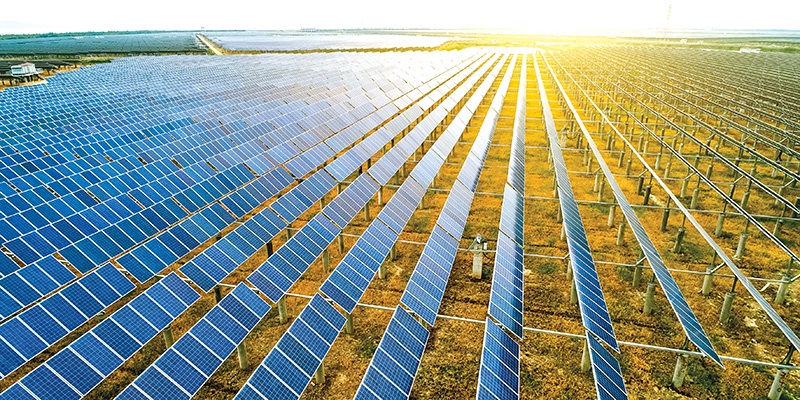
According to a report published by the World Bank, Vietnam can develop 5-10GW of offshore wind power by 2030, generating about $60 billion in added value.
The policymakers of the latest draft of Vietnam’s mammoth Power Development Plan VIII see themselves confronted with additional wind and solar demand, as well as the scrutiny of a deputy prime minister, requiring the Ministry of Industry and Trade to remedy issues to meet the national goals of energy security and net zero emissions by 2050.
 |
CONCEPTUALIZATION OF “MARITIME SECURITY” IN SOUTHEAST ASIA: CONVERGENCE AND DIVERGENCE
PUBLISHED: DECEMBER 15, 2021 CSIS
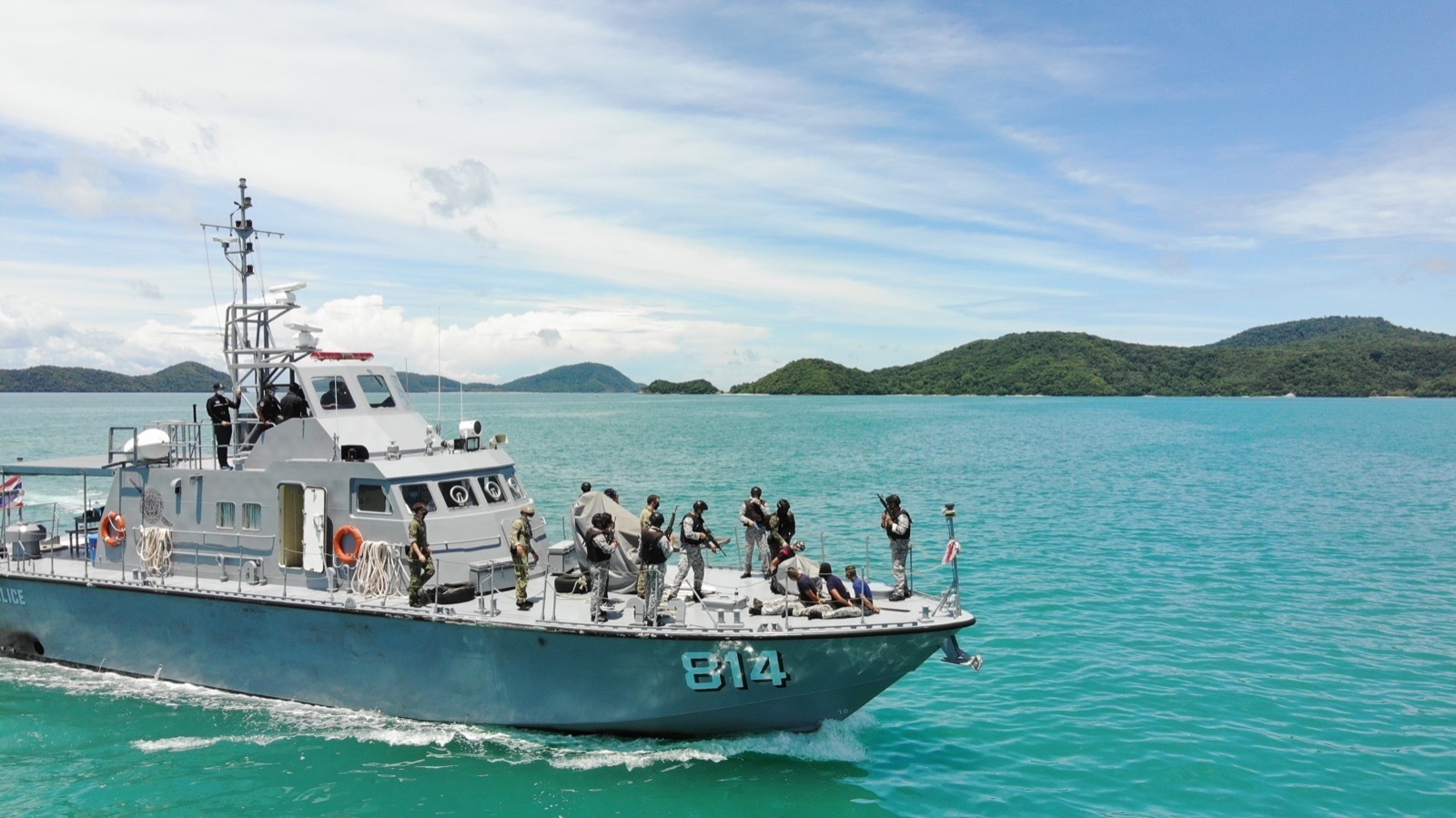
“Maritime Security” has emerged as a central concept in Southeast Asia’s policy lexicon. However, as is the case in much of the world, the term’s precise meaning is not consistently clear. Which challenges and state activities should be categorized as maritime security and which should be considered elements of another domain is generally ambiguous. This ambiguity can be useful to leaders seeking to build unity of action among government agencies with overlapping maritime policy mandates and to diplomats seeking to rely on euphemistic qualities to support flexible political narratives that minimize the risks associated with security dilemmas. However such linguistic polysemy only works for so long and introduces risk. Left unclarified, terms will develop assumed meanings. For example, many Southeast Asians regard contemporary American talk about maritime security as a thin veil for something better understood as “Great Power Competition at Sea.” Therefore, even the most benign initiatives are factored into regional calculations aimed at balancing between external powers. Within the region, it is also possible for lexical disconnects to lead to problematic misinterpretations of policy intent and diplomatic signals.
Recognizing that understanding the varied conceptualizations of maritime security is an academic puzzle with real-world practical implications in Southeast Asia, the S. Rajaratnam School of International Studies convened a roundtable of experts to take stock of regional maritime security definitions. These specialists surveyed national policy documents and policymaker discourse to assess how maritime security is defined, used, and conceptualized in seven key Southeast Asian coastal states (the Philippines, Vietnam, Brunei, Malaysia, Indonesia, Singapore, and Thailand), ASEAN as a multinational institution, and the Quad members (Australia, Japan, India, and the United States). This stocktaking enabled the team to identify and discuss the significance of the convergences and divergences. Noting the transnational nature of discourse, the phrase “Southeast Asian conceptualizations” was adopted as a shorthand. This does not specifically mean usage by Southeast Asian individuals or the region’s national governments but refers to the security-related discourse taking place in the region. While the primary goal of the project was to improve communication by providing common reference points, the project also discovered findings of practical policy importance.
Discussions of each country’s conceptualization of maritime security and the implications of the term’s varying definitions across the region are available in the following 14 article series:
Evolving Conceptualizations of Maritime Security in Southeast Asia by John Bradford
The Philippines’ Conceptualizations of Maritime Security by Jay Batongbacal
Vietnam’s Conceptualizations of Maritime Security by Nguyen Nam Duong
Brunei Darussalam’s Conceptualizations of Maritime Security by Asyura Salleh
Malaysia’s Conceptualizations of Maritime Security by Tharishini Krishnan
Indonesia’s Conceptualizations of Maritime Security by Gilang Kembara
Singapore’s Conceptualization of Maritime Security by YingHui Lee
Thailand’s Conceptualizations of Maritime Security by Somjade Kongrawd
ASEAN Conceptualizations of Maritime Security by Dita Liliansa
Australia’s Conceptualization of Maritime Security by David Letts
India’s Conceptualization of Maritime Security by Prakash Gopal
Japan’s Conceptualization of Maritime Security by Kentaro Furuya
The United States’ Conceptualization of Maritime Security by Blake Herzinger
Maritime Security Conceptualizations in Southeast Asia: The Implications of Convergence and Divergence by John Bradford
 CVD
CVD 