Global Electricity Review 2023

Ember-climate.org

Wind and solar reached a record 12% of global electricity in 2022, and power sector emissions may have peaked.

Malgorzata Wiatros-Motyka

Senior Electricity Analyst

12 April 2023 | 85 min read

Ember’s fourth annual Global Electricity Review aims to provide the most transparent and up-to-date overview of changes in global electricity generation in 2022 and a realistic summary of how “on track” the electricity transition is for limiting global heating to 1.5 degrees.

The report analyses electricity data from 78 countries representing 93% of global electricity demand and includes estimated changes in the remaining generation. It also dives deeper into the top ten CO2 emitting countries and regions, accounting for over 80% of global CO2 emissions.

We make all of the data freely accessible to empower others to do their own analysis and help speed the switch to clean electricity. Use our Data Explorer to find out more.

Thank you to all of the contributors at Ember and to the peer reviewers on the Advisory Board.

Download report >>

Global Electricity Review 2023

Wind and solar reached a record 12% of global electricity in 2022, and power sector emissions may have peaked.

Malgorzata Wiatros-Motyka

Senior Electricity Analyst

12 April 2023 | 85 min read

Avail

About

Ember’s fourth annual Global Electricity Review aims to provide the most transparent and up-to-date overview of changes in global electricity generation in 2022 and a realistic summary of how “on track” the electricity transition is for limiting global heating to 1.5 degrees.

The report analyses electricity data from 78 countries representing 93% of global electricity demand and includes estimated changes in the remaining generation. It also dives deeper into the top ten CO2 emitting countries and regions, accounting for over 80% of global CO2 emissions.

We make all of the data freely accessible to empower others to do their own analysis and help speed the switch to clean electricity. Use our Data Explorer to find out more.

Thank you to all of the contributors at Ember and to the peer reviewers on the Advisory Board.

Executive summary

Wind and solar reach a record 12% of global electricity in 2022

As soon as 2023, wind and solar could push the world into a new era of falling fossil generation, and therefore of falling power sector emissions.

The global electricity sector is the first sector that needs to be decarbonised, in parallel with electricity demand rising, as electrification unlocks emissions cuts throughout the entire economy. The IEA Net Zero Emissions scenario points to a 2040 net zero power sector; ten years ahead of a net zero economy in 2050. Tracking the electricity transition, therefore, is critical to assess our climate progress.

The decarbonisation of the power sector is underway, as record growth in wind and solar drove the emissions intensity of the world’s electricity to its lowest ever level in 2022. It will be an impressive moment when power sector emissions begin to fall year-on-year, but the world is not there yet, and emissions need to be falling fast.

  • 01 Electricity at its cleanest, as wind and solar generate 12% of global power. The carbon intensity of global electricity generation fell to a record low of 36 gCO2/kWh in 2022, the cleanest-ever electricity. This was due to record growth in wind and solar, which reached a 12% share in the global electricity mix, up from 10% in 2021. Together, all clean electricity sources (renewables and nuclear) reached 39% of global electricity, a new record high. Solar generation rose by 24%, making it the fastest-growing electricity source for 18 years in a row; wind generation grew by 17%. The increase in global solar generation in 2022 could have met the annual electricity demand of South Africa, and the rise in wind generation could have powered almost all of the UK. Over sixty countries now generate more than 10% of their electricity from wind and solar. However, other sources of clean electricity dropped for the first time since 2011 due to a fall in nuclear output and fewer new nuclear and hydro plants coming online.
  • 02 Limited coal increase, gas plateaus. Power sector emissions rose in 2022 (+1.3%), reaching an all-time high. Electricity is cleaner than ever, but we are using more of it. Coal generation increased by 1.1%, in line with average growth in the last decade. The ‘coal power phasedown’ agreed at COP26 in 2021 may not have begun in 2022, but also the energy crisis didn’t lead to a major increase in coal burn as many feared. Gas power generation fell marginally (-0.2%) in 2022–for the second time in three years–in the wake of high gas prices globally. Gas-to-coal switching was limited in 2022 because gas was already mostly more expensive than coal in 2021. Only 31 GW of new gas power plants were built in 2022, the lowest in 18 years. But 2022 saw the lowest number of coal plant closures in seven years, as countries look to maintain back-up capacity, even as the transition picks up speed. 
  • 032022 may be “peak” power emissions. Wind and solar are slowing the rise in power sector emissions. If all the electricity from wind and solar instead came from fossil generation, power sector emissions would have been 20% higher in 2022. The growth alone in wind and solar generation (+557 TWh) met 80% of global electricity demand growth in 2022 (+694 TWh). Clean power growth is likely to exceed electricity demand growth in 2023; this would be the first year for this to happen outside of a recession. With average growth in electricity demand and clean power, we forecast that 2023 will see a small fall in fossil generation (-47 TWh, -0.3%), with bigger falls in subsequent years as wind and solar grow further. That would mean 2022 hit “peak” emissions. A new era of falling power sector emissions is close.

Download report >>

International Arbitration Yearbook 2022-2023


Welcome to the 16th edition of the “Baker McKenzie International Arbitration Yearbook.” We are pleased to bring you our analysis of notable developments in international arbitration over the past year from over 45 jurisdictions worldwide.

As with the editions before it, the 2022-2023 Yearbook looks at important legislative and case law updates from each jurisdiction. This includes:

• New arbitral rules from major institutions including the AAA, CAM-CCBC, CEPANI, DIAC and the SCC
• The ongoing reform of arbitration legislation to reflect international best practice, with recent developments in Italy, Japan, Luxembourg, the United Kingdom and Vietnam
• The continued effects of the European Court of Justice’s decision in Achmea
• The decision of a number of European states to withdraw from the Energy Charter Treaty and the accession of new parties to the ICSID convention
• The latest case law on the recognition and enforcement of foreign arbitral awards under the New York Convention, which has now been ratified in 172 jurisdictions worldwide
• New requirements from several institutions to disclose the sources of third-party funding, and the expansion of financing options for arbitration parties in Hong Kong

In this year’s edition we have introduced a new chapter on the arbitration framework in the OHADA area, which includes 17 African states.

I trust you will find our coverage of these, and many other important topics, to be of interest. Such breadth of coverage is only possible because of Baker McKenzie’s truly global presence. Our international arbitration team is the largest, busiest and most ranked arbitration team in the world and is ranked in the top 10 arbitration teams globally by Global Arbitration Review. With over 200 practitioners, we have acted in more hearings than any other firm, in every major center, allowing us to offer unrivaled insights into the state of arbitration right across the globe.

Finally, we extend our thanks to Ben Roe, Markus Altenkirch and Maria Barros Mota, to our editorial team Cathy Keegan, Sarah Fox and Paul Allanigue, and to our vast network of colleagues and friends who have contributed to this international team effort.

Ed Poulton
Global Chair, International Arbitration

Tiếp tục đọc “International Arbitration Yearbook 2022-2023”

Why do Jerusalem tensions fuel regionwide unrest?

yesterday, April7, 2023 AP

Muslim worshippers perform Friday prayers outside the Dome of Rock Mosque at the Al-Aqsa Mosque compound in the Old City of Jerusalem during the Muslim holy month of Ramadan, Friday, April 7, 2023. (AP Photo/Mahmoud Illean)

Muslim worshippers perform Friday prayers outside the Dome of Rock Mosque at the Al-Aqsa Mosque compound in the Old City of Jerusalem during the Muslim holy month of Ramadan, Friday, April 7, 2023. (AP Photo/Mahmoud Illean)

JERUSALEM (AP) — It’s become something of a grim, springtime tradition in the Holy Land.

Israeli police fire tear gas and rubber bullets at Palestinians stockpiling rocks and fireworks inside one of the most bitterly disputed holy sites on Earth. The violence ripples across Israel and the occupied West Bank, and militants from as far away as Gaza and Lebanon respond with rockets.

Tiếp tục đọc “Why do Jerusalem tensions fuel regionwide unrest?”

Nuclear Weapons in Europe: Mapping U.S. and Russian Deployments

By Jonathan Masters and Will Merrow, CFR

March 30, 2023 1:20 pm (EST)

Russia’s threat to deploy tactical nuclear weapons in Belarus has raised the specter of a new nuclear standoff with the United States and its allies in Europe. It also draws new attention to how such arms are deployed in NATO states.

What’s behind Russian President Vladimir Putin’s decision to deploy tactical nuclear weapons in Belarus?

The move that Putin announced in late March would be the first time since the fall of the Soviet Union that Russia has stationed nuclear weapons beyond its own borders, and it raises the prospects for a renewed, destabilizing nuclear arms rivalry with the United States and its North Atlantic Treaty Organization (NATO) allies.

Tiếp tục đọc “Nuclear Weapons in Europe: Mapping U.S. and Russian Deployments”

What Is NATO?


The alliance is bolstering its military deterrent in Europe amid Russia’s invasion of Ukraine and has expanded to include Finland.

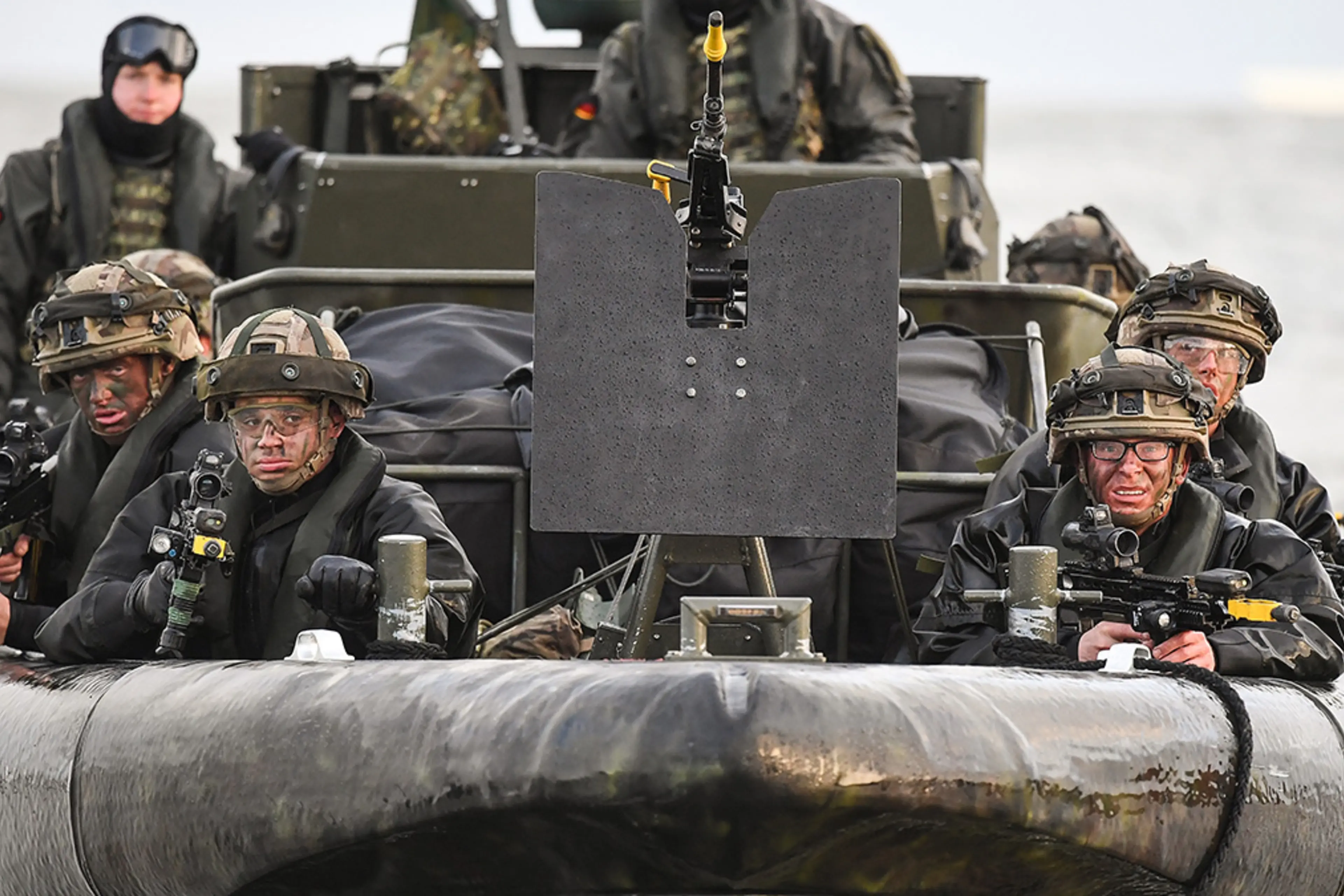
The United Kingdom’s Royal Marines take part in NATO exercises in Scotland in 2018.
The United Kingdom’s Royal Marines take part in NATO exercises in Scotland in 2018. Jeff J Mitchell/Getty Images

WRITTEN BY Jonathan Masters, CFR

UPDATED

Last updated April 4, 2023 7:00 am (EST)

Summary

  • Established during the Cold War, NATO is a transatlantic security alliance composed of thirty-one member countries, including the United States.
  • NATO has focused on deterring Russian aggression in recent years, but it has also conducted security operations in Afghanistan, Iraq, Kosovo, and Somalia. 
  • Amid Russia’s invasion of Ukraine, many NATO allies are providing Kyiv with extraordinary quantities of military supplies, and the alliance has expanded to include Finland.

Introduction

Founded in 1949 as a bulwark against Soviet aggression, the North Atlantic Treaty Organization (NATO) remains the pillar of U.S.-Europe military cooperation. An expanding bloc of NATO allies has taken on a broad range of missions since the close of the Cold War, many well beyond the Euro-Atlantic region, in countries such as Afghanistan and Libya.

Russia’s unprovoked invasion of Ukraine, a nonmember, in early 2022 has shaken Europe’s security architecture and prompted a major reevaluation of NATO members’ foreign policies and defense commitments. The threat from Russia has generated the greatest tensions with the alliance in the post-Cold War era. It is driving up defense spending and has pushed some longtime NATO partners, namely Finland and Sweden, to seek full membership. Finland acceded to the alliance in April 2023.

Tiếp tục đọc “What Is NATO?”

Scammers masquerading as banks steal money via SMS

By Luu Quy   April 5, 2023 | 08:51 am GMT+7 e.vnexpress.vn

Scammers masquerading as banks steal money via SMS

A fake website that masquerade as the Viecombank banking app. Photo by VnExpress/Luu QuyVietnamese citizens have been reporting fake text messages with user interfaces nearly identical to official apps and websites that ask recipients to provide bank information.

Bui Huyen from Hanoi said she nearly lost around VND280 million ($11,930) after receiving a scam text message from a number identified as “Vietcombank.”

The message came on Saturday last week, telling her that her VCB Digibank banking app had been logged into on an unknown device. The message provided a link to log into her account.

Huyen immediately clicked the link to secure her account because the text appeared on an official SMS thread from Vietcombank, so harbored no suspicions.

“The interface for logging in was identical to the app I often use, so I entered my account name and password as requested,” Huyen said.

Tiếp tục đọc “Scammers masquerading as banks steal money via SMS”

CFR – Daily News Brief April 3, 2023

ImageDaily News BriefApril 3, 2023
Top of the Agenda

OPEC+ Announces Surprise Cuts to Global Oil Output

International oil prices rose today (Bloomberg) after Saudi Arabia and other oil-exporting nations announced plans to reduce output (AP) by 1.15 million barrels per day between May and the end of the year. The Organization of the Petroleum Exporting Countries (OPEC) and its partners, collectively known as OPEC+, had not previously signaled plans to slash output. Additionally, OPEC+ member Russia extended its ongoing cut of five hundred thousand barrels per day through the end of the year. The White House called the cuts ill-advised and pledged to work with producers and consumers to bring oil prices down.  The oil producers’ announcement comes as Australia, the European Union, and Group of Seven (G7) countries try to enforce a global price cap on Russian oil. However, Japan negotiated an exemption from the cap due to its energy needs, the Wall Street Journal reported yesterday. 
Tiếp tục đọc “CFR – Daily News Brief April 3, 2023”

China plots 33 spots for regular research ship visits, in Taiwan Strait, South China Sea, Pacific and Indian oceans

Stephen Chen in Beijing,SCMP

Published: 6:00pm, 1 Apr, 2023

Why you can trust SCMP

6

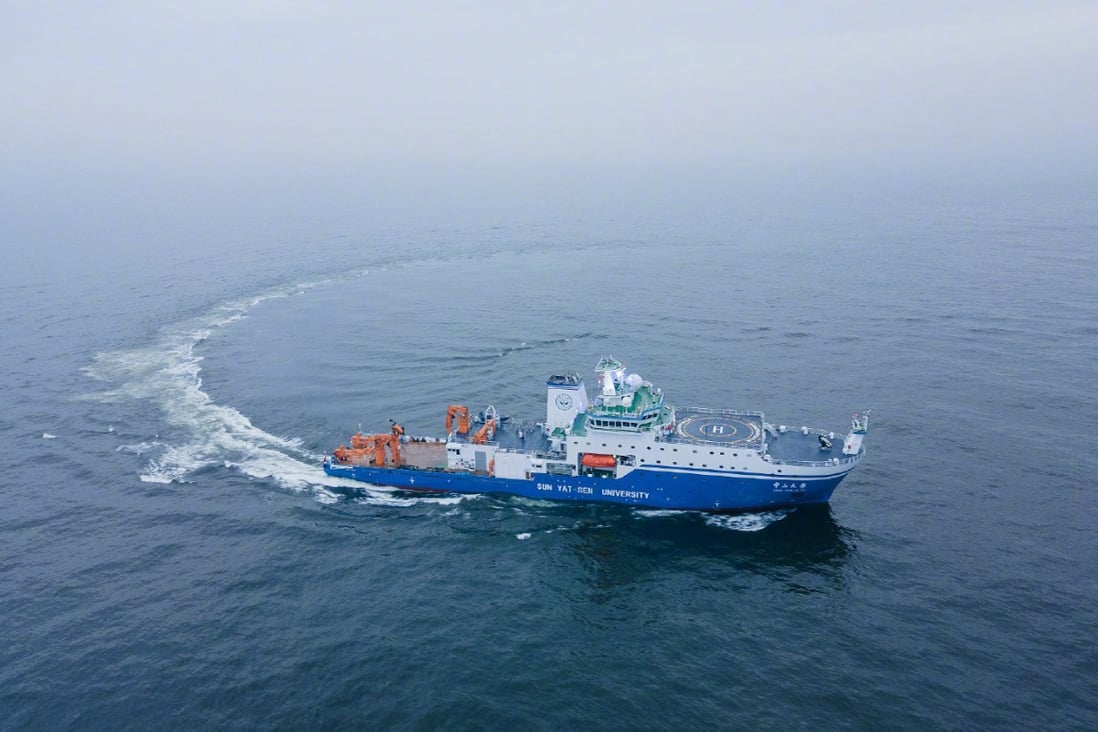
China operates one of the world’s largest ocean surveying fleets but survey routes have often lacked transparency and varied from one mission to another. Photo: Xinhua

China operates one of the world’s largest ocean surveying fleets but survey routes have often lacked transparency and varied from one mission to another. Photo: Xinhua

Beijing has for the first time listed the specific locations to be visited regularly by Chinese ocean research vessels, including disputed areas of the South China Sea and waters close to US Pacific bases.

The 33 areas, or “reference sections”, cover a wide span of regional waterways – from the Taiwan Strait and South China Sea to the western Pacific and eastern Indian oceans – according to the announcement from the National Natural Science Foundation of China (NSFC), a top government research funder.

Tiếp tục đọc “China plots 33 spots for regular research ship visits, in Taiwan Strait, South China Sea, Pacific and Indian oceans”

CFR – The World This Week March 31, 2023

ImageThe World This WeekMarch 31, 2023
The Putin-Xi Summit Reinforces Anti-U.S. Partnership Thomas Graham

Russian President Vladimir Putin and Chinese leader Xi Jinping attend a welcome ceremony at the Kremlin on March 21, 2023. (Alexey Maishev/Sputnik)The meeting of Russian President Vladimir Putin and Chinese leader Xi Jinping in Moscow helped both give the impression of a united front, but underlying tensions were also discernible. Get the quick take
Tiếp tục đọc “CFR – The World This Week March 31, 2023”

Tiến sĩ ‘dạy làm giàu’ dụ tiền 2.500 người bằng cách nào?

Thứ bảy, 1/4/2023, 00:00 (GMT+7)

Ông Phạm Thanh hải
Ông Phạm Thanh Hải trong một hội thảo của Câu lạc bộ Học làm giàu. Ảnh: ANTĐ

HÀ NỘIĐang làm ăn ì ạch, Phạm Thanh Hải bỗng thu 2.700 tỷ đồng một năm nhờ quảng bá là tiến sĩ, mở lớp dạy làm giàu dụ 2.574 người góp vốn, trả lãi 50%/năm, VKS cáo buộc.

Ngày 29/3, TAND Hà Nội mở phiên xét xử bị cáo Phạm Thanh Hải, 57 tuổi, cựu Chủ tịch Công ty CP thương mại đầu tư và phát triển công nghệ quốc tế (IDT), về tội Lừa đảo chiếm đoạt tài sản. Do hàng trăm bị hại vắng mặt, HĐXX phải hoãn phiên toà tới 19/4.

Tám năm từ khi bị bắt, tháng 10/2015, vụ án “tiến sĩ dạy làm giàu” vẫn chưa đến hồi kết.

Tiếp tục đọc “Tiến sĩ ‘dạy làm giàu’ dụ tiền 2.500 người bằng cách nào?”

Biden Signs Executive Order to Prohibit U.S. Government Use of Commercial Spyware that Poses Risks to National Security or Has Been Misused by Foreign Actors to Enable Human Rights Abuses

MARCH 27, 2023 White House

FACT SHEET: President Biden Signs Executive Order to Prohibit U.S. Government Use of Commercial Spyware that Poses Risks to National Security

  1. HOME
  2. BRIEFING ROOM
  3. STATEMENTS AND RELEASES

Presidential Directive Will Serve as a Cornerstone Initiative During the Second Summit for Democracy

Today, President Biden signed an Executive Order that prohibits, for the first time, operational use by the United States Government of commercial spyware that poses risks to national security or has been misused by foreign actors to enable human rights abuses around the world.

Commercial spyware – sophisticated and invasive cyber surveillance tools sold by vendors to access electronic devices remotely, extract their content, and manipulate their components, all without the knowledge or consent of the devices’ users – has proliferated in recent years with few controls and high risk of abuse.

The proliferation of commercial spyware poses distinct and growing counterintelligence and security risks to the United States, including to the safety and security of U.S. Government personnel and their families. U.S. Government personnel overseas have been targeted by commercial spyware, and untrustworthy commercial vendors and tools can present significant risks to the security and integrity of U.S. Government information and information systems.

Tiếp tục đọc “Biden Signs Executive Order to Prohibit U.S. Government Use of Commercial Spyware that Poses Risks to National Security or Has Been Misused by Foreign Actors to Enable Human Rights Abuses”

CFR – Daily News Brief, March 30, 2023

Image Daily News Brief March 30, 2023
Top of the Agenda

EU Chief Calls for Europe to ‘De-Risk’ From China

During a speech in Brussels today, European Commission President Ursula von der Leyen called for the European Union (EU) to take a “bolder” stance (Politico) toward Beijing in response to China becoming “more repressive at home and more assertive abroad.” She said this would help Europe “de-risk” itself (Reuters) economically and diplomatically, but that economic decoupling from China is not possible. She also referred to the close relationship between China’s and Russia’s leaders and said China is responsible for advancing a “just peace” in Ukraine that includes the withdrawal of Russian forces. Von der Leyen will visit Beijing next week. 
European leaders have diverged in recent months (FT) over their views on China. While the United States has hardened its own China policy through controls on tech exports, trade officials at the European Commission have studied the possibility of controls on outbound European investment. 
Tiếp tục đọc “CFR – Daily News Brief, March 30, 2023”

Speech by President von der Leyen on EU-China relations to the Mercator Institute for China Studies and the European Policy Centre

30 March 2023 Brussels, European Commission

Ladies and Gentlemen,

It is a real pleasure to be here at this very special event co-hosted by two of Europe’s most knowledgeable and independent-minded think tanks. In a time when global affairs are becoming harder to decrypt – and in an era where facts are routinely challenged – the work that you do at these think tanks has never been more important for Europe. Because it is only by having a deeper understanding of the world as it really is – not as we may wish it to be – that we can develop better informed policies. This is why I believe think tanks are an essential part of our democracy. In just ten years, MERICS has developed a unique expertise in analysing the political, economic and social trends in China and how these impact Europe and the world. And we must preserve and uphold your right – and that of all think tanks –– to be analytical and to be critical. So I want to express my solidarity with you and all the other individuals and institutions who have been unfairly sanctioned by the Chinese government. I would also like to congratulate the European Policy Centre on its recent 25th anniversary. From the outset, you have been a truly European voice in the world of policy and academia. This spirit is very much in the image of one of your founders, and one of Europe’s most unheralded fathers – Max Kohnstamm. Max Kohnstamm lived through personal trauma and tragedy during World War II. This experience inspired him to dedicate his life to building a united Europe. One question always guided his work: ‘Do we believe that states are forever condemned to remain […] never to trust another state? Or do we believe in the possibility of change, of gradually changing men’s minds and their behaviour?’. This commitment to creating a better understanding between people lives on through Europe’s think-tank community.

Tiếp tục đọc “Speech by President von der Leyen on EU-China relations to the Mercator Institute for China Studies and the European Policy Centre”