Eight things the world must do to avoid the worst of climate change

Latest IPCC report highlights key measures countries must take to avoid climate catastrophe

Fiona Harvey, Environment editor, The Guardian Tue 21 Mar 2023 19.10 GMT

The Intergovernmental Panel on Climate Change published the “synthesis report” of its sixth assessment report (AR6) on Monday. Eight years in preparation, this mammoth report encompasses the entire range of human knowledge of the climate system, compiled by hundreds of scientists from thousands of academic papers, and published in four parts, in August 2021, February and April 2022, and March 2023.

The report drew together the most important findings – but also highlighted some key measures that governments and countries must take immediately if we are to avoid climate catastrophe:

Reduce methane

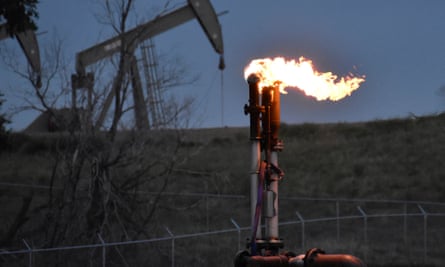
A flare to burn methane from oil production in North Dakota, US.
A flare to burn methane from oil production in North Dakota, US. Photograph: Matthew Brown/AP

Sharp cuts to short-lived climate pollutants, methane chief among them, could cut more than half a degree from global heating. Produced from oil and gas operations and coalmines, and from animal husbandry and natural sources – such as decaying vegetation – methane is a greenhouse gas about 80 times more powerful than carbon dioxide. But it lasts only for about 20 years before degrading into CO2.

Tiếp tục đọc “Eight things the world must do to avoid the worst of climate change”

Long popular in Asia, floating solar catches on in US

Search

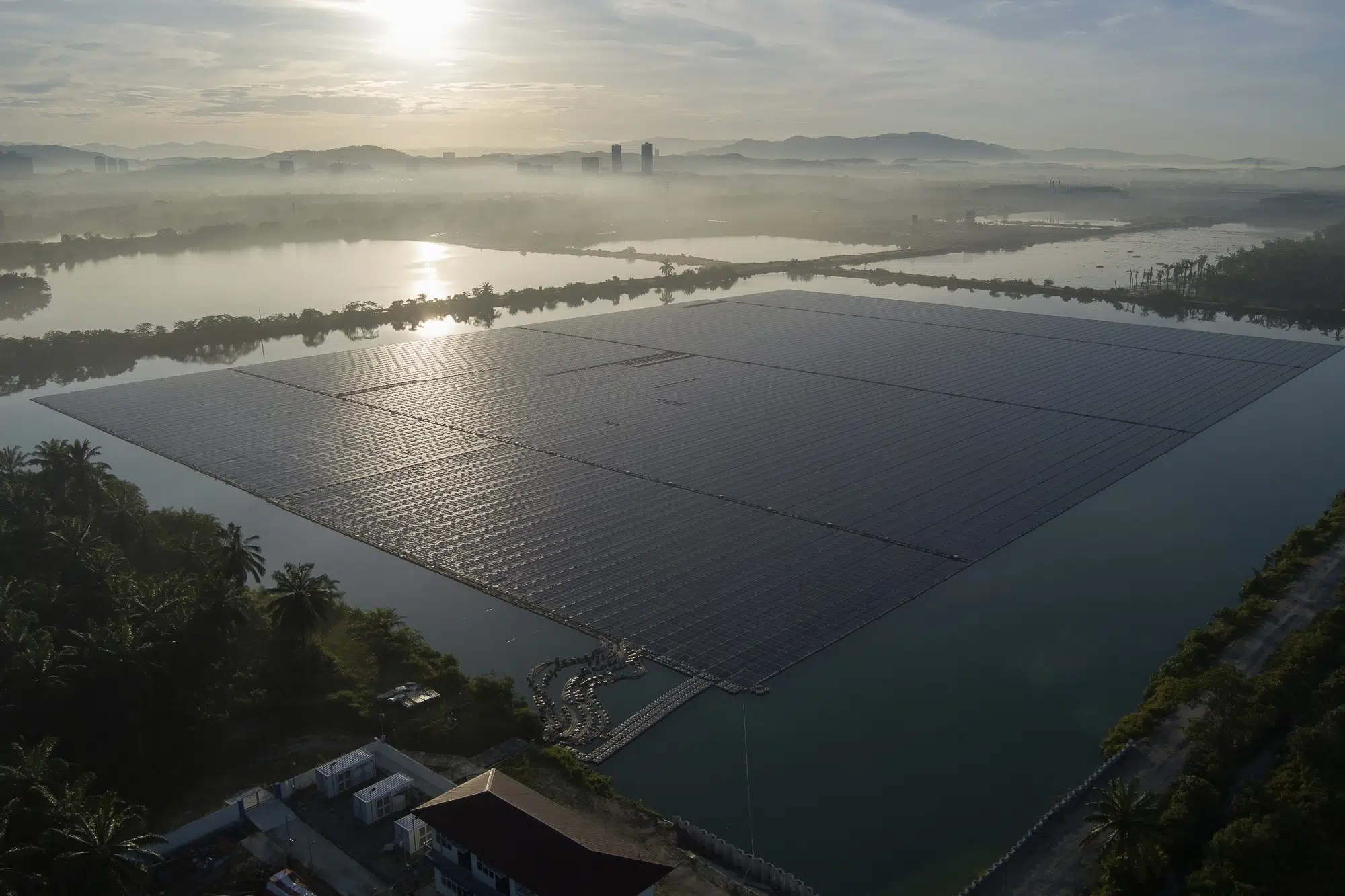
The sun rises over floating solar panels on May 3, 2023, in Selangor, Malaysia. Floating solar panel farms are beginning to boom in the United States after rapid growth in Asia. They're attractive not just for their clean power and lack of a land footprint, but because they also conserve water by preventing evaporation. (AP Photo/Vincent Thian)

By ISABELLA O’MALLEY

May 10, 2023 AP

When Joe Seaman-Graves, the city planner for the working class town of Cohoes, New York, Googled the term “floating solar,” he didn’t even know it was a thing.

What he did know is that his tiny town needed an affordable way to get electricity and had no extra land. But looking at a map, one feature stood out.

“We have this 14-acre water reservoir,” he said.

Seaman-Graves soon found the reservoir could hold enough solar panels to power all the municipal buildings and streetlights, saving the city more than $500,000 each year. He had stumbled upon a form of clean energy that is steeply ramping up.

Tiếp tục đọc “Long popular in Asia, floating solar catches on in US”

Aggression in West PH Sea: China’s maritime ‘Great Wall’ plan

By: Kurt Dela Peña May 04, 2023 globalnation.inquirer.net

COMPOSITE IMAGE: JEROME CRISTOBAL FROM INQ/STOCK/PAMALAKAYA FILE PHOTOS

(First of two parts)

MANILA, Philippines—China is building a maritime ‘Great Wall’ in the South China Sea, including the West Philippine Sea, according to analysts who have been keeping tabs on Chinese aggression in the disputed waters.

But unlike the engineering marvel Great Wall built mainly for defense, the one that China is building on seas far from its coast is also for dominance, the analysts said.

In the 1990s, China started building structures over coral reefs and islets inside the Philippines’ exclusive economic zone (EEZ) in the West Philippine Sea. This was met by so far the strongest protest from the Philippine government—an arbitration case over the Scarborough Shoal standoff in 2012.

But China, instead, “flexed more of its military muscle.” The intrusion continued with impunity.

Tiếp tục đọc “Aggression in West PH Sea: China’s maritime ‘Great Wall’ plan”

How Bidenomics Has Finally Defeated Reaganomics


TRICKLE DOWN IS DONE

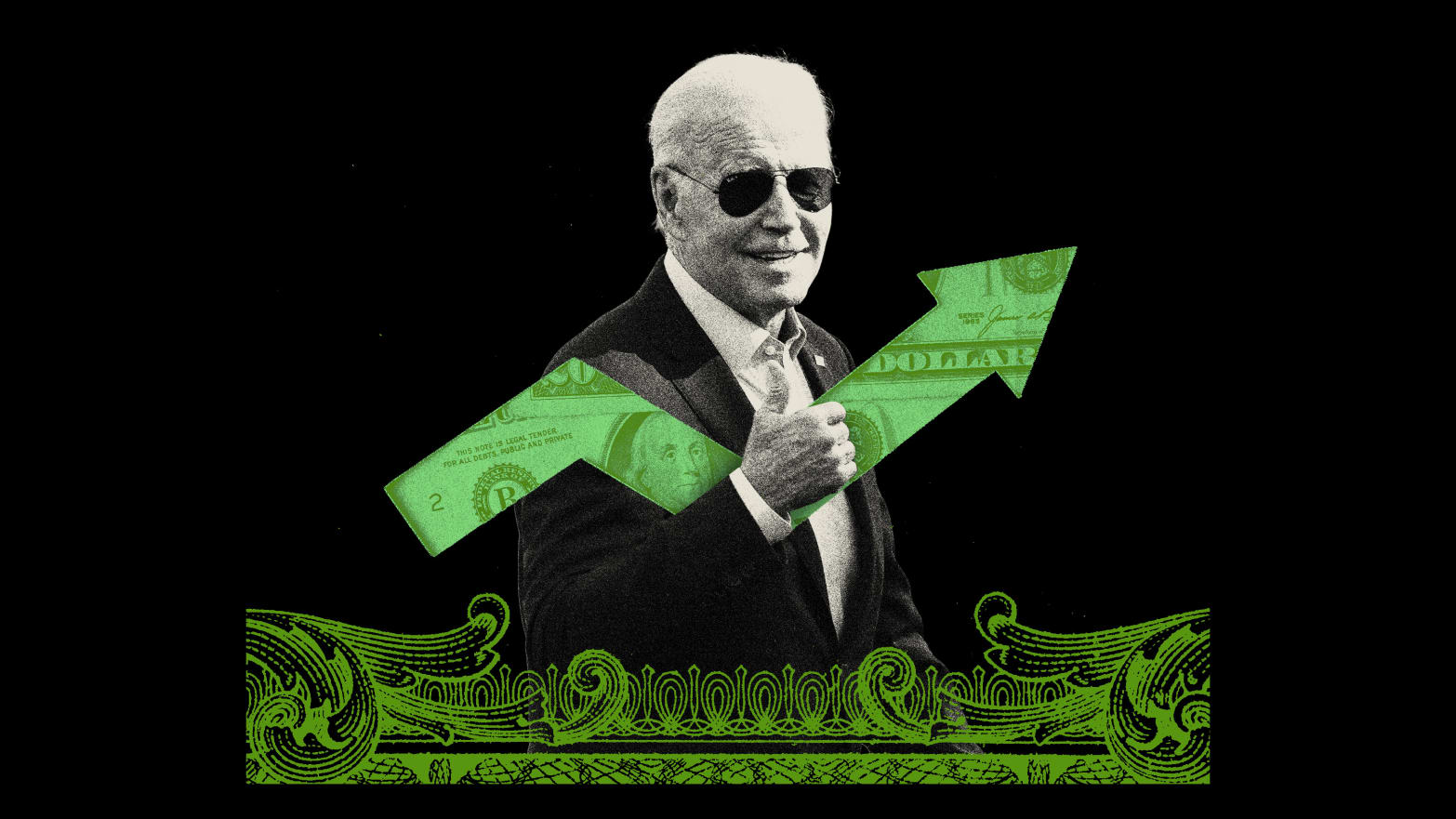
Two years into his presidency, Joe Biden has revolutionized America’s economic policy—both home and abroad.

David Rothkopf, thedailybeast

Published May. 03, 2023 4:11AM ET 


The last thing many of us expected when Joe Biden became president was that he would be a revolutionary. But just over two years into Biden’s presidency, there is no doubt that he has done more to dramatically transform U.S. policy and thinking in more areas than any of his predecessors since Franklin Roosevelt. Tiếp tục đọc “How Bidenomics Has Finally Defeated Reaganomics”

What the Bush-Obama China Memos Reveal

Newly declassified documents contain important lessons for U.S. China policy.

APRIL 29, 2023, 6:00 AM Foregn Policy

By Michael J. Green, the CEO of the United States Studies Centre at the University of Sydney, and Paul Haenle, the director of Carnegie China.

As U.S.-China relations transition from an era of engagement to one of strategic competition, some in the Biden and former Trump administrations have claimed to be abandoning four decades of naive American assumptions about Beijing. Past U.S. policy, they say, was based on a futile view that engagement would lead to a democratic and cooperative China. This, however, is not only a misreading of past U.S. policies but also dangerous analytical ground upon which to build a new national security strategy.

The fact is that no administration since that of Richard Nixon has made U.S. security dependent on Chinese democratization. Every administration has combined engagement with strategies to counterbalance China through alliances, trade agreements, and U.S. military power. Throwing out all previous U.S. approaches to China would mean throwing out some of the most important tools the current administration relies on to compete with China. And the Biden administration will not get its China strategy right until it is clear about what has worked in the past.

Hand-Off: The Foreign Policy George W. Bush Passed to Barack Obama; Stephen J. Hadley, Peter D. Feaver, William C. Inboden, and Meghan L. O’Sullivan (eds.); Brookings Institution Press, 774 pp., $39, February 2023

Tiếp tục đọc “What the Bush-Obama China Memos Reveal”

U.S. Support for the Philippines in the South China Sea

PRESS STATEMENT

OFFICE OF THE SPOKESPERSON

US STATE DEPARTMENT

APRIL 29, 2023

The United States stands with The Philippines in the face of the People’s Republic of China (PRC) Coast Guard’s continued infringement upon freedom of navigation in the South China Sea. Imagery and video recently published in the media is a stark reminder of PRC harassment and intimidation of Philippine vessels as they undertake routine patrols within their exclusive economic zone.  We call upon Beijing to desist from its provocative and unsafe conduct. The United States continues to track and monitor these interactions closely.

Tiếp tục đọc “U.S. Support for the Philippines in the South China Sea”

Remarks by US National Security Advisor Jake Sullivan on Renewing American Economic Leadership at the Brookings Institution

APRIL 27, 2023 whitehouse.gov

AS DELIVERED

I want to start by thanking all of you for indulging a National Security Advisor to discuss economics.

As most of you know, Secretary Yellen gave an important speech just down the street last week on our economic policy with respect to China.  Today I’d like to zoom out to our broader international economic policy, particularly as it relates to President Biden’s core commitment—indeed, to his daily direction to us—to more deeply integrate domestic policy and foreign policy.

After the Second World War, the United States led a fragmented world to build a new international economic order.  It lifted hundreds of millions of people out of poverty.  It sustained thrilling technological revolutions.  And it helped the United States and many other nations around the world achieve new levels of prosperity.

But the last few decades revealed cracks in those foundations.  A shifting global economy left many working Americans and their communities behind.
A financial crisis shook the middle class.  A pandemic exposed the fragility of our supply chains.  A changing climate threatened lives and livelihoods.  Russia’s invasion of Ukraine underscored the risks of overdependence.

So this moment demands that we forge a new consensus. 

That’s why the United States, under President Biden, is pursuing a modern industrial and innovation strategy—both at home and with partners around the world.  One that invests in the sources of our own economic and technological strength, that promotes diversified and resilient global supply chains, that sets high standards for everything from labor and the environment to trusted technology and good governance, and that deploys capital to deliver on public goods like climate and health. 

Now, the idea that a “new Washington consensus,” as some people have referred to it, is somehow America alone, or America and the West to the exclusion of others, is just flat wrong.

This strategy will build a fairer, more durable global economic order, for the benefit of ourselves and for people everywhere.

So today, what I want to do is lay out what we are endeavoring to do.  And I’ll start by defining the challenges as we see them—the challenges that we face.  To take them on, we’ve had to revisit some old assumptions.  Then I’ll walk through, step by step, how our approach is tailored to meeting those challenges.

When President Biden came into office more than two years ago, the country faced, from our perspective, four fundamental challenges.

First, America’s industrial base had been hollowed out.

The vision of public investment that had energized the American project in the postwar years—and indeed for much of our history—had faded.  It had given way to a set of ideas that championed tax cutting and deregulation, privatization over public action, and trade liberalization as an end in itself. 

There was one assumption at the heart of all of this policy: that markets always allocate capital productively and efficiently—no matter what our competitors did, no matter how big our shared challenges grew, and no matter how many guardrails we took down.

Now, no one—certainly not me—is discounting the power of markets. But in the name of oversimplified market efficiency, entire supply chains of strategic goods—along with the industries and jobs that made them—moved overseas.  And the postulate that deep trade liberalization would help America export goods, not jobs and capacity, was a promise made but not kept.  

Another embedded assumption was that the type of growth did not matter.  All growth was good growth.  So, various reforms combined and came together to privilege some sectors of the economy, like finance, while other essential sectors, like semiconductors and infrastructure, atrophied.  Our industrial capacity—which is crucial to any country’s ability to continue to innovate—took a real hit.  

The shocks of a global financial crisis and a global pandemic laid bare the limits of these prevailing assumptions.

The second challenge we faced was adapting to a new environment defined by geopolitical and security competition, with important economic impacts.

Much of the international economic policy of the last few decades had relied upon the premise that economic integration would make nations more responsible and open, and that the global order would be more peaceful and cooperative—that bringing countries into the rules-based order would incentivize them to adhere to its rules.

It didn’t turn out that way.  In some cases it did, and in lot of cases it did not.

By the time President Biden came into office, we had to contend with the reality that a large non-market economy had been integrated into the international economic order in a way that posed considerable challenges. 

The People’s Republic of China continued to subsidize at a massive scale both traditional industrial sectors, like steel, as well as key industries of the future, like clean energy, digital infrastructure, and advanced biotechnologies.  America didn’t just lose manufacturing—we eroded our competitiveness in critical technologies that would define the future.

Economic integration didn’t stop China from expanding its military ambitions in the region, or stop Russia from invading its democratic neighbors.  Neither country had become more responsible or cooperative.

Tiếp tục đọc “Remarks by US National Security Advisor Jake Sullivan on Renewing American Economic Leadership at the Brookings Institution”

CFR – Critical Minerals and China

The Water’s Edge April 28, 2023
The President’s Inbox Recap: Critical Minerals and China

by Michelle Kurilla, Guest Contributor


The digging of raw nickel ore near Sorowako, Indonesia’s Sulawesi island, on January 8, 2014.
REUTERS/Yusuf Ahmad

The latest episode of The President’s Inbox is live, and we’ve revived the practice of posting a weekly episode recap on The Water’s Edge.  This week, Jim sat down with Morgan Bazilian, the Director of the Payne Institute and a professor of public policy at the Colorado School of Mines. They discussed the role of critical minerals in geopolitical competition with China.

Here are four takeaways from the conversation:

1. Critical minerals are essential for the green energy transition. Lithium, cobalt, nickel, copper, and other minerals are critical to building the batteries, electrical grids, and solar facilities needed to move away from fossil fuels. Demand for lithium alone is predicted to increase thirteen-fold by 2040 and could become a sticking point in the green energy transition. Nor is demand for critical minerals limited to the energy sector; they’re widely used to manufacture everything from smartphones to advanced weaponry.

2. China dominates the critical mineral supply chain. A few countries sit atop vast mineral reserves. Seventy-five percent of the world’s known lithium reserves are found in Argentina, Bolivia, and Chile. The Democratic Republic of the Congo possess more than half the world’s cobalt reserves. Indonesia has more than 20 percent of the world’s nickel reserves. Regardless of where mines might be located, China owns or finances many of them. As recently as 2020, China owned and financed fifteen of the nineteen cobalt mines in the DROC. China also dominates the refining process. It controls 65 percent of cobalt refining, nearly 60 percent of the lithium refining, and as much as 95 percent of manganese refining. This dominance gives China leverage over customers, something it has used in the past. In 2010, China stopped exporting rare earth elements (a subset of critical minerals essential to electronics manufacturing) to Japan amid heightened tensions between the two countries.

3. The United States can lessen its dependence but doing so will take time. The United States is working with its allies and partners to lessen potential vulnerabilities to disruptions in critical mineral supply. The recently signed Mineral Security Partnership with Australia, Canada, the United Kingdom, France, Germany, Japan, South Korea, and others would allow investments in mining infrastructure abroad by the United States through the Export-Import Bank. The United States is currently negotiating a deal with the EU that would harmonize rules governing critical minerals used in electric batteries. The United States struck a similar deal with Japan last month. President Biden could also invoke the Defense Production Act to rapidly increase domestic investment in critical minerals. But all of these steps will take time to produce results. It can take more than sixteen years to make a new mine operational. There’s been pushback to investments in mining and processing due to their harmful environmental impacts, and both Democratic and Republican lawmakers have voiced concern about a need for congressional oversight in the trade agreements.

4. Technological advancements could lessen supply chain vulnerabilities. Technology has a long history of solving scarcity problems. Critical minerals could provide yet another example. For example, progress is being made on developing sodium batteries. They don’t require either cobalt or nickel as lithium batteries do. Even better for the United States, Wyoming sits on top of more than 90 percent of the world’s main industrial source of sodium. But it would take time to scale up sodium battery production and ease doubts about their durability, let alone ramp up construction of sodium battery factories to compete with China and get the rest of the world onboard.

Shortly after Jim and Morgan talked, Chile nationalized its lithium reserves, citing economic and environmental concerns. Chile isn’t the first country to make this move. Mexico did the same last year.

If you’re looking to read more of Morgan’s work, check out the piece he co-wrote earlier this year for Foreign Affairs arguing that the United States needs to rework its supply chains at home and abroad to “win the energy battle of the twenty-first century.” In another article for Foreign Policy, he and his co-authors warned America’s dependency on the critical minerals that China dominates poses a national security risk. He also co-wrote a piece for the Wilson Center’s New Security Beat blog that argued the United States needs to diversify its supply chains globally and domestically so that its climate mitigation strategies and military readiness are not in competition with one another.Read Original Post

How online searches for ‘Ukraine’ and ‘Taiwan’ are censored in China: study

Thousands of combinations of keywords attract either no matches on internet platforms or redirect to approved content, Canadian research group saysThree-month project shows infringement of ‘rights to freely access political and religious content’

Sylvie Zhuang

Sylvie Zhuang in Beijing

Published: 7:58pm, 28 Apr, 2023, SCMP

A Canadian study has detailed censored search terms about the war in Ukraine on Chinese platforms.  Photo: Shutterstock Images

A Canadian study has detailed censored search terms about the war in Ukraine on Chinese platforms. Photo: Shutterstock Images

Ukraine” and “Taiwan” are among a wide range of newly discovered keyword combinations censored by Chinese search engines and social media platforms, according to a study by a group of Canadian researchers.

In a report released on Wednesday, researchers from the University of Toronto’s Citizen Lab said they looked at eight platforms accessible in China and found “60,000 unique censorship rules used to partially or totally censor search results”.

Tiếp tục đọc “How online searches for ‘Ukraine’ and ‘Taiwan’ are censored in China: study”

China and Taiwan: A Torrid Backstory

Tensions between the United States and China over Taiwan have been on the rise. Here’s what lies behind them.

Monday, April 17th, 2023 New York Times

This transcript was created using speech recognition software. While it has been reviewed by human transcribers, it may contain errors. Please review the episode audio before quoting from this transcript and email transcripts@nytimes.com with any questions.

Sabrina Tavernise: From “The New York Times,” I’m Sabrina Tavernise. And this is “The Daily.” [MUSIC PLAYING]

The posturing between the US and China has been intensifying in recent weeks, especially when it comes to Taiwan. Today, my colleague, Edward Wong, on why China is so fixated on Taiwan and how the US got in the middle of it.

It’s Monday, April 17.

So, Ed, Taiwan has been back in the news again for the past few weeks. Tell us why.

Edward Wong: Well, Sabrina, we saw tensions spike this month over Taiwan. Earlier this month, the president of Taiwan, Tsai Ing-wen, stopped in Los Angeles on her way back to Taiwan from Central America. Archived Recording (Tsai Ing-Wen)

Tiếp tục đọc “China and Taiwan: A Torrid Backstory”