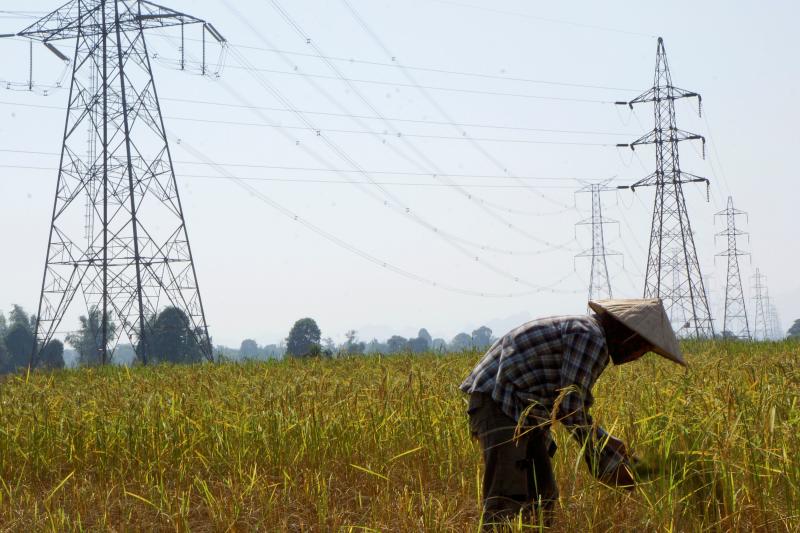
Actions Large Energy Buyers Can Take to Transform and Decarbonize the Grid: Procurement Practices for Achieving 100% Carbon Free Electricity

WRI.org

EXECUTIVE SUMMARY

▪ Large energy buyers—including corporates, cities, and institutional customers—have played and will continue to play an important role in driving clean energy in the near term, particularly renewables. However, to ensure that the power sector achieves deep decarbonization over the next two to three decades, large energy buyers will need to take additional actions to play a leading role in accelerating the transition to a carbon-free grid.

▪ Large energy buyers can implement approaches that help transform the grid such as matching clean energy purchasing with the timing of their energy use, incorporating demand flexibility, purchasing dispatchable clean electricity, adopting enabling technologies (e.g., energy storage), maximizing emissions reductions, and driving an an equitable transition to clean energy.

▪ There is no single strategy for implementing transformative procurement practices, which is why we have
highlighted a variety of approaches in this issue brief. Optimal procurement approaches can vary based on differences in customer electricity usage, market context, available product offerings, staff and resources, and differences across grids.

▪ To enable large energy buyers to implement transformative procurement practices, new products and solutions will be needed. Metrics and recognition programs will also need to be revised to incentivize and encourage more customers to take actions that can facilitate a carbon-free grid.

Download full paper here

The latest UN report is clear: Climate change is here, it’s a crisis, and it’s caused by fossil fuels.

The Attlantic.com

By Robinson Meyer

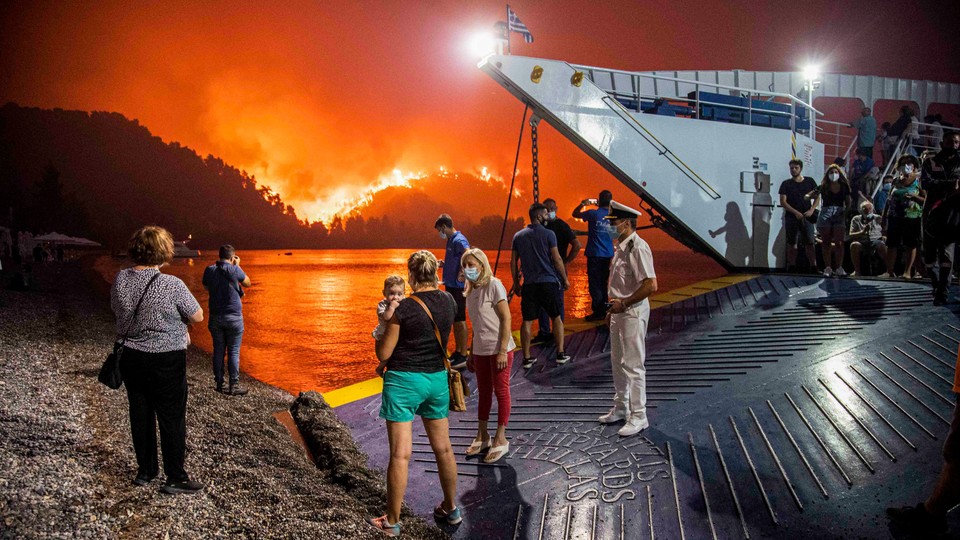
People board a ferry prior to an evacuation as a wildfire approaches the seaside village of Limni, on the island of Evia, Greece, on August 6, 2021.
NurPhoto / Getty

AUGUST 10, 2021SHARE

A new United Nations–led report from hundreds of climate scientists around the world makes it clear: The human-driven climate crisis is now well under way. Earth is likely hotter now than it has been at any moment since the beginning of the last Ice Age, 125,000 years ago, and the world has warmed 1.1 degrees Celsius, or nearly 2 degrees Fahrenheit, since the Industrial Revolution began—an “unprecedented” and “rapid” change with no parallel in the Common Era. What’s more, the recent spate of horrific heat waves, fire-fueling droughts, and flood-inducing storms that have imperiled the inhabited world are not only typical of global warming, but directly caused by it.

Tiếp tục đọc “The latest UN report is clear: Climate change is here, it’s a crisis, and it’s caused by fossil fuels.”

UN report: Pandemic year marked by spike in world hunger

UNICEF.org

Africa posting biggest jump. World at critical juncture, must act now for 2030 turnaround

malnutrition

UNICEF/UN0232174/Njiokiktjien VII PhotoAfra, held by her mother Therese, is being checked for malnourishment at Al Sabbah Children’s hospital in Juba, South Sudan.

ROME/NEW YORK, 12 July 2021 – There was a dramatic worsening of world hunger in 2020, the United Nations said today – much of it likely related to the fallout of COVID-19. While the pandemic’s impact has yet to be fully mapped, a multi-agency report estimates that around a tenth of the global population – up to 811 million people – were undernourished last year. The number suggests it will take a tremendous effort for the world to honour its pledge to end hunger by 2030.  

This year’s edition of The State of Food Security and Nutrition in the World is the first global assessment of its kind in the pandemic era. The report is jointly published by the Food and Agriculture Organization of the United Nations (FAO), the International Fund for Agricultural Development (IFAD), the United Nations Children’s Fund (UNICEF), the UN World Food Programme (WFP) and the World Health Organization (WHO).

Tiếp tục đọc “UN report: Pandemic year marked by spike in world hunger”

Đề nghị sửa đổi bổ sung Luật Điện lực: Bộ Công Thương

(Chinhphu.vn) – Bộ Công Thương đang đề nghị xây dựng Luật sửa đổi, bổ sung một số điều của Luật Điện lực nhằm giải quyết một số vướng mắc trong quá trình thực tiễn thi hành hiện nay.

Bảo đảm và nâng cao chất lượng điện năng, chất lượng cung cấp dịch vụ điện – Ảnh minh họa

Tiếp tục đọc “Đề nghị sửa đổi bổ sung Luật Điện lực: Bộ Công Thương”

What sparked the mass violence in South Africa – video explainer

theguardian.com

South Africa has recently experienced its worst violence since the end of the apartheid regime 27 years ago. More than 200 people were killed and thousands arrested in a week of civil unrest during which hundreds of shops were looted, factories set ablaze and government infrastructure destroyed. The Guardian’s Africa correspondent, Jason Burke, explains how the violence was sparked by more than just the jailing of the former president Jacob Zuma, and what impact it could have on a country where more than half of the population lives in poverty

https://www.theguardian.com/world/video/2021/jul/21/what-sparked-the-mass-violence-in-south-africa-video-explainer

Aral Sea: The world 4th largest sea that dried up in 40 years

The Aral Sea was once the fourth-largest lake in the world. Fed primarily by snowmelt and precipitation flowing down from faraway mountains, it was a temperate oasis in an arid region. But in the 1960s, the Soviet Union diverted two major rivers to irrigate farmland, cutting off the inland sea from its source. The Aral Sea has been slowly disappearing ever since. These images show how the Aral Sea and its surrounding landscape has changed over the past few decades.

South Korea and Japan Will End Overseas Coal Financing. Will China Catch Up?

WRI.org

Since 2013, public finance from China, Japan and South Korea accounted for more than 95% of total foreign financing toward coal-fired power plants. This financing enabled the construction and operation of coal power plants in developing countries, where investment in power supply does not match demand. These investments also came at a time when the global carbon budget was already overstretched.

Tiếp tục đọc “South Korea and Japan Will End Overseas Coal Financing. Will China Catch Up?”

Sixty years of climate change warnings: the signs that were missed (and ignored)

theguardian.com

The effects of ‘weird weather’ were already being felt in the 1960s, but scientists linking fossil fuels with climate change were dismissed as prophets of doomby Alice BellMon 5 Jul 2021 06.00 BST

In August 1974, the CIA produced a study on “climatological research as it pertains to intelligence problems”. The diagnosis was dramatic. It warned of the emergence of a new era of weird weather, leading to political unrest and mass migration (which, in turn, would cause more unrest). The new era the agency imagined wasn’t necessarily one of hotter temperatures; the CIA had heard from scientists warning of global cooling as well as warming. But the direction in which the thermometer was travelling wasn’t their immediate concern; it was the political impact. They knew that the so-called “little ice age”, a series of cold snaps between, roughly, 1350 and 1850, had brought not only drought and famine, but also war – and so could these new climatic changes.

“The climate change began in 1960,” the report’s first page informs us, “but no one, including the climatologists, recognised it.” Crop failures in the Soviet Union and India in the early 1960s had been attributed to standard unlucky weather. The US shipped grain to India and the Soviets killed off livestock to eat, “and premier Nikita Khrushchev was quietly deposed”.

But, the report argued, the world ignored this warning, as the global population continued to grow and states made massive investments in energy, technology and medicine.

Tiếp tục đọc “Sixty years of climate change warnings: the signs that were missed (and ignored)”

How to Teach Consent Across the Curriculum

Edutopia.org

Studying the concept of consent outside the confines of health classes may leave students better equipped to apply what they learn.By Laura McGuireJune 16, 2021

DGLimages / Alamy Stock Photo

In 2018, when I first wrote about consent education and the role that schools play in preventing sexual misconduct, my focus was on getting consent education into the schools. Unfortunately, the need for deterring gender-based interpersonal violence is still very much the reality across the country. While a few states have begun creating mandates for consent education at some point in a student’s high school years, most states have either ignored the issue entirely or disregarded the enforcement of these standards. Students, staff, and communities continue to feel the impact of not having consent infused into their school culture.

Tiếp tục đọc “How to Teach Consent Across the Curriculum”

Report: New solar is cheaper to build than to run existing coal plants in China, India and most of Europe

renewableworld.com

By Jennifer Runyon -6.23.2021

Source: BloombergNEF. Note: The map indicates for each country the technology with the lowest LCOE per MWh for new-build solar (yellow) and wind (blue) or running costs fo existing coal (black) or gas (gray). Running costs include a carbon price where applicable. Calculations exclude subsidies and tax-credits. Natural gas reflects combined-cycle gas turbines.

This week, BloombergNEF’s released estimates for its global benchmark that tracks the levelized cost of electricity, or LCOE, for utility-scale PV and onshore wind. The LCOE looks at the all-in cost to build, operate, and maintain power plants and then calculates the cost per megawatt-hour (MWh) of the energy produced based on all of those inputs.

Tiếp tục đọc “Report: New solar is cheaper to build than to run existing coal plants in China, India and most of Europe”

COVID vaccines to reach poorest countries in 2023 — despite recent pledges

Nature.com

Amid a COVID surge in Africa, vaccine promises from richer nations are not enough to bring an early end to the pandemic, experts say.

A woman receives a nasal swab from a health worker wearing personal protective equipment
COVID-19 testing in Johannesburg. South African President Cyril Ramaphosa has reintroduced restrictions following a surge of the Delta variant.Credit: Emmanuel Croset/AFP/Getty

Most people in the poorest countries will need to wait another two years before they are vaccinated against COVID-19, researchers have told Nature.

Around 11 billion doses are needed to fully vaccinate 70% of the world’s population against COVID-19. As of 4 July, 3.2 billion doses had been administered. At the current vaccination rate, this will increase to around six billion doses by the end of the year, researchers from the International Monetary Fund, based in Washington DC, project.

Tiếp tục đọc “COVID vaccines to reach poorest countries in 2023 — despite recent pledges”