Top Takeaways from the UN World Leaders Summit at COP26

Dawn over Glasgow COP26

CommentaryTopic Climate

WRI.org

The first two days of the UN Climate Conference (COP26) featured over 100 high-level announcements and speeches during the “World Leaders Summit,” helping set the tone for the two-week long conference. The gathering of world leaders was immediately preceded by the G20 Summit held in Rome.

While several important announcements were made that will help to move the needle on global climate action, negotiators will still have their work cut out for them as they try to pave the way for more progress in the coming days.

Here’s a look at the developments so far.

Limited Progress at G20 Summit in Rome

In a final communique, G20 nations recognized the importance of strengthening national climate action this decade, and committed to revisit and further enhance their 2030 emission reduction targets where necessary. This should pave the way for negotiators at COP26 to agree that major emitters will further strengthen their 2030 targets within the next couple of years to keep the Paris Agreement’s 1.5 degrees C (2.7 degrees F) temperature goal within reach.  

Tiếp tục đọc “Top Takeaways from the UN World Leaders Summit at COP26”
Five trends reshaping European power markets

mckinsey.com

By Eivind Samseth, Fabian Stockhausen, Xavier Veillard, and Alexander WeissO

Open interactive popup Article (8 pages)

European power markets have entered a period of unprecedented change. Power prices have touched new highs: baseload week-ahead prices have risen above €200 per megawatt-hour (MWh)1 in a number of European countries—about four times the average historical level. That increase has been prompted largely by a surge in natural-gas and carbon prices, which currently exceed €100 per MWh2 and €60 per metric ton, respectively. This development has affected the cost of power produced by natural-gas power plants, which broadly set prices in European markets.

At the same time, price volatility is reaching new heights as a result of the uncertain output of renewable assets and a tight supply-and-demand balance in the European power system. Navigating this next normal will be a key challenge for utilities, traders, and large power consumers, and that highlights the importance of developing resilient power-asset portfolios and managing risk.

In this article, we explore five trends that will shape the European power sector in the decade to come and offer some perspectives on how utilities and large consumers might respond.

What’s ahead for the European power sector?

The European power market is undergoing major changes. Five trends underpin these developments.

Tiếp tục đọc “Five trends reshaping European power markets”

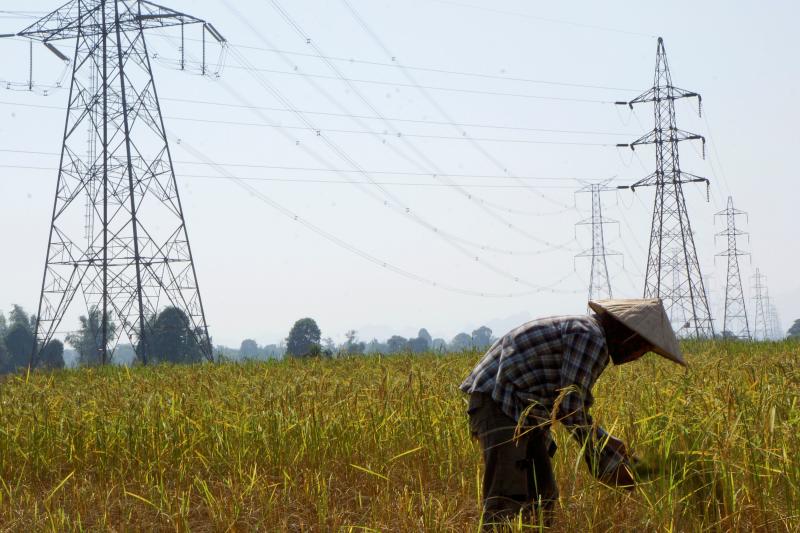
What does the data tell us about electricity pricing in Laos?

mekongeye.com

By Ekaphone Phouthonesy12 October 2021 at 1:30 (Updated on 18 October 2021 at 15:00)

Through a variety of data sources an evidence-based picture of electricity pricing and the electricity-generation business in Laos is revealed.

A 42-year-old resident of Thongsanang village in central Vientiane, nicknamed To, was upset after receiving an electricity bill in May that was almost twice as high as normal.

“I’m going to send a letter to EDL asking them to investigate this unusual increase in my bill,” he told friends at a local coffee shop.

“Normally, I pay around 900,000 kip (US$95) a month, but this month I had to pay 1.6 million kip (US$168),” said Mr To, a worker with a monthly salary of about 1.8 million kip (US$190).

Tiếp tục đọc “What does the data tell us about electricity pricing in Laos?”

The Global Sustainable Competitiveness Index 2021

solability.com

  • Scandinavia keeps topping the GSCI: Sweden is leading the Sustainable Competitiveness Index, closely followed by Denmark, Iceland & Finland, while Norway is ranked 9
  • The top 20 are dominated by Northern European countries, including the Baltic states
  • Of the top twenty nations only one is not European – New Zealand on 11
  • The UK is ranked 15, Germany 22
  • The World’s largest economy, the US, is ranked 32. The US ranks particularly low in resource efficiency, but also social capital – potentially undermining the global status of the US in the future
  • Of the large emerging economies (BRICs), China is ranked 37, Brazil 49, Russia 51, and India 130.
  • Tiếp tục đọc “The Global Sustainable Competitiveness Index 2021”

China’s Commitment to Stop Overseas Financing of New Coal Plants in Perspective

CSIS.org

September 24, 2021

On September 21, 2021, Chinese president Xi Jinping announced at the United Nations General Assembly debate that China would not build any new coal-fired power plants abroad and would step up its support for developing green and low-carbon energy in developing countries. He also reiterated the country’s goal to become carbon neutral by 2060 and peak carbon emissions by 2030, targets which he had first announced last year. This new announcement sets the tone for the upcoming UN climate change conference, COP26, which will be held in Glasgow in early November.

Q1: Why does this new climate commitment matter?

A1: Xi Jinping’s speech at last year’s UN General Assembly was noteworthy because it set a timeline for China’s decarbonization. However, in addition to not specifying a peak level of emissions, it also left unanswered the question of whether the country would shoulder the responsibility for climate action outside its borders. China’s role as the largest public financier of coal projects globally has come into particular focus this past year as other governments, such as the G7 members, have pledged to slash their public financing of such projects. There were multiple calls from the international community, including U.S. special envoy for climate John Kerry, for China to end its support for coal projects globally.

Tiếp tục đọc “China’s Commitment to Stop Overseas Financing of New Coal Plants in Perspective”

Is Europe’s gas and electricity price surge a one-off?

bruegel.org

Surging natural gas prices in Europe, driven by rising demand and tight supply, are pushing up electricity prices; to prevent volatility, governments need to commit more clearly to a low-carbon future.

Since January 2021, natural gas prices have soared by more than 170% in Europe (Figure 1), sparking concerns about the potential macroeconomic implications.https://e.infogram.com/1p761ygy79gngyhz5yydwzln9lanq3km1rm?parent_url=https%3A%2F%2Fwww.bruegel.org%2F2021%2F09%2Fis-europes-gas-and-electricity-price-surge-a-one-off%2F&src=embed#async_embed

Both demand and supply factors have contributed to a tightening of the European gas market.

European gas demand is increasing in residential heating, industry and power generation. Higher demand for residential heating due to a cold winter and widespread remote working pushed up overall European gas demand by 7.6% in the first quarter of 2021. Also, a combination of continued industrial output rebound, summer heatwaves with increased use of air conditioning and rallying EU carbon prices fostering a switch from coal to gas, kept European gas demand high throughout the second quarter of the year.

Tiếp tục đọc “Is Europe’s gas and electricity price surge a one-off?”

What’s Behind Europe’s Skyrocketing Power Prices

bloomberg.com

Europe’s energy ambitions are clear: to shift to a low-carbon future by remaking its power generating and distribution systems. But the present situation is an expensive mess. A global supply crunch for natural gas, bottlenecks for renewable energy and wind speeds in the North Sea among the slowest in 20 years, idling turbines, have contributed to soaring electricity prices. As winter approaches, governments are preparing to intervene if needed in volatile energy markets to keep homes warm and factories running.

1. What’s the problem here?

Energy prices skyrocketed as economies emerge from the pandemic — boosting demand just as supplies are falling short. Coal plants have been shuttered, gas stockpiles are low and the continent’s increasing reliance on renewable sources of energy is exposing its vulnerability. Even with mild weather in September, gas and electricity prices were breaking records across the continent and in the U.K. Italy’s Ecological Transition Minister Roberto Cingolani said he expected power prices to increase by 40% in the third quarter. In the U.K., CF Industries Holdings Inc., a major fertilizer producer, shut two plants, and Norwegian ammonia manufacturer Yara International ASA curbed its European production because of high fuel costs, as the crunch started to hit industrial companies.

Tiếp tục đọc “What’s Behind Europe’s Skyrocketing Power Prices”

The young Vietnamese helping tackle the illegal wildlife trade

Alzajeera.com

Trang Nguyen is a rarity in Vietnam where civil society is viewed with scepticism and most young people want more lucrative careers.

Trang has won international recognition for her work including the Future for Nature Award [Theo Krus/Courtesy of Trang Nguyen]

By Sen Nguyen10 Sep 2021

Standing on top of a four-wheel drive looking out at a central Kenyan wildlife reserve wearing a bucket hat and walking boots, Trang Nguyen stands apart from most Vietnamese who prefer European charm and East Asian wonders for their holidays and photographic memories.

But Trang is no ordinary traveller.

The 31-year-old founder and executive director of WildAct, a Vietnamese conservation NGO, travels the world as a wildlife conservation scientist.

Tiếp tục đọc “The young Vietnamese helping tackle the illegal wildlife trade”

What’s behind the decision to close Yale-NUS College?(Singapore’s first liberal-arts college)

NUS said the best elements of Yale-NUS and its own University Scholars Programme will form the basis of a yet-to-be-named new college.NUS said the best elements of Yale-NUS and its own University Scholars Programme will form the basis of a yet-to-be-named new college.ST PHOTO: CHONG JUN LIANG
straitstimes.com

Sandra DavieAng Qing and Ng Wei Kai PUBLISHEDSEP 5, 2021, 5:00 AM SGT

SINGAPORE – More than a week since the shock announcement that Yale-NUS College will close its doors in 2025, students and alumni are still wondering if they will get a more detailed explanation of the decision.

Tiếp tục đọc “What’s behind the decision to close Yale-NUS College?(Singapore’s first liberal-arts college)”

ASEAN needs more Belt and Road money, say ministers

asia.nikkei.com

China-led investments needed to assist COVID-damaged economies

Chinese high-speed trains are flagship Belt and Road Initiative projects that will dramatically improve connectivity in mainland Southeast Asia.    © APCK TAN, Nikkei staff writerSeptember 1, 2021 21:14 JST

SHANGHAI — Ministers from the Association of Southeast Asian Nations called on Wednesday for more multilateral investments through China’s Belt and Road Initiative to support economic recovery while the COVID-19 pandemic continues to depress regional economic growth.

Meeting online at a Belt and Road Summit, ASEAN ministers said the region has benefited from the infrastructure and digital connectivity already brought about by BRI, but new initiatives are needed to create opportunities amid pandemic-induced uncertainties.

Tiếp tục đọc “ASEAN needs more Belt and Road money, say ministers”

Việt Nam mạnh giàu: Giấc mơ từ bên ngoài Tổ quốc

03/09/2021 07:14 GMT+7

tuoitre.vn

TTO – Khi thế giới trở nên phẳng, những giấc mơ cũng không có “quốc tịch”. Ước mong về một Việt Nam mạnh giàu, khởi sinh bên ngoài lãnh thổ, nói với ta nhiều hơn về cái di sản hiện tồn trên đường phát triển đó.

Việt Nam mạnh giàu: Giấc mơ từ bên ngoài Tổ quốc - Ảnh 1.

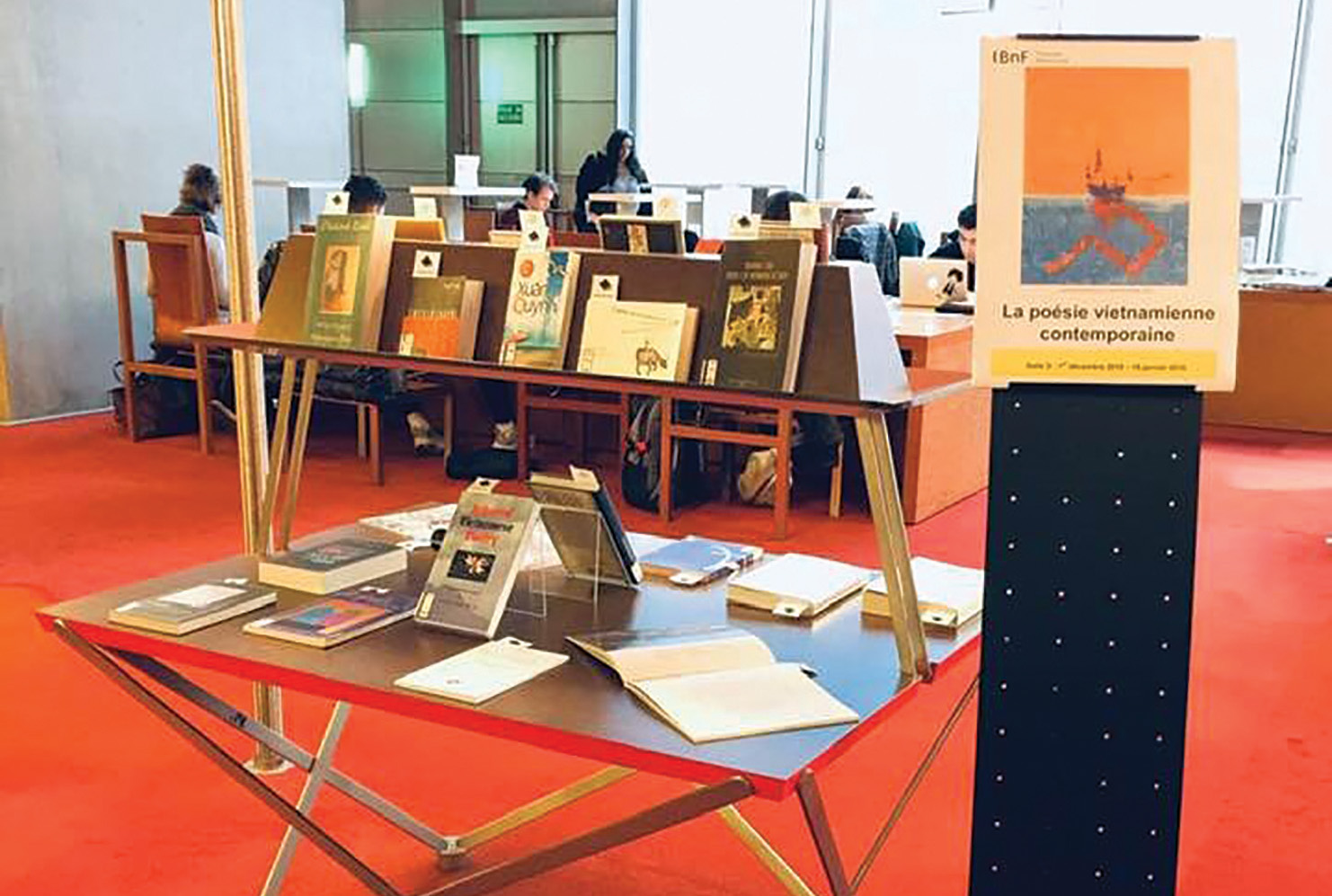
Trưng bày sách “Thơ Việt Nam đương đại” tại phòng đọc Thư viện Quốc gia Pháp

Họ đang tìm mọi cơ hội để hướng về và phát triển đất nước. Cũng có thể là người chẳng có máu mủ ruột rà gì với quốc gia bé nhỏ này nhưng họ lại bị hai chữ “Việt Nam” quyến luyến và không ngừng cổ vũ cho sự phát triển của nó.

Khi thế giới trở nên phẳng, những giấc mơ cũng không có “quốc tịch”. Ước mong về một Việt Nam mạnh giàu, khởi sinh bên ngoài lãnh thổ, nói với ta nhiều hơn về cái di sản hiện tồn trên đường phát triển đó.

Tiếp tục đọc “Việt Nam mạnh giàu: Giấc mơ từ bên ngoài Tổ quốc”

Germany to invest billions to bring semiconductor production back to Europe

euractiv.com

By Oliver Noyan | EURACTIV.de | translated by Daniel Eck

 3 Sept 2021 (updated:  0:16)

Europe is not just trailing behind in terms of numbers, but also with respect to quality. Most advanced microchips, which are used in smartphones, computers and other high-tech devices, are currently produced almost exclusively in Asia. [SCHUTTERSTOCK/genkur]

Languages: Deutsch

Tiếp tục đọc “Germany to invest billions to bring semiconductor production back to Europe”

Geopolitical standoff in South China Sea leads to environmental fallout

mongabay.com

by Leilani Chavez on 12 August 2021

  • Satellite images show significant growth in the occurrence of algal blooms in contested areas in the South China Sea.
  • Images suggest that these algal blooms or phytoplankton overgrowth are linked to the presence of vessels anchored in the area and to island-building activities in the region.
  • While satellite images help give a preview of the ecological state of the South China Sea, on-site observations are necessary to validate the findings, experts say.
  • Decades of territorial and maritime disputes, however, have limited the conduct of studies and dissuaded the establishment of conservation zones in the South China Sea.

Tiếp tục đọc “Geopolitical standoff in South China Sea leads to environmental fallout”

If your coffee’s going downhill, blame climate change

by Reuters

Monday, 16 August 2021 10:00 GMT

Brazil is turning to stronger and more bitter robusta coffee beans, which are hardier in the heat than the delicate arabica, in a sign of how climate change is affecting global markets

* Robusta coffee more heat tolerant than arabica

* It can be grown at lower altitudes than rival variety

* Top roasters ramping up use of Brazilian robusta

* Yields in Brazil now match top robusta grower Vietnam

By Maytaal Angel, Marcelo Teixeira and Roberto Samora

LONDON/NEW YORK/SAO PAULO, Aug 16 (Reuters) – Coffee leader Brazil is turning to stronger and more bitter robusta beans, which are hardier in the heat than the delicate arabica, in a sign of how climate change is affecting global markets – and shaping our favourite flavours.

Brazil is the world’s biggest producer of arabica, yet its production has stayed largely flat over the last five years. Meanwhile its output of cheaper robusta – generally grown at lower altitudes and viewed as of inferior quality – has leapt and is attracting more and more international buyers, new data shows.

The expansion is challenging Vietnam’s longstanding robusta dominance, while squeezing smaller players, increasingly leaving output concentrated in fewer regions and more vulnerable to price spikes if extreme weather occurs.

It also promises to gradually alter the flavour of the world’s coffee over the coming years as more of the harsher and more caffeine-charged robusta variety, widely used to make instant coffee, makes its way into the pricier ground blends currently dominated by arabica.

Whatever your taste, Enrique Alves, a scientist specialising in coffee seed cultivation at Brazilian state agritech research centre Embrapa, said that it might ultimately be thanks to robusta that “our daily coffee will never be missing” as the globe warms.

Tiếp tục đọc “If your coffee’s going downhill, blame climate change”