I'm from Hanoi, Viet Nam.
I'm an author of Dot Chuoi Non (dotchuoinon.com/author/hangbelu/), a blog on Positive thinking, founded by Dr. Tran Dinh Hoanh, an attorney in Washington DC.
I'm a co-founder of Conversations on Vietnam Development - cvdvn.net, a virtual think tank. I am a co-founder of two companies in Viet Nam working on children education services. I advise companies on STEAM education, English language education for children and students in Vietnam.
I'm studying the Buddha's teaching and the teaching of Jesus. I practice mindful living including meditation.
I hold a PhD on Sustainable Energy Systems from University of Lisbon and Aalto University.
I graduated from Hanoi University of Technology on Environmental Engineering. I obtained a Master degree of the same major from Stanford University and Nanyang Technological University.
My English-language blog at: hangbelu.wordpress/.
I play table tennis as a hobby.
Với mức lương hưu từ 2-4,5 triệu đồng mỗi tháng, nhiều người ngoài 60 tuổi vẫn phải làm thêm các công việc khác để có thêm thu nhập. Họ mong lương hưu được hưởng ít nhất bằng mức lương tối thiểu.
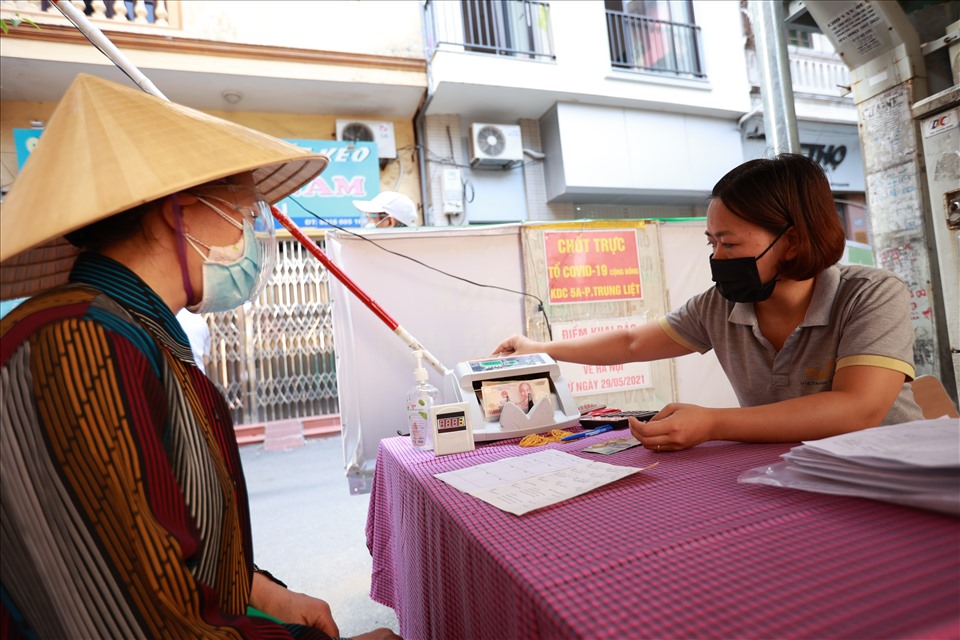
Lương hưu của nhiều người lao động thấp so với mặt bằng chung khiến họ không thể đảm bảo cuộc sống. Ảnh: Nguyễn NAM
Lương hưu thấp so với mặt bằng chung
Ông Lê Viết Hưởng, 61 tuổi, trú tại xã Vũ Vinh, huyện Vũ Thư, tỉnh Thái Bình hiện đang được hưởng mức lương hưu 2,3 triệu đồng/tháng. Mức lương này đang thấp hơn mức lương tối thiểu vùng đang áp dụng trên địa bàn huyện Vũ Thư (mức 3.070.000 đồng/tháng). Với số tiền hưu nhận được, ông Hưởng sống khá chật vật, nhất là khi tuổi già, sức khoẻ suy giảm.
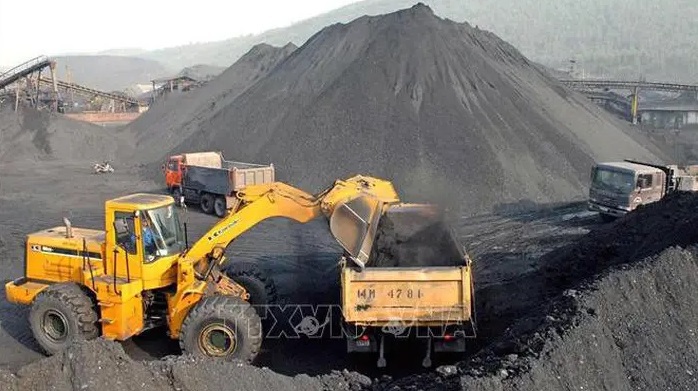
Vietnam’s coal imports are forecast to rise to meet domestic production demand, according to a draft strategy for developing the coal industry in Vietnam recently introduced by the Ministry of Industry and Trade (MoIT).
Hanoi (VNA) – Vietnam’s coal imports are forecast to rise to meet domestic production demand, according to a draft strategy for developing the coal industry in Vietnam recently introduced by the Ministry of Industry and Trade (MoIT).
Accordingly, Vietnam will import about 50-83 million tonnes of coal per year during the period from 2025 to 2035, with the volume gradually falling to about 32-35 million tonnes by 2045.
The data from the MoIT shows domestic coal consumption increased rapidly from 27.8 million tonnes in 2011 to 38.77 million tonnes in 2015, and about 53.52 million tonnes in 2021.
The volume of coal consumed at present has more than doubled compared to 2011, mainly for electricity production.
The demand for primary energy, including coal, will continue to increase, possibly peaking in the 2030-2035 period, the ministry said.
Vietnam’s coal demand will be around 94-97 million tonnes in 2025, and peak at 125-127 million tonnes in 2030, mainly due to the increase in demand for power generation, and the cement, metallurgy and chemical industries.
The ministry also predicted that the demand for energy after 2040 will decline due to the energy transition process to meet emission reduction targets.
The paper provides a wealth of data about the current state of the nuclear industry and the potential for its growth over the next ten to twenty years, while also considering important questions about the geopolitical dimensions which underpin the relationships between the exporters and importers of nuclear technology and the ties, such as financing and provision of services in the nuclear energy value chain, which bind them over multiple decades
See full paper here at Oxford Institute for Energy Studies
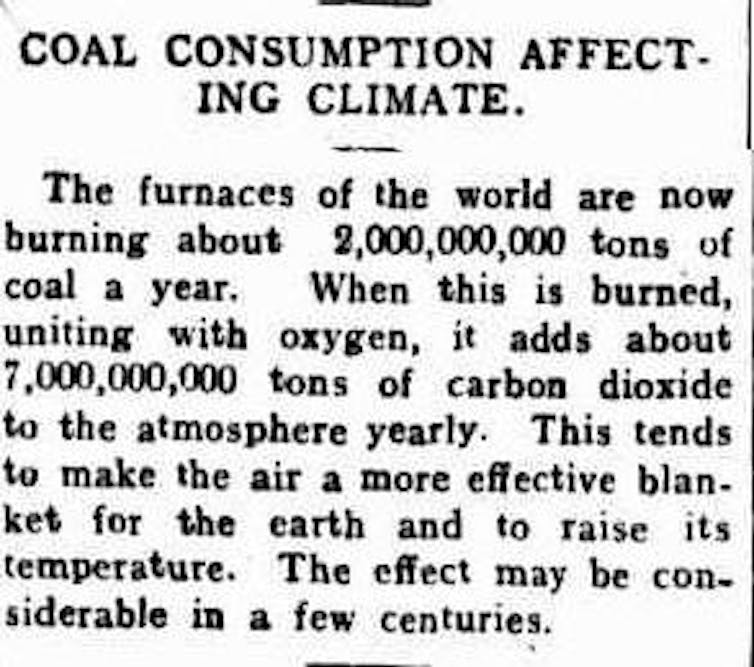
On August 14 1912, a small New Zealand newspaper published a short article announcing global coal usage was affecting our planet’s temperature.
This piece from 110 years ago is now famous, shared across the internet this time every year as one of the first pieces of climate science in the media (even though it was actually a reprint of a piece published in a New South Wales mining journal a month earlier).
So how did it come about? And why has it taken so long for the warnings in the article to be heard – and acted on?
This short 1912 article made the direct link between burning coal and global temperature changes. The Braidwood Dispatch and Mining Journal, National Library of Australia
The fundamental science has been understood for a long time
American scientist and women’s rights campaigner Eunice Foote is now widely credited as being the first person to demonstrate the greenhouse effect back in 1856, several years before United Kingdom researcher John Tyndall published similar results.
Her rudimentary experiments showed carbon dioxide and water vapour can absorb heat, which, scaled up, can affect the temperature of the earth. We’ve therefore known about the relationship between greenhouse gases and Earth’s temperature for at least 150 years.
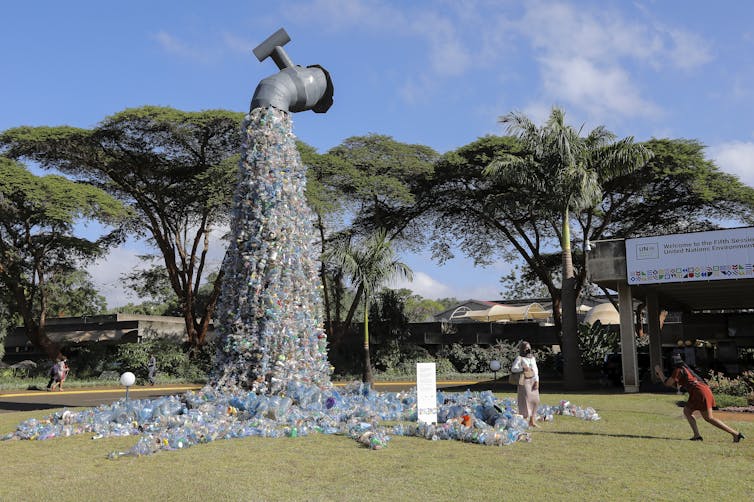
The flow of plastic entering the ocean is expected to double by 2040. To prevent this tsunami of difficult-to-decompose waste, experts have proposed a global treaty which could oblige all nations to reduce how much plastic they produce and emit to the environment.
At a recent meeting of the United Nations Environment Assembly (UNEA) in Nairobi, Kenya, ministers and representatives from 173 countries agreed on the terms for negotiating such a treaty over the next two years.
Is this the turning point for plastic pollution the world needs? And how will it work? We asked Steve Fletcher, a professor of ocean policy and economy at the University of Portsmouth and an advisor to the UN Environment Prograamme on plastic.
What has actually been agreed in Nairobi?
The UNEA is a gathering of all United Nations member states to discuss and adopt policies for tackling global environmental problems. It is the highest environmental decision-making body in the world. On Wednesday March 2 2022, ministers and representatives from 173 countries formally adopted a resolution to start negotiations for a legally binding agreement to end plastic pollution.
The three-day UNEA meeting brought countries together to discuss turning off the plastic tap. EPA-EFE/Daniel Irungu
Agreeing the mandate and focus of the negotiations is just the start. Before the end of 2024, the substance of the agreement will need to be thrashed out.
when it comes to the Paris Agreement and climate action; namely that when individuals change their behaviour by consuming differently they can drive industries to change, as those industries are then caught between a ‘greening’ consumer demand and international and governmental policies focusing on climate action.
Back in the 1980s, everyone was talking about the hole in the ozone layer, so what happened, and what can the international agreement to ban CFCs teach us about the importance of multilateral cooperation when it comes to climate action?
What exactly is the ozone layer?
The ozone layer is the part of the Earth’s atmosphere that protects the planet from ultraviolet radiation. It’s found in the Stratosphere which is around 10-50km above the surface of the earth. Think of it as a layer of sunscreen that protects us from all manner of harmful rays. Without it, life on Earth would be extremely unpleasant.
Green water – the rainwater available to plants in the soil – is indispensable for life on and below the land. But in a new study, we found that widespread pressure on this resource has crossed a critical limit.
The planetary boundaries framework – a concept that scientists first discussed in 2009 – identified nine processes that have remained remarkably steady in the Earth system over the last 11,700 years. These include a relatively stable global climate and an intact biosphere that have allowed civilisations based on agriculture to thrive. Researchers proposed that each of these processes has a boundary that, once crossed, puts the Earth system, or substantial components of it, at risk of upset.
Eight-year-old Chelsea Symonds carries a bucket of collected rainwater in her family’s yard in the drought-affected town of Murrurundi, New South Wales, Australia, on February 17, 2020.
By Adnan Aamir, Marwaan Macan-Markar, Shaun Turton and Cissy Zhou – AUGUST 10, 2022
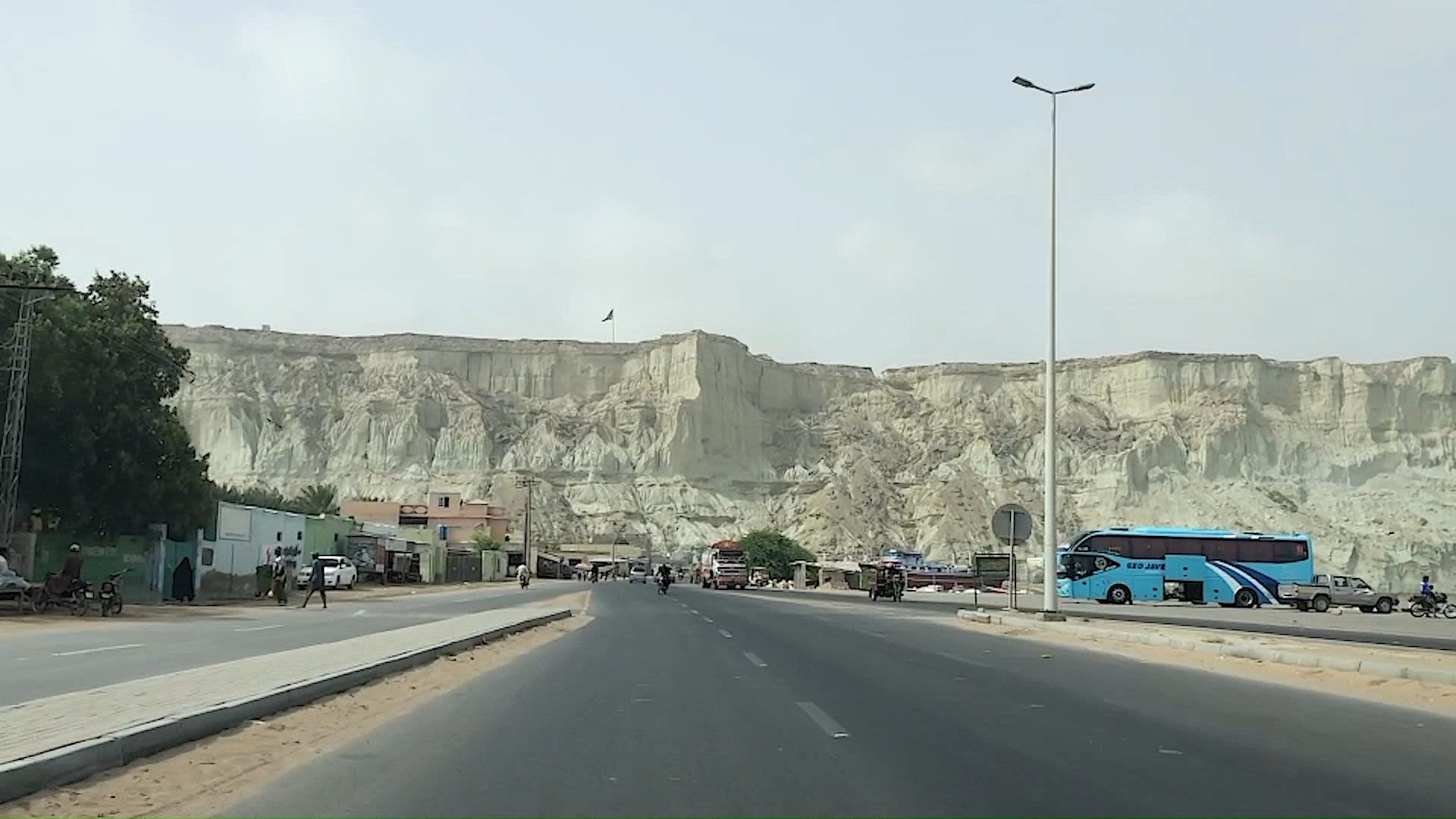
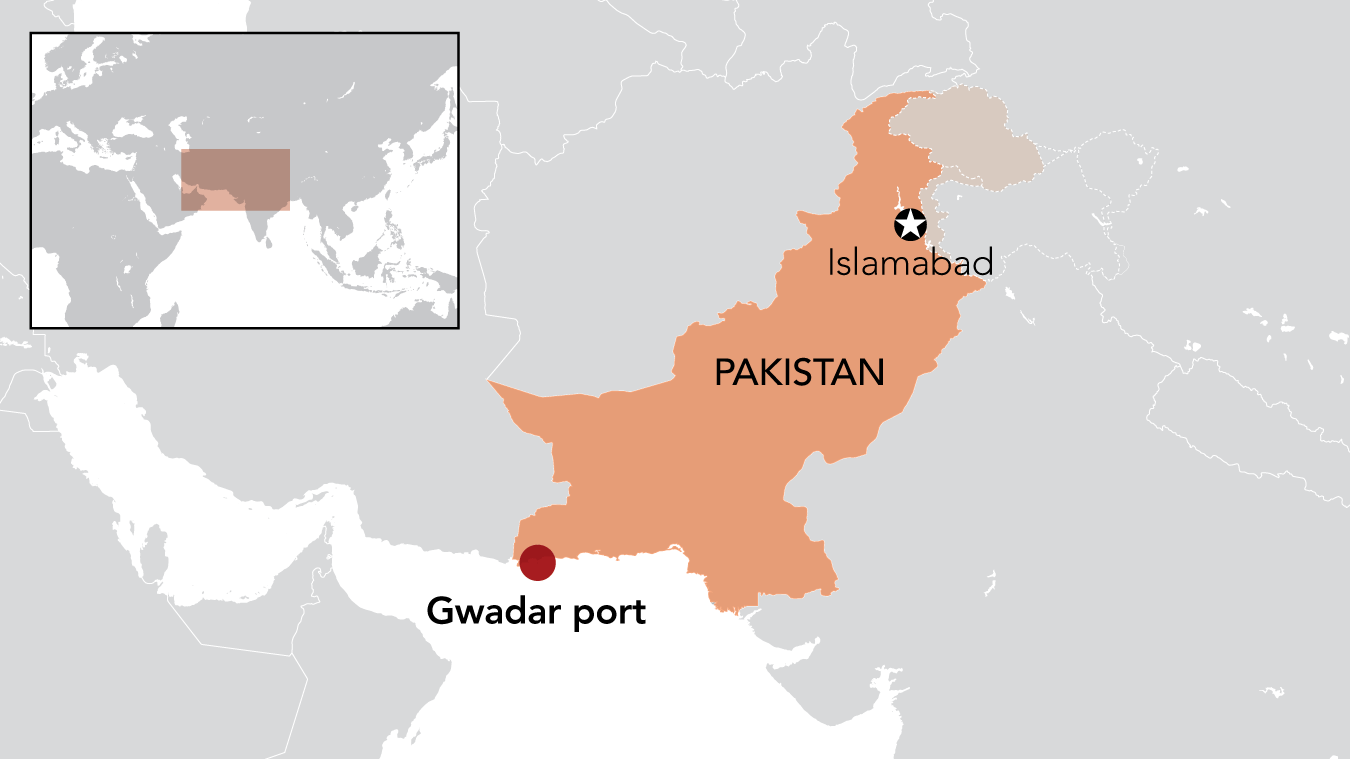
The drive to Pakistan’s port of Gwadar takes seven and a half hours from Karachi via the Makran coastal highway. Much of the 600-km route is deserted, with no restaurants, restrooms or even fuel stations. On a recent journey, around 200 vehicles in total could be counted during the entire drive.
Arriving in the city on Pakistan’s Indian Ocean coast, Chinese and Pakistani flags are ubiquitous, and Chinese-financed construction projects loom, but the city is spookily devoid of economic activity. Near the seafront, broad avenues are curiously empty of vehicles. Inside the city center, the roads are narrow, congested and covered with foul smelling drain water, with few multistory buildings aside from the Chinese-built port compound.
It is hard to visualize Gwadar as the launch pad of a new global paradigm, but that is what Beijing would have the world believe.
Nine years ago it was plucked out of obscurity — a backwater in Pakistan’s restive Balochistan region — and presented as China’s commercial window onto the Indian Ocean, a hub for regional integration under the Belt and Road Initiative, which was to harness the juggernaut of the Chinese economy to the goal of Asian economic development.
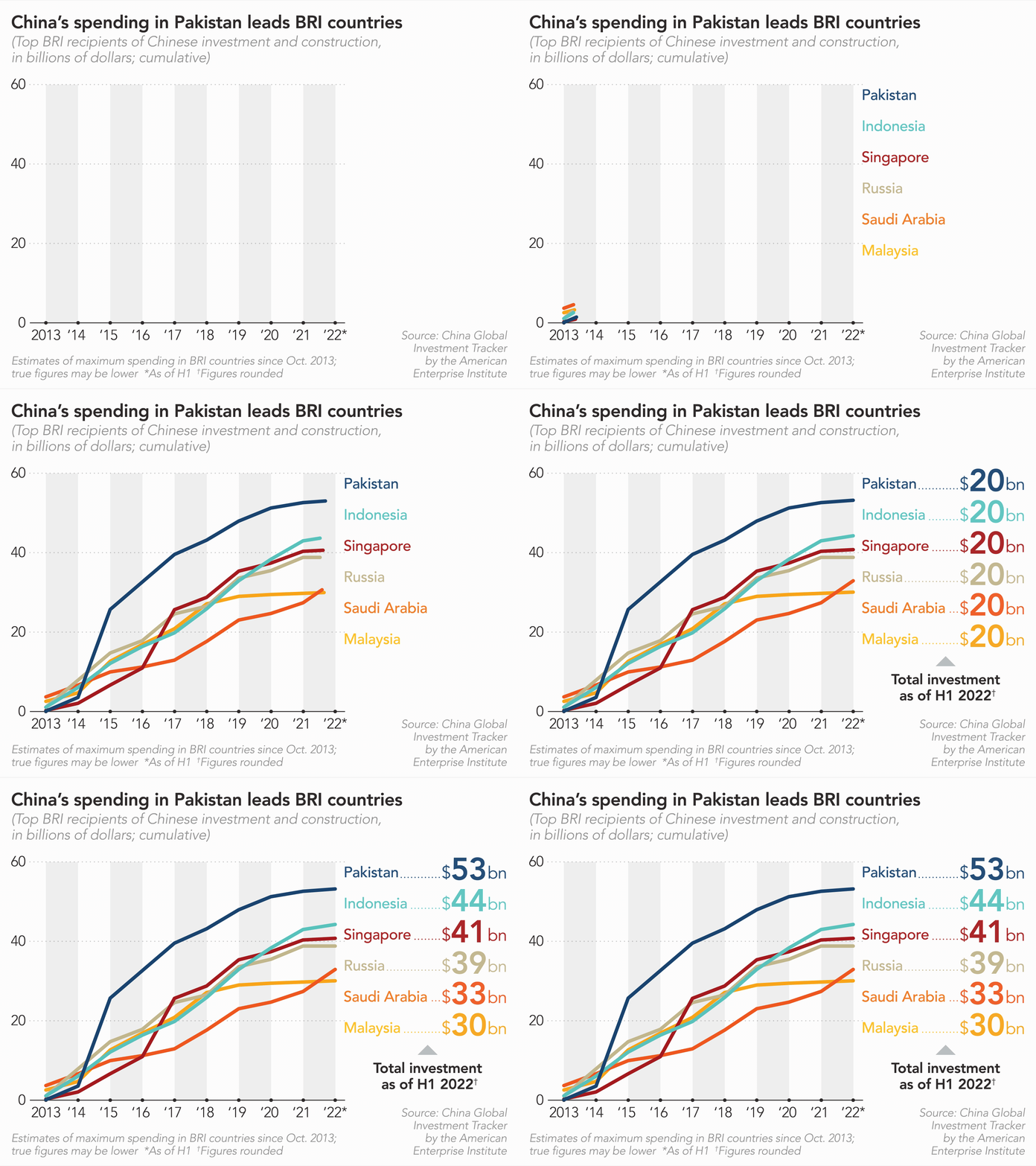
The BRI is an audacious program of lending, aid and infrastructure contracts totaling over $880 billion, according to the American Enterprise Institute.
The initiative, which includes pledges to 149 countries, aims to promote Chinese-led regional integration — and sow economic dependence on Beijing.
First announced in a speech by Chinese President Xi Jinping in 2013 as the “Silk Road,” the BRI was fleshed out in April 2015 with the announcement of the China-Pakistan Economic Corridor (CPEC), stretching from Gwadar to the Chinese city of Kashgar, in Xinjiang. The CPEC showcased the China-Pakistan “all-weather friendship” with $46 billion in pledged funds that has since grown to $50 billion. It was to be the backbone of the now renamed Belt and Road Initiative.
The Earth is approximately 1.1℃ warmer than it was at the start of the industrial revolution. That warming has not been uniform, with some regions warming at a far greater pace. One such region is the Arctic.
A new study shows that the Arctic has warmed nearly four times faster than the rest of the world over the past 43 years. This means the Arctic is on average around 3℃ warmer than it was in 1980.
This is alarming, because the Arctic contains sensitive and delicately balanced climate components that, if pushed too hard, will respond with global consequences.
Why is the Arctic warming so much faster?
A large part of the explanation relates to sea ice. This is a thin layer (typically one metre to five metres thick) of sea water that freezes in winter and partially melts in the summer.
The sea ice is covered in a bright layer of snow which reflects around 85% of incoming solar radiation back out to space. The opposite occurs in the open ocean. As the darkest natural surface on the planet, the ocean absorbs 90% of solar radiation.
When covered with sea ice, the Arctic Ocean acts like a large reflective blanket, reducing the absorption of solar radiation. As the sea ice melts, absorption rates increase, resulting in a positive feedback loop where the rapid pace of ocean warming further amplifies sea ice melt, contributing to even faster ocean warming.
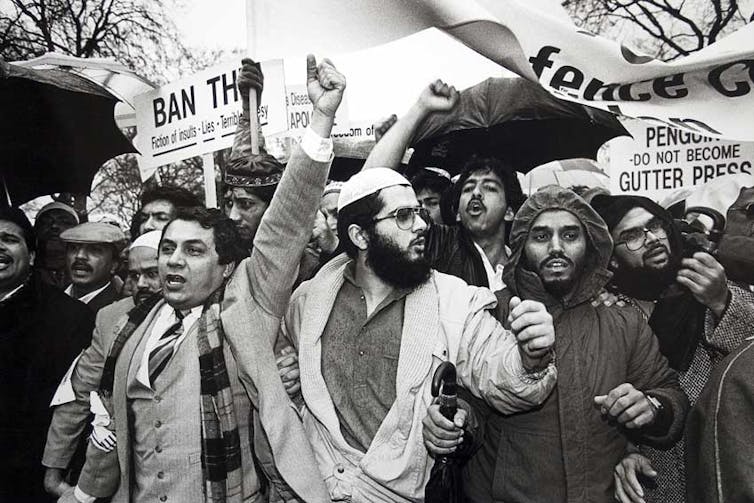
Author Salman Rushdie is in the hospital with serious injuries after being stabbed by a man at an arts festival in New York State on Aug. 12, 2022. The following article was published on the 30th anniversary of the release of The Satanic Verses.
One of the most controversial books in recent literary history, Salman Rushdie’s“The Satanic Verses,” was published three decades ago this month and almost immediately set off angry demonstrations all over the world, some of them violent.
A year later, in 1989, Iran’s supreme leader, the Ayatollah Khomeini, issued a fatwa, or religious ruling, ordering Muslims to kill the author. Born in India to a Muslim family, but by then a British citizen living in the U.K., Rushdie was forced to go into protective hiding for the greater part of a decade.
Our mission is to share knowledge and inform decisions.
About us
The controversy
The book, “Satanic Verses,” goes to the heart of Muslim religious beliefs when Rushdie, in dream sequences, challenges and sometimes seems to mock some of its most sensitive tenets.
Muslims believe that the Prophet Muhammed was visited by the angel Gibreel – Gabriel in English – who, over a 22 year period, recited God’s words to him. In turn, Muhammed repeated the words to his followers. These words were eventually written down and became the verses and chapters of the Quran.
Climate change can exacerbate a full 58% of the infectious diseases that humans come in contact with worldwide, from common waterborne viruses to deadly diseases like plague, our new research shows
With climate change influencing more than 1,000 transmission pathways like those and climate hazards increasingly globally, we concluded that expecting societies to successfully adapt to all of them isn’t a realistic option. The world will need to reduce the greenhouse gas emissions that are driving climate change to reduce these risks.
A doctor checks the eyes of a 53-year-old woman in Vietnam after she received corneas from a brain-dead man at a hospital in HCMC. Photo by VnExpress/Thu AnhThe number of people registered to donate organs after brainstem death has kept increasing over the years to almost 50,000.
When the Vietnam National Coordinating Center for Human Organ Transplantation was established in 2014, it received just 200 registrations, most including center officials and staff while the rest comprised medical workers.
Illicit industry traffics thousands of victims from China through Southeast Asia
“The videos provide a window into the dark world run by transnational criminal networks able to smuggle people from China, through Vietnam and into Cambodia and Myanmar”
PHNOM PENH — The first punch lands on the left side of the young man’s face, the second on the right.
Several more follow. Knees strike his stomach. He cannot defend himself, his hands are cuffed. His attacker, face outside the frame, has his fist wrapped in cloth.
He drags his victim by the lapels into the middle of the frame, faces him to the camera and tells him to speak.
“Dad, I’m in Cambodia, I’m not inside of China,” says the young man, through tears, his voice breaking and blood streaming from his nose. “I beg you, please send money.”
The ransom video, which was sent to the victim’s parents, was one of several shown to Nikkei Asia by Li*, a person who helps rescue human trafficking victims in Cambodia.
This ransom video supplied to Nikkei shows a handcuffed man being beaten with a stick while other victims watch in horror.
Another video shows a shirtless man cuffed on the ground being beaten with a stick while two more captives, handcuffed to a nearby window grill, watch on in terror. In a third, a grounded man, a foot on his neck, writhes in pain as he is electrocuted with a Taser.
The videos provide a window into the dark world run by transnational criminal networks able to smuggle people from China, through Vietnam and into Cambodia and Myanmar.





 This ransom video supplied to Nikkei shows a handcuffed man being beaten with a stick while other victims watch in horror.
  CVD
CVD