I'm from Hanoi, Viet Nam.
I'm an author of Dot Chuoi Non (dotchuoinon.com/author/hangbelu/), a blog on Positive thinking, founded by Dr. Tran Dinh Hoanh, an attorney in Washington DC.
I'm a co-founder of Conversations on Vietnam Development - cvdvn.net, a virtual think tank. I am a co-founder of two companies in Viet Nam working on children education services. I advise companies on STEAM education, English language education for children and students in Vietnam.
I'm studying the Buddha's teaching and the teaching of Jesus. I practice mindful living including meditation.
I hold a PhD on Sustainable Energy Systems from University of Lisbon and Aalto University.
I graduated from Hanoi University of Technology on Environmental Engineering. I obtained a Master degree of the same major from Stanford University and Nanyang Technological University.
My English-language blog at: hangbelu.wordpress/.
I play table tennis as a hobby.
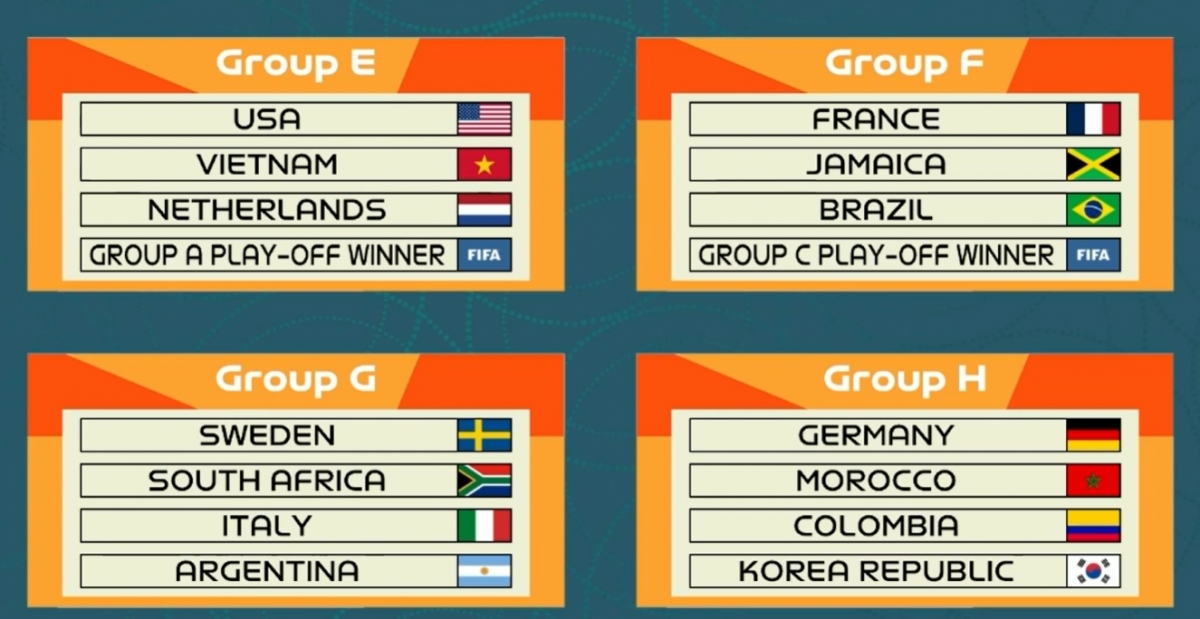
VOV.VN – Vietnam have been drawn in Group E alongside defending champions the United States, the Netherlands, and a playoff winner at the 2023 FIFA Women’s World Cup, as announced at the draw held in New Zealand on October 22.
This represents a huge challenge for Vietnam as the USA are four-time champions and they are currently placed at the top of the FIFA Women’s World Rankings.
Elsewhere, the Netherlands were the runners-up of the FIFA Women’s World Cup in 2019 and are now in eighth position in the global rankings.
The final Group E team could be either Thailand, Cameroon, or Portugal, and the name will be announced after a play-off match in February, 2023.
Group E matches will take place in New Zealand from July 22 to August 1 next year.
Vietnam are scheduled to take on the USA on July 22, the play-off winner on July 27 and the Netherlands on August 1.
The 2023 FIFA Women’s World Cup is the ninth edition of the global tournament, the quadrennial world championship for women’s national football teams organised by FIFA.
The 2023 tournament will be jointly hosted by Australia and New Zealand from July 20 to August 20, 2023. This is the first time that the FIFA Women’s World Cup will have two host nations and 32 teams to vie for the trophy instead of 24 as previously.
This is the first time that Vietnam have progressed to the finals of the international tournament.
(PLO)- Xây dựng Luật đạo đức là để giáo dục mọi người nhận thức được danh dự là điều thiêng liêng nhất trong đời người, nhằm góp phần tốt hơn trong phòng ngừa vi phạm, tội phạm.
Báo cáo của Chính phủ, các cơ quan tư pháp gửi Quốc hội (QH) cho thấy có tình trạng móc nối, tiếp tay của cán bộ, công chức, viên chức nhà nước đối với doanh nghiệp để trục lợi.
Tội phạm tham nhũng, chức vụ tăng 37,6%
Mới đây, thừa ủy quyền của Thủ tướng, Tổng thanh tra Chính phủ Đoàn Hồng Phong đã ký báo cáo gửi QH về công tác phòng chống tham nhũng năm 2022. Đáng chú ý, báo cáo của Chính phủ cho hay hoạt động phòng chống tham nhũng, tiêu cực (PCTNTC) đã từng bước được mở rộng ra khu vực ngoài Nhà nước.
Theo Chính phủ, Ủy ban Chứng khoán Nhà nước đã triển khai 25 đoàn thanh kiểm tra định kỳ và 40 đoàn kiểm tra đột xuất về hoạt động chào bán, mua lại cổ phiếu, bán cổ phiếu quỹ, chào mua công khai, việc thực hiện nghĩa vụ của công ty đại chúng, tổ chức niêm yết… cũng như việc tuân thủ quy định pháp luật chứng khoán đối với các công ty đại chúng, công ty chứng khoán, công ty quản lý quỹ.
Cơ quan CSĐT Bộ Công an đã khởi tố vụ án thao túng thị trường chứng khoán xảy ra tại Tập đoàn FLC, Công ty cổ phần Chứng khoán BOS và các công ty có liên quan; khởi tố vụ án lừa đảo chiếm đoạt tài sản xảy ra tại Tập đoàn Tân Hoàng Minh và các tổ chức, đơn vị có liên quan…
Dù vậy, Chính phủ nhận định: “Tình trạng móc nối, tiếp tay của cán bộ, công chức, viên chức nhà nước đối với doanh nghiệp để trục lợi, chiếm đoạt tài sản của Nhà nước còn diễn ra ở một số lĩnh vực”.
Arbitral hubs and institutions in Asia have reached new heights in terms of their growth and popularity, achieving stellar global rankings and an ever-growing number of case filings. Arbitration’s popularity in Asia has been augmented by the generally pro-arbitration stance taken by the countries in the region. This chapter examines recent developments in Singapore and other parts of Asia, tracking the continued growth and overall maturation of Asia’s arbitration scene.
Discussion points
The growing profile of the arbitral seats and institutions in Asia
Steps taken by arbitral institutions to enhance and update their rules to compete with other international arbitral institutions
Pro-arbitration stance of jurisdictions across the region, including support for the arbitral process and the enforcement of arbitral awards
Referenced in this article
Bloomberry Resorts and Hotels Inc and another v Global Gaming Philippines LLC and another ([2021] SGCA 9)
CAJ and another v CAI and another appeal ([2021] SGCA 102)
CKG v CKH ([2021] SGHC(I) 5)
CNX v CNY ([2022] SGHC 53)
National Oilwell Varco Norway AS (formerly known as Hydralift AS) v Keppel FELS Ltd (formerly known as Far East Levingston Shipbuilding Ltd) ([2022] SGCA 24)
Phoenixfin Pte Ltd and others v Convexity Ltd ([2022] SGCA 17)
The ‘Navios Koyo’ ([2021] SGCA 99)
Westbridge Ventures II Investment Holdings v Anupam Mittal ([2021] SGHC 244)
Arbitral hubs and institutions in Asia have reached new heights in terms of their growth and popularity. In the 2021 Queen Mary University of London and White & Case International Arbitration Survey (the QMUL Survey),[1] Singapore and Hong Kong ranked first and third respectively as the most popular arbitral seats in the world. This marks a first for Singapore, and it shares its position with London – a global powerhouse in the field. Singapore was also named the most preferred seat in the Asia-Pacific, and, along with Hong Kong, ranked in the top-five most preferred seats in all regions.
TP HCM chỉ có thể cầm cự không quá một ngày nếu mất nước, bởi đô thị 10 triệu dân chưa có đủ nguồn dự phòng trong tình huống khẩn nguy.
Năm 1975, dân số TP HCM khoảng 3 triệu người. 47 năm sau, số người sinh sống tại thành phố là gần 10 triệu, chưa tính khách vãng lai. Để đáp ứng nhu cầu người dân và phát triển kinh tế của đô thị lớn nhất nước, hơn 4 thập niên qua, ngành cấp nước thành phố liên tục tăng công suất, từ 450.000 m3 lên 2,4 triệu m3 – hơn gấp 5 lần.
Thống kê thời gian gần đây cứ 5 năm, thành phố lại tăng một triệu người. Nếu tính mỗi người cần trung bình 200 lít nước một ngày, đô thị lớn nhất Việt Nam sẽ tiêu thụ thêm 365 triệu m3 nước mỗi năm – bằng gần 1/4 dung tích hồ Dầu Tiếng (1,5 tỷ m3). Đó là chưa kể nhu cầu về nước cho các hoạt động sản xuất, dịch vụ còn cao hơn nhiều so với nước sinh hoạt.
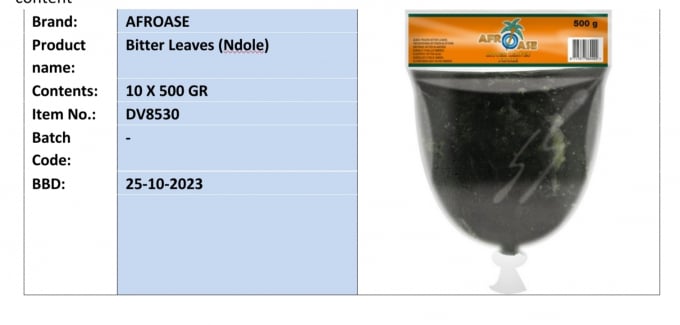
(VAN) The EU has warned that bitter leaves and some other agricultural products exported from Vietnam have exceeded the maximum residue level of many active ingredients and banned substances.
According to the Vietnam Sanitary and Phytosanitary Notification Authorities and Enquiry Point (SPS Vietnam Office), RASFF – Rapid Alert System for Food and Feed of the European Union (EU) has just sent a warning notice, stating that the product of frozen ground bitter leaves of An Van Co., Ltd. Thinh (Address: 60 Ly Thuong Kiet, Ward 1, Bao Loc City, Lam Dong Province) was found to have exceeded the maximum residue level (MRL) of many active ingredients and banned substances.
The product of frozen ground bitter leaves receives warning from the EU.
In which, some active ingredients have high residue levels such as: Thiamethoxam (54 mg/kg); Tebuconazole (26 mg/kg); Propiconazole (34 mg/kg); Diniconazole (86 mg/kg).
The country issuing the notification is the Netherlands, which has notified the consignee. Finland has initiated the recall of the product.
In addition to frozen ground bitter leaves, Vietnam has also received warning on tea exported to Hong Kong. This product contains three banned substances and pesticide residues exceeding EU regulations, including: Chlorfluazuron (0.11 mg/kg); Imidacloprid (0.15 mg/kg) and Chlorpyrifos (0.043 mg/kg).
Being the focal point for transparent information about SPS measures and regulations to WTO members, the Vietnam SPS Office has notified this issue to the Plant Protection Department and related units.
[1/3] The logo of Swiss bank Credit Suisse is seen at its headquarters in Zurich, Switzerland October 4, 2022. REUTERS/Arnd Wiegmann
This content was produced in Russia where the law restricts coverage of Russian military operations in Ukraine
MOSCOW, Oct 26 (Reuters) – Russia on Wednesday banned dealings in the shares or share capital of 45 banks or banking units, all either owned by parties in countries that Russia terms “unfriendly” or owned through foreign capital.
Western countries and allies, including Japan, have piled financial restrictions on Russia since it sent troops into Ukraine in late February. Moscow retaliated with obstacles for Western businesses and their allies leaving Russia, and in some cases seized their assets.
The list followed a decree issued on Aug. 5 by President Vladimir Putin banning dealings in stakes in the financial and energy sectors owned by parties in “unfriendly” countries unless specific permission was given. read more read more
Citi, the largest Wall Street bank to have a presence in Russia with an exposure of $8 billion, plans to wind down nearly all of the institutional banking services as it is unable to sell the business amid the recent sanctions-related laws. read more read more read more
Machinery and mechanical equipment top category of products shipped from region, whose month-on-month decline aligns with weakening in Chinese exportsUS customs chief insists ‘seeing good examples of compliance so far’ with recently implemented Uygur Forced Labour Prevention Act
Published: 2:00am, 25 Oct, 2022
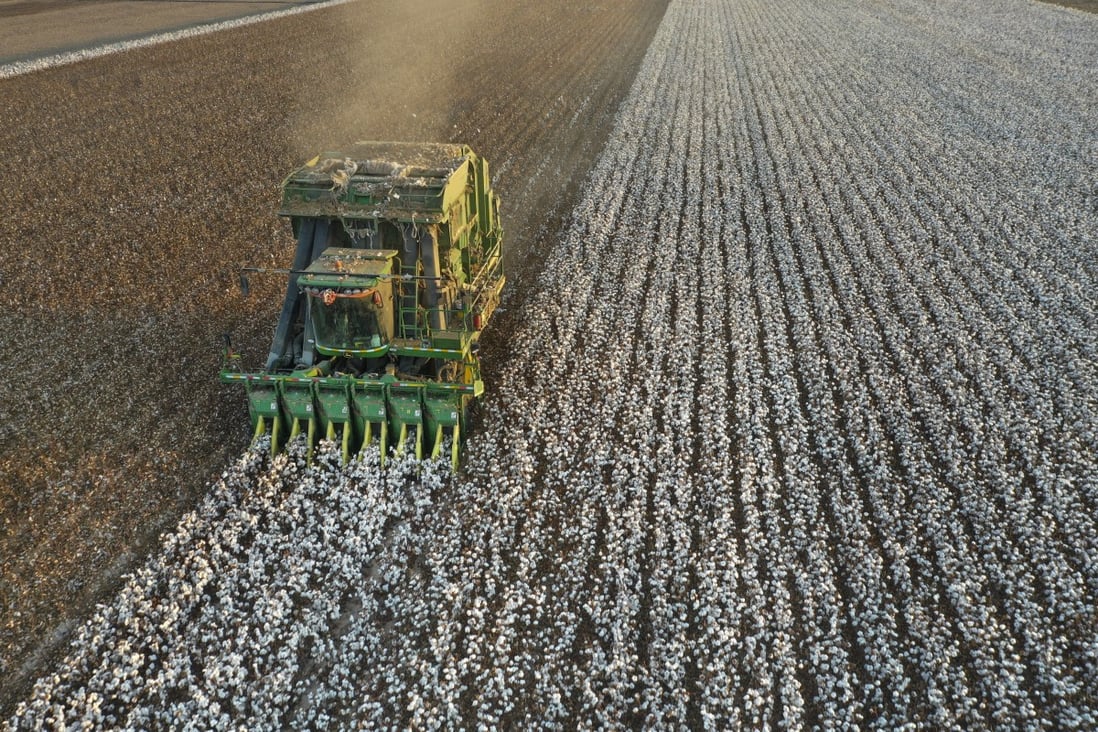
Xinjiang’s exports to the United States dropped in September after soaring for two consecutive months, but were still nearly three times as high as the same month last year, according to the latest Chinese customs data – despite a Washington law that seeks to ban goods from the far-west region of China due to forced labour allegations.
The shipments from Xinjiang to the US have appeared to continue even as officials from the US customs agency insist that they have been effectively enforcing the Uygur Forced Labour Prevention Act, which kicked in on June 21.
Companies from the Xinjiang Uygur autonomous region in September exported US$21.05 million worth of goods to the US, slashed by more than half compared with the figure for August, but more than double the tally in June, trade data showed.
The month-on-month decline of Xinjiang exports to the US was in line with the overall weakening of Chinese exports.
For decades, people across South-east Asia have been hunting wild animals for food. But commercial pressures and cheaper snaring methods are causing the region’s forests to be emptied faster than they can be replenished — with repercussions for human and forest health.
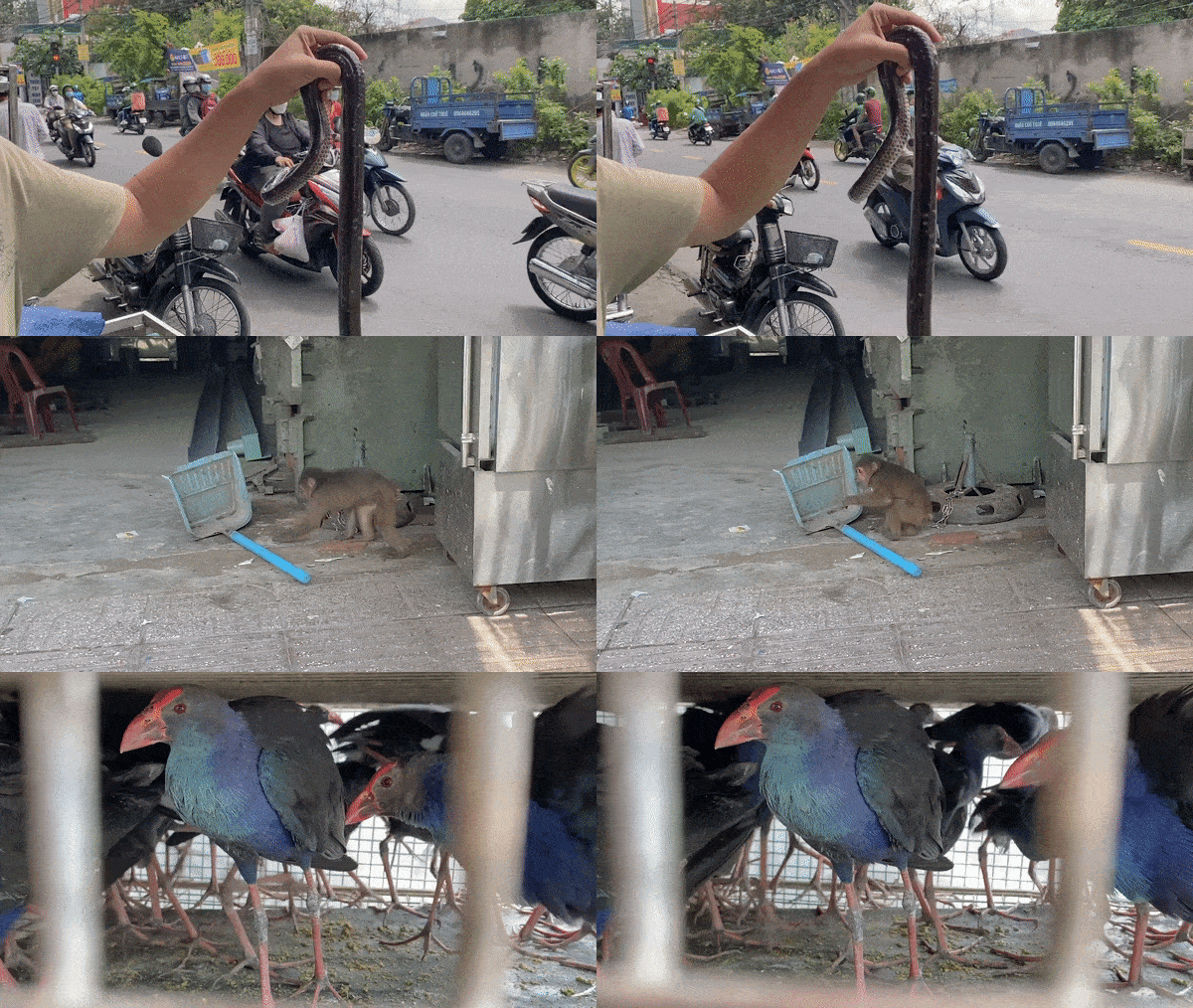
They were taken to the wildlife rescue centre not in cages but in fine mesh bags, as though they were already fresh meat being sold by the gram.
But the four ferret badgers were still alive and kicking.
The mammals had been literally rescued from the jaws of death.
VIETNAM AND CAMBODIA – Local policemen had seized them from a restaurant and taken them to Save Vietnam’s Wildlife’s facility located within Cuc Phuong National Park, about a two-hour drive from Hanoi.
“The restaurant bought them from people who caught them from the forest,” said Mr Tran Van Truong, who as captive coordinator is in charge of the facility’s operations. “They are a bit stressed now, but they seem okay otherwise. We can probably release them back into the wild after a few days.”
Not all of man’s wild quarry are as lucky.
Demand for bushmeat and exotic pets from city dwellers is contributing to the emptying of South-east Asia’s forests. ST PHOTO: MARK CHEONG
Trapping wild animals for bushmeat may be illegal in Vietnam, but the practice is still widespread in the country. In other parts of South-east Asia too, the Covid-19 pandemic and its likely origins in the wildlife trade has had nary an impact on the region’s appetite for wild meat.
Wild animals are still being taken from the forests in large numbers, to be eaten or kept as pets, and we discovered how voracious appetites for them were still during visits to Vietnam and Cambodia in September.
Wild animals sold at a market in Ho Chi Minh City. VIDEO: ANTON L. DELGADO
At a cost of $37 billion, Indonesia could retire its coal power plants as early as 2040 and reap economic, social and environmental benefits from the shift, a new analysis by nonprofit TransitionZero shows.
Replacing coal with renewables will create a windfall of new jobs, which would outweigh coal closure job losses by six to one, according to the analysis.
The analysis has also identified three coal plants in Indonesia that are the most suitable for early retirement, as they have lower abatement costs and are the most polluting.
JAKARTA — Indonesia’s plan to retire its coal-fired power plants and replace them with renewable energy by 2050 is not only feasible, but, when environmental costs are considered, will be less costly than relying on coal to power the Indonesian economy, according to a new analysis.
Indonesia is often dubbed as the last bastion for coal, as its power sector remains heavily reliant on the fossil fuel — about 70% of its generated electricity came from coal in 2021. Indonesia is also the world’s biggest thermal coal exporter.
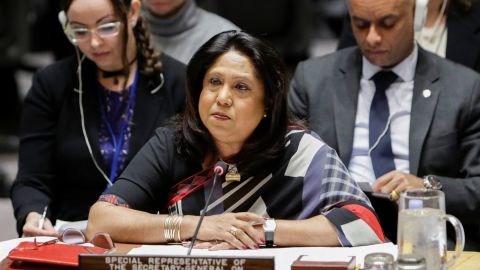
Pramila Patten, Special Representative of the UN Secretary-General on Sexual Violence in Conflict, at a Security Council meeting in New York in 2018.Xinhua/ShutterstockCNN —
Russia is using rape and sexual violence as part of its “military strategy” in Ukraine, a UN envoy said this week.
The claim follows data released by a panel of UN experts recently that verified “more than a hundred cases” of rape or sexual assault incidents reported in Ukraine since February.
“When you hear women testify about Russian soldiers equipped with Viagra, it’s clearly a military strategy,” Pramila Patten, UN Special Representative on Sexual Violence in Conflict, said in an interview with AFP on Thursday.
“the Author BORIS BONDAREV worked as a diplomat in the Russian Ministry of Foreign Affairs from 2002 to 2022, most recently as a counsellor at the Russian Mission to the United Nations Office in Geneva. He resigned in May to protest the invasion of Ukraine.”
For three years, my workdays began the same way. At 7:30 a.m., I woke up, checked the news, and drove to work at the Russian mission to the United Nations Office in Geneva. The routine was easy and predictable, two of the hallmarks of life as a Russian diplomat.читать статью по-русски (Read in Russian)
February 24 was different. When I checked my phone, I saw startling and mortifying news: the Russian air force was bombing Ukraine. Kharkiv, Kyiv, and Odessa were under attack. Russian troops were surging out of Crimea and toward the southern city of Kherson. Russian missiles had reduced buildings to rubble and sent residents fleeing. I watched videos of the blasts, complete with air-raid sirens, and saw people run around in panic.
As someone born in the Soviet Union, I found the attack almost unimaginable, even though I had heard Western news reports that an invasion might be imminent. Ukrainians were supposed to be our close friends, and we had much in common, including a history of fighting Germany as part of the same country. I thought about the lyrics of a famous patriotic song from World War II, one that many residents of the former Soviet Union know well: “On June 22, exactly at 4:00 a.m., Kyiv was bombed, and we were told that the war had started.” Russian President Vladimir Putin described the invasion of Ukraine as a “special military operation” intended to “de-Nazify” Russia’s neighbor. But in Ukraine, it was Russia that had taken the Nazis’ place
“That is the beginning of the end,” I told my wife. We decided I had to quit.
Resigning meant throwing away a twenty-year career as a Russian diplomat and, with it, many of my friendships. But the decision was a long time coming. When I joined the ministry in 2002, it was during a period of relative openness, when we diplomats could work cordially with our counterparts from other countries. Still, it was apparent from my earliest days that Russia’s Ministry of Foreign Affairs was deeply flawed. Even then, it discouraged critical thinking, and over the course of my tenure, it became increasingly belligerent. I stayed on anyway, managing the cognitive dissonance by hoping that I could use whatever power I had to moderate my country’s international behavior. Tiếp tục đọc “The Sources of Russian Misconduct – A Diplomat Defects From the Kremlin”→
As countries prepare to gather at COP27 in Sharm el-Sheik, Egypt to advance the Paris Agreement on climate change, attention turns once again to its building blocks: countries’ 2030 climate commitments, known as nationally determined contributions (NDCs).
While the Paris Agreement established three global goals — limit global temperature rise to well below 2 degrees C (3.6 degrees F) and ideally 1.5 degrees C (2.7 degrees F), promote adaptation and resilience, and align financial flows with low-emissions, climate-resilient development — NDCs are the foundation. In its NDC, each of the Paris Agreement’s 194 Parties must lay out its aims to reduce emissions. Many also include plans for adapting to climate impacts and the financial requirements needed for implementation.
Countries must strengthen their NDCs on a regular, five-year cycle. Most submitted their initial commitments in 2015 and updated them by 2021. A new, stronger round of NDCs is due in 2025.
WRI’s Climate Watch platform tracks more than 200 indicators on all NDCs. The new State of NDCs report analyzed this data to draw out key trends and evaluate where the NDCs now stand. The key takeaway? Countries are making incremental progress on strengthening their NDCs, but what we really need to achieve the goals of the Paris Agreement is urgent transformational change.
Here’s what we know and what countries should keep in mind as they formulate new NDCs by 2025:
U.S. Attorney Breon Peace said at a news conference Oct. 18, 2022, that Lafarge and its Syrian subsidiary were responsible for providing significant funds to ISIS. (Timothy A. Clary/AFP/Getty Images)
NEW YORK — Global cement company Lafarge will pay the U.S. government nearly $780 million for conspiring with Islamic State militants to run a production plant in war-ravaged Syria during its civil war — a move that helped bolster the terrorist group’s meager finances, officials said Tuesday.
A top executive of Lafarge, which was acquired by Swiss-based Holcim in 2015, pleaded guilty in the U.S. District Court in Brooklyn to a count of conspiring to provide material support to foreign terrorist organizations, admitting that Lafarge knowingly engaged in a deal with Islamic State, also known as ISIS, and the al-Nusrah Front (ANF), a Syrian Islamist militia, in 2013 and 2014.
The guilty plea marked the first time a corporation was prosecuted under a U.S. statute that prohibits a person or entity from assisting foreign terrorist groups, officials said. The Justice Department has a broad ability to bring such cases in U.S. courts even if the conduct generally occurred abroad but also involves at least one wire transaction locally.
Justice Department officials said Tuesday that the two groups obtained at least $6 million in payments from Lafarge. The payoffs allowed Lafarge to operate the plant in the Northern region of Syria, near the Turkish border, and bought them protection from the militias.
The Islamic State also made more than $3 million directly through the sale of cement it obtained at the end of Lafarge’s operation there starting in late 2014.
In total, Lafarge agreed to forfeit $687 million and pay $91 million in criminal fines to the United States.
U.S. District Judge William F. Kuntz, who accepted Lafarge’s guilty plea, said the case “impacts global communities [and] the national security of the United States,” as well as victims of the terrorists.
Lafarge, which is based in France, had dealings with ISIS at a time when the group was responsible for capturing and killing journalists and aid workers in the devastated region.
Justice Department officials said the company paid for access to the plant and for protection from ISIS at a time when other corporations were fleeing Syria.
The Islamic State even issued stamped driving permits for Lafarge workers to get access to the plant.
“To the brothers at the checkpoints of Qarah Qawzak Bridge, may Allah keep you safe,” a translation of the permit read. “Kindly allow the employees of Lafarge Cement Company to pass through after completing the necessary work and after paying their dues to us.”
U.S. Attorney Breon Peace said at a news conference Tuesday that Lafarge and its Syrian subsidiary were responsible for providing significant funds to ISIS, which “otherwise operated on a shoestring budget.”
“This conduct by a Western corporation was appalling and has no precedent or justification,” Peace said.
Deputy Attorney General Lisa Monaco said greedy intentions by Lafarge fueled rampant violence.
“In its pursuit of profits, Lafarge and its top executives not only broke the law, they helped to finance a violent reign of terror that ISIS and [ANF]imposed on the people of Syria,” Monaco said.
In France, six former executives and Lafarge are facing pending criminal charges in connection with their relationships in Syria. Those six people were referred to in court papers in the New York case but were not named.
“We deeply regret that this conduct occurred and have worked with the U.S. Department of Justice to resolve this matter,” Lafarge said in a statement.
The conduct did not involve “Lafarge operations or employees in the United States and none of the executives who were involved in the conduct are with Lafarge or any affiliated entities today,” the statement also said.




 CVD
CVD 