I'm from Hanoi, Viet Nam.
I'm an author of Dot Chuoi Non (dotchuoinon.com/author/hangbelu/), a blog on Positive thinking, founded by Dr. Tran Dinh Hoanh, an attorney in Washington DC.
I'm a co-founder of Conversations on Vietnam Development - cvdvn.net, a virtual think tank. I am a co-founder of two companies in Viet Nam working on children education services. I advise companies on STEAM education, English language education for children and students in Vietnam.
I'm studying the Buddha's teaching and the teaching of Jesus. I practice mindful living including meditation.
I hold a PhD on Sustainable Energy Systems from University of Lisbon and Aalto University.
I graduated from Hanoi University of Technology on Environmental Engineering. I obtained a Master degree of the same major from Stanford University and Nanyang Technological University.
My English-language blog at: hangbelu.wordpress/.
I play table tennis as a hobby.
19-year-old Long is a deaf artist in Hanoi, navigating the world with autism and physical challenges. He found his voice and focus in art, and in creating detailed oil paintings that capture Hanoi’s Old Quarter architecture. Long’s devoted single mother raised him, always believing in his talent. For them, his art is more than expression—it is the means to support the family.
The documentary follows Long as he prepares for a solo exhibition. The pressure is high. Can he shed the easy label of “disabled artist” and achieve recognition based purely on his talent? This is an inspiring story of grit and determination, showing how Long’s passion for art does not let his impairments hold him back, but instead drives him to excel.
Youths make up some 80% of new cases there, and social conservatism may be contributing to the virus’ spread.
HIV cases have increased by 500% in the Philippines. This means the archipelago has the fastest rate of transmission of the virus in Asia Pacific. Some officials have called it a public health crisis. What’s more alarming, youth make up the bulk of transmission numbers. About 80% of the new cases are of those below the age of 35. If nothing is done, the country could have half a million HIV patients by 2030. Why is HIV spreading so quickly in the Philippines? How does social conservatism, stigma and the lack of awareness create the perfect environment for the virus to spread?
00:00 A surge of HIV cases in the Philippines 04:35 How HIV is transmitted 06:37 Lack of HIV awareness in the Philippines 09:47 Mandated sex education and resistance 13:52 Influence of religion in the Philippines 15:50 Contradictions in Filipino culture 17:33 Controversy around Comprehensive Sexuality Education (CSE) 20:10 Stigma around condoms 22:44 Finding out your partner gave you HIV 25:16 Filipino sex work industry and HIV risk 28:36 How HIV affects the body and high youth deaths 30:38 Stigma around HIV testing 32:08 Treating and managing HIV 35:05 US funding cuts impact HIV control efforts 37:15 What is PrEP and PEP 38:52 Solutions for the Philippines’ HIV crisis
YANGON, Myanmar – More than 12 million people in Myanmar will face acute hunger in 2026, with a projected one million people hitting emergency levels that will require lifesaving assistance, the United Nations World Food Programme (WFP) warned today. Intensifying conflict and a sharp jump in displacement now risks pushing an underfunded hunger crisis to breaking point.
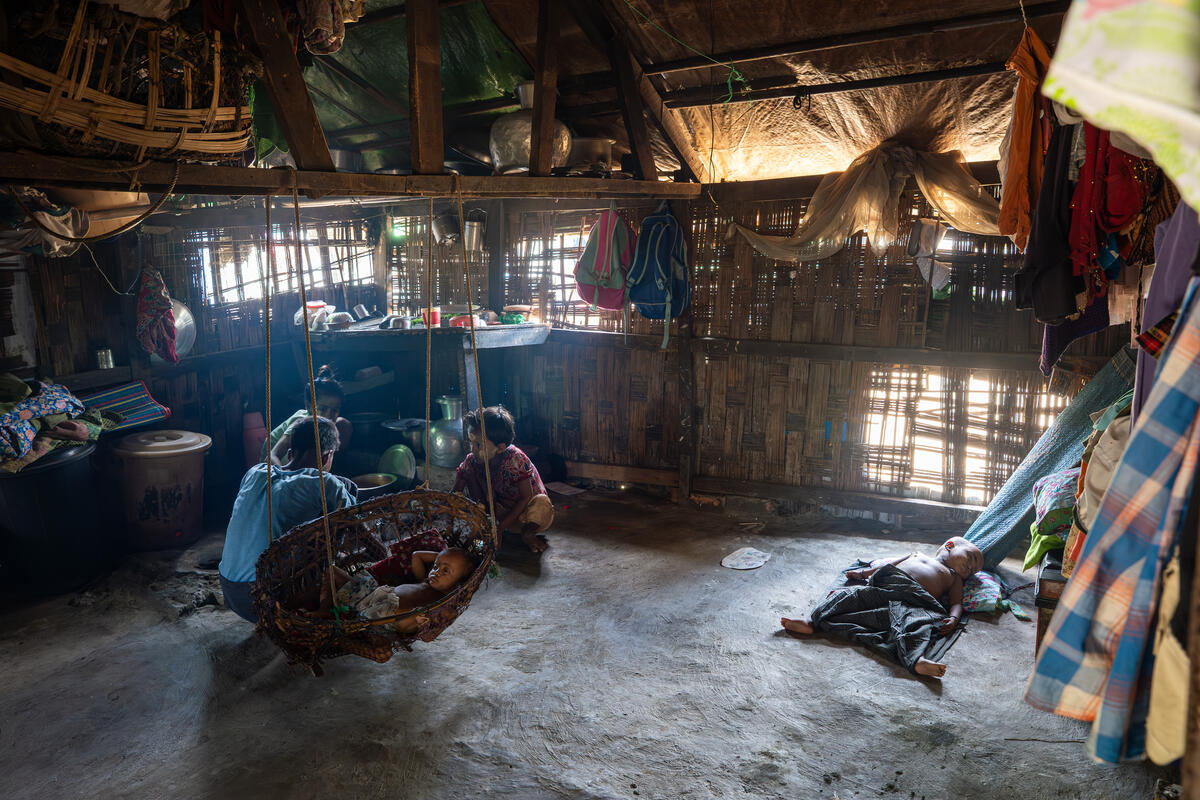
The people of Myanmar already face dire levels of hunger; a place where mothers cannot afford enough food to sustain their health, and malnutrition has become a new reality for thousands of children. More than 400,000 young children and mothers with acute malnutrition are surviving on nutrient-deprived diets of plain rice or watery porridge.
“Conflict and deprivation are converging to strip away people’s basic means of survival, yet the world isn’t paying attention,” said Michael Dunford, WFP Country Director in Myanmar. “This is one of the worst hunger crises on the planet, and one of the least funded. We cannot allow this level of suffering to remain invisible. The scale of need is far outpacing our ability to respond.”
Internal displacement is expected to rise from 3.6 million to 4 million next year, according to the latest United Nations Office for the Coordination of Humanitarian Affairs (OCHA) Myanmar Humanitarian Needs and Response Plan. This surge threatens to push millions of households who are barely coping into extreme deprivation.
“We’re on the ground. We’re delivering food and nutrition every day under extremely challenging conditions. But we are massively underfunded,” said Dunford. “The international community must act. Sustained funding and diplomatic support are needed to stop this crisis worsening next year.”
In 2026, WFP aims to assist 1.3 million people — a fraction of the more than 12 million in need — with humanitarian support requiring a budget of US$125 million.
The United Nations World Food Programme is the world’s largest humanitarian organization saving lives in emergencies and using food assistance to build a pathway to peace, stability and prosperity for people recovering from conflict, disasters and the impact of climate change.
Satellite analysis has identified 517 suspected riverbank mines in Laos, many likely illegal, with clusters along key Mekong tributaries, raising fears of widespread, unmonitored contamination.
Officials in Attapeu province confirmed illegal mining remains pervasive despite crackdowns, with most operations missing from official records and many linked to Vietnamese or Chinese supply chains.
The mining surge, including gold and rare earth extraction, poses major risks to ecosystems and communities in the Mekong Basin, where water testing capacity is weak and signs of declining fish populations and polluted rivers are emerging.
Researchers say Mekong countries must coordinate regionally and engage China, the main importer of the region’s mining output, while strengthening enforcement and environmental oversight to address a rapidly expanding, largely unregulated mining sector.
While Buddhism has branched into a number of sects over the centuries, its rich tradition of peace activism continues
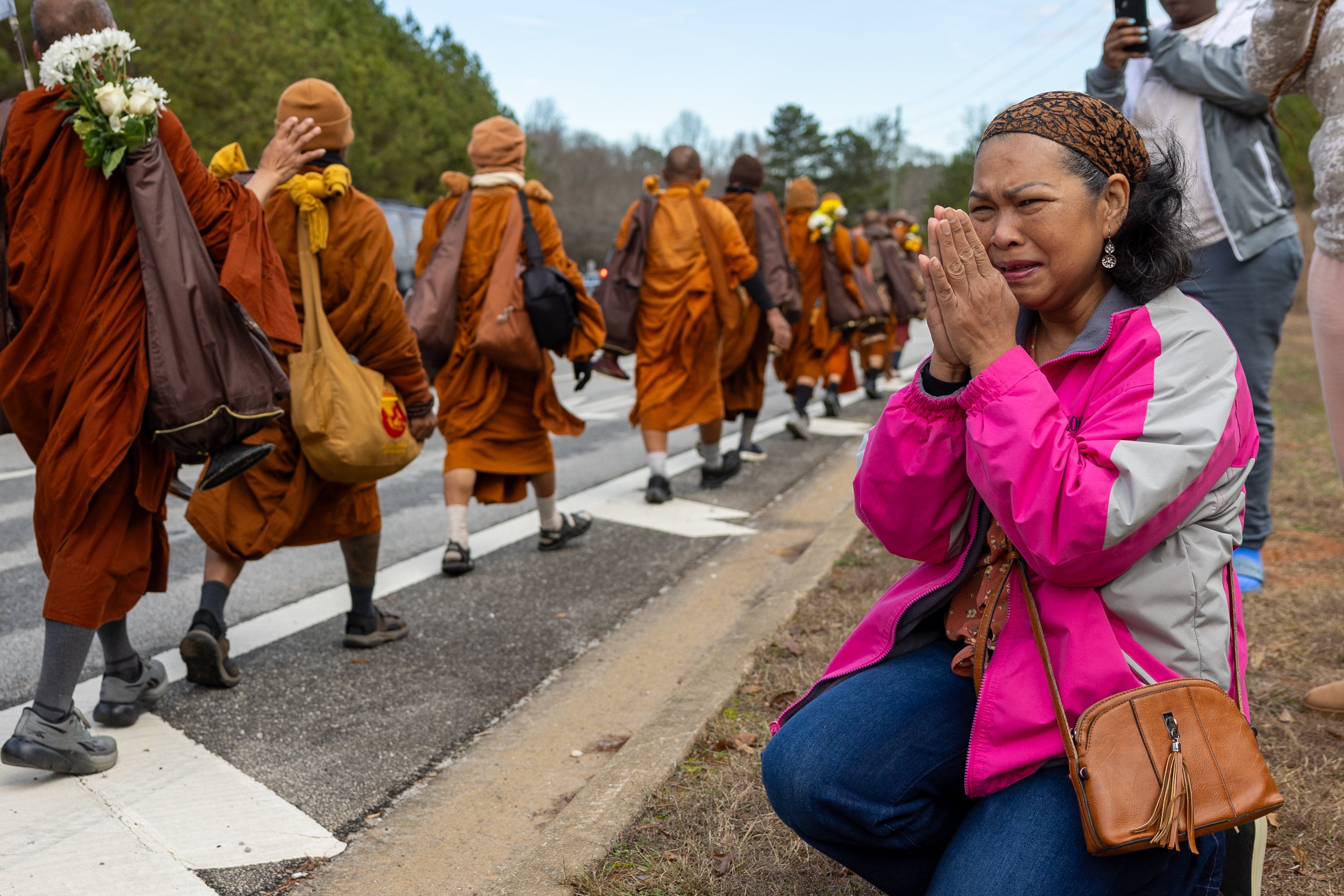
A woman reacts as Buddhist monks on a ‘Walk for Peace’ trek on Veterans Parkway in Fayetteville, Ga., on Monday, Dec. 29, 2025 (Arvin Temkar/Atlanta Journal-Constitution via AP)
A group of Buddhist monks hasn’t let a car wreck stop them from walking across much of the U.S. to promote peace.
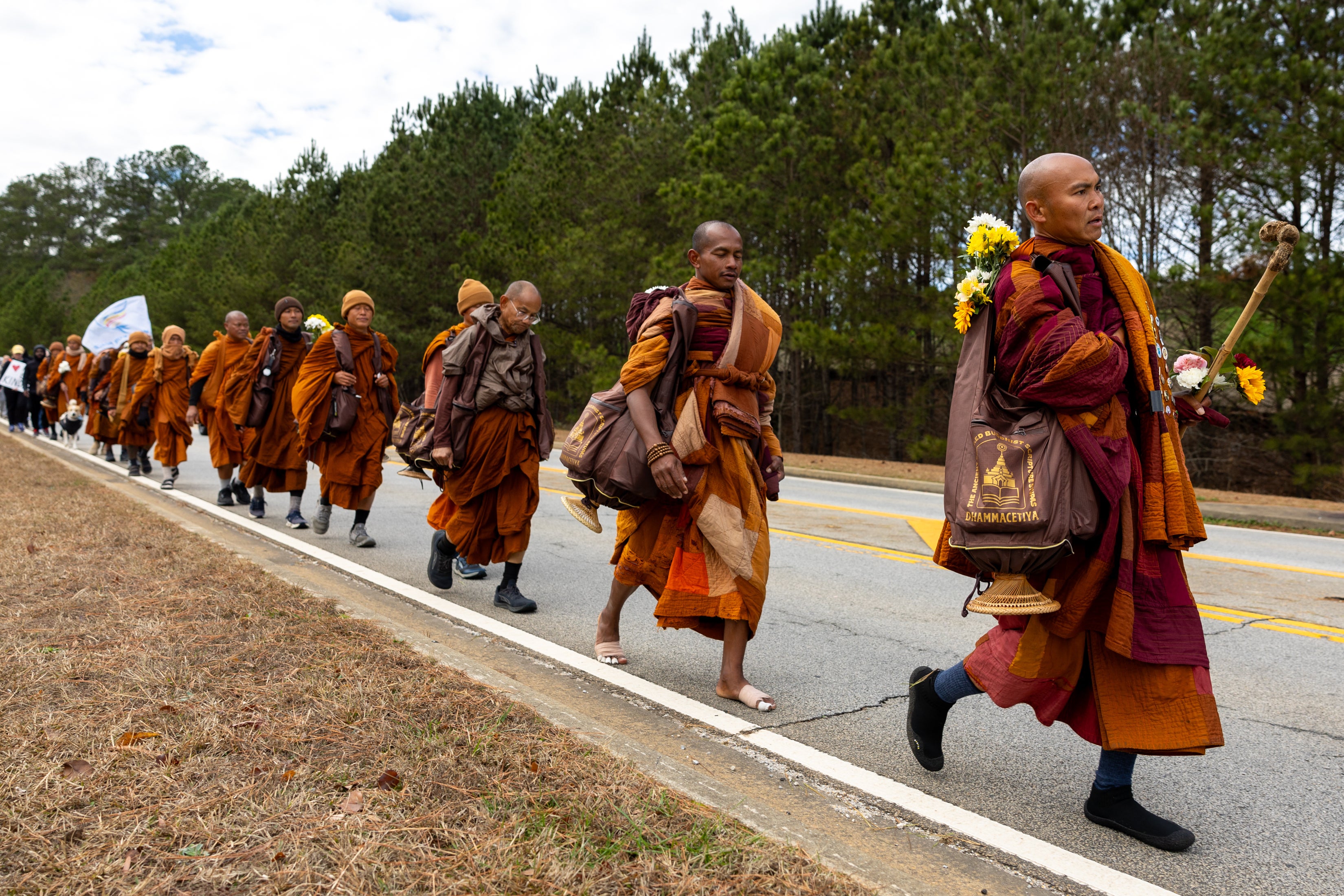
After starting their walk in Fort Worth, Texas, on Oct. 26, the group of about two dozen monks has made it to Georgia as they continue on a path to Washington, D.C., highlighting Buddhism’s long tradition of activism for peace.
The group planned to walk its latest segment through Georgia on Tuesday from the town of Morrow to Decatur, on the eastern edge of Atlanta. Marking day 66 of the walk, the group invited the public to a Peace Gathering in Decatur Tuesday afternoon.
The monks and their loyal dog Aloka are traveling through 10 states en route to Washington, D.C. In coming days, they plan to pass through or very close to Athens, Georgia; the North Carolina cities of Charlotte, Greensboro and Raleigh; and Richmond, Virginia, on their way to the nation’s capital city.
The group has amassed a huge audience on social media, with more than 400,000 followers on Facebook. Aloka has its own hashtag, #AlokathePeaceDog.
Buddhist monks walk through Trilith in Fayetteville, Ga., on Monday, Dec. 29, 2025, from Texas to Washington, D.C. (Arvin Temkar/Atlanta Journal-Constitution via AP)
The group’s Facebook page is frequently updated with progress reports, inspirational notes and poetry.
“We do not walk alone. We walk together with every person whose heart has opened to peace, whose spirit has chosen kindness, whose daily life has become a garden where understanding grows,” the group posted recently.
The trek has not been without danger. Last month outside Houston, the monks were walking on the side of a highway near Dayton, Texas, when their escort vehicle, which had its hazard lights on, was hit by a truck, Dayton Interim Police Chief Shane Burleigh said.
The truck “didn’t notice how slow the vehicle was going, tried to make an evasive maneuver to drive around the vehicle, and didn’t do it in time,” Burleigh said at the time. “It struck the escort vehicle in the rear left, pushed the escort into two of the monks.”
One of the monks had “substantial leg injuries” and was flown by helicopter to a hospital in Houston, Burleigh said. The other monk with less serious injuries was taken by ambulance to another hospital in suburban Houston. The monk who sustained the serious leg injuries was expected to have a series of surgeries to heal a broken bone, but his prognosis for recovery was good, a spokeswoman for the group said.
The group has amassed a huge audience on social media, with more than 400,000 followers on Facebook. Aloka has its own hashtag, #AlokathePeaceDog (Arvin Temkar/Atlanta Journal-Constitution via AP)
Buddhism is a religion and philosophy that evolved from the teachings of Gautama Buddha, a prince turned teacher who is believed to have lived in northern India and attained enlightenment between the 6th and 4th centuries B.C.
The religion spread to other parts of Asia after his death and came to the West in the 20th century. The Buddha taught that the path to end suffering and become liberated from the cycle of birth, death and reincarnation, includes the practice of non-violence, mental discipline through meditation and showing compassion for all beings.
While Buddhism has branched into a number of sects over the centuries, its rich tradition of peace activism continues. Its social teaching was pioneered by figures like the Dalai Lama and Thich Nhat Hanh, who have applied core principles of compassion and non-violence to political, environmental and social justice as well as peace-building efforts around the world.
In 2025, Vietnamese cuisine has garnered widespread recognition from prestigious global rankings. Beloved street foods and traditional market dishes have been named among the world’s best.
Vietnam secured 4th place in the list of the 15 countries with the most attractive cuisines globally, as voted by Condé Nast Traveller.
At the 6th World Culinary Awards, Vietnam was honored as “Asia’s Leading Culinary Destination 2025.” In December, Taste Atlas – a globally respected food mapping site – ranked Vietnamese cuisine 16th among the top 100 world cuisines, up three spots from the previous year.
Banh mi
On November 15, CNN Travel included Vietnamese banh mi in its list of the 25 best sandwiches in the world.
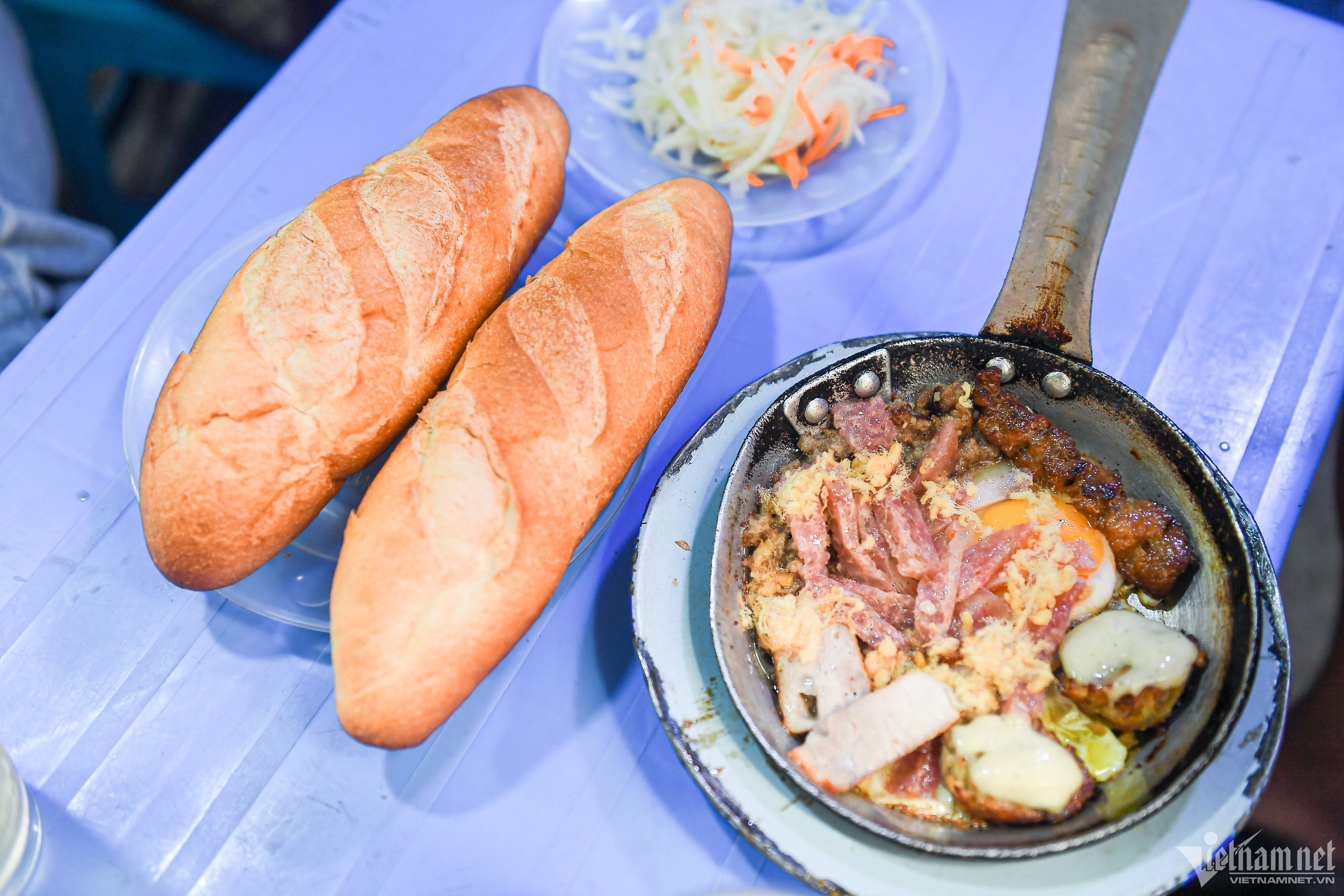
According to CNN Travel, banh mi can be found on nearly every street corner across Ho Chi Minh City, Hanoi, and other provinces, captivating global diners with its signature crispy crust and richly varied fillings.
The classic “thap cam” version, featuring pork, Vietnamese sausage, pickled vegetables, herbs, and a distinctive sauce, offers an addictive balance of savory and sweet flavors. Other variations like chicken banh mi and vegetarian options add to its diversity.
Chủ tịch Hội thủy lợi Việt Nam cho biết trước đây khi ngành thủy lợi làm quy hoạch cho các lưu vực ở miền Trung, sông nào cũng có dung tích phòng lũ. Song khi thay đổi đầu mối quản lý, với việc xây dựng ồ ạt nhiều dự án thủy điện, các bộ ngành phối hợp không chặt chẽ, nên dung tích phòng lũ ở miền Trung gần như không có hoặc không đáng kể.
Nhật ký lũ trên cột nhà ông Nguyễn Văn Biên (82 tuổi) ở Hội An, Đà Nẵng, năm nay khắc thêm một dấu mốc mới – 2025, vượt tất cả năm lịch sử ông từng ghi dấu trước đó – 1964, 1999, 2007, và 2009.
Trận lũ Giáp Thìn diễn ra 61 năm trước vẫn là nỗi ám ảnh với ông Biên. Nước lũ ngập quá căn nhà cổ một tầng. Chàng thanh niên 20 tuổi cùng cha mẹ vác theo 3 kg gạo, gói vài bộ áo quần, bơi qua trú tạm ở căn nhà hai tầng đối diện. Họ thất thần nhìn dòng nước lũ nhấc bổng những căn nhà tranh, và cuốn trôi không ít phận người xấu số.
“Không có ngôi nhà hai tầng đó, chắc mình cũng giống họ”, ông nhớ lại.
Không ai thống kê số người tử nạn năm đó. Nhưng ông Biên chắc chắn nó gây thiệt hại hơn cả trận “đại hồng thuỷ” năm 1999, khiến 595 người chết và mất tích tại 10 tỉnh, thành, trong đó Quảng Nam (cũ) và Đà Nẵng là 110 người.
Ký ức từ những trận lũ lịch sử trở thành bài học cho nhiều thế hệ sống nơi tâm lũ như ông Biên. Khi tích lũy đủ tiền để sửa nhà năm 2018, ông ngẫm ngập phố cổ chưa năm nào quá 3 m, nên quyết định nâng sàn tầng hai cao hơn mặt đường 4 m, và cách mặt sông Hoài chừng 5 m. Đêm 30/10, nước lũ lên nhanh, ngập đến 2,5 m cột nhà, vượt cả mốc lũ năm 1964. Lúc ấy, ông lo sợ lịch sử lặp lại, phải tính đến phương án xấu nhất sẽ gọi cứu hộ thế nào.
May mắn, nước chưa lên tới tầng hai, nhưng ngập đến ngày thứ 5 mới rút, ít ngày sau lại lên lại. Trong hơn 10 ngày từ 22/10 đến 3/11, người dân Hội An chạy lũ ba lần. Toàn thành phố Đà Nẵng (sau sáp nhập) ghi nhận 15 người chết và 3 mất tích, thấp hơn nhiều con số năm 1999.
The world is facing an unprecedented housing crisis. According to the latest UN-Habitat estimates, 318 million people are homeless, while 2.8 billion people—over a third of the global population—lack access to adequate housing. Behind these stark figures lie deep inequalities that undermine social progress and human dignity.
Adequate housing is more than shelter, it is a foundation for stability, health, education, and opportunity. Without a safe and secure home, individuals are more vulnerable to poverty, exclusion, and poor health outcomes. Homelessness also carries a heavy social cost, eroding trust, cohesion, and the potential for societies to thrive.
The housing challenge is global but manifests differently across contexts. In rapidly urbanizing regions, millions live in informal settlements or slums, where basic services are scarce and conditions unsafe. Today, 1.1 billion people live in such informal settlements, with 90 percent concentrated in Africa and Asia. Conflict, economic inequality, climate change, and natural disasters are major drivers of displacement and housing insecurity, pushing millions into precarious living conditions.
The urgency of the crisis was underlined at the UN-Habitat Assembly in Nairobi (29–30 May 2025), where Member States adopted the UN-Habitat Strategic Plan for 2026–2029. The plan places affordable housing, secure land tenure, and access to basic services at the heart of global priorities. Leaders called for bold and coordinated action, stressing that housing must be treated as a human right and a cornerstone of sustainable development.
The right to adequate housing is embedded in international human rights instruments and explicitly tied to the 2030 Agenda for Sustainable Development. Goal 11 commits the international community to make cities and human settlements inclusive, safe, resilient, and sustainable. Addressing homelessness and housing insecurity is therefore essential to achieving the SDGs and ensuring that no one is left behind.
Tackling homelessness and inadequate housing requires integrated strategies at local, national, and global levels:
Scaling up affordable housing initiatives through innovative financing, public-private partnerships, and policy reforms.
Expanding social protection systems to prevent families from falling into homelessness.
Investing in resilient housing solutions to adapt to the realities of climate change and disasters.
Strengthening community-based models such as cooperatives and housing associations that empower people to participate in shaping their own futures.
Homelessness is not inevitable. With coordinated action and commitment, the global community can reverse these trends. As the world prepares for the Second World Summit for Social Development in Doha, 4-6 November 2025, the message is clear: accelerating social progress requires that every person has access to a safe, secure, and dignified place to call home.
PGS. Trương Quang Thông– Đại học Kinh tế TPHCM (UEH)
Kinh nghiệm quốc tế cho thấy Việt Nam là ngoại lệ trong khu vực. Ở Trung Quốc, người mua căn hộ thứ hai phải đặt cọc tối thiểu 60-70% và trả lãi suất cao hơn 30% so với căn đầu tiên. Còn Hàn Quốc thì cấm hoàn toàn vay thế chấp để mua nhà thứ hai ở các “khu đầu cơ” (speculative zones). Đảo quốc Singapore áp dụng quy định “Loan-to-Value ratio” rất chặt chẽ, giới hạn 45% cho căn thứ hai và 35% cho căn thứ ba (Monetary Authority of Singapore, 2023).
(KTSG) – Giá nhà không chỉ phản ánh cung – cầu vật chất, mà còn là tấm gương phản chiếu của chính sách phân phối cơ hội. Khi tín dụng và thuế đều ưu ái người đã có tài sản, hệ thống trở nên bất công, và bất động sản trở thành nơi tích tụ rủi ro tài chính lẫn khủng hoảng niềm tin.
Nhà đất vẫn trở thành biểu tượng của thành công và nơi trú ẩn an toàn cho vốn tư nhân. Ảnh: N.K
Trong ba thập niên qua, Việt Nam đã chứng kiến những đợt tăng giá bất động sản mạnh nhất khu vực Đông Nam Á. Giá căn hộ tại trung tâm TPHCM và Hà Nội cao gấp 20-30 lần thu nhập bình quân năm của một người lao động có kỹ năng trung bình (World Bank, 2023). Mức chênh lệch này cao gấp 3 lần so với Thái Lan và gần gấp 4 lần so với Hàn Quốc trong những giai đoạn so sánh tương tự.
Singapore is reporting an increase in sightings of “shadow fleet” tankers carrying sanctioned cargo off its shores. These vessels often conceal their identities, change flags and switch off tracking systems. Most are old and poorly maintained, increasing the risk of accidents and environmental disasters. Experts say they pose serious safety concerns in one of the world’s busiest shipping lanes.
Al Jazeera’s Patrick Fok reports from Singapore. Jennifer Parker is a specialist in maritime law and security at the University of New South Wales and a former naval officer. She said shadow fleets are hard to track because they operate outside normal rules.
Improved aid access means there is no longer famine in Gaza, but the war-ravaged territory still faces emergency conditions, a UN-backed global hunger monitor said on Friday. Israel denied that there is a food shortage in Gaza, where around 1.6 million people are expected to face crisis levels of food insecurity in the coming months.
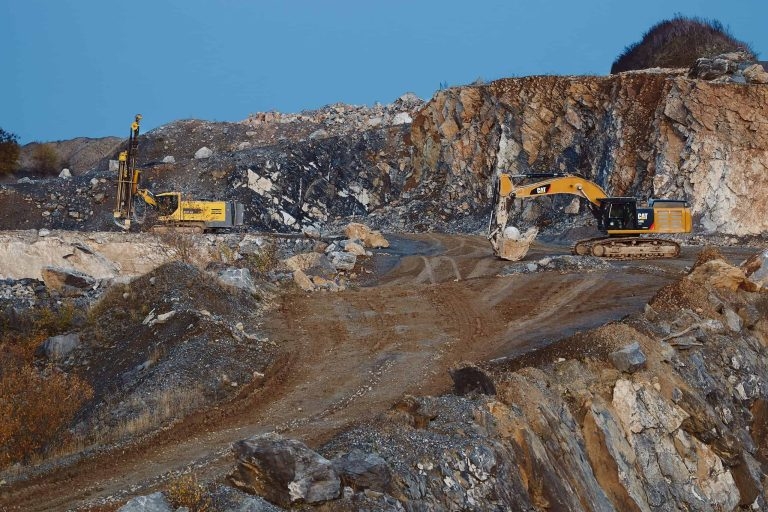
Luật sửa đổi, bổ sung một số điều của Luật Địa chất và khoáng sản khẳng định đất hiếm là khoáng sản chiến lược đặc biệt. Việc thăm dò, khai thác, chế biến phải được kiểm soát chặt chẽ, không xuất khẩu thô khoáng sản đất hiếm. Chỉ các doanh nghiệp, tổ chức được Nhà nước chỉ định hoặc cho phép mới được quyền thăm dò, khai thác, chế biến và sử dụng đất hiếm. Hoạt động chế biến sâu đất hiếm phải gắn với xây dựng hệ sinh thái công nghiệp hiện đại để nâng cao chuỗi giá trị trong nước…
Chỉ các doanh nghiệp, tổ chức được Nhà nước chỉ định hoặc cho phép mới được quyền thăm dò, khai thác, chế biến và sử dụng đất hiếm. Ảnh minh họa
Tiếp tục chương trình Kỳ họp thứ 10, ngày 11/12, Quốc hội biểu quyết thông qua Luật sửa đổi, bổ sung một số điều của Luật Địa chất và khoáng sản với đa số đại biểu có mặt tán thành.
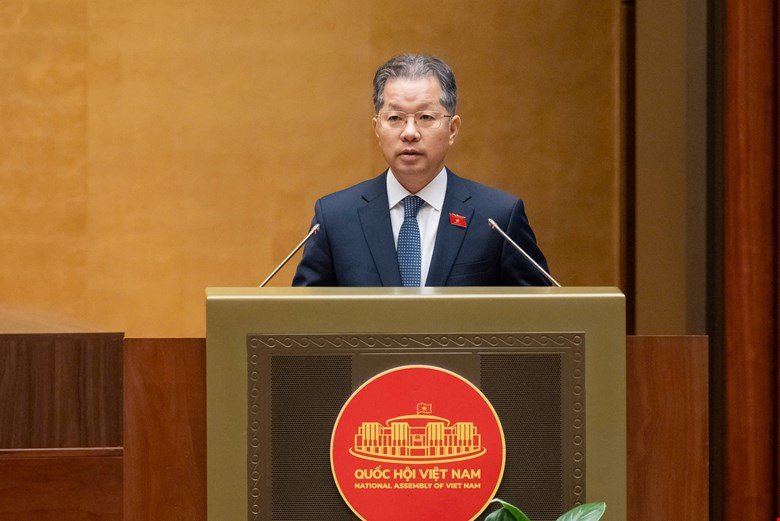
Trước khi Quốc hội thông qua, Bộ trưởng Bộ Nông nghiệp và Môi trường Trần Đức Thắng, thừa ủy quyền của Thủ tướng Chính phủ báo cáo giải trình, tiếp thu, chỉnh lý dự thảo Luật sửa đổi, bổ sung một số điều của Luật Địa chất và khoáng sản. Theo đó, Chính phủ đã tiếp thu và phối hợp với các cơ quan có liên quan rà soát, chỉnh lý, hoàn thiện dự thảo về các vấn đề bảo đảm tính thống nhất, đồng bộ của hệ thống pháp luật, quy định đầy đủ các trường hợp chuyển tiếp và một số vấn đề cụ thể khác.
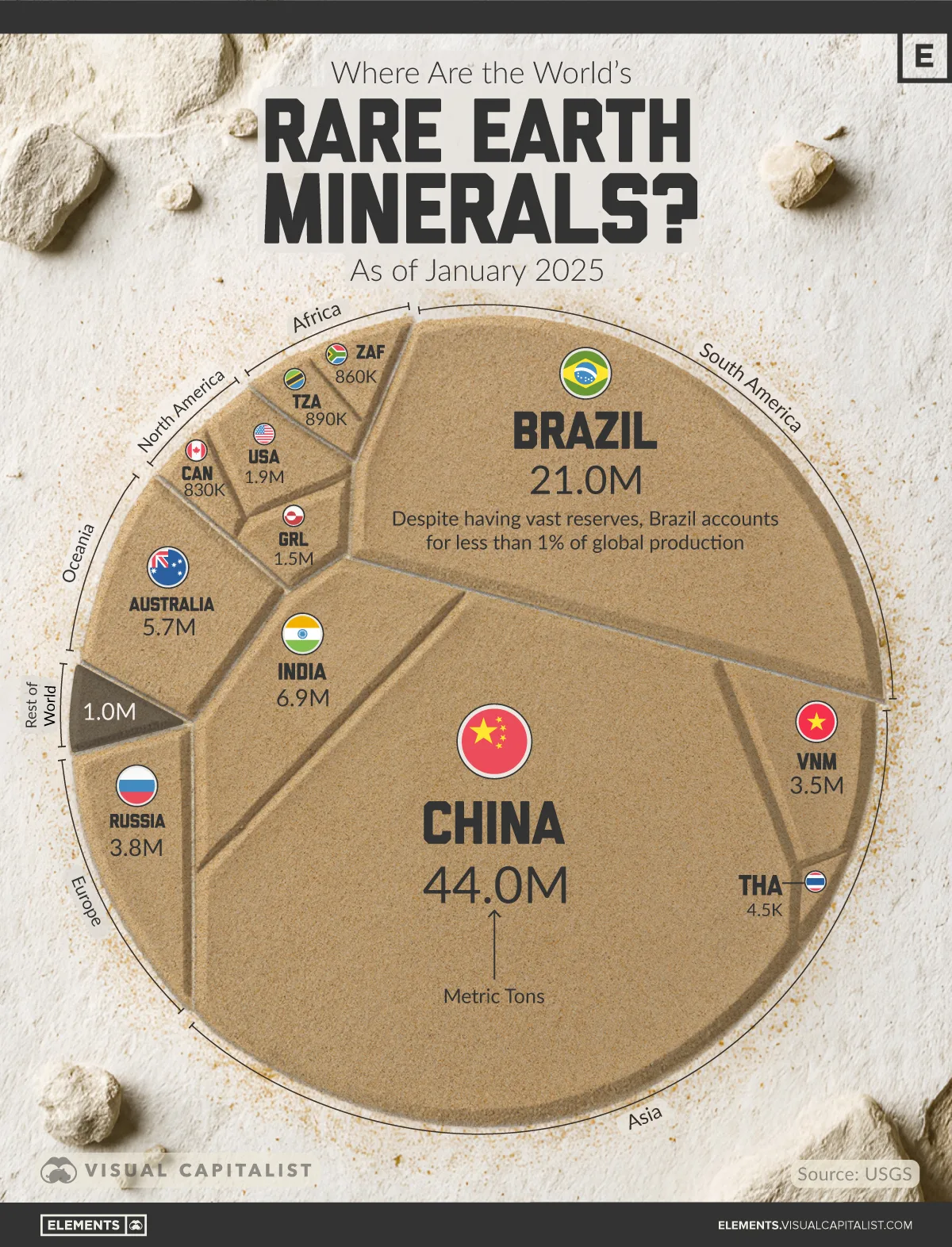
China accounts for nearly half of global rare earth reserves (44M of 92M metric tons).
Brazil ranks second (21M tons), while the U.S. holds 1.9M tons—about 2% of the total.
Rare earth elements (REEs) are the backbone of modern technology, from EV motors and wind turbines to smartphones and precision-guided systems.
This map breaks down where the world’s known rare earth reserves are located in 2025, highlighting how concentrated they are across a handful of countries.
The distribution is highly uneven. China alone holds nearly half of the global total, followed by Brazil’s sizable deposits. By contrast, many advanced economies have limited reserves.
China leads with 44.0 million metric tons, about 48% of the world total of 91.9 million metric tons. Brazil is a clear second at 21.0 million tons (23%), reflecting large ionic clay and hard-rock deposits that are still early in development.
(Chinhphu.vn) – Sáng 11/12, với đa số đại biểu tán thành (438/444), Quốc hội đã chính thức thông qua Luật Tòa án chuyên biệt tại Trung tâm Tài chính quốc tế.
11/12/2025
Chánh án Tòa án nhân dân tối cao Nguyễn Văn Quảng
Luật Tòa án chuyên biệt tại Trung tâm Tài chính quốc tế có hiệu lực thi hành từ 1/1/2026. Luật này áp dụng đối với Tòa án chuyên biệt, thành viên Trung tâm tài chính quốc tế, nhà đầu tư, cơ quan, tổ chức, cá nhân có liên quan đến việc giải quyết vụ việc thuộc thẩm quyền của Tòa án chuyên biệt.
Tòa án chuyên biệt tại Trung tâm Tài chính quốc tế là tòa án thuộc hệ thống Tòa án nhân dân được tổ chức, hoạt động theo quy định của Luật này, có thẩm quyền xét xử, giải quyết các vụ việc tại Trung tâm tài chính quốc tế.
Luật quy định rõ việc thành lập Tòa án chuyên biệt đặt tại TPHCM.
International standards are proliferating, delivering major benefits to wealthy nations and big multinationals while leaving many developing countries behind, a new World Bank report shows.
Main Messages
Standards are the hidden foundations of prosperity. They are the shared rules that make plugs fit sockets, medicines work safely, and digital systems connect seamlessly. Standards embody collective knowledge, build trust, and enable economies to function efficiently. When they fail, markets fragment; when they work, prosperity follows.
For low- and middle-income countries, standards have never mattered more. Nearly 90 percent of world trade is now shaped by nontariff measures, most linked to standards. From digital systems for payment to charging stations for electric vehicles, new technologies can deliver economywide benefits only when standards exist. Mastering them can enhance national competitiveness and protect against technological, financial, and environmental risks.
Standards are a versatile tool of economic policy.Governments can use voluntary standards to drive innovation and give technical guidance on compliance with regulations. They can also make them mandatory when uniform compliance is necessary to protect health, safety, or the environment. In addition, governments can deploy standards as an instrument of industrial policy without reference to specific technologies or firms.
Ambition must match capacity.Countries should follow a trajectory that takes into account their stage of economic development, first adapting international standards to local realities when needed, then aligning with them as institutions mature, and actively participating in authoring standards in priority areas as capabilities grow. Rwanda’s Zamukana Ubuziranenge (“Grow with Standards”) program exemplifies this path, helping micro, small, and medium enterprises progress step by step towards compliance with international standards.
Investing in quality-enhancing infrastructure makes standards work well. The system of testing, certification, metrology, and accreditation in a country is what makes standards effective. Such systems are expensive to build and easy to neglect. Countries should start with public provision of quality-enhancing services in key sectors, then gradually open these services up to private participation. In many places, capacity gaps are stark: Ethiopia has fewer than 100 accredited auditors for compliance with standards of the International Organization for Standardization (ISO), compared with 12,000 in Germany.
To make standards a springboard for development, countries should do the following:
Create incentives for firms to upgrade the quality of their exports rather than imposing unrealistic mandates.
Adapt and sequence standards to align with the national capacity to enforce them.
Participate actively in international forums for setting standards.
Invest in and share quality infrastructure resources regionally.
The global community, for its part, must do the following:
Support participation by low- and middle-income countries in developing international standards and design tiered standards that reflect diverse capacities among countries.
Deepen regulatory cooperation and reduce fragmentation.
Develop credible standards for emerging technologies and actions to prevent or mitigate climate change.
Expand research and data on the economic and social impacts of standards.
Standards matter for development. Countries that take them seriously are getting ahead. Countries that ignore them risk falling behind.